Adhyaya 20
Sainyavinyāsa–Lakṣaṇa (Disposition of Armies and Battlefield Omens) | सैन्यविन्यास–लक्षणम्
Upa-parva: Kurukṣetra-sainyavinyāsa (Army Disposition and Omens) — within Bhīṣma Parva
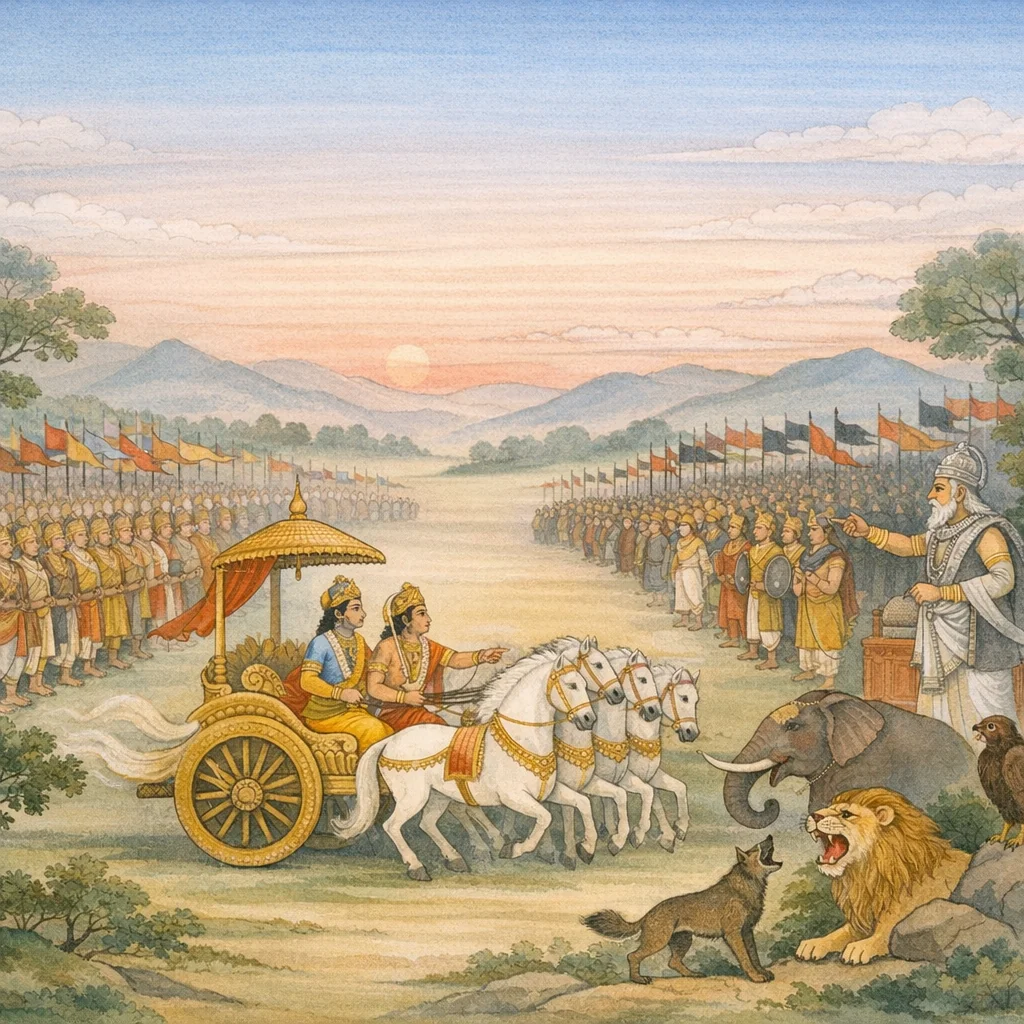
Dhṛtarāṣṭra questions Saṃjaya about who displayed earlier elation at sunrise and requests a precise account of ominous and favorable signs: the positions of sun, moon, and wind; animal cries around the armies; and the visible composure of young warriors. Saṃjaya reports that both armies approached in comparable magnitude and splendor, dense with elephants, chariots, and horses, appearing formidable and orderly. He notes orientation contrasts—Kauravas described as facing westward/backward while the Pāṇḍavas stand facing eastward—paired with interpretive portents: wind and auspicious alignment are associated with the Pāṇḍavas, while unsettling animal cries attend the Dhārtarāṣṭras. The narrative then inventories leadership and coalition structure: Duryodhana is centered on a distinguished elephant amid acclaim; Śakuni with Gāndhāras guards him; Bhīṣma stands foremost with white insignia; Droṇa protects the rear; additional commanders and regional forces are assigned to middle and flanks. Quantitative scaling of the host is given through elephant–chariot–horse ratios, and Bhīṣma is credited with arranging varied vyūhas (human, divine, gandharva, asura) on successive days. The chapter concludes by contrasting the Kaurava host’s vastness with the Pāṇḍavas’ perceived strategic advantage due to leadership by Keśava (Kṛṣṇa) and Arjuna.
Chapter Arc: धृतराष्ट्र संजय से पूछते हैं—सूर्योदय के समय किस पक्ष के योद्धा युद्ध-इच्छा से अधिक हर्षित और उत्सुक दिख रहे थे, जब भीष्म के नेतृत्व में दोनों सेनाएँ निकट आ चुकी थीं। → संजय दोनों सेनाओं का समतुल्य, चित्र-विचित्र, रथ-गज-अश्व से परिपूर्ण दृश्य रचते हैं; साथ ही अपशकुन उभरते हैं—पाण्डवों की पीठ पर अनुकूल वायु, कौरव-पक्ष की ओर हिंसक पशुओं की ध्वनियाँ, और कौरवों के हाथियों का पाण्डव गजराजों की मदगन्ध से विचलित होना। → संजय निर्णायक संकेत देते हैं—धृतराष्ट्र की ध्वजिनी भले ‘अनन्तरूपा’ और ‘भीमा’ हो, पर वह पाण्डवों की सेना जैसी नहीं; क्योंकि पाण्डव-पक्ष में नेतृत्व केशव (कृष्ण) और अर्जुन के हाथ में है—यही युद्ध-भाग्य का धुरी-बिंदु बनता है। → भीष्म के द्वारा प्रतिदिन नये-नये व्यूह (मानुष, दैव, गान्धर्व, आसुर) रचने और कौरव-सेना के घोष-समुद्र-सा उमड़ने का वर्णन कर संजय युद्ध-व्यवस्था की व्यापकता स्थापित करते हैं, पर साथ ही संकेत करते हैं कि केवल संख्या नहीं, नेतृत्व और धर्म-बल निर्णायक होंगे। → सूर्योदय के साथ व्यूह-रचना पूर्ण है; अब प्रथम टकराव की घड़ी निकट है—किसका उत्साह टिकेगा और किसके अपशकुन फलित होंगे?
Shlokas
Verse 1
इति श्रीमहाभारते भीष्मपर्वणि श्रीमद्भगवद्गीतापर्वणि सैन्यवर्णने विंशो5ध्याय: ।। २० || इस प्रकार श्रीमहाभारत भीष्मपर्वके अन्तर्गत श्रीमद्भगवद्गीतापर्वमें सैन्यवर्णणनविषयक बीसवाँ अध्याय पूरा हुआ ॥/ २० ॥। ऑपन---र< बक। है २ >> एकविशोड< ध्याय: कौरवसेनाको देखकर युधिषछ्िरका विषाद करना और 'श्रीकृष्णकी कृपासे ही विजय होती है” यह कहकर अर्जुनका उन्हें आश्वासन देना संजय उवाच बृहतीं धार्तराष्ट्रस्य सेनां दृष्टवा समुद्यताम् । विषादमगमदू राजा कुन्तीपुत्रो युधिष्िर:
Sañjaya said: Seeing the vast army of Dhṛtarāṣṭra’s sons drawn up and ready for battle, King Yudhiṣṭhira—the son of Kuntī—was overcome by despondency.
Verse 2
धृतराष्ट्रने पूछा--संजय! सूर्योदयके समय किस पक्षके योद्धा युद्धकी इच्छासे अधिक हर्षका अनुभव करते हुए जान पड़ते थे? भीष्मके नेतृत्वमें निकट आये हुए मेरे सैनिक अथवा भीमसेनकी अध्यक्षतामें आनेवाले पाण्डव सैनिक! उस समय कौन अधिक प्रसन्न थे? ।। केषां जघन्यौ सोमसूर्यो सवायू केषां सेनां श्वापदाश्षाभषन्त । केषां यूनां मुखवर्णा: प्रसन्ना: सर्व होतद् ब्रूहि तत्त्व यथावत्,चन्द्रमा, सूर्य और वायु किनके प्रतिकूल थे? किनकी सेनाकी ओर देखकर हिंसक जन्तु भयंकर शब्द करते थे? किस पक्षके नवयुवकोंके मुखकी कान्ति प्रसन्न थी? ये सब बातें तुम मुझे ठीक-ठीक बताओ
Dhṛtarāṣṭra said: “Sañjaya, at sunrise, which side’s warriors seemed to feel the greater exhilaration, eager for battle—my troops who had drawn near under Bhīṣma’s command, or the Pāṇḍava forces advancing under Bhīmasena’s leadership? Who, at that moment, appeared more confident and pleased? For whom were the moon and the sun, along with the wind, inauspicious? Toward which army did the wild beasts cry out ominously? On which side did the young men’s faces shine with glad color? Tell me all this exactly, as it truly was.”
Verse 3
संजय उवाच उभे सेने तुल्यमिवोपयाते उभे व्यूहे हृष्टरूपे नरेन्द्र । उभे चित्र वनराजिप्रकाशे तथैवोभे नागरथाश्वपूर्णे,संजय बोले--नरेन्द्र! दोनों ओरकी सेनाएँ समान रूपसे आगे बढ़ रही थीं। दोनों ओरके व्यूहमें खड़े हुए सैनिक हर्षसे उल्लसित थे। दोनों ही सेनाएँ वनश्रेणियोंके समान आश्चर्यरूप प्रतीत होती थीं और दोनों ही हाथी, रथ एवं घोड़ोंसे भरी हुई थीं
Sañjaya said: O king, both armies advanced as though evenly matched. In both battle-formations the warriors stood with exultant faces. Both hosts appeared wondrous—like variegated lines of forest—each likewise filled with elephants, chariots, and horses.
Verse 4
उभे सेने बृहत्यौ भीमरूपे तथैवोभे भारत दुर्विषहो । तथैवोभे स्वर्गजयाय सूष्टे तथैवोभे सत्पुरुषोपजुष्टे,भारत! दोनों ओरकी सेनाएँ विशाल, भयंकर और दुःसह थीं, मानो विधाताने दोनों सेनाओंको स्वर्गकी प्राप्तिके लिये ही रचा था। दोनोंमें ही सत्पुरुष भरे हुए थे
Sañjaya said: O Bhārata, both armies were vast, fearsome, and hard to withstand—as though the Ordainer had fashioned them for the conquest of heaven. And in both were many noble and righteous men.
Verse 5
पश्चान्मुखा: कुरवो धार्तराष्ट्रा: स्थिता: पार्था: प्राडमुखा योत्स्यमाना: । दैत्येन्द्रसेनेव च कौरवाणां देवेन्द्रसेनेव च पाण्डवानाम्,आपके पुत्र कौरवोंका मुख पश्चिम दिशाकी ओर था और कुन्तीके पुत्र उनसे युद्ध करनेके लिये पूर्वाभिमुख खड़े थे। कौरवसेना दैत्यराजकी सेनाके समान जान पड़ती थी और पाण्डववाहिनी देवराज इन्द्रकी सेनाके तुल्य प्रतीत होती थी
Sañjaya said: The Kurus, the sons of Dhṛtarāṣṭra, stood facing west, while the sons of Pṛthā (the Pāṇḍavas) stood facing east, ready to fight. The Kaurava host appeared like the army of the lord of the Dānavas, whereas the Pāṇḍava force seemed like the army of Indra, king of the gods—framing the coming battle as a moral and cosmic confrontation between opposing alignments.
Verse 6
चक्रे वायु: पृष्ठत: पाण्डवानां धार्तराष्ट्रज्शवापदा व्याहरन्त । गजेन्द्राणां मदगन्धां श्व॒ तीव्रान् न सेहिरे तव पुत्रस्य नागा:
Sañjaya said: The wind blew from behind the Pāṇḍavas, while on the Kaurava side the wild beasts cried out ominously. And your son’s elephants could not endure the sharp, overpowering scent of musth from the lordly elephants.
Verse 7
पाण्डवसेनाके पीछेकी ओरसे हवा चल रही थी और आपके पुत्रोंकी ओर देखकर हिंसक जन्तु बोल रहे थे। आपके पुत्रकी सेनामें जो हाथी थे, वे पाण्डवपक्षके गजराजोंके मदोंकी तीव्र गन्ध नहीं सहन कर पाते थे ।। दुर्योधनो हस्तिनं पद्मवर्ण सुवर्णकक्ष॑ जालवन्तं प्रभिन्नम् । समास्थितो मध्यगत: कुरूणां संस्तूयमानो वन्दिभिम्मागधैश्वल,दुर्योधन कमलके समान कान्तिवाले मदस्रावी गजराजपर बैठकर कौरवसेनाके मध्यभागमें खड़ा था। उसके हाथीपर सोनेका हौदा कसा हुआ था और पीठपर सोनेकी जाली बिछी हुई थी। उस समय बन्दी और मागधजन उसकी स्तुति कर रहे थे
Sañjaya said: A favorable wind was blowing from behind the Pandava army, while ominous cries of fierce creatures were heard as they faced your sons. The elephants in your son’s host could not endure the sharp, intoxicating scent of musth from the great elephants of the Pandava side. Meanwhile Duryodhana, seated upon a musth elephant radiant like a lotus, fitted with a golden howdah and a golden netting on its back, stood in the midst of the Kuru forces as bards and Magadha panegyrists sang his praises—an image of royal pride set against portents that hint at the moral and strategic imbalance of the coming battle.
Verse 8
चन्द्रप्रभं श्वेतमथातपत्र सौवर्णसख्रग् भ्राजति चोत्तमाड़े । त॑ सर्वतः शकुनि: पर्वतीयै: सार्थ गान्धारैर्याति गान्धारराज:,उसके मस्तकपर चन्द्रमाके समान कान्तिमान् श्वेत छत्र तना हुआ था और कण्ठमें सोनेकी माला सुशोभित हो रही थी। गान्धारराज शकुनि गान्धारदेशके पर्वतीय योद्धाओंके साथ आकर दुर्योधनको सब ओरसे घेरकर चल रहा था
Sañjaya said: A white parasol, radiant like the moon, was held aloft above him, and a golden garland shone upon his head. The king of Gāndhāra, Śakuni, advanced with the mountain warriors of Gāndhāra, moving so as to surround Duryodhana on every side—an image of protective display that also hints at the tight web of counsel and influence around the Kaurava cause as the war formations take shape.
Verse 9
भीष्मो5ग्रत: सर्वसैन्यस्य वृद्ध: श्वेतच्छत्र: श्वेतधनु: सखड्गः । श्वेतोष्णीष: पाण्डुरेण ध्वजेन श्वेतैरश्वेः श्वेतशैलप्रकाशै:,हमारी सम्पूर्ण सेनाके आगे बूढ़े पितामह भीष्म थे। उनके सिरपर श्वेत रंगकी पगड़ी थी और श्वेत वर्णका ही छत्र तना हुआ था। उनके धनुष और खडग भी श्वेत ही थे। वे श्वेत शैलके समान प्रकाशित होनेवाले श्वेत घोड़ों और श्वेत ध्वजसे सुशोभित हो रहे थे
Sañjaya said: At the very front of the entire army stood the aged Bhīṣma. He was marked by whiteness—his parasol, his bow, and his sword; a white turban on his head; a pale banner above him; and horses gleaming white like a mountain of snow. The scene presents Bhīṣma as the venerable elder leading the Kaurava host, his austere, luminous appearance underscoring both the gravity of the war and the moral weight carried by an elder bound to duty even amid tragic conflict.
Verse 10
तस्य सैन्ये धार्तराष्ट्रा श्न सर्वे बाह्लीकानामेकदेश: शलश्न | ये चाम्बष्ठा: क्षत्रिया ये च सिन्धो- स्तथा सौवीरा: पञ्चनदाश्व शूरा:,उनकी सेनामें आपके सभी पुत्र, बाह्नीकसेनाका एक अंश, शल और अम्बष्ठ, सौवीर, सिन्धु तथा पंचनद देशके शूरवीर क्षत्रिय विद्यमान थे
Sañjaya reports that within that army were all the sons of Dhṛtarāṣṭra, along with a contingent from the Bāhlīkas, and Śala; and also the valiant Kṣatriyas of the Ambaṣṭhas, as well as warriors from the Sindhu country, the Sauvīras, and the heroes of the Pañcanada region. The verse underscores how the Kaurava host is strengthened by many allied peoples, widening the moral and political scope of the coming war beyond a single family feud.
Verse 11
शोणैह्हये रुक्मरथो महात्मा द्रोणो धनुष्पाणिरदीनसत्त्व: । आस्ते गुरु: प्रायश: सर्वराज्ञां पश्चाच्च भूमीन्द्र इवाभियाति,उनके पीछे प्रायः समस्त राजाओंके गुरु, उदार हृदयवाले महामना द्रोणाचार्य हाथमें धनुष लिये लाल घोड़ोंसे जुते हुए सुवर्णमय रथमें बैठकर भूमिपालकी भाँति युद्धके लिये जा रहे थे
Sañjaya said: The great-souled Droṇa—undaunted in spirit, bow in hand—sat in a golden chariot yoked with chestnut horses. As the preceptor of nearly all the kings, he advanced behind them toward the battle, like a sovereign protector moving to war. The verse underscores the moral weight of a teacher entering combat: Droṇa’s authority as guru and his personal valor are set within the tragic duty-bound momentum of the Kurukṣetra war.
Verse 12
वार्थक्षत्रि: सर्वसैन्यस्य मध्ये भूरिश्रवा: पुरुमित्रो जयश्न । शाल्चा मत्स्या: केकयाश्षेति सर्वे गजानीकैर्भ्रातरो योत्स्यमाना:,वृद्धक्षत्रका पुत्र जयद्रथ, भूरिश्रवा, पुरुमित्र, जय, शाल्व और मत्स्यदेशीय क्षत्रिय तथा सब भाई केकय-राजकुमार युद्धकी इच्छासे हाथियोंके समूहोंको साथ ले सम्पूर्ण सेनाके मध्यभागमें स्थित थे
Sañjaya said: In the very midst of the entire army stood Vārthakṣatri, along with Bhūriśravas, Purumitra, and Jaya; and also the Śālvas, the Matsyas, and all the Kekayas—brothers marshalled with divisions of elephants, eager to join battle. The scene underscores the deliberate organization of forces and the collective resolve of allied kṣatriyas as the war’s momentum gathers.
Verse 13
शारद्वतश्रोत्तरधूर्महात्मा महेष्वासो गौतमश्रित्रयोधी । शकै: किरातैर्यवनै: पह्चवैश्व सार्थ चमूमुत्तरतो$भियाति,महान् धनुर्धर और विचित्र रीतिसे युद्ध करनेवाले गौतमवंशीय महामना कृपाचार्य गुरुतर भार ग्रहण करके शक, किरात, यवन तथा पल्लव सैनिकोंके साथ कौरवसेनाके बाँयें भागमें होकर चल रहे थे
Sanjaya said: The great-souled Kripa—born of Śaradvat, a mighty archer of the Gautama lineage, famed for varied and unconventional modes of battle—advanced on the northern flank with the Śakas, Kirātas, Yavanas, and Pahlavas, bearing a heavy responsibility in the Kaurava host.
Verse 14
महार थैर्वृष्णिभोजै: सुगुप्तं सुराष्ट्रकैविंहितैरात्तशस्त्रै: | बृहद् बल॑ कृतवर्माभिगुप्तं बल॑ त्वदीयं दक्षिणेनाभियाति,हाथमें हथियार लिये सुशिक्षित सुराष्ट्रदेशीय वीरों तथा वृष्णि और भोजवंशके महारथियोंद्वारा पालित विशाल सेना कृतवर्मद्वारा सुरक्षित होकर आपकी सेनाके दाहिने भागसे होकर युद्धके लिये यात्रा कर रही थी
Sañjaya said: Well-protected by the great chariot-warriors of the Vṛṣṇis and Bhojas, and by the well-trained Saurāṣṭra fighters bearing weapons, that vast force—guarded by Kṛtavarman—was advancing to battle along the right flank of your army.
Verse 15
संशप्तकानामयुतं रथानां मृत्युर्जयो वार्जुनस्येति सृष्टा: । येनार्जुनस्तेन राजन् कृतास्त्रा: प्रयातारस्ते त्रिगर्ताश्न शूरा:,“या तो हम अर्जुनपर विजय प्राप्त करेंगे अथवा हमारी मृत्यु हो जायगी' ऐसी प्रतिज्ञा करके दस हजार संशप्तक रथी तथा बहुत-से अस्त्रवेत्ता त्रिगर्तदेेशीय शूरवीर जिस ओर अर्जुन थे, उसी ओर जा रहे थे
Sañjaya said: “O King, ten thousand chariot-warriors of the Saṃśaptakas—having taken the vow, ‘Either death or victory over Arjuna’—set forth. Those Trigarta heroes, skilled in weapons, advanced straight toward the very side where Arjuna was.”
Verse 16
साग्रं शतसहस््रं तु नागानां तव भारत । नागे नागे रथशतं शतमश्चा रथे रथे,भारत! आपकी सेनामें एक लाखसे अधिक हाथी थे। एक-एक हाथीके साथ सौ-सौ रथ थे और एक-एक रथके साथ सौ-सौ घोड़े थे
Sañjaya said: “O Bhārata, your army had a little more than a hundred thousand elephants. With each elephant there were a hundred chariots, and with each chariot a hundred horses.”
Verse 17
अश्वेड्श्वे दश धानुष्का धानुष्के शतचर्मिण: । एवं व्यूढान्यनीकानि भीष्मेण तव भारत,प्रत्येक अश्वके पीछे दस-दस धनुर्धर और प्रत्येक धनुर्धरके साथ सौ-सौ पैदल सैनिक नियुक्त किये गये थे, जो ढाल-तलवार लिये रहते थे। भरतनन्दन! इस प्रकार भीष्मजीने आपकी सेनाओंका व्यूह रचा था
Sañjaya said: “Behind each horse were stationed ten archers, and with each archer were assigned a hundred foot-soldiers bearing shield and sword. O scion of Bharata, thus did Bhīṣma array the battle-formation (vyūha) of your armies.”
Verse 18
संव्यूह् मानुषं व्यूहं दैवं गान्धर्वमासुरम् दिवसे दिवसे प्राप्ते भीष्म: शान्तनवोडग्रणी:,शान्तनुनन्दन सेनापति भीष्म प्रत्येक दिन मानुष, दैव, गान्धर्व और आसुर प्रणालीके अनुसार व्यूह-रचना करके सेनाके अग्रभागमें स्थित होते थे। भीष्मद्वारा रचित कौरवसेनाका वह व्यूह महारथियोंके समुदायसे सम्पन्न हो समुद्रके समान गर्जना करता था। युद्धमें उसका मुख पश्चिमकी ओर था
Sañjaya said: As each day arrived, Bhīṣma—the son of Śāntanu and foremost among leaders—arrayed the Kaurava forces in successive battle-formations: human, divine, gandharva-like, and demonic. Thus he stood at the head of the army, shaping the day’s strategy and setting the tone of the conflict through disciplined order and overwhelming martial power.
Verse 19
महारथौघविपुल: समुद्र इव घोषवान् । भीष्मेण धार्तराष्ट्राणां व्यूह: प्रत्यड्मुखो युधि,शान्तनुनन्दन सेनापति भीष्म प्रत्येक दिन मानुष, दैव, गान्धर्व और आसुर प्रणालीके अनुसार व्यूह-रचना करके सेनाके अग्रभागमें स्थित होते थे। भीष्मद्वारा रचित कौरवसेनाका वह व्यूह महारथियोंके समुदायसे सम्पन्न हो समुद्रके समान गर्जना करता था। युद्धमें उसका मुख पश्चिमकी ओर था
Sanjaya said: Vast with hosts of great chariot-warriors, the Kauravas' battle-array, fashioned by Bhishma, roared like the ocean. In the fight it was set facing westward.
Verse 20
अनन्तरूपा ध्वजिनी नरेन्द्र भीमा त्वदीया न तु पाण्डवानाम् | तां चैव मन्ये बृहतीं दुष्प्रधर्षा यस्या नेता केशवदश्चार्जुनश्ष,नरेन्द्र! आपकी सेना अनन्त रूपवाली एवं भयंकर थी; पाण्डवोंकी वैसी नहीं थी। परंतु मैं तो उसी सेनाको विशाल और दुर्जय मानता हूँ, जिसके नेता साक्षात् भगवान् श्रीकृष्ण और अर्जुन हैं
Sañjaya said: “O king, your army was vast in its many formations and terrifying in might; the Pāṇḍavas’ host was not so. Yet I deem that very army to be the truly great and unconquerable one—the army whose leaders are Keśava (Śrī Kṛṣṇa) and Arjuna. For where righteous purpose is guided by divine wisdom and disciplined heroism, mere numbers and outward terror do not decide victory.”
Frequently Asked Questions
The tension lies in governance by interpretation: a ruler seeks certainty through signs while remaining accountable for decisions; the chapter presents omens as informational cues, not substitutes for responsibility in command and policy.
Operational readiness depends on structured hierarchy, clear placement of key leaders, and continuous situational assessment; morale and legitimacy are managed through visible symbols, disciplined formations, and coalition coordination.
No explicit phalaśruti is stated here; its meta-function is archival and diagnostic—recording how early-war logistics, portents, and leadership configuration frame later outcomes within the epic’s causality.