Adhyaya 59
युद्धसंग्रहः (Kurukṣetra Campaign in Summary)
Upa-parva: Kurukṣetra-yuddha-smṛti (Vāsudeva’s recollection of the war; embedded retrospective episode)
This adhyāya is structured as a dialogic recollection. Vasudeva requests a factual account from Kṛṣṇa (Puṇḍarīkākṣa), who responds by stating that the deeds are too numerous for exhaustive enumeration and therefore offers a prioritized synopsis. He outlines the sequence of commanders and major phases: Bhīṣma as Kaurava commander and Śikhaṇḍin as a key Pandava front figure under Arjuna’s protection; the ten-day engagement ending with Bhīṣma’s fall and subsequent waiting for Uttarāyaṇa. Droṇa then assumes command, protected by senior fighters, while Dhṛṣṭadyumna leads the Pandavas under Bhīma’s guard; a five-day severe phase ends with Droṇa’s defeat. Karṇa becomes commander; after intense engagements, he is killed in a decisive encounter with Arjuna. The Kauravas then rally around Śalya, who is slain by Yudhiṣṭhira; Sahadeva kills Śakuni. Duryodhana retreats and is pursued; he is located at the Dvaipāyana lake and ultimately felled by Bhīma in a public contest. The chapter further notes the night-time massacre of the sleeping Pandava camp by Aśvatthāman (Droṇa’s son) in retaliation, leaving only a small remnant including the Pāṇḍavas with Kṛṣṇa and Sātyaki; Aśvatthāman escapes with Kṛpa and Bhoja, and Yuyutsu survives. The narration concludes with the framing voice (Vaiśaṃpāyana) observing that the Vṛṣṇis experienced mixed distress and exhilaration while hearing this account.
Chapter Arc: जनमेजय जिज्ञासा करता है—उत्तंक को वरदान देकर महायशस्वी श्रीकृष्ण ने आगे क्या किया? → वैशम्पायन बताते हैं कि गोविन्द सात्यकि के साथ शीघ्रगामी अश्वों पर आरूढ़ होकर द्वारका की ओर प्रस्थान करते हैं, मार्ग में सरोवर, नदियाँ, वन और पर्वत लाँघते हुए—मानो दीर्घ प्रवास के बाद घर की ओर लौटता हुआ विजयी नायक। → रम्या द्वारवती में प्रवेश: पताकाओं और घण्टिकाओं से गुंजित नगर, और यादवों का देवताओं की भाँति स्वागत—श्रीकृष्ण का माता-पिता से मिलन, आलिंगन, कुशल-प्रश्न और सान्त्वना के मधुर वचन। → वृष्णि-भोज-अन्धक जन समुदाय के बीच सम्मान पाकर श्रीकृष्ण अपने सुन्दर भवन में प्रवेश करते हैं; सात्यकि भी अपने गृह को लौटता है। → द्वारका-प्रवेश के बाद गृहस्थ-जीवन और यादव-समाज में आगे क्या संवाद/घटनाएँ घटेंगी—यह जिज्ञासा बनी रहती है।
Shlokas
Verse 1
जनमेजयने पूछा--द्विजश्रेष्ठ!] महायशस्वी महाबाहु भगवान् श्रीकृष्णने उत्तंकको वरदान देनेके पश्चात् क्या किया?,इस प्रकार श्रीमह्ाभारत आश्वमेधिकपर्वके अन्तर्गत अनुगीतापर्वमें श्रीकृष्णका द्वारकाप्रवेशविषयक उनसठवाँ अध्याय पूरा हुआ ॥/ ५९ ॥। (दाक्षिणात्य अधिक पाठके ३ ३ “लोक मिलाकर कुल २४३ श्लोक हैं) #5-2८5 >> धन #* षष्टितमो< ध्याय: वसुदेवजीके पूछनेपर श्रीकृष्णका उन्हें महाभारत-युद्धका वृत्तान्त संक्षेपसे सुनाना वसुदेव उवाच श्रुतवानस्मि वार्ष्णेय संग्रामं परमाद्भुतम् । नराणां वदतां तत्र कथं वा तेषु नित्यश:
Janamejaya said: “O best of the twice-born! After the glorious, mighty-armed Lord Śrī Kṛṣṇa granted a boon to Uttanka, what did he do next?”
Verse 2
वैशम्पायन उवाच उत्तड़काय वरं दत्त्वा प्रायात् सात्यकिना सह । द्वारकामेव गोविन्द: शीघ्रवेगैर्महाहयै:,वैशम्पायनजीने कहा--उत्तंकको वर देकर भगवान् श्रीकृष्ण महान् वेगशाली शीघ्रगामी घोड़ोंद्वारा सात्यकि (और सुभद्रा)-के साथ पुनः द्वाराकी ओर ही चल दिये
Vaiśampāyana said: Having granted Uttanka a boon, Govinda set out with Sātyaki, swiftly returning toward Dvārakā on great horses of rapid speed.
Verse 3
सरांसि सरितश्चैव वनानि च गिरीस्तथा । अतिक्रम्याससादाथ रम्यां द्वारवतीं पुरीम्,मार्गमें अनेकानेक सरोवरों, सरिताओं, वनों और पर्वतोंको लाँधकर वे परम रमणीय द्वारका नगरीमें जा पहुँचे। महाराज! उस समय वहाँ रैवतक पर्वतपर कोई बड़ा भारी उत्सव मनाया जा रहा था। सात्यकिको साथ लिये कमलनयन भगवान् श्रीकृष्ण भी उस समय उस महोत्सवमें पधारे
Vaiśampāyana said: Crossing many lakes and rivers, and passing through forests and mountains, they at last reached the exceedingly beautiful city of Dvāravatī. O King, at that time a grand festival was being celebrated on Mount Raivataka; and lotus-eyed Bhagavān Śrī Kṛṣṇa too arrived at that great celebration, accompanied by Sātyaki.
Verse 4
वर्तमाने महाराज महे रैवतकस्य च । उपायात् पुण्डरीकाक्षो युयुधानानुगस्तदा,मार्गमें अनेकानेक सरोवरों, सरिताओं, वनों और पर्वतोंको लाँधकर वे परम रमणीय द्वारका नगरीमें जा पहुँचे। महाराज! उस समय वहाँ रैवतक पर्वतपर कोई बड़ा भारी उत्सव मनाया जा रहा था। सात्यकिको साथ लिये कमलनयन भगवान् श्रीकृष्ण भी उस समय उस महोत्सवमें पधारे
Vaiśampāyana said: O King, while a great festival was being celebrated on Mount Raivataka, Puṇḍarīkākṣa (Śrī Kṛṣṇa), accompanied by Yuyudhāna (Sātyaki), arrived there. Having crossed many lakes, rivers, forests, and mountains along the way, they reached the supremely delightful city of Dvārakā and entered the ongoing grand celebration.
Verse 5
अलंकृतस्तु स गिरिरनाननारूपैर्विचित्रितै: । बभौ रत्नमयै: कोशै: संवृतः पुरुषर्षभ,पुरुषप्रवर! वह पर्वत नाना प्रकारके विचित्र रत्नमय ढेरोंद्वारा सजाया गया था, उस समय उसकी अद्भुत शोभा हो रही थी
Vaiśampāyana said: That mountain, adorned with many wondrous and varied forms, shone brilliantly, being covered all around with heaps of jewel-like treasures—O best and foremost of men.
Verse 6
काजउ्चनस्रग्भिरग्रयाभि: सुमनोभिस्तथैव च । वासोभिश्व महाशैल: कल्पवृक्षैस्तथैव च,सोनेकी सुन्दर मालाओं, भाँति-भाँतिके पुष्पों, वस्त्रों और कल्पवृक्षोंसे घिरे हुए उस महान् शैलकी अपूर्व शोभा हो रही थी
Vaiśampāyana said: That great mountain shone with an extraordinary beauty, encircled by excellent golden garlands, fragrant blossoms, fine garments, and wish-fulfilling trees—an auspicious splendor suggesting divine favor and the merit that adorns sacred places.
Verse 7
दीपवृक्षैश्ष सौवर्णरभीक्ष्णममुपशोभित: । गुहानिर्सरदेशेषु दिवाभूतो बभूव ह,वृक्षेके आकारमें सजाये हुए सोनेके दीप उस स्थानकी शोभाको और भी उद्दीप्त कर रहे थे। वहाँकी गुफाओं और झरनोंके स्थानोंमें दिनके समान प्रकाश हो रहा था
Vaiśampāyana said: The place was continually adorned with golden lamps arranged upon lamp-bearing trees. In the regions of caves and at the outlets of springs and waterfalls, it became as bright as daytime—an image of ordered splendor and careful hospitality, where darkness is dispelled by deliberate, auspicious illumination.
Verse 8
पताकाभिरवविंचित्राभि: सघण्टाभि: समन्ततः । पुम्भि: स्त्रीभिश्व संघुष्ट: प्रणित इव चाभवत्,चारों ओर विचित्र पताकाएँ फहरा रही थीं, उनमें बँधी हुई घण्टियाँ बज रही थीं और स्त्रियों तथा पुरुषोंके सुमधुर शब्द वहाँ व्याप्त हो रहे थे। इससे वह पर्वत संगीतमय-सा प्रतीत हो रहा था
Vaiśampāyana said: All around, the place was adorned with many-variegated banners, and the bells fastened to them rang out. Filled with the pleasant sounds of men and women, it seemed as though the very mountain had been led into music—alive with festive harmony.
Verse 9
अतीव प्रेक्षणीयो 5 भून्मेरु्मुनिगणैरिव । मत्तानां हृष्टरूपाणां स्त्रीणां पुंसां च भारत
Vaiśampāyana said: O Bhārata, it became exceedingly delightful to behold—like Mount Meru surrounded by hosts of sages—amid men and women who, intoxicated with joy, wore radiant, exultant expressions.
Verse 10
प्रमत्तमत्तसम्मत्तक्ष्वेडितोत्क्रुष्टसंकुल:
Vaiśaṃpāyana said: It was filled with the confused din of the heedless and the intoxicated—boastful snorts, loud cries, and tumultuous shouts—signaling a loss of restraint and the moral danger that follows when passion and pride overtake discipline.
Verse 11
विपणापणवान् रम्यो भक्ष्यभोज्यविहारवान्,उस महान् पर्वतपर होनेवाला वह महोत्सव परम मंगलमय प्रतीत होता था। वहाँ दूकानें और बाजार लगी थीं। भक्ष्य-भोज्य पदार्थ यथेष्ट रूपसे प्राप्त होते थे। सब ओर घूमने-फिरनेकी सुविधा थी। वस्त्रों और मालाओंके ढेर लगे थे। वीणा, वेणु और मृदंग बज रहे थे। इन सबके कारण वहाँकी रमणीयता बहुत बढ़ गयी थी। वहाँ दीनों, अन्धों और अनाथोंके लिये निरन्तर सुरा-मैरेयमिश्रित भक्ष्य-भोज्य पदार्थ दिये जाते थे
Vaiśampāyana said: That great festival, set upon the mountain, appeared supremely auspicious. There were shops and marketplaces; food and drink were available in abundance as one wished, and movement and recreation were easy in every direction. Heaps of garments and garlands were laid out, while vīṇā, flute, and mṛdaṅga resounded. By all these, the charm of the place greatly increased. Moreover, for the poor, the blind, and the orphaned, provisions of food and drink—mixed with surā and maireya—were continually distributed.
Verse 12
वस्त्रमाल्योत्करयुतो वीणावेणुमृदड्भगवान् । सुरामैरेयमिश्रेण भक्ष्यभोज्येन चैव ह,उस महान् पर्वतपर होनेवाला वह महोत्सव परम मंगलमय प्रतीत होता था। वहाँ दूकानें और बाजार लगी थीं। भक्ष्य-भोज्य पदार्थ यथेष्ट रूपसे प्राप्त होते थे। सब ओर घूमने-फिरनेकी सुविधा थी। वस्त्रों और मालाओंके ढेर लगे थे। वीणा, वेणु और मृदंग बज रहे थे। इन सबके कारण वहाँकी रमणीयता बहुत बढ़ गयी थी। वहाँ दीनों, अन्धों और अनाथोंके लिये निरन्तर सुरा-मैरेयमिश्रित भक्ष्य-भोज्य पदार्थ दिये जाते थे
Vaiśampāyana said: The great festive gathering appeared supremely auspicious—heaped with garments and garlands, resonant with the music of vīṇā, flute, and mṛdaṅga drums, and abundantly supplied with foods and drinks, including surā and maireya. Markets and stalls were set up, provisions were available in plenty, and movement was easy in every direction. Moreover, for the poor, the blind, and the orphaned, food and drink mixed with surā and maireya were continually distributed—showing the event’s public generosity even amid its indulgent revelry.
Verse 13
दीनान्धकृपणादिभ्यो दीयमानेन चानिशम् | बभौ परमकल्याणो महस्तस्य महागिरे:,उस महान् पर्वतपर होनेवाला वह महोत्सव परम मंगलमय प्रतीत होता था। वहाँ दूकानें और बाजार लगी थीं। भक्ष्य-भोज्य पदार्थ यथेष्ट रूपसे प्राप्त होते थे। सब ओर घूमने-फिरनेकी सुविधा थी। वस्त्रों और मालाओंके ढेर लगे थे। वीणा, वेणु और मृदंग बज रहे थे। इन सबके कारण वहाँकी रमणीयता बहुत बढ़ गयी थी। वहाँ दीनों, अन्धों और अनाथोंके लिये निरन्तर सुरा-मैरेयमिश्रित भक्ष्य-भोज्य पदार्थ दिये जाते थे
Vaiśampāyana said: As gifts and provisions were being distributed without pause to the poor, the blind, the destitute, and others, the great festival held upon that mighty mountain appeared supremely auspicious. The scene emphasizes public generosity and care for the vulnerable as a mark of true prosperity and merit.
Verse 14
पुण्यावसथवान् वीर पुण्यकृद्धिर्निषेवित: । विहारो वृष्णिवीराणां महे रैवतकस्य ह
Vaiśampāyana said: “O hero, this was a holy dwelling-place, revered and frequented by those who performed meritorious deeds. It was the famed pleasure-ground and resort of the Vṛṣṇi warriors—indeed, of great Raivataka.”
Verse 15
तदा च कृष्णसांनिध्यमासाद्य भरतर्षभ,(स्तुवन्त्यन्तर्हिता देवा गन्धर्वाश्व सहर्षिभि: । भरतश्रेष्ठ] उस समय देवता, गन्धर्व और ऋषि अदृश्यरूपसे श्रीकृष्णके निकट आकर उनकी स्तुति करने लगे
Then, O bull among the Bharatas, having come into the very presence of Kṛṣṇa, the gods—remaining unseen—together with the Gandharvas and the Ṛṣis began to praise Him. The scene underscores that true greatness is recognized not merely by human acclaim but by the reverence of higher beings, and it frames Kṛṣṇa as a moral and cosmic center whose presence draws spontaneous devotion.
Verse 16
ततः सम्पूज्यमान: स विवेश भवनं शुभम्
Then, being duly honored and respectfully received, he entered the auspicious residence—an image of rightful hospitality and social duty fulfilled through reverence toward a worthy guest.
Verse 17
विवेश च प्रह्ृष्टात्मा चिरकालप्रवासत:
Vaiśampāyana said: He entered, his heart filled with joy, after having lived away from home for a long time—an arrival that signals the easing of hardship and the restoration of rightful order after prolonged separation.
Verse 18
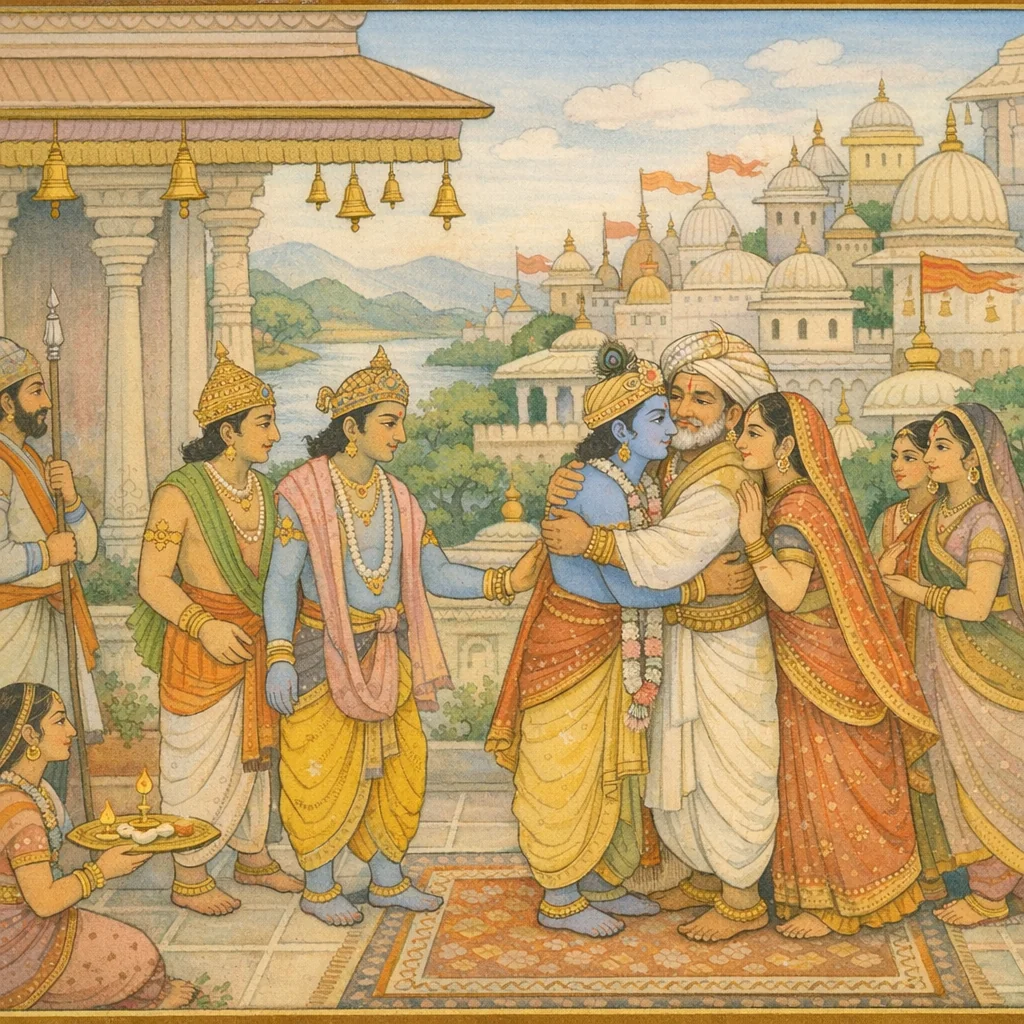
भगवान् श्रीकृष्ण अपने पिता-माता आदिको महाभारतका वृत्तान्त सुना रहे हैं उपायान्तं तु वार्ष्णेयं भोजवृष्ण्यन्धकास्तथा
Vaiśampāyana said: As Kṛṣṇa of the Vṛṣṇi line was approaching, the Bhojas, Vṛṣṇis, and Andhakas also came forward—gathering to hear and receive the account of the Mahābhārata as he related it to his parents and elders, reaffirming kinship, memory, and dharma through shared narration.
Verse 19
स तानभ्यर्च्य मेधावी पृष्टवा च कुशलं तदा । अभ्यवादयत प्रीत:ः पितरं मातरं तदा,मेधावी श्रीकृष्णने उन सबका आदर करके उनका कुशल-समाचार पूछा और प्रसन्नतापूर्वक अपने माता-पिताके चरणोंमें प्रणाम किया
Then the wise one, having respectfully honored them, inquired after their welfare. Pleased at heart, he bowed in reverence to his father and mother—an act that underscores the ethical ideal of gratitude, humility, and filial duty even amid royal and martial affairs.
Verse 20
ताभ्यां स सम्परिष्वक्त: सान्त्वितश्न महाभुज: । उपोपदिष्टै: सर्वेस्तैर्वष्णिभि: परिवारित:
Embraced by those two and comforted, the mighty-armed hero—surrounded by all the Vṛṣṇis and supported by their counsel—was consoled and steadied in spirit amid the duties and emotions that followed the great events.
Verse 21
उन दोनोंने उन महाबाहु श्रीकृष्णको अपनी छातीसे लगा लिया और मीठे वचनोंद्वारा उन्हें सान्त्वना दी। इसके बाद सभी वृष्णिवंशी उनको घेरकर आस-पास बैठ गये,स विश्रान्तो महातेजा: कृतपादावनेजन: । कथयामास तत्सरव॑ पृष्ट: पित्रा महाहवम् महातेजस्वी श्रीकृष्ण जब हाथ-पैर धोकर विश्राम कर चुके, तब पिताके पूछनेपर उन्होंने उस महायुद्धकी सारी घटना कह सुनायी
When the mighty and radiant Śrī Kṛṣṇa had rested after washing his hands and feet, and when his father questioned him, he recounted in full the entire course of that great war. The scene frames the aftermath of violence with ritual cleanliness, composure, and truthful narration—suggesting that even after catastrophic conflict, one must return to restraint, clarity, and responsible speech before elders.
Verse 59
इति श्रीमहाभारते आश्वमेधिके पर्वणि अनुगीतापर्वणि कृष्णस्य द्वारकाप्रवेशे एकोनषष्टितमो5 ध्याय:
Thus, in the Śrī Mahābhārata, within the Aśvamedhika Parva—specifically in the Anugītā section—ends the fifty-ninth chapter, concerning Kṛṣṇa’s entry into Dvārakā. This is a colophon marking the close of a narrative unit, situating the episode within the broader post-war restoration of order and the reaffirmation of dharma after the great conflict.
Verse 96
गायतां पर्वतेन्द्रस्य दिवस्पृणिव नि:स्वन: । जैसे मुनिगणोंसे मेरुकी शोभा होती है, उसी प्रकार द्वारकावासियोंके समागमसे वह पर्वत अत्यन्त दर्शनीय हो गया था। भरतनन्दन! उस पर्वतराजके शिखरपर हर्षोन्मत्त होकर गाते हुए स्त्री-पुरुषोंका सुमधुर शब्द मानो स्वर्गलोकतक व्याप्त हो रहा था
Vaiśaṃpāyana said: From the summit of that lord of mountains, the sweet, jubilant singing of men and women rose in a mighty resonance, as if it were filling the very heavens. Just as Meru is adorned by the gathering of sages, so that mountain became exceedingly beautiful by the assembly of the people of Dvārakā—its festive joy seeming to spread up to the celestial world.
Verse 103
तथा किलकिलाशब्दैर्भूधरो5भून्मनोहर: । कुछ लोग क्रीडा आदिमें आसक्त होकर दूसरे कार्योंकी ओर ध्यान नहीं देते थे, कितने ही हर्षसे मतवाले हो रहे थे, कुछ लोग कूदते-फाँदते, उच्च स्वरसे कोलाहल करते और किलकारियाँ भरते थे। इन सभी शब्दोंसे गूँजता हुआ पर्वत परम मनोहर जान पड़ता था
Vaishampayana said: Thus, with the resounding cries of “kilakilā” and the general uproar of revelry, the mountain appeared exceedingly delightful. Some, absorbed in play, paid no attention to other tasks; many became intoxicated with joy; others leapt about, shouted loudly, and filled the air with jubilant calls—so that the whole mountain, echoing with these sounds, seemed charming and festive.
Verse 143
स नगो वेश्मसंकीर्णो देवलोक इवाबभौ । वीरवर! उस पर्वतपर प्रण्यानुष्ठानके लिये बहुत-से गृह और आश्रम बने थे, जिनमें पुण्यात्मा पुरुष निवास करते थे। रैवतक पर्वतके उस महोत्सवमें वृष्णिवंशी वीरोंका विहार- स्थल बना हुआ था। वह गिरिप्रदेश बहुसंख्यक गृहोंसे व्याप्त होनेके कारण देवलोकके समान शोभा पाता था
Vaiśampāyana said: That mountain, crowded with many dwellings, shone like the world of the gods. Upon it, numerous houses and hermitages had been established for the performance of sacred observances, inhabited by men of merit. In that great festival on Mount Raivataka, it became a place of recreation for the heroic Vṛṣṇi warriors; and because the whole hillside was filled with countless residences, the region appeared as splendid as heaven—suggesting how communal piety and disciplined celebration can transform a worldly landscape into a sanctified space.
Verse 156
देवगन्धर्वा ऊचु: साधक: सर्वरधर्माणामसुराणां विनाशक: । त्वं स्रष्टा सृज्यमाधारं कारणं धर्मवेदवित् ।। त्वया यत् क्रियते देव न जानीमो5त्र मायया । केवलं त्वाभिजानीम: शरणं परमेश्वरम् ।। ब्रह्मादीनां च गोविन्द सांनिध्यं शरणं नमः ।। देवता और गन्धर्व बोले--भगवन्! आप समस्त धर्मोके साधक और असुरोंके विनाशक हैं। आप ही स्रष्टा, आप ही सृज्य जगत् और आप ही उसके आधार हैं। आप ही सबके कारण तथा धर्म और वेदके ज्ञाता हैं। देव! आप अपनी मायासे जो कुछ करते हैं, हमलोग उसे नहीं जान पाते हैं। हम केवल आपको जानते हैं। आप ही सबके शरणदाता और परमेश्वर हैं। गोविन्द! आप ब्रह्मा आदिको भी सामीप्य और शरण प्रदान करनेवाले हैं। आपको नमस्कार है ।। वैशम्पायन उवाच इति स्तुते&मानुषैश्न पूजिते देवकीसुते ।) शक्रसझप्रतीकाशो बभूव स हि शैलराट् । वैशम्पायनजी कहते हैं--इस प्रकार मानवेतर प्राणियों--देवताओं और गन्धर्वोद्वारा जब देवकीनन्दन श्रीकृष्णकी स्तुति और पूजा की जा रही थी, उस समय वह पर्वतराज रैवतक इन्द्रभवनके समान जान पड़ता था
The gods and Gandharvas said: “You are the fulfiller of all dharmas and the destroyer of the Asuras. You are the Creator; you are the created world, and you are its support. You are the cause of all, and the knower of Dharma and the Vedas. O Lord, what you accomplish through your māyā we cannot comprehend here; we know only you—the supreme refuge, the Supreme Lord. O Govinda, you grant even Brahmā and the other gods nearness to you and shelter. Salutations to you.” Vaiśampāyana said: “Thus praised and worshipped by these non-human beings—the gods and Gandharvas—the son of Devakī (Kṛṣṇa) made that king of mountains, Raivataka, appear resplendent like Indra’s celestial abode.”
Verse 163
गोविन्द: सात्यकिश्वैव जगाम भवनं स्वकम् | तदनन्तर सबसे सम्मानित हो भगवान् श्रीकृष्णने अपने सुन्दर भवनमें प्रवेश किया और सात्यकि भी अपने घरमें गये
Vaiśampāyana said: Govinda (Śrī Kṛṣṇa), honored by all, entered his beautiful own residence; and Sātyaki too went to his own home.
Verse 173
कृत्वा नसुकरं कर्म दानवेष्विव वासव: । जैसे इन्द्र दानवोंपर महान् पराक्रम प्रकट करके आये हों, उसी प्रकार दुष्कर कर्म करके दीर्घकालके प्रवाससे प्रसन्नचित्त होकर लौटे हुए भगवान् श्रीकृष्णने अपने भवनमें प्रवेश किया
Vaiśampāyana said: Having accomplished a deed that was not easy—like Vāsava (Indra) displaying great valor against the Dānavas—Bhagavān Śrī Kṛṣṇa, pleased at heart after a long sojourn, returned and entered his own residence.
Verse 186
अभ्यगच्छन् महात्मानं देवा इव शतक्रतुम् । जैसे देवता देवराज इन्द्रकी अगवानी करते हैं, उसी प्रकार भोज, वृष्णि और अन्धकवंशके यादवोंने अपने निकट आते हुए महात्मा श्रीकृष्णका आगे बढ़कर स्वागत किया
Vaiśampāyana said: The Yādavas of the Bhoja, Vṛṣṇi, and Andhaka lineages went forward to meet the great-souled Śrī Kṛṣṇa, welcoming him just as the gods would welcome Śatakratu (Indra).
Frequently Asked Questions
The chapter balances completeness against responsibility: it asserts that total enumeration is impractical and instead models ethically curated narration—highlighting decisive actions while acknowledging the scale of loss and the weight of consequence.
Collective trauma is processed through disciplined recollection: the epic presents memory as a civic instrument that supports restoration, clarifies causal chains of action, and discourages misrepresentation of duty and outcome.
Rather than a formal phalaśruti, the chapter provides meta-commentary through framing: Vaiśaṃpāyana notes the Vṛṣṇis’ mixed emotional response, indicating that hearing and transmitting itihāsa carries psychological and moral impact within the broader pursuit of order and meaning.