Adhyaya 47
Brahmopadeśa on Saṃnyāsa, Tapas, and Jñāna (ब्रह्मोपदेशः—संन्यासतपोज्ञानविमर्शः)
Upa-parva: Mokṣa–Saṃnyāsa Upadeśa (Brahmopadeśa) — Philosophical Discourse Segment
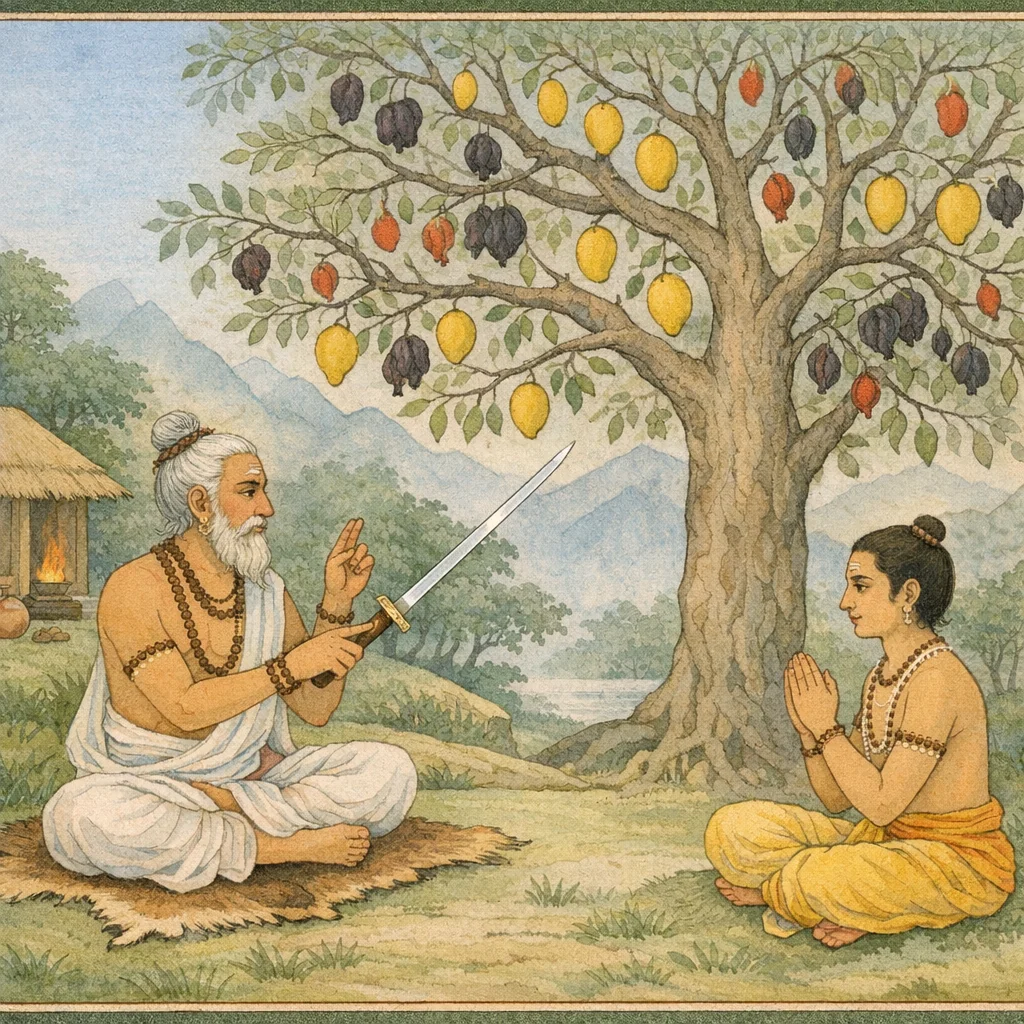
Brahmā articulates a graded doctrine in which elders of settled insight equate true austerity with renunciation, and identify supreme Brahman as known through knowledge. Brahman is described as proximate yet subtle—beyond dualities, attributeless, eternal, inconceivable, and esoteric. The disciplined see that state through jñāna and tapas, purified of darkness and passion. The teaching valorizes tapas as an illuminant and right conduct as dharma-supporting, yet ranks knowledge as supreme and saṃnyāsa as the highest tapas. Liberation is tied to realizing the self as present in all beings, perceiving coexistence and withdrawal, and holding unity and multiplicity without distress. The liberated disposition is non-desiring and non-disparaging, leading to brahma-bhāva even while embodied. A concise soteriological profile follows: knower of guṇas and principles, free of possessiveness and egoism, moving toward the attributeless through tranquility. A cosmological metaphor depicts embodied existence as an ancient ‘brahma-tree’ grown from the unmanifest seed, with intellect, ego, senses, elements, and differentiated branches bearing auspicious/inauspicious fruits; it is to be cut with the supreme sword of knowledge, abandoning death and birth. The chapter closes with a two-birds motif and a kṣetrajña formulation: the inner conscious principle transcends the guṇas and is released from the death-bond.
Chapter Arc: गुरु-शिष्य संवाद में ब्रह्म का वचन उठता है—वह ब्रह्म जो वेदविद्या का आश्रय है, पर अज्ञानियों को ‘अतिदूर’ प्रतीत होता है: निर्द्वन्द्व, निर्गुण, नित्य, अचिन्त्य। → शिष्य के भीतर जिज्ञासा तीव्र होती है: यदि ब्रह्म इतना सूक्ष्म और निर्गुण है, तो साधक उसे कैसे पाए? उत्तर में संन्यास-तप, मन की शुद्धि, रजोगुण-त्याग, निर्ममता और निरहंकार की कठोर साधना का क्रम उभरता है। → देह-रूपी वृक्ष का विराट रूपक प्रकट होता है—अव्यक्त-योनि से उत्पन्न, बुद्धि-स्कन्ध, महाहंकार-विटप, इन्द्रिय-कोटर, महाभूत-शाखाएँ, शुभाशुभ फल; और फिर निर्णायक विधान: ‘ज्ञान-खड्ग’ से इस वृक्ष को काटकर ही परम पद का साक्षात्कार। → ब्रह्म-प्राप्ति का निष्कर्ष स्पष्ट किया जाता है: जो प्रधान-प्रकृति, गुण और तत्त्व को जानकर निर्ममो, निरहंकारी, निर्द्वन्द्व और प्रशान्त होता है, वह निःसंदेह मुक्त होता है—यह मार्ग प्रशम (शान्ति) में ले जाता है।
Shlokas
Verse 1
/ भीकम (2 अमान सप्तचत्वारिशो<् ध्याय: मुक्तिके साधनोंका, देहरूपी वृक्षका तथा ज्ञान-खड्गसे उसे काटनेका वर्णन ब्रह्मोवाच संन्यासं तप इत्याहुर्वृद्धा निश्चितवादिन: । ब्राह्मणा ब्रह्मयोनिस्था ज्ञान ब्रह्म परं विदु:,ब्रह्माजीनी कहा-महर्षियो! निश्चित बात कहनेवाले और वेदोंके कारणरूप परमात्मामें स्थित वृद्ध ब्राह्मण संन्यासको तप कहते हैं और ज्ञानको ही परब्रह्मका स्वरूप मानते हैं
Brahmā said: “O great ṛṣis, the aged sages, firm in their conclusions, declare renunciation (saṃnyāsa) itself to be true austerity. Those Brāhmaṇas who abide in the source of Brahman understand that knowledge (jñāna) is the Supreme Brahman.”
Verse 2
अतिदूरात्मकं ब्रह्म वेदविद्याव्यपाश्रयम् । निर्द्धन््धं निर्गुणं नित्यमचित्त्यगुणमुत्तमम्
Vāyu said: “Brahman is of a nature far beyond ordinary reach, grounded in the support of sacred knowledge and true learning. It is free from all limiting conditions, beyond the guṇas, eternal, and supreme—its qualities are not grasped by the mind.”
Verse 3
निर्णिक्तमनस: पूता व्युत्क्रानन्तरजसो5मला:,जिनके मनकी मैल धुल गयी है, जो परम पवित्र हैं, जिन्होंने रजोगुणको त्याग दिया है, जिनका अन्तःकरण निर्मल है, जो नित्य संन्यासपरायण तथा ब्रह्मके ज्ञाता हैं, वे पुरुष तपस्याके द्वारा कल्याणमय पथका आश्रय लेकर परमेश्वरको प्राप्त होते हैं
Those whose minds have been cleansed, who are pure and stainless, who have cast off the inner dust of passion, whose hearts are clear—ever devoted to renunciation and established in the knowledge of Brahman—such persons, taking refuge in the auspicious path through disciplined austerity, attain the Supreme Lord.
Verse 4
तपसा क्षेममध्वानं गच्छन्ति परमे श्वरम् । संन्यासनिरता नित्यं ये च ब्रह्म॒ुविदो जना:,जिनके मनकी मैल धुल गयी है, जो परम पवित्र हैं, जिन्होंने रजोगुणको त्याग दिया है, जिनका अन्तःकरण निर्मल है, जो नित्य संन्यासपरायण तथा ब्रह्मके ज्ञाता हैं, वे पुरुष तपस्याके द्वारा कल्याणमय पथका आश्रय लेकर परमेश्वरको प्राप्त होते हैं
Vāyudeva said: Those people who are ever devoted to renunciation and who truly know Brahman—advancing by the auspicious path secured through austerity—attain the Supreme Lord.
Verse 5
तप: प्रदीप इत्याहुराचारो धर्मसाधकः । ज्ञानं वै परमं विद्यात् संन्यासं तप उत्तमम्,ज्ञानी पुरुषोंका कहना है कि तपस्या (परमात्म-तत्त्वको प्रकाशित करनेवाला) दीपक है, आचार धर्मका साधक है, ज्ञान परब्रह्मका स्वरूप है और संन्यास ही उत्तम तप है
Vāyu-deva said: “They declare austerity to be a lamp that illumines the highest reality; right conduct is what accomplishes dharma. Know true knowledge to be the supreme principle itself, and understand renunciation to be the finest form of austerity.”
Verse 6
यस्तु वेद निराधारं ज्ञानं तत्त्वविनिश्चयात् | सर्वभूतस्थमात्मानं स सर्वगतिरिष्यते,जो तत्त्वका पूर्ण निश्चय करके ज्ञानस्वरूप, निराधार और सम्पूर्ण प्राणियोंके भीतर रहनेवाले आत्माको जान लेता है, वह सर्वव्यापक हो जाता है
Vāyudeva said: Whoever, with complete certainty about the truth, realizes the self as pure knowledge—supportless and yet abiding within all beings—such a person is regarded as one who has attained all-pervasiveness, moving freely beyond limitation through true insight.
Verse 7
यो विद्वान् सहवासं च विवासं चैव पश्यति । तथैवैकत्वनानात्वे स दुःखात् प्रतिमुच्यते,जो विद्वान संयोगको भी वियोगके रूपमें ही देखता है तथा वैसे ही नानात्वमें एकत्व देखता है, वह दुःखसे सर्वथा मुक्त हो जाता है
Vāyu said: The wise person sees even companionship as bearing the nature of separation, and likewise perceives an underlying oneness amid apparent multiplicity. By such clear-sighted understanding, one is completely released from sorrow.
Verse 8
यो न कामयते किंचिन्न किंचिदवमन्यते । इहलोकस्थ एवैष ब्रह्म भूयाय कल्पते,जो किसी वस्तुकी कामना तथा किसीकी अवहेलना नहीं करता, वह इस लोकमें रहकर भी ब्रह्मस्वरूप होनेमें समर्थ हो जाता है
Vāyu said: One who neither hankers after anything nor despises anything becomes fit for Brahmanhood; even while living in this very world, such a person is capable of abiding as Brahman—free from craving and contempt, steady in equal regard.
Verse 9
प्रधानगुणतत्त्वज्ञ: सर्वभूतप्रधानवित् । निर्ममो निरहंकारो मुच्यते नात्र संशय:,जो सब भूतोंमें प्रधान--प्रकृतिको तथा उसके गुण एवं तत्त्वको भलीभाँति जानकर ममता और अहंकारसे रहित हो जाता है, उसके मुक्त होनेमें संदेह नहीं है
Vāyu-deva said: One who truly knows Pradhāna (Prakṛti), its guṇas and tattvas, and who understands Pradhāna as the basis underlying all beings—becoming free from possessiveness and ego—certainly attains liberation; of this there is no doubt. The ethical thrust is inner renunciation: knowledge must culminate in the dropping of ‘mine’ and ‘I’ for freedom to arise.
Verse 10
निर्द्धदद्ों निर्ममस्कारो नि:ःस्वधाकार एव च । निर्गुणं नित्यमद्धन्द्ध प्रशमेनेव गच्छति,जो द्वल्घोंसे रहित, नमस्कारकी इच्छा न रखने-वाला और स्वधाकार (पितृ-कार्य) न करनेवाला संन्यासी है, वह अतिशय शान्तिके द्वारा ही निर्गुण, द्वन्द्धातीत, नित्यतत्त्वको प्राप्त कर लेता है
Vāyu-deva said: The renunciant who is free from the pairs of opposites, who does not seek or depend upon acts of salutation or social deference, and who has given up the ritual obligations of ancestral offerings—such a one, by the power of deep inner tranquillity alone, attains the ever-existing Reality that is beyond qualities and beyond all dualities. The ethical thrust is that liberation is grounded not in external markers of piety or status, but in equanimity and pacification of the mind.
Verse 11
हित्वा गुणमयं सर्व कर्म जन्तु: शुभाशुभम् | उभे सत्यानृते हित्वा मुच्यते नात्र संशय:,शुभ और अशुभ समस्त त्रिगुणात्मक कर्मोंका तथा सत्य और असत्य--इन दोनोंका भी त्याग करके संन्यासी मुक्त हो जाता है, इसमें संशय नहीं है
Vāyu said: “Abandoning all action that is constituted of the guṇas—whether deemed auspicious or inauspicious—and renouncing both truth and untruth as objects of attachment, the renunciant is liberated; of this there is no doubt.”
Verse 12
अव्यक्तयोनिप्रभवो बुद्धिस्कन्धमयो महान् | महाहंकारविटप इन्द्रियाडुकुरकोटर:
Vāyu-deva said: “This mighty cosmic tree arises from an unmanifest source. Its trunk is formed of intellect (buddhi); its great bough is the sense of ‘I’ (ahaṃkāra), and its hollows and cavities are the sense-organs.”
Verse 13
महाभूतविशालश्न विशेषयति शाखिन: । सदापत्र: सदापुष्प: शुभाशुभफलोदय:
Vāyu-deva said: “That vast expanse of the great elements makes the trees distinct and manifest. Ever-leafed and ever-flowering, it brings forth fruits—both auspicious and inauspicious.”
Verse 14
आजीव्य: सर्वभूतानां ब्रह्म॒वृक्ष: सनातन: । एनं छित्त्वा च भित्त्वा च तत्त्वज्ञानासिना बुध:
Vāyu said: “This ancient ‘Brahman-tree’ is the livelihood and support of all beings. Yet the wise cut it down and split it apart with the sword of true knowledge (tattva-jñāna), discerning reality as it is and severing the root of delusion.”
Verse 15
हित्वा सड़मयान् पाशान् मृत्युजन्मजरोदयान् । निर्ममो निरहड्कारो मुच्यते नात्र संशय:
Vāyu said: “Casting off the sixfold snares—those that culminate in death, rebirth, and the rise of old age—one who is free from possessiveness and free from ego is released; of this there is no doubt.”
Verse 16
यह देह एक वृक्षके समान है। अज्ञान इसका मूल (जड़) है, बुद्धि स्कन्ध (तना) है, अहंकार शाखा है, इन्द्रियाँ अंकुर और खोखले हैं तथा पञचमहाभूत इसको विशाल बनानेवाले हैं और इस वृक्षकी शोभा बढ़ाते हैं। इसमें सदा ही संकल्परूपी पत्ते उगते और कर्मरूपी फूल खिलते रहते हैं। शुभाशुभ कर्मोसे प्राप्त होनेवाले सुख-दुःखादि ही इसमें सदा लगे रहनेवाले फल हैं। इस प्रकार ब्रह्म॒रूपी बीजसे प्रकट होकर प्रवाहरूपसे सदा मौजूद रहनेवाला यह देहरूपी वृक्ष समस्त प्राणियोंके जीवनका आधार है। बुद्धिमान् पुरुष तत्त्वज्ञानरूपी खड़गसे इस वृक्षको छिन्न-भिन्न कर जब जन्म-मृत्यु और जरावस्थाके चक्करमें डालनेवाले आसक्तिरूप बन्धनोंको तोड़ डालता है तथा ममता और अहंकारसे रहित हो जाता है, उस समय उसे अवश्य मुक्ति प्राप्त होती है, इसमें संशय नहीं है ।। द्वाविमौ पक्षिणौ नित्यौ संक्षेपौ चाप्पयचेतनौ । एताभ्यां तु परो योअन्यश्लेतनावान् स उच्यते
Vāyu said: “This body is like a tree. Ignorance is its root; intellect (buddhi) is its trunk; ego (ahaṃkāra) is its branch; the senses are its shoots and hollows; and the five great elements (pañca-mahābhūta) make it vast and fair. In it, leaves in the form of intentions (saṅkalpa) ever arise, and flowers in the form of actions (karma) ever bloom. The fruits that ever cling to it are joy and sorrow and the like, gained from auspicious and inauspicious deeds. Thus this body-tree, sprung from the seed that is Brahman and ever present as an unbroken stream, is the support of the life of all beings. When the wise person, with the sword of true knowledge (tattva-jñāna), hews this tree to pieces, breaks the bonds of attachment that cast one into the whirl of birth, death, and old age, and becomes free of possessiveness and free of ego, then liberation is surely attained—of this there is no doubt. And there are two birds ever-present—subtle and, in themselves, without independent awareness. Yet beyond these two there is another, higher principle: the truly conscious one. He alone is spoken of as the sentient reality.”
Verse 17
इस वृक्षपर रहनेवाले (मन-बुद्धिरूप) दो पक्षी हैं, जो नित्य क्रियाशील होनेपर भी अचेतन हैं। इन दोनोंसे श्रेष्ठ अन्य (आत्मा) है, वह ज्ञानसम्पन्न कहा जाता है ।। अचेतन: सत्त्वसंख्याविमुक्त: सत्त्वात् परं चेतयतेडन्तरात्मा । स क्षेत्रवित् सर्वसंख्यातबुद्धि- गुणातिगो मुच्यते सर्वपापै:,संख्यासे रहित जो सत्त्व अर्थात् मूलप्रकृति है, वह अचेतन है। उससे भिन्न जो जीवात्मा है, उसे अन्तर्यामी परमात्मा ज्ञानसम्पन्न करता है। वही क्षेत्रको जाननेवाला जब सम्पूर्ण तत्त्वोंको जान लेता है, तब गुणातीत होकर सब पापोंसे छूट जाता है
Vāyu said: “Upon this tree dwell two birds—figures for mind and intellect—ever active, yet themselves insentient. Superior to these two is another, the Self, which is called endowed with true knowledge. Prakṛti, the primordial ‘sattva’ beyond enumeration, is insentient; distinct from it, the individual self is awakened and illumined by the inner Ruler, the Supreme Self. When that knower of the field comes to comprehend all the principles of existence, he transcends the guṇas and is released from every sin.”
Verse 23
ज्ञानेन तपसा चैव धीरा: पश्यन्ति तत् परम् । वह वेदविद्याका आधार ब्रह्म (अज्ञानियोंके लिये) अत्यन्त दूर है। वह निर्द्धन्द्, निर्गुण, नित्य, अचिन्त्य गुणोंसे युक्त और सर्वश्रेष्ठ है। धीर पुरुष ज्ञान और तपस्याके द्वारा उस परमात्माका साक्षात्कार करते हैं
“By knowledge and by austerity (tapas), the steadfast behold that Supreme.” Brahman, the foundation of Vedic wisdom, is for the ignorant exceedingly far away. It is free from dualities, beyond the guṇas, eternal, inconceivable, yet possessed of ineffable excellences and supreme above all. The wise realize direct vision of the Paramātman through knowledge and austerity.
Verse 46
इस प्रकार श्रीमह्याभारत आश्वमेधिकपर्वके अन्तर्गत अनुगीतापर्वमें गुरु-शिष्य- संवादविषयक छियालीसवाँ अध्याय पूरा हुआ
Thus, in the Śrī Mahābhārata, within the Āśvamedhika Parva, in the Anugītā section, the forty-sixth chapter—concerned with the dialogue between teacher and disciple—comes to its conclusion.
Verse 47
इति श्रीमहाभारते आश्वमेधिके पर्वणि अनुगीतापर्वणि गुरुशिष्यसंवादे सप्तचत्वारिंशो5ध्याय:
Thus, in the Śrī Mahābhārata, within the Āśvamedhika Parva—specifically in the Anugītā section—this concludes the forty-seventh chapter of the dialogue between teacher and disciple.
Frequently Asked Questions
The implicit dilemma is the hierarchy of spiritual means: whether liberation is best pursued through action-based austerity and conduct, or through renunciant non-attachment grounded in discriminative knowledge; the chapter resolves by subordinating conduct and tapas to jñāna-oriented saṃnyāsa.
Liberation is associated with realizing the self as all-pervading, transcending dualities and guṇas, and dissolving possessiveness and egoism; tranquility and knowledge are presented as the decisive instruments for cutting the structure of conditioned existence.
No explicit phalaśruti formula is stated; instead, the chapter embeds its result-claim doctrinally—freedom from sorrow, release from the death-bond, and cessation of birth and death through knowledge and non-attachment.