Adhyaya 34
Āśramamaṇḍala-darśana and Ṛṣi-samāgama (Observation of the Hermitage Precinct and the Assembly of Sages)
Upa-parva: Āśramamaṇḍala-darśana (Forest Hermitage Observations and Reception of the Pāṇḍavas)
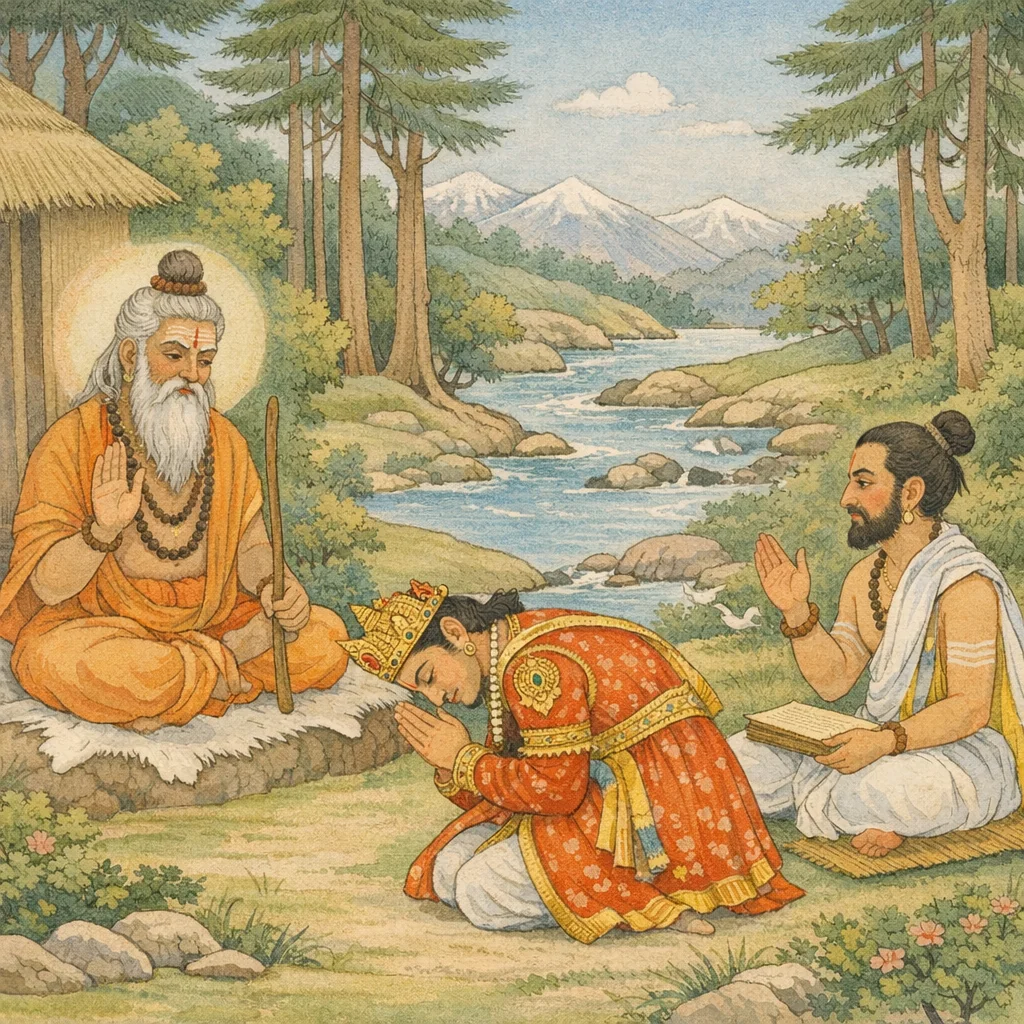
Vaiśaṃpāyana reports that a night passes auspiciously in the hermitage, filled with dharma- and artha-themed conversations. The Pāṇḍavas, setting aside luxurious bedding, sleep upon the earth near their mother, mirroring Dhṛtarāṣṭra’s austere regimen by adopting the same food and mode of living. At dawn, after completing morning rites, the Kuntī-putra with his brothers surveys the āśrama precinct by Dhṛtarāṣṭra’s permission, observing lit vedīs, maintained fires, and sages attending the ritual order. The hermitage is depicted through sensory and ecological markers—flowers, smoke from rites, learned Vedic recitations, abundant fruits and roots, and unafraid herds and birds whose calls ornament the scene. The king (in this context, the visiting royal figure) donates ritual and ascetic implements—golden and udumbara vessels, skins, ladles, kamaṇḍalus, pots, and metal utensils—distributing whatever is desired by the ascetics. Returning, he sees Dhṛtarāṣṭra seated calmly with Gāndhārī, and Kuntī standing nearby in a posture of disciplined reverence. Formal greetings follow: the visitor states his name, receives permission to sit, and the Pāṇḍavas take seats by royal instruction. Then great ṛṣis arrive, including Vyāsa surrounded by disciples; the assembly rises to honor them, and Vyāsa is offered a prepared seat, after which the other eminent brāhmaṇas sit with his consent.
Chapter Arc: जनमेजय के मन में एक तीव्र आकांक्षा उठती है—यदि व्यास प्रसन्न हों तो वे उसे भी उसके पिता परीक्षित का साक्षात् दर्शन करा दें, उसी रूप-वेष-वय में, ताकि वह श्रद्धा सहित सब कुछ देख सके। → वैशम्पायन के कथन में धृतराष्ट्र के तपोमार्ग और व्यास-कृपा का स्मरण आता है—राजधर्म, ब्रह्मविद्या और बुद्धि-निश्चय की उपलब्धि; विदुर का तपोबल से सिद्धि को प्राप्त होना। इन उदाहरणों से जनमेजय की चाह और भी प्रखर होती है, पर साथ ही प्रश्न उठता है कि क्या मृत पिता का दर्शन धर्मसम्मत और संभव है। → जनमेजय व्यास से वर माँगता है—‘ममापि वरदो व्यासो दर्शयेत् पितरं यदि’—और अपने संकल्प को दृढ़ करते हुए कहता है कि ऋषिमुख्य की प्रसाद-कृपा से उसका काम सिद्ध हो। → कथा-प्रवाह में जनमेजय का विनय, श्रद्धा और निश्चय स्थापित होता है; वह धर्मपक्षधर, सद्वृत्त-रुचि वाले महापुरुषों को नमस्कार करने की बात स्वीकारता है और शेष कथा के लिए वैशम्पायन से प्रश्न करता है। अध्याय का समापन ‘पुत्रदर्शनपर्व’ के भीतर इस प्रसंग को अगले चरण की ओर मोड़ देता है। → व्यास की कृपा से जनमेजय को अपने पिता परीक्षित का दर्शन वास्तव में कैसे और किस विधान से होगा—यह अगले अध्याय में खुलता है।
Shlokas
Verse 1
/ ३- क्योंकि वह इन्द्रियोंका विषय नहीं रहा। २- क्योंकि उसके लिये मुझे जाननेका कोई कारण नहीं रहा। पजञ्चत्रिशो<ड्ध्याय: व्यासजीकी कृपासे जनमेजयको अपने पिताका दर्शन प्राप्त होना वैशम्पायन उवाच अदृष्टवा तु नृपः पुत्रान् दर्शन प्रतिलब्धवान् । ऋषे: प्रसादात् पुत्राणां स्वरूपाणां कुरूद्गबह,वैशम्पायनजी कहते हैं--कुरुश्रेष्ठ जनमेजय! राजा धृतराष्ट्रने पहले कभी अपने पुत्रोंको नहीं देखा था, परंतु महर्षि व्यासके प्रसादसे उन्होंने उनके स्वरूपका दर्शन प्राप्त कर लिया
Vaiśampāyana said: O best of the Kurus, the king—who had never before seen his sons—now obtained the sight of them. By the grace of the sage, he beheld the very forms of his sons.
Verse 2
स राजा राजघधर्मश्नि ब्रह्मोपनिषदं तथा । अवाप्तवान्नरश्रेष्ठो बुद्धिनिश्चयमेव च,उन नरश्रेष्ठ राजा धृतराष्ट्रने राजधर्म, ब्रह्मविद्या तथा बुद्धिका यथार्थ निश्चय भी पा लिया था। महाज्ञानी विदुरने तो अपने तपोबलसे सिद्धि प्राप्त की थी; परंतु धृतराष्ट्रने तपस्वी व्यासका आश्रय लेकर सिद्धिलाभ किया था
Vaiśampāyana said: That king—foremost among men—had fully attained knowledge of royal duty, and likewise the wisdom of the Upaniṣads concerning Brahman, along with firm clarity of judgment.
Verse 3
विदुरश्न महाप्राज्ञो ययौ सिद्धि तपोबलात् । धृतराष्ट्र: समासाद्य व्यासं चैव तपस्विनम्,उन नरश्रेष्ठ राजा धृतराष्ट्रने राजधर्म, ब्रह्मविद्या तथा बुद्धिका यथार्थ निश्चय भी पा लिया था। महाज्ञानी विदुरने तो अपने तपोबलसे सिद्धि प्राप्त की थी; परंतु धृतराष्ट्रने तपस्वी व्यासका आश्रय लेकर सिद्धिलाभ किया था
Vaiśampāyana said: The great sage Vidura, endowed with profound wisdom, attained spiritual perfection through the power of his austerities. Dhṛtarāṣṭra, for his part, gained that same attainment by approaching and taking refuge with the ascetic Vyāsa.
Verse 4
जनमेजय उवाच ममापि वरदो व्यासो दर्शयेत् पितरं यदि । तद्रूपवेषवयसं श्रद्दध्यां सर्वमेव ते
Janamejaya said: “If the boon-giving Vyāsa would also show me my father—appearing with the same form, attire, and age—then I would place full trust in everything you have related.”
Verse 5
प्रियं मे स्थात् कृतार्थश्व॒ स्यामहं कृतनिश्चय: । प्रसादादृषिमुख्यस्य मम काम: समृध्यताम्
May what is dear to me come to pass; may I be fulfilled in my purpose, firm in resolve. By the gracious favor of that foremost of sages, may my wish be brought to completion.
Verse 6
जनमेजयने कहा--ब्रह्मन! यदि वरदायक भगवान् व्यास मुझे भी मेरे पिताका उसी रूप, वेश और अवस्थामें दर्शन करा दें तो मैं आपकी बतायी हुई सारी बातोंपर विश्वास कर सकता हूँ। उस अवस्थामें मैं कृतार्थ होकर दृढ़ निश्चयको प्राप्त हो जाऊँगा। इससे मेरा अत्यन्त प्रिय कार्य सिद्ध होगा। आज मुनिश्रेष्ठ व्यासजीके प्रसादसे मेरी इच्छा भी पूर्ण होनी चाहिये ।। सौतिरुवाच इत्युक्तवचने तस्मिन् नृपे व्यास: प्रतापवान् । प्रसादमकरोद् धीमानानयच्च परीक्षितम्,सौति कहते हैं--राजा जनमेजयके इस प्रकार कहनेपर परम प्रतापी बुद्धिमान महर्षि व्यासने उनपर भी कृपा की। उन्होंने राजा परीक्षित्को उस यज्ञभूमिमें बुला दिया
Janamejaya said: “O Brahmin, if the boon-bestowing Lord Vyāsa would grant me a vision of my father in that very form, attire, and condition, then I could place full trust in everything you have related. In that state I would feel fulfilled and attain firm conviction; my most cherished purpose would be accomplished. Today, by the grace of the best of sages, Vyāsa, my desire too ought to be completed.” Sauti said: When the king spoke thus, the mighty and wise Vyāsa showed him favor and summoned Parīkṣit to the sacrificial ground.
Verse 7
ततस्तद्रूपवयसमागतं नृपतिं दिव: । श्रीमन्तं पितरं राजा ददर्श जनमेजय:,स्वर्गसे उसी रूप और अवस्थामें आये हुए अपने तेजस्वी पिता राजा परीक्षित्का भूपाल जनमेजयने दर्शन किया
Then King Janamejaya beheld his own illustrious father—the king—who had come from heaven in the very same form and age.
Verse 8
शमीकं च महात्मानं पुत्र तं चास्य शुद्धिणम् । अमात्या ये बभूवुश्च राज्ञस्तांश्व॒ ददर्श ह,उनके साथ ही महात्मा शमीक और उनके पुत्र शृंगी ऋषि भी थे। राजा परीक्षित॒के जो मन्त्री थे, उनका भी जनमेजयने दर्शन किया
He also beheld the great-souled sage Śamīka and his son Śṛṅgin, renowned for his austere purity. And he likewise saw those ministers who had served King Parīkṣit.
Verse 9
ततः सो5वभृथे राजा मुदितो जनमेजय: । पितरं स्नापयामास स्वयं सस््नौ च पार्थिव:,(परीक्षिदपि तत्रैव बभूव स तिरोहितः ।) तदनन्तर राजा जनमेजयने प्रसन्न होकर यज्ञान्तस्नानके समय पहले अपने पिताको नहलाया; फिर स्वयं स्नान किया। फिर राजा परीक्षित् वहीं अन्तर्धान हो गये
Then, at the avabhṛtha bath, King Janamejaya rejoiced: he first bathed his father, and then bathed himself. After that, King Parīkṣit vanished from that very place, hidden from sight.
Verse 10
स््नात्वा स नृपतिर्विप्रमास्तीकमिदमब्रवीत् । यायावरकुलोत्पन्नं जरत्कारुसुतं तदा
After bathing, the king addressed the Brahmin Āstīka in these words: “Āstīka—born in the lineage of the yāyāvara, the wandering ascetics, and the son of Jaratkāru…”
Verse 11
स्नान करके उन नरेशने यायावरकुलमें उत्पन्न जरत्कारुकुमार आस्तीक मुनिसे इस प्रकार कहा-- ।। आस्तीक विविधाश्षय्यों यज्ञोडयमिति मे मति: । यदद्यायं पिता प्राप्तो मम शोकप्रणाशन:,“आस्तीकजी! मुझे तो ऐसा जान पड़ता है, मेरा यह यज्ञ नाना प्रकारके आश्वर्योंका केन्द्र हो रहा है; क्योंकि आज मेरे शोकोंका नाश करनेवाले ये पिताजी भी यहाँ उपस्थित हो गये थे”
Janamejaya said: “O Āstīka, it seems to me that this sacrifice of mine has become a very seat of manifold wonders, for today my father—who dispels my grief—has also appeared here.”
Verse 12
आस्तीक उवाच ऋषिरद्द्धपायनो यत्र पुराणस्तपसो निधि: । यज्ञे कुरुकुलश्रेष्ठ तस्य लोकावुभौ जितौ
Āstīka said: “There, the ancient sage Dvaipāyana—an inexhaustible treasury of austerity—was present. O best of the Kuru line, by that sacrificial act he won victory in both worlds (here and hereafter).”
Verse 13
आस्तीक बोले--कुरुकुलश्रेष्ठ! राजन्! जिसके यज्ञमें तपस्याकी निधि पुरातन ऋषि महर्षि द्वैपायन व्यास विराजमान हों, उसकी तो दोनों लोकोंमें विजय है ।। श्रुतं विचित्रमाख्यानं त्वया पाण्डवनन्दन । सर्पाश्न भस्मसान्नीता गताश्न पदवीं पितु:,पाण्डवनन्दन! तुमने यह विचित्र उपाख्यान सुना। तुम्हारे शत्रु सर्पगण भस्म होकर तुम्हारे पिताकी ही पदवीको पहुँच गये
Āstīka said: “O best of the Kuru line, O King! In whose sacrifice the ancient seer—Mahārṣi Dvaipāyana Vyāsa, a treasury of austerity—sits in honored presence, that man attains victory in both worlds. O delight of the Pāṇḍavas, you have heard this wondrous account: the serpents who were your foes have been reduced to ashes, and they have gone to the very state attained by your father.”
Verse 14
कथंचित् तक्षको मुक्त: सत्यत्वात् तव पार्थिव । ऋषय: पूजिता: सर्वे गतिर्दृष्टा महात्मन:,पृथ्वीनाथ! तुम्हारी सत्यपरायणताके कारण किसी तरह तक्षकके प्राण बच गये हैं। तुमने समस्त ऋषियोंकी पूजा की और महात्मा व्यासकी कहाँतक पहुँच है, इसे प्रत्यक्ष देख लिया
O king, somehow Takṣaka’s life has been spared because of your steadfast truthfulness. You have honored all the sages, and you have directly beheld the spiritual reach and stature of the great-souled Vyāsa.
Verse 15
प्राप्त: सुविपुलो धर्म: श्रुत्वा पापविनाशनम् | विमुक्तो हृदयग्रन्थिरुदारजनदर्शनात्,इस पापनाशक कथाको सुनकर तुम्हें महान् धर्मकी प्राप्ति हुई है। उदार हृदयवाले संतोके दर्शनसे तुम्हारे हृदयकी गाँठ खुल गयी--तुम्हारा सारा संशय दूर हो गया
Having heard this sin-destroying account, you have attained a vast and noble dharma. Through the sight of magnanimous, high-souled people, the knot in your heart has been loosened—your inner doubt and confusion have been released.
Verse 16
ये च पक्षधरा धर्मे सद्वृत्तरुचयश्च ये । यान् दृष्टवा हीयते पापं तेभ्य: कार्या नमस्क्रिया,जो लोग धर्मके पक्षपाती हैं, जो सदाचारके पालनमें रुचि रखते हैं तथा जिनके दर्शनसे पापका नाश होता है, उन महात्माओंको अब तुम्हें नमस्कार करना चाहिये
And those too who uphold the side of dharma, who delight in the practice of good conduct, and whose very sight diminishes sin—such great-souled persons should now be saluted by you with reverence.
Verse 17
सौतिरुवाच एतच्छुत्वा द्विजश्रेष्ठात्स राजा जनमेजय: । पूजयामास तमृषिमनुमान्य पुनः पुनः,सौति कहते हैं--शौनक! विप्रवर आस्तीकके मुखसे यह बात सुनकर राजा जनमेजयने उन महर्षि व्यासका बार-बार पूजन और सत्कार किया
Sauti said: Hearing this from the foremost of the twice-born (Āstīka), King Janamejaya repeatedly honored that sage, showing him reverence again and again.
Verse 18
पप्रच्छ तमृषिं चापि वैशम्पायनमच्युतम् । कथावशेषं धर्मज्ञो वनवासस्य सत्तम,साधुशिरोमणे! तत्पश्चात् उन धर्मज्ञ नरेशने धर्मसे कभी च्युत न होनेवाले महर्षि वैशम्पायनसे पुनः धृतराष्ट्रके वनवासकी अवशिष्ट कथा पूछी
Then he questioned that sage as well, the unfailing Vaiśampāyana: “O best of men, crest-jewel among the virtuous—tell me what remains of the account of Dhṛtarāṣṭra’s forest-dwelling.”
Verse 34
इस प्रकार श्रीमह्याभारत आश्रमवासिकपरववके अन्तर्गत पुत्रदर्शनपर्वमें जनमेजयके प्रति वैशम्पायनका वाक्यविषयक चौंतीसवाँ अध्याय पूरा हुआ
Thus ends the thirty-fourth chapter of the Āśramavāsika Parvan of the sacred Mahābhārata—within the sub-episode called the Putradarśana Parvan—where Vaiśampāyana addresses King Janamejaya. This closing colophon marks the completion of the chapter and frames the transmission of the epic as a disciplined act of remembrance and moral reflection.
Verse 35
इति श्रीमहाभारते आश्रमवासिके पर्वणि पुत्रदर्शनपर्वणि जनमेजयस्य स्वपितृदर्शने पज्चत्रिंशो 5ध्याय:
Thus ends the thirty-fifth chapter of the Śrī Mahābhārata in the Āśramavāsika Parva, within the section called the ‘Vision of the Sons’, describing King Janamejaya’s vision of his own forefathers. This colophon frames the narrative as a sacred recollection, emphasizing continuity of lineage, reverence for ancestors, and the ethical weight of remembering one’s roots after the devastations of war.
Frequently Asked Questions
The ethical tension is the recalibration of royal identity after conflict: the Pāṇḍavas voluntarily suspend courtly comfort and adopt austerity, signaling that legitimacy now depends on restraint, humility, and alignment with āśrama norms rather than on material sovereignty.
The chapter implies that dharma is sustained through disciplined practice—rites, regulated speech, and reverent conduct—and that social healing is pursued by submitting power to spiritual and ethical frameworks (ṛṣi authority, ritual order, and dāna).
No explicit phalaśruti appears in the provided passage; its meta-function is contextual, using the hermitage’s ordered ecology and protocols to frame the elders’ forest-residence as a normative dharmic resolution within the epic’s closing movement.