Adhyaya 11
Adhyāya 11 — Maṇḍala-vicāra and Ṣāḍguṇya-prayoga (Circle-of-Kings Analysis and the Six Policies)
Upa-parva: Nīti-upadeśa (Rājanīti on Maṇḍala and Ṣāḍguṇya) — Dhṛtarāṣṭra’s Counsel to Yudhiṣṭhira
Dhṛtarāṣṭra instructs Yudhiṣṭhira to ‘know the circles’ (maṇḍalāni) of self and others, including neutral and intermediate parties, and to classify relationships among hostile powers, allies, and allied-allies. He enumerates state factors—ministers, territories, forts (including difficult terrain), and forces—treating them as variables that shift with circumstance. The discourse then anchors decision-making in ṣāḍguṇya (six strategic measures), alongside the assessment of growth/decline and the appropriate ‘station’ (sthāna). Dhṛtarāṣṭra advises engagement when one’s side is strong and the opponent weak, and agreement when one is weak; he emphasizes treasury accumulation as preparation for movement (yāna). He warns against dividing one’s position inappropriately, prescribes offering low-yield land in adverse circumstances, and counsels prudence in accepting wealth or alliances from reversed/hostile configurations. He discusses seeking hostages or royal sons for treaty security while also urging efforts to secure release through skilled counsel. The chapter ends with practical measures for safeguarding one’s realm—pressure, immobilization, treasury disruption—while cautioning against harming a subordinate who has submitted, and it outlines graded withdrawal with ministers, treasury, civic support, and force when resistance is not feasible.
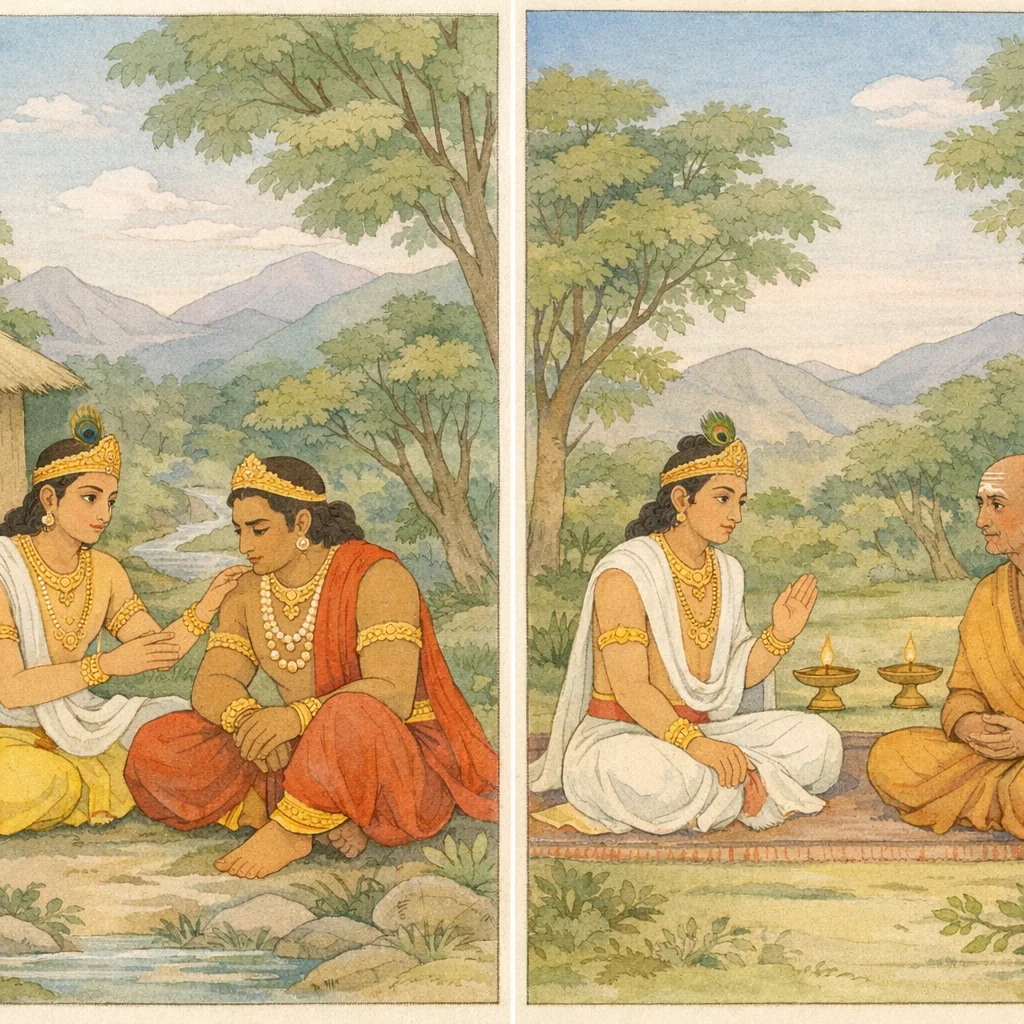
Chapter Arc: वनवास-आश्रम के कठोर कष्टों से तपे भीम के भीतर पुरानी कटुता फिर जाग उठती है—धृतराष्ट्र के प्रति उसका रोष युधिष्ठिर के दान-निर्णय पर छाया डालने लगता है। → अर्जुन भीम को समझाता है कि साधुजन अपराध नहीं, उपकार स्मरण रखते हैं और आर्य-मर्यादा का पालन ही श्रेष्ठता है; युधिष्ठिर इस उपदेश को सुनकर विदुर को दूत बनाकर धृतराष्ट्र तक अपना निश्चय पहुँचाने का संकल्प करता है, पर भीम के क्रोध की आशंका बनी रहती है। → युधिष्ठिर विदुर से कहलवाता है कि धृतराष्ट्र पुत्रों और सुहृदों के श्राद्ध हेतु जितना चाहें उतना व्यय करें—मेरे और अर्जुन के गृह का समस्त धन उन्हीं का है; यहाँ तक कि ‘मेरा शरीर भी आपके अधीन है’—यह पूर्ण समर्पण अध्याय का शिखर बनता है। → युधिष्ठिर स्पष्ट करता है कि धृतराष्ट्र को भीमसेन के कोप का भय नहीं करना चाहिए; भीम स्वयं वन के हिम-वर्षा-धूप और अनेक दुःखों से परिक्लिष्ट होकर अब संयम के योग्य है—इस प्रकार दान, क्षमा और कुल-शांति का मार्ग प्रशस्त होता है। → विदुर यह संदेश लेकर धृतराष्ट्र के पास जाता है—अब प्रश्न यह है कि वृद्ध राजा इस उदार स्वीकृति को कैसे ग्रहण करेगा और भीम का अंतःसंघर्ष वास्तव में शांत होगा या नहीं।
Shlokas
Verse 1
द्वादशोड् ध्याय: अर्जुनका भीमको समझाना और युधिष्ठिरका धृतराष्ट्रको यथेष्ट धन देनेकी स्वीकृति प्रदान करना अजुन उवाच भीम ज्येष्ठो गुरुमें त्वं नातो<न्यद् वक्तुमुत्सहे । धृतराष्ट्रस्तु राजर्षि: सर्वथा मानमहति,अर्जुन बोले--भैया भीमसेन! आप मेरे ज्येष्ठ भ्राता और गुरुजन हैं; अतः आपके सामने मैं इसके सिवा और कुछ नहीं कह सकता कि राजर्षि धृतराष्ट्र सर्वथा समादरके योग्य हैं
Arjuna said: “Brother Bhīmasena, you are my elder and, in a sense, my guide; therefore, before you I do not feel able to say anything beyond this: King Dhṛtarāṣṭra, a royal sage, is in every way worthy of honor.”
Verse 2
न स्मरन्त्यपराद्धानि स्मरन्ति सुकृतान्यपि । असम्धिन्नार्यमर्यादा: साधव: पुरुषोत्तमा:,जिन्होंने आर्योकी मर्यादा भंग नहीं की है, वे साधु-स्वभाववाले श्रेष्ठ पुरुष दूसरोंके अपराधोंको नहीं, उपकारोंको ही याद रखते हैं
Arjuna said: “The truly noble—those who have not violated the code of the Āryas—do not dwell on others’ offenses. They remember even the good done to them. Such saintly men, the best among persons, keep gratitude alive rather than resentment.”
Verse 3
इति तस्य वच: श्रुत्वा फाल्गुनस्य महात्मन: । विदुरं प्राह धर्मात्मा कुन्तीपुत्रो युधिष्ठिर:,महात्मा अर्जुनकी यह बात सुनकर धर्मात्मा कुन्तीपुत्र युधिष्ठिरने विदुरजीसे कहा --
Vaiśampāyana said: Having heard those words of the great-souled Phālguna (Arjuna), the righteous-minded Yudhiṣṭhira—son of Kuntī—then addressed Vidura.
Verse 4
इदं मद्वचनात् क्षत्त: कौरवं ब्रूहि पार्थिवम् । यावदिच्छति पुत्राणां श्राद्ध तावद् ददाम्यहम्,“चाचाजी! आप मेरी ओरसे कौरवनरेश धृतराष्ट्रसे जाकर कह दीजिये कि वे अपने पुत्रोंका श्राद्ध करनेके लिये जितना धन चाहते हों, वह सब मैं दे दूँगा
Arjuna said: “O steward (khṣattṛ), convey my words to the Kuru king. For the śrāddha rites of his sons, whatever amount he wishes, that much I will provide.”
Verse 5
भीष्मादीनां च सर्वेषां सुहृदामुपकारिणाम् | मम कोशादिति विभो मा भूद् भीम: सुदुर्मना:,'प्रभो! भीष्म आदि समस्त उपकारी सुहदोंका श्राद्ध करनेके लिये केवल मेरे भण्डारसे धन मिल जायगा। इसके लिये भीमसेन अपने मनमें दुखी न हों”
Arjuna said: “O lord, let the funds for the śrāddha rites of Bhīṣma and all those beneficent well-wishers come from my own treasury. Let Bhīma not become deeply distressed in his mind over this.”
Verse 6
वैशम्पायन उवाच इत्युक्त्वा धर्मराजस्तमर्जुनं प्रत्यपूजयत् । भीमसेन: कटाक्षेण वीक्षां चक्रे धनंजयम्,वैशम्पायनजी कहते हैं-जनमेजय! ऐसा कहकर धर्मराजने अर्जुनकी बड़ी प्रशंसा की। उस समय भीमसेनने अर्जुनकी ओर कटरक्षपूर्वक देखा
Vaiśampāyana said: Having spoken thus, King Dharmarāja (Yudhiṣṭhira) honored and warmly commended Arjuna. At that moment Bhīmasena cast a sharp, sidelong glance at Dhanañjaya.
Verse 7
ततः स विदुरं धीमान् वाक्यमाह युधिष्ठिर: । भीमसेने न कोप॑ं स नृपति: कर्तुमहति,तब बुद्धिमान् युधिष्ठिरने विदुरसे कहा--“चाचाजी! राजा धृतराष्ट्रको भीमसेनपर क्रोध नहीं करना चाहिये
Then the wise Yudhiṣṭhira spoke to Vidura: “The king should not turn his anger upon Bhīmasena.”
Verse 8
परिक्लिष्टो हि भीमो5पि हिमवृष्टयातपादिभि: । दुःखैर्बहुविधैर्धीमानरण्ये विदितं तव,“आपको तो मालूम ही है कि वनमें हिम, वर्षा और धूप आदि नाना प्रकारके दुःखोंसे बुद्धिमान् भीमसेनको बड़ा कष्ट उठाना पड़ा है
Vaiśampāyana said: “Even Bhīma, though strong and discerning, was sorely afflicted in the forest by snow, rain, scorching sun, and many kinds of hardship—this you already know.”
Verse 9
कि तु मद्गबचनाद् ब्रूहि राजानं भरतर्षभ । यद् यदिच्छसि यावच्च गृहतां मद्गृूहादिति,“आप मेरी ओरसे राजा धृतराष्ट्रसे कहिये कि भरतश्रेष्ठत आप जो-जो वस्तु जितनी मात्रामें लेना चाहते हों, उसे मेरे घरसे ग्रहण कीजिये”
Vaiśampāyana said: “Yet, on my word, tell the king, O bull among the Bharatas: ‘Whatever you wish, and in whatever measure, let it be taken from my house.’”
Verse 10
यन्मात्सर्यमयं भीम: करोति भृशदुःखित: । न तन्मनसि कर्तव्यमिति वाच्य: स पार्थिव:,'भीमसेन अत्यन्त दुखी होनेके कारण जो कभी ईर्ष्या प्रकट करते हैं, उसे वे मनमें न लावें। यह बात आप महाराजसे अवश्य कह दीजियेगा”
Vaiśampāyana said: “Whatever jealousy Bhīma, overwhelmed by intense sorrow, may display—let the king not take it into his heart. This is what he should be told.”
Verse 11
यन्ममास्ति धनं किंचिदर्जुनस्य च वेश्मनि । तस्य स्वामी महाराज इति वाच्य: स पार्थिव:,“मेरे और अर्जुनके घरमें जो कुछ भी धन है, उस सबके स्वामी महाराज धूृतराष्ट्र हैं; यह बात उन्हें बता दीजिये
Vaiśampāyana said: “Whatever wealth of any kind exists in my house and in Arjuna’s dwelling—tell the king that he, the sovereign, is the rightful master of it all.”
Verse 12
ददातु राजा वित्रेभ्यो यथेष्ट क्रियतां व्यय: । पुत्राणां सुहृदां चैव गच्छत्वानृण्यमद्य सः,वे ब्राह्मणोंको यथेष्ट धन दें। जितना खर्च करना चाहें, करें। आज वे अपने पुत्रों और सुहृदोंके ऋणसे मुक्त हो जायेँ इति श्रीमहाभारते आश्रमवासिके पर्वणि आश्रमवासपर्वणि युधिष्ठिरानुमो दने द्वादशोड्ध्याय:
Vaiśampāyana said: “Let the king give the Brahmins whatever they desire; let expenditure be made as he wishes. Let him today become free of all obligations—those owed to his sons and to his well-wishers.”
Verse 13
इदं चापि शरीरं मे तवायत्तं जनाधिप । धनानि चेति विद्धि त्वं न मे तत्रास्ति संशय:,“उनसे कहिये, जनेश्वर! मेरा यह शरीर और सारा धन आपके ही अधीन है। इस बातको आप अच्छी तरह जान लें। इस विषयमें मेरे मनमें संशय नहीं है”
Vaiśampāyana said: “O lord of men, know this well: my very body too is under your authority, and so are my possessions. In this matter there is no doubt in my mind.”
Frequently Asked Questions
The tension between strategic necessity and ethical restraint: the chapter permits calibrated non-kinetic measures to protect the realm while explicitly discouraging harm to a subordinate who has submitted, aligning expediency with governance norms.
Policy must be conditional and evidence-based: evaluate the maṇḍala, classify relationships, measure strength and resources, and then select the appropriate ṣāḍguṇya response (e.g., engagement, agreement, movement) rather than acting from anger or pride.
No explicit phalaśruti appears in the provided passage; the chapter functions as technical instruction, embedding its ‘value’ in practical governance outcomes and in the broader epic aim of aligning rule with dharma.