Adhyaya 7
Karma-Phala Rahasya and the Ethics of Dāna (कर्मफल-रहस्यं दानधर्मश्च)
Upa-parva: Dāna-Dharma and Karma-Phala Anuśāsana (Instruction on Gifts and the Results of Action)
Yudhiṣṭhira requests Bhīṣma to explain the outcomes of auspicious actions. Bhīṣma responds with a ṛṣi-derived principle: karma does not perish; the agent experiences results through the same instrumentality by which actions are done, and deeds performed in particular life-states recur as corresponding experiences across births. The five senses are described as continual witnesses, with the self as a sixth, reinforcing moral accountability. The chapter then catalogs exemplary gifts and disciplines: ‘five-fee sacrifice’ analogies tied to offering one’s faculties (vision, mind, truthful speech), hospitality to travelers and strangers, and provisions for ascetics (shelter, bedding, clothing, conveyance). It further associates specific restraints (withdrawal from tastes, abstention from meat), austerities (fasting, vows, silence, continence), and truthfulness with defined benefits (well-being, social esteem, prosperity, desired posthumous destinations). A closing ethical hierarchy elevates honoring father, mother, and teacher as foundational; neglecting these renders other rites fruitless. Vaiśaṃpāyana notes the audience’s approval, and the unit ends with a caution that misapplied sacred speech renders ritual effort ineffective, inviting further questions on auspicious/inauspicious fruition.
Chapter Arc: युधिष्ठिर कर्मों के फल और उनकी अटलता का रहस्य पूछते हैं—क्या किया हुआ कर्म नष्ट होता है, और वह किस प्रकार जीव का पीछा करता है? → भीष्म ऋषियों के ‘रहस्य’ का उद्घाटन करते हैं: मनुष्य जिस-जिस शरीर/अवस्था (स्थूल-सूक्ष्म) से कर्म करता है, उसी-उसी स्तर पर उसका फल भोगता है; इन्द्रियाँ और आत्मा सदा साक्षी हैं, इसलिए कर्म का लेखा मिटता नहीं। दान-धर्म के सूक्ष्म भेद भी सामने आते हैं—थके, अपरिचित पथिक को अन्न देना महापुण्य है; पर मंत्र, सोम, अग्नि आदि का ‘वृथोपयोग’ (अर्थहीन/दिखावटी प्रयोग) निष्फल हो जाता है। → भीष्म का निर्णायक रूपक: जैसे हजारों गायों में बछड़ा अपनी माता को ढूँढ़ लेता है, वैसे ही पूर्वकृत कर्म अपने कर्ता को ढूँढ़कर ही फल देता है—कर्म का अनुगमन अचूक है। → भीष्म निष्कर्ष देते हैं कि शुभ-अशुभ फल-प्राप्ति कर्म-निष्ठ है; दान और आचरण का मूल्य ‘भाव’ और ‘उचित पात्र/समय’ से बढ़ता है, जबकि दिखावटी यज्ञ-क्रिया व्यर्थ हो जाती है। आगे सुनने की जिज्ञासा के लिए वे द्वार खोलते हैं—‘अब और क्या सुनना चाहते हो?’ → भीष्म का प्रश्न—‘शुभाशुभ फल-प्राप्ति के बाद अब क्या सुनना चाहते हो?’—अगले उपदेश (दान, आचार, गुरु/पितृ-तृप्ति आदि) की ओर ले जाता है।
Shlokas
Verse 1
(दाक्षिणात्य अधिक पाठके २ श्लोक मिलाकर कुल ५१ श्लोक हैं) ऑपन--#रात< बक। ] अत्शऑशाए:<ह सप्तमो<्ध्याय: कर्मोके फलका वर्णन युधिछिर उवाच कर्मणां च समस्तानां शुभानां भरतर्षभ । फलानि महतां श्रेष्ठ प्रब्रूहि परिपृच्छत:,युधिष्ठिरने पूछा-महापुरुषोंमें प्रधान भरतश्रेष्ठ! अब मैं समस्त शुभ कर्मोके फल क्या हैं? यह पूछ रहा हूँ, अत: यही बताइये
Yudhiṣṭhira said: “O bull among the Bharatas, O best of the great ones—tell me, for I ask you directly, what fruits arise from all auspicious actions.”
Verse 2
भीष्म उवाच हन्त ते कथयिष्यामि यन्मां पृच्छसि भारत । रहस्यं यदृषीणां तु तच्छृणुष्व युधिष्ठिर । या गति: प्राप्यते येन प्रेत्यभावे चिरेप्सिता,भीष्मजीने कहा--भरतनन्दन युधिष्ठिर! तुम मुझसे जो कुछ पूछ रहे हो, यह ऋषियोंके लिये भी रहस्यका विषय है; किंतु मैं तुम्हें बतला रहा हूँ। सुनो, मरनेके बाद जिस मनुष्यको जैसी चिर अभिलषित गति मिलती है, उसका भी वर्णन करता हूँ
Bhishma said: “Very well, O Bharata, I shall tell you what you ask of me. This is indeed a matter held as a secret even among the seers; yet listen, O Yudhishthira. I will describe that long-desired destiny which a person attains after death, and the means by which it is reached.”
Verse 3
येन येन शरीरेण यद् यत् कर्म करोति यः । तेन तेन शरीरेण तत् तत् फलमुपाश्चुते,मनुष्य जिस-जिस (स्थूल या सूक्ष्म) शरीरसे जो-जो कर्म करता है उसी-उसी शरीरसे उस-उस कर्मका फल भोगता है
Bhīṣma said: Whatever action a person performs through whatever body—gross or subtle—through that very body he experiences the corresponding result. Thus, the fruits of deeds are not random: they return to the doer in the same embodied mode by which the deed was done, affirming moral causality and personal responsibility.
Verse 4
यस्यां यस्यामवस्थायां यत् करोति शुभाशुभम् | तस्यां तस्यामवस्थायां भुद्धक्ते जन्मनि जन्मनि,जिस-जिस अवस्थामें वह जो-जो शुभ या अशुभ कर्म करता है, प्रत्येक जन्मकी उसी- उसी अवस्थामें वह उसका फल भोगता है
Bhishma said: Whatever auspicious or inauspicious deed a person performs in whatever condition or stage of life, in birth after birth that person experiences its result in that very kind of condition—thus karma bears fruit in a manner corresponding to the state in which it was done.
Verse 5
न नश्यति कृतं कर्म सदा पज्चेन्द्रियैरिह । ते हास्य साक्षिणो नित्यं पष्ठ आत्मा तथैव च,पाँचों इन्द्रियोंद्रारा किया हुआ कर्म कभी नष्ट नहीं होता है। वे पाँचों इन्द्रियाँ और छठा मन--ये उस कर्मके साक्षी होते हैं
Bhīṣma said: A deed performed here through the five senses never truly perishes. Those five senses stand as its constant witnesses, and so too does the sixth—the inner self (mind, inward consciousness)—ever observing it. Thus, even when no external judge is present, actions remain morally accountable, carried and attested within the agent.
Verse 6
इस प्रकार श्रीमह्याभारत अनुशासनपर्वके अन्तर्गत दानधर्मपर्वमें दैव और पुरुषार्थका निर्देशविषयक छठा अध्याय पूरा हुआ,चक्षुर्दद्यान्मनो दद्याद् वाचं दद्याच्च सूनृताम् । अनुव्रजेदुपासीत स यज्ञ: पञ्चदक्षिण: अतः मनुष्यको उचित है कि यदि कोई अतिथि घरपर आ जाय तो उसको प्रसन्न दृष्टिसे देखे। उसकी सेवामें मन लगावे। मीठी बोली बोलकर उसे संतुष्ट करे। जब वह जाने लगे तो उसके पीछे-पीछे कुछ दूरतक जाय और जबतक वह रहे उसके स्वागत-सत्कारमें लगा रहे >-ये पाँच काम करना गृहस्थके लिये पाँच प्रकारकी दक्षिणाओंसे युक्त यज्ञ कहलाता है
Bhishma said: “One should give the guest a gracious look, give one’s mind in attentive service, and give gentle, truthful speech. One should also accompany the guest a little way when he departs and remain devoted to honoring him while he stays. These five acts, performed by a householder, are a sacrifice endowed with five ‘fees’ (dakṣiṇās)—a daily yajña of hospitality and ethical conduct.”
Verse 7
यो दद्यादपरिक्लिष्टमन्नमध्वनि वर्तते | श्रान्तायादृष्टपूर्वाय तस्य पुण्यफलं महत्,जो थके-माँदे अपरिचित पथिकको प्रसन्नतापूर्वक अन्न दान करता है, उसे महान् पुण्यफलकी प्राप्ति होती है राजन! शुभ और अशुभ फलकी प्राप्तिके विषयमें महर्षि व्यासने ये सब बातें बतायी थीं, जिन्हें मैंने इस समय तुमसे कहा है। अब और क्या सुनना चाहते हो? ।। इति श्रीमहाभारते अनुशासनपर्वणि दानधर्मपर्वणि कर्मफलिकोपाख्याने सप्तमो<थध्याय:
Bhishma said: Whoever, while on a journey, gives untroubled and wholesome food to a weary traveler whom he has not met before—his merit is great. The teaching praises spontaneous hospitality to strangers in distress: a simple act of nourishment, offered without hesitation or hardship to the giver, yields abundant spiritual reward.
Verse 8
स्थण्डिलेषु शयानानां गृहाणि शयनानि च । चीरवल्कलसंवीते वासांस्याभरणानि च,जो वानप्रस्थी वेदीपर शयन करते हैं उन्हें जन्मान्तरमें उत्तम गृह और शग्याकी प्राप्ति होती है। जो चीर और वल्कल वस्त्र पहनते हैं उन्हें दूसरे जन्ममें उत्तम वस्त्र और उत्तम आभूषणोंकी प्राप्ति होती है
Bhishma said: Those who, as forest-dwelling ascetics, sleep upon bare ground are rewarded in a later birth with excellent houses and comfortable beds. And those who clothe themselves in coarse bark and rags attain, in another life, fine garments and worthy ornaments. Thus, voluntary austerity and simplicity, embraced in accordance with dharma, are taught to bear auspicious fruit.
Verse 9
वाहनानि च यानानि योगात्मनि तपोधने । अग्नीनुपशयानस्य राज्ञ: पौरुषमेव च,जिसका चित्त योगयुक्त होता है उस तपोधन पुरुषको दूसरे जन्ममें अच्छे-अच्छे वाहन और यान उपलब्ध होते हैं तथा अग्निकी उपासना करनेवाले राजाको जन्मान्तरमें पौरुषकी प्राप्ति होती है
Bhishma said: For the ascetic rich in austerity whose mind is established in yoga, fine conveyances—vehicles and chariots—become available in a later birth. And for a king devoted to the worship and tending of the sacred fires, manly vigor and heroic strength are attained in another life. The teaching links inner discipline and ritual responsibility with corresponding fruits, emphasizing that righteous practice shapes one’s future condition.
Verse 10
रसानां प्रतिसंहारे सौभाग्यमनुगच्छति । आमिषप्रतिसंहारे पशून् पुत्रांश्व विन्दति,रसोंका परित्याग करनेसे सौभाग्यकी और मांसका त्याग करनेसे पशुओं तथा पुत्रोंकी प्राप्ति होती है
Bhishma said: “By restraining and giving up indulgence in tastes, one is followed by good fortune. By restraining and giving up meat, one gains livestock and also sons.”
Verse 11
अवाक्शिरास्तु यो लम्बेदुदवासं च यो वसेत् । सततं चैकशायी य: स लभेतेप्सितां गतिम्,जो तपस्वी नीचे सिर करके लटकता है अथवा जलमें निवास करता है; तथा जो सदा ही अकेला सोता (तब्रह्मचर्यका पालन करता) है, वह मनोवांछित गतिको प्राप्त होता है
Bhishma said: “One who hangs with his head downward, or who dwells in water, and who always sleeps alone—living in disciplined continence—such an ascetic attains the desired goal.”
Verse 12
पाद्यमासनमेवाथ दीपमन्नं प्रतिश्रयम् । दद्यादतिथिपूजार्थ स यज्ञ: पजचदक्षिण:,जो अतिथिको पैर धोनेके लिये जल, बैठनेके लिये आसन, प्रकाशके लिये दीपक, खानेके लिये अन्न और ठहरनेके लिये घर देता है, इस प्रकार अतिथिका सत्कार करनेके लिये इन पाँच वस्तुओंका दान 'पंचदक्षिण यज्ञ” कहलाता है
Bhishma said: “For the sake of honoring a guest, one should offer water for washing the feet, a seat, a lamp for light, food, and shelter. This fivefold offering made in hospitality is called the ‘sacrifice with five gifts’ (pañca-dakṣiṇā-yajña).”
Verse 13
वीरासनं वीरशय्यां वीरस्थानमुपागत: । अक्षयास्तस्य वै लोका: सर्वकामगमास्तथा,जो वीरासन रणभूमिमें जाकर वीरशय्या (मृत्यु)-को प्राप्त हो वीरस्थान (स्वर्गलोक) में जाता है, उसे अक्षय लोकोंकी प्राप्ति होती है। वे लोक सम्पूर्ण कामनाओंकी प्राप्ति करानेवाले होते हैं
Whoever goes to the battlefield and takes the hero’s seat (vīrāsana), attaining the hero’s bed—death in valor—and reaches the hero’s realm (vīra-sthāna) in heaven, gains imperishable worlds. Those worlds grant the fulfillment of every desire.
Verse 14
धनं लभेत दानेन मौनेनाज्ञां विशाम्पते । उपभोगांश्व तपसा ब्रद्मचर्येण जीवितम्,प्रजानाथ! मनुष्य दानसे धन पाता है, मौन-व्रतके पालनसे दूसरोंद्वारा आज्ञापालन करानेकी शक्ति प्राप्त करता है, तपस्यासे भोग और ब्रह्मचर्य-पालनसे जीवन (आयु)-की उपलब्धि होती है
Bhishma said: “O lord of the people, wealth is gained through giving; through the vow of silence (mauna) one gains the power to have one’s commands obeyed; through austerity (tapas) one attains enjoyments; and through the practice of brahmacarya one secures life—longevity and vital strength. Thus, each discipline yields its proper fruit when pursued in accordance with dharma.”
Verse 15
रूपमैश्वर्यमारोग्यमहिंसाफलम श्षुते । फलमूलाशिनो राज्यं स्वर्ग: पर्णाशिनां भवेत्,अहिंसा धर्मके आचरणसे रूप, ऐश्वर्य और आरोग्यरूपी फलकी प्राप्ति होती है। फल- मूल खानेवालेको राज्य और पत्ते चबाकर रहनेवालेको स्वर्गकी प्राप्ति होती है
Bhīṣma said: From non-violence (ahiṁsā) one gains the fruits of beauty, prosperity, and health. One who lives on fruits and roots attains sovereignty, and one who subsists on leaves attains heaven. Thus disciplined restraint, and especially ahiṁsā, is praised as a powerful ethical practice that yields both worldly well-being and higher spiritual reward.
Verse 16
प्रायोपवेशिनो राजन् सर्वत्र सुखमुच्यते । गवाढ्य: शाकदीक्षायां स्वर्गगामी तृणाशन:,राजन! जो आमरण अनशनका व्रत लेकर बैठता है उसके लिये सर्वत्र सुख बताया गया है। शाकाहारकी दीक्षा लेनेपर गोधनकी प्राप्ति होती है और तृण खाकर रहनेवाला पुरुष स्वर्गलोकमें जाता है
Bhīṣma said: O king, of one who sits undertaking prāyopaveśa—the vow of fasting unto death—it is declared that happiness is found everywhere. By taking the initiation into a vegetable diet (śākāhāra) one gains wealth in cattle, and the man who lives on grass goes to heaven.
Verse 17
स्त्रियस्त्रिषवर्णं स्नात्वा वायुं पीत्वा क्रतुं लभेत् । स्वर्ग सत्येन लभते दीक्षया कुलमुत्तमम्,स्त्री-सम्बन्धी भोगोंका परित्याग करके त्रिकाल स्नान करते हुए वायु पीकर रहनेसे यज्ञका फल प्राप्त होता है। सत्यसे मनुष्य स्वर्गको और दीक्षासे उत्तम कुलको पाता है
Bhīṣma said: By renouncing pleasures connected with women, bathing at the three prescribed times, and living with such extreme restraint as though “drinking the wind,” one attains the merit of a sacrifice. By truthfulness a person gains heaven, and by consecrated discipline (dīkṣā) one attains an excellent lineage—noble standing and purity of family tradition.
Verse 18
सलिलाशी भवेद् यस्तु सदाग्नि: संस्कृतो द्विज: । मनुं साधयतो राज्यं नाकपृष्ठमनाशके,जो ब्राह्मण सदा जल पीकर रहता है, अग्निहोत्र करता है और मन्त्र-साधनामें संलग्न रहता है, उसे राज्य मिलता है और निराहारखरत करनेसे मनुष्य स्वर्गलोकमें जाता है
Bhīṣma said: That well-trained twice-born who lives on water, who maintains the sacred fires continually and performs agnihotra, and who is devoted to disciplined mantra-practice, attains sovereignty while upholding Manu’s ordinance; and by undertaking the vow of fasting (abstaining from food), a person reaches the heavenly world.
Verse 19
उपवासं च दीक्षायामभिषेकं च पार्थिव । कृत्वा द्वादश वर्षाणि वीरस्थानाद् विशिष्यते,पृथ्वीनाथ! जो पुरुष बारह वर्षोतकके लिये व्रतकी दीक्षा लेकर अन्नका त्याग करता और तीर्थोमें स्नान करता रहता है, उसे रणभूमिमें प्राण त्यागनेवाले वीरसे भी बढ़कर उत्तम लोककी प्राप्ति होती है
Bhīṣma said: O king, a man who undertakes a vowed initiation (dīkṣā), lives on fasting, and performs sacred bathings at the tīrthas for twelve years attains a higher state than even the warrior who lays down his life on the battlefield.
Verse 20
अधीत्य सर्ववेदान् वै सद्यो दुःखादू विमुच्यते । मानसं हि चरन् धर्म स्वर्गलोकमुपाश्ुते,जो सम्पूर्ण वेदोंका अध्ययन कर लेता है, वह तत्काल दु:ःखसे मुक्त हो जाता है तथा जो मनसे धर्मका आचरण करता है, उसे स्वर्गलोककी प्राप्ति होती है
Bhishma said: “One who has mastered the study of all the Vedas is freed at once from sorrow. And one who practices dharma inwardly—by the discipline of the mind—attains the world of heaven.”
Verse 21
या दुस्त्यजा दुर्मतिभिर्या न जीर्य॑ति जीर्यत: । योडसौ प्राणान्तिको रोगस्तां तृष्णां त्यजत: सुखम्,खोटी बुद्धिवाले पुरुषोंके लिये जिसका त्याग करना कठिन है, जो मनुष्यके जीर्ण हो जानेपर भी स्वयं जीर्ण नहीं होती तथा जो प्राणनाशक रोगके समान सदा कष्ट देती रहती है, उस तृष्णाका त्याग कर देनेवाले पुरुषको ही सुख मिलता है
Bhishma said: “That craving which is hard to abandon for the misguided, which does not grow old even when a person grows old, and which torments constantly like a life-destroying disease—only the one who casts off that thirst attains true happiness.”
Verse 22
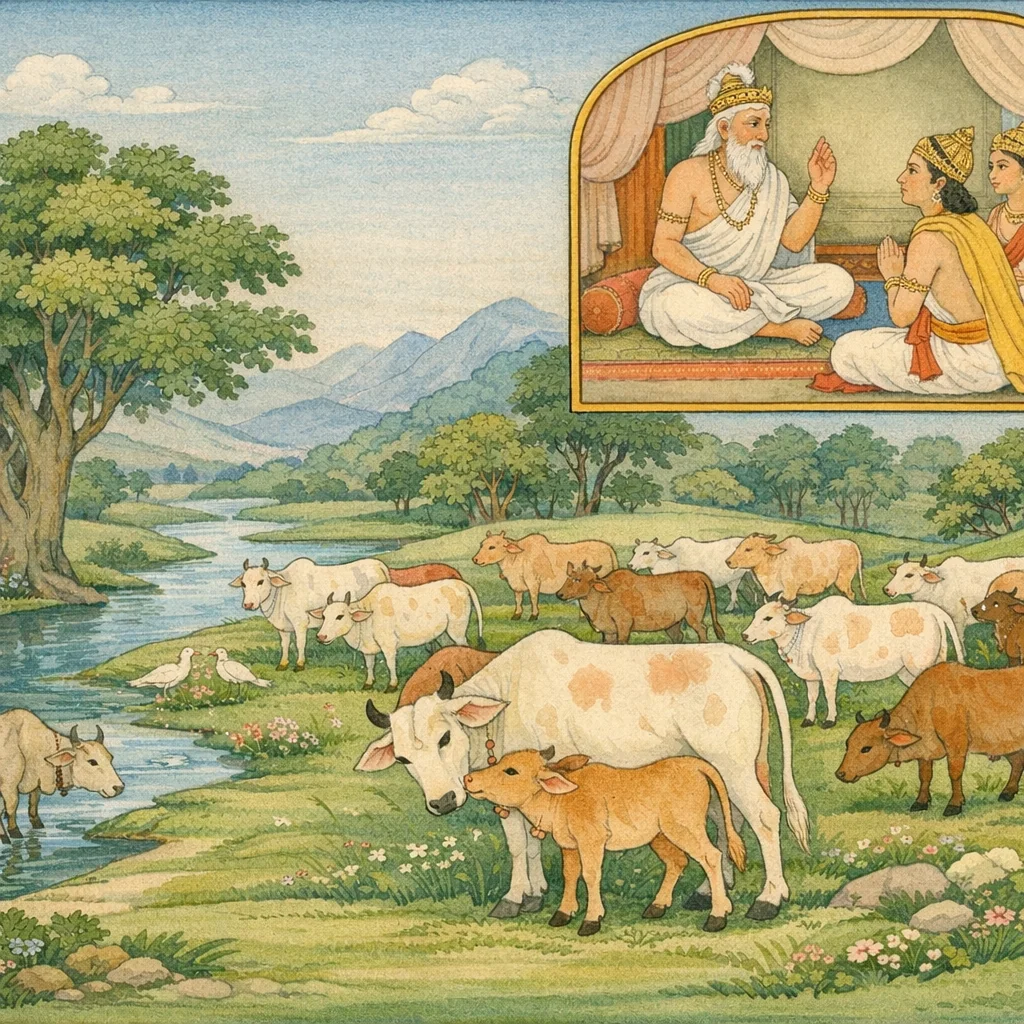
यथा धेनुसहस्रेषु वत्सो विन्दति मातरम् | एवं पूर्वकृतं कर्म कर्तारमनुगच्छति,जैसे बछड़ा हजारों गौओंके बीचमें अपनी माताको ढूँढ़ लेता है, उसी प्रकार पहलेका किया हुआ कर्म भी कर्ताको पहचानकर उसका अनुसरण करता है
Bhishma said: “Just as a calf, even among a thousand cows, finds its own mother, so too a deed done in the past recognizes its doer and follows after him.”
Verse 23
अचोटद्यमानानि यथा पुष्पाणि च फलानि च । स्वकाल नातिवर्तन्ते तथा कर्म पुरा कृतम्,जैसे फूल और फल किसीकी प्रेरणा न होनेपर भी अपने समयका उल्लंघन नहीं करते --ठीक समयपर फूलने-फलने लग जाते हैं, वैसे ही पहलेका किया हुआ कर्म भी समयपर फल देता ही है
Bhishma said: “Just as flowers and fruits, even without being prodded, do not overstep their appointed season but blossom and ripen at the proper time, so too a deed performed in the past inevitably yields its result when its time arrives.”
Verse 24
जीर्यन्ति जीर्यतः केशा दन्ता जीर्यन्ति जीर्यत: । चक्षु:श्रोत्रे च जीर्येते तृष्णैका न तु जीर्यते,मनुष्यके जीर्ण (जराग्रस्त) होनेपर उसके केश जीर्ण होकर झड़ जाते हैं, वृद्ध पुरुषके दाँत भी टूट जाते हैं, नेत्र और कान भी जीर्ण होकर अन्धे-बहरे हो जाते हैं। केवल तृष्णा ही जीर्ण नहीं होती है (वह सदा नयी-नवेली बनी रहती है)
Bhishma said: “As a person grows old, the hair withers and falls; the teeth too decay with age. The eyes and ears also grow feeble. Yet craving alone does not grow old—it remains ever fresh.”
Verse 25
येन प्रीणाति पितरं तेन प्रीत: प्रजापति: । प्रीणाति मातरं येन पृथिवी तेन पूजिता
Bhīṣma said: By whatever conduct one gladdens one’s father, by that Prajāpati, the Lord of creatures, is pleased. And by whatever conduct one gladdens one’s mother, by that the Earth herself is honored.
Verse 26
सर्वे तस्यादृता धर्मा यस्यैते त्रय आदृता: । अनादूृतास्तु यस्यैते सर्वास्तस्याफला: क्रिया:,जिसने इन तीनोंका आदर किया, उसके द्वारा सभी धर्मोका आदर हो गया और जिसने इन तीनोंका अनादर कर दिया, उसकी सम्पूर्ण यज्ञादिक क्रियाएँ निष्फल हो जाती हैं
Bhīṣma said: For the one who honors these three, it is as though all forms of dharma have been honored. But for the one who neglects these three, all his actions—such as sacrifices and other rites—become fruitless.
Verse 27
वैशम्पायन उवाच भीष्मस्यैतद् वचःश्रुत्वा विस्मिता: कुरुपुड्रवा: । आसन प्रहृष्टमनस: प्रीतिमन्तो5भवंस्तदा,वैशम्पायनजी कहते हैं--जनमेजय! भीष्मजीकी यह बात सुनकर समस्त श्रेष्ठ कुरुवंशी आश्वर्यचकित हो उठे। सबके मनमें हर्षजनित उल्लास भर गया। उस समय सभी बड़े प्रसन्न हुए
Vaiśampāyana said: Hearing these words of Bhīṣma, the foremost of the Kuru lineage were struck with wonder. Their hearts filled with delighted exhilaration, and at that moment they all became deeply pleased.
Verse 28
भीष्म उवाच यन्मन्त्रे भवति वृथोपयुज्यमाने यत् सोमे भवति वृथाभिषूयमाणे । यच्चाग्नौ भवति वृथाभिटृ्यमाने तत् सर्व भवति वृथाभिधीयमाने,भीष्मजी कहते हैं--युधिष्ठिर! वेदमन्त्रोंका व्यर्थ (अशुद्ध) उपयोग (उच्चारण) करनेपर जो पाप लगता है, सोमयागको दक्षिणा आदि न देनेके कारण व्यर्थ कर देनेपर जो दोष लगता है तथा विधि और मन्त्रके बिना अग्निमें निरर्थक आहुति देनेपर जो पाप होता है; वह सारा पाप मिथ्या भाषण करनेसे प्राप्त होता है
Bhīṣma said: “Yudhishthira, whatever sin arises from misusing Vedic mantras, whatever fault arises when the Soma-sacrifice is rendered fruitless through improper performance and neglect of due gifts, and whatever sin arises from offering oblations into the fire without proper rite and mantra—all that same evil accrues from speaking falsely.”
Verse 29
इत्येतदृषिणा प्रोक्तमुक्तवानस्मि यद् विभो । शुभाशुभफलप्राप्ती किमत: श्रोतुमिच्छसि
Bhīṣma said: “Thus have I told you what was declared by the sage, O mighty one. Concerning the attainment of auspicious and inauspicious results, what more do you wish to hear?”
Verse 253
येन प्रीणात्युपाध्यायं तेन स्याद् ब्रह्म पूजितम् । मनुष्य जिस व्यवहारसे पिताको प्रसन्न करता है, उससे भगवान् प्रजापति प्रसन्न होते हैं। जिस बर्तावसे वह माताको सन्तुष्ट करता है, उससे पृथ्वी देवीकी भी पूजा हो जाती है तथा जिससे वह उपाध्यायको तृप्त करता है, उसके द्वारा परब्रह्म परमात्माकी पूजा सम्पन्न हो जाती है
Bhīṣma said: By whatever conduct a person pleases his teacher, by that very conduct the Supreme Brahman is worshipped. Thus, honoring and satisfying one’s preceptor is not merely social courtesy; it is an ethical act that becomes a form of highest spiritual reverence.
Frequently Asked Questions
That karma is conserved: actions performed through particular faculties and in particular conditions inevitably mature into corresponding experiences for the same agent, across successive births.
Prioritize disciplined speech and senses, practice structured hospitality (pādya, āsana, dīpa, anna, shelter), and align austerity with non-injury and truthfulness, treating these as measurable causes of social and personal well-being.
Yes: it asserts that misapplied or “vainly uttered” sacred speech can render mantra, soma, and fire offerings ineffective, framing correct intention and articulation as integral to ritual outcome.