Adhyaya 15
Śiva-darśana through Tapas and Stuti (उपमन्यु–कृष्ण संवादः)
Upa-parva: Śiva-stuti and Darśana Context (Upamanyu–Kṛṣṇa Discourse)
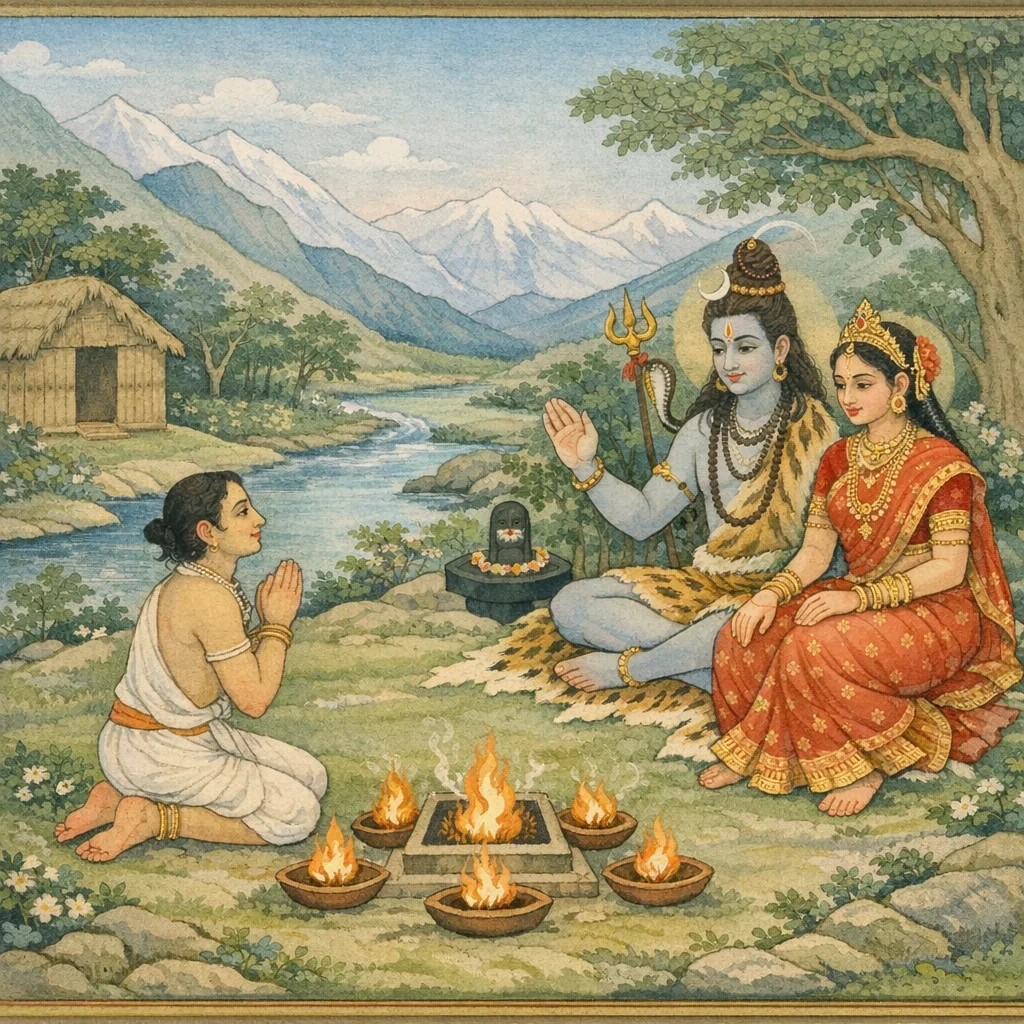
Upamanyu addresses Kṛṣṇa, noting that Hari has contemplated many forms and asks why the Lord would not grant Kṛṣṇa favor; he then offers a japa by which Kṛṣṇa may behold Śaṅkara. Kṛṣṇa recounts his dīkṣā and austerities: ascetic markers (staff, shaven head, kuśa, bark garments, ghee-anointment, girdle), progressive dietary restraints (fruit, water, then air), and a one-legged, arms-raised vigil. A visionary theophany follows: an intense radiance like many suns, within which appears a cloudlike, lightning-adorned form where Mahādeva abides with Umā, described with iconographic detail (weapons, tiger-skin, matted locks, ornaments, serpentine sacred thread). The scene expands into a cosmic liturgy: Rudras, Ādityas, Vasus, Sādhyas, Viśvedevas, Aśvins, Brahmā, Indra, Viṣṇu, yogeśvaras, ṛṣis, time divisions, Vedas, metres, initiations, sacrifices, and beings of all orders are said to honor Śiva. Kṛṣṇa, initially unable to gaze fully, is instructed by the deity to look and speak; he offers a sustained stuti identifying Śiva as the ground of creation, dissolution, guṇas, cognition, ritual elements, virtues and afflictions, and the indwelling kṣetrajña. The cosmos responds with acclamation; flowers fall and a pleasant wind blows. Śaṅkara, after regarding Umā, Indra, and Kṛṣṇa, acknowledges Kṛṣṇa’s supreme devotion and grants him the option to choose eight rare boons.
Chapter Arc: उपमन्यु अपने पूर्ववृत्तान्त का सूत्र पकड़ते हुए शिव-महिमा का घोष करता है—“शर्वसमो देवो नास्ति”—और श्रोताओं को एक ऐसे देव-तत्त्व की ओर खींच ले जाता है जो दान, युद्ध और मोक्ष—तीनों में अद्वितीय है। → कथा-धारा में वैदिक अग्नियों (गार्हपत्य, दक्षिणाग्नि, आहवनीय, सभ्य, आवसथ्य) और तप-नियमों का संकेत आता है, जिससे यह तनाव बनता है कि साधक का मार्ग कर्म (यज्ञ/अग्नि) से होकर कैसे देव-कृपा तक पहुँचता है; साथ ही वर-प्राप्ति की आकांक्षा और उसके नैतिक परिणाम (पुत्र, यश, बल, शम, कुल-प्रीति) प्रश्न बनकर उभरते हैं। → शंकर “एवमस्तु” कहकर वरदान की मुहर लगाते हैं और उमा/शर्वाणी तपोनिधि के रूप में पुत्र-प्रदान का विधान करती हैं—“साम्बो नाम”—तथा अतिरिक्त वरों का प्रसाद (आठ वर) भी उद्घोषित होता है; शिव की सर्वश्रेष्ठता का स्तुति-वाक्य इसी क्षण को दैवी प्रमाण में बदल देता है। → वरों की सूची धर्म-केन्द्रित अनुशासन में स्थिर होती है—द्विजों पर अकोप, पितृ-प्रसाद, कुल-प्रीति, शम-प्राप्ति, दाक्ष्य, शत्रुघात, यश, बल, योगप्रियता—और उपमन्यु यह ‘अत्यद्भुत’ आख्यान ब्राह्मण-तेजस्वी परम्परा में समर्पित कर देता है। → शिव-स्तुति का उद्घोष आगे भी जारी रहने का संकेत देता है—महादेव की दान-वीर्य-गति की तुलना से परे अन्य गुणों/व्रतों का विस्तार अगले प्रसंग में खिंचता है।
Shlokas
Verse 1
(दाक्षिणात्य पाठके ४ श्लोक मिलाकर कुल ४३३ श्लोक हैं) मी पी नजजञन जल ि्जजऑआंडहडइ > गार्हपत्य, दक्षिणाग्नि, आहवनीय, सभ्य और आवसथ्य--ये पाँच वैदिक अग्नियाँ हैं। स्मार्त छठी और लौकिक सातवीं अग्नि है। - सर्वज्ञता, तृप्ति, अनादि बोध, स्वतन्त्रता, नित्य अलुप्त शक्ति और अनन्त शक्ति--ये महेश्वरके स्वरूपभूत छः: अज्भ बताये गये हैं। पजञ्चदशो<् ध्याय: शिव और पार्वतीका श्रीकृष्णको वरदान और उपमन्युके द्वारा महादेवजीकी महिमा श्रीकृष्ण उवाच मूर्थ्ना निपत्य नियतस्तेज:संनिचये ततः । परम हर्षमागत्य भगवन्तमथाब्रुवम्,श्रीकृष्ण कहते हैं--भारत! तदनन्तर मनको वशमें करके तेजोराशिमें स्थित महादेवजीको मस्तक झुकाकर प्रणाम करनेके अनन्तर बड़े हर्षमें भरकर मैंने उन भगवान् शिवसे कहा--
Śrī Kṛṣṇa said: “O Bhārata, thereafter, having brought my mind under control, I bowed my head and prostrated before the blessed Lord Śiva, who abides as a concentrated mass of divine radiance. Then, filled with supreme joy, I addressed that Lord.”
Verse 2
धर्मे दृढत्वं युधि शत्रुघातं यशस्तथाग्रयं परमं बलं च । योगप्रियत्वं तव संनिकर्ष वृणे सुतानां च शतं शतानि,“धर्ममें दृढ़तापूर्वक स्थिति, युद्धमें शत्रुओंका संहार करनेकी क्षमता, श्रेष्ठ यश, उत्तम बल, योगबल, सबका प्रिय होना, आपका सांनिध्य तथा दस हजार पुत्र--ये ही आठ वर मैं माँग रहा हूँ!
Kṛṣṇa said: “I choose these boons: steadfastness in dharma; the power to strike down enemies in battle; foremost renown; supreme strength; delight in yoga (spiritual discipline); being dear to all; your close presence; and hundreds upon hundreds of sons. These are the eight boons I ask.”
Verse 3
एवमस्त्विति तद्वाक्यं मयोक्त: प्राह शड्कर: । ततो मां जगतो माता धारिणी सर्वपावनी,मेरे इस प्रकार कहनेपर भगवान् शंकरने कहा, “एवमस्तु--ऐसा ही हो।” तब सबका धारण-पोषण करनेवाली सर्वपावनी तपोनिधि रुद्रपत्नी जगदम्बा उमादेवी एकाग्रचित्त होकर बोलीं--“निष्पाप श्यामसुन्दर! भगवानने तुम्हें साम्ब नामक पुत्र दिया है
When I had spoken those words, Śaṅkara replied, “So be it.” Then the Mother of the world—she who sustains all beings and purifies all—(Umā, the consort of Rudra) spoke with a focused mind: “O sinless one, the Blessed Lord has granted you a son named Sāmba.”
Verse 4
उवाचोमा प्रणिह्ठिता शर्वाणी तपसां निधि: । दत्तो भगवता पुत्र: साम्बो नाम तवानघ,मेरे इस प्रकार कहनेपर भगवान् शंकरने कहा, “एवमस्तु--ऐसा ही हो।” तब सबका धारण-पोषण करनेवाली सर्वपावनी तपोनिधि रुद्रपत्नी जगदम्बा उमादेवी एकाग्रचित्त होकर बोलीं--“निष्पाप श्यामसुन्दर! भगवानने तुम्हें साम्ब नामक पुत्र दिया है
Umā—Śarvāṇī, the treasure-house of austerity—spoke with a mind fixed in concentration: “O sinless one, the Blessed Lord has granted you a son named Sāmba.”
Verse 5
मत्तो5प्यष्टौ वरानिष्टान् गृहाण त्वं ददामि ते । प्रणम्य शिरसा सा च मयोक्ता पाण्डुनन्दन,“अब मुझसे भी अभीष्ट आठ वर माँग लो। मैं तुम्हें वे वर प्रदान करती हूँ।' पाण्डुनन्दन! तब मैंने जगदम्बाके चरणोंमें सिरसे प्रणाम करके उनसे कहा--
“From me also, ask for eight desired boons; I shall grant them to you.” Thus spoke she. Then, O son of Pāṇḍu, having bowed my head at the feet of the Mother of the Universe, I addressed her—(and began to state my request).
Verse 6
द्विजेष्वकोपं पितृतः प्रसाद शतं सुतानां परमं च भोगम् । कुले प्रीतिं मातृतश्न प्रसाद॑ शमप्राप्तिं प्रवृणे चापि दाक्ष्यम्,“ब्राह्मणोंपर कभी मेरे मनमें क्रोध न हो। मेरे पिता मुझपर प्रसन्न रहें। मुझे सैकड़ों पुत्र प्राप्त हों। उत्तम भोग सदा उपलब्ध रहें। हमारे कुलमें प्रसन्नता बनी रहे। मेरी माता भी प्रसन्न रहें। मुझे शान्ति मिले और प्रत्येक कार्यमें कुशलता प्राप्त हो--ये आठ वर और माँगता हूँ”
Kṛṣṇa said: “May I never harbor anger toward the twice-born (brāhmaṇas). May my father be pleased with me. May I obtain a hundred sons, and may the highest enjoyments be ever within reach. May harmony and affection abide in our lineage; may my mother too be pleased. May I attain inner peace, and may I possess skillfulness in every undertaking—these are the boons I ask.”
Verse 7
उमोवाच एवं भविष्यत्यमरप्रभाव नाहं मृषा जातु वदे कदाचित् | भार्यासहस्राणि च षोडशैव तासु प्रियत्वं च तथाक्षयं च,भगवती उमाने कहा--अमरोंके समान प्रभावशाली श्रीकृष्ण! ऐसा ही होगा। मैं कभी झूठ नहीं बोलती हूँ। तुम्हें सोलह हजार रानियाँ होंगी। उनका तुम्हारे प्रति प्रेम रहेगा। तुम्हें अक्षय धनधान्यकी प्राप्ति होगी। बन्धु-बान्धवोंकी ओरसे तुम्हें प्रसन्नता प्राप्त होगी। मैं तुम्हारे इस शरीरके सदा कमनीय बने रहनेका वर देती हूँ और तुम्हारे घरमें प्रतिदिन सात हजार अतिथि भोजन करेंगे+
Umā said: “So it shall be, O Kṛṣṇa of godlike splendor. Never at any time do I speak falsehood. You shall have sixteen thousand wives; among them there will be enduring affection for you, and there will also be unfailing prosperity.”
Verse 8
प्रीतिं चाग्रयां बान्धवानां सकाशाद् ददामि ते<हं वपुष: काम्यतां च | भोक्ष्यन्ते वै सप्ततिं वै शतानि गृहे तुभ्यमतिथीनां च नित्यम्,भगवती उमाने कहा--अमरोंके समान प्रभावशाली श्रीकृष्ण! ऐसा ही होगा। मैं कभी झूठ नहीं बोलती हूँ। तुम्हें सोलह हजार रानियाँ होंगी। उनका तुम्हारे प्रति प्रेम रहेगा। तुम्हें अक्षय धनधान्यकी प्राप्ति होगी। बन्धु-बान्धवोंकी ओरसे तुम्हें प्रसन्नता प्राप्त होगी। मैं तुम्हारे इस शरीरके सदा कमनीय बने रहनेका वर देती हूँ और तुम्हारे घरमें प्रतिदिन सात हजार अतिथि भोजन करेंगे+
I grant you the highest affection from your kinsmen, and I also bestow upon you the continual loveliness and desirability of your body. In your house, guests will always be fed in great numbers—indeed, by the hundreds—day after day.
Verse 9
वायुदेव उवाच एवं दत्त्वा वरान् देवो मम देवी च भारत । अन्तर्हित: क्षणे तस्मिन् सगणो भीमपूर्वज,भगवान् श्रीकृष्ण कहते हैं--भरतनन्दन! भीमसेनके बड़े भैया! इस प्रकार महादेवजी तथा देवी पार्वती मुझे वरदान देकर अपने गणोंके साथ उसी क्षण अन्तर्धान हो गये
Vāyudeva said: “O Bhārata, after granting me these boons, the God (Mahādeva) and my Goddess (Pārvatī) vanished that very instant, together with their attendant hosts.”
Verse 10
एतदत्यदभुतं पूर्व ब्राह्मणायातितेजसे । उपमन्यवे मया कृत्स्नं व्याख्यातं॑ पार्थिवोत्तम । नमस्कृत्वा तु स प्राह देवदेवाय सुव्रत,नृपश्रेष्ठ! यह अत्यन्त अद्भुत वृत्तान्त मैंने पहले महातेजस्वी ब्राह्मण उपमन्युको पूर्णरूपसे बताया था। उत्तम व्रतका पालन करनेवाले नरेश! उपमन्युने देवाधिदेव महादेवजीको नमस्कार करके इस प्रकार कहा
Vāyu said: “O best of kings, I had earlier explained in full this exceedingly wondrous account to the supremely radiant Brahmin Upamanyu. Then Upamanyu, steadfast in sacred observance, bowed in reverence to the God of gods and spoke as follows.”
Verse 11
उपसन्युरुवाच नास्ति शर्वसमो देवो नास्ति शर्वसमा गति: । नास्ति शर्वसमो दाने नास्ति शर्वसमो रणे
Upasanyu said: “There is no god equal to Śarva; there is no refuge or final goal equal to Śarva. In generosity none equals Śarva, and in battle none equals Śarva.”
Verse 14
इस प्रकार श्रीमहाभारत अनुशासनपर्वके अन्तर्गत दानधर्मपर्वमें मेघवाहनपर्वका आख्यानविषयक चौदहवाँ अध्याय पूरा हुआ
Thus ends the fourteenth chapter—concerned with the narrative of the Meghavāhana episode—within the Dāna-dharma section of the Anuśāsana Parva of the Śrī Mahābhārata.
Verse 15
उपमन्यु बोले--महादेवजीके समान कोई देवता नहीं है। महादेवजीके समान कोई गति नहीं है। दानमें शिवजीकी समानता करनेवाला कोई नहीं है तथा युद्धमें भी भगवान् शंकरके समान दूसरा कोई वीर नहीं है ।। इति श्रीमहाभारते अनुशासनपर्वणि दानधर्मपर्वणि मेघवाहनप्वाख्याने पजठ्चदशो<5 ध्याय:,इस प्रकार श्रीमह्याभारत अनुशासनपर्वके अन्तर्गत दानधर्मपर्वमें मेघवाहन (इन्द्ररूपधारी महादेव)-की महिगाके प्रतिपादक पर्वकी कथामें पंद्रहवाँ अध्याय पूरा हुआ
Upamanyu said: “There is no deity equal to Mahādeva. There is no refuge or final course equal to Mahādeva. In generosity none can match Śiva, and in battle too there is no other hero equal to Lord Śaṅkara.”
Frequently Asked Questions
A combined model of regulated austerity (dīkṣā, dietary restraint, posture, vigilance) and articulate devotional praise (stuti/japa), portraying inner discipline and intention as prerequisites for divine encounter.
Śiva is described as the source and terminus of beings, the locus of guṇas and cognition, the substance of ritual constituents, and the indwelling knower (kṣetrajña), integrating cosmology, psychology, and liturgy into a single theistic framework.
Yes: the stuti culminates in a responsive cosmic affirmation (acclamation, flowers, auspicious wind) and Śaṅkara’s explicit recognition of Kṛṣṇa’s devotion, followed by the offer of eight rare boons as the immediate narrative fruit.