Adhyaya 8
Ruru–Pramadvarā: Lineage, Fosterage, Betrothal, and the Snakebite Crisis (Ādi Parva, Adhyāya 8)
Upa-parva: Ruru–Pramadvarā Upākhyāna (Genealogical-Etiological Episode within Ādi Parva)
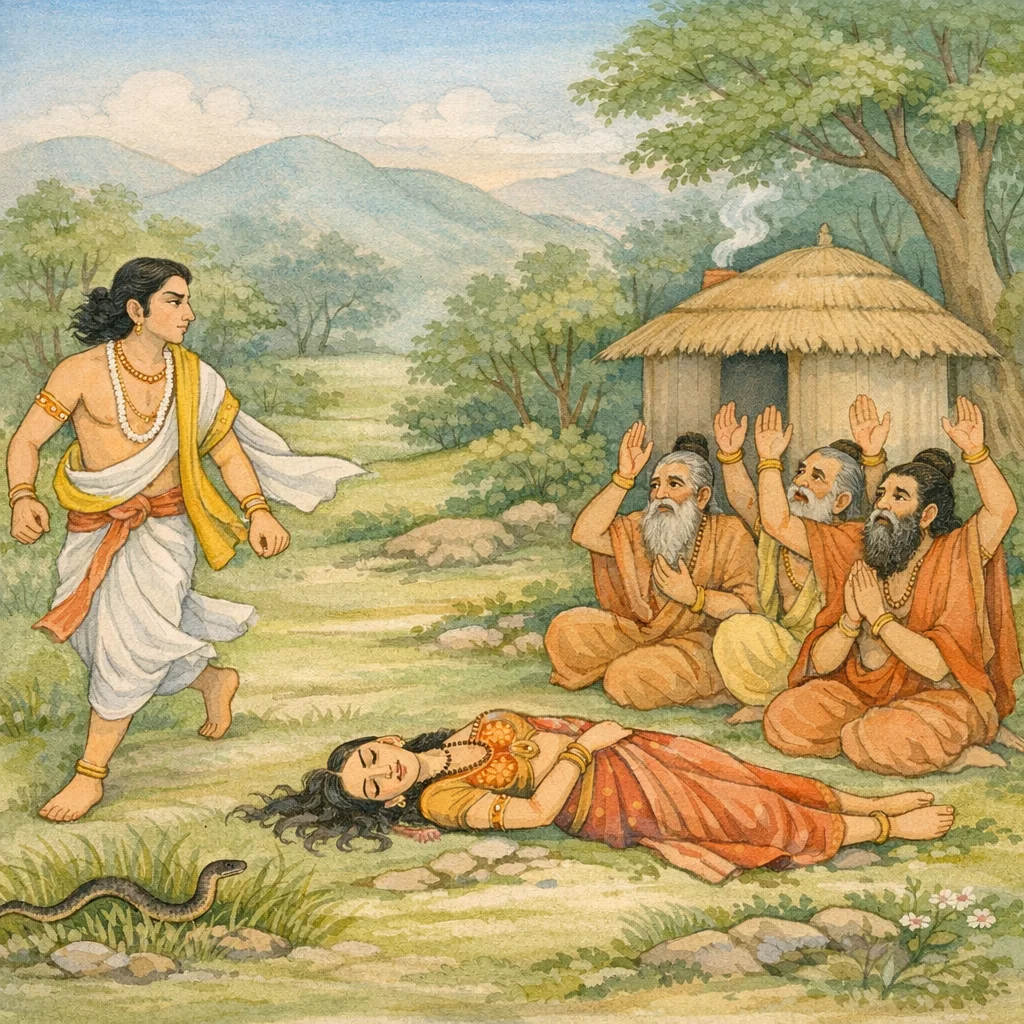
Sauti narrates a genealogical sequence: Cyavana (Bhārgava) fathers Pramati with Sukanyā; Pramati fathers Ruru with Ghṛtācī; and Ruru fathers Śunaka with Pramadvarā. The narrator announces an expanded account of Ruru’s life. The chapter then introduces the sage Sthūlakeśa, devoted to austerity and the welfare of beings. In the same period, the Gandharva king Viśvāvasu is born to Menakā; Menakā later abandons a radiant infant girl near a riverbank, and Sthūlakeśa compassionately adopts and raises her in his hermitage, naming her Pramadvarā for her surpassing virtues. Ruru encounters Pramadvarā at the hermitage and becomes emotionally attached; he arranges the proposal via his father Pramati, and Sthūlakeśa grants the marriage, fixing an auspicious time. Shortly before the wedding, while playing with companions, Pramadvarā inadvertently steps on a sleeping snake; compelled by the logic of fate/time (kāla-dharma), it bites her, and she falls unconscious, appearing lifeless. Ascetics gather in grief—named sages assemble—and Ruru, distressed, rushes out, marking the narrative pivot from anticipated union to ethical crisis.
Chapter Arc: सौतिउवाच—भृगुवंश की धारा में एक नया प्रसंग उठता है: च्यवन–सुकन्या से जन्मे प्रमति, और प्रमति से जन्मा तेजस्वी रुरु; उसी रुरु के जीवन में प्रेम और विधि का कठोर खेल आरम्भ होने को है। → रुरु आश्रम-प्रदेश में प्रमद्वरा को देख मदन-विद्ध हो जाता है; पिता द्वारा नक्षत्र-शुभ मुहूर्त में वाग्दान होता है और विवाह की तैयारी बँधती है। परन्तु जिस सुख का द्वार खुल रहा था, उसी देहरी पर कालधर्म छाया डालता है—असावधानी के क्षण में विष-दंतों वाला सर्प अवसर खोजता है। → विवाह से पहले ही सर्प प्रमद्वरा को काट लेता है; विषोपलिप्त दंश से वह प्राणशून्य हो जाती है। आश्रम में करुण क्रन्दन उठता है—द्विजश्रेष्ठ शोक में बैठ जाते हैं और रुरु, आर्त होकर, बाहर निकल पड़ता है; प्रेम का उत्सव एक ही क्षण में मृत्यु-शय्या बन जाता है। → प्रमद्वरा की मृत्यु से उत्पन्न शोक-स्थिरता में ऋषि-समाज एकत्र होता है; वनवासी मुनि और कुल-प्रमुख (प्रमति सहित) उपस्थित होकर आगे के उपाय/विचार की भूमिका बनाते हैं—कथा रुरु के चरित-विस्तार की ओर दृढ़ता से मुड़ती है। → रुरु के शोक और क्रोध के बीच प्रश्न लटकता है—क्या यह मृत्यु अंतिम है, या धर्म-बल/तप/वरदान से कोई असाध्य उपाय प्रकट होगा?
Shlokas
Verse 1
अपन बछ। ] अाडण का: अष्टमो> ध्याय: प्रमद्वराका जन्म, रुरुके साथ उसका वाग्दान तथा विवाहके पहले ही सॉपके काटनेसे प्रमद्वराकी मृत्यु सौतिरुवाच स चापि च्यवनो ब्रह्मन् भार्गवो5जनयत् सुतम् । सुकन्यायां महात्मानं प्रमतिं दीप्ततेजसम्,उग्रश्रवाजी कहते हैं--ब्रह्मन! भृगुपुत्र च्यवनने अपनी पत्नी सुकन्याके गर्भसे एक पुत्रको जन्म दिया, जिसका नाम प्रमति था। महात्मा प्रमति बड़े तेजस्वी थे। फिर प्रमतिने घृताची अप्सरासे रुरु नामक पुत्र उत्पन्न किया तथा रुरुके द्वारा प्रमद्वराके गर्भसे शुनकका जन्म हुआ
Sauti said: “O Brahmin, the Bhārgava sage Cyavana also begot a son upon Sukanyā. That son was Pramati, great-souled and radiant with spiritual and ascetic power.”
Verse 2
प्रमतिस्तु रुरं नाम घृताच्यां समजीजनत् । रुरु: प्रमद्वरायां तु शुनकं समजीजनत्,उग्रश्रवाजी कहते हैं--ब्रह्मन! भृगुपुत्र च्यवनने अपनी पत्नी सुकन्याके गर्भसे एक पुत्रको जन्म दिया, जिसका नाम प्रमति था। महात्मा प्रमति बड़े तेजस्वी थे। फिर प्रमतिने घृताची अप्सरासे रुरु नामक पुत्र उत्पन्न किया तथा रुरुके द्वारा प्रमद्वराके गर्भसे शुनकका जन्म हुआ
Pramati begot a son named Ruru upon the apsaras Ghṛtācī. In turn, Ruru begot Śunaka upon Pramadvarā.
Verse 3
(शौनकस्तु महाभाग शुनकस्य सुतो भवान् ।) शुनकस्तु महासत्त्व: सर्वभार्गवनन्दन: । जातस्तपसि तीव्रे च स्थित: स्थिरयशास्तत:,महाभाग शौनकजी! आप शुनकके ही पुत्र होनेके कारण 'शौनक' कहलाते हैं। शुनक महान् सत्त्वगुणसे सम्पन्न तथा सम्पूर्ण भूगुवंशका आनन्द बढ़ानेवाले थे। वे जन्म लेते ही तीव्र तपस्यामें संलग्न हो गये। इससे उनका अविचल यश सब ओर फैल गया
Śaunaka said: “O noble one, since you are the son of Śunaka, you are known as ‘Śaunaka’. Śunaka was a man of great spiritual strength, a delight and pride of the entire Bhṛgu lineage. From the very time of his birth he remained devoted to intense austerity; therefore his steadfast fame spread everywhere.”
Verse 4
तस्य ब्रह्मन् रुरो: सर्व चरितं भूरितेजस: । विस्तरेण प्रवक्ष्यामि तच्छुणु त्वमशेषत:,ब्रह्मन्! मैं महातेजस्वी रुरुके सम्पूर्ण चरित्रका विस्तारपूर्वक वर्णन करूँगा। वह सब- का-सब आप सुनिये
O Brāhmaṇa, I shall relate in full the entire life-story of the mighty and radiant Ruru. Listen to it completely, in detail, without leaving anything out.
Verse 5
ऋषिरासीन्महान् पूर्व तपोविद्यासमन्वित: । स्थूलकेश इति ख्यात: सर्वभूतहिते रत:,पूर्वकालमें स्थूलकेश नामसे विख्यात एक तप और विद्यासे सम्पन्न महर्षि थे; जो समस्त प्राणियोंके हितमें लगे रहते थे
Śaunaka said: In ancient times there lived a great sage, endowed with austerity and sacred learning. He was renowned by the name Sthūlakeśa, and he was devoted to the welfare of all beings.
Verse 6
एतस्मिन्नेव काले तु मेनकायां प्रजज्ञिवान् । गन्धर्वराजो वित्रर्षे विश्वावसुरिति स्मृत:,विप्रर्षे! इन्हीं महर्षिके समयकी बात हैं--गन्धर्वराज विश्वावसुने मेनकाके गर्भसे एक संतान उत्पन्न की
Śaunaka said: “At that very time, the Gandharva king—known among the sages as Viśvāvasu—begot a child in Menakā.”
Verse 7
अप्सरा मेनका तस्य त॑ गर्भ भगुनन्दन । उत्ससर्ज यथाकालं स्थूलकेशाश्रमं प्रति,भृगुनन्दन! मेनका अप्सराने गन्धर्वराजद्वारा स्थापित किये हुए उस गर्भको समय पूरा होनेपर स्थूलकेश मुनिके आश्रमके निकट जन्म दिया
Śaunaka said: O descendant of Bhṛgu, the Apsaras Menakā, when the time was fulfilled, delivered that child near the hermitage of the sage Sthūlakeśa.
Verse 8
उत्सृज्य चैव त॑ गर्भ नद्यास्तीरे जगाम सा । अप्सरा मेनका ब्रह्मन् निर्दया निरपत्रपा,ब्रह्मन्! निर्दय और निर्लज्ज मेनका अप्सरा उस नवजात गर्भको वहीं नदीके तटपर छोड़कर चली गयी इति श्रीमहाभारते आदिपर्वणि पौलोमपर्वणि प्रमद्वरासर्पदंशे5ष्टमो5ध्याय:
O Brahmin, the apsaras Menakā—pitiless and without shame—abandoned that newborn child on the riverbank and went away.
Verse 9
कन्याममरगर्भाभां ज्वलन्तीमिव च श्रिया | तां ददर्श समुत्सृष्टां नदीतीरे महानृषि:,तदनन्तर तेजस्वी महर्षि स्थूलकेशने एकान्त स्थानमें त्यागी हुई उस बन्धुहीन कन्याको देखा, जो देवताओंकी बालिकाके समान दिव्य शोभासे प्रकाशित हो रही थी। उस समय उस कन्याको वैसी दशामें देखकर द्विजश्रेष्ठ मुनिवर स्थूलकेशके मनमें बड़ी दया आयी; अतः वे उसे उठा लाये और उसका पालन-पोषण करने लगे। वह सुन्दरी कन्या उनके शुभ आश्रमपर दिनोदिन बढ़ने लगी
Śaunaka said: On the bank of a river, the great sage saw a young maiden who had been abandoned. She shone with auspicious beauty, as if fortune itself were radiant in her, like a celestial child.
Verse 10
स्थूलकेश: स तेजस्वी विजने बन्धुवर्जिताम् । सतां दृष्टवा तदा कन्यां स्थूलकेशो महाद्विज:,तदनन्तर तेजस्वी महर्षि स्थूलकेशने एकान्त स्थानमें त्यागी हुई उस बन्धुहीन कन्याको देखा, जो देवताओंकी बालिकाके समान दिव्य शोभासे प्रकाशित हो रही थी। उस समय उस कन्याको वैसी दशामें देखकर द्विजश्रेष्ठ मुनिवर स्थूलकेशके मनमें बड़ी दया आयी; अतः वे उसे उठा लाये और उसका पालन-पोषण करने लगे। वह सुन्दरी कन्या उनके शुभ आश्रमपर दिनोदिन बढ़ने लगी
Śaunaka said: The radiant sage Sthūlakeśa, a great brāhmaṇa, saw in a lonely place a young girl abandoned and without any kin. Seeing her in that desolate condition, compassion arose in him; he took her up and began to protect and raise her.
Verse 11
जग्राह च मुनिश्रेष्ठ: कृपाविष्ट: पुपोष च । ववृधे सा वरारोहा तस्याश्रमपदे शुभे,तदनन्तर तेजस्वी महर्षि स्थूलकेशने एकान्त स्थानमें त्यागी हुई उस बन्धुहीन कन्याको देखा, जो देवताओंकी बालिकाके समान दिव्य शोभासे प्रकाशित हो रही थी। उस समय उस कन्याको वैसी दशामें देखकर द्विजश्रेष्ठ मुनिवर स्थूलकेशके मनमें बड़ी दया आयी; अतः वे उसे उठा लाये और उसका पालन-पोषण करने लगे। वह सुन्दरी कन्या उनके शुभ आश्रमपर दिनोदिन बढ़ने लगी
Śaunaka said: Moved by compassion, the foremost of sages took the abandoned maiden into his care and nourished her. In that auspicious hermitage, the graceful girl grew day by day.
Verse 12
जातकाद्या: क्रियाश्चास्या विधिपूर्व यथाक्रमम् । स्थूलकेशो महाभागश्नचकार सुमहानृषि:,महाभाग महर्षि स्थूलकेशने क्रमशः: उस बालिकाके जात-कर्मादि सब संस्कार विधिपूर्वक सम्पन्न किये
Śaunaka said: The great and illustrious sage Sthūlakeśa duly performed, in proper order and according to prescribed rites, all the sacraments (saṃskāras) for that girl—beginning with the birth-rite.
Verse 13
प्रमदाभ्यो वरा सा तु सत्त्वरूपगुणान्विता । ततः प्रमद्वरेत्यस्था नाम चक्रे महानृषि:,वह बुद्धि, रूप और सब उत्तम गुणोंसे सुशोभित हो संसारकी समस्त प्रमदाओं (सुन्दरी स्त्रियों)-से श्रेष्ठ जान पड़ती थी; इसलिये महर्षिने उसका नाम “प्रमद्धरा' रख दिया
Śaunaka said: She appeared superior to all other maidens, being endowed with a noble disposition, beauty, and excellent qualities. Therefore the great sage, taking her to be the best among maidens, bestowed on her the name “Pramadvārā.”
Verse 14
तामाश्रमपदे तस्य रुरुर्दृष्टवा प्रमद्वराम् । बभूव किल धर्मात्मा मदनोपहतस्तदा,एक दिन धर्मात्मा रुसने महर्षिके आश्रममें उस प्रमद्वराको देखा। उसे देखते ही उनका हृदय तत्काल कामदेवके वशीभूत हो गया
At that hermitage-settlement, Ruru caught sight of Pramadvarā. Though known as a righteous man, he was then—so it is said—struck by Kāma, and his heart came under the sway of desire.
Verse 15
पितरं सखिभि: सो5थ श्रावयामास भार्गवम् | प्रमतिश्चा भ्ययाचत् तां स्थूलकेशं यशस्विनम्,तब उन्होंने मित्रोंद्वारा अपने पिता भृगुवंशी प्रमतिको अपनी अवस्था कहलायी। तदनन्तर प्रमतिने यशस्वी स्थूलकेश मुनिसे (अपने पुत्रके लिये) उनकी वह कन्या माँगी
Then, through his friends, he had his father—Pramati of the Bhṛgu lineage—hear of his condition. Thereafter Pramati approached the illustrious sage Sthūlakeśa and requested his daughter for his son.
Verse 16
ततः प्रादात् पिता कन््यां रुरवे तां प्रमद्वराम् । विवाहं स्थापयित्वाग्रे नक्षत्रे भगदैवते,तब पिताने अपनी कन्या प्रमद्वराका रुकुके लिये वाग्दान कर दिया और आगामी उत्तरफाल्गुनी नक्षत्रमें विवाहका मुहूर्त निश्चित किया
Then the maiden’s father gave his daughter Pramadvarā in betrothal to Ruru. Having thus arranged the marriage beforehand, he fixed the wedding at the auspicious time of the Bhaga-ruled constellation (Uttaraphālgunī).
Verse 17
तत: कतिपयाहस्य विवाहे समुपस्थिते । सखीभ्रि: क्रीडती सार्थ सा कन्या वरवर्णिनी,तदनन्तर जब विवाहका मुहूर्त निकट आ गया, उसी समय वह सुन्दरी कन्या सखियोंके साथ क्रीड़ा करती हुई वनमें घूमने लगी
Śaunaka said: When the wedding, due after only a few days, was drawing near, that beautiful maiden, accompanied by her friends, went about in the forest, playing.
Verse 18
नापश्यत् सम्प्रसुप्तं वै भुजड़ूूं तिर्यगायतम् । पदा चैनं समाक्रामन्मुमूर्ष: कालचोदिता,मार्गमें एक साँप चौड़ी जगह घेरकर तिरछा सो रहा था। प्रमद्वराने उसे नहीं देखा। वह कालसे प्रेरित होकर मरना चाहती थी, इसलिये सर्पको पैरसे कुचलती हुई आगे निकल गयी
She did not notice the serpent lying fast asleep, stretched crosswise across the path. Driven by fate and as though wishing for death, she stepped upon it with her foot and went on.
Verse 19
स तस्या: सम्प्रमत्तायाश्वोदित: कालधर्मणा । विषोपलिप्तान् दशनान् भृशमड़े न्यपातयत्,उस समय कालधर्मसे प्रेरित हुए उस सर्पने उस असावधान कन्याके अंगमें बड़े जोरसे अपने विषभरे दाँत गड़ा दिये
Driven by the inexorable law of Time, the serpent, finding the maiden off her guard, struck fiercely and sank its poison-smeared fangs into her body. The episode underscores how negligence and unawareness can invite sudden calamity, and how events often unfold under the larger, impersonal force of kāla (Time) that overrides ordinary human expectation.
Verse 20
सा दष्टा तेन सर्पेण पपात सहसा भुवि । विवर्णा विगतश्रीका भ्रष्टाभरणचेतना,उस सर्पके डँस लेनेपर वह सहसा पृथ्वीपर गिर पड़ी। उसके शरीरका रंग उड़ गया, शोभा नष्ट हो गयी, आभूषण इधर-उधर बिखर गये और चेतना लुप्त हो गयी। उसके बाल खुले हुए थे। अब वह अपने उन बन्धुजनोंके हृदयमें विषाद उत्पन्न कर रही थी। जो कुछ ही क्षण पहले अत्यन्त सुन्दरी एवं दर्शनीय थी, वही प्राणशून्य होनेके कारण अब देखनेयोग्य नहीं रह गयी
Śaunaka said: Bit by that serpent, she suddenly fell to the ground. Her complexion drained away, her radiance and grace were lost, her ornaments slipped and scattered, and consciousness left her. In a moment, the beauty that had delighted the eye became a sight of grief for her kin—an ethical reminder of how swiftly life’s splendor can be overturned by unseen danger and how attachment to outward brilliance is fragile.
Verse 21
निरानन्दकरी तेषां बन्धूनां मुक्तमूर्थजा । व्यसुरप्रेक्षणीया सा प्रेक्षणीयतमाभवत्,उस सर्पके डँस लेनेपर वह सहसा पृथ्वीपर गिर पड़ी। उसके शरीरका रंग उड़ गया, शोभा नष्ट हो गयी, आभूषण इधर-उधर बिखर गये और चेतना लुप्त हो गयी। उसके बाल खुले हुए थे। अब वह अपने उन बन्धुजनोंके हृदयमें विषाद उत्पन्न कर रही थी। जो कुछ ही क्षण पहले अत्यन्त सुन्दरी एवं दर्शनीय थी, वही प्राणशून्य होनेके कारण अब देखनेयोग्य नहीं रह गयी
Śaunaka said: With her hair loosened, she became a source of grief to her kinsmen. Lifeless and no longer fit to be looked upon, she—who only moments before had been most beautiful and most worthy of seeing—was now transformed into a sight that brought sorrow. The passage underscores how swiftly life’s beauty and social joy can collapse into bereavement, reminding the listener of the fragility of embodied existence and the ethical weight of harm that causes such suffering to families.
Verse 22
प्रसुप्ते वाभवच्चापि भुवि सर्पविषार्दिता । भूयो मनोहरतरा बभूव तनुमध्यमा,वह सर्पके विषसे पीड़ित होकर गाढ़ निद्रामें सोयी हुईकी भाँति भूमिपर पड़ी थी। उसके शरीरका मध्यभाग अत्यन्त कृश था। वह उस अचेतनावस्थामें भी अत्यन्त मनोहारिणी जान पड़ती थी
Śaunaka said: Struck by the poison of a serpent, she lay upon the ground as though sunk in deep sleep. Even in that senseless state, her slender-waisted form appeared all the more captivating—an image that heightens the pathos of her suffering and underscores the moral weight of harm done through heedlessness and violence.
Verse 23
ददर्श तां पिता चैव ये चैवान्ये तपस्विन: । विचेष्टमानां पतितां भूतले पद्मवर्चसम्,उसके पिता स्थूलकेशने तथा अन्य तपस्वी महात्माओंने भी आकर उसे देखा। वह कमलकी-सी कान्तिवाली किशोरी धरतीपर चेष्टारहित पड़ी थी
Śaunaka said: Her father, and other ascetics as well, came and saw her—fallen upon the ground, motionless, yet radiant with a lotus-like splendor.
Verse 24
ततः सर्वे द्विजवरा: समाजग्मु: कृपान्विता: । स्वस्त्यात्रेयो महाजानु: कुशिक: शड्खमेखल:,प्रमति: सह पुत्रेण तथान्ये वनवासिन: । तदनन्तर स्वस्त्यात्रेय, महाजानु, कुशिक, शंखमेखल, उद्दालक, कठ, महायशस्वी श्वेत, भरद्वाज, कौणकुत्स्य, आर्टिषिण, गौतम, अपने पुत्र रुकुसहित प्रमति तथा अन्य सभी वनवासी श्रेष्ठ द्विज दयासे द्रवित होकर वहाँ आये
Then all those foremost twice-born sages, moved by compassion, gathered there—Svastyātreya, Mahājānu, Kuśika, Śaṅkhamekhala, and Pramati together with his son, along with other forest-dwelling ascetics.
Verse 25
उद्दालक: कठझ्जैव श्लेतश्वैव महायशा: । भरद्वाज: कौणकुत्स्य आर्टिषिणो5थ गौतम:
Śaunaka said: “(Among those sages were) Uddālaka; Kaṭhañja; the illustrious Śvetaśva; Bharadvāja; Kauṇakutsya; Ārtiṣiṇa; and also Gautama.”
Verse 26
तां ते कन््यां व्यसुं दृष्टवा भुजड्स्य विषार्दिताम्,वे सब लोग उस कन्याको सर्पके विषसे पीड़ित हो प्राणशून्य हुई देख करुणावश रोने लगे। रुरु तो अत्यन्त आर्त होकर वहाँसे बाहर चला गया और शेष सभी द्विज उस समय वहीं बैठे रहे
Seeing that maiden lying lifeless, struck down by the serpent’s venom, all those present were overcome with compassion and began to weep. Ruru, seized by extreme anguish, went out from that place, while the remaining brahmins stayed seated there at that time.
Verse 27
रुरुदुः कृपयाविष्टा रुरुस्त्वार्तों बहिर्ययौ । ते च सर्वे द्विजश्रेष्ठास्तत्रैवोपाविशंस्तदा,वे सब लोग उस कन्याको सर्पके विषसे पीड़ित हो प्राणशून्य हुई देख करुणावश रोने लगे। रुरु तो अत्यन्त आर्त होकर वहाँसे बाहर चला गया और शेष सभी द्विज उस समय वहीं बैठे रहे
They wept, overcome with compassion; but Ruru, tormented by grief, went out. And all those foremost brahmins remained seated there at that time.
Verse 253
प्रमति: सह पुत्रेण तथान्ये वनवासिन: । तदनन्तर स्वस्त्यात्रेय, महाजानु, कुशिक, शंखमेखल, उद्दालक, कठ, महायशस्वी श्वेत, भरद्वाज, कौणकुत्स्य, आर्टिषिण, गौतम, अपने पुत्र रुकुसहित प्रमति तथा अन्य सभी वनवासी श्रेष्ठ द्विज दयासे द्रवित होकर वहाँ आये
Śaunaka said: “Pramati came there together with his son, and so did other forest-dwelling ascetics. After them arrived Svastyātreya, Mahājānu, Kuśika, Śaṅkhamekhala, Uddālaka, Kaṭha, the illustrious Śveta, Bharadvāja, Kauṇakutsya, Ārtiṣiṇi, and Gautama. Moved by compassion, Pramati—accompanied by his son Ruku—and all those eminent twice-born sages who lived in the forest came to that place.”
Frequently Asked Questions
The chapter frames a dilemma of accountability under accident and fate: harm occurs without deliberate hostility, raising questions about how duty and response should be oriented when suffering emerges from unintended contact and kāla-driven consequence.
It emphasizes that dharma includes structured social duties (fosterage, marriage rites) while also requiring adaptive compassion when plans collapse; it also illustrates how kāla (time/contingency) can disrupt human intention, demanding ethical resilience.
No explicit phalaśruti is stated here; the meta-commentary appears instead as narratorial signposting—Sauti’s promise to recount Ruru’s full career—positioning this chapter as a causal hinge within a larger exemplum.