Adhyaya 68
Ādi Parva, Adhyāya 68 — Sarvadamana’s Childhood and Śakuntalā’s Claim at Court
Upa-parva: Śakuntalopākhyāna (Duḥṣanta–Śakuntalā Episode)
Vaiśaṃpāyana recounts that Śakuntalā bears an exceptionally vigorous son after Duḥṣanta departs. Kaṇva oversees the child’s early saṃskāras and, observing extraordinary strength, notes his suitability for future rulership. The boy’s fearless play—subduing wild animals around the hermitage—leads residents to name him Sarvadamana (“subduer of all”). Kaṇva instructs his disciples to escort Śakuntalā, adorned with auspicious signs, to Gajasāhvaya (Hastināpura) with the child. At court, Śakuntalā formally petitions Duḥṣanta to install the boy as heir, invoking the earlier agreement and framing the issue as dharma-bound responsibility. Duḥṣanta denies recognition and questions her credibility and origins, escalating the dispute. Śakuntalā responds with an extended ethical discourse: truth is witnessed by inner conscience and cosmic agencies; self-deception is morally culpable; wifehood and progeny are central to household dharma and continuity; and rejecting one’s child violates normative duty. She also recounts her birth from Menakā and Viśvāmitra, while the king continues to treat her claims as unverified and dismisses her.
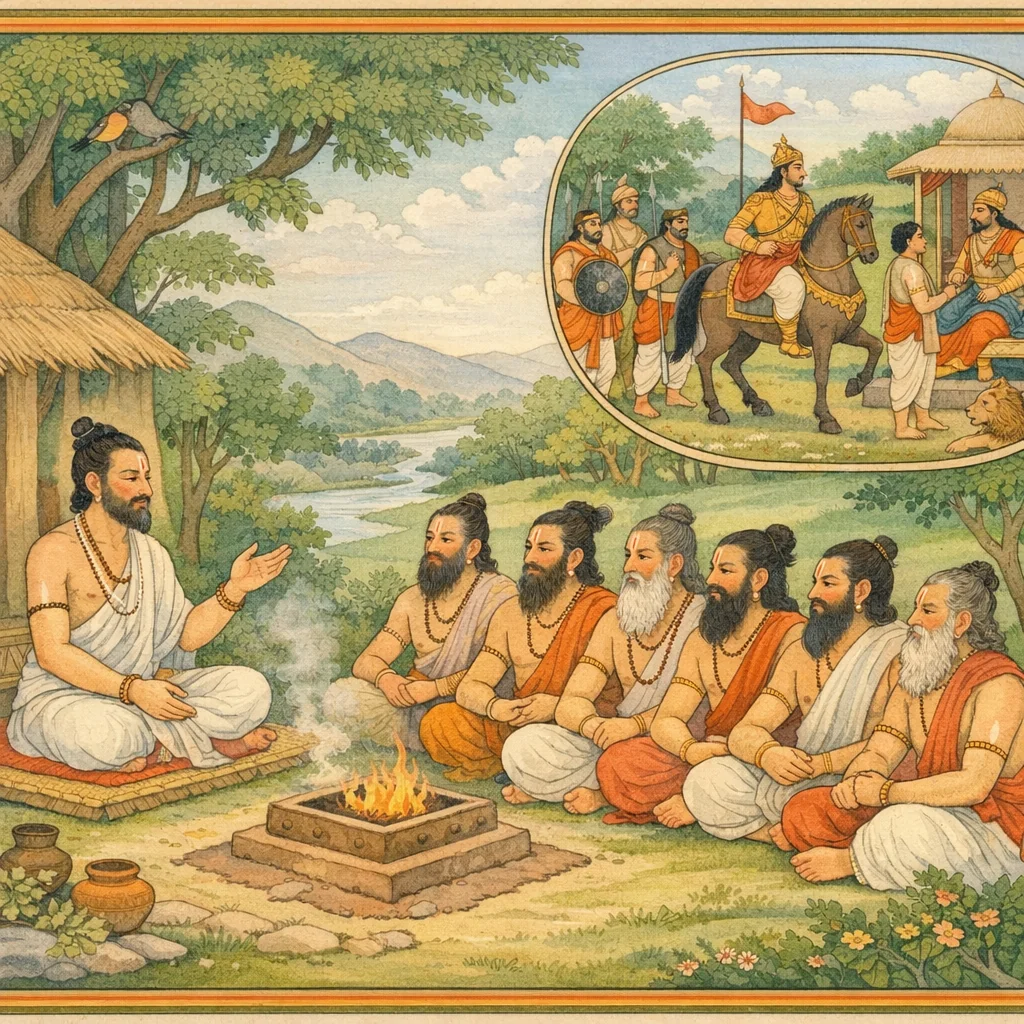
Chapter Arc: ऋषियों की सभा में शौनक का आग्रह उठता है—‘अब मैं कुरुओं के वंश का आदि से विस्तार सुनना चाहता हूँ’; कथा का द्वार राजवंश-गौरव की ओर खुलता है। → वैशम्पायन दुष्यन्त का परिचय देते हैं: पूरुवंश का विस्तार करने वाला, सीमांत पृथ्वी का रक्षक, ऐसा राजा जिसके राज्य में चौर्य, क्षुधा और व्याधि का भय नहीं; वर्ण अपने-अपने स्वधर्म में रमे हैं—यह आदर्श-राज्य का ऊँचा मानक आगे की वंशकथा पर अपेक्षा का भार रख देता है। → दुष्यन्त की ‘अद्भुत शक्ति’ का उत्कर्ष-वर्णन—मन्दराचल को उपवन-काननों सहित उठाने जैसी अतिशयोक्तिपूर्ण उपमा, चतुष्पथ-गदा-युद्ध और सर्वप्रहरण-निपुणता; साथ ही समुद्र-सा अक्षोभ्य और पृथ्वी-सा सहिष्णु—राजा का तेज और संयम एक साथ चरम पर पहुँचते हैं। → कथन इस निष्कर्ष पर टिकता है कि ऐसे धर्मपरायण, प्रसन्न-पुर-राष्ट्र वाले राजा के आश्रय में प्रजा निर्भय और स्वधर्मनिष्ठ रहती है; कुरुवंश के उद्गम की कथा के लिए मंच तैयार हो जाता है। → श्रोता-समुदाय की जिज्ञासा अब वंश-परम्परा के अगले कड़ी—दुष्यन्त से आगे भरत और कुरु-परम्परा के विस्तार—पर अटक जाती है।
Shlokas
Verse 1
/ है अर छा | अर-क्रा् - “अत्रि” शब्दसे यहाँ सूर्यको ग्रहण किया गया है। नीलकण्ठने भी यही अर्थ लिया है। अष्टषष्टितमो< ध्याय: राजा दुष्यन्तकी अद्भुत शक्ति तथा राज्यशासनकी क्षमताका वर्णन जनमेजय उवाच त्वत्त: श्रुतमिदं ब्रह्मन् देवदानवरक्षसाम् । अंशावतरणं सम्यग गन्धर्वाप्सरसां तथा,जनमेजय बोले--ब्रह्मन! मैंने आपके मुखसे देवता, दानव, राक्षस, गन्धर्व तथा अप्सराओंके अंशावतरणका वर्णन अच्छी तरह सुन लिया
Janamejaya said: “O Brahmin, I have heard clearly from you the proper account of the partial manifestations among the gods, the asuras (dānavas) and rākṣasas, and likewise among the gandharvas and apsarases.”
Verse 2
इमं तु भूय इच्छामि कुरूणां वंशमादित: । कथ्यमानं त्वया विप्र विप्र्षिगणसंनिधौ,विप्रवर! अब इन ब्रह्मर्षियोंक समीप आपके द्वारा वर्णित कुरुवंशका वृत्तान्त पुनः आदिसे ही सुनना चाहता हूँ
Janamejaya said: “Yet again I wish to hear, from the very beginning, the lineage of the Kurus—recounted by you, O Brahmin, here in the presence of the assembly of great seers.”
Verse 3
वैशम्पायन उवाच पौरवाणां वंशकरो दुष्यन्तो नाम वीर्यवान् । पृथिव्याश्षतुरन््ताया गोप्ता भरतसत्तम,वैशम्पायनजीने कहा--भरतवंशशिरोमणे! पूरुवंशका विस्तार करनेवाले एक राजा हो गये हैं, जिनका नाम था दुष्यन्त। वे महान् पराक्रमी तथा चारों समुद्रोंसे घिरी हुई समूची पृथ्वीके पालक थे
Vaiśampāyana said: “O best of the Bharatas, there arose a mighty king named Duṣyanta, who expanded the line of the Pauravas. A man of great valor, he was the protector of the entire earth—the whole world in its four quarters—ruling as a guardian-king in accordance with royal duty.”
Verse 4
चतुर्भागं भुवः कृत्स्नं यो भुडक्ते मनुजेश्वर: । समुद्रावरणांश्वापि देशान्ू स समितिंजय:,राजा दुष्यन्त पृथ्वीके चारों भागोंका तथा समुद्रसे आवृत सम्पूर्ण देशोंका भी पूर्णरूपसे पालन करते थे। उन्होंने अनेक युद्धोंमें विजय पायी थी। रत्नाकर समुद्रतक फैले हुए, चारों वर्णके लोगोंसे भरे-पूरे तथा म्लेच्छ देशकी सीमासे मिले-जुले सम्पूर्ण भूभागोंका वे शत्रुमर्दन नरेश अकेले ही शासन तथा संरक्षण करते थे
Vaiśampāyana said: King Duṣyanta, a conqueror in assemblies of battle, alone governed and protected the whole earth—its four quarters and even the lands bounded by the ocean. He maintained order across the realm, securing its borders and upholding royal responsibility through victorious strength.
Verse 5
आम्लेच्छावधिकान् सर्वान् स भुड्क्ते रिपुमर्दन: । रत्नाकरसमुद्रान्तां श्चातुर्वण्यजनावृतान्,राजा दुष्यन्त पृथ्वीके चारों भागोंका तथा समुद्रसे आवृत सम्पूर्ण देशोंका भी पूर्णरूपसे पालन करते थे। उन्होंने अनेक युद्धोंमें विजय पायी थी। रत्नाकर समुद्रतक फैले हुए, चारों वर्णके लोगोंसे भरे-पूरे तथा म्लेच्छ देशकी सीमासे मिले-जुले सम्पूर्ण भूभागोंका वे शत्रुमर्दन नरेश अकेले ही शासन तथा संरक्षण करते थे
Vaiśampāyana said: That enemy-crushing king Duṣyanta governed and protected the entire earth—its regions extending up to the ocean, filled with people of the four social orders, and reaching even to the frontier lands bordering the mleccha territories. Having won many battles, he maintained order and kingship over all these domains by his own sovereign power.
Verse 6
न वर्णसंकरकरो न कृष्याकरकृज्जन: । न पापकृत् कश्चिदासीत् तस्मिन् राजनि शासति,उस राजाके शासनकालनमें कोई मनुष्य वर्णसंकर संतान उत्पन्न नहीं करता था; पृथ्वी बिना जोते-बोये ही अनाज पैदा करती थी और सारी भूमि ही रत्नोंकी खान बनी हुई थी, इसलिये कोई भी खेती करने या रत्नोंकी खानका पता लगानेकी चेष्टा नहीं करता था। पाप करनेवाला तो उस राज्यमें कोई था ही नहीं
Vaiśampāyana said: When that king was ruling, no one produced mixed-caste offspring, no one took up farming or mining, and there was not a single person who committed sin. It was an age of orderly social conduct and effortless prosperity, where abundance and moral restraint made exploitative labor and wrongdoing unnecessary.
Verse 7
धर्मे रतिं सेवमाना धर्मार्थावभिपेदिरे । तदा नरा नरव्याप्र तस्मिउ्जनपदेश्वरे,नरश्रेष्ठ] सभी लोग धर्ममें अनुराग रखते और उसीका सेवन करते थे। अतः धर्म और अर्थ दोनों ही उन्हें स्वतः प्राप्त हो जाते थे। तात! राजा दुष्यन्त जब इस देशके शासक थे, उस समय कहीं चोरोंका भय नहीं था। भूखका भय तो नाममात्रको भी नहीं था। इस देशपर दुष्यन्तके शासनकालमें रोग-व्याधिका डर तो बिलकुल ही नहीं रह गया था
Vaiśampāyana said: In that time, people delighted in dharma and actively lived by it; therefore both righteousness and prosperity came to them of their own accord. O tiger among men, when King Duṣyanta ruled that realm, there was no fear of thieves, hunger was scarcely even spoken of, and the dread of disease had altogether vanished under his governance.
Verse 8
नासीच्चौरभयं तात न क्षुधाभयमण्वपि । नासीद् व्याधिभयं चापि तस्मिञज्जनपदेश्वरे,नरश्रेष्ठ] सभी लोग धर्ममें अनुराग रखते और उसीका सेवन करते थे। अतः धर्म और अर्थ दोनों ही उन्हें स्वतः प्राप्त हो जाते थे। तात! राजा दुष्यन्त जब इस देशके शासक थे, उस समय कहीं चोरोंका भय नहीं था। भूखका भय तो नाममात्रको भी नहीं था। इस देशपर दुष्यन्तके शासनकालमें रोग-व्याधिका डर तो बिलकुल ही नहीं रह गया था
Vaiśampāyana said: “Dear child, in that realm there was no fear of thieves, not even the slightest fear of hunger. Nor was there any fear of disease, for that country was under a sovereign ruler. Such was the order of life when righteous kingship prevailed—security, sustenance, and health arose naturally from dharma.”
Verse 9
स्वथर्मे रेमिरे वर्णा दैवे कर्मणि निःस्पृहा: । तमाश्रित्य महीपालमासंश्रैवाकुतो भया:,सब वर्णोंके लोग अपने-अपने धर्मके पालनमें रत रहते थे। देवाराधन आदि कर्मोंको निष्कामभावसे ही करते थे। राजा दुष्यन्तका आश्रय लेकर समस्त प्रजा निर्भय हो गयी थी
Vaiśampāyana said: The social orders delighted in adhering to their own duties, performing acts of divine worship and sacred rites without selfish desire. Taking refuge in that king, the protector of the earth, the people became secure—like those who have crossed beyond all doubt—free from fear on every side.
Verse 10
कालवर्षी च पर्जन्य: सस्यानि रसवन्ति च । सर्वरत्नसमृद्धा च मही पशुमती तथा,मेघ समयपर पानी बरसाता और अनाज रसयुक्त होते थे। पृथ्वी सब प्रकारके रत्नोंसे सम्पन्न तथा पशु-धनसे परिपूर्ण थी
Vaiśampāyana said: In that time the rains fell in due season, and the crops became full of sap and flavor. The earth was rich in every kind of treasure and likewise abounded in cattle—signs of a well-ordered realm where prosperity follows right governance and harmony with dharma.
Verse 11
स्वकर्मनिरता विप्रा नानृतं तेषु विद्यते । स चाद्भुतमहावीर्यों वज़संहननो युवा,ब्राह्मण अपने वर्णाश्रमोचित कर्मोमें तत्पर थे। उनमें झूठ एवं छल-कपट आदिका अभाव था। राजा दुष्यन्त स्वयं भी नवयुवक थे। उनका शरीर वज्रके सदृश दृढ था। वे अदभुत एवं महान् पराक्रमसे सम्पन्न थे
Vaiśampāyana said: The brāhmaṇas were devoted to their prescribed duties; among them there was no falsehood. And he—young, with a body compact and firm like a thunderbolt—was endowed with wondrous and great valor.
Verse 12
उद्यम्य मन्दरं दोर्भ्या वहेत्ू सवनकाननम् | चतुष्पथगदायुद्धे सर्वप्रहरणेषु च,वे अपने दोनों हाथोंद्वारा उपवनों और काननोंसहित मन्दराचलको उठाकर ले जानेकी शक्ति रखते थे। गदायुद्धके प्रक्षेप5, विक्षेप*, परिक्षेपट, और अभिक्षेप*---इन चारों प्रकारोंमें कुशल तथा सम्पूर्ण अस्त्र-शस्त्रोंकी विद्यामें अत्यन्त निपुण थे। घोड़े और हाथीकी पीठपर बैठनेकी कलामें वे अत्यन्त प्रवीण थे। बलमें भगवान् विष्णुके समान और तेजमें भगवान् सूर्यके सदृश थे
Vaiśampāyana said: He had the strength to lift Mount Mandara with both arms and carry it along with its groves and forests. In the fourfold discipline of mace-combat at the crossroads arena, and in the use of every kind of weapon and implement of war, he was thoroughly accomplished—an exemplar of martial power directed by skill and training rather than mere brute force.
Verse 13
नागपृष्े<श्चपृष्ठे च बभूव परिनिष्ठित: । बले विष्णुसमश्वासीत् तेजसा भास्करोपम:,वे अपने दोनों हाथोंद्वारा उपवनों और काननोंसहित मन्दराचलको उठाकर ले जानेकी शक्ति रखते थे। गदायुद्धके प्रक्षेप5, विक्षेप*, परिक्षेपट, और अभिक्षेप*---इन चारों प्रकारोंमें कुशल तथा सम्पूर्ण अस्त्र-शस्त्रोंकी विद्यामें अत्यन्त निपुण थे। घोड़े और हाथीकी पीठपर बैठनेकी कलामें वे अत्यन्त प्रवीण थे। बलमें भगवान् विष्णुके समान और तेजमें भगवान् सूर्यके सदृश थे
Vaiśampāyana said: He was firmly established in skill—steady both on the back of a serpent and on the back of a mount. In bodily strength he inspired confidence like Viṣṇu, and in radiance he was comparable to the Sun.
Verse 14
अक्षोभ्यत्वेडर्णवबसम: सहिष्णुत्वे धरासम: । सम्मतः स महीपाल: प्रसन्नपुरराष्ट्रवान्,वे समुद्रके समान अक्षोभ्य और पृथ्वीके समान सहनशील थे। महाराज दुष्यन्तका सर्वत्र सम्मान था। उनके नगर तथा राष्ट्रके लोग सदा प्रसन्न रहते थे। वे अत्यन्त धर्मयुक्त भावनासे सदा प्रसन्न रहनेवाली प्रजाका शासन करते थे
Vaiśampāyana said: In unshakability he was like the ocean, and in forbearance like the earth. That king was honored everywhere; his city and realm were marked by contentment. He ruled a populace that was devoted to dharma and lived in a steady spirit of well-being.
Verse 15
भूयो धर्मपरैभविर्मुदितं जनमादिशत्,वे समुद्रके समान अक्षोभ्य और पृथ्वीके समान सहनशील थे। महाराज दुष्यन्तका सर्वत्र सम्मान था। उनके नगर तथा राष्ट्रके लोग सदा प्रसन्न रहते थे। वे अत्यन्त धर्मयुक्त भावनासे सदा प्रसन्न रहनेवाली प्रजाका शासन करते थे
Vaiśampāyana said: Again he governed a people devoted to dharma, keeping them content. Like the ocean he was unshakable, and like the earth he was forbearing. King Duṣyanta was honored everywhere. The inhabitants of his city and realm remained continually cheerful. With a deeply righteous disposition, he ruled a populace that was steady in contentment and aligned with dharma.
Verse 67
इस प्रकार श्रीमहाभारत आदिपव॑ीके अन्तर्गत सम्भवपर्वमें अंशावतरणयमाप्तिविषयक सड़सठवाँ अध्याय पूरा हुआ
Thus concludes the sixty-seventh chapter of the Sambhava Parva within the Ādi Parva of the Śrī Mahābhārata, concerning the descent of divine portions (incarnate shares) and the completion of the Yama-related account. This closing colophon marks the end of a thematic unit and frames the narrative as a purposeful unfolding of cosmic order and moral causality.
Verse 68
इति श्रीमहाभारते आदिपर्वणि सम्भवपर्वणि शकुन्तलोपाख्याने अष्टषष्टितमो<5 ध्याय:,इस प्रकार श्रीमह्ाभारत आदिपर्वके अन्तर्गत सम्भवपर्वमें शकुन्तलोपाख्यानविषयक अड़सठवाँ अध्याय पूरा हुआ
Thus, in the Śrī Mahābhārata, within the Ādi Parva and specifically the Sambhava Parva, the sixty-eighth chapter of the Śakuntalā episode concludes. This closing colophon marks the completion of a narrative unit that frames lineage, legitimacy, and dharma through the story of Śakuntalā.
Frequently Asked Questions
The dilemma concerns public recognition versus denial: whether a king may refuse acknowledgment of a claimed spouse and child, and how truth, reputation, and duty interact when private memory and public legitimacy conflict.
Speech and intention are ethically audited by both inner conscience and the moral order; denying responsibility through self-serving narration is treated as a form of wrongdoing, while dharma is upheld through truthful acknowledgment and protection of lineage duties.
No explicit phalaśruti appears here; the chapter functions as ethical instruction through narrative and Śakuntalā’s normative argumentation rather than through a stated reward-for-hearing formula.