Adhyaya 60
Adhyāya 60: Devagaṇa–Ṛṣi–Prajāpatīnāṃ Sambhavaḥ (Origins of Divine Classes, Sages, and Progenitors)
Upa-parva: Sambhava Parva (Genealogies and Origins)
Vaiśaṃpāyana enumerates key origin-lines that connect cosmic governance to later epic history. He first lists the six mind-born sons of Brahmā—Marīci, Aṅgiras, Atri, Pulastya, Pulaha, and Kratu—and identifies the eleven Rudras associated with Sthāṇu (Śiva) (including names such as Mṛgavyādha, Śarva, Nirṛti, Ajaikapād, Ahirbudhnya, Pinākī, Dahana, Īśvara, Kapālī, Sthāṇu, Bhava). He then expands collateral genealogies: Aṅgiras’s notable sons (Bṛhaspati, Ucathya, Saṃvarta), Pulastya’s association with rākṣasas, Pulaha’s with beasts and related classes, and Kratu’s offspring described as truth-vowed and world-renowned. Dakṣa’s birth and his fifty daughters are introduced, with their distribution to Dharma (ten), Soma (twenty-seven), and Kaśyapa (thirteen), followed by the naming of Dharma’s ten wives (Kīrti, Lakṣmī, Dhṛti, Medhā, Puṣṭi, Śraddhā, Kriyā, Buddhi, Lajjā, Mati). The chapter outlines the eight Vasus (Dhara, Dhruva, Soma, Aha, Anila, Anala, Pratyūṣa, Prabhāsa) and selected descendants (e.g., Agni’s son Kumāra/Skanda with epithets and associates). It includes Viśvakarmā’s role as divine artisan, the emergence of Dharma in anthropomorphic form, and Bhṛgu’s lineage through Śukra, Cyavana, Aurva, Ṛcīka, Jamadagni, and Rāma (Paraśurāma). The discourse further maps ancillary births (Lakṣmī as sister of Dhātā and Vidhātā; Adharma and Nirṛti’s offspring; bird lineages from Tāmra; animal lineages from krodhavaśā women; elephant and species origins; nāgas and pannagas; Garuḍa and Aruṇa). It closes with a phalaśruti-like statement that hearing this ordered account of origins purifies, increases knowledge, and supports an elevated destiny.
Chapter Arc: जनमेजय के सर्पयज्ञ की दीप्त सभा में अचानक महर्षि वेदव्यास का आगमन होता है—जिनका जन्म, तेज और वेद-व्यवस्था स्वयं कथा का प्रमाण बनकर उपस्थित होते हैं। → सभा-वंदना और सत्कार के बाद जनमेजय हाथ जोड़कर निवेदन करता है कि कुरु-पाण्डवों के प्राचीन भेद, उसके कारण बने सर्वनाश, और उस इतिहास का यथार्थ क्रम उसे सुनाया जाए; व्यास अपने अधिकार से कथा-परंपरा को स्थापित करते हैं। → व्यास वैशम्पायन को आज्ञा देते हैं—“कुरुओं और पाण्डवों में जो भेद हुआ, जो तुमने मुझसे सुना है, वह सब राजा को कहो”; गुरु-आज्ञा से वैशम्पायन महाभारत-इतिहास का वाचन आरम्भ करने को उद्यत होता है। → कथा का ‘अधिकार’ और ‘वक्ता’ निश्चित हो जाते हैं: व्यास स्रोत हैं, वैशम्पायन वाचक हैं, जनमेजय श्रोता है; सभा सन्नद्ध होकर पुरातन इतिवृत्त सुनने के लिए स्थिर हो जाती है। → वैशम्पायन द्वारा कुरु-पाण्डव-विभेद और विनाश-प्रसंग का वास्तविक आरम्भ अगले अध्याय में खुलने को ठहरता है।
Shlokas
Verse 1
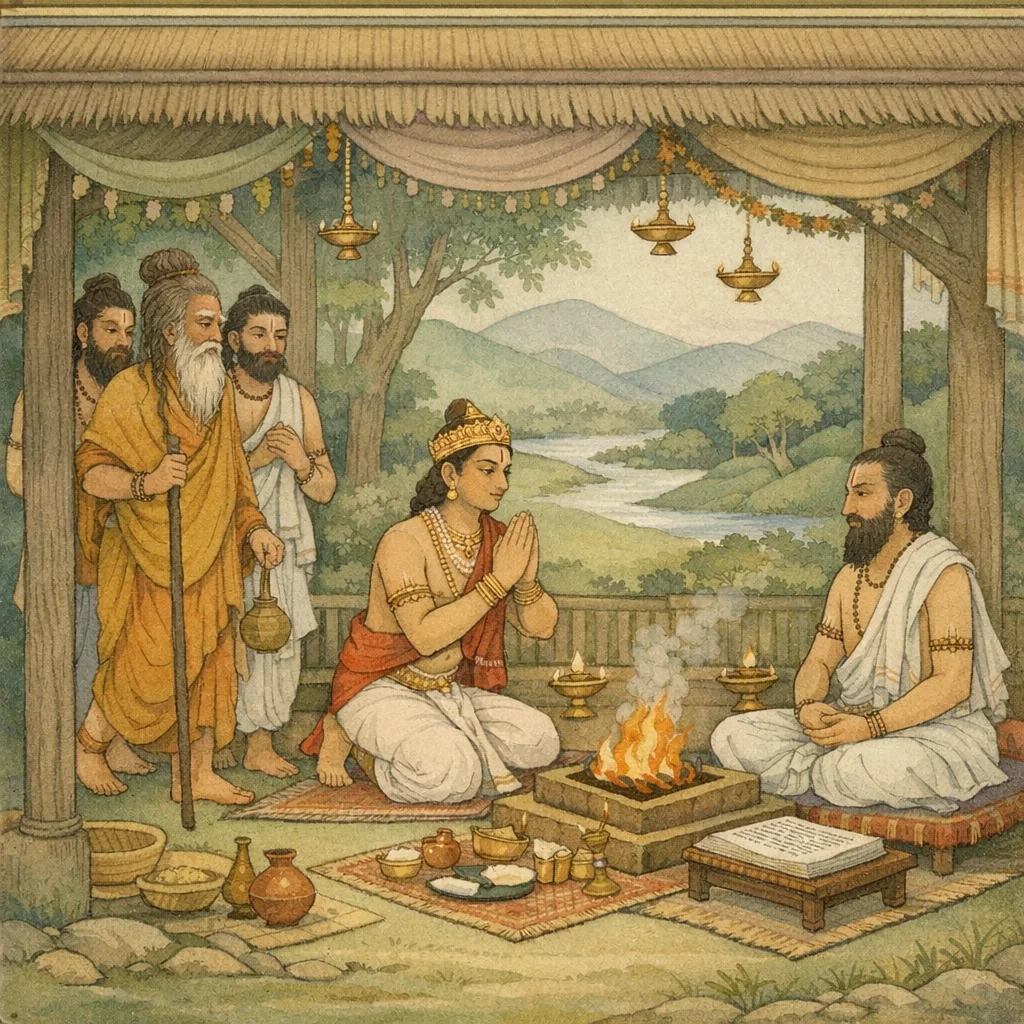
षष्टितमो< ध्याय: जनमेजयके यज्ञमें व्यासमजीका आगमन, सत्कार तथा राजाकी प्रार्थनासे व्यासजीका वैशम्पायनजीसे महाभारत- कथा सुनानेके लिये कहना सौतिरुवाच श्र॒त्वा तु सर्पसत्राय दीक्षितं जनमेजयम् । अभ्यगच्छदृषिर्विद्वान् कृष्णद्वैपायनस्तदा,उग्रश्रवाजी कहते हैं--शौनक! जब विद्वान महर्षि श्रीकृष्णद्वैधयायनने यह सुना कि राजा जनमेजय सर्पयज्ञकी दीक्षा ले चुके हैं, तब वे वहाँ आये
Ugraśravas (Sauti) said: “O Śaunaka, when the wise sage Kṛṣṇa Dvaipāyana (Vyāsa) heard that King Janamejaya had been consecrated for the serpent-sacrifice (sarpa-satra), he came there at once.”
Verse 2
जनयामास यं काली शक्ति: पुत्रात् पराशरात् कन्यैव यमुनाद्वीपे पाण्डवानां पितामहम्,वेदव्यासजीको सत्यवतीने कन्यावस्थामें ही शक्तिनन्दन पराशरजीसे यमुनाजीके द्वीपमें उत्पन्न किया था। वे पाण्डवोंके पितामह हैं
Ugraśravas said: “Kālī—the daughter of the sage Śakti—while still a maiden, gave birth to him (Vyāsa) on an island in the Yamunā through Parāśara. That child became the grandsire of the Pāṇḍavas.”
Verse 3
जातमात्रश्न यः सद्य इष्ट्या देहमवीवृधत् | वेदांश्नाधिजगे साड्रान् सेतिहासान् महायशा:,जन्म लेते ही उन्होंने अपनी इच्छासे शरीरको बढ़ा लिया तथा उन महायशस्वी व्यासजीको (स्वतः: ही) अंगों और इतिहासोंसहित सम्पूर्ण वेदों और उस परमात्मतत्त्वका ज्ञान प्राप्त हो गया, जिसे कोई तपस्या, वेदाध्ययन, व्रत, उपवास, शम और यज्ञ आदिके द्वारा भी नहीं प्राप्त कर सकता
Ugraśravas said: “As soon as he was born, he at once caused his body to grow by mere will. That greatly renowned one also immediately mastered the Vedas in their entirety, together with their ancillary disciplines and the Itihāsa tradition.”
Verse 4
यन्नैति तपसा वक्षिन्न वेदाध्ययनेन च । न व्रतैनोंपवासैश्ल न प्रशान्त्या न मन्युना,जन्म लेते ही उन्होंने अपनी इच्छासे शरीरको बढ़ा लिया तथा उन महायशस्वी व्यासजीको (स्वतः: ही) अंगों और इतिहासोंसहित सम्पूर्ण वेदों और उस परमात्मतत्त्वका ज्ञान प्राप्त हो गया, जिसे कोई तपस्या, वेदाध्ययन, व्रत, उपवास, शम और यज्ञ आदिके द्वारा भी नहीं प्राप्त कर सकता
Ugraśravas said: “O eloquent one, that supreme reality is not attained by austerity, nor by mere study of the Vedas; not by vows or fasting, not by outward calm, and not by anger-driven effort.”
Verse 5
विव्यासैकं चतुर्धा यो वेदं वेदविदां वर: । परावरज्ञो ब्रह्मर्षि: कवि: सत्यव्रत शुचि:,वे वेदवेत्ताओंमें श्रेष्ठ थे और उन्होंने एक ही वेदको चार भागोंमें विभक्त किया था। ब्रह्मर्षि व्यासजी परब्रह्म और अपरब्रह्म॒के ज्ञाता, कवि (त्रिकालदर्शी), सत्यव्रतपरायण तथा परम पवित्र हैं
Śaunaka said: “That Vyāsa—foremost among the knowers of the Veda—who divided the single Veda into four parts, is a brahmarṣi who knows both the higher and the lower realities; a seer-poet with vision across time, steadfast in truth, and utterly pure.”
Verse 6
यः पाए-डुं धृतराष्ट्रं च विदुरं चाप्पजीजनत् । शान्तनो: संततिं तन्वन् पुण्यकीर्तिमहायशा:,उनकी कीर्ति पुण्यमयी है और वे महान् यशस्वी हैं। उन्होंने ही शान्तनुकी संतान- परम्पराका विस्तार करनेके लिये पाण्डु, धृतराष्ट्र तथा विदुरको जन्म दिया था
Śaunaka said: “He whose fame is holy and whose renown is great—he it was who begot Pāṇḍu, Dhṛtarāṣṭra, and Vidura, thereby extending the line of Śāntanu.”
Verse 7
जनमेजयस्य राजर्षे: स महात्मा सदस्तदा । विवेश सहित: शिष्यैवेंदवेदाड़पारगै:,उन महात्मा व्यासने वेद-वेदांगोंके पारंगत विद्वान शिष्योंके साथ उस समय राजर्षि जनमेजयके यज्ञमण्डपमें प्रवेश किया
Śaunaka said: At that time, that great-souled sage entered the assembly-hall of the royal seer Janamejaya, accompanied by disciples who had mastered the Vedas and the auxiliary sciences.
Verse 8
तत्र राजानमासीनं ददर्श जनमेजयम् । वृतं सदस्यैर्बहुभिददेवैरिव पुरन्दरम्,वहाँ पहुँचकर उन्होंने सिंहासनपर बैठे हुए राजा जनमेजयको देखा, जो बहुत-से सभासदोंद्वारा इस प्रकार घिरे हुए थे, मानो देवराज इन्द्र देवताओंसे घिरे हुए हों
There he beheld King Janamejaya seated upon his throne, surrounded by many members of the royal assembly—like Indra, the slayer of Pura, encircled by the gods.
Verse 9
तथा मूर्धाभिषिक्तैश्न नानाजनपदेश्वरै: । ऋषच्विम्भि््रह्म॒कल्पैश्व कुशलैर्यज्ञसंस्तरे,जिनके मस्तकोंपर अभिषेक किया गया था, ऐसे अनेक जनपदोंके नरेश तथा यज्ञानुष्ठानमें कुशल ब्रह्माजीके समान योग्यतावाले ऋत्विज् भी उन्हें सब ओरसे घेरे हुए थे
So too, many rulers—consecrated by royal anointing and governing diverse realms—surrounded him on every side; and along with them were officiating priests (ṛtvij), Brahmin-like in dignity and competence, skilled in arranging and conducting sacrificial rites (yajña).
Verse 10
जनमेजयस्तु राजर्षिदृष्टवा तमृषिमागतम् । सगणो<थभ्युद्ययौ तूर्ण प्रीत्या भरतसत्तम:,भरतश्रेष्ठ राजर्षि जनमेजय महर्षि व्यासको आया देख बड़ी प्रसन्नताके साथ उठकर खड़े हो गये और अपने सेवकगणोंके साथ तुरंत ही उनकी अगवानी करनेके लिये चल दिये
King Janamejaya, the royal sage, seeing that seer arrive, rose at once in joy. With his attendants about him, the best of the Bharatas hurried forward to welcome and receive him with due honor.
Verse 11
काउ्चनं विष्टरं तस्मै सदस्यानुमत:ः प्रभु: । आसन कल्पयामास यथा शक्रो बृहस्पते:,जैसे इन्द्र बृहस्पतिजीको आसन देते हैं, उसी प्रकार राजाने सदस्योंकी अनुमति लेकर व्यासजीके लिये सुवर्णका विष्टर दे आसनकी व्यवस्था की
Śaunaka said: With the assent of the assembled elders, the lord arranged for him a golden seat—just as Indra, king of the gods, provides a seat for Bṛhaspati.
Verse 12
तत्रोपविष्टं वरदं देवर्षिगणपूजितम् । पूजयामास राजेन्द्र: शास्त्रदृष्टेन कर्मणा,देवर्षियोंद्वारा पूजित वरदायक व्यासजी जब वहाँ बैठ गये, तब राजेन्द्र जनमेजयने शास्त्रीय विधिके अनुसार उनका पूजन किया
When the boon-bestowing sage, honored by the host of divine seers, had taken his seat there, King Janamejaya duly worshipped him according to the rites prescribed in the sacred tradition.
Verse 13
पाद्यमाचमनीयं च अर्घ्य गां च विधानतः । पितामहाय कृष्णाय तदर्हाय न्यवेदयत्,उन्होंने अपने पितामह श्रीकृष्णद्वैपायनको विधि-विधानके साथ पाद्य, आचमनीय, अर्घ्य और गौ भेंट की, जो इन वस्तुओंको पानेके अधिकारी थे
He duly presented the traditional offerings—water for washing the feet, water for sipping, the respectful arghya, and even a cow—to his grandsire Kṛṣṇa Dvaipāyana (Vyāsa), who was worthy of receiving such honors.
Verse 14
प्रतिगृह तु तां पूजां पाण्डवाज्जनमेजयात् । गां चैव समनुज्ञाप्य व्यास: प्रीतो5भवत् तदा,पाण्डववंशी जनमेजयसे वह पूजा ग्रहण करके गौके सम्बन्धमें अपना आदर व्यक्त करते हुए व्यासजी उस समय बड़े प्रसन्न हुए
Having accepted that act of reverence from Janamejaya, the descendant of the Pāṇḍavas, and having also graciously assented regarding the cow offered in honor, Vyāsa was at that time greatly pleased.
Verse 15
तथा च पूजयित्वा तं प्रणयात् प्रपितामहम् | उपोपविश्य प्रीतात्मा पर्यपृष्छठनामयम्,पितामह व्यासजीका प्रेमपूर्वक पूजन करके जनमेजयका चित्त प्रसन्न हो गया और वे उनके पास बैठकर कुशल-मंगल पूछने लगे
And having thus honored that great-grandfather with affectionate reverence, he sat down near him with a delighted heart and inquired after his well-being—asking whether he was free from illness and distress.
Verse 16
भगवानपि तं॑ दृष्टवा कुशल प्रतिवेद्य च । सदस्यै: पूजित: सर्वे: सदस्यान् प्रत्यपूजयत्,भगवान् व्यासने भी जनमेजयकी ओर देखकर अपना कुशल-समाचार बताया तथा अन्य सभासदोंद्वारा सम्मानित हो उनका भी सम्मान किया
Seeing him, the venerable sage first conveyed his well-being. Then, having been honored by all the assembled members, he returned their courtesy by honoring the assembly in turn—modeling the ethic of mutual respect and proper conduct in a learned gathering.
Verse 17
ततस्तु सहित: सर्वे: सदस्यैर्जनमेजय: । इदं पश्चाद् द्विजश्रेष्ठं पर्यपृच्छत् कृताञज्जलि:,तदनन्तर सब सदस्योंसहित राजा जनमेजयने हाथ जोड़कर द्विजश्रेष्ठ व्यासजीसे इस प्रकार प्रश्न किया
Then King Janamejaya, accompanied by all the assembled members of the council, respectfully joined his palms and, addressing the foremost of the twice-born, asked his question.
Verse 18
जनमेजय उवाच कुरूणां पाण्डवानां च भवानू प्रत्यक्षदर्शिवान् तेषां चरितमिच्छामि कथ्यमान त्वया द्विज,जनमेजयने कहा--ब्रह्मम! आप कौरवों और पाण्डवोंको प्रत्यक्ष देख चुके हैं; अतः मैं आपके द्वारा वर्णित उनके चरित्रको सुनना चाहता हूँ
Janamejaya said: “O Brahmin, you have directly seen both the Kurus and the Pāṇḍavas. Therefore I wish to hear, as narrated by you, the account of their conduct and character.”
Verse 19
कथं समभवद् भेदस्तेषामक्लिष्टकर्मणाम् । तच्च युद्ध कथं वृत्तं भूतान्तकरणं महत्,वे तो राग-द्वेष आदि दोषोंसे रहित सत्कर्म करनेवाले थे, उनमें भेद-बुद्धि कैसे उत्पन्न हुई? तथा प्राणियोंका अन्त करनेवाला उनका वह महायुद्ध किस प्रकार हुआ?
Janamejaya said: “How did dissension arise among those men of untroubled, righteous conduct? And how did that great war—so vast and so destructive as to bring about the end of countless beings—come to pass?”
Verse 20
पितामहानां सर्वेषां दैवेनानिष्टचेतसाम् । कार्त्स्न्येनितन्ममाचक्ष्व यथावृत्तं द्विजोत्तम,द्विजश्रेष्ठट जान पड़ता है, प्रारब्धने ही प्रेरणा करके मेरे सब प्रपितामहोंके मनको युद्धरूपी अनिष्टमें लगा दिया था। उनके इस सम्पूर्ण वृत्तानन््तका आप यथावत् रूपसे वर्णन करें
Janamejaya said: “O best of twice-born sages, tell me in full, exactly as it happened, the entire account of how fate turned the minds of all my forefathers toward what was undesirable—toward the calamity of war.”
Verse 21
सौतिरुवाच तस्य तद् वचन श्रुत्वा कृष्णद्वैधायनस्तदा । शशास शिष्यमासीनं वैशम्पायनमन्तिके,उग्रश्रवाजी कहते हैं-जनमेजयकी यह बात सुनकर श्रीकृष्णद्वैपायन व्यासने पास ही बैठे हुए अपने शिष्य वैशम्पायनको उस समय इस प्रकार आदेश दिया
Ugraśravas (Sauti) said: Hearing those words of his, Kṛṣṇa Dvaidhāyana Vyāsa then instructed his disciple Vaiśampāyana, who was seated nearby.
Verse 22
व्यास उवाच कुरूणां पाण्डवानां च यथा भेदो5भवत् पुरा । तदस्मै सर्वमाचक्ष्व यन्मत्त: श्रुववानसि,व्यासजी बोले--वैशम्पायन! पूर्वकालमें कौरवों और पाण्डवोंमें जिस प्रकार फूट पड़ी थी; जिसे तुम मुझसे सुन चुके हो, वह सब इस समय इन राजा जनमेजयको सुनाओ
Vyāsa said: “O Vaiśampāyana, recount to this King Janamejaya in full how, in former times, the rupture arose between the Kurus and the Pāṇḍavas—everything that you have heard from me.”
Verse 23
गुरोर्वचनमाज्ञाय स तु विप्रर्षभस्तदा । आचचक्षे तत: सर्वमितिहासं पुरातनम्,उस समय गुरुदेव व्यासजीकी यह आज्ञा पाकर विप्रवर वैशम्पायनने राजा जनमेजय, सभासदगण तथा अन्य सब भूपालोंसे कौरव-पाण्डवोंमें जिस प्रकार फूट पड़ी और उनका सर्वनाश हुआ, वह सब पुरातन इतिहास कहना प्रारम्भ किया
Having understood and accepted his teacher’s command, that foremost of Brahmins then began to recount in full the ancient history—how dissension arose between the Kauravas and the Pāṇḍavas and how it led to their complete destruction.
Verse 24
राज्ञे तस्मै सदस्येभ्य: पार्थिवेभ्यश्व सर्वश: । भेदं सर्वविनाशं च कुरुपाण्डवयोस्तदा,उस समय गुरुदेव व्यासजीकी यह आज्ञा पाकर विप्रवर वैशम्पायनने राजा जनमेजय, सभासदगण तथा अन्य सब भूपालोंसे कौरव-पाण्डवोंमें जिस प्रकार फूट पड़ी और उनका सर्वनाश हुआ, वह सब पुरातन इतिहास कहना प्रारम्भ किया
To that king, to the assembled members of the court, and to all the other rulers present, the narrator began to relate the ancient history—how, at that time, a fatal division arose between the Kurus and the Pāṇḍavas, and how that rupture led to their complete destruction.
Verse 60
इति श्रीमहाभारते आदिपर्वणि अंशावतरणपर्वणि कथानुबन्धे षष्टितमो5ध्याय: ।। ६० || इस प्रकार श्रीमहाभारत आदिपर्वके अन्तर्गत अंशावतरणपर्वमें कथानुबन्धविषयक साठवाँ अध्याय पूरा हुआ
Thus, in the Śrī Mahābhārata, within the Ādi Parva, in the section called the Aṃśāvataraṇa Parva, the sixtieth chapter—dealing with the linkage and continuation of the narrative—comes to an end. (This is the chapter-colophon marking the completion of Chapter 60.)
Frequently Asked Questions
The chapter does not stage a single immediate dharma-sankat; instead it frames a structural ethical problem: how authority and obligation are justified through descent, sanctioned unions, and assigned functions, which later episodes must interpret amid conflicting duties.
The upadeśa is that human history is intelligible only within a wider causal map: lineages encode roles, capacities, and constraints, and disciplined attention to origins supports clearer judgment about dharma in complex situations.
Yes. The closing verses state that hearing this ordered account of great beings’ origins purifies the listener from wrongdoing, supports comprehensive understanding, and is associated with attaining an elevated course (gati), functioning as a chapter-level phalaśruti.