Adhyaya 51
आस्तीक-वरप्रदानम् (Āstīka’s Boon and the Interruption of the Sarpa-satra)
Upa-parva: Sarpa-Satra (Janamejaya’s Serpent-Sacrifice) Episode
Chapter 51 stages a high-tension convergence of ritual efficacy, royal anger, and dharmic speech-constraints. Janamejaya observes that the youthful Āstīka speaks with the gravity of an elder and declares his intent to grant him a boon, requesting the assembled priests to facilitate it. The priests affirm that a brahmin—learned or not—deserves honor and indicate that the ritual is successfully compelling Takṣaka to approach. The narrative reports Indra’s protective involvement: Takṣaka, fearful, is described as being near Indra (even placed upon Indra’s garment), prompting Janamejaya to demand that the priests cause Takṣaka to fall together with Indra into the fire. The officiants announce Takṣaka’s imminent arrival, describing the serpent’s disoriented descent under mantra-force. At this critical interval, Āstīka urges “this is the moment” and claims the promised boon: he requests that the king’s sacrifice cease so that serpents do not continue to fall into the fire. Janamejaya, reluctant, offers alternative gifts (gold, silver, cattle), but Āstīka refuses and repeats the sole demand—cessation—framing it as welfare for his maternal lineage. The chapter closes with the learned assembly advising the king to allow the brahmin to obtain his boon, underscoring the binding authority of given speech over ongoing retaliatory action.
Chapter Arc: सूत उग्रश्रवा जनमेजय के सर्पयज्ञ-उपक्रम का सूत्र पकड़ते हैं—राजा, मंत्रियों और ऋत्विजों की सम्मति से, प्रतिज्ञा को कर्म में बदलने हेतु यज्ञ का संकल्प करता है। → राजा पुरोहित और ऋत्विजों को बुलाकर विधिपूर्वक यज्ञ-आयोजन का आदेश देता है; शास्त्रानुसार यज्ञायतन के लिए भूमि मापी जाती है, मंडप रचा जाता है, और तक्षक-वध के प्रतिशोध का संकल्प भीतर-भीतर तीक्ष्ण होता जाता है। → यज्ञायतन बनते समय एक ‘महान निमित्त’ प्रकट होता है—ऐसा संकेत जो यज्ञ में विघ्न डालने वाला है; उसी क्षण राजसत्ता और वैदिक विधि के बीच तनाव चरम पर पहुँचता है। → दीक्षा से पहले जनमेजय सुरक्षा-व्यवस्था कड़ी करता है—द्वारपाल/क्षत्ता को आज्ञा देता है कि कोई अज्ञात व्यक्ति भीतर न प्रवेश करे; यज्ञ-स्थल की पवित्रता और नियंत्रण को प्राथमिकता दी जाती है। → विघ्नकारी निमित्त का रहस्य और उसका स्रोत अनकहा रह जाता है—क्या यह नागों की प्रतिक्रिया है, या धर्म की चेतावनी; और क्या कोई ‘अपरिचित’ फिर भी भीतर प्रवेश करेगा?
Shlokas
Verse 1
/ ऑपन-- मा बछ। अि<-छऋाल एकपज्चाशक्तो< ध्याय: जनमेजयके सर्पयज्ञका उपक्रम सौतिरुवाच एवमुक्त्वा ततः श्रीमान् मन्सत्रिभिश्नानुमोदित: । आरुरोह प्रतिज्ञां स सर्पसत्राय पार्थिव:,उग्रश्रवाजी कहते हैं--शौनक! श्रीमान् राजा जनमेजयने जब ऐसा कहा, तब उनके मन्त्रियोंने भी उस बातका समर्थन किया। तत्पश्चात् राजा सर्पयज्ञ करनेकी प्रतिज्ञापर आरूढ़ हो गये
Ugraśravas said: “O Śaunaka, after King Janamejaya spoke thus, his ministers also approved his resolve. Thereupon the illustrious ruler firmly took up his vow to undertake the serpent-sacrifice.” The passage frames a king’s decision as publicly ratified by counsel, highlighting how a ruler’s intent—especially when driven by anger or retribution—can be strengthened by endorsement and thus set into motion with grave ethical consequences.
Verse 2
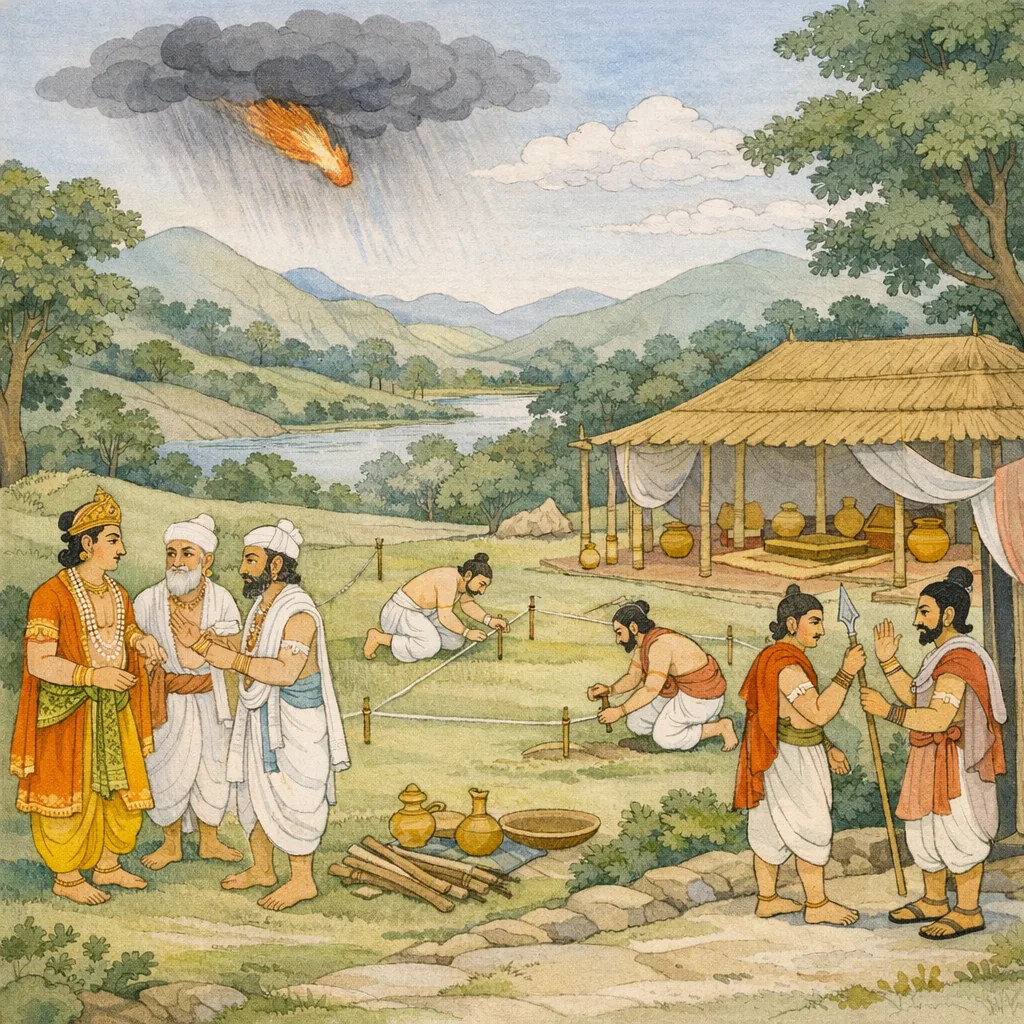
ब्रह्मन् भरतशार्दूलो राजा पारिक्षितस्तदा | पुरोहितमथाहूय ऋत्विजो वसुधाधिप:
Janamejaya said: “O Brāhmaṇa, at that time King Parīkṣit—lion among the Bharatas, lord of the earth—summoned his royal priest and the officiating priests.”
Verse 3
अब्रवीद् वाक्यसम्पन्न: कार्यसम्पत्करं वच: | ब्रह्मन! सम्पूर्ण वसुधाके स्वामी भरतवंशियोंमें श्रेष्ठ परीक्षितुकुमार राजा जनमेजयने उस समय पुरोहित तथा ऋत्विजोंकों बुलाकर कार्य सिद्ध करनेवाली बात कही-- ।। २६ || यो मे हिंसितवांस्तातं तक्षक: स दुरात्मवान्,'ब्राह्मणो! जिस दुरात्मा तक्षकने मेरे पिताकी हत्या की है, उससे मैं उसी प्रकारका बदला लेना चाहता हूँ। इसके लिये मुझे क्या करना चाहिये, यह आपलोग बतावें। क्या आपलोगोंको ऐसा कोई कर्म विदित है जिसके द्वारा मैं तक्षक नागको उसके बन्धु- बान्धवोंसहित जलती हुई आगमें झोंक सकूँ? उसने अपनी विषाग्निसे पूर्वकालमें मेरे पिताको जिस प्रकार दग्ध किया था, उसी प्रकार मैं भी उस पापी सर्पको जलाकर भस्म कर देना चाहता हूँ!
Janamejaya said: “O Brahmin! I, Janamejaya—son of Parikshit, lord of the whole earth and foremost among the Bharatas—have summoned my family priest and the officiating priests to speak a word that will accomplish my purpose. The wicked serpent Takshaka, who killed my father, has wronged me. I wish to repay him in kind. Tell me what I should do. Do you know of a rite by which I can cast Takshaka, together with his kinsmen, into blazing fire? As he once burned my father with the fire of his poison, so I too desire to burn that sinful serpent and reduce him to ashes.”
Verse 4
प्रतिकुर्या तथा तस्य तद् भवन्तो ब्रुवन्तु मे । अपि तत् कर्म विदितं भवतां येन पन्नगम्,'ब्राह्मणो! जिस दुरात्मा तक्षकने मेरे पिताकी हत्या की है, उससे मैं उसी प्रकारका बदला लेना चाहता हूँ। इसके लिये मुझे क्या करना चाहिये, यह आपलोग बतावें। क्या आपलोगोंको ऐसा कोई कर्म विदित है जिसके द्वारा मैं तक्षक नागको उसके बन्धु- बान्धवोंसहित जलती हुई आगमें झोंक सकूँ? उसने अपनी विषाग्निसे पूर्वकालमें मेरे पिताको जिस प्रकार दग्ध किया था, उसी प्रकार मैं भी उस पापी सर्पको जलाकर भस्म कर देना चाहता हूँ!
Janamejaya said: “Tell me, revered ones, what I should do so that I may repay him in the same manner. Do you know of any rite or act by which that serpent may be brought under my power and made to suffer the consequence of his deed?” In context, Janamejaya’s words arise from grief and anger over his father’s death at Takṣaka’s hands; he seeks a retaliatory action framed as ‘equal return,’ raising an ethical tension between personal vengeance and righteous restraint.
Verse 5
तक्षकं सम्प्रदीप्तेड5ग्नौ प्रक्षिपेयं सबान्धवम् । यथा तेन पिता महां पूर्व दग्धो विषाग्निना । तथाहमपि तं पापं दग्धुमिच्छामि पन्नगम्,'ब्राह्मणो! जिस दुरात्मा तक्षकने मेरे पिताकी हत्या की है, उससे मैं उसी प्रकारका बदला लेना चाहता हूँ। इसके लिये मुझे क्या करना चाहिये, यह आपलोग बतावें। क्या आपलोगोंको ऐसा कोई कर्म विदित है जिसके द्वारा मैं तक्षक नागको उसके बन्धु- बान्धवोंसहित जलती हुई आगमें झोंक सकूँ? उसने अपनी विषाग्निसे पूर्वकालमें मेरे पिताको जिस प्रकार दग्ध किया था, उसी प्रकार मैं भी उस पापी सर्पको जलाकर भस्म कर देना चाहता हूँ!
Janamejaya said: “I wish to cast Takṣaka, together with all his kin, into a blazing fire. Just as that serpent once burned my noble father with the fire of his venom, so I too desire to burn that sinful nāga. O brāhmaṇa, tell me what I should do—do you know of any rite by which Takṣaka can be hurled into the flames along with his relatives?”
Verse 6
ऋत्विज ऊचु: अस्ति राजन् महत् सत्र त्वदर्थ देवनिर्मितम् । सर्पसत्रमिति ख्यातं पुराणे परिपठ्यते,ऋत्विजोंने कहा--राजन्! इसके लिये एक महान् यज्ञ है, जिसका देवताओंने आपके लिये पहलेसे ही निर्माण कर रखा है। उसका नाम है सर्पसत्र। पुराणोंमें उसका वर्णन आया है
The officiating priests said: “O king, there is a great sacrificial session, fashioned by the gods for your sake long ago. It is famed as the Sarpa-satra, and is recounted in the ancient Purāṇas.”
Verse 7
आहर्ता तस्य सत्रस्य त्वन्नान्यो5स्ति नराधिप । इति पौराणिका: प्राहुरस्माकं चास्ति स क्रतु:,नरेश्वर! उस यज्ञका अनुष्ठान करनेवाला आपके सिवा दूसरा कोई नहीं है, ऐसा पौराणिक विद्दान् कहते हैं। उस यज्ञका विधान हमलोगोंको मालूम है
“O lord of men, none but you can be the patron and accomplisher of that sacrificial session. Thus declare the learned authorities on the Purāṇas. And the ordinance for that rite is known to us as well.”
Verse 8
एवमुक्तः स राजर्षिमिने दग्धं॑ हि तक्षकम् | हुताशनमुखे दीप्ते प्रविष्टमिति सत्तम,साधुशिरोमणे! ऋत्विजोंके ऐसा कहनेपर राजर्षि जनमेजयको विश्वास हो गया कि अब तक्षक निश्चय ही प्रज्वलित अग्निके मुखमें समाकर भस्म हो जायगा
When the priests spoke thus, King Janamejaya became convinced that Takṣaka had indeed been burned—having entered the blazing mouth of the sacrificial fire and been reduced to ash.
Verse 9
ततोअ<ब्रवीन्मन्त्रविदस्तान् राजा ब्राह्मुणांस्तदा । आहरिष्यामि तत् सत्र सम्भारा: सम्प्रियन्तु मे,तब राजाने उस समय उन मन्त्रवेत्ता ब्राह्मणोंस कहा--“'मैं उस यज्ञका अनुष्ठान करूँगा। आपलोग उसके लिये आवश्यक सामग्री संग्रह कीजिये”
Then the king addressed those Brahmins skilled in sacred formulas: “I shall have that sacrificial session performed. Let the required materials for the rite be gathered and made ready for me.”
Verse 10
ततस्ते ऋत्विजस्तस्य शास्त्रतो द्विजसत्तम । त॑ं देशं मापयामासुर्यज्ञायतनकारणात्,द्विजश्रेष्ठ] तब उन ऋत्विजोंने शास्त्रीय विधिके अनुसार यज्ञमण्डप बनानेके लिये वहाँकी भूमि नाप ली
Then his officiating priests, following the prescriptions of the sacred manuals, measured out that site in order to establish the sacrificial enclosure and set the ritual ground.
Verse 11
यथावद् वेदविद्वांस: सर्वे बुद्धेः परं गता: । ऋद्धया परमया युक्तमिष्टं द्विजगणैर्युतम्,वे सभी ऋत्विज् वेदोंके यथावत् विद्वान् तथा परम बुद्धिमान थे। उन्होंने विधिपूर्वक मनके अनुरूप एक यज्ञ-मण्डप बनाया, जो परम समृद्धिसे सम्पन्न, उत्तम द्विजोंके समुदायसे सुशोभित, प्रचुर धनधान्यसे परिपूर्ण तथा ऋत्विजोंसे सुसेवित था। उस यज्ञमण्डपका निर्माण कराकर ऋत्विजोंने सर्पयज्ञकी सिद्धिके लिये उस समय राजा जनमेजयको दीक्षा दी। इसी समय जब कि सर्पसत्र अभी प्रारम्भ होनेवाला था, वहाँ पहले ही यह घटना घटित हुई
Janamejaya said: “All those learned in the Vedas were fully accomplished, having gone beyond ordinary understanding. The sacrificial arena was duly arranged, endowed with supreme prosperity, and graced by an assembly of excellent twice-born priests.”
Verse 12
प्रभूतधनधान्याब्यमृत्विग्भि: सुनिषेवितम् । निर्माय चापि विधिवद् यज्ञायतनमीप्सितम्,वे सभी ऋत्विज् वेदोंके यथावत् विद्वान् तथा परम बुद्धिमान थे। उन्होंने विधिपूर्वक मनके अनुरूप एक यज्ञ-मण्डप बनाया, जो परम समृद्धिसे सम्पन्न, उत्तम द्विजोंके समुदायसे सुशोभित, प्रचुर धनधान्यसे परिपूर्ण तथा ऋत्विजोंसे सुसेवित था। उस यज्ञमण्डपका निर्माण कराकर ऋत्विजोंने सर्पयज्ञकी सिद्धिके लिये उस समय राजा जनमेजयको दीक्षा दी। इसी समय जब कि सर्पसत्र अभी प्रारम्भ होनेवाला था, वहाँ पहले ही यह घटना घटित हुई
Janamejaya said: “They constructed, in due ritual order, the desired sacrificial enclosure—abundant in wealth and grain and well-attended by the officiating priests.”
Verse 13
राजान दीक्षयामासु: सर्पसत्राप्तये तदा । इदं चासीत् तत्र पूर्व सर्पसत्रे भविष्यति,वे सभी ऋत्विज् वेदोंके यथावत् विद्वान् तथा परम बुद्धिमान थे। उन्होंने विधिपूर्वक मनके अनुरूप एक यज्ञ-मण्डप बनाया, जो परम समृद्धिसे सम्पन्न, उत्तम द्विजोंके समुदायसे सुशोभित, प्रचुर धनधान्यसे परिपूर्ण तथा ऋत्विजोंसे सुसेवित था। उस यज्ञमण्डपका निर्माण कराकर ऋत्विजोंने सर्पयज्ञकी सिद्धिके लिये उस समय राजा जनमेजयको दीक्षा दी। इसी समय जब कि सर्पसत्र अभी प्रारम्भ होनेवाला था, वहाँ पहले ही यह घटना घटित हुई
Janamejaya said: “At that time the priests initiated the king for the successful accomplishment of the serpent-sacrifice. And just then—when the Sarpa-satra was about to begin—this event, already destined to occur in that sacrifice, took place there.”
Verse 14
निमित्तं महदुत्पन्नं यज्ञविघ्नकरं तदा । यज्ञस्यायतने तस्मिन् क्रियमाणे वचो<ब्रवीत्,उस यज्ञमें विघ्न डालनेवाला बहुत बड़ा कारण प्रकट हो गया। जब वह यज्ञमण्डप बनाया जा रहा था, उस समय वास्तुशास्त्रके पारंगत विद्वान बुद्धिमान एवं अनुभवी सूत्रधार शिल्पवेत्ता सूतने वहाँ आकर कहा--
Janamejaya said: “At that time, a great portent arose—one that threatened to obstruct the sacrifice. While the sacrificial enclosure was being constructed, a pronouncement was made there.”
Verse 15
स्थपतिर्बुद्धिसम्पन्नो वास्तुविद्याविशारद: । इत्यब्रवीत् सूत्रधार: सूत: पौराणिकस्तदा,उस यज्ञमें विघ्न डालनेवाला बहुत बड़ा कारण प्रकट हो गया। जब वह यज्ञमण्डप बनाया जा रहा था, उस समय वास्तुशास्त्रके पारंगत विद्वान बुद्धिमान एवं अनुभवी सूत्रधार शिल्पवेत्ता सूतने वहाँ आकर कहा--
Then the sthapati, endowed with keen intelligence and well-versed in the science of vāstu, spoke thus—the Sūta, the sūtradhāra, master of the works, and a knower of ancient lore.
Verse 16
यस्मिन् देशे च काले च मापनेयं प्रवर्तिता । ब्राह्मणं कारणं कृत्वा नायं संस्थास्यते क्रतु:,“जिस स्थान और समयमें यह यज्ञमण्डप मापनेकी क्रिया प्रारम्भ हुई है, उसे देखकर यह मालूम होता है कि एक ब्राह्मणको निमित्त बनाकर यह यज्ञ पूर्ण न हो सकेगा”
Janamejaya said: “From the very place and the very time at which the measuring of the sacrificial ground has been set in motion, the omen is plain: this sacrifice will not reach completion if a single brāhmaṇa is made the pretext or instrument. An undertaking begun under such inauspicious conditions cannot be brought to a successful end.”
Verse 17
एतच्छुत्वा तु राजासौ प्राग्दीक्षाकालमब्रवीत् । क्षत्तारं न हि मे कश्रिदज्ञात: प्रविशेदिति,यह सुनकर राजा जनमेजयने दीक्षा लेनेसे पहले ही सेवकको यह आदेश दे दिया --'मुझे सूचित किये बिना किसी अपरिचित व्यक्तिको यज्ञमण्डपमें प्रवेश न करने दिया जाय'
Janamejaya said: Hearing this, the king—before the time of his consecration (dīkṣā)—issued an order to the chamberlain: “Let no unknown person enter my sacrificial enclosure without my being informed.” The command reflects a ruler’s duty to safeguard the sanctity and security of a yajña, where negligence may bring both ritual disruption and moral fault.
Verse 50
इस प्रकार श्रीमहाभारत आदिपरववके अन्तर्गत आस्तीकपवरमें जनमेजय और सन्त्रियोंका संवादविषयक पचासवाँ अध्याय पूरा हुआ
Thus ends the fiftieth chapter of the Āstīka section within the Ādi Parva of the Śrī Mahābhārata, dealing with the dialogue between King Janamejaya and the Sūta narrator. The colophon marks a pause in the epic’s transmission and underscores the Mahābhārata’s ethical method: dharma is explored through questioning, listening, and reflective narration rather than mere assertion.
Verse 51
इति श्रीमहाभारते आदिपर्वणि आस्तीकपर्वणि सर्पसत्रोपक्रमे एकपज्चाशत्तमो5ध्याय:
Thus, in the Śrī Mahābhārata, within the Ādi Parva—specifically the Āstīka section—begins the account of the commencement of the snake-sacrifice (sarpa-satra); this is the fifty-first chapter.
Frequently Asked Questions
The dilemma is whether a ruler may continue an expansive retaliatory ritual once he has publicly committed to granting a boon—testing the priority of promised speech and hospitality over anger-driven completion.
The chapter teaches that dharma is operationalized through constraints: a vow to give (vara) and respect for brahminical petition can ethically interrupt even a technically successful exercise of power.
No explicit phalaśruti is stated here; the meta-point is structural—this episode models how the epic privileges dharmic speech-acts and counsel as higher-order regulators within the narrative’s moral economy.