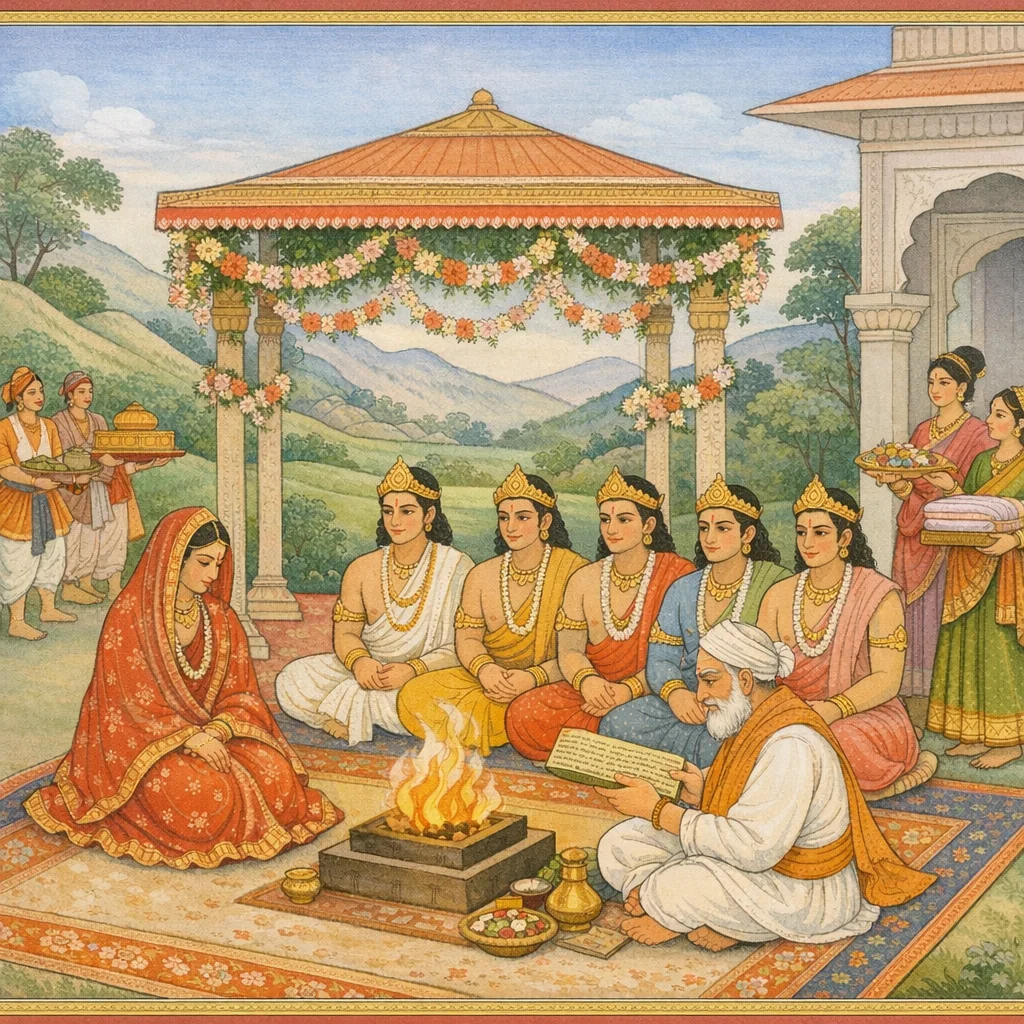
Adhyaya 197
Vidurovācā: Śreyas, Mantra, and Conciliation toward the Pāṇḍavas (विदुरोवाच—श्रेयः-मन्त्र-समाधानम्)
Upa-parva: Mantra–Nīti (Vidura’s Counsel to Dhṛtarāṣṭra) — Ādi Parva, late counsel sequence
Vidura addresses Dhṛtarāṣṭra, asserting that beneficial counsel does not take root in those unwilling to listen. He defends the integrity and competence of Bhīṣma and Droṇa as impartial elders equal in regard toward both Dhṛtarāṣṭra’s sons and the Pāṇḍavas, emphasizing their truthfulness, dharmic standing, and absence of malice. Vidura warns against the influence of Duryodhana, Karṇa, and Śakuni as strategically unsound and ethically compromised. He argues pragmatically that the Pāṇḍavas are difficult to defeat in conflict due to their prowess and alliances (including Kṛṣṇa, Balarāma, Sātyaki, and the Drupada–Pāñcāla network). The counsel recommends dharmic handling of inheritance and conciliation, including reputational repair for prior covert wrongdoing associated with Purocana, and proposes strengthening alliances rather than pursuing avoidable antagonism.
Chapter Arc: नारायण के सच्चिदानन्द-स्वरूप का स्मरण कर कथा विवाह-मण्डप में उतरती है—जहाँ दैव-विधान के आगे मनुष्य की चेष्टा मौन हो जाती है। → भाग्य की ‘अनिवर्तनीय ग्रन्थि’ का बोध उभरता है: जो स्वकर्म से लिखा गया, वह टलता नहीं। द्रौपदी के पूर्ववचन/पूर्वजन्म-संकेत और शंकर-विधान का उल्लेख विवाह के असाधारण स्वरूप को और रहस्यमय बनाता है—एक ही कन्या, पाँच पतियों का विधान। → वेदपारग पुरोहित अग्नि-साक्षी में पाणिग्रहण कराकर याज्ञसेनी को पाण्डवों के साथ विधिवत् प्रदक्षिणा कराता है—दैव-निर्णय अब सामाजिक-धार्मिक मुहर पाता है। → विवाह सम्पन्न होने पर द्रुपद महादान करता है—रथ, घोड़े, वस्त्र, आभूषण और विविध धन। पाण्डव पाञ्चालपुर से वैभव सहित प्रस्थान करते हैं; और द्रौपदी अपने शुभ शील-व्रत से सबके हृदय में प्रसन्नता बढ़ाती है। → पाँच-पत्नी-विधान की यह स्वीकृति भविष्य में धर्म, ईर्ष्या और राजनैतिक परिणतियों की नई गाँठें बाँधने को तैयार रहती है।
Shlokas
Verse 1
ऑपन--माजल बछ। अकाल > भगवान् नारायण सच्चिदानन्दघन हैं; उनके नाम, रूप, लीला और धाम--सभी चिन्मय हैं। उन्होंने अपने श्याम और श्वेत केशोंको द्वारमात्र बनाकर स्वयं ही सम्पूर्णरूपसे अपनेको प्रकट किया था। सप्तनवर्त्याधेकशततमो< ध्याय: द्रौोपदीका पाँचों पाण्डवोंके साथ विवाह द्ुपद उवाच अश्रुत्वैवं वचन ते महर्षे मया पूर्व यतितं संविधातुम् । न वै शक््यं विहितस्यापयानं तदेवेदमुपपन्नं विधानम्,द्रुपद बोले--'ब्रह्मर्ष! आपके इस वचनको न सुननेके कारण ही पहले मैंने वैसा करने (कृष्णाको एक ही योग्य पतिसे ब्याहने)-का प्रयत्न किया था; परंतु विधाताने जो रच रखा है, उसे टाल देना असम्भव है; अतः उसी पूर्वनिश्चित विधानका पालन करना उचित है
Drupada said: “O great seer, because I had not heard your counsel earlier, I previously strove to arrange matters otherwise—seeking to give her to a single suitable husband. But what the Ordainer has already set in place cannot be turned aside. Therefore, it is fitting to follow this very arrangement that has now come to pass, in accordance with the prior decree of destiny.”
Verse 2
दिष्टस्य ग्रन्थिरनिवर्तनीय: स्वकर्मणा विहितं नेह किंचित् । कृतं निमित्तं हि वरैकहेतो- स्तदेवेदमुपपन्नं विधानम्,भाग्यमें जो लिख दिया है, उसे कोई भी बदल नहीं सकता। अपने प्रयत्नसे यहाँ कुछ नहीं हो सकता। एक वरकी प्राप्तिके लिये जो साधन (तप) किया गया, वही पाँच पतियोंकी प्राप्तिका कारण बन गया; अतः दैवके द्वारा पूर्वनिश्चित विधानका ही पालन करना उचित है
Drupada said: “The knot of destiny cannot be undone. In this matter, nothing can be altered by one’s own effort. The means that was undertaken for the sake of obtaining a single boon has itself become the cause for obtaining five husbands. Therefore, it is fitting to accept and follow the ordinance that has already been fixed by fate.”
Verse 3
यथैव कृष्णोक्तवती पुरस्ता- चैक पतिं मे भगवान् ददातु । स चाप्येवं वरमित्यब्रवीत् तां देवो हि वेत्ता परमं यदत्र,पूर्वजन्ममें कृष्णाने अनेक बार भगवान् शंकरसे कहा--'प्रभो! मुझे पति दें।” जैसा उसने कहा, वैसा ही वर उन्होंने भी उसे दे दिया। अत: इसमें कौन-सा उत्तम रहस्य छिपा है, उसे वे भगवान् ही जानते हैं
Drupada said: “Just as Kṛṣṇā had formerly spoken—‘May the Blessed Lord grant me a single husband’—so too did the god grant her that very boon. Therefore, what deeper and higher mystery lies in this matter is known fully only to that divine one.”
Verse 4
यदि चैवं विहित: शंकरेण धर्मोउधर्मो वा नात्र ममापराध: । गृह्नन्त्विमे विधिवत् पाणिमस्या यथोपजोष॑ं विहितैषां हि कृष्णा,यदि साक्षात् शंकरने ऐसा विधान किया है तो यह धर्म हो या अधर्म, इसमें मेरा कोई अपराध नहीं है। ये पाण्डवलोग विधिपूर्वक प्रसन्नतासे इसका पाणिग्रहण करें; विधाताने ही कृष्णाको इन पाण्डवोंकी पत्नी बनाया है
Drupada said: “If this has indeed been ordained by Śaṅkara, then whether it be deemed righteous or unrighteous, there is no fault on my part in it. Let these Pāṇḍavas, in due ritual form and with willing assent, take her hand in marriage; for it is the Disposer who has appointed Kṛṣṇā (Draupadī) to be the wife of these men.”
Verse 5
वैशम्पायन उवाच ततोड<ब्रवीद् भगवान् धर्मराज- मद्यैव पुण्याहमुत व: पाण्डवेय । अद्य पौष्यं योगमुपैति चन्द्रमा: पार्णिं कृष्णायास्त्वं गृहाणाद्य पूर्वम्,वैशम्पायनजी कहते हैं--जनमेजय! तदनन्तर भगवान् व्यासने धर्मराज युधिष्ठिरसे कहा--'पाण्डुनन्दन! आज ही तुम लोगोंके लिये पुण्य-दिवस है। आज चन्द्रमा भरण- पोषणकारक पुष्य नक्षत्रपर जा रहे हैं; इसलिये आज पहले तुम्हीं कृष्णाका पाणिग्रहण करो”
Vaiśampāyana said: Then the revered sage spoke to Dharmarāja (Yudhiṣṭhira): “O son of Pāṇḍu, today itself is an auspicious day for you all. Today the Moon is entering the nourishing Puṣya constellation; therefore, you should first take Kṛṣṇā’s hand in marriage today.”
Verse 6
ततो राजा यज्ञसेन: सपुत्रो जन्यार्थमुक्त बहु तत् तदग्र्यम् । समानयामास सुतां च कृष्णा- माप्लाव्य रत्नैर्बहुभिरविंभूष्य,व्यासजीका यह आदेश सुनकर पुत्रोंसहित राजा द्रुपदने वर-वधूके लिये कथित समस्त उत्तम वस्तुओंको मँगवाया और अपनी पुत्री कृष्णाको स्नान कराकर बहुत-से रत्नमय आभूषणोंद्वारा विभूषित किया
Vaiśampāyana said: Then King Yajñasena (Drupada), together with his sons, had brought in all the many excellent items that had been prescribed for the wedding. He then had his daughter Kṛṣṇā (Draupadī) bathed and adorned her with numerous jeweled ornaments—preparing her with due dignity for the rite of marriage.
Verse 7
ततस्तु सर्वे सुहददो नृपस्य समाजग्मु: सहिता मन्त्रिणश्व द्रष्टं विवाहं परमप्रतीता द्विजाश्न पौराश्न यथा प्रधाना:,तत्पश्चात् राजाके सभी सुहृद-सम्बन्धी, मन्त्री, ब्राह्मण और पुरवासी अत्यन्त प्रसन्न हो विवाह देखनेके लिये आये और बड़ोंको आगे करके बैठे
Thereafter, all the king’s friends and kinsmen, along with his ministers, the brāhmaṇas, and the townspeople, came in great delight to witness the wedding, and they sat in due order, placing the elders in front.
Verse 8
ततोअस्य वेश्माग्रयजनोपशोभितं विस्तीर्णपद्मोत्पलभूषिताजिरम् । बलौघरत्नौघविचित्रमाबभौ नभो यथा निर्मलतारकान्वितम्,तदनन्तर राजा ट्रुपदका वह भवन श्रेष्ठ पुरुषोंसे सुशोभित होने लगा। उसके आँगनको विस्तृत कमल और उत्पल आदिसे सजाया गया था। वहाँ एक ओर सेनाएँ खड़ी थीं और दूसरी ओर रत्नोंका ढेर लगा था। इससे वह राजभवन निर्मल तारकाओंसे संयुक्त आकाशकी भाँति विचित्र शोभा धारण कर रहा था
Vaiśampāyana said: Then his royal mansion began to shine, adorned with eminent people. Its courtyard was spread out and decorated with lotuses and blue lotuses. On one side stood masses of troops, and on another lay heaps of jewels. Thus that palace assumed a wondrous splendor, like a clear sky filled with stars.
Verse 9
ततस्तु ते कौरवराजपुत्रा विभूषिता: कुण्डलिनो युवान: । महार्हवस्त्राम्बरचन्दनो क्षिता: कृताभिषेका: कृतमड्लक्रिया:,इधर युवावस्थासे सम्पन्न कौरव-राजकुमार पाण्डव वस्त्राभूषणोंसे विभूषित और कुण्डलोंसे अलंकृत हो अभिषेक और मंगलाचार करके बहुमूल्य कपड़ों एवं केसर, चन्दनसे सुशोभित हुए
Then those youthful princes of the Kuru king’s line, adorned with ornaments and wearing earrings, were ceremonially consecrated. Having performed auspicious rites, they appeared splendid—clothed in costly garments and anointed with saffron and sandal—prepared in dignity for the public and sacred duties that lay ahead.
Verse 10
पुरोहितेनाग्निसमानवर्चसा सहैव धौम्येन यथाविधि प्रभो । क्रमेण सर्वे विविशुस्ततः सदो महर्षभा गोष्ठमिवाभिनन्दिन:,तब अग्निके समान तेजस्वी अपने पुरोहित धौम्यजीके साथ विधिपूर्वक बड़े-छोटेके क्रमसे वे सभी प्रसन्नतापूर्वक विवाहमण्डपमें गये--ठीक उसी तरह, जैसे बड़े-बड़े साँड गोशालामें प्रवेश करें
Vaiśampāyana said: O lord, accompanied by their priest Dhāumya—whose splendor was like fire—they all entered the ceremonial hall in due order and according to proper rite, rejoicing, like mighty bulls entering a cowshed. The scene underscores disciplined observance of ritual propriety and respectful hierarchy even amid festive excitement.
Verse 11
ततः समाधाय स वेदपारगो जुहाव मन्त्रैज्वलितं हुताशनम् । युधिष्ठिरं चाप्युपनीय मन्त्रवि- ज्रियोजयामास सहैव कृष्णया,तत्पश्चात् वेदके पारंगत विद्वान् मन्त्रज्ञ पुरोहित धौम्यने (वेदीपर) प्रज्वलित अग्निकी स्थापना करके उसमें मन्त्रोंद्रारा आहुति दी और युधिष्ठिरको बुलाकर कृष्णाके साथ उनका गँठबन्धन कर दिया
Then the Veda-knowing priest, having duly arranged the rite, offered oblations with sacred mantras into the blazing fire. Next, bringing Yudhiṣṭhira forward, the expert in mantras solemnized his marriage with Kṛṣṇā (Draupadī), joining them in the prescribed nuptial bond—an act that frames the union as a dharmic, publicly witnessed commitment rather than a private desire.
Verse 12
प्रदक्षिणं तौ प्रगृहीतपाणी समानयामास स वेदपारग: । ततो<भ्यनुज्ञाय तमाजिशोभिनं पुरोहितो राजगृहाद् विनिर्यया,वेदोंके परिपूर्ण विद्वान् पुरोहितने उन दोनों दम्पतिका पाणिग्रहण कराकर उनसे अग्निकी परिक्रमा करवायी, फिर (अन्य शास्त्रोक्त विधियोंका अनुष्ठान करके) उनका विवाहकार्य सम्पन्न कर दिया। इसके बाद संग्राममें शोभा पानेवाले युधिष्ठिरको छुट्टी देकर पुरोहितजी भी उस राजभवनसे बाहर चले गये
Vaiśampāyana said: The learned priest, well-versed in the Vedas, led the two—whose hands had been joined in the marriage rite—around the sacred fire in circumambulation. Then, having formally granted leave to that warrior who shone in battle, the priest departed from the royal residence.
Verse 13
क्रमेण चानेन नराधिपात्मजा वरस्त्रियस्ते जगृहुस्तदा करम् । अहन्यहन्युत्तमरूपधारिणो महारथा: कौरववंशवर्धना:,इसी क्रमसे कौरव-कुलकी वृद्धि करनेवाले, उत्तम शोभा धारण करनेवाले महारथी राजकुमार पाण्डवोंने एक-एक दिन परम सुन्दरी द्रौपदीका पाणिग्रहण किया
Vaiśampāyana said: In this very order, those royal princes—mighty warriors, bearers of excellent beauty, and increasers of the Kuru lineage—took the hand of that foremost lady in marriage, each on a successive day.
Verse 14
इदं च तत्राद्भुतरूपमुत्तमं जगाद देवर्षिरतीतमानुषम् । महानुभावा किल सा सुमध्यमा बभूव कनन््यैव गते गतेडहनि,देवर्षिने वहाँ घटित हुई इस 3 उत्तम एवं अलौकिक घटनाका वर्णन किया है कि सुन्दर कटिप्रदेशवाली महानुभावा प्रतिवार विवाहके दूसरे दिन कन्याभावको ही प्राप्त हो जाती थी
Vaiśampāyana said: There the divine seer also related a supremely wondrous marvel beyond human measure: that illustrious lady of slender waist would, as each day passed, become a maiden again—returning to virginity even after the second day of marriage.
Verse 15
कृते विवाहे द्रुपदो धनं ददौ महारथेभ्यो बहुरूपमुत्तमम् | शतं रथानां वरहेममालिनां चतुर्युजां हेमखलीनमालिनाम्,विवाह-कार्य सम्पन्न हो जानेपर ट्रपदने महारथी पाण्डवोंको दहेजमें बहुत-सा धन और नाना प्रकारकी उत्तम वस्तुएँ समर्पित कीं। सुन्दर सुवर्णकी मालाओं और सुवर्णजटित जुओंसे सुशोभित सौ रथ प्रदान किये, जिनमें चार-चार घोड़े जुते हुए थे
Vaiśampāyana said: When the wedding rites were completed, King Drupada presented the great chariot-warriors—the Pāṇḍavas—with abundant wealth and many kinds of excellent gifts as bridal offerings. He granted a hundred chariots, adorned with splendid garlands of fine gold and fitted with golden harness-ornaments, each chariot yoked with four horses.
Verse 16
शतं गजानामपि पद्मिनां तथा शतं गिरीणामिव हेमश्ज्ञिणाम् । तथैव दासीशतम ग्र्ययौवनं महाहवेषाभरणाम्बरस्रजम्,पद्म आदि उत्तम लक्षणोंसे युक्त सौ हाथी तथा पर्वतोंके समान ऊँचे और सुनहरे हौदोंसे सुशोभित सौ हाथी और (साथ ही) बहुमूल्य शुंगार-सामग्री, वस्त्राभूषण एवं हार धारण करनेवाली एक सौ नवयौवना दासियाँ भी भेंट की
Vaiśampāyana said: He presented a hundred noble elephants as well—lotus-marked and auspicious—and another hundred towering like mountains, adorned with golden trappings. Likewise, he offered a hundred young maidservants in the prime of youth, richly arrayed with costly ornaments, garments, and garlands.
Verse 17
पृथक् पृथग दिव्यदृशां पुनर्ददौ तदा धनं सौमकिरग्निसाक्षिकम् | तथैव वस्त्राणि विभूषणानि प्रभावयुक्तानि महानुभाव:,सोमकवंशमें उत्पन्न महानुभाव राजा द्रुपदने इस प्रकार अग्निको साक्षी बनाकर प्रत्येक सुन्दर दृष्टिवाले पाण्डवोंके लिये अलग-अलग प्रचुर धन तथा प्रभुत्व-सूचक बहुमूल्य वस्त्र और आभूषण अर्पित किये
Vaiśaṃpāyana said: Then King Drupada—born in the Somaka line and a man of great stature—again bestowed, separately upon each of the radiant Pandavas, abundant wealth, making Agni the witness; and likewise he offered costly garments and ornaments, endowed with marks of royal power and prestige.
Verse 18
कृते विवाहे च ततस्तु पाण्डवा: प्रभूतरत्नामुपलभ्य तां श्रियम् । विजहुरिन्द्रप्रतिमा महाबला: पुरे तु पाज्चालनृपस्य तस्य ह,विवाहके पश्चात् इन्द्रके समान महाबली पाण्डव प्रचुर रत्नराशिके साथ लक्ष्मीस्वरूपा द्रौपदीको पाकर पांचालराज ट्रपदके ही नगरमें सुखपूर्वक विहार करने लगे
Vaiśampāyana said: After the marriage was duly concluded, the Pāṇḍavas—mighty and comparable to Indra—having obtained that prosperity in the form of Draupadī along with abundant treasures, lived joyfully in the city of that Pāñcāla king (Drupada).
Verse 197
(सर्वेज्प्यतुष्यन् नृप पाण्डवेया- स्तस्या: शुभ: शीलसमाधिवृत्तै: । सा चाप्येषा याज्ञसेनी तदानीं विवर्धयामास मुद स्वसुव्रतैः ।।) राजन! सभी पाण्डव द्रौपदीकी सुशीलता, एकाग्रता और सद्व्यवहारसे बहुत संतुष्ट थे (और द्रौपदीको भी संतुष्ट रखनेका प्रयत्न करते थे)। इसी प्रकार ट्रुपदकुमारी कृष्णा भी उस समय अपने उत्तम नियमोंद्वारा पाण्डवोंका आनन्द बढ़ाती थी। इति श्रीमहाभारते आदिपर्वणि वैवाहिकपर्वणि द्रौपदीविवाहे सप्तनवत्यधिकशततमो<ध्याय:
Vaiśampāyana said: O king, all the sons of Pāṇḍu were deeply pleased with her—by her auspicious character, her steadiness of mind, and her refined conduct. And she too, Yājñasenī (Draupadī), at that time increased the joy of the Pāṇḍavas through her own excellent vows and disciplined way of life.
Frequently Asked Questions
The dilemma is whether royal policy should follow impartial, welfare-oriented counsel (Bhīṣma/Droṇa/Vidura) or be captured by factional preference that prioritizes immediate advantage, risking adharma and long-term instability.
Sustainable governance requires śravaṇa (receptive listening) to well-wishing advisers, impartiality toward kin, and preference for conciliation when objectives can be achieved without escalation; ignoring such counsel erodes legitimacy and welfare.
No explicit phalaśruti is stated here; the chapter functions as pragmatic-ethical instruction, implying outcomes through rāja-nīti logic: adherence yields stability and reputational repair, while rejection amplifies conflict risk.