Adhyaya 188
Ādi Parva, Adhyāya 188 — Draupadī-Vivāha Dharma-Vicāra (Debate on the Legitimacy of One Wife for Five)
Upa-parva: Draupadī–Pāṇḍava Vivāha-Dharma Saṃvāda (Polyandry Legitimacy Discourse)
Vaiśaṃpāyana reports the reception of Kṛṣṇa by the Pāṇḍavas and the Pāñcāla party. After formal courtesies and seating, Pārṣata raises the central question: how can Draupadī be wife to multiple brothers without producing dharma-saṅkara? Vyāsa frames the issue as a contested dharma that appears to conflict with both social convention and Vedic expectation, inviting viewpoints. Drupada argues the arrangement is adharmic, unsupported by prior practice and incompatible with the principle of a single husband-wife pairing. Dhṛṣṭadyumna adds procedural doubt, emphasizing the subtlety of dharma and his inability to decide. Yudhiṣṭhira asserts sincerity and non-adharmic intent, citing purāṇic precedent (Gautamī Jaṭilā associated with multiple ṛṣis) and emphasizing the normative force of the guru’s word; he alludes to Kuntī’s directive (“bhaikṣavat bhujyatām”) as binding. Kuntī expresses fear of untruth and seeks resolution. Vyāsa reassures her and states the dharma is sanātana, then leads the king privately to explain the doctrinal basis for “bahūnām eka-patnitā” (one wife for many), while the others wait in suspense.
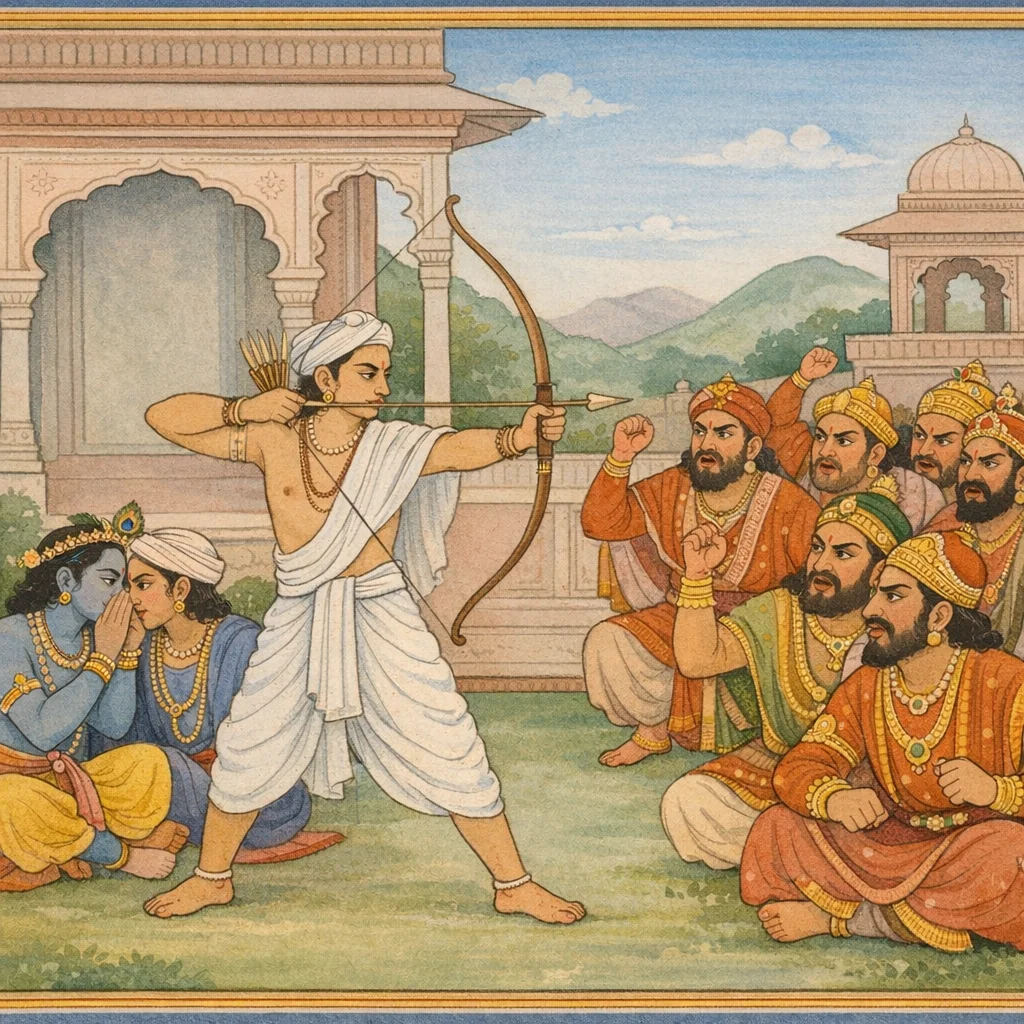
Chapter Arc: द्रौपदी-स्वयंवर के बाद सभा में एकत्र राजाओं का क्रोध भड़क उठता है—वे कहते हैं कि द्रुपद ने उन्हें तृणवत् समझकर एक ब्राह्मण को ‘योषितां वरा’ द्रौपदी देने का अपमान किया है। → राजा द्रुपद पर छल और कृतघ्नता का आरोप लगाते हैं—‘पहले बुलाकर सत्कार-भोजन कराया, फिर अब हमें नहीं मानता’; साथ ही शास्त्र-परंपरा का हवाला देकर कहते हैं कि स्वयंवर में वरण का अधिकार क्षत्रियों का है, ब्राह्मणों का नहीं। वे द्रुपद को मारने और द्रौपदी को छीनने को उद्यत होते हैं। → उन्मत्त गजराजों की भाँति टूट पड़ते राजाओं को पाण्डुपुत्र—विशेषतः अर्जुन और भीम—वेग से रोकते हैं; अर्जुन धनुष धारण कर निर्भय खड़ा रहता है और उनकी ‘अतिमानुष’ क्षमता देखकर दर्शक विस्मित हो उठते हैं। → कृष्ण (चक्रधर) और बलराम (हलायुध) पाण्डवों की शक्ति पहचानते हैं; बलराम कृष्ण से कहता है कि घबराहट न करो—भीम का अनुज (अर्जुन) युद्ध के लिए समर्थ है। कृष्ण के वचन/दृष्टि से प्रसंग का अर्थ स्पष्ट होता है: ये साधारण ब्राह्मण नहीं, असाधारण वीर हैं। → सभा में यह रहस्य और गाढ़ा होता है कि ये ‘ब्राह्मण-वेषधारी’ कौन हैं—क्या ये वही पाण्डव हैं जिनके जतु-गृह-दाह से बच निकलने की चर्चा सुनी गई थी?
Shlokas
Verse 1
(दाक्षिणात्य अधिक पाठके ५ ३६ “लोक मिलाकर कुल ३३३ “लोक हैं) नील (0) आफ +लअस+- अष्टा शीर्त्याधिकशततमोब् ध्याय: द्रपदको मारनेके लिये उद्यत हुए राजाओंका सामना करनेके लिये भीम और अर्जुनका उद्यत होना और उनके विषयमें भगवान् श्रीकृष्णका बलरामजीसे वार्तालाप वैशम्पायन उवाच तस्मै दित्सति कनन््यां तु ब्राह्मणाय तदा नृपे । कोप आसीन्महीपानामालोक्यान्योन्यमन्तिकात्,वैशम्पायनजी कहते हैं--जनमेजय! राजा ट्रुपद उस ब्राह्मणको कन्या देना चाहते हैं, यह जानकर उस समय राजाओंको बड़ा क्रोध हुआ और वे एक-दूसरेको देखकर तथा समीप आकर इस प्रकार कहने लगे--
Vaiśampāyana said: O king (Janamejaya), when King Drupada wished to give his daughter to that brāhmaṇa, the assembled rulers were seized by anger. Looking at one another and drawing near, they began to speak among themselves—revealing how personal desire and wounded pride can quickly turn a royal gathering toward conflict and adharma.
Verse 2
अस्मानयमतिक्रम्य तृणीकृत्य च संगतान् | दातुमिच्छति विप्राय द्रौपदी योषितां वराम्,“(अहो! देखो तो सही,) यह राजा ट्रुपद (यहाँ) एकत्र हुए हमलोगोंको तिनकेकी तरह तुच्छ समझकर और हमारा उल्लंघन करके युवतियोंमें श्रेष्ठ अपनी कन््याका विवाह एक ब्राह्मणके साथ करना चाहता है
Vaiśampāyana said: “Look at this—King Drupada, disregarding us and treating this assembled company as mere straw, wishes to give Draupadī, the finest among women, in marriage to a brāhmaṇa.”
Verse 3
अवरोप्येह वृक्ष तु फलकाले निपात्यते । निहन्मैनं दुरात्मानं योड्यमस्मान् न मन्यते,“यह वृक्ष लगाकर अब फल लगनेके समय उसे काटकर गिरा रहा है। अतः हमलोग इस दुरात्माको मार डालें; क्योंकि यह हमें कुछ नहीं समझ रहा है
Vaiśampāyana said: “Having planted this tree here, he is now felling it just when it is time to bear fruit. Therefore let us strike down this wicked man, for today he shows us no regard and does not consider us of any account.”
Verse 4
न हार्हत्येष सम्मान नापि वृद्धक्रमं गुणै: । हन्मैनं सह पुत्रेण दुराचारं नृपद्धिषम्,“यह राजा द्रुपद गुणोंके कारण हमसे वृद्धोचित सम्मान पानेका अधिकारी भी नहीं है; राजाओंसे द्वेष करनेवाले इस दुराचारीको पुत्रसहित हमलोग मार डालें
Vaiśampāyana said: “This king Drupada, by virtue of his qualities, does not deserve from us the honor due to an elder, nor the precedence accorded by seniority. Let us strike down this wicked man—one who bears hatred toward kings—together with his son.”
Verse 5
अयं हि सर्वानाहूय सत्कृत्य च नराधिपान् | गुणवद् भोजयित्वान्नं ततः पश्चान्न मन्यते,“पहले तो इसने हम सब राजाओंको बुलाकर सत्कार किया, उत्तम गुणयुक्त भोजन कराया और ऐसा करनेके बाद यह हमारा अपमान कर रहा है
For this man, having summoned all the kings, honored them, and fed them excellent food, now afterwards shows them no regard—after first extending hospitality, he proceeds to treat them with contempt.
Verse 6
अस्मिन् राजसमावाये देवानामिव संनये । किमयं सदृशं कज्चिन्नूपतिं नैव दृष्टवान्,“देवताओंके समूहकी भाँति उत्तम नीतिसे सुशोभित राजाओंके इस समुदायमें क्या इसने किसी भी नरेशको अपनी पुत्रीके योग्य नहीं देखा है?
Vaiśampāyana said: “In this royal assembly—resplendent with excellent polity, like a conclave of the gods—has he truly found no king at all who is a fitting match? Has he seen none worthy for his daughter?”
Verse 7
न च विप्रेष्वधीकारो विद्यते वरणं प्रति । स्वयंवर: क्षत्रियाणामितीयं प्रथिता श्रुति:,'स्वयंवरमें कन्याद्वारा वरण प्राप्त करनेका अधिकार ही ब्राह्मणोंको नहीं है। (लोगोंमें) यह बात प्रसिद्ध है कि स्वयंवर क्षत्रियोंका ही होता है
Vaiśampāyana said: “And among Brahmins there is no entitlement with respect to choosing in a svayaṃvara. It is a well-known traditional dictum that a svayaṃvara belongs to the Kṣatriyas.”
Verse 8
अथवा यदि कन्येयं न च कज्चिद् बुभूषति । अग्नावेनां परिक्षिप्य याम राष्ट्राणि पार्थिवा:,“अथवा राजाओ! यदि यह कन्या हमलोगोंमेंसे किसीको अपना पति बनाना न चाहे तो हम इसे जलती हुई आगमें झोंककर अपने-अपने राज्यको चल दें
Vaiśampāyana said: “Or else, O kings, if this maiden does not wish to choose any one of us as her husband, then let us cast her into the fire and depart, each to his own kingdom.”
Verse 9
ब्राह्मणो यदि चापल्याल्लो भाद् वा कृतवानिदम् | विप्रियं पार्थिवेन्द्राणां नैष वध्य: कथंचन,“यद्यपि इस ब्राह्मणने चपलताके कारण अथवा राजकन्याके प्रति लोभ होनेसे हम राजाओंका अप्रिय किया है, तथापि ब्राह्मण होनेके कारण हमें किसी प्रकार इसका वध नहीं करना चाहिये
“Even if this Brahmin did this out of fickleness, or out of greed for the princess, and so incurred the displeasure of the kings, he must not be slain—by no means whatsoever—for he is a Brahmin.”
Verse 10
ब्राह्मणार्थ हि नो राज्यं जीवितं हि वसूनि च । पुत्रपौत्रं च यच्चान्यदस्माकं विद्यते धनम्,“क्योंकि हमारा राज्य, जीवन, रत्न, पुत्र-पौत्र तथा और भी जो धन-वैभव है, वह सब ब्राह्मणोंके लिये ही है। (ब्राह्मणोंक लिये हम इन सब चीजोंका त्याग कर सकते हैं)
Vaiśampāyana said: “For the sake of Brahmins, indeed, are our kingdom, our very life, and our treasures; for their sake are our sons and grandsons as well, and whatever other wealth we possess. All that we have is meant to serve the Brahmins—and for them we are prepared to relinquish it.”
Verse 11
अवमानभयाच्चैव स्वधर्मस्य च रक्षणात् | स्वयंवराणामन्येषां मा भूदेवंविधा गति:,“ट्रपदको तो हम इसलिये दण्ड देना चाहते हैं कि (हमारा) अपमान न हो, हमारे धर्मकी रक्षा हो और दूसरे स्वयंवरोंकी भी ऐसी दुर्गति न हो”
Vaiśampāyana said: “Out of fear of dishonour, and in order to safeguard our own dharma, we wish to impose punishment—so that other svayaṃvaras may not meet such a disgraceful outcome.”
Verse 12
इत्युक्त्वा राजशार्दूला हृष्टा: परिघबाहव: । द्रुपदं तु जिघांसन्त: सायुधा: समुपाद्रवन्,यों कहकर परिघ-जैसी मोटी बाँहोंवाले वे श्रेष्ठ भूपाल हर्ष (और उत्साह)-में भरकर हाथोंमें अस्त्र-शस्त्र लिये ट्रपदको मारनेकी इच्छासे उनकी ओर वेगसे दौड़े
Vaiśampāyana said: “Having spoken thus, those tiger-like kings—broad-armed like iron clubs—were filled with exhilaration. Bearing weapons, and intent on killing Drupada, they rushed swiftly toward him.”
Verse 13
तान् गृहीतशरावापान् क्रुद्धानापततो बहून् द्रुपदो वीक्ष्य संत्रासाद् ब्राह्मणाउ्छरणं गत:,उन बहुत-से राजाओंको क्रोधमें भरकर धनुष लिये आते देख ट्रुपद अत्यन्त भयभीत हो ब्राह्मणोंकी शरणमें गये
Vaiśampāyana said: “Seeing many kings, enraged and rushing toward him with bows and arrows already in hand, Drupada—overwhelmed by fear—went to seek refuge among the brāhmaṇas.”
Verse 14
वेगेनापततस्तांस्तु प्रभिन्नानिव वारणान् । पाण्डुपुत्रौ महेष्वासौ प्रतियातावरिंदमौ,मदकी धारा बहानेवाले मदोनन््मत्त गजराजोंकी भाँति उन नरेशोंको वेगसे आते देख शत्रुदमन महाथनुर्धर पाण्डुनन्दन भीम और अर्जुन उनका सामना करनेके लिये आ गये
Vaiśampāyana said: Seeing those kings rush forward at great speed—like lordly elephants, maddened in rut, charging with full force—the two sons of Pāṇḍu, mighty archers and subduers of foes, Bhīma and Arjuna, advanced to meet them head-on.
Verse 15
ततः समुत्पेतुरुदायु धास्ते महीक्षितो बद्धगोधाड्गुलित्रा: । जिघांसमाना: कुरुराजपुत्रा- वमर्षयन्तो<र्जुनभीमसेनौ,तब हाथोंमें गोहके चमड़ेके दस्ताने पहने और आयुधोंको ऊपर उठाये अमर्षमें भरे हुए वे (सभी) नरेश कुरुराजकुमार अर्जुन और भीमसेनको मारनेके लिये उनपर टूट पड़े
Then the kings sprang up, weapons raised, their hands fitted with iguana-hide gloves. Burning with resentment, they surged forward intending to kill the Kuru princes Arjuna and Bhīmasena.
Verse 16
ततस्तु भीमो<द्भुतभीमकर्मा महाबलो वज़्समानसार: । उत्पाट्य दोर्भ्या ट्रुममेकवीरो निष्पत्रयामास यथा गजेन्द्र:,तब तो वज्रके समान शक्तिशाली तथा हक त एवं भयानक कर्म करनेवाले अद्वितीय वीर महाबली भीमसेनने गजराजकी भाँति दोनों हाथोंसे एक वृक्षको उखाड़ लिया और उसके पत्ते झाड़ दिये
Vaiśampāyana said: Then Bhīma—mighty in strength, adamantine in firmness, and famed for deeds both wondrous and fearsome—single-handedly tore up a tree with his two arms, and, like a lordly elephant, stripped it of its leaves.
Verse 17
त॑ वृक्षमादाय रिपुप्रमाथी दण्डीव दण्डं पितृराज उग्रम् तस्थौ समीपे पुरुषर्ष भस्य पार्थस्य पार्थ: पृथुदीर्घबाहु:,फिर मोटी और विशाल भुजाओंवाले शत्रुनाशन कुन्तीकुमार भीमसेन उसी वृक्षको हाथमें लेकर भयंकर दण्ड उठाये हुए दण्डधारी यमराजकी भाँति पुरुषोत्तम अर्जुनके समीप खड़े हो गये
Vaiśampāyana said: Taking up that tree, the foe-crushing son of Pṛthā—broad and long-armed—stood close beside Pārtha (Arjuna), the bull among men, like Yama, lord of the departed, standing with his dreadful staff.
Verse 18
तत् प्रेक्ष्य कर्मातिमनुष्यबुद्धि- जिंष्णु: स हि भ्रातुरचिन्त्यकर्मा | विसिष्मिये चापि भयं विहाय तस्थौ धरनुर्गहा महेन्द्रकर्मा,असाधारण बुद्धिवाले तथा देवराज इन्द्रके समान महापराक्रमी, अचिन्त्यकर्मा अर्जुन अपने भाई भीमसेनके (अद्भुत) कार्यको देखकर चकित हो उठे और छोड़कर धनुष हाथमें लिये हुए युद्धके लिये गये
Seeing that deed, Arjuna—of superhuman insight, ever-victorious, and famed for unfathomable exploits—marvelled at his brother’s astonishing action. Casting aside fear, he stood ready for battle, bow in hand, a warrior whose prowess was like that of Indra.
Verse 19
तत् प्रेक्ष्य कर्मातिमनुष्यबुद्धि- जिंष्णो: सहभ्रातुरचिन्त्यकर्मा । दामोदरो भ्रातरमुग्रवीर्य हलायुध॑ वाक्यमिदं बभाषे,जिनकी बुद्धि लोकोत्तर और कर्म अचिन्त्य हैं, उन भगवान् श्रीकृष्णने अर्जुन तथा उनके भाई भीमसेनका वह (साहसपूर्ण) कार्य देखकर भयंकर पराक्रमी एवं हलको ही आयुधके रूपमें धारण करनेवाले अपने भ्राता बलरामजीसे यह बात कही--
Seeing that daring deed of Arjuna—whose intelligence seemed beyond ordinary human measure—and of his brother, the unfathomably capable Dāmodara (Kṛṣṇa) addressed his own brother, the formidable and mighty Hālāyudha (Balarāma), bearer of the plough as his weapon, and spoke these words:
Verse 20
य एष सिंहर्षभखेलगामी महद्धनुः कर्षति तालमात्रम् । एषोडर्जुनो नात्र विचार्यमस्ति यद्यस्मि संकर्षण वासुदेव:,'भैया संकर्षण! ये जो श्रेष्ठ सिंहके समान चालसे लीलापूर्वक चल रहे हैं और तालके- बराबर विशाल धनुषको खींच रहे हैं, ये अर्जुन ही हैं; इसमें विचार करनेकी कोई बात नहीं है। यदि मैं वासुदेव हूँ तो मेरी यह बात झूठी नहीं है और ये जो बड़े वेगसे वृक्ष उखाड़कर सहसा समस्त राजाओंका सामना करनेके लिये उद्यत हुए हैं, भीमसेन हैं; क्योंकि इस समय पृथ्वीपर भीमसेनके सिवा दूसरा कोई ऐसा वीर नहीं है, जो युद्ध-भूमिमें यह अद्भुत पराक्रम कर सके
“O Saṅkarṣaṇa, this one who moves with playful ease like a lion among bulls, and who draws that mighty bow to the measure of a tāla—he is Arjuna; there is no need for doubt here. If I am Vāsudeva, then my word is not false.”
Verse 21
यस्त्वेष वृक्ष तरसावभज्य राज्ञां निकारे सहसा प्रवृत्त: । वृकोदरान्नान्य इहैतदद्य कर्तु समर्थ: समरे पृथिव्याम्,'भैया संकर्षण! ये जो श्रेष्ठ सिंहके समान चालसे लीलापूर्वक चल रहे हैं और तालके- बराबर विशाल धनुषको खींच रहे हैं, ये अर्जुन ही हैं; इसमें विचार करनेकी कोई बात नहीं है। यदि मैं वासुदेव हूँ तो मेरी यह बात झूठी नहीं है और ये जो बड़े वेगसे वृक्ष उखाड़कर सहसा समस्त राजाओंका सामना करनेके लिये उद्यत हुए हैं, भीमसेन हैं; क्योंकि इस समय पृथ्वीपर भीमसेनके सिवा दूसरा कोई ऐसा वीर नहीं है, जो युद्ध-भूमिमें यह अद्भुत पराक्रम कर सके
“But the one who, with sheer force, has torn up a tree and has suddenly rushed forward to confront the assembled kings—none other than Vṛkodara (Bhīma) on this earth today is capable of such a deed in battle.”
Verse 22
योडसौ पुरस्तात् कमलायताक्ष- स्तनुर्महासिंहगतिर्विनीत: । गौर: प्रलम्बोज्ज्वलचारुघोणो विनि:सृतः सो<च्युत धर्मपुत्र:,“अच्युत! जो विकसित कमलदलके समान विशाल नेत्रोंवाले, दुबले-पतले, विनयशील, गोरे, महान् सिंहकी-सी चालसे चलनेवाले तथा लंबी, सुन्दर एवं मनोहर नाकवाले पुरुष (अभी यहाँसे) निकले हैं, वे धर्मपुत्र युधिष्ठिर हैं
“O Acyuta, that man who has just gone out in front—lotus-petaled wide-eyed, slender in build, modest in demeanor, fair in complexion, moving with the majestic gait of a great lion, and bearing a long, radiant, handsome nose—he is Dharmaputra (Yudhiṣṭhira).”
Verse 23
यौ तौ कुमाराविव कार्तिकेयौ द्वावश्विनेयाविति मे वितर्क: । मुक्ता हि तस्माज्जतुवेश्मदाहा- न्मया श्रुता: पाण्डुसुता: पृथा च,“उनके साथ युगल कार्तिकेय-जैसे जो दो कुमार थे, वे अश्विनीकुमारोंके पुत्र नकुल और सहदेव रहे हैं--ऐसा मेरा अनुमान है; क्योंकि मैंने सुन रखा है कि उस लाक्षागृहके दाहसे पाण्डव और कुन्तीदेवी--सभी बचकर निकल गये थे
“Those two youths who were with them—like a pair of Kārttikeyas—must, in my judgment, have been the twin sons of the Aśvins, Nakula and Sahadeva. For I have heard that from the burning of that house of lac the sons of Pāṇḍu, along with Pṛthā (Kuntī), all escaped alive.”
Verse 24
(यथा नृपा: पाण्डवमाजिमध्ये त॑ प्राब्रवीच्चक्रधरो हलायुधम् । बल॑ विजाननू् पुरुषोत्तमस्तदा न कार्यमार्येण च सम्भ्रमस्त्वया ।। भीमानुजो योधयितु समर्थ एको हि पार्थ: ससुरासुरान् बहुन् । अल विजेतुं किमु मानुषान् नृपान् साहाय्यमस्मान् यदि सव्यसाची । स वाउछति सम प्रयताम वीर पराभव: पाण्डुसुते न चास्ति ।।) राजालोग रणभूमिमें पाण्डुपुत्र अर्जुनके प्रति अपना क्रोध जैसे प्रकट कर रहे थे, उसे सुनकर अर्जुनके बलको जानते हुए चक्रधारी पुरुषोत्तम भगवान् श्रीकृष्णने बलरामजीसे कहा--'भैया! आपको घबराना नहीं चाहिये। यदि बहुत-से देवता और असुर एकत्र हो जायूँ, तो भी भीमके छोटे भाई कुन्तीकुमार अर्जुन उन सबके साथ अकेले ही युद्ध करनेमें समर्थ हैं। फिर इन मानव-भूपालोंपर विजय पाना कौन बड़ी बात है। यदि सव्यसाची अर्जुन हमारी सहायता लेना चाहेंगे तो हम इसके लिये प्रयत्न करेंगे। वीरवर! मेरा विश्वास है कि पाण्डुपुत्र अर्जुनकी पराजय नहीं हो सकती।' तमब्रवीन्निर्जलतोयदाभो हलायुधो5नन्तरजं प्रतीत: । प्रीतो5स्मि दृष्टवा हि पितृष्वसारं पृथां विमुक्तां सह कौरवाग्रयै:,जलहीन मेघके समान गौरवर्णवाले हलधर (बलरामजी)-ने अपने छोटे भाई श्रीकृष्णकी बातपर विश्वास करके उनसे कहा--'भैया! कुरुकुलके श्रेष्ठ वीर पाण्डवोंसहित अपनी बुआ कुन्तीको लाक्षागृहसे बची हुई देखकर मुझे बड़ी प्रसन्नता हुई है”
Vaiśampāyana said: As the kings on the battlefield were voicing their anger against Arjuna, the Pāṇḍava, the discus-bearing Lord—the Supreme Person—knowing Arjuna’s strength, spoke to Halāyudha (Balarāma): “Noble brother, you should not be anxious. Pārtha, Bhīma’s younger brother, is able to fight alone even if many gods and asuras were gathered together—how much more these merely human kings. If the ambidextrous archer Arjuna should wish for our assistance, we shall exert ourselves for it. O hero, I am convinced there can be no defeat for the son of Pāṇḍu.” Trusting his younger brother’s words, the fair-complexioned, plough-weaponed Balarāma, like a rainless cloud, replied: “Brother, I am delighted to see our paternal aunt Pṛthā (Kuntī) freed, together with the foremost of the Kurus (the Pāṇḍavas), from the lac-house.”
Verse 188
इति श्रीमहा भारते आदिपर्वणि स्वयंवरपर्वणि कृष्णवाक्ये अष्टाशीत्यधिकशततमो< ध्याय:,इस प्रकार श्रीमह्याभारत आदिपर्वके अन्तर्गत स्वयंवरपर्वमें श्रीकृष्णवाक्यविषयक एक सौ अद्वासीवाँ अध्याय पूरा हुआ
Thus, in the revered Mahābhārata, within the Ādi Parva—specifically the Svayaṃvara section—ends the one hundred and eighty-eighth chapter, centered on Kṛṣṇa’s words. This closing colophon formally marks the completion of the chapter and frames the preceding discourse as authoritative guidance within the narrative’s ethical and political setting.
Frequently Asked Questions
Whether Draupadī can become “ekā bahūnām” (one wife for multiple husbands) without violating dharma or producing dharma-saṅkara, given apparent tension between customary marital norms and claims of authoritative sanction.
The chapter models ethical reasoning under uncertainty: when dharma appears conflicted, one should consult authoritative interpreters, evaluate precedent, and prioritize truthfulness and coherence over impulsive judgment.
No explicit phalaśruti is stated here; the meta-commentary is structural—Vyāsa’s reassurance that the rule is sanātana and his private instruction to the king signal that correct understanding of exceptional dharma depends on qualified transmission.