Adhyaya 180
Ādi Parva, Adhyāya 180 — Svayaṃvara-Virodha and Pāṇḍava Parākrama (Draupadī Episode)
Upa-parva: Svayaṃvara–Saṃrambha (Draupadī Svayaṃvara Aftermath Episode)
Vaiśaṃpāyana reports that when Drupada intends to give the maiden (Draupadī) to a brāhmaṇa (the successful contender in disguise), the assembled kings react with anger, interpreting the act as an affront to their status and to svayaṃvara convention. They articulate a rationale grounded in kṣatriya prerogative: selection in svayaṃvara is traditionally for kṣatriyas, and a brāhmaṇa is described as lacking adhikāra in this context. Some voices escalate toward punitive intent against Drupada, while another strand of argument introduces restraint: even if the brāhmaṇa acted from youth or greed, he should not be harmed, and the kings profess that their resources exist for brāhmaṇa welfare—framing non-violence toward brāhmaṇas as a dharmic boundary. The kings then surge forward armed, seeking to seize Drupada; Drupada, alarmed, seeks refuge among brāhmaṇas. As the kings advance like charging elephants, the Pāṇḍava brothers (notably Arjuna and Bhīma) move to resist them. Bhīma uproots a tree and wields it as an improvised weapon, standing near Arjuna in a defensive posture. Observing these extraordinary feats, Dāmodara (Kṛṣṇa) speaks to Halāyudha (Balarāma), identifying Arjuna by his distinctive bowmanship and Bhīma by his superhuman strength. Kṛṣṇa further infers the presence of the Pāṇḍavas and Pṛthā (Kuntī) as survivors of the lac-house fire; Balarāma expresses satisfaction upon hearing that their paternal aunt has been rescued along with the Kuru princes.
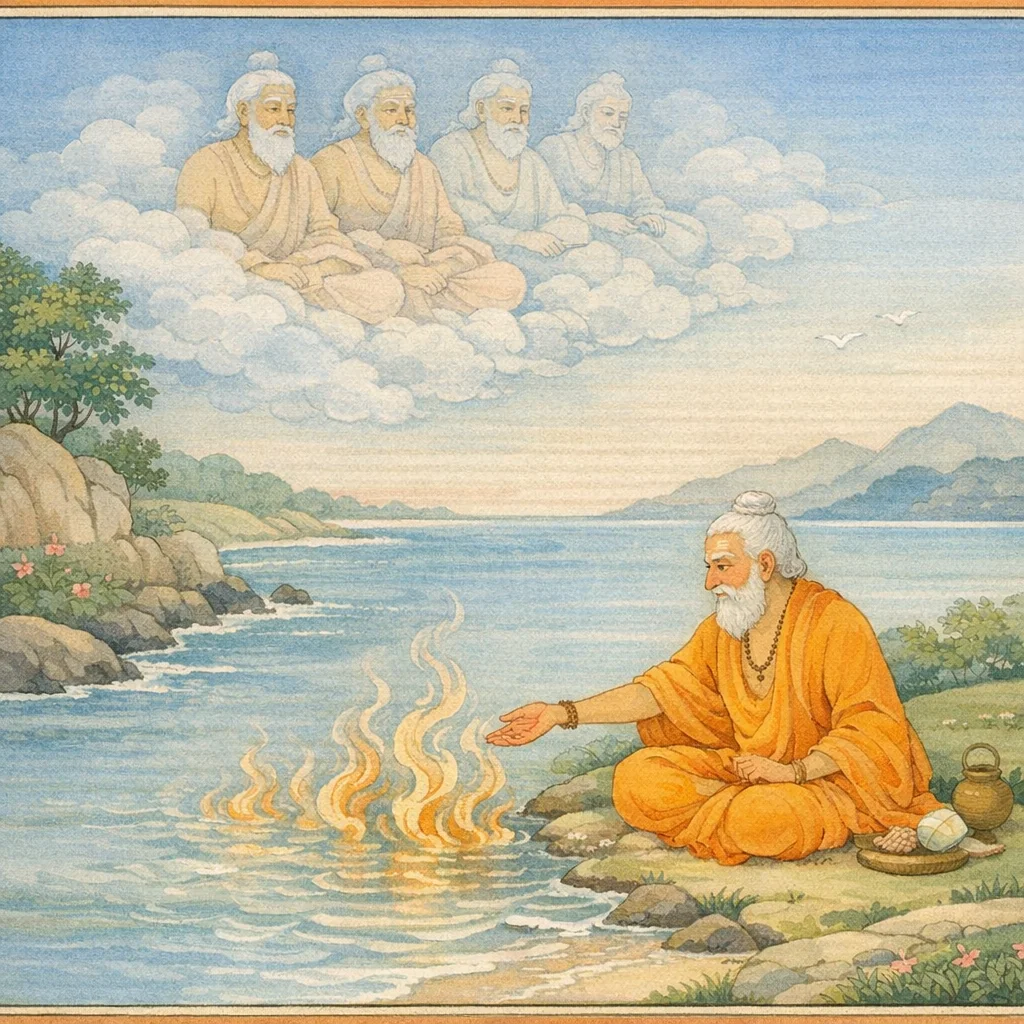
Chapter Arc: और्व ऋषि अपने भीतर धधकते क्रोध को ‘अरणि में छिपी अग्नि’ की तरह बताते हैं—वह व्यर्थ नहीं जाएगा, पर उसे किस दिशा में छोड़ा जाए, यही संकट है। → पितर (पूर्वज) और्व को रोकते हैं: क्रोध का निरर्थक प्रतिज्ञा बन जाना भी अधर्म है, और क्रोध को सह लेना भी तभी सार्थक है जब वह त्रिवर्ग (धर्म-अर्थ-काम) की रक्षा करे। वे स्मरण कराते हैं कि पाप को रोकने वाला यदि समर्थ होकर भी न रोके, तो वह भी उसी पाप का भागी होता है। और्व के भीतर न्याय-प्रतिशोध और लोक-रक्षा का द्वंद्व तीव्र होता जाता है। → और्व स्वीकार करते हैं कि उनका क्रोध लोकों को भस्म कर सकता है; वे स्वयं को ‘लोकानामीश्वर’ के समान समर्थ मानते हुए भी पितरों के वचन से बँधने को कठिन बताते हैं—और फिर निर्णायक क्षण में उस क्रोधाग्नि को बडवानल (समुद्र की अग्नि) के रूप में समुद्र में त्याग देते हैं, ताकि विनाश का वेग लोकों पर न टूटे। → क्रोध का ‘निष्फल’ होना नहीं, उसका ‘नियमन’ होता है: और्व प्रतिशोध की ऊर्जा को विश्व-विनाश से हटाकर एक नियंत्रित, दूरस्थ रूप में स्थापित करते हैं। पितरों की शिक्षा—पाप-निरोध, सामर्थ्य की जिम्मेदारी, और क्रोध का धर्म-संगत उपयोग—स्थिर हो जाती है।
Shlokas
Verse 1
जज बक। अकाल एकोनाशीरत्याधिेकशततमो< ध्याय: ऑऔर्व और पितरोंकी बातचीत तथा और्वका अपनी क्रोधाग्निको बडवानलरूपसे समुद्रमें त्यागना ऑर्व उवाच उक्तवानस्मि यां क्रोधात् प्रतिज्ञां पितरस्तदा । सर्वलोकविनाशाय न सा मे वितथा भवेत्,औरवने कहा--पितरो! मैंने क्रोधवश उस समय जो सम्पूर्ण लोकोंके विनाशकी प्रतिज्ञा कर ली थी, वह झूठी नहीं होनी चाहिये अर-क्रा् अशीर्त्याधिकशततमो<& ध्याय: पुलस्त्य आदि महर्षियोंके समझानेसे पराशरजीके द्वारा राक्षससत्रकी समाप्ति गन्धर्व उवाच एवमुक्तः स विप्रर्षिवसिष्ठेन महात्मना । न्ययच्छदात्मन: क्रोधं॑ सर्वलोकपराभवात् गन्धर्व कहता है--अर्जुन! महात्मा वसिष्ठके यों कहनेपर उन ब्रह्मर्षि पराशरने अपने क्रोधको समस्त लोकोंके पराभवसे रोक लिया
Aurva said: “O Fathers (ancestral sages), in a moment of anger I once made a vow aimed at the destruction of all the worlds. That vow of mine must not turn out to be false.”
Verse 2
वृथारोषप्रतिज्ञो वै नाहं भवितुमुत्सहे । अनिस्तीर्णो हि मां रोषो देहेदग्निरिवारणिम्,जिसका क्रोध और प्रतिज्ञा निष्फल होते हों, ऐसा बननेकी मेरी इच्छा नहीं है। यदि मेरा क्रोध सफल नहीं हुआ तो वह मुझको उसी प्रकार जला देगा, जैसे आग अरणी काष्ठको जला देती है ईजे च स महातेजा: सर्ववेदविदां वर: । ऋषी राक्षससत्रेण शाक्तेयोडथ पराशर: तब सम्पूर्ण वेदवेत्ताओंमें श्रेष्ठ महातेजस्वी शक्ति-नन्दन पराशरने राक्षससत्रका अनुष्ठान किया
Ūrva said: “I cannot bring myself to become one whose wrath and vow prove futile. If my anger is not carried through to its intended end, that unspent fury will burn me up—just as fire consumes the araṇi-wood.”
Verse 3
यो हि कारणत:ः क्रोध॑ संजातं क्षन्तुमर्हति । नालं स मनुज: सम्यक् त्रिवर्ग परिरक्षितुम्,जो किसी कारणवश उत्पन्न हुए क्रोधको सह लेता है, वह मनुष्य धर्म, अर्थ और कामकी रक्षा करनेमें समर्थ नहीं होता ततो वृद्धांश्व बालांश्व राक्षसान् स महामुनि: । ददाह वितते यज्ञे शक्तेव॑ंधमनुस्मरन् उस विस्तृत यज्ञमें अपने पिता शक्तिके वधका बार-बार चिन्तन करते हुए महामुनि पराशरने राक्षसजातिके बूढ़ों तथा बालकोंको भी जलाना आरम्भ किया
Aurva said: “A person who, for some reason, endures the anger that has arisen within him is not truly capable of safeguarding the three aims of life—dharma, artha, and kāma—in a proper way.” Thereafter, the great sage Parāśara, while conducting an extensive sacrifice and repeatedly recalling the killing of his father Śakti, began to burn the Rākṣasas—even the old and the young.
Verse 4
अशिष्टानां नियन्ता हि शिष्टानां परिरक्षिता । स्थाने रोष: प्रयुक्त: स्यान्नूपै: सर्वजिगीषुभि:,सबको जीतनेकी इच्छा रखनेवाले राजाओंद्वारा उचित अवसरपर प्रयोगमें लाया हुआ रोष दुष्टोंका दमन और साधु पुरुषोंकी रक्षा करनेवाला हो न हि तं वारयामास वसिष्ठो रक्षसां वधात् । द्वितीयामस्य मा भाडुक्ष॑ प्रतिज्ञामिति निश्चयात् उस समय महर्षि वसिष्ठने यह सोचकर कि इसकी दूसरी प्रतिज्ञाको न तोड़ूँ, उन्हें राक्षसोंके वधसे नहीं रोका
Aurva said: “Wrath, when applied at the proper time, becomes—especially for kings who seek victory over all—a curb upon the unruly and a protection for the disciplined and righteous. Therefore Vasiṣṭha did not restrain him from slaying the rākṣasas, having resolved, ‘Let me not cause his second vow to be broken.’”
Verse 5
अश्रौषमहमूरुस्थो गर्भशय्यागतस्तदा । आसवं मातृवर्गस्थ भगूणां क्षत्रियैर्वथे,मैं जिन दिनों माताकी एक जाँघमें गर्भ-शय्यापर सोता था, उन दिनों क्षत्रियोंद्वारा भार्गवोंका वध होनेपर माताओंका करुण क्रन्दन मुझे स्पष्ट सुनायी देता था त्रयाणां पावकानां च सत्रे तस्मिन् महामुनिः । आसीतू पुरस्ताद् दीप्तानां चतुर्थ इव पावक: उस सत्रमें तीन प्रज्वलित अग्नियोंके समक्ष महामुनि पराशर चौथे अग्निके समान प्रकाशित हो रहे थे
Aurva said: “Even when I lay in the womb, resting upon my mother’s thigh, I clearly heard the anguished cries of the mothers of the Bhṛgus when the Kṣatriyas slaughtered them. And at that sacrificial session, before the three blazing sacred fires, the great sage Parāśara shone forth like a fourth fire—radiant and formidable.”
Verse 6
संहारो हि यदा लोके भृगूणां क्षत्रियाधमै: । आगर्भोच्छेदनात् क्रान्तस्तदा मां मन्युराविशत्,इन नीच क्षत्रियोंने जब गर्भके बच्चोंतकके सिर काट-काटकर संसारमें भृगुवंशी ब्राह्मणोंका संहार आरम्भ कर दिया, तब मुझमें क्रोधका आवेश हुआ तेन यज्ञेन शुभ्रेण हूयमानेन शक्तिज: । तद्विदीपितमाकाशं सूर्येणेव घनात्यये (पापी राक्षसोंका संहार करनेके कारण) वह यज्ञ अत्यन्त निर्मल एवं शुद्ध समझा जाता था। शक्तिनन्दन पराशरद्वारा उसमें यज्ञसामग्रीका हवन आरम्भ होते ही (वह इतना प्रज्वलित हो उठा कि) उसके तेजसे सम्पूर्ण आकाश ठीक उसी तरह उद्धासित होने लगा, जैसे वर्षा बीतनेपर सूर्यकी प्रभासे उद्दीप्त हो उठता है
Aurva said: “When, in this world, the most base of kṣatriyas began the extermination of the Bhṛgus—going so far as to cut down even those still in the womb—then wrath entered me. And when that pure sacrifice was being offered into by Śakti’s son (Parāśara), the oblation-fire blazed so fiercely that the whole sky was lit up, like the sun’s radiance when the rain-clouds have passed.”
Verse 7
सम्पूर्णकोशा: किल मे मातर: पितरस्तथा । भयात् सर्वेषु लोकेषु नाधिजग्मु: परायणम्,जिनकी कोख भरी हुई थी, वे मेरी माताएँ और पितृगण भी भयके मारे समस्त लोकोंमें भागते फिरे; किंतु उन्हें कहीं भी शरण नहीं मिली त॑ वसिष्ठादय: सर्वे मुनयस्तत्र मेनिरे । तेजसा दीप्यमानं वै द्वितीयमिव भास्करम् उस समय वसिष्ठ आदि सभी मुनियोंको वहाँ तेजसे प्रकाशमान महर्षि पराशर दूसरे सूर्यके समान जान पड़ते थे
Ūrva said: “Even my mothers—whose wombs were full—and my fathers as well, driven by fear, wandered through all the worlds, yet found no refuge anywhere. Then all the sages there, beginning with Vasiṣṭha, beheld that radiant seer blazing with spiritual power, like a second sun.”
Verse 8
तान् भूगूणां यदा दारान् वक्रिन्नाभ्युपपद्यत । माता तदा दधारेयमूरुणैकेन मां शुभा,जब भार्गवोंकी पत्नियोंका कोई भी रक्षक नहीं मिला, तब मेरी इस कल्याणमयी माताने मुझे अपनी एक जाँघमें छिपाकर रखा था ततः परमदुष्प्रापमन्यैर्क्रषिरुदारधी: । समापिपयिषु: सत्र तमत्रि: समुपागमत् तदनन्तर दूसरोंके लिये उस यज्ञको बंद करना अत्यन्त कठिन जानकर उदारबुद्धि महर्षि अत्रि स्वयं उस यज्ञको समाप्त करानेकी इच्छासे पराशरके पास आये
Auruva said: “When no protector could be found for the wives of the Bhṛgus, my blessed mother hid me away in one of her thighs. Thereafter, realizing that it would be exceedingly difficult for others to bring that sacrificial session to a close, the noble-minded sage Atri came there, wishing to have that satra concluded.”
Verse 9
प्रतिषेद्धा हि पापस्य यदा लोकेषु विद्यते । तदा सर्वेषु लोकेषु पापकृन्नोपपद्यते,जबतक जगत्में कोई भी पापकर्मको रोकनेवाला होता है, तबतक सम्पूर्ण लोकोंमें पापियोंका होना सम्भव नहीं होता तथा पुलस्त्य: पुलहः क्रतुश्चैव महाक्रतुः । तत्राजग्मुरमित्रघ्न रक्षसां जीवितेप्सया शत्रुओंका नाश करनेवाले अर्जुन! उसी प्रकार पुलस्त्य, पुलह, क्रतु और महाक्रतुने भी राक्षसोंके जीवनकी रक्षाके लिये वहाँ पदार्पण किया
Aurva said: “So long as there exists in the worlds one who restrains sinful conduct, it is not possible for sinners to prevail everywhere. In the same way, O Arjuna, slayer of foes, Pulastya, Pulaha, Kratu, and Mahākratu also arrived there, seeking to preserve the lives of the Rākṣasas.”
Verse 10
यदा तु प्रतिषेद्धारं पापों न लभते क्वचित् | तिष्ठन्ति बहवो लोकास्तदा पापेषु कर्मसु,जब पापी मनुष्यको कहीं कोई रोकनेवाला नहीं मिलता, तब बहुतेरे मनुष्य पाप करनेमें लग जाते हैं पुलस्त्यस्तु वधात् तेषां रक्षसां भरतर्षभ | उवाचेदं वच: पार्थ पराशरमरिंदमम् भरतकुलभूषण कुन्तीकुमार! उन राक्षसोंका विनाश होता देख महर्षि पुलस्त्यने शत्रुसूदन पराशरसे यह बात कही--
Aurva said: “When a sinful person finds no one anywhere to restrain him, then many people persist in sinful actions. For when wrongdoing goes unchecked, it spreads among the populace.”
Verse 11
जानन्नपि च यः पापं शक्तिमान् न नियच्छति । ईश: सन् सो$पि तेनैव कर्मणा सम्प्रयुज्यते,जो मनुष्य शक्तिमान् एवं समर्थ होते हुए भी जान-बूझकर पापको नहीं रोकता, वह भी उसी पापकर्मसे लिप्त हो जाता है कच्चित् तातापविषध्नं ते कच्चिन्नन्दसि पुत्रक | अजानतामदोषाणां सर्वेषां रक्षसां वधात् “तात! तुम्हारे इस यज्ञमें कोई विघ्न तो नहीं पड़ा? बेटा! तुम्हारे पिताकी हत्याके विषयमें कुछ भी न जाननेवाले इन सभी निर्दोष राक्षसोंका वध करके कया तुम्हें प्रसन्नता होती है?
Aurva said: “Even when one knows it to be wrong, if a capable person does not restrain sin, then—even though he is a master of himself—he becomes implicated by that very deed. Tell me, dear child: has your rite proceeded without obstruction? And do you truly feel joy after killing all these rākṣasas who were innocent in this matter, not knowing anything about your father’s death?”
Verse 12
राजभिश्रेश्वरैश्वेव यदि वै पितरो मम । शक्तैर्न शकितास्त्रातुमिष्टं मत्वेह जीवितम्,इस लोकमें अपना जीवन सबको प्रिय है, यह समझकर सबका शासन करनेवाले राजालोग सामर्थ्य होते हुए भी मेरे पिताओंकी रक्षा न कर सके, इसीलिये मैं भी इन सब लोकोंपर कुपित हुआ हूँ। मुझमें इन्हें दण्ड देनेकी शक्ति है। अतः (इस विषयमें) मैं आपलोगोंका वचन माननेमें असमर्थ हूँ प्रजोच्छेदमिमं महां न हि कर्तु त्वमर्हसि । नैष तात द्विजातीनां धर्मो दृष्टस्तपस्विनाम् “वत्स! मेरी संततिका तुम्हें इस प्रकार उच्छेद नहीं करना चाहिये। तात! यह हिंसा तपस्वी ब्राह्मणोंका धर्म कभी नहीं मानी गयी
Aurva said: “If even my forefathers could not be protected by the foremost kings and rulers—though they had the power—because they judged life in this world to be dear to all, then I too have become enraged against all these worlds. I have the strength to punish them; therefore I am unable to comply with your request in this matter. But (the elders reply): ‘Child, you should not bring about this great destruction of progeny in this way. Dear one, such violence has never been regarded as the dharma of ascetic Brahmins.’”
Verse 13
अत एषामहं क़ुद्धो लोकानामी श्वरो हाहम् । भवतां च वचो नालमहं समभिवर्तितुम्,इस लोकमें अपना जीवन सबको प्रिय है, यह समझकर सबका शासन करनेवाले राजालोग सामर्थ्य होते हुए भी मेरे पिताओंकी रक्षा न कर सके, इसीलिये मैं भी इन सब लोकोंपर कुपित हुआ हूँ। मुझमें इन्हें दण्ड देनेकी शक्ति है। अतः (इस विषयमें) मैं आपलोगोंका वचन माननेमें असमर्थ हूँ शम एव परो धर्मस्तमाचर पराशर । अधर्मिष्ठ वरिष्ठ: सन् कुरुषे त्वं पराशर “पराशर! शान्त रहना ही (ब्राह्मणोंका) श्रेष्ठ धर्म है, अतः उसीका आचरण करो। तुम श्रेष्ठ ब्राह्मण होकर भी यह पापकर्म करते हो?
Aurva said: “Therefore I am enraged with these worlds—alas, I who am their lord. I am not able to comply with your request. Parāśara, self-restraint is indeed the highest dharma; practice that. Though you are a foremost brāhmaṇa, why do you commit this unrighteous act?”
Verse 14
ममापि चेद् भवेदेवमी श्वरस्य सतो महत् | उपेक्षमाणस्य पुनर्लोकानां किल्बिषाद् भयम्,यदि मैं भी शक्ति रहते हुए लोगोंके इस महान् पापाचारको उदासीनभावसे चुपचाप देखता रहूँ, तो मुझे भी उनलोगोंके पापसे भय हो सकता है शक्ति चापि हि धर्मज्ञ नातिक्रान्तुमिहाहसि । प्रजायाश्न ममोच्छेदं न चैवं कर्तुमहिसि “तुम्हारे पिता शक्ति धर्मके ज्ञाता थे, तुम्हें (इस अधर्मकृत्यद्वारा) उनकी मर्यादाका उल्लंघन नहीं करना चाहिये। फिर मेरी संतानोंका विनाश करना तुम्हारे लिये कदापि उचित नहीं है
Aurva said: “Even I—though possessed of power—would incur fear of sin if I were to stand by in indifference while people commit such great wrongdoing. And you too, O knower of dharma, should not overstep the bounds set by Śakti. Nor is it right for you to bring about the destruction of my progeny in this manner.”
Verse 15
यश्चायं मन्युजो मेडग्निलोकानादातुमिच्छति । दहेदेष च मामेव निगृहीत: स्वतेजसा,मेरे क्रोधसे उत्पन्न हुई जो यह आग (सम्पूर्ण) लोकोंको अपनी लपटोंसे लपेट लेना चाहती है, यदि मैं इसे रोक दूँ तो यह मुझे ही अपने तेजसे जलाकर भस्म कर डालेगी शापाद्धि शक्तेवासिष्ठ तदा तदुपपादितम् | आत्मजेन स दोषेण शक्ति्नीत इतो दिवम् वसिष्ठकुलभूषण! शक्तिके शापसे ही उस समय वैसी दुर्घटना हो गयी थी। वे अपने ही अपराधसे इस लोकको छोड़कर स्वर्गवासी हुए हैं (इसमें राक्षमोंका कोई दोष नहीं है)
Aurva said: “This fire, born of wrath, seeks to seize and engulf the worlds. If I restrain it, it will turn back upon me and burn me to ashes by its own radiance. For, O Vasiṣṭha, it was indeed through Śakti’s curse that such a calamity was brought about then; he, through his own fault, departed from this world to heaven—there is no blame upon the rākṣasas in this matter.”
Verse 16
भवतां च विजानामि सर्वलोकहितेप्सुताम् । तस्माद् विधध्व॑ यच्छेयो लोकानां मम चेश्वरा:,मैं यह भी जानता हूँ कि आपलोग समस्त जगत्का हित चाहनेवाले हैं। अतः शक्तिशाली पितरो! आपलोग ऐसा करें, जिससे इन लोकोंका और मेरा भी कल्याण हो नहितं राक्षस: कश्चिच्छक्तो भक्षयितु मुने । आत्मनैवात्मनस्तेन दृष्टो मृत्युस्तदाभवत् “मुने! कोई भी राक्षस उन्हें खा नहीं सकता था। अपने ही शापसे (राजाको नरभक्षी राक्षस बना देनेके कारण) उन्हें उस समय अपनी मृत्यु देखनी पड़ी
Aurva said: “I know as well that you are intent on the welfare of all the worlds. Therefore, O mighty lords (ancestors), do what is truly best—both for these worlds and for me.” “O sage, no rākṣasa was capable of devouring them; rather, by their own deed alone they then beheld their death—brought about by that very consequence arising from themselves.”
Verse 17
पितर ऊचु. य एष मन्युजस्तेडग्निलोंकानादातुमिच्छति । अप्सु तं मुज्च भद्रं ते लोका हाप्सु प्रतिष्ठिता:,पितर बोले--ओऔर्व! तुम्हारे क्रोधसे उत्पन्न हुई जो यह अग्नि सब लोकोंको अपना ग्रास बनाना चाहती है, उसे तुम जलमें छोड़ दो, तुम्हारा कल्याण हो; क्योंकि (सभी) लोक जलनमें प्रतिष्ठित हैं निमित्तभूतस्तत्रासीद् विश्वामित्र: पराशर | राजा कल्माषपादश्च दिवमारुह्मु मोदते “पराशर! विश्वामित्र तथा राजा कल्माषपाद भी इसमें निमित्तमात्र ही थे (तुम्हारे पूर्वजोंकी मृत्युमें तो प्रारब्ध ही प्रधान है)। इस समय तुम्हारे पिता शक्ति स्वर्गमें जाकर आनन्द भोगते हैं
The Pitṛs said: “O Aurva, the fire born of your wrath that seeks to consume all the worlds—release it into the waters. May you be well; for the worlds are established upon the waters. In this matter, Parāśara and Viśvāmitra, and King Kalmāṣapāda too, were only instrumental causes; destiny was the chief factor in your forefathers’ death. Even now your father Śakti has ascended to heaven and rejoices there.”
Verse 18
आपोमया: सर्वरसा: सर्वमापोमयं जगत् | तस्मादप्सु विमुञ्चेम॑ क्रोधाग्निं द्विजसत्तम,सभी रस जलके परिणाम हैं तथा सम्पूर्ण जगत् (भी) जलका परिणाम माना गया है। अतः द्विजश्रेष्ठ) तुम अपनी इस क्रोधाग्निको जलमें ही छोड़ दो ये च शक्त्यवरा: पुत्रा वसिष्ठस्य महामुने । ते च सर्वे मुदा युक्ता मोदन्ते सहिता: सुरै: “महामुने! वसिष्ठजीके शक्तिसे छोटे जो पुत्र थे, वे सभी देवताओंके साथ प्रसन्नतापूर्वक सुख भोग रहे हैं
Ūrva said: “All flavors arise from water; indeed, the whole world is understood as a transformation of water. Therefore, O best of twice-born, release this fire of anger into the waters. And those sons of the great sage Vasiṣṭha who were younger than Śakti—O great sage—are all united with joy and rejoice together with the gods.”
Verse 19
अयं तिष्ठतु ते विप्र यदीच्छसि महोदधौ । मन्युजोग्निर्दहन्नापो लोका ह्यापोमया: स्मृता:,विप्रवर! यदि तुम्हारी इच्छा हो तो यह क्रोधाग्नि जलको जलाती हुई समुद्रमें स्थित रहे; क्योंकि सभी लोक जलके परिणाम माने गये हैं सर्वमेतद् वसिष्ठस्य विदितं वै महामुने । रक्षसां च समुच्छेद एघ तात तपस्विनाम् “महर्षे! तुम्हारे पितामह वसिष्ठजीको ये सब बातें विदित हैं। तात शक्तिनन्दन! तेजस्वी राक्षसोंक विनाशके लिये आयोजित इस यज्ञमें तुम भी निमित्तमात्र ही बने हो (वास्तवमें यह सब उन्हींके पूर्वकर्मोका फल है)। अतः अब इस यज्ञको छोड़ दो। तुम्हारा कल्याण हो, तुम्हारे इस सत्रकी समाप्ति हो जानी चाहिये”
Aurva said: “O brahmin, if you so desire, let this fire born of wrath remain in the great ocean, scorching the waters; for the worlds are remembered to be constituted of water. Great sage, all this is indeed known to Vasiṣṭha. And, dear one—son of Śakti—this rite aimed at the extermination of the rākṣasas is, for ascetics, a matter already determined by prior causes; you have become only an instrument. Therefore abandon this sacrifice; may you be well, and may this session come to its proper close.”
Verse 20
एवं प्रतिज्ञा सत्येयं तवानघ भविष्यति । न चैवं सामरा लोका गमिष्यन्ति पराभवम्,अनघ! ऐसा करनेसे तुम्हारी प्रतिज्ञा भी सच्ची हो जायगी और देवताओंसहित समस्त लोक भी नष्ट नहीं होंगे निमित्तभूतस्त्वं चात्र क्रतो वासिष्ठनन्दन | तत् सत्र मुछच भद्रं ते समाप्तमिदमस्तु ते “महर्षे! तुम्हारे पितामह वसिष्ठजीको ये सब बातें विदित हैं। तात शक्तिनन्दन! तेजस्वी राक्षसोंक विनाशके लिये आयोजित इस यज्ञमें तुम भी निमित्तमात्र ही बने हो (वास्तवमें यह सब उन्हींके पूर्वकर्मोका फल है)। अतः अब इस यज्ञको छोड़ दो। तुम्हारा कल्याण हो, तुम्हारे इस सत्रकी समाप्ति हो जानी चाहिये”
Aurva said: “O sinless one, by acting thus your vow will indeed become true, and the worlds together with the gods will not fall into ruin. And you, O descendant of Vasiṣṭha, are here only an instrumental cause in this sacrifice. Therefore, abandon this sacrificial session; may good be yours—let this rite now come to its proper conclusion.”
Verse 21
वसिष्ठ उवाच ततस्तं क्रोधजं तात और्वोडग्निं वरुणालये । उत्ससर्ज स चैवाप उपयुद्धक्ते महोदधौ,वसिष्ठजी कहते हैं--पराशर! तब और्वने (अपनी) उस क्रोधाग्निको समुद्रमें डाल दिया। आज भी वह बहुत बड़ी घोड़ीके मुखकी-सी आकृति धारण करके महासागरके जलका पान करती रहती है। वेदज्ञ पुरुष उससे (भली-भाँति) परिचित हैं। वह बड़वा अपने मुखसे वही आग उगलती हुई महासागरका जल पीती रहती है गन्धर्व उवाच एवमुक्त: पुलस्त्येन वसिष्ठदेन च धीमता । तदा समापयामास सत्र शाक्तो महामुनि: गन्धर्व कहता है--अर्जुन! पुलस्त्यजी तथा परम बुद्धिमान् वसिष्ठजीके यों कहनेपर महामुनि शक्तिपुत्र पराशरने उसी समय यज्ञको समाप्त कर दिया
Vasiṣṭha said: “Then, dear one, Aurva cast that fire born of wrath into the abode of Varuṇa—the ocean. There, in the great sea, it remains, drinking the waters and blazing forth.”
Verse 22
महद्धयशिरो भूत्वा यत् तद् वेदविदो विदुः । तमग्निमुद्गिरद् वक्त्रात् पिबत्यापो महोदधौ,वसिष्ठजी कहते हैं--पराशर! तब और्वने (अपनी) उस क्रोधाग्निको समुद्रमें डाल दिया। आज भी वह बहुत बड़ी घोड़ीके मुखकी-सी आकृति धारण करके महासागरके जलका पान करती रहती है। वेदज्ञ पुरुष उससे (भली-भाँति) परिचित हैं। वह बड़वा अपने मुखसे वही आग उगलती हुई महासागरका जल पीती रहती है सर्वराक्षससत्राय सम्भूृतं पावकं तदा । उत्तरे हिमवत्पाश्वें उत्ससर्ज महावने सम्पूर्ण राक्षसोंके विनाशके उद्देश्यसे किये जाने-वाले उस सत्रके लिये जो अग्नि संचित की गयी थी, उसे उन्होंने उत्तरदिशामें हिमालयके आस-पासके विशाल वनमें छोड़ दिया
Vasiṣṭha said: “That being which the knowers of the Veda recognize became the great ‘mare-headed’ form. From its mouth it continually belches forth that fire and drinks the waters of the great ocean. Then, the fire that had been amassed for a sacrifice intended for the destruction of all rākṣasas was released in the vast forest on the northern side near the Himalaya.”
Verse 23
तस्मात् त्वमपि भद्ठं ते न लोकान् हन्तुमरहसि । पराशर परॉल्लोकान् जानउज्ञानवतां वर,ज्ञानियोंमें श्रेष्ठ पराशर! तुम्हारा कल्याण हो, तुम परलोकको भलीभाँति जानते हो; अतः तुम्हें भी समस्त लोकोंका विनाश नहीं करना चाहिये स तत्राद्यापि रक्षांसि वृक्षानश्मन एव च | भक्षयन् दृश्यते वह्निः सदा पर्वणि पर्वणि वह अग्नि आज भी वहाँ सदा प्रत्येक पर्वके अवसरपर राक्षसों, वृक्षों और पत्थरोंको जलाती हुई देखी जाती है
Therefore, you too—may it be well with you—should not seek to destroy the worlds. O Parāśara, best among the wise, you understand the realities of the other world; hence it does not befit you to bring ruin upon all beings. For even now, in that very place, the fire is seen again and again at each recurring season, consuming rākṣasas, trees, and even stones—an enduring reminder of the consequences of unrestrained wrath.
Verse 178
इस प्रकार श्रीमहाभारत आदिपव॑के अन्तर्गत चैत्ररथपर्वमें और्वक्रोधनिवारण-विषयक एक सौ अठहत्तरवाँ अध्याय पूरा हुआ
Thus ends the one hundred and seventy-eighth chapter of the Ādi Parva of the Śrī Mahābhārata, within the Caitraratha section, dealing with the pacification and restraint of Aurva’s wrath.
Verse 179
इति श्रीमहाभारते आदिपर्वणि चैत्ररथपर्वण्यौर्वोपाख्याने एकोनाशीत्यधिकशततमो< ध्याय:
Thus, in the Śrī Mahābhārata, within the Ādi Parva—specifically in the Caitraratha section—this concludes the Aūrva episode, marking the one-hundred-and-seventy-ninth chapter.
Verse 180
इति श्रीमहाभारते आदिपर्वणि चैत्ररथपर्वण्यौवोपाख्याने अशीत्यधिकशततमो<ध्याय:
Thus ends the one-hundred-and-eightieth chapter of the Ādi Parva of the Śrī Mahābhārata, within the Caitraratha section, in the episode known as the tale of Auvā. This is a colophon marking the close of the chapter rather than a spoken narrative verse.
Frequently Asked Questions
The chapter stages a dharma-saṅkaṭa between enforcing kṣatriya protocol (svayaṃvara as a kṣatriya institution) and maintaining dharmic restraint toward brāhmaṇas (non-violability and reverence), even when political honor feels threatened.
The narrative implies that social order depends not only on asserting rights but also on limiting retaliation: dharma operates through boundaries (who may be punished, how far honor-claims may go) and through strategic recourse to legitimate protective institutions (śaraṇa among brāhmaṇas).
No explicit phalaśruti appears in the supplied verses; instead, the chapter functions as narrative meta-commentary by using recognition (Kṛṣṇa and Balarāma identifying the Pāṇḍavas) to signal the epic’s larger providential and dynastic continuity.