Adhyaya 116
Ādi-parva Adhyāya 116 — Pāṇḍu’s Transgression of the Curse and Mādrī’s Final Charge
Upa-parva: Pāṇḍu-Vanavāsa (Forest Life of Pāṇḍu) Episode
Vaiśaṃpāyana describes Pāṇḍu observing his five sons in the great forest and then moving with his wives through a springtime woodland rich in blossoming trees and lotus-filled waters. The environment becomes a narrative catalyst for desire (manmatha), and Pāṇḍu, seeing Mādrī in a secluded setting, fails to restrain impulse despite the known curse that makes conjugal union fatal. The text depicts his loss of discernment as a collapse of self-governance, culminating in immediate death after union with Mādrī. Kuntī arrives with the children, laments, and questions how the curse was violated; Mādrī responds that she attempted to dissuade him and then articulates a final ethical-administrative directive: Kuntī should care for Mādrī’s sons as her own, and Mādrī requests cremation alongside the king. The chapter closes with Mādrī ascending the funeral pyre, sealing the episode’s emphasis on consequence, guardianship, and the irreversible effects of private action on dynastic continuity.
Chapter Arc: Janamejaya, having heard of Dhritarashtra’s hundred sons and the Vaishya-born Yuyutsu, presses Vaishampayana: “You spoke of a daughter too—how did she come to be?” → The narration turns to the strange birth: Gandhari’s single mass of flesh is to be divided into a hundred portions by Vyasa—yet the question hangs: if the count is exactly one hundred, how can a daughter exist beyond them? The possibility of failure (no progeny at all) shadows the act. → Vyasa, the blazing seer, apportions the flesh into a full hundred shares and, by his will and rite, ordains an additional portion—thus the lone daughter, Duhshala, is brought forth alongside the hundred brothers (and apart from Yuyutsu). → Vaishampayana completes the account of Duhshala’s birth, satisfying Janamejaya’s doubt and restoring coherence to the genealogy of the Kuru line. → “O king, I have told you Duhshala’s birth—ask what more you wish to hear,” inviting the next inquiry into the unfolding destinies of the Kauravas and Pandavas.
Shlokas
Verse 1
अपर पञ्चदशाधिकशततमो< ध्याय: दुःशलाके जन्मकी कथा जनमेजय उवाच धृतराष्ट्रस्य पुत्राणामादित: कथितं त्वया । ऋषे: प्रसादात् तु शतं न च कन्या प्रकीर्तिता,जनमेजयने पूछा--ब्रह्मन! महर्षि व्यासके प्रसादसे धृतराष्ट्रके सौ पुत्र हुए, यह बात आपने मुझे पहले ही बता दी थी। परंतु उस समय यह नहीं कहा था कि उन्हें एक कन्या भी हुई
Janamejaya said: “You have already told me, from the beginning, about the sons of Dhṛtarāṣṭra—how, by the grace of the sage, they became a hundred. Yet you did not mention that a daughter was also born.”
Verse 2
वैश्यापुत्रो युयुत्सुश्न कन्या चैका शताधिका । गान्धारराजदुहिता शतपुत्रेति चानघ,अनघ! इस समय आपने वैश्यापुत्र युयुत्सु तथा सौ पुत्रोंके अतिरिक्त एक कन्याकी भी चर्चा की है। अमिततेजस्वी महर्षि व्यासने गान्धारराजकुमारीको सौ पुत्र होनेका ही वरदान दिया था। भगवन्! फिर आप मुझसे यह कैसे कहते हैं कि एक कन्या भी हुई
Janamejaya said: “O blameless one, you mentioned Yuyutsu, the son of a Vaiśyā, and also that there was one daughter in addition to the hundred. Yet the daughter of the king of Gāndhāra was granted the boon of having a hundred sons. How, then, do you say that there was also a daughter?”
Verse 3
उक्ता महर्षिणा तेन व्यासेनामिततेजसा । कथं त्विदानीं भगवन् कन्यां त्व॑ं तु ब्रवीषि मे,अनघ! इस समय आपने वैश्यापुत्र युयुत्सु तथा सौ पुत्रोंके अतिरिक्त एक कन्याकी भी चर्चा की है। अमिततेजस्वी महर्षि व्यासने गान्धारराजकुमारीको सौ पुत्र होनेका ही वरदान दिया था। भगवन्! फिर आप मुझसे यह कैसे कहते हैं कि एक कन्या भी हुई
Janamejaya said: “O venerable one, O sinless sage—earlier it was declared by the great seer Vyāsa of immeasurable splendor that the Gandhāra princess would be granted a hundred sons. How is it, then, that you now tell me that there was also a daughter?”
Verse 4
यदि भागशतं पेशी कृता तेन महर्षिणा । न प्रजास्यति चेद् भूय: सौबलेयी कथंचन,यदि महर्षिने उक्त मांसपिण्डके सौ भाग किये और यदि सुबलपुत्री गान्धारीने किसी प्रकार फिर गर्भ धारण या प्रसव नहीं किया, तो उस दु:शला नामवाली कनन््याका जन्म किस प्रकार हुआ? ब्रह्मर्ष! यह सब यथार्थरूपसे मुझे बताइये। मुझे इस विषयमें कौतूहल हो रहा है
Janamejaya said: “If that great sage divided the lump of flesh into a hundred portions, and if Gandhārī, the daughter of Subala, was in no way to conceive or give birth again, then how did the girl named Duḥśalā come to be born? O brahmarṣi, tell me all this exactly as it happened; my curiosity about this matter has been aroused.”
Verse 5
कथं तु सम्भवस्तस्या दुःशलाया वदस्व मे । यथावदिह वितप्रर्षे परं मेडत्र कुतूहलम्,यदि महर्षिने उक्त मांसपिण्डके सौ भाग किये और यदि सुबलपुत्री गान्धारीने किसी प्रकार फिर गर्भ धारण या प्रसव नहीं किया, तो उस दु:शला नामवाली कनन््याका जन्म किस प्रकार हुआ? ब्रह्मर्ष! यह सब यथार्थरूपसे मुझे बताइये। मुझे इस विषयमें कौतूहल हो रहा है
Janamejaya said: “Tell me, then, how Duḥśalā came to be born. O best of seers among the brahmins, explain it here exactly as it happened, for I am deeply curious about this matter—if the sage divided the lump of flesh into a hundred parts, and if Gāndhārī, daughter of Subala, did not again conceive or give birth in any other way, then by what means was the girl named Duḥśalā born? Please relate the truth to me.”
Verse 6
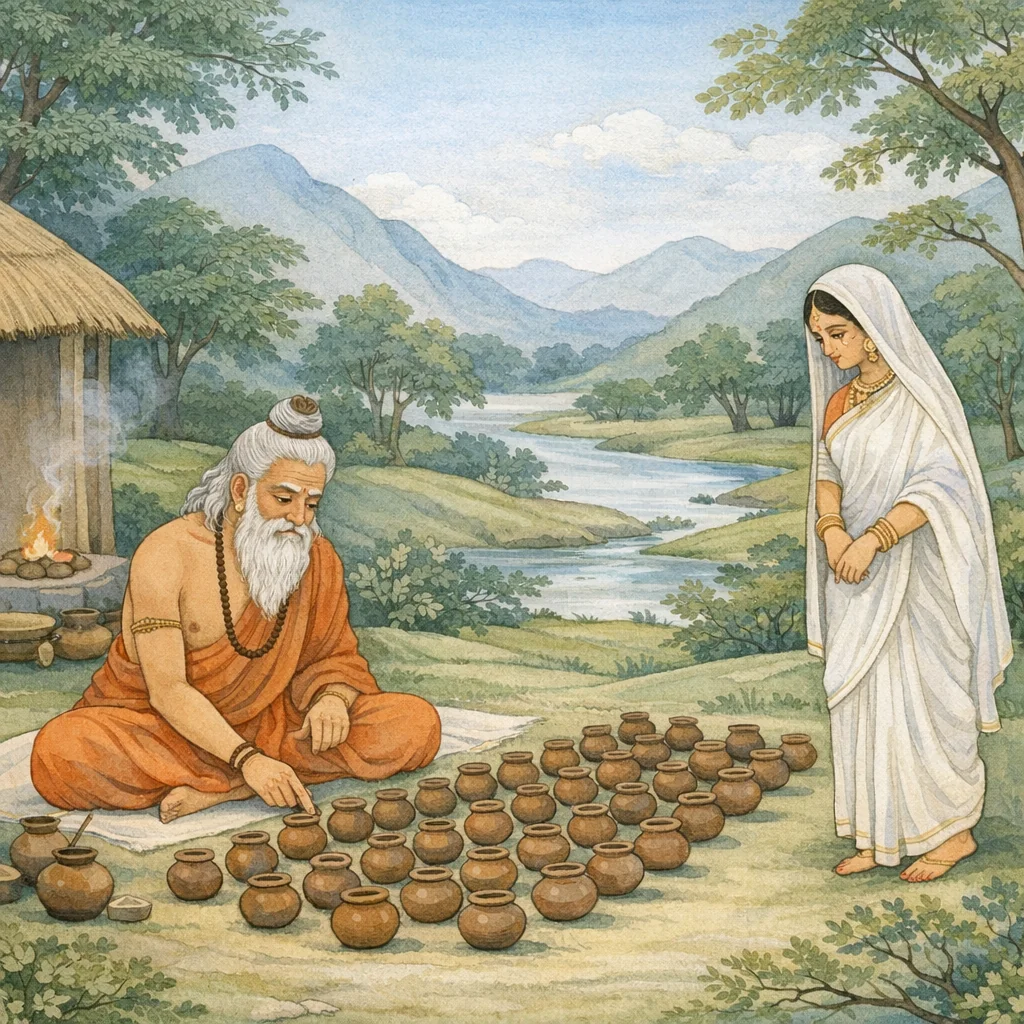
वैशम्पायन उवाच साध्वयं प्रश्न उद्दिष्ट: पाण्डवेय ब्रवीमि ते । तां मांसपेशीं भगवान् स्वयमेव महातपा:,वैशम्पायनजीने कहा--पाण्डवनन्दन! तुमने यह बहुत अच्छा प्रश्न पूछा है। मैं तुम्हें इसका उत्तर देता हूँ। महातपस्वी भगवान् व्यासने स्वयं ही उस मांसपिण्डको शीतल जलसे सींचकर उसके सौ भाग किये। राजन! उस समय जो भाग जैसा बना, उसे धायद्वारा वे एक-एक करके घीसे भरे हुए कुण्डोंमें डलवाते गये। इसी बीचमें पूर्ण दृढ़तासे सतीव्रतका पालन करनेवाली साध्वी एवं सुन्दरी गान्धारी कन्याके स्नेह-सम्बन्धका विचार करके मन- ही-मन सोचने लगी--इसमें संदेह नहीं कि इस मांसपिण्डसे मेरे सौ पुत्र उत्पन्न होंगे; क्योंकि व्यासमुनि कभी झूठ नहीं बोलते; परंतु मुझे अधिक संतोष तो तब होता, यदि एक पुत्री भी हो जाती
Vaiśampāyana said: “O descendant of the Pāṇḍus, this is a well-put question. I shall tell you the answer. The Blessed sage, great in austerity, did it himself—he attended to that lump of flesh and proceeded with the measures by which it would be divided and preserved, so that the promised offspring might come to be.”
Verse 7
शीताभिरद्धिरासिच्य भागं भागमकल्पयत् । यो यथा कल्पितो भागस्तं तं धात्रया तथा नूप,वैशम्पायनजीने कहा--पाण्डवनन्दन! तुमने यह बहुत अच्छा प्रश्न पूछा है। मैं तुम्हें इसका उत्तर देता हूँ। महातपस्वी भगवान् व्यासने स्वयं ही उस मांसपिण्डको शीतल जलसे सींचकर उसके सौ भाग किये। राजन! उस समय जो भाग जैसा बना, उसे धायद्वारा वे एक-एक करके घीसे भरे हुए कुण्डोंमें डलवाते गये। इसी बीचमें पूर्ण दृढ़तासे सतीव्रतका पालन करनेवाली साध्वी एवं सुन्दरी गान्धारी कन्याके स्नेह-सम्बन्धका विचार करके मन- ही-मन सोचने लगी--इसमें संदेह नहीं कि इस मांसपिण्डसे मेरे सौ पुत्र उत्पन्न होंगे; क्योंकि व्यासमुनि कभी झूठ नहीं बोलते; परंतु मुझे अधिक संतोष तो तब होता, यदि एक पुत्री भी हो जाती
Vaiśaṃpāyana said: Having sprinkled it with cool water, he arranged it portion by portion. O king, whatever portion took shape in whatever way, that very portion he then had the nurse place accordingly (into the prepared vessels).
Verse 8
घृतपूर्णेषु कुण्डेषु एकैकं प्राक्षिपत् तदा । एतस्मिन्नन्तरे साध्वी गान्धारी सुदृढव्रता,वैशम्पायनजीने कहा--पाण्डवनन्दन! तुमने यह बहुत अच्छा प्रश्न पूछा है। मैं तुम्हें इसका उत्तर देता हूँ। महातपस्वी भगवान् व्यासने स्वयं ही उस मांसपिण्डको शीतल जलसे सींचकर उसके सौ भाग किये। राजन! उस समय जो भाग जैसा बना, उसे धायद्वारा वे एक-एक करके घीसे भरे हुए कुण्डोंमें डलवाते गये। इसी बीचमें पूर्ण दृढ़तासे सतीव्रतका पालन करनेवाली साध्वी एवं सुन्दरी गान्धारी कन्याके स्नेह-सम्बन्धका विचार करके मन- ही-मन सोचने लगी--इसमें संदेह नहीं कि इस मांसपिण्डसे मेरे सौ पुत्र उत्पन्न होंगे; क्योंकि व्यासमुनि कभी झूठ नहीं बोलते; परंतु मुझे अधिक संतोष तो तब होता, यदि एक पुत्री भी हो जाती
Vaiśampāyana said: “Then he placed them one by one into jars filled with ghee. Meanwhile, the virtuous Gāndhārī, steadfast in her vows, reflected inwardly.”
Verse 9
दुहितुः स्नेहसंयोगमनुध्याय वराड़ना । मनसाचिन्तयद् देवी एतत् पुत्रशतं मम,वैशम्पायनजीने कहा--पाण्डवनन्दन! तुमने यह बहुत अच्छा प्रश्न पूछा है। मैं तुम्हें इसका उत्तर देता हूँ। महातपस्वी भगवान् व्यासने स्वयं ही उस मांसपिण्डको शीतल जलसे सींचकर उसके सौ भाग किये। राजन! उस समय जो भाग जैसा बना, उसे धायद्वारा वे एक-एक करके घीसे भरे हुए कुण्डोंमें डलवाते गये। इसी बीचमें पूर्ण दृढ़तासे सतीव्रतका पालन करनेवाली साध्वी एवं सुन्दरी गान्धारी कन्याके स्नेह-सम्बन्धका विचार करके मन- ही-मन सोचने लगी--इसमें संदेह नहीं कि इस मांसपिण्डसे मेरे सौ पुत्र उत्पन्न होंगे; क्योंकि व्यासमुनि कभी झूठ नहीं बोलते; परंतु मुझे अधिक संतोष तो तब होता, यदि एक पुत्री भी हो जाती
Vaiśampāyana said: Reflecting on the bond of affection connected with a daughter, that noble lady—the queen—pondered in her mind: “This indeed will become my hundred sons.”
Verse 10
भविष्यति न संदेहो न ब्रवीत्यन्यथा मुनि: । ममेयं परमा तुष्टि्दुहिता मे भवेद् यदि,वैशम्पायनजीने कहा--पाण्डवनन्दन! तुमने यह बहुत अच्छा प्रश्न पूछा है। मैं तुम्हें इसका उत्तर देता हूँ। महातपस्वी भगवान् व्यासने स्वयं ही उस मांसपिण्डको शीतल जलसे सींचकर उसके सौ भाग किये। राजन! उस समय जो भाग जैसा बना, उसे धायद्वारा वे एक-एक करके घीसे भरे हुए कुण्डोंमें डलवाते गये। इसी बीचमें पूर्ण दृढ़तासे सतीव्रतका पालन करनेवाली साध्वी एवं सुन्दरी गान्धारी कन्याके स्नेह-सम्बन्धका विचार करके मन- ही-मन सोचने लगी--इसमें संदेह नहीं कि इस मांसपिण्डसे मेरे सौ पुत्र उत्पन्न होंगे; क्योंकि व्यासमुनि कभी झूठ नहीं बोलते; परंतु मुझे अधिक संतोष तो तब होता, यदि एक पुत्री भी हो जाती
“It will surely come to pass—there is no doubt. The sage does not speak otherwise than truth. Yet my greatest satisfaction would be this: if a daughter were also to be born to me.”
Verse 11
एका शताधिका बाला भविष्यति कनीयसी । ततो दौहित्रजालल्लोकादबाह्मोइसौ पतिर्मम,यदि सौ पुत्रोंके अतिरिक्त एक छोटी कन्या हो जायगी तो मेरे ये पति दौहित्रके पुण्यसे प्राप्त होनेवाले उत्तम लोकोंसे भी वंचित नहीं रहेंगे
Vaiśampāyana said: “There will be one more than a hundred children, and the youngest will be a girl. If, in addition to the sons, a single little daughter is born, then my husband will not be deprived of the excellent worlds attained through the merit of a daughter’s son.”
Verse 12
अधिका किल नारीणां प्रीतिजामातृजा भवेत् | यदि नाम ममापि स्याद् दुहितैका शताधिका,कहते हैं, स्त्रियोंका दामादमें पुत्रसे भी अधिक स्नेह होता है। यदि मुझे भी सौ पुत्रोंके अतिरिक्त एक पुत्री प्राप्त हो जाय तो मैं पुत्र और दौहित्र दोनोंसे घिरी रहकर कृतकृत्य हो जाऊँ। यदि मैंने सचमुच तप, दान अथवा होम किया हो तथा गुरुजनोंको सेवाद्वारा प्रसन्न कर लिया हो, तो मुझे पुत्री अवश्य प्राप्त हो। इसी बीचमें मुनिश्रेष्ठ भगवान् श्रीकृष्णद्वैपायन वेदव्यासने स्वयं ही उस मांसपिण्डके विभाग कर दिये और पूरे सौ अंशोंकी गणना करके गान्धारीसे कहा
Vaiśampāyana said: “It is said that a woman’s affection for her son-in-law can be even greater than for her own son. If I too were to have, in addition to a hundred sons, even a single daughter, then—surrounded by both sons and grandsons through that daughter—I would feel my life fulfilled.”
Verse 13
कृतकृत्या भवेयं वै पुत्रदौहित्रसंवृता । यदि सत्यं तपस्तप्तं दत्तं वाप्यथवा हुतम्,कहते हैं, स्त्रियोंका दामादमें पुत्रसे भी अधिक स्नेह होता है। यदि मुझे भी सौ पुत्रोंके अतिरिक्त एक पुत्री प्राप्त हो जाय तो मैं पुत्र और दौहित्र दोनोंसे घिरी रहकर कृतकृत्य हो जाऊँ। यदि मैंने सचमुच तप, दान अथवा होम किया हो तथा गुरुजनोंको सेवाद्वारा प्रसन्न कर लिया हो, तो मुझे पुत्री अवश्य प्राप्त हो। इसी बीचमें मुनिश्रेष्ठ भगवान् श्रीकृष्णद्वैपायन वेदव्यासने स्वयं ही उस मांसपिण्डके विभाग कर दिये और पूरे सौ अंशोंकी गणना करके गान्धारीसे कहा
Vaiśaṃpāyana said: “May I indeed become fulfilled, surrounded by sons and grandsons through a daughter. If I have truly practiced austerity, given in charity, or offered oblations in sacrifice, then may I obtain a daughter as well—so that, having both a son and a daughter’s son, I may be complete.”
Verse 14
गुरवस्तोषिता वापि तथास्तु दुहिता मम । एतस्मिन्नेव काले तु कृष्णद्वैपायन: स्वयम्,कहते हैं, स्त्रियोंका दामादमें पुत्रसे भी अधिक स्नेह होता है। यदि मुझे भी सौ पुत्रोंके अतिरिक्त एक पुत्री प्राप्त हो जाय तो मैं पुत्र और दौहित्र दोनोंसे घिरी रहकर कृतकृत्य हो जाऊँ। यदि मैंने सचमुच तप, दान अथवा होम किया हो तथा गुरुजनोंको सेवाद्वारा प्रसन्न कर लिया हो, तो मुझे पुत्री अवश्य प्राप्त हो। इसी बीचमें मुनिश्रेष्ठ भगवान् श्रीकृष्णद्वैपायन वेदव्यासने स्वयं ही उस मांसपिण्डके विभाग कर दिये और पूरे सौ अंशोंकी गणना करके गान्धारीसे कहा
Vaiśampāyana said: “If the elders and teachers have indeed been pleased, then so be it—may I have a daughter.” Just then, at that very time, Kṛṣṇa Dvaipāyana (Vyāsa) himself intervened.
Verse 15
व्यभजत् स तदा पेशीं भगवानृषिसत्तम: । गणयित्वा शतं पूर्णमंशानामाह सौबलीम्,कहते हैं, स्त्रियोंका दामादमें पुत्रसे भी अधिक स्नेह होता है। यदि मुझे भी सौ पुत्रोंके अतिरिक्त एक पुत्री प्राप्त हो जाय तो मैं पुत्र और दौहित्र दोनोंसे घिरी रहकर कृतकृत्य हो जाऊँ। यदि मैंने सचमुच तप, दान अथवा होम किया हो तथा गुरुजनोंको सेवाद्वारा प्रसन्न कर लिया हो, तो मुझे पुत्री अवश्य प्राप्त हो। इसी बीचमें मुनिश्रेष्ठ भगवान् श्रीकृष्णद्वैपायन वेदव्यासने स्वयं ही उस मांसपिण्डके विभाग कर दिये और पूरे सौ अंशोंकी गणना करके गान्धारीसे कहा
Vaiśampāyana said: Then the Blessed One, foremost among sages, divided that mass of flesh into portions. Having counted out a full hundred parts, he addressed Saubalī (Gāndhārī). The episode reveals the force of ascetic insight and ritual order: what seems formless and ill-omened is brought to structured fruition by the sage’s disciplined agency, aligning the longing for progeny with the workings of fate and merit.
Verse 16
व्यास उवाच पूर्ण पुत्रशतं त्वेतन्न मिथ्या वागुदाह्नता । दौहित्रयोगाय भाग एक: शिष्ट: शतात् पर: । एषा ते सुभगा कन्या भविष्यति यथेप्सिता,व्यासजी बोले--गान्धारी! मैंने झूठी बात नहीं कही थी; ये पूरे सौ पुत्र हैं। सौके अतिरिक्त एक भाग और बचा है, जिससे दौहित्रका योग होगा। इस अंशसे तुम्हें अपने मनके अनुरूप एक सौभाग्यशालिनी कन्या प्राप्त होगी
Vyāsa said: “This is indeed a complete hundred sons; the words I spoke were not false. Beyond the hundred, one portion still remains, destined to bring about a grandson through your daughter (dauhitra). From that remaining portion, you will obtain a fortunate daughter, exactly as you desire.”
Verse 17
ततोअन्यं घृतकुम्भं च समानाय्य महातपा: । त॑ चापि प्राक्षिपत् तत्र कन्याभागं तपोधन:,यों कहकर महातपस्वी व्यासजीने घीसे भरा हुआ एक और घड़ा मँगाया और उन तपोधन मुनिने उस कन्याभागको उसीमें डाल दिया। भरतवंशी नरेश! इस प्रकार मैंने तुम्हें दुःशलाके जन्मका प्रसंग सुना दिया। अनघ! बोलो, अब पुन: और क्या कहूँ
Then the great ascetic had another jar of clarified butter (ghṛta) brought. Into that vessel too, the sage rich in austerity placed the maiden’s portion. O Bharata king, thus have I related to you the account of Duḥśalā’s birth; O blameless one, tell me—what more shall I say again?
Verse 18
एतत् ते कथितं राजन् दुःशलाजन्म भारत । ब्रृहि राजेन्द्र कि भूयो वर्तयिष्यामि तेडनघ,यों कहकर महातपस्वी व्यासजीने घीसे भरा हुआ एक और घड़ा मँगाया और उन तपोधन मुनिने उस कन्याभागको उसीमें डाल दिया। भरतवंशी नरेश! इस प्रकार मैंने तुम्हें दुःशलाके जन्मका प्रसंग सुना दिया। अनघ! बोलो, अब पुन: और क्या कहूँ
Vyāsa said: “O king, descendant of Bharata, I have now related to you the account of Duḥśalā’s birth. Tell me, O lord of kings, what more you wish to hear, O blameless one, and I shall continue the narration for you.”
Verse 114
इस प्रकार श्रीमह्याभारत आदिपर्वके अन्तर्गत सम्भवपर्वमें गान्धारीपुत्रोत्पत्तिविषयक एक सौ चौदहवाँ अध्याय पूरा हुआ
Thus ends the one hundred and fourteenth chapter of the Sambhava section within the Ādi Parva of the revered Mahābhārata, dealing with the birth of Gāndhārī’s sons. The closing formula marks the completion of a narrative unit and signals the text’s careful ordering of lineage and causality—foundational elements for the ethical tensions that later unfold.
Verse 115
इति श्रीमहाभारते आदिपर्वणि सम्भवपर्वणि दु:ःशलोत्पत्तौ पजञ्चदशाधिकशततमो<ध्याय:
Thus, in the Śrī Mahābhārata, within the Ādi Parva and specifically the Sambhava Parva, ends the one-hundred-and-fifteenth chapter, concerning the birth of Duḥśalā. This colophon marks the close of a narrative unit, setting in place the genealogy and origins of key figures whose bonds of kinship and duty will later grow ethically weighty as the great conflict unfolds.
Frequently Asked Questions
The dilemma centers on whether acknowledged constraints (a curse functioning as binding prohibition) can be overridden by impulse; the narrative frames the choice as a failure of restraint with immediate moral and practical consequences.
The chapter emphasizes that ethical knowledge must be operationalized as self-governance; when discernment collapses under desire, the resulting harm extends beyond the individual to dependents and institutions, requiring subsequent responsibility and care.
No explicit phalaśruti is stated here; the chapter’s meta-function is causal and instructional, embedding a practical lesson on restraint and guardianship within the epic’s broader dharma–karma architecture.