Adhyaya 75
Karketana (Karketa) Lakṣaṇa: Origin, Color-Forms, Purity Marks, and Ritual Efficacy
Continuing from the close of Adhyaya 74, Sūta turns to a focused teaching on Karketana (Karketa), first giving its Purāṇic origin: Vāyu casts the nails of the Daitya lord into lotus-forests, and from them arises Karketana endowed with wind-power. The chapter then lists its visible color range—coppery yellow like blood, moon, honey, or fire, with possible blue or white variations—warning that altered appearance may indicate disease or defect. It defines the auspicious lakṣaṇas of the highest-grade gem: glossy purity, uniform tint, a yellowish hue, heaviness, and pleasing variegation without cracks, wounds, or serpentine blemish. A ritual method follows: wrap it in gold leaf and heat it in sacred fire until it shines, said to remove disease and Kali’s harms and to grant longevity, support of lineage, and happiness. The benefits of wearing a perfected Karketana—honor, wealth, relatives, radiance, and joy—are affirmed, while defective look-alikes are cautioned against. The chapter concludes that valuation must rest on śāstric expertise: true color and form, and fresh sun-like brilliance, should be appraised by learned authorities, harmonizing sacred reverence with disciplined gem assessment and preparing for further ratna discussions.
Shlokas
Verse 1
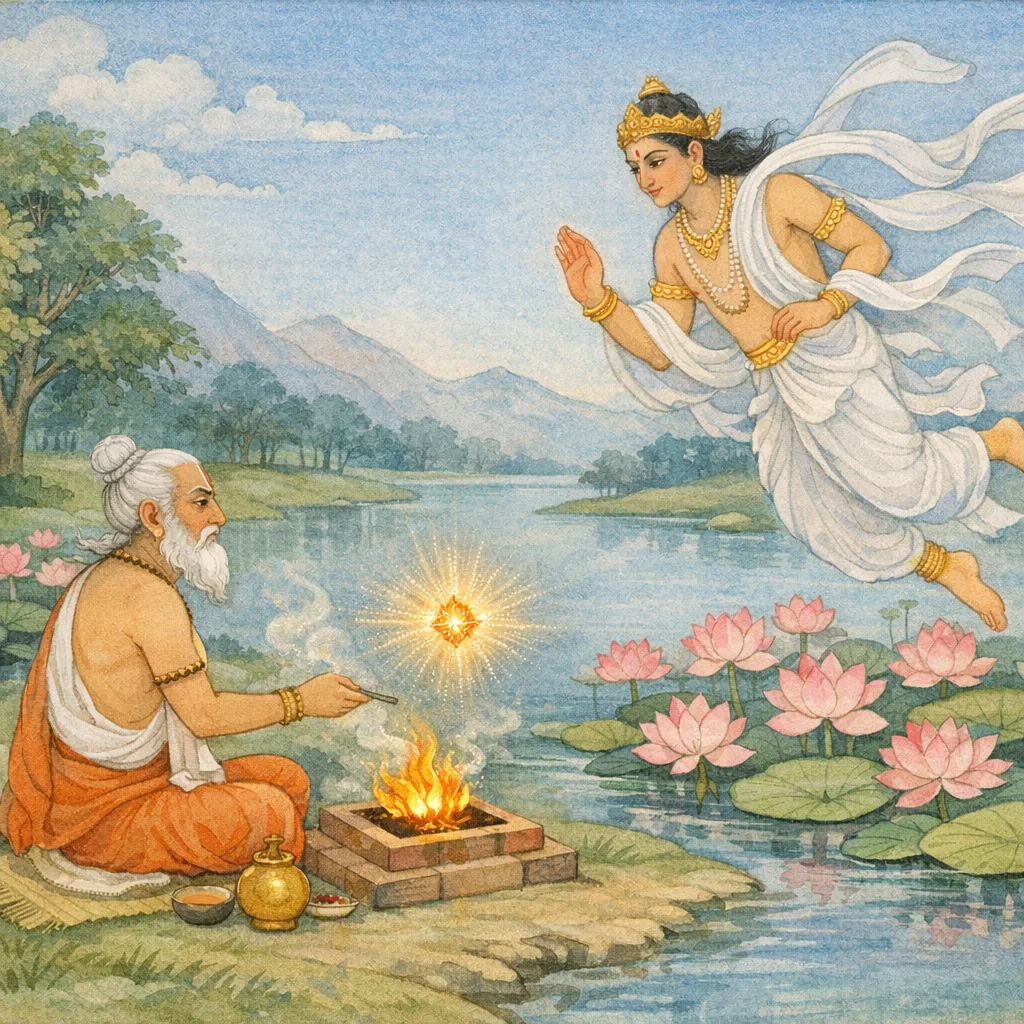
नाम चतुः सप्ततितमो ऽध्यायः सूत उवाच / वायुर्नखान्दैत्यपतेर्गृहीत्वा चिक्षेप सत्पद्मवनेषु हृष्टः / ततः प्रसूतं पवनोपपन्नं कर्केतनं पूजयतमं पृथिव्याम्
Sūta said: “Thus is the seventy-fourth chapter. Vāyu, seizing the nails of the lord of the Daityas, joyfully cast them into the forests of sacred lotuses. From that act arose Karketana, endowed with the power of the Wind, most worthy of worship upon the earth.”
Verse 2
वर्णेन तद्रुधिरसोममधुप्रकाशमाताम्रपीतदहनोज्ज्वलितं विभाति / नीलं पुनः खलु सितं परुषं विभिन्नं व्याध्यादिदोषकरणेन च तद्विभाति
In its color it appears like blood, like the moon, like honey, and like the glow of fire—shining coppery and yellow. Again, it may appear blue or white, rough or variegated; it takes on such appearances due to diseases and other defects.
Verse 3
स्निग्धा विशुद्धाः समरागिणश्च आपीतवर्णा गुरवो विचित्राः / त्रासव्रणव्यालविवर्जिताश्च कर्केतनास्ते परमं पवित्राः
Such karketa gems are glossy and pure, evenly colored, yellowish in hue, heavy and beautifully variegated; free from cracks, wounds, and any serpentine blemish—they are regarded as supremely sacred.
Verse 4
पत्रेण काञ्चनमयेन तु वेष्टयित्वा तप्तं यदा हुतवहे भवति प्रकाशम् / रोगप्रणाशनकरं कलिनाशनं तदायुष्करं कुलकरं च सुखप्रदं च
When it is wrapped in a golden leaf and heated in the sacred fire until it shines forth, it becomes a destroyer of disease and a remover of Kali’s ill effects; it promotes longevity, upholds one’s lineage, and bestows happiness.
Verse 5
एवंविधं बहुगुणं मणिमावहन्ति कर्केतनं शुभलङ्कृतये नरा ये / ते पूजिता बहुधना बहुबान्धवाश्च नित्योज्ज्वलाः प्रमुदिता अपिते भवन्ति
Men who wear the many-virtuous jewel Karketana (hessonite/garnet) as an auspicious adornment are honored, blessed with abundant wealth and many kinsmen; they remain ever radiant and joyful.
Verse 6
एके ऽपनह्य विकृताकुलनीलभासः प्रम्लानरागलुलिताः कलुषा विरूपाः / तेजो ऽतिदीप्ति कुलपुष्टिविहीनवर्णाः कर्केतनस्य सदृशं वपुरुद्वहन्ति
Some, casting off their garments, bear distorted bodies with a confused bluish sheen—complexion faded, sullied, and misshapen. Their radiance blazes excessively, yet their color lacks the nourishing grace of noble lineage, carrying a form resembling Karketana.
Verse 7
कर्केतनं यदि परीक्षितवर्णरूपं प्रत्यग्रभास्वरदिवाकरसुप्रकाशम् / तस्योत्तमस्य मणि शास्त्रविदां महिम्ना तुल्यं तु मूल्यमुदितं तुलितस्य कार्यम्
If Karketana (hessonite) is examined and found true in color and form—shining with fresh brilliance like the radiant sun—then, by the authoritative judgment of those learned in the śāstras, the declared value of that finest gem should be taken as equal to what is established by proper weighing and appraisal.
Frequently Asked Questions
The chapter lists: glossy and pure appearance, uniform tint, yellowish hue, heaviness, pleasing variegation, and absence of cracks, wounds, and serpentine blemishes—these marks define the supremely sacred grade.
It states that Karketana may appear blue or white, rough or variegated, and that such shifts can arise due to diseases and other defects—implying that appearance is diagnostic for quality.
If the gem is true in color and form and shines with fresh, sun-like brilliance, its value should be accepted as determined by learned śāstra-experts, consistent with proper weighing and appraisal procedures.