Adhyaya 100
Vināyaka-pīḍā: Omens, Purification, Crossroads Offerings, and Ambikā Svastyayana
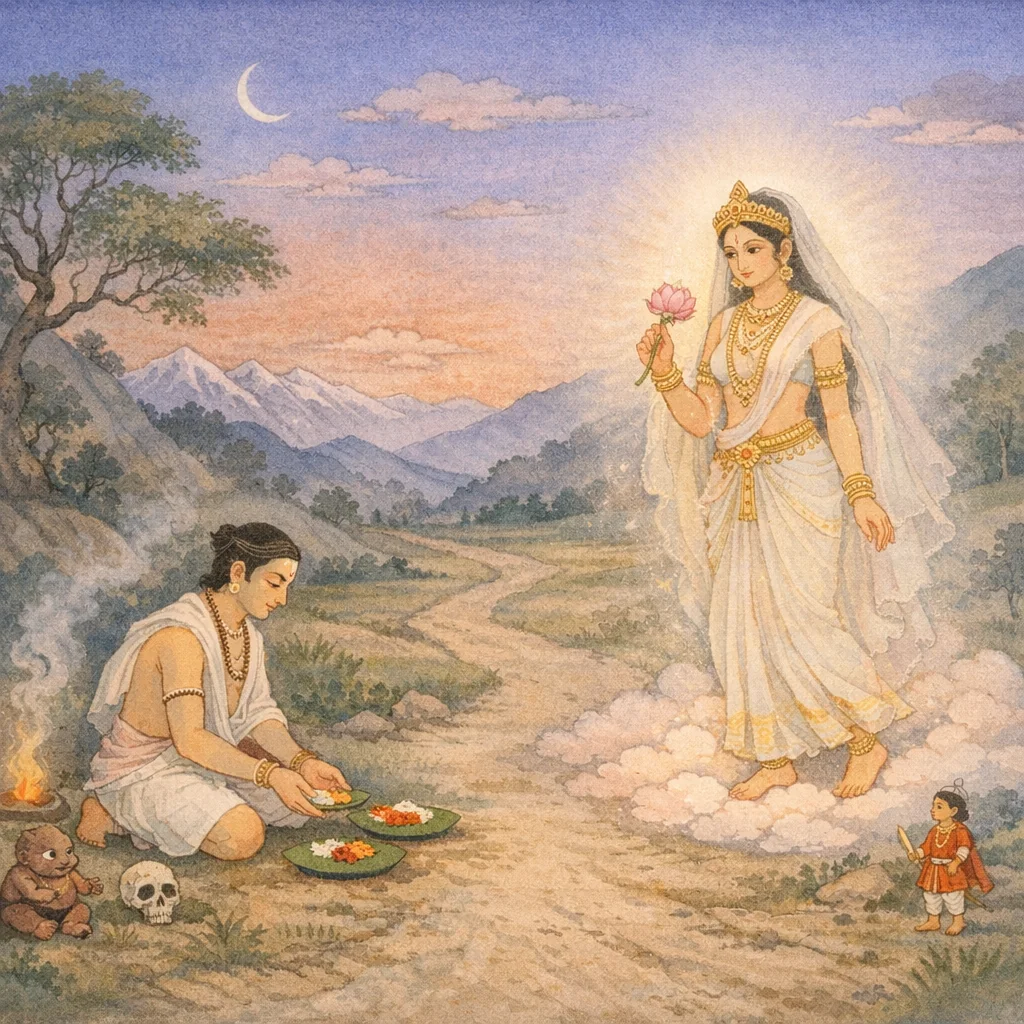
Continuing the Ācāra-khaṇḍa’s remedial teaching on obstacles and misfortune, Yājñavalkya first lists nimittas of Vināyaka-affliction: ominous dreams (deep water, shaven-headed men) and cascading failures—dejection, thwarted undertakings, hostile gatherings, loss of kingdom, delayed marriage, and miscarriage. He then prescribes a stepwise upaśamana: impurity is driven out with pale mustard and ghee; anointing and bath are prepared with clay, rocanā, fragrances, and guggulu, brought in four same-colored pitchers and ritually installed. Mantras invoke Pavamāna purification and the blessings of Varuṇa, Sūrya, Bṛhaspati, Indra, Vāyu, and the Saptarṣis to remove ill-fortune from the head and senses. After bathing, mustard oil mixed with snuhī latex and udumbara is applied, followed by measured offerings using kuśa and ritual implements. The rite culminates in crossroads offerings to Kuṣmāṇḍa and Rājaputra with varied foods and liquor, then arghya and prayers to Ambikā for beauty, fame, prosperity, sons, and desired boons. Finally, brāhmaṇa-feeding, gifts, clothing the guru, Navagraha worship, and devotion to the Sun secure auspicious merit, preparing the practitioner for the next chapters on śānti, graha, and dharmic restoration.
Shlokas
Verse 1
नाम नवनवतितमो ऽध्यायः श्रागरुडमहापुराणम्- १०० याज्ञवल्क्य उवाच / विनायकोपसृष्टस्य लक्षणानि निबोधत / स्वप्ने ऽवगाहते ऽत्यर्थं जलं मुण्डांश्च पश्यति
Yājñavalkya said: “Understand the signs of one afflicted by Vināyaka: in dreams he plunges deeply into water, and he sees shaven-headed men.”
Verse 2
विमना विफलारम्भः संसदित्यनिमित्ततः / राजा राज्यं कुमारी च पतिं पुत्रं च गुर्विणी
Without any apparent cause, the mind grows dejected; undertakings begin yet end fruitlessly; an assembly turns hostile; a king loses his kingdom; an unmarried maiden fails to obtain a husband; and a pregnant woman loses her child.
Verse 3
नाप्नुयात्स्नापनं तस्य पुण्ये ऽह्निविधिपूर्वकम् / गौरसर्षपकल्केन साज्येनोत्सारितस्य तु
For one already ritually cleansed—impurity expelled with a paste of pale mustard blended with ghee—the formal bathing rite (snāpana) is not to be performed again on an auspicious day according to the prescribed rule.
Verse 4
सर्वौषधैः सर्वगन्धैर्विलिप्तशिरसस्तथा / भद्रासनोपविष्टस्य स्वस्ति वाच्यं द्विजाञ्छुभान्
With the head anointed with all healing herbs and fragrant substances, and seated upon the auspicious seat (bhadrāsana), one should have the virtuous twice-born Brahmins pronounce the blessing words of “svasti”.
Verse 5
मृत्तिकां रोचनां गन्धान् गुग्गुलुं चाप्सु निः क्षिपेत् / या आहृता एकवर्णैश्चतुर्भिः कलशैर्ह्रदात्
Into the water one should place clay, rocanā (a sacred yellow pigment), fragrant substances, and guggulu (aromatic resin). That water is to be brought from a lake in four pitchers (kalaśas) of the same color.
Verse 6
चर्मण्यानुडुहे रक्ते स्थाप्यं भद्रासने तथा / सहस्राक्षं शतधारमृषिभिः पावनं स्मृतम्
It should be placed upon a hide stained with blood and set upon the auspicious seat (bhadrāsana). The sages have declared “Sahasrākṣa” (the Thousand‑eyed) and “Śatadhāra” (the Hundred‑streamed) to be purifying.
Verse 7
तेन त्वामभिषिञ्चामि पावमान्यः पुनन्तु ते / भगं तु वरुणो राजा भगं सूर्यो बृहस्पतिः
With this I anoint you; may the Pavamāna purifiers cleanse you. May King Varuṇa bestow upon you bhaga—your share of fortune; may Sūrya and Bṛhaspati also grant you that благessing.
Verse 8
भगमिन्द्रश्च वायुश्च भगं सप्तर्षयो ददुः / यत्ते केशेषु दौर्भाग्यं सीमन्ते यच्च मूर्धनि
Indra and Vāyu, and the Seven Ṛṣis, have bestowed upon you bhaga—your fortunate share. Whatever ill-fortune rests upon your hair, at the parting (sīmanta) and upon the crown of the head, may it be removed.
Verse 9
ललाटे कर्णयोरक्ष्णोरापस्तद्घ्नुन्तु ते सदा / स्नातस्य सार्षपं तैलं स्नुवेणौदुम्बरेण तु
May the waters ever ward off those afflictions from your forehead, ears, and eyes. After bathing, apply mustard oil, using the milky sap of the snuhī plant and (wood or implement) of the udumbara fig tree.
Verse 10
जुहुयान्मूर्धनि कुशान्सव्येन परिगृह्य च / मितश्चसमितश्चैव तथा शालकटङ्कटौ
Holding kuśa grass in the left hand, one should make the offering at the crown of the head; likewise with the measured and well-arranged items, and also with the ritual implements śālaka and aṅkaṭa.
Verse 11
कुष्माण्डो राजपुत्रश्च अन्ते स्वाहासमन्वितैः / दद्याच्चतुष्पथे भूमौ कुशानास्तीर्य सर्वशः
At the conclusion of the rite, one should present the offering with the invocation “svāhā” to Kuṣmāṇḍa and to Rājaputra at a four-way crossroads upon the earth, after spreading kuśa grass thoroughly in all directions.
Verse 12
कृताकृतांस्तण्डुलांश्च पललौदनमेव च / पुष्पं चित्रं सुगन्धं च सुरां च त्रिविधामपि
Rice—cooked and uncooked—meat-rice (a cooked dish), flowers, colorful offerings, fragrant substances, and even liquor of three kinds are offered.
Verse 13
मूलकं पूरिकापूपं तथैवौण्डेरकस्त्रजः / दधि पायसमन्नं च गुडपिष्टं समोदकम्
Radish; stuffed fried cakes and sweet cakes; ring-shaped pastries and garlands (of offerings); curd; rice cooked in milk (kheer); cooked rice; and preparations of jaggery and flour with a sweetened drink—these are to be offered.
Verse 14
एतान्सर्वानुपाहृत्य भूमौ कृत्वा ततः शिरः / अम्बिकामुपतिष्ठेच्च दद्यादर्घ्यं कृताञ्जलिः
Having brought all these offerings, one should place them on the ground and then bow the head. Then, with folded hands, one should stand in reverence before Ambikā and offer arghya (a respectful water-offering).
Verse 15
दूर्वासर्षपपुष्पैश्च पुत्रजन्मभिरन्ततः / कृतस्वस्त्ययनं चैव प्रार्थयेदम्बिकां सतीम्
With dūrvā grass, mustard, and flowers—and finally, with rites for the begetting (or birth) of a son—having duly performed the svastyayana (auspicious benediction), one should pray to the virtuous Mother Ambikā (Satī).
Verse 16
रूपं देहि यशोदेहि भगं भगवति ! देहि मे / पुत्रान्देहि श्रियं देहि सर्वान्कामांश्च देहि मे
Grant me beauty; grant me fame; O Blessed Goddess, grant me prosperity. Grant me sons; grant me fortune; grant me all desired wishes.
Verse 17
ब्राह्मणान् भोजयेत्पश्चाच्छुक्लवस्त्रानुलेपनैः / वस्त्रयुग्मङ्गुरोर्दद्यासंपूज्य च ग्रहांस्तथा / श्रेयः कर्मफलं विन्द्यात्सूर्यार्चनरतस्तथा
Afterwards, one should feed the Brāhmaṇas, offering white garments and fragrant unguents. One should present a pair of clothes to one’s guru, and likewise worship the nine grahas (planets). Thus, one devoted to the worship of Sūrya attains auspicious merit—the beneficial fruit of action.
Frequently Asked Questions
The chapter highlights dream-omens (plunging into deep water; seeing shaven-headed men) and real-world patterns: causeless dejection, undertakings that begin but end fruitlessly, hostility in assemblies, loss of kingdom for a ruler, failure of an unmarried girl to obtain a husband, and loss of the child for a pregnant woman.
The ingredients function as śuddhi and saṃskāra media—earth (clay) for grounding impurity, rocanā for auspicious consecration, fragrances and guggulu for sanctifying and protective fumigant qualities. The four pitchers and uniform color emphasize ritual coherence and directional completeness, supporting the rite’s aim of restoring wholeness and stability.
A crossroads (catuṣpatha) is a liminal zone where obstructive influences are ritually ‘diverted’ away from the household. Offering with svāhā after spreading kuśa in all directions symbolically contains and transfers the affliction outward, while appeasing specified beings (Kuṣmāṇḍa, Rājaputra) to neutralize vighna and restore auspicious flow.
After the external appeasement and purification, Ambikā (Satī) is approached as the auspicious Mother who grants śrī (prosperity), yaśas (fame), rūpa (beauty), putra (sons), and iṣṭa (desired aims). This frames obstacle-removal not only as negating harm but as re-establishing positive fertility, fortune, and social flourishing.