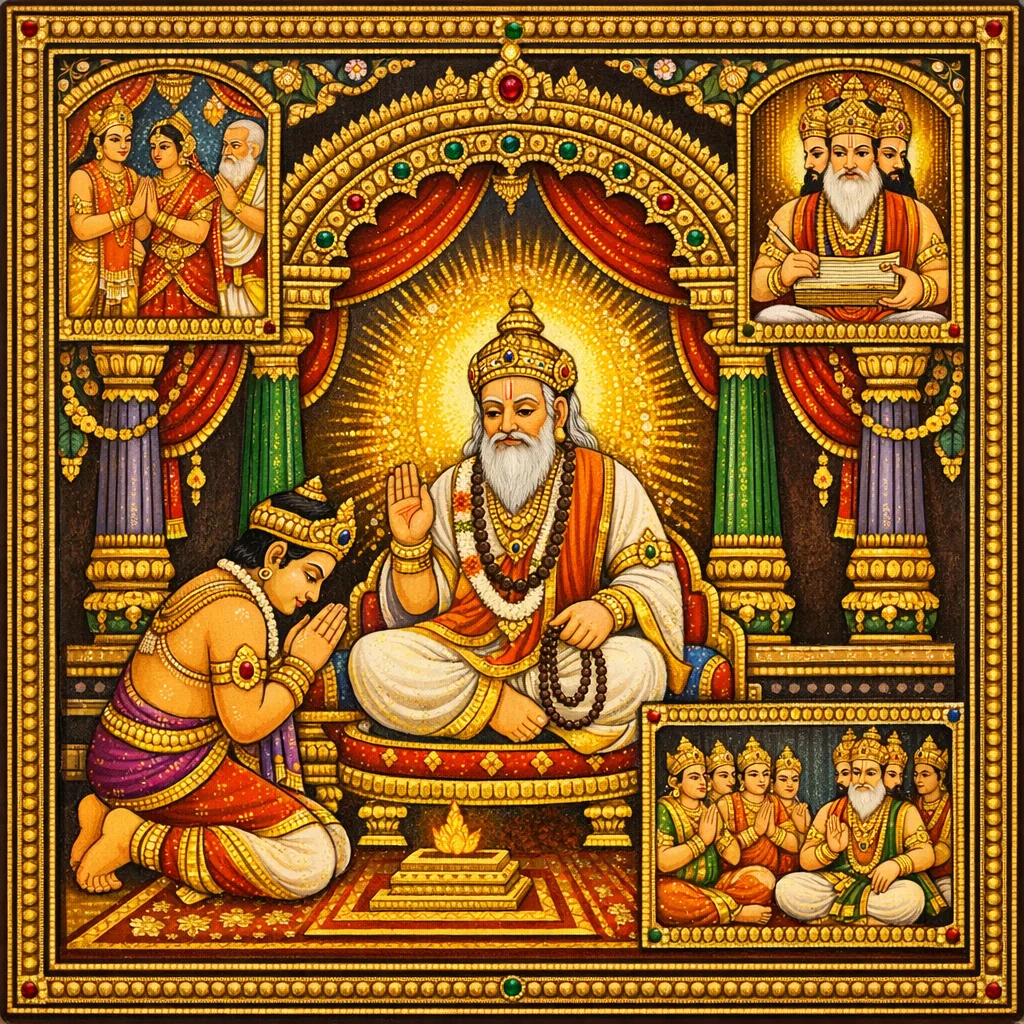
Adhyaya 9
Indra’s Query on Karma-vipāka and the Viśvarūpa Episode (Lalitopākhyāna Context)
This chapter teaches, through a question-and-answer exchange, the workings of karmic retribution (karma-vipāka) and the proper means of ritual expiation (prāyaścitta). Indra approaches a dharma-authority praised as “sarva-dharmajña” and “trikāla-jñāna-vittama” and asks what karma produced his calamity and what expiation should be performed. The reply first grounds the account in genealogy: Kaśyapa’s line is traced through Diti, Danu is named, and Rūpavatī is given in marriage to Dhātṛ; from her is born Viśvarūpa, radiant, devoted to Nārāyaṇa, and learned in Veda and Vedāṅga. The narrative then turns to priestly politics: the daitya faction chooses Bhṛgu’s son as purohita, while the devas seek a ritual remedy and invite Viśvarūpa—linked to both sides—to serve. A prior episode is recalled in which a comparative judgment—tīrtha-yātrā versus saṃsāra—angers the sages; their curse drives the afflicted one into the karma-bhūmi under poverty and constraint, leading ultimately toward Kāñcī. The chapter thus connects misfortune with speech-acts, contested authority, and dharma-knowledge, using genealogy to legitimate the ethical and ritual counsel that follows.
Shlokas
Verse 1
इति श्रीब्रह्माण्डमहापुराणे उत्तरभागे हयग्रीवागस्त्यसंवादे ललितोपाख्याने ऽष्टमो ऽध्यायः इन्द्र उवाच भगवन्सर्व धर्मज्ञ त्रिकालज्ञानवित्तम / दुष्कृतं तत्प्रतीकारो भवता सम्यगीरितः
Thus, in the Śrī Brahmāṇḍa Mahāpurāṇa, in the Uttara section, in the dialogue of Hayagrīva and Agastya, within the Lalitopākhyāna, begins the eighth chapter. Indra said: “O Bhagavan, knower of all dharmas and of the three times, you have rightly declared the remedy for evil deeds.”
Verse 2
केन कर्मविपाकेन ममापदि यमागता / प्रायश्चित्तं च किं तस्य गदस्व वदतां वर
By what ripening of karma has this calamity come upon me? And what is its prāyaścitta, the expiation? O best of speakers, declare it.
Verse 3
बृहस्पतिरुवाच काश्यपस्य ततो जज्ञे दित्यां दनुरिति स्मृतः / कन्या रूपवती नाम धात्रे तां प्रददौ पिता
Bṛhaspati said: “Then, from Kaśyapa, in the womb of Diti, was born (a son) remembered as Danu. His daughter, named Rūpavatī, her father gave in marriage to the god Dhātṛ.”
Verse 4
तस्याः पुत्रस्ततो जातो विश्वरूपो महाद्युतिः / नारायणपरो नित्यं वेदवेदाङ्गपारगः
From her was then born a son named Viśvarūpa, of mighty radiance; ever devoted to Nārāyaṇa, he was fully versed in the Vedas and the Vedāṅgas.
Verse 5
ततो दैत्येश्वरो वव्रे भृगुपुत्रं पुरोहितम् / भवानधिकृतो राज्ये देवानामिव वासवः
Then the lord of the Daityas chose the son of Bhṛgu as his purohita and said, “You are entrusted with the kingdom, like Vāsava (Indra) among the gods.”
Verse 6
ततः पूर्वे च काले तु सुधर्मायां त्वयि स्थिते / त्वया कश्चित्कृतः प्रश्न ऋषीणां सन्निधौ तदा
And in former times, when you were seated in the hall of Sudharmā, you once posed a question in the presence of the ṛṣis.
Verse 7
संसारस्तीर्थयात्रा वा को ऽधिको ऽस्ति तयोर्गुमः / वदन्तु तद्विनिश्चित्य भवन्तो मदनुग्रहात्
Between saṃsāra and pilgrimage to the tīrthas, which is the greater in merit? Decide it with certainty and speak, by my favor.
Verse 8
तत्प्रश्नस्योत्तरं वक्तुं ते सर्व उपचक्रिरे / तत्पूर्वमेव कथितं मया विधिबलेन वै
To answer that question, they all began to speak; but before that, I had already declared it, by the power of Vidhi (the ordained order).
Verse 9
तीर्थ यात्रा समधिका संसारादिति च द्रुतम् / तच्छ्रुत्वा ते प्रकुपिताः शेपुर्मामृषयो ऽखिलाः
I quickly said, “Pilgrimage to the tīrthas is greater than saṃsāra.” Hearing this, all the ṛṣis grew enraged and cursed me.
Verse 10
कर्मभूमिं व्रजेः शीघ्रं दारिर्द्येण मितैः सुतैः / एवं प्रकुपितैः शप्तः खिन्नः काञ्चीं समाविशम्
Afflicted by poverty and with only a few children, I hastened to the land of sacred duty. Cursed by those who were enraged, weary at heart, I entered Kanchi.
Verse 11
पुरीं पुरोधसा हीनां वीक्ष्य चिन्ताकुलात्मना / भवता सह देवैस्तु पौरोहित्यार्थमादरात्
Seeing the city bereft of a purohita, my heart became troubled with anxious thought. Then you, together with the devas, respectfully entreated for the priestly office.
Verse 12
प्रार्थितो विश्वरूपस्तु बभूव तपतां वरः / स्वस्रीयो दानवानां तु देवानां च पुरोहितः
When entreated, Viśvarūpa—the foremost among ascetics—appeared. Being a close kinsman, he became purohita to both the dānavas and the devas.
Verse 13
नात्यर्थम करोद्वैरं दैत्येष्वपि महातपाः / बभूवतुस्तुल्यबलौ तदा देत्येन्द्रवासवौ
The great ascetic did not kindle excessive enmity even toward the daityas. Thus, at that time, Daityendra and Vāsava became equal in might.
Verse 14
ततस्त्वं कुपितो राजन्स्वक्लीयं दानवेशितुः / हन्तुमिच्छन्नगाश्चाशु तपसः साधनं वनम्
Then, O king, angered and wishing to slay the kinsman of the lord of the dānavas, you swiftly went to the forest, the very means for austerity.
Verse 15
तमासनस्थं मुनिभिस्त्रिशृङ्गमिव पर्वतम् / त्रयी मुखरदिग्भागं ब्रह्मानदैकनिष्ठितम्
He was seated among the sages like a three-peaked mountain, the quarters resounding with the chants of the three Vedas, established solely in the bliss of Brahman.
Verse 16
सर्वभूतहितं तं तु मत्वा चेशानुकूलितः / शिरांसि यौगपद्येन छिन्नात्यासंस्त्वयैव तु
Thinking it was for the welfare of all beings and favored by the Lord, the heads were severed simultaneously by you alone.
Verse 17
तेन पापेन संयुक्तः पीडितश्च मुहुर्मुहुः / ततो मेरुगुहां नीत्वा बहूनब्दान्हि संस्थितः
United with that sin and afflicted again and again, he then took it to a cave in Mount Meru and resided there for many years.
Verse 18
ततस्तस्य वचः श्रुत्वा ज्ञात्वा तु मुनिवाक्यतः / पुत्र शोकेन संतप्तस्त्वां शशाप रुषान्वितः
Then, hearing his words and knowing the truth through the sage's speech, the father, burning with grief for his son, cursed you in anger.
Verse 19
निःश्रीको भवतु क्षिप्रं मम शापेन वासवः / अनाथकास्ततो देवा विषण्णा दैत्यपीडिताः
May Vasava be bereft of his splendor immediately by my curse. Consequently, the gods became lordless, dejected, and oppressed by the demons.
Verse 20
त्वया मया च रहिताः सर्वे देवाः पलायिताः / गत्वा तु ब्रह्मसदनं नत्वा तद्वृत्तमूचिरे
Bereft of you and of me, all the gods fled in fear. They went to Brahmā’s abode, bowed down, and told him the whole account.
Verse 21
ततस्तु चिन्तया मास तदघस्य प्रतिक्रियाम् / तस्य प्रतिक्रियां वेत्तुं न शशाकात्मभूस्तदा
Then Brahmā pondered the atonement for that sin, yet at that time the Self-born could not discern its remedy.
Verse 22
ततो देवैः परिवृतो नारायणमुपागमत्
Then Brahmā, surrounded by the gods, approached Nārāyaṇa.
Verse 23
नत्वा स्तुत्वा चतुर्वक्रस्तद्वृत्तान्तं व्यजिज्ञपत् / विचिन्त्य सो ऽपि बहुधा कृपया लोकनायकः
Four-faced Brahmā bowed and praised Him, and made known the whole matter. Nārāyaṇa, the Lord of the worlds, pondered it in many ways, moved by compassion.
Verse 24
तदघं तु त्रिधा भित्त्वा त्रिषु स्थानेष्वथार्पयत् / स्त्रीषु भूम्यां च वृक्षेषु तेषामपि वरं ददौ
He split that sin into three parts and placed them in three abodes—among women, in the earth, and in the trees; and to them too He granted a boon.
Verse 25
तदा भर्त्तृसमायोगं पुत्रावाप्तिमृतुष्वपि / छेदे पुनर्भवत्वं तु सर्वेषामपि शाखिनाम्
Then, even in the seasons, may there be union with the husband and the gaining of a son; and though cut down, may all trees be born again.
Verse 26
खातपूर्तिं धरण्यश्च प्रददौ मधुसूदनः / तेष्वघं प्रबभूवाशु रजोनिर्यासमूषरम्
Madhusūdana granted the filling of the pits and even the earth itself; yet among them sin quickly arose, dry and barren like sap mixed with dust.
Verse 27
निर्गतो गह्वरात्तस्मात्त्वमिन्द्रो देवनायकः / राज्यश्रियं च संप्राप्तः प्रसादात्परमेष्ठिनः
Having come forth from that deep cavern, you became Indra, leader of the gods; and by the grace of Parameṣṭhin you attained the splendor of kingship.
Verse 28
तेनैव सांत्वितो धाता जगाद च जनार्दनम् / मम शापो वृथा न स्यादस्तु कालान्तरे मुने
Thus comforted, Dhātā spoke to Janārdana: “O sage, let my curse not be in vain; let it take effect at a later time.”
Verse 29
भगवांस्तद्वचः श्रुत्वा मुनेरमिततेजसः / प्रहृष्टो भाविकार्यज्ञस्तूष्णीमेव तदा ययौ
Hearing those words of the sage of immeasurable splendor, the Blessed Lord—knower of what was yet to come—rejoiced, and then departed in silence.
Verse 30
एतावन्तमिमं कालं त्रिलोकीं पालयन्भवान् / एश्वर्यमदमत्तत्वात्कैलासाद्रिमपीडयत
For so long you safeguarded the three worlds; yet, intoxicated by the pride of sovereignty, you even oppressed Mount Kailāsa.
Verse 31
सर्वज्ञेन शिवेनाथ प्रेषितो भगवान्मुनिः / दुर्वासास्त्वन्मदभ्रंशं कर्त्तुकामः शशाप ह
O Lord, the blessed sage Durvāsā, sent by all-knowing Śiva, pronounced a curse, intent on shattering your intoxication of pride.
Verse 32
एकमेव फलं जातमुभयोः शापयोरपि / अधुना पश्यनिः श्रीकन्त्रैलोक्यं समजायत
The outcome of both curses was the same; behold now—Triloka has become bereft of Śrī, of auspicious splendor.
Verse 33
न यज्ञाः संप्रवर्त्तन्ते न दानानि च वासव / न यमा नापि नियमा न तपासि च कुत्रचित्
O Vāsava, no sacrifices are performed, nor gifts bestowed; there are no yamas, no niyamas, and nowhere any austerity.
Verse 34
विप्राः सर्वे ऽपि निःश्रीका लोभोपहतचेतसः / निःस्त्त्वा धैर्यहीनाश्च नास्तिकाः प्रायशो ऽभवन्
All the vipras became bereft of Śrī; their minds were wounded by greed; devoid of sattva and courage, they mostly turned nāstika.
Verse 35
निरौषधिरसा भूमिर्निवीर्य जायतेतराम् / भास्करो धूसराकारश्चन्द्रमाः कान्तिवर्जितः
The earth, bereft of the sap of healing herbs, became utterly strengthless; the Sun turned ashen in form, and the Moon was stripped of its radiance.
Verse 36
निस्तेजस्को हविर्भोक्ता मनुद्धूलिकृताकृतिः / न प्रसन्ना दिशां भागा नभो नैव च निर्मलम्
Agni, the eater of the oblations, became lusterless, as though his form were coated with dust; the quarters were not serene, nor was the sky clear.
Verse 37
दुर्बला देवताः सर्वा विभान्त्यन्यादृशा इव / विनष्टप्रयमेवास्ति त्रैलोक्यं सचराचरम्
All the deities grew feeble and seemed as though of another aspect; the three worlds, with all that moves and does not move, were as if already near ruin.
Verse 38
हयग्रीव उवाच इत्थं कथयतोरेव बृहस्पतिपहेन्द्रयोः / मलकाद्या महादैत्याः स्वर्गलोकं बबाधिरे
Hayagriva said: Even as Brhaspati and Indra were speaking thus, the mighty Daityas—Malaka and the rest—began to assail the realm of heaven.
Verse 39
नन्दनोद्यान मखिलं चिच्छिदुर्बलगर्विताः / उद्यानपालकान्सर्वानायुधैः समताडयन्
Puffed up with pride in their might, they tore apart the whole of Nandana Grove and struck down all the garden-keepers with their weapons.
Verse 40
प्राकारमवभिद्यैव प्रविश्य नगरान्तरम् / मन्दिरस्थान्सुरान्सर्वानत्यन्तं पर्यपीडयन्
Breaking through the rampart, they entered the heart of the city and grievously oppressed all the Devas abiding in the temples.
Verse 41
आजहुरप्सरोरत्नान्यशेषाणि विशेषतः / ततो देवाः समस्ताश्च चक्रुर्भृशमबाधिताः
They carried off, most especially, all the jewel-treasures of the Apsaras without remainder; thereupon all the Devas were sorely afflicted and harassed.
Verse 42
तादृशं घोषमाकर्म्य वासवः प्रोज्झितासनः / सर्वैरनुगतो देवैः पलायनपरो ऽभवत्
Hearing such an uproar, Vāsava (Indra) forsook his seat; followed by all the Devas, he turned wholly toward flight.
Verse 43
ब्राह्मं धाम समभ्येत्य विषण्मवदनो वृषा / यथावत्कथयामास निखिलं दैत्यचेष्टितम्
With downcast face, Vṛṣā (Indra) came to Brahmā’s abode and duly recounted in full the deeds and designs of the Daityas.
Verse 44
विधातापि तदाकर्ण्य सर्वदेवसमन्वितम् / हतश्रीकं हरिहयमालोक्येदमुवाच ह
Hearing this, the Ordainer (Brahmā), surrounded by all the Devas, beheld Harihaya (Indra) shorn of splendor and spoke these words.
Verse 45
इन्द्रत्वमखिलैर्द्देवैर्मुकुन्दं शरणं व्रज / दैत्यारातिर्जगत्कर्ता स ते श्रेयो विधास्यति
O Indra, with all the gods, take refuge in Mukunda. He, the foe of the Daityas and the Maker of the worlds, will ordain your highest good.
Verse 46
इत्युक्त्वा तेन सहितः स्वयं ब्रह्मा पितामहः / समस्तदेवसहितः क्षीरोदधिमुपाययौ
Having spoken thus, Brahmā the Pitāmaha himself, together with him and all the gods, went to the Ocean of Milk.
Verse 47
अथ ब्रह्मादयो देवा भगवन्तं जनार्दनम् / तुष्टुवुर्वाग्वरिष्ठाभिः सर्वलोकमहेश्वरम्
Then the gods, led by Brahmā, praised Bhagavān Janārdana, the Great Lord of all the worlds, with their finest utterances.
Verse 48
अथ प्रसन्नो भगवान्वासुदेवः सनातनः / जगाद स कलान्देवाञ्जगद्रक्षणलंपटः
Then the eternal Bhagavān Vāsudeva, pleased and intent on safeguarding the world, spoke to the gods.
Verse 49
श्रीभगवानुवाच भवतां सुविधास्यामि तेजसैवोपबृंहमम् / यदुच्यते मयेदानीं युष्माभिस्त द्विधीयताम्
The Blessed Lord said: I shall aid you and strengthen you with my own radiance. Now, whatever I say, you must carry it out accordingly.
Verse 50
ओषधिप्रवराः सर्वाः क्षिपत क्षीरसागरे / असुरैरपि संधाय सममेव च तैरिह
O gods, cast all the foremost healing herbs into the Ocean of Milk; here, even making a pact with the asuras, undertake this work together with them as equals.
Verse 51
मन्थानं मन्दरं कृत्वा कृत्वा योक्त्रं च वासुकिम् / मयि स्थिते सहाये तु मथ्यताममृतं सुराः
Make Mount Mandara the churning staff and Vasuki the rope; with Me standing as your aid, O suras, churn forth the amrita.
Verse 52
समस्तदानवाश्चापि वक्तव्याः सांत्वपूर्वकम् / सामान्यमेव युष्माकमस्माकं च फलं त्विति
And to all the danavas, speak with soothing words: “The fruit of this will be shared alike—yours and ours, the same.”
Verse 53
मथ्यमाने तु दुग्धाब्धौ या समुत्पद्यते सुधा / तत्पानाद्बलिनो यूयममर्त्याश्च भविष्यथ
When the Ocean of Milk is churned and the sacred nectar arises, by drinking it you will become mighty and also immortal.
Verse 54
यथा दैत्याश्च पीयूषं नैतत्प्राप्स्यन्ति किञ्चन / केवलं क्लेशवन्तश्च करिष्यामि तथा ह्यहम्
Thus will I arrange it: the daityas shall not obtain this nectar in the least, and will bear only toil and hardship.
Verse 55
इति श्रीवासुदेवेन कथिता निखिलाः सुराः / संधानं त्वतुलैर्दैत्यैः कृतवन्तस्तदा सुराः / नानाविधौषधिगणं समानीय सुरासुराः
Thus did Śrī Vāsudeva address all the gods. Then the devas made a pact with the peerless daityas, and devas and asuras gathered together many kinds of healing herbs.
Verse 56
श्रीराब्धिपयसि क्षिप्त्वा चन्द्रमो ऽधिकनिर्मलम् / मन्थानं मन्दरं कृत्वा कृत्वा योक्त्रं तु वासुकिम् / प्रारेभिरे प्रयत्नेन मन्थितुं यादसां पतिम्
Casting the supremely pure Moon into the milky waters of the sacred ocean, they made Mandara the churning staff and Vāsuki the rope, and with great effort began to churn the sea, lord of all aquatic beings.
Verse 57
वासुकेः पुच्छभागे तु सहिताः सर्वदेवताः / शिरोभागे तु दैतेया नियुक्तास्तत्र शौरिणा
All the gods gathered at Vāsuki’s tail, while at his head Śauri (Kṛṣṇa) stationed the daityas.
Verse 58
बलवन्तो ऽपि ते दैत्यास्तन्मुखोच्छ्वासपावकैः / निर्दग्धवपुषः सर्वे निस्तेजस्कास्तदाभवन्
Though mighty, those daityas were scorched by the fire of his breath issuing from his mouth, and in that moment they became bereft of radiance.
Verse 59
पुच्छदेशे तु कर्षन्तो मुहुराप्यायिताः सुराः / अनुकूलेन वातेन विष्णुना प्रेरितेन तु
Pulling from the tail end, the gods were again and again refreshed and strengthened, for a favorable wind, set in motion by Viṣṇu, aided them.
Verse 60
आदिकूर्माकृतिः श्रीमान्मध्ये क्षीरपयोनिधेः / भ्रमतो मन्दराद्रेस्तु तस्या धिष्टानतामगात्
In the midst of the Ocean of Milk, the glorious Lord assumed the form of the primal Tortoise and became the steadfast base of the whirling Mount Mandara.
Verse 61
मध्ये च सर्वदेवानां रूपेणान्येन माधवः / चकर्ष वासुकिं वेगाद्दैत्यमध्ये परेण च
Amid all the gods, Mādhava in one form swiftly drew Vāsuki, and in another form He drew as well among the daityas.
Verse 62
ब्रह्मरूपेण तं शैलं विधार्याक्रान्तवारिधिम् / अपरेण च देवर्षिर्महता तेजसा मुहुः
In the form of Brahmā He upheld that mountain and set it firm upon the ocean; and in another form, as a divine seer, He again and again poured forth mighty radiance.
Verse 63
उपवृंहितवान्देवान्येन ते बलशालिनः / तेजसा पुनरन्येन बलात्कारसहेन सः
In one form He invigorated the mighty gods and increased their strength; in another, with overpowering tejas, He made them able to endure the crushing strain.
Verse 64
उपबृंहितवान्नागं सर्वशक्तिजनार्दनः / मथ्यमाने ततस्तस्मिन्क्षीरब्धौ देवदानवैः
Janārdana, in whom all powers abide, strengthened even the nāga Vāsuki; then the devas and dānavas began to churn the Ocean of Milk.
Verse 65
आविर्बभूव पुरतः सुरभिः सुरपूजिता / मुदं जग्मुस्तदा देवा दैतेयाश्च तपोधन
Then Surabhi, revered and worshiped by the gods, manifested before them. O rich in austerity, the Devas and the Daityas alike rejoiced.
Verse 66
मथ्यमाने पुनस्तस्मिन्क्षीराब्दौ देवदानवैः / किमेतदिति सिद्धानां दिवि चिन्तयतां तदा
As the Devas and Dānavas again churned the Ocean of Milk, the Siddhas in heaven pondered, “What is this?”
Verse 67
उत्थिता वारुणी देवी मदाल्लोलविलोचना / असुराणां पुरस्तात्सा स्मयमाना व्यतिष्ठत
Then the goddess Vāruṇī arose, her eyes wavering with intoxication; smiling, she stood before the Asuras.
Verse 68
जगृहुर्नैव तां दैत्या असुराश्चाभवंस्ततः / सुरा न विद्यते येषां तेनैवासुरशब्दिताः
The Daityas and Asuras did not accept her; thus they came to be called “Asuras”. Those in whom there is no surā are, for that very reason, termed asura.
Verse 69
अथसा सर्वदेवानामग्रतः समतिष्ठत / जगृहुस्तां मुदा देवाः सूचिताः परमेष्ठिना / सुराग्रहणतो ऽप्येते सुरशब्देन कीर्तिताः
Then she stood before all the gods. At the indication of Parameṣṭhin (Brahmā), the Devas accepted her with joy; and because they received surā, they too are celebrated by the name “Suras”.
Verse 70
मथ्यमाने ततो भूयः पारिजातो महाद्रुमः / आविरासीत्सुंगधेन परितो वासयञ्जगत्
As the churning went on, the mighty Pārijāta tree appeared again, and with its divine fragrance it perfumed the world on every side.
Verse 71
अत्यर्थसुंदराकारा धीराश्चाप्सरसां गणाः / आविर्भूताश्च देवर्षे सर्वलोकमनोहराः
O devarṣi, hosts of apsarases appeared—exceedingly beautiful in form and serene in bearing—enchanting the hearts of all the worlds.
Verse 72
ततः शीतांशुरुदभूत्तं जग्राह महेश्वरः / विषजातं तदुत्पन्नं जगृहुर्नागजातयः
Then Śītāṃśu (the Moon) arose, and Maheśvara took him. The poison that was produced was taken up by the races of the Nāgas.
Verse 73
कौस्तुभाख्यं ततो रत्नमाददे तज्जनार्दनः / ततः स्वपत्रगन्धेन मदयन्ती महौषधीः / विजया नाम संजज्ञे भैरवस्तामुपाददे
Then Janārdana took up the jewel called Kaustubha. Next was born Vijayā, a mighty herb whose leaf-fragrance intoxicates the great medicinal plants; Bhairava received her.
Verse 74
ततो दिव्यांबरधरो देवो धन्वन्तरिः स्वयम् / उपस्थितः करे बिभ्रदमृताढ्यं कमण्डलुम्
Then the god Dhanvantari himself appeared, clad in divine garments, holding in his hand a kamaṇḍalu brimming with amṛta.
Verse 75
ततः प्रहृष्टमनसो देवा दैत्याश्च सर्वतः / मुनयश्चाभवंस्तुष्टास्तदानीं तपसां निधे
Then the Devas and the Daityas everywhere became glad of heart; O treasure of austerity, at that time the sages too were satisfied.
Verse 76
ततो विकसितांभोजवासिनी वरदायिनी / उत्थिता पद्महस्ता श्रीस्तस्मात्क्षीरमहार्मवात्
Then Śrī, dwelling in the blossomed lotus, bestower of boons, lotus-handed, arose from that great Ocean of Milk.
Verse 77
अथ तां मुनयः सर्वे श्रीसुक्तेन श्रियं पराम् / तुष्टुवुस्तुष्ट हृदया गन्धर्वाश्च जगुः परम्
Then all the sages praised the supreme Śrī with the Śrīsūkta; and the Gandharvas, their hearts delighted, sang exalted songs.
Verse 78
विश्वाजीप्रमुखाः सर्वे ननृतुश्चाप्सरोगणाः / गङ्गाद्याः पुण्यनद्यश्च स्नानार्थमुपतस्थिरे
All the hosts of Apsarases, led by Viśvājī, began to dance; and the holy rivers, Gaṅgā and the rest, came forward for the rite of bathing.
Verse 79
अष्टौ दिग्दन्तिनश्चैव मेध्यपात्रस्थितं जलम् / आदाय स्नापयाञ्चक्रुस्तां श्रियं पद्मवासिनीम्
The eight elephants of the directions took water kept in purified vessels and bathed Śrī, the lotus-dwelling goddess.
Verse 80
तुलसीं च समुत्पन्नां परार्ध्या मैक्यजां हरेः / पद्ममालां ददौ तस्यै मूर्तिमान्क्षीरसागरः
Most precious Tulasi arose, born of oneness with Hari; the Milk Ocean, taking form, bestowed upon her a garland of lotuses.
Verse 81
भूषणानि च दिव्यानि विश्वकर्मा समर्पयत् / दिव्यमाल्यां बरधरा दिव्यभूषणभूषिता / ययौ वक्षस्थलं विष्णोः सर्वेषां पश्यतां रमा
Viśvakarmā presented divine ornaments; Rama, bearing a celestial garland and adorned with heavenly jewels, before all eyes went to Viṣṇu’s breast.
Verse 82
तुलसी तु धृता तेन विष्णुना प्रभविष्णुना / पश्यति स्म च सा देवी विष्णुवक्षथलालया / देवान्दयार्द्रया दृष्ट्या सर्वलोकमहेश्वरी
Viṣṇu, the mighty Lord, held Tulasi; the Goddess dwelling upon Viṣṇu’s breast, Sovereign of all worlds, beheld the devas with a gaze softened by compassion.
Frequently Asked Questions
The episode is anchored in Kaśyapa’s progeny through Diti, with Danu named, and then through Rūpavatī (given to Dhātṛ), whose son Viśvarūpa is presented as a Nārāyaṇa-devoted, Veda–Vedāṅga-competent figure—genealogy functioning as authorization for his ritual office.
Indra’s crisis is framed as karma-vipāka (the ripening of prior acts) requiring prāyaścitta (expiation/remedial discipline). The narrative links misfortune to contested judgments, curse dynamics, and the governance role of the purohita.
The colophonic framing places the discourse within the Lalitopākhyāna transmission environment (Hayagrīva–Agastya dialogue tradition). This chapter supplies the dharma-and-lineage logic—karma, remediation, and authority—that later Shākta narrative elements often presuppose.