Adhyaya 11
मोहिनी-प्रादुर्भावः (Mohinī’s Manifestation) — Narrative Prelude to the Bhandāsura Cycle
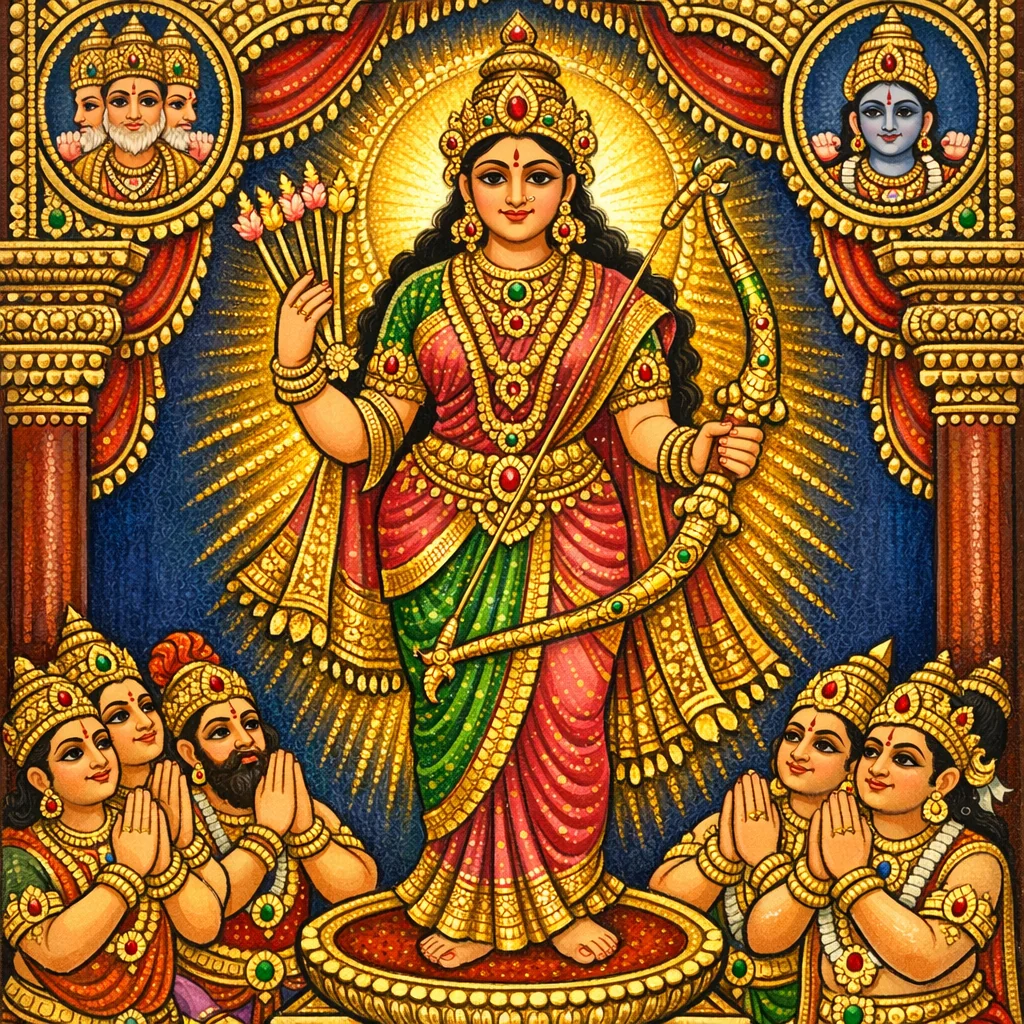
This Adhyāya, set in the Uttara-bhāga of the Hayagrīva–Agastya dialogue, serves as the causal prelude to the Lalitopākhyāna’s conflict narrative. Asked by Agastya for an ordered account of Bhaṇḍāsura’s origin and Tripurāmbikā/Lalitā’s decisive victory, Hayagrīva begins an explanatory chain: the transition from the prior chapter’s close into Agastya’s questions; the remembered departure of Dakṣāyaṇī and the disruption of Dakṣa’s sacrifice; a contemplation of the Deity as jñāna-ānanda-rasa worshipped by sages; the Himalayan and Gaṅgā-bank setting of prolonged devotion to Śaṅkara; yogic relinquishing of the body and the birth of a daughter in the Himavat milieu; Nārada’s report and the title “Rudrāṇī” through service to Śaṅkara; the devas oppressed by Tāraka approaching Brahmā; Brahmā’s tapas and Janārdana’s boon; and the manifestation of the world-enchanting Mohinī with the motifs of flower-arrows and a sugarcane bow. The chapter closes by reaffirming karma-based causality in creation and the unfailing potency of the invoked boon and divine agency.
Shlokas
Verse 1
इति श्रीब्रह्माण्डमहापुराणे उत्तरभागे हयग्रीवागस्त्यसंवादे ललितोपाख्याने मोहिनीप्रादुर्भावमलकासुरवधो नाम दशमो ऽध्यायः समाप्तश्चोपोद्धातखण्डः / अगस्त्य उवाच कथं भण्डासुरो जातः कथं वा त्रिपुरांबिका / कथं बभञ्ज तं संख्ये तत्सर्वं वद विस्तरात्
Thus, in the Śrī Brahmāṇḍa Mahāpurāṇa, in the latter section, within the dialogue of Hayagrīva and Agastya in the Lalitā narrative, the tenth chapter—called “The Manifestation of Mohinī and the Slaying of Malkāsura”—and the introductory section came to an end. Agastya said: How was Bhaṇḍāsura born, and how did Tripurāmbikā arise? How did she shatter him in battle? Tell me all in detail.
Verse 2
हयग्रीव उवाच पुरा दाक्षायणीं त्यक्त्वा पितुर्यज्ञविनाशनम्
Hayagrīva said: Long ago, after forsaking Dākṣāyaṇī, (Śiva) brought ruin upon her father’s sacrifice.
Verse 3
आत्मानमात्मना पश्यञ्ज्ञानानन्दरसात्मकः / उपास्यमानो मुनिभिरद्वन्द्वगुणलक्षणः
He beholds the Self by the Self, whose essence is the nectar of knowledge and bliss. Worshiped by the sages, he bears the marks of qualities beyond all duality.
Verse 4
गङ्गाकूले हिमवतः पर्यन्ते प्रविवेश ह / सापि शङ्करमा राध्य चिरकालं मनस्विनी
He entered the bank of the Gaṅgā, at the far boundary of Himavat. That steadfast woman too worshiped Śaṅkara for a long time.
Verse 5
योगेन स्वां तनुं त्यक्त्वा सुतासीद्धिमभूभृतः
By the power of yoga she cast off her body and was born as the daughter of Himabhūbhṛt (Himavat).
Verse 6
स शैलो नारदाच्छ्रुत्वा रुद्राणीति स्वकन्याकाम् / तस्य शुश्रूषणार्थाय स्थापयामास चान्तिके
That lord of mountains, hearing from Nārada that his own daughter was Rudrāṇī, placed her nearby (Śaṅkara) so she might serve him in attendance.
Verse 7
एतस्मिन्नन्तरे देवास्तारकेण हि पीडिताः / ब्रह्मणोक्ताः समाहूय मदनं चेदमब्रुवन्
Meanwhile the gods, sorely oppressed by Tāraka, were summoned at Brahmā’s word; gathering together, they spoke thus to Madana.
Verse 8
सर्गादौ भगवान्ब्रह्म सृजमानो ऽखिलाः प्रजाः / न निर्वृतिरभूत्तस्य कदाचिदपि मानसे / तपश्चचार सुचिरं मनोवाक्कायकर्मभिः
At the dawn of creation, the Blessed Brahmā, though bringing forth all beings, never found contentment in his mind; therefore he practiced austerity for a long time with mind, speech, body, and deed.
Verse 9
ततः प्रसन्नो भगवान्सलक्ष्मीको जनार्दनः / वरेण च्छन्दयामास वरदः सर्वदेहिनाम्
Then the Lord Janārdana, accompanied by Lakṣmī, became gracious; the Bestower of boons to all embodied beings granted him a blessing.
Verse 10
ब्रह्मोवाच / यदि तुष्टो ऽसि भगवन्ननायासेन वै जगत् / चराचरयुतं चैतत्सृजामि त्वत्प्रसादतः
Brahmā said: “O Lord, if You are pleased, then by Your grace I shall effortlessly create this world, filled with both the moving and the unmoving.”
Verse 11
एवमुक्तो विधात्रा तु महाल क्ष्मीमुदैक्षत / तदा प्रादुरभूस्त्वं हि जगन्मोहनरूपधृक्
Thus addressed by the Creator (Brahmā), he looked upon Mahālakṣmī; then You manifested, bearing a form that enchants the worlds.
Verse 12
तवायुधार्थं दत्तं च पुष्पबाणेक्षुकार्मुकम् / विजयत्वमजेयत्वं प्रादा त्प्रमुदितो हरिः
As weapons for You were given flower-arrows and a sugarcane bow; the delighted Hari also bestowed victory and invincibility.
Verse 13
असौ सृजति भूतानि कारणेन स्वकर्मणा / साक्षिभूतः स्वजनतो भवान्भजतु निर्वृन्तिम्
He brings forth beings by the cause of his own karma; as a witness among his own, may you attain the supreme repose (nirvṛti).
Verse 14
एष दत्तवरो ब्रह्मा त्वयि विन्यस्य तद्भरम् / मनसो निर्वृतिं प्राप्य वर्तते ऽद्यापि मन्मथ
O Manmatha, this Brahmā, granted a boon, placed that burden upon you; having attained peace of mind, he abides so even to this day.
Verse 15
अमोघं बलवीर्यं ते न ते मोघः पराक्रमः
Your strength and vital prowess are unfailing; your valor is never in vain.
Verse 16
सुकुमाराण्यमोघानि कुसुमास्त्राणि ते सदा / ब्रह्मदत्तवरो ऽयं हि तारको नाम दानवः
Even your tender flower-weapons (kusumāstras) are ever unfailing; for this dānava named Tāraka has received a boon bestowed by Brahmā.
Verse 17
बाधते सकलांल्लोकानस्मानपि विशेषतः / शिवपुत्रादृते ऽन्यत्र न भयं तस्य विद्यते
He afflicts all the worlds, and us in particular; save for the son of Śiva, he has fear of none.
Verse 18
त्वां विनास्मिन्महाकार्ये न कश्चित्प्रवदेदपि / स्वकराच्च भवेत्कार्यं भवतो नान्यतः क्वचित्
O Lord, without you in this great undertaking no one can even speak. This work will be accomplished by your own hand alone, never from any other source.
Verse 19
आत्म्यैक्यधयाननिरतः शिवो गौर्या समन्वितः / हिमाचलतले रम्ये वर्तते मुनिभिर्वृतः
Śiva, absorbed in meditation on the oneness of the Self, together with Gaurī, dwells on the lovely slopes of Himācala, surrounded by sages.
Verse 20
तं नियोजय गौर्यां तु जनिष्यति च तत्सुतः / ईषत्कार्यमिदं कृत्वा त्रायस्वास्मान्महाबल
Send him to Gaurī; then his son too will be born. O mighty one, do this small deed and deliver us.
Verse 21
एवमभ्यर्थितो देवैः स्तूयमानो मुहुर्मुहुः / जगामात्मविनाशाय यतो हिमवतस्तटम्
Thus entreated by the gods and praised again and again, he went to the shore of Himavat, intent on his own self-destruction.
Verse 22
किमप्याराधयान्तं तु ध्यानसंमीलितेक्षणम् / ददर्शेशानमासीनं कुसुमषुरुदायुधः
While offering worship, he beheld Īśāna seated with eyes closed in meditation, whose weapon was a bow of flower-arrows.
Verse 23
एतस्मिन्नन्तरे तत्र हिमवत्तनया शिवम् / आरिराधयिषुश्चा गाद्बिभ्राणा रूपमद्भुतम्
Meanwhile, there the daughter of Himavat, Girijā, bearing a wondrous form, went forth to worship Śiva.
Verse 24
समेत्य शम्भुं गिरिजां गन्धपुष्पोपहारकैः / शुश्रूषणपरां तत्र ददर्शातिबलः स्मरः
Girijā approached Śambhu with offerings of fragrance and flowers; there mighty Smara beheld her, intent on devoted service.
Verse 25
अदृश्यः सर्वभूतानान्नातिदूरे ऽस्य संस्थितः / सुमनोमार्गणैरग्र्यैस्स विव्याध महेश्वरम्
Invisible to all beings, he stood not far away and pierced Maheśvara with his finest arrows of flowers.
Verse 26
विस्मृत्य स हि कार्याणि बाणविद्धो ऽन्तिके स्थिताम् / गौरीं विलोकयामास मन्मथाविष्टचेतनः
Struck by the arrow, he forgot his tasks; his mind seized by Manmatha, he began to gaze upon Gaurī standing nearby.
Verse 27
धृतिमालंब्य तु पुनः किमेतदिति चिन्तयन् / ददर्शाग्रे तु सन्नद्धं मन्मथं कुसुमायुधम्
Steadying himself again and wondering, “What is this?”, he saw before him Manmatha, the flower-armed one, standing ready.
Verse 28
तं दृष्ट्वा कुपितः शूली त्रैलोक्यदहनक्षमः / तार्तीयं चक्षुरुन्मील्य ददाह मकरध्वजम्
Seeing him, Śiva the trident-bearer, able to burn the three worlds, grew wrathful; opening his third eye, he burned Makaradhvaja (Kāmadeva).
Verse 29
शिवेनैवमवज्ञाता दुःखिता शैलकन्यका / अनुज्ञया ततः पित्रोस्तपः कर्तुमगाद्वनम्
Thus slighted by Śiva, the Mountain’s Daughter (Pārvatī) was grieved; then, with her father’s leave, she went to the forest to perform austerities.
Verse 30
अथ तद्भस्म संवीक्ष्य चित्रकर्मा गणेश्वरः / तद्भस्मना तु पुरुषं चित्राकारं चकार सः
Then, beholding that ash, Citrakarmā, lord of the gaṇas, fashioned from that very ash a man of wondrous form.
Verse 31
तं विचित्रतनुं रुद्रो ददर्शाग्रे तु पूरुषम् / तत्क्षणाज्जात जीवो ऽभून्मूर्तिमानिव मन्मथः / महाबलो ऽतितेजस्वी मध्याह्नार्कसमप्रभः
Rudra beheld before him that man of wondrous body. In that very instant he became alive, as though Manmatha embodied—mighty in strength, blazing in splendor, radiant like the midday sun.
Verse 32
तं चित्रकर्मा बाहुभ्यां समालिङ्ग्य मुदान्वितः / स्तुहि वाल महादेवं स तु सर्वार्थसिद्धिदः
Citrakarmā, filled with joy, embraced him with both arms and said, “Child, praise Mahādeva; he is the giver of the fulfillment of all aims.”
Verse 33
इत्युक्त्वा शतरुद्रीयमुपादिशदमेयधीः / ननाम शतशो रुद्रं शतरुद्रियमाजपन्
Having spoken thus, the one of immeasurable wisdom taught the Śatarudrīya. Then, chanting the Śatarudrīya, he bowed to Rudra hundreds of times.
Verse 34
ततः प्रसन्नो भगवान्महादेवो वृषध्वजः / वरेण च्छन्दयामास वरं वव्रे स बालकः
Then Bhagavān Mahādeva, bearer of the bull-banner, was pleased and invited him to choose a boon. The boy asked for a single boon.
Verse 35
प्रतिद्वन्द्विबलार्थं तु मद्बलेनोपयोक्ष्यति / तदस्त्रशस्त्रमुख्यानि वृथा कुर्वन्तु नो मम
For strength against his opponent, let him draw upon my own power; therefore, let his foremost weapons and astras become futile against me.
Verse 36
तथेति तत्प्रतिश्रुत्य विचार्य किमपि प्रभुः / षष्टिवर्षसहस्राणि राज्यमस्मै ददौ पुनः
Saying, “So be it,” the Lord assented, reflected for a moment, and then granted him the kingdom again for sixty thousand years.
Verse 37
एतद्दृष्ट्वा तु चरितं धाता भण्डिति भण्डिति / यदुवाच ततो नाम्ना भण्डो लोकेषु कथ्यते
Seeing this deed, Dhātā cried, “Bhaṇḍi! Bhaṇḍi!”; and from that utterance he came to be known in the worlds by the name “Bhaṇḍa”.
Verse 38
इति दत्त्वा वरं तस्मै सर्वैर्मुनिगणैर्वृतः / दत्त्वास्त्राणि च शस्त्राणि तत्रैवान्तरधाच्च सः
Thus, having granted him a boon and being surrounded by all the hosts of sages, he bestowed divine missiles and weapons, and then vanished there on that very spot.
Frequently Asked Questions
Agastya asks how Bhaṇḍāsura originated and how Tripurāmbikā defeated him; the chapter begins the etiological chain that links earlier Śaiva episodes (Dakṣa-yajña disruption), tapas/boon mechanics, and divine manifestations (Mohinī) to the later Bhaṇḍa narrative.
Mohinī appears as a “world-enchanting” form (jagan-mohana-rūpa) and the floral weapon-set signals Śākta symbolic warfare: conquest through attraction, mind, and subtle force—an anticipatory code for Lalitā’s theology rather than a purely martial inventory.
From the sampled material it functions primarily as origin-causality (nidāna) rather than a full vaṃśa catalog: it names key agents and settings (Himavat, Nārada, Rudrāṇī designation) that contextualize later genealogical or mythic developments.