Adhyaya 33
युगप्रजालक्षणम् ऋषिप्रवरवर्णनं च (Yuga–Prajā-Lakṣaṇa and the Enumeration of Eminent Ṛṣis)
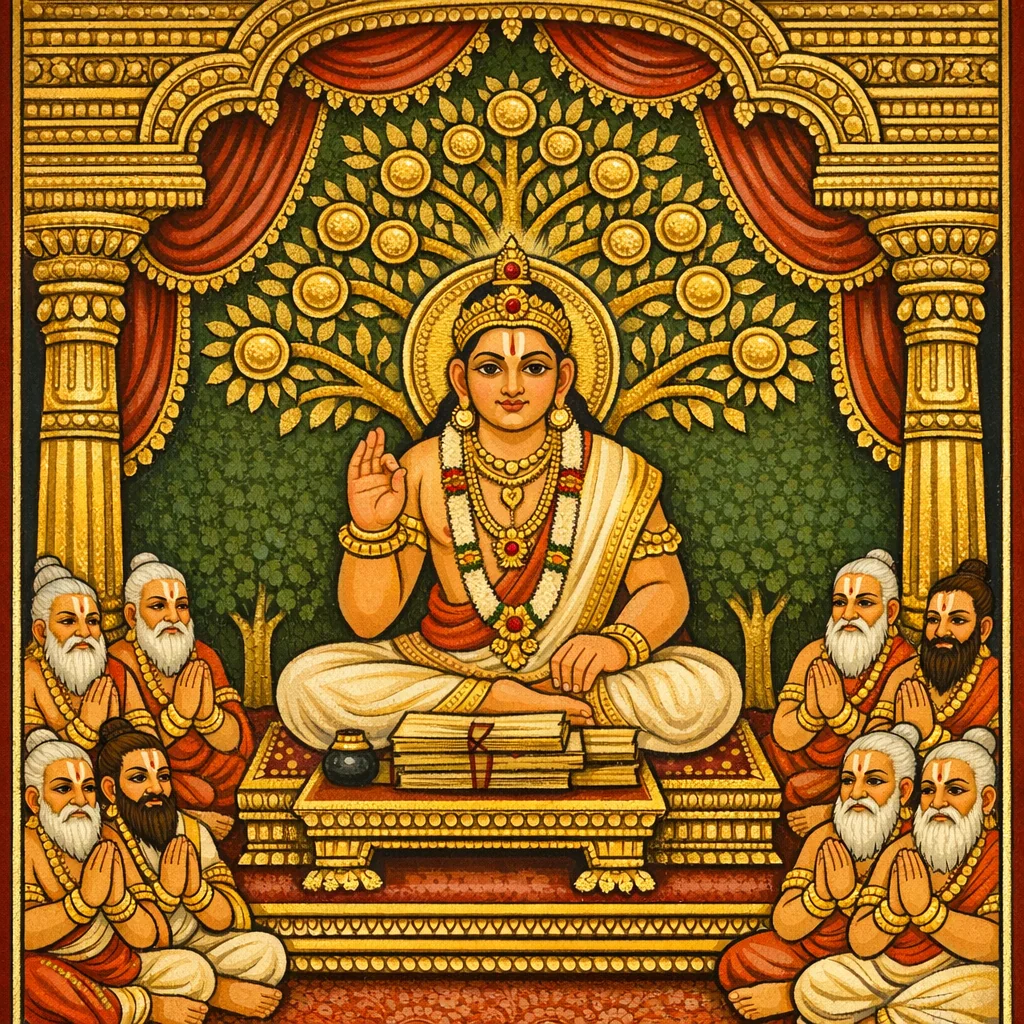
This Adhyāya is a catalogic discourse: Sūta instructs the assembly to “know by name” the authoritative expounders within the brāhmaṇa lineages. It densely lists śrutarṣis, grouping them by Vedic affiliation and teaching descent (teachers, disciples, and grand-disciples), showing how yuga-knowledge and prajā classifications are preserved through śākhā networks. The chapter’s aim is technical rather than dramatic—an archival validation that maps recognized reciters and interpreters (pravaktṛs), implying that cosmological and temporal doctrines (yuga/manvantara readings) rest on identifiable human transmitters. Repeated attention to counts and group totals signals an intent to standardize these lists for stable citation in later cosmography and genealogy.
Shlokas
Verse 1
इति श्रीब्रह्माण्डे महापुराणे वायुप्रोक्ते पूर्वभागे द्वितीये ऽनुषङ्गपादे युगप्रजालक्षणमृषिप्रवरवर्णनं च नाम द्वात्रिंशत्तमो ऽध्यायः सूत उवाच ऋषिकाणां सुताश्चापि विज्ञेया ऋषिपुत्रकाः / ब्राह्यणानां प्रवक्तारो नामतश्च निबोधत
Thus, in the Śrī Brahmāṇḍa Mahāpurāṇa, in the former section spoken by Vāyu, in the second Anuṣaṅgapāda, is the thirty-second chapter called “The marks of the yugas and of beings, and the description of the pravaras of the ṛṣis.” Sūta said: The sons of the ṛṣis too are to be known as ṛṣiputrakas; learn, by name, the expounders among the Brāhmaṇas.
Verse 2
सप्रधानाः प्रवक्ष्यन्ते समासाच्च श्रुतर्षयः / बह्वृचो भार्गवः पैलः सांकृत्यो जाजलिस्तथा
Now, in brief, the foremost śruta-ṛṣis will be spoken of: Bahvṛca, Bhārgava, Paila, Sāṃkṛtya, and Jājali.
Verse 3
संध्यास्तिर्माठरश्चैव याज्ञवल्क्यः पराशरः / उपमन्युरिन्द्रप्रमतिर्माडूकिः शाकलिश्च सः
Also: Sandhyāsti, Māṭhara, Yājñavalkya, Parāśara, Upamanyu, Indrapramati, Māḍūki, and Śākali.
Verse 4
बाष्कलिः शोकपाणिश्च नैलः पैलो ऽलकस्तथा / पन्नगाः पक्षगन्ताश्च षडशीतिः श्रुतर्षयः
Bāṣkali, Śokapāṇi, Naila, Paila, and Alaka; and also Pannaga and Pakṣaganta—these together are the eighty-six Śruti-sages.
Verse 5
एते द्विजातयो मुख्या बह्वृचानां श्रुतर्षयः / वैशंपायनलौहित्यौ कण्ठकालावशावधः
These are the foremost twice-born, the Śruti-sages of the Bahvṛca tradition: Vaiśaṃpāyana, Lauhitya, Kaṇṭha, Kāla, and Avaśāvadha.
Verse 6
श्यामापतिः पलाडुश्च आलंबिः कमलापतिः / तेषां शिष्याः प्रशिष्याश्च षडशीति श्रुतर्षयः
Śyāmāpati, Palāḍu, Ālaṃbi, and Kamalāpati; and their disciples and grand-disciples together make eighty-six Śruti-sages.
Verse 7
एते द्विजर्षयः प्रोक्ताश्चरकाध्वर्यवो द्विजाः / चैमिनिः सभरद्वाजः काव्यः पौष्यञ्जिरेव च
These dvija-sages are spoken of as the Carakādhvaryus: Caimini, Sabharadvāja, Kāvya, and Pauṣyañji as well.
Verse 8
हिरण्यनाभः कौशिल्यो लौगाक्षिः कुसुमिस्तथा / लङ्गली शालिहोत्रश्च शक्तिराजश्च भार्गवः
Hiraṇyanābha, Kauśilya, Laugākṣi, and Kusumi; likewise Laṅgalī, Śālihotra, and Śaktirāja of the Bhārgava lineage.
Verse 9
सामगानामथाचार्य ऐलो राजा पुरूरवाः / षट्चत्वारिंशदन्ये वै तेषां शिष्याः श्रुतर्षयः
The preceptor of the Sāma chants was King Purūravas of the Aila line; and there were forty-six other disciples, sages learned in the Śruti.
Verse 10
कौशीतिः कङ्कमुद्गश्च कुण्डकः सपराशरः / लोभालोभश्च धर्मात्मा तथा ब्रह्म बलश्च सः
Kauśīti, Kaṅkamudga, Kuṇḍaka with Parāśara, Lobhālōbha of righteous soul, and also Brahma and Bala—these too were among them.
Verse 11
क्रन्थलो ऽथो मदगलो मार्कण्डेयो ऽथ धर्मवित् / इत्येते नवतिर्ज्ञेया होत्रवद्ब्रह्मचारिणः
Kranthala, Madagala, Mārkaṇḍeya, and Dharmavit—thus they are to be known as ninety, brahmacārins like the hotṛ priests.
Verse 12
चरकाध्वर्यवश्चापि ह्यनुमंन्त्रं तु ब्राह्मणम् / चलूभिः सुमतिश्चैव तथा देववरश्च यः
Carakādhvaryava as well, and Anumantra the brāhmaṇa; also Calūbhi, Sumati, and Devavara—these too are named.
Verse 13
अनुकृष्णस्तथायुश्च अनुभूमिस्तथैव च / तथाप्रीतः कृशाश्वश्व सुमूलिर्बाष्कलिस्तथा
Anukṛṣṇa and Āyu, and likewise Anubhūmi; so too Prīta, Kṛśāśva, Sumūli, and Bāṣkali—these names are also recounted.
Verse 14
चरकाध्वर्यकाध्वर्युनमस्युर्ब्रह्मचारिणः / वैयासकिः शुको विद्वांल्लौकिर्भूरिश्रवास्तथा
Caraka and the Adhvaryu priests, and other Adhvaryus—those brahmacārins offered reverent salutations; and there were also Śuka, the wise son of Vyāsa, Lauki, and Bhūriśrava.
Verse 15
सोमाविरतुनान्तक्यस्तथा धौम्यश्च काश्यपः / आरण्या इलकश्चैव उपमन्युर्विदस्तथा
Somāviratunāntakya, as well as Dhaumya and Kāśyapa; Āraṇya, Ilaka, Upamanyu, and Vida too were present there.
Verse 16
भार्गवो मधुकः पिङ्गः श्वेत केतुस्तथैव च / प्रजादर्पः कहोडश्च याज्ञवल्क्यो ऽथ शौनकः
Bhārgava, Madhuka, Piṅga, and likewise Śvetaketu; Prajādarpa, Kahoḍa, Yājñavalkya, and then Śaunaka (were there as well).
Verse 17
अनङ्गो निरतालश्च मध्यमाध्वर्यवस्तुते / अदितिर्देवमाता च जलापा चैव मानवी
Anaṅga and Niratāla, and Madhyamādhvaryavastute; Aditi, the Mother of the Devas, and Jalāpā, the Manavī, were there as well.
Verse 18
उर्वशी विश्वयोषा च ह्यप्सरःप्रवरे शुभे / मुद्गला चातुजीवैव तारा चैव यशस्विनी
Urvāśī and Viśvayoṣā—auspicious, foremost among the Apsarases; and Mudgalā, Cātujīvā, and the renowned Tārā were there as well.
Verse 19
प्रातिमेधी च मार्गा च सुजाता च महातपा / लोपामुद्रा च धर्मज्ञा या च कोशीतिका स्मृता
Prātimedhī and Mārgā, Sujātā and the great ascetic Mahātapā; and Lopāmudrā, knower of dharma, and she remembered as Kośītikā.
Verse 20
एताश्च ब्रह्मवादिन्य अप्सरो रूपंसमताः / इत्येता मुख्यशः प्रोक्ता मया च ऋषिपुत्रकाः
All these are apsaras who speak of Brahman, equal in beauty; thus, O sons of the seers, I have chiefly declared them.
Verse 21
वैदशाखाप्रणयनास्ततस्ते ऋषयः स्मृताः / ईश्वरा मन्त्रवक्तार ऋषयो ह्यृषिकास्तथा
Because they composed the branches of the Veda, they are remembered as seers; they are like Īśvara, proclaimers of mantras—ṛṣis and likewise ṛṣikās.
Verse 22
ऋषिपुत्राः प्रवक्तरः कल्पानां ब्राह्मणस्य तु / ईश्वराणामृषीणां च ऋषिकाणां सहात्मजैः
The sons of the seers are expounders of the kalpas and of the Brāhmaṇa portion; and also of the Īśvara-like ṛṣis and ṛṣikās, together with their offspring.
Verse 23
तथा वाक्यानि जनीष्व यथैषां मन्त्रदृष्टयः / तत्राज्ञायुक्तमद्वैतं दीप्तं गंभीरशब्दवत्
Bring forth utterances in accord with their mantra-vision; there, the non-dual truth, joined with divine command, shines like a deep and solemn sound.
Verse 24
अत्यन्तमपरोक्षं च लिङ्गं नाम तथैव च / सर्वभूतान्यभूतं च परिदानं च यद्भवेत्
The Liṅga is supremely immediate and manifest, and so too is its very Name; pervading all beings yet remaining “abhūta” (unborn), and taking the form of “paridāna” (offering and bestowal)—such is it.
Verse 25
क्वचिन्निरुक्तप्रोक्तार्थं वाक्यं स्वायंभुवं विदुः / यत्किञ्चिन्मन्त्रसंयुक्तं तत्र नामविभक्तिभिः
In some places, a statement whose meaning is set forth by Nirukta is known as “svāyaṃbhuva”; and whatever is joined with mantra is there understood through names and vibhaktis (case-endings).
Verse 26
प्रत्यक्षाभिहितं चैवमृषीणां वचनं मतम् / नैगमैर्विविधैः शब्दैर्निपातैर्बहुलं च यत्
Thus the utterance of the ṛṣis is held to be directly expressed; and it is abundant in varied naigama (Vedic) words and in many nipātas (particles).
Verse 27
यच्चाप्यस्ति महद्वाक्यमृषीकाणां वचः स्मृतम् / अविस्पष्टपदं यच्च यच्च स्याद्बहुसंशयम्
And there is also the great saying (mahāvākya) remembered of the ṛṣis—whose wording is unclear, and which gives rise to many doubts.
Verse 28
ऋषिपुत्रवचस्तद्वै सर्वाश्च परिदेवताः / हेतुदृष्टान्त बहुलं चित्रशब्दमपार्थकम्
That is the speech of the sons of the ṛṣis, and likewise of all the paridevatās (lesser attendant deities): rich in reasons and examples, adorned with ornate words, yet devoid of true meaning.
Verse 29
सर्वास्तु तमशक्तं च वाक्यमेतत्तु मानुषम् / मिश्रा इति समाख्याताः प्रभावादृषितां गाताः
This utterance is human, yet it is also charged with the power of tamas. By its potency they attained the state of seers and were known as the “Miśras”.
Verse 30
समुत्कर्षाय कर्षाभ्यां जातिव्यत्याससंभवाः / भूतभव्यभवज्ज्ञान जन्मदुःखचिकित्सनम्
Through rise and decline arises the interchange of birth and lineage. Knowledge of past, future, and present is the remedy for the sorrow of being born.
Verse 31
मिश्राणां तद्भवेद्वाक्यं गुरोर्बलप्रवर्त्तनम् / धर्मशास्त्रप्रणेतारो महिम्ना सर्वगाश्च वै
The speech of the Miśras sets the guru’s power in motion. They are framers of the Dharmaśāstras and, by their majesty, move everywhere.
Verse 32
तपःप्रकर्षः सुमहान्येषां ते ऋषयः स्मृताः / बृहस्पतिश्च शुक्रश्च व्यासः सारस्वतस्तथा
Their excellence in austerity is exceedingly great; thus they are remembered as rishis—Bṛhaspati, Śukra, Vyāsa, and Sārasvata.
Verse 33
व्यासाः शास्त्रप्रणयना वेदव्यास इति स्मृताः / यस्मादवारजाः संतः पूर्वेभ्यो मेधयाधिकाः
Those Vyāsas who composed the śāstras are remembered as “Veda-Vyāsa”, for though later-born, they surpassed the earlier ones in brilliance of intellect.
Verse 34
ऐश्वर्येण च संपन्नास्ततस्ते ऋषयः स्मृताः / यस्मिन्कालो न चं वयः प्रमाणमृषिभावने
Endowed with sacred sovereignty, they are remembered as ṛṣis; for in the state of ṛṣihood, neither time nor age is the measure.
Verse 35
दृश्यते हि पुमान्कश्चित्कश्चिज्ज्येष्ठतमो धिया / यस्माद्बुद्ध्या च वर्षीयान्बलो ऽपि श्रुतवानृषिः
One may be seen as the eldest by wisdom alone; for by buddhi one becomes mature, and even a child may be a ṛṣi learned in śruti.
Verse 36
यः कश्चित्पादवान्मध्ये प्रयुक्तो ऽक्षर संपदा / विनियुक्तावसानां तु तामृचं परिचक्षते
A mantra that has pādas, is properly set in the middle with fullness of syllables, and ends as prescribed—this is called a Ṛk.
Verse 37
यः कश्चित्करणैर्मन्त्रो न च पादक्षरैर्मितः / अतियुक्तावसानं च तद्यजुर्वै प्रचक्षते
A mantra shaped by ritual procedures (karaṇas), not measured by pādas and syllables, and having an over-extended ending—this is called Yajus.
Verse 38
ह्रीङ्कारः प्रणवो गीतः प्रस्तावश्च चतुर्थकम् / पञ्चमः प्रतिहोत्रश्च षष्ठमाहुरुपद्रवम्
Hrīṅkāra, the Praṇava, the chant (gīta), and the prelude (prastāva) are the fourth; the fifth is pratihotra, and the sixth is called upadrava.
Verse 39
निधनं सप्तमं साम्नः सप्तविन्ध्य मिदं स्मृतम् / पञ्चविन्ध्य इति प्रोक्तं ह्रीङ्कारः प्रणवादृते
The seventh nidhana of the Sāman is remembered as “Saptavindhya.” And “Pañcavindhya” is the Hrīṅkāra uttered without the Praṇava (Om).
Verse 40
ब्रह्मणे धर्ममत्युक्तौ यत्तदा ज्ञाप्यतेर्ऽथतः / आशास्तिस्तु प्रसंख्याता विलापः परिदेवना
In a dharma-aligned utterance, what is then conveyed to Brahmā in its true sense is counted as Āśāsti; and Vilāpa is Paridevanā—lamentation and wailing.
Verse 41
क्रोधाद्वा द्वेषणाच्चैव प्रश्राख्यानं तथैव च / एतत्तु सर्वविद्यानां विहितं मन्त्रलक्षणम्
Whether arising from anger or from aversion, and likewise as questioning and as narration—this is the ordained mark of mantra in all the vidyās.
Verse 42
मन्त्रा नवविधाः प्रोक्ता ऋग्यजुः सामलक्षणाः / मूर्तिर्निन्दा प्रशंसा चाक्रोशस्तोषस्तथैव च
Mantras bearing the marks of Ṛg, Yajus, and Sāman are declared to be ninefold: mūrti (form), censure, praise, rebuke, and satisfaction, and so on.
Verse 43
प्रश्रानुज्ञास्तथाख्यानमाशास्मतिविधयो मताः / मन्त्रभेदांश्च वक्ष्यामि चतुर्विशतिलक्षणान्
Questioning, permission, narration, hope, and remembrance—these are regarded as the methods. Now I shall speak of the distinctions of mantras, with their twenty-four characteristics.
Verse 44
प्रशंसा स्तुतिराक्रोशो निन्दा च परिदेवना / अभिशापो विशापश्च प्रश्नः प्रतिवचस्तथा
Praise, hymn of adoration, outcry, censure and lamentation; likewise curse, counter-curse, question and reply.
Verse 45
आशीर्यज्ञस्तथाक्षेप अर्थाख्यानं च संकथा / वियोगा ह्यभियोगाश्च कथा संस्था वरश्च वै
Blessing-sacrifice, reproach, exposition of meaning and dialogue; separation and accusation; narrative, establishment, and the granting of a boon.
Verse 46
प्रतिषेधोप देशौ च नमस्कारः स्पृहा तथा / विलापश्चेति मन्त्राणां चतुर्विंशतिरुद्धृताः
Prohibition and instruction, reverent salutation, longing, and lament—thus are the twenty-four kinds of mantras set forth.
Verse 47
ऋषिभिर्यज्ञतत्त्वज्ञैर्विहितं ब्रह्मणं पुरा / हेतु र्निर्वचनं निन्दा प्रशस्तिः संशयो निधिः
In ancient times the seers, knowers of the truth of sacrifice, ordained the Brāhmaṇa portion; therein are cause, etymological exposition, censure, praise, doubt, and ‘nidhi’ (treasure).
Verse 48
पुराकृतिपुराकल्पौ व्यवधारणकल्पना / उपमा च दशैते वै विधयो ब्राह्मणस्य तु
Purākṛti and purākalpa, discrimination and imaginative construction, and simile—these ten, indeed, are the methods of the Brāhmaṇa portion.
Verse 49
लक्षणं ब्राह्मणस्यैनद्विहितं सर्वशाखिनाम / हेतुर्हन्तेः स्मृतो धातोर्यन्निहन्त्युदितं परैः
This is the mark of the Brahmana, enjoined in all branches of tradition. From the root ‘han’ the term ‘hetu’ is remembered; others declare it as ‘nihanti’—that which destroys.
Verse 50
अथवार्थे परिप्राप्ते हिनो तेर्गतिकर्मणा / तथा निर्वचनं ब्रूयाद्वाक्यार्थस्यावधारणम्
Or, when the meaning has been duly obtained, take the root ‘hin’ in the sense of action as movement. Thus one should state the derivation and firmly determine the meaning of the sentence.
Verse 51
निन्दां तामाहुरायार्या यद्दोषे निन्दनं वचः / प्रपूर्वाच्छंसतेर्धातोः प्रशंसागुणवत्तया
The noble ones call it ‘nindā’ when speech censures a fault. And from the root ‘śaṃs’ with the prefix ‘pra’ arises ‘praśaṃsā’—praise endowed with virtue.
Verse 52
इदं त्विदमिदं नैदमित्यनिश्चित्य संशयम् / इदमेवं विधातव्यमित्ययं विधिरुच्यते
When one cannot decide, “this is it” or “this is not it,” doubt arises. And the injunction that says, “this is to be done thus,” is called vidhi, the rule.
Verse 53
अन्यस्यान्यस्य चौक्तिर्या बुधैः सोक्ता पुराकृतिः / यो ह्यत्यन्तपरोक्षार्थः स पुराकल्प उच्यते
An utterance in which, speaking of one thing, another is spoken of—this the wise call purākṛti. And that whose meaning is exceedingly indirect is called purākalpa.
Verse 54
पुरातिक्रान्तवाचित्वात्पुराकल्पस्य कल्प नाम् / मन्त्रब्राह्मणकल्पैश्च निगमैः शुद्धविस्तरैः
Because the ancient utterance has passed beyond its former age, that primeval kalpa is spoken of by the name “Kalpa”; and in the Nigamas—pure and expansive—it is set forth through the Mantras, the Brāhmaṇas, and the Kalpa-texts.
Verse 55
अनिश्चित्य कृतामाहुर्व्यवधारणकल्पनाम् / यथा हीदं तथा तद्वै इदं चैव तथैव तत्
That which is fashioned without being firmly ascertained is called “vyavadhāraṇa-kalpanā,” a determining supposition: as this is, so indeed is that—this likewise so, and that likewise so.
Verse 56
इत्येवमेषा ह्युपमा दशमो ब्राह्मणस्य तु / इत्येतद्ब्रह्मणस्यादौ विहितं रक्षणं बुधैः
Thus this simile is reckoned as the tenth within the Brāhmaṇa portion; and so, at the very beginning of the lore of Brahman, the wise ordained this rule of safeguarding.
Verse 57
तस्य तद्विद्भिरुद्दिष्टा व्याख्याम्यनुपदं द्विजैः / मन्त्राणां कल्पना चैव विधिदृष्टिषु कर्मसु
The exposition indicated by those who know its truth, O twice-born, I shall explain word by word; and also the ordering of the Mantras within rites and acts as seen through the rule of vidhi.
Verse 58
मन्त्रो मन्त्रयतेर्द्धातोर्ब्राह्मणो ब्राह्मणेन तु / अल्पाक्षरमसंदिग्धं सारवद्विश्वतोमुखम् / अस्तोभमनवद्यं च सूत्रं सूत्रविदो विदुः
“Mantra” arises from the verbal root mantrayate, and “Brāhmaṇa” is what is proclaimed by the Brāhmaṇas. That which is of few syllables, free from doubt, rich in essence, applicable on every side, without padding, and without fault—this the knowers of sūtra recognize as “sūtra.”
Frequently Asked Questions
Primarily rishi-teacher transmission lines: the chapter enumerates śrutarṣis and recognized pravaktṛs (expounders), often grouped by Vedic affiliation and extended through disciples and grand-disciples rather than focusing on Solar/Lunar royal dynasties.
It functions as an authority-map and archival checksum: fixed totals and grouped lists stabilize the tradition, indicating which reciters/schools are considered reliable carriers of yuga and prajā classifications used elsewhere in the Purāṇa.
No. The sampled material is a rishi/pravaktṛ catalog within Prakriyā Pāda and does not present Lalitopākhyāna-style Śākta theology, yantras, or the Bhaṇḍāsura narrative.