Adhyaya 16
Pṛthivyāyāma-vistara (Extent and Divisions of the Earth) / पृथिव्यायामविस्तरः
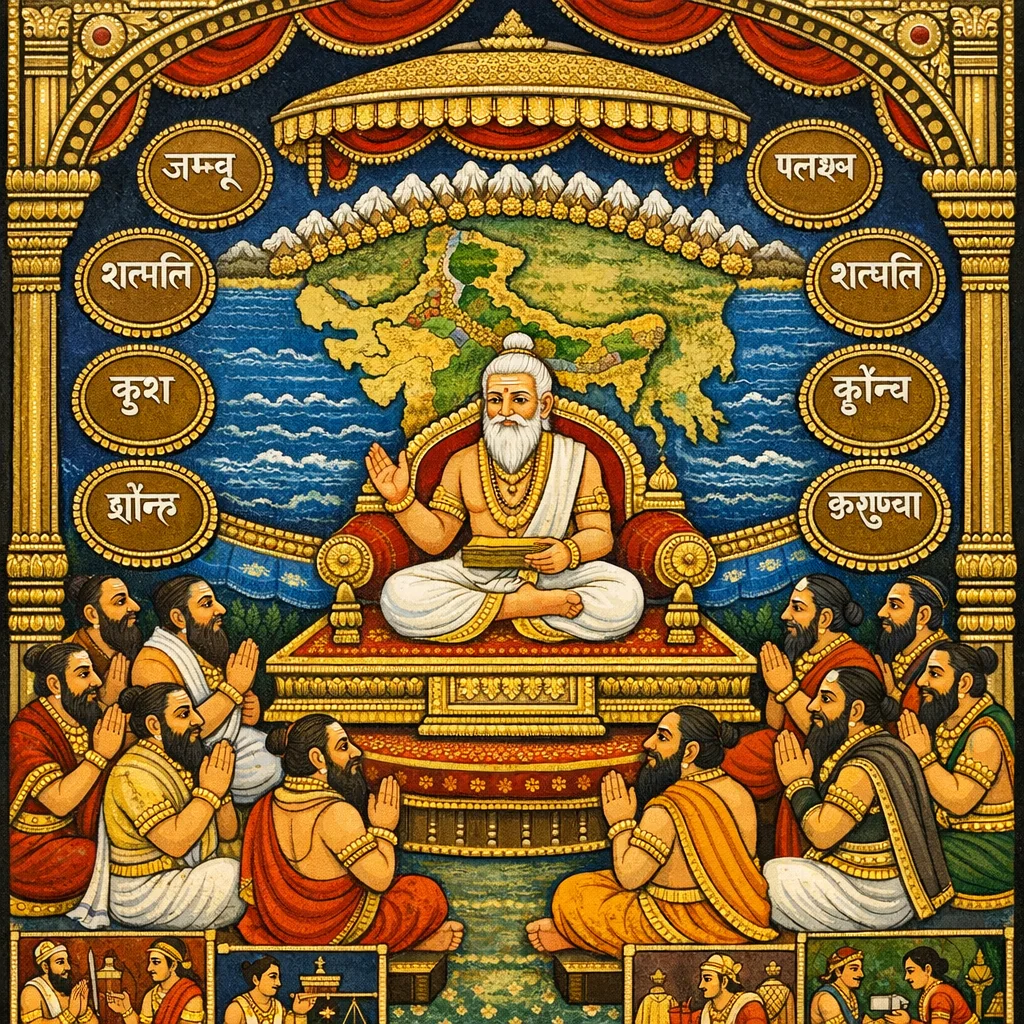
The chapter unfolds as a didactic dialogue in which sages ask about Bhārata-varṣa—its identity, boundaries, internal divisions, and why it is the privileged arena of karma. Sūta (Lomaharṣaṇa) defines Bhārata geographically (between the northern ocean and the southern reach of the Himālaya), etymologically (linked to Manu Bharata as the “bearer/sustainer” of peoples), and soteriologically (the land where embodied beings perform karma leading to svarga or mokṣa). He then lists nine sea-separated “bhedas,” naming regions such as Indradvīpa, Kaśerūmān, Tāmravarṇa, Gabastimān, Nāgadvīpa, Saumya, Gāndharva, and Vāruṇa, and identifies Bhārata as the ninth, ocean-girt division. Spatial measures are given in yojanas, along with border notes—Kirātas in the east, Yavanas in the west, and mleccha groups on the fringes. The sampled portion closes with varṇa distribution and the social-ritual order (brāhmaṇa/kṣatriya/vaiśya/śūdra duties), oriented to dharma–artha–kāma and āśrama-based striving for heaven and liberation.
Shlokas
Verse 1
इति श्रीब्रह्माण्डे महापुराणे वायुप्रोक्ते पूर्वभागे द्वीतीये ऽनुषङ्गपादे पृथिव्यायामविस्तरो नाम पञ्चदशो ऽध्यायः सूत उवाच एवमेव निसर्गो वै वर्षाणां भारते शुभे / दृष्टः परमतत्त्वज्ञैर्भूयः किं वर्णयामि वः
Thus, in the Śrī Brahmāṇḍa Mahāpurāṇa, in the former section spoken by Vāyu, in the second Anuṣaṅga-pāda, is the fifteenth chapter called “The Expansion of the Earth.” Sūta said: In auspicious Bhārata, the order of the regions’ creation is just so; the knowers of the supreme truth have beheld it—what more shall I describe to you?
Verse 2
ऋषिरुवाच यदिदं भारतं वर्षं यस्मिन्स्वायंभुवादयः / चतुर्दशैते मनवः प्रजासर्गे ऽभवन्पुनः
The ṛṣi said: This is Bhārata-varṣa, wherein Svāyaṃbhuva and the rest—these fourteen Manus—again and again arose in the creation of beings.
Verse 3
एतद्वेदितुमिच्छामस्तन्नो निगद सत्त्मः / एतच्छ्रुतवचस्तेषामब्रवीद्रोमहर्षणः
We wish to know this; O best of men, tell us. Hearing their words, Romaharṣaṇa (Sūta) spoke.
Verse 4
अत्र वो वर्णयिष्यामि वर्षे ऽस्मिन् भारते प्रजाः / इदं तु मध्यमं चित्रं शुभाशुभफलोदयम्
Here I shall describe to you the beings in this Bhārata-varṣa; this is the wondrous portrait of the middle realm, where the fruits of the auspicious and the inauspicious arise.
Verse 5
उत्तरं यत्ममुद्रस्य हिमवद्दक्षिणं च यत् / वर्षं तद्भारतं नाम यत्रेयं भारती प्रजा
The land that lies north of the ocean and south of Himavat (the Himalaya) is called Bharata-varsha, where this Bharati people dwell.
Verse 6
भरणाच्च प्रजानां वै मनुर्भरत उच्यते / निरुक्तवचनाच्चैवं वर्षं तद्भारतं स्मृतम्
Because he sustained and nurtured the people, Manu is called Bharata; and by this etymological saying, that land is remembered as Bharata-varsha.
Verse 7
इतः स्वर्गश्च मोक्षश्च मध्यश्चान्तश्च गम्यते / न खल्वन्यत्र मर्त्यानां भूमौ कर्म विधीयते
From here are attained heaven and moksha, the middle path and the final goal; for nowhere else on earth is the ordinance of karma laid down for mortals.
Verse 8
भारतस्यास्य वर्षस्य नव भेदान्निबोधत / समुद्रातरिता ज्ञेयास्ते त्वगम्याः परस्परम्
Know the nine divisions of this Bharata-varsha: they are separated by seas and are held to be mutually inaccessible.
Verse 9
इन्द्रद्वीपः कशेरूमांस्ताम्रवर्णो गभस्तिमान् / नागद्वीपस्तथा सौम्यो गान्धर्वस्त्वथ वारुणः
Indra-dvipa, Kasheruman, Tamravarna, and Gabhastiman; likewise Naga-dvipa, Saumya, Gandharva, and then Varuna—these are the (dvipas) named.
Verse 10
अयं तु नवमस्तेषां द्वीपः सागरसंवृतः / योजनानां सहस्रे तु द्वीपो ऽयं दक्षिणोत्तरात्
This is the ninth of those islands (dvīpas), encircled by the ocean. From south to north, this dvīpa extends for a thousand yojanas.
Verse 11
आयतो ह्याकुमार्य्या वै चागङ्गाप्रभवाच्च वै / तिर्यगुत्तरविस्तीर्मः सहस्राणि नवैव तु
This dvīpa stretches in length from Ākumārya to the source of Āgaṅgā. In breadth, across and toward the north, its measure is nine thousand.
Verse 12
द्वीपो ह्युपनिविष्टो ऽयं म्लेच्छैरन्तेषु सर्वशः / पूर्वे किराता ह्यस्यान्ते पश्चिमे यवनाः स्मृताः
This dvīpa is settled on all its borders by mlecchas. On its eastern end are the Kirātas; on its western end, the Yavanas are remembered.
Verse 13
ब्राह्मणाः क्षत्रिया वैश्या मध्ये शूद्राश्च भागशः / इज्यायुधवणिज्याभिर्वर्त्तयन्तो व्यवस्थिताः
In the middle dwell brāhmaṇas, kṣatriyas, vaiśyas, and śūdras, each in their allotted portions. They live established in their duties—worship and sacrifice, the bearing of arms, and trade.
Verse 14
तेषां संव्यवहारो ऽत्र वर्त्तते वै परस्परम् / धर्मार्थकामसंयुक्तो वर्णानां तु स्वकर्मसु
Here their mutual dealings with one another continue. In the proper duties of the varṇas, this order of life is joined with dharma, artha, and kāma.
Verse 15
संकल्पः पञ्चमानां च ह्याश्रमाणां यथाविधि / इह स्वर्गापवर्गार्थं प्रवृत्तिर्येषु मानुषी
There is the duly ordained resolve of the five āśramas; in them human endeavor in this world is directed toward heaven and apavarga (liberation).
Verse 16
यस्त्वयं नवमो द्वीपस्तिर्यगायाम उच्यते / कृत्स्नं जयति यो ह्येनं सम्राडित्यभिधीयते
This ninth continent is called Tiryag-āyāma; whoever conquers it in its entirety is known as a Samrāṭ, a sovereign emperor.
Verse 17
अयं लोकस्तु वै सम्राडन्तरिक्षं विराट् स्मृतम् / स्वराडसौ स्मृतो लौकः पुनर्वक्ष्यामि विस्तरात्
This world is indeed called Samrāṭ; the mid-space (antarikṣa) is remembered as Virāṭ. That realm is known as Svarāṭ; I shall explain it again in detail.
Verse 18
सप्तैवास्मिन्सुपर्वाणो विश्रुताः कुल पर्वताः / महेन्द्रो मलयः सह्यः शुक्तिमानृक्षपर्वतः
Here there are seven renowned kula-mountains: Mahendra, Malaya, Sahya, Śuktimān, and Ṛkṣa-parvata, among them.
Verse 19
विन्ध्यश्च पारियात्रश्च सप्तैते कुलपर्वताः / तेषां सहस्रश्चान्ये पर्व तास्तु समीपगाः
Vindhya and Pāriyātra complete these seven kula-mountains; near them stand a thousand other mountains in close array.
Verse 20
अविज्ञाताः सारवन्तो विपुलाश्चित्रसानवः / संदरः पर्वतश्रेष्ठो वैहारो दुर्दुरस्तथा
There are mountains still unknown—rich in essence, vast, and crowned with wondrous peaks. Among them Sandara is the foremost of mountains; so too are Vaihāra and Durdura.
Verse 21
कोलाहलः ससुरसो मैनाको वैद्युतस्तथा / वातन्धमो नागगिरिस्तथा पाण्डुरपर्वतः
There are Kolāhala and Sasurasa, Maināka and Vaidyuta; likewise Vātandhama, Nāgagiri, and the mountain Pāṇḍura.
Verse 22
तुङ्गप्रस्थः कृष्णगिरिर्गोधनो गिरिरेव च / पुष्पगिर्युज्जयन्तौ च शैलो रैवतकस्तथा
There are Tungaprastha, Kṛṣṇagiri, and the mountain Godhana; also Puṣpagiri and Ujjayanta; and likewise Śaila and Raivataka.
Verse 23
श्रीपर्वतश्चित्रकूटः कूटशैलो गिरिस्तथा / अन्ये तेभ्यो ऽपरिज्ञाता ह्रस्वाः स्वलपोपजी विनः
There are Śrīparvata, Citrakūṭa, and Kūṭaśaila; and beyond them are others still unknown—low-lying, with but scant means of livelihood.
Verse 24
तैर्विमिश्रा जनपदा आर्या म्लेच्छाश्च भागशः / पीयन्ते यैरिमा नद्यो गङ्गा सिंधु सरस्वती
Through them the realms are intermingled—partly Ārya and partly Mleccha. By them the waters of these rivers are drunk: the Gaṅgā, the Sindhu, and the Sarasvatī.
Verse 25
शतद्रुश्चन्द्र भागा च यमुना सरयूस्तथा / इरावती वितस्ता च विपाशा देविका कुहूः
Śatadru, Candrabhāgā, Yamunā, and Sarayū; likewise Irāvatī, Vitastā, Vipāśā, Devikā, and Kuhū—these are the sacred rivers.
Verse 26
गोमती धूतपापा च बुद्बुदा च दृषद्वती / कौशकी त्रिदिवा चैव निष्ठीवी गेडकी तथा
Gomatī, Dhūtapāpā, Budbudā, and Dṛṣadvatī; and also Kauśakī, Tridivā, Niṣṭhīvī, and Geḍakī—these too are sacred rivers.
Verse 27
चक्षुर्लोहित इत्येता हिमवत्पादनिस्सृताः / वेदस्मृतिर्वेदवती वृत्रघ्नी सिंधु रेव च
Cakṣu and Lohita—these flow forth from the feet of Himavat; and so too Vedasṃṛti, Vedavatī, Vṛtraghnī, Sindhu, and Revā.
Verse 28
वर्णाशा नन्दना चैव सदानीरा महानदी / पाशा चर्मण्वतीनूपा विदिशा वेत्रवत्यपि
Varṇāśā and Nandanā; Sadānīrā and Mahānadī; and also Pāśā, Carmaṇvatī, Nūpā, Vidiśā, and Vetravatī (all sacred rivers).
Verse 29
क्षिप्रा ह्यवन्ति च तथा पारियात्राश्रयाः स्मृताः / शोणो महानदश्चैव नर्म्मदा सुरसा क्रिया
Kṣiprā and Avanti are remembered as rivers sheltered by the Pāriyātra range; and also Śoṇa, Mahānada, Narmadā, Surasā, and Kriyā.
Verse 30
मन्दाकिनी दशार्णा च चित्रकूटा तथैव च / तमसा पिप्पला श्येना करमोदा पिशाचिका
Mandākinī, Daśārṇā, and Citrakūṭā; likewise Tamasā, Pippalā, Śyenā, Karamodā, and Piśācikā—these are the sacred rivers.
Verse 31
चित्रोपला विशाला च बञ्जुला वास्तुवाहिनी / सनेरुजा शुक्तिमती मङ्कुती त्रिदिवा क्रतुः
Citropalā, Viśālā, and Bañjulā; also Vāstuvāhinī, Sanerujā, Śuktimatī, Maṅkutī, Tridivā, and Kratu—these too are sacred rivers.
Verse 32
ऋक्षवत्संप्रसूतास्ता नद्यो मणिजलाः शिवाः / तापी पयोष्णी निर्विन्ध्या सृपा च निषधा नदी
Born from Mount Ṛkṣavat are those rivers, their waters like jewels—benign and auspicious: Tāpī, Payoṣṇī, Nirvindhyā, Sṛpā, and the river Niṣadhā.
Verse 33
वेणी वैतरणी चैव क्षिप्रा वाला कुमुद्वती / तोया चैव महागौरी दुर्गा वान्नशिला तथा
Veṇī and Vaitaraṇī; Kṣiprā, Vālā, and Kumudvatī; likewise Toyā, Mahāgaurī, Durgā, and Vānnaśilā—these are sacred rivers.
Verse 34
विन्ध्यपादप्रसूतास्ता नद्यः पुण्यजलाः शुभाः / गोदावरी भीमरथी कृष्णवेणाथ बञ्जुला
From the feet of the Vindhya arose those auspicious rivers with holy, merit-giving waters: Godāvarī, Bhīmarathī, Kṛṣṇaveṇā, and Bañjulā.
Verse 35
तुङ्गभद्रा सुप्रयोगा बाह्या कावेर्यथापि च / दक्षिणप्रवहा नद्यः सह्य पादाद्विनिःस्मृताः
Tungabhadrā, Suprayogā, Bāhyā, and likewise Kāverī—these are remembered as south-flowing rivers that sprang forth from the feet of the Sahya range.
Verse 36
कृतमाला ताम्रपर्णी पुष्पजात्युत्पलावती / नद्यो ऽभिजाता मलयात्सर्वाः शीतजलाः शुभाः
Kṛtamālā, Tāmraparṇī, Puṣpajāti, and Utpalāvatī—rivers born of Mount Malaya, all auspicious and blessed with cool waters.
Verse 37
त्रिसामा ऋषिकुल्या च बञ्जुला त्रिदिवाबला / लाङ्गूलिनी वंशधरा महेन्द्रतनयाः स्मृताः
Trisāmā, Ṛṣikulyā, Bañjulā, Tridivābalā, Lāṅgūlinī, and Vaṃśadharā are remembered as the daughters of Mount Mahendra—sacred rivers.
Verse 38
ऋषिकुल्या कुमारी च मन्दगा मन्दगामिनी / कृपा पलाशिनी चैव शुक्तिमत्प्रभवाः स्मृताः
Ṛṣikulyā, Kumārī, Mandagā, Mandagāminī, Kṛpā, and Palāśinī are remembered as rivers that arise from Mount Śuktimat.
Verse 39
तास्तु नद्यः सरस्वत्यः सर्वा गङ्गाः समुद्रगाः / विश्वस्य मातरः सर्वा जगत्पापहराः स्मृताः
Those rivers are of the nature of Sarasvatī; all are Gaṅgās that journey to the ocean. They are remembered as mothers of the world, removing the sins of all creation.
Verse 40
तासां नद्युपनद्यो ऽन्याः शतशो ऽथ सहस्रशः / तास्विमे कुरुपाञ्चालाः शाल्वा माद्रेयजाङ्गलाः
Those rivers have yet other tributaries, by the hundreds and by the thousands; along their banks dwell the peoples of Kuru-Pañcāla, Śālva, Mādreya, and Jāṅgala.
Verse 41
शूरसेना भद्रकारा बोधाः सहपटच्चराः / मत्स्याः कुशल्याः सौशल्याः कुन्तलाः काशिकोशलाः
There are the Śūrasenas, the Bhadrakāras, the Bodhas with the Paṭaccaras; and the Matsyas, Kuśalyas, Sauśalyas, Kuntalas, and the Kāśi-Kośalas.
Verse 42
गोधा भद्राः करिङ्गाश्च मागधाश्चोत्कलैः सह / मध्यदेश्या जनपदाः प्रायशस्त्त्र कीर्त्तिताः
Godha, Bhadra, and Kariṅga, and the Māgadhas together with the Utkalas—thus, the realms of Madhyadeśa have here been, for the most part, recounted.
Verse 43
सह्यस्य चौत्तरान्तेषु यत्र गोदावरी नदी / पृथिव्यामपि कृत्स्नायां स प्रदेशो मनोरमः
At the northern end of the Sahya range, where the river Godāvarī flows, that land is wondrously beautiful even upon the whole earth.
Verse 44
तत्र गोवर्धनं नाम पुरं रामेण निर्मितम् / रामप्रियाथ स्वर्गीया वृक्ष दिव्यास्त थौषधीः
There stands the city called Govardhana, built by Rāma; and there are heavenly, divine trees and sacred healing herbs, dear to Rāma.
Verse 45
भरद्वाजेन मुनिना तत्प्रियार्थे ऽवरोपिताः / अतः पुर्वरोद्देशस्तेन जज्ञे मनोरमः
The sage Bharadvāja planted them for what was dear to him; therefore the eastern tract of that place came to be wondrous and fair.
Verse 46
बाह्लीका वाटधानाश्च आभीरा कालतोयकाः / अपरान्ताश्च मुह्माश्च पाञ्चलाश्चर्ममण्डलाः
The Bāhlīkas, Vāṭadhānas, Ābhīras, and Kālatoyakas; the Aparāntas, Muhmas, and Pāñcālas—these were peoples of the Carmamaṇḍala region.
Verse 47
गान्धारा यवनाश्चैव सिंधुसौवीरमण्डलाः / चीनाश्चैव तुषाराश्च पल्लवा गिरिगह्वराः
The Gāndhāras and Yavanas, the realm of Sindhu-Sauvīra; and the Cīnas, Tuṣāras, and Pallavas—peoples dwelling in mountain caves and ravines.
Verse 48
शाका भद्राः कुलिन्दाश्च पारदा विन्ध्यचूलिकाः / अभीषाहा उलूताश्च केकया दशामालिकाः
The Śākas, Bhadrās, Kulindas, Pāradās, and Vindhyacūlikas; the Abhīṣāhas, Ulūtas, Kekayas, and Daśāmālikas—these too were many distinct realms.
Verse 49
ब्राह्मणाः क्षत्रियाश्चैव वैश्यशूद्रकुलानि तु / कांवोजा दरदाश्चैव बर्बरा अङ्गलौहिकाः
There were Brāhmaṇas and Kṣatriyas, and clans of Vaiśyas and Śūdras; and also the Kāmbojas, Daradas, Barbaras, and Aṅgalauhikas.
Verse 50
अत्रयः सभरद्वाजाः प्रस्थलाश्च दशेरकाः / लमकास्तालशालाश्च भूषिका ईजिकैः सह
Here are named the Atrayas, those allied with Bharadvāja, the Prasthalas and the Daśerakas; also the Lamakas, Tālaśālas, and Bhūṣikas, together with the Ījikas.
Verse 51
एते देशा उदीच्या वै प्राच्यान्देशान्निबोधत / अङ्गवङ्गा श्चोलभद्राः किरातानां च जातयः / तोमरा हंसभङ्गाश्च काश्मीरास्तङ्गणास्तथा
These are indeed the northern lands; now know also the eastern countries—Aṅga and Vaṅga, the Colabhadras, and the tribes of the Kirātas; the Tomaras, the Haṃsabhaṅgas, and likewise the Kāśmīras and the Taṅgaṇas.
Verse 52
झिल्लिकाश्चाहुकाश्चैव हूणदर्वास्तथैव च
Also are mentioned the Jhillikas and the Ahukas, and likewise the Hūṇas and the Darvas.
Verse 53
अन्ध्रवाका मुद्गरका अन्तर्गिरिबहिर्गिराः / ततः प्लवङ्गवो ज्ञेया मलदा मलवर्तिकाः
The Andhravākas, the Mudgarakas, the inner-mountain and outer-mountain folk are named; thereafter are to be known the Plavaṅgavas—Maladas and Malavartikas.
Verse 54
समन्तराः प्रावृषेया भार्गवा गोपपार्थिवाः / प्राग्ज्योतिषाश्च पुण्ड्राश्च विदेहास्ताम्रलिप्तकाः
Also are named the Samantaras, the Prāvṛṣeyas, the Bhārgavas, and the Gopapārthivas; and likewise the Prāgjyotiṣas, the Puṇḍras, the Videhas, and the Tāmraliptakas.
Verse 55
मल्ला मगधगोनर्दाः प्राच्यां जनपदाः स्मृताः / अथापरे जनपदा दक्षिणापथवासिनः
Malla, Magadha, and Gonarda are remembered as the janapadas of the East; other janapadas, however, dwell upon Dakṣiṇāpatha, the Southern Way.
Verse 56
पण्ड्याश्च केरलाश्चैव चोलाः कुल्यास्तथैव च / सेतुका मूषिकाश्चैव क्षपणा वनवासिकाः
The Pāṇḍyas and the Keralas, the Cholas and the Kulyas as well; also the Setukas, the Mūṣikas, the Kṣapaṇas, and the forest-dwelling Vanavāsikas.
Verse 57
माहराष्ट्रा महिषिकाः कलिङ्गश्चैव सर्वशः / आभीराश्च सहैषीका आटव्या सारवास्तथा
Māhārāṣṭra, the Mahiṣikas, and the Kalingas everywhere; and also the Ābhīras, the Sahaiṣīkas, the Āṭavyās, and the Sāravas.
Verse 58
पुलिन्दा विन्ध्यमौलीया वैदर्भा दण्डकैः सह / पौरिका मौलिकाश्चैव श्मका भोगवर्द्धिनाः
The Pulindas, the Vindhyamaulīyas, and the Vaidarbhas together with the Daṇḍakas; also the Paurikas, the Maulikas, the Śmakas, and the Bhogavarddhinas.
Verse 59
कोङ्कणाः कन्तलाश्चान्ध्राः कुलिन्दाङ्गारमारिषाः / दाक्षिणाश्चैव ये देशा अपरांस्तान्निबोधत
Koṅkaṇa, Kantala, and Āndhra; Kulinda, Aṅgāra, and Māriṣa—these are the lands of the South; and know also the other regions besides.
Verse 60
सूर्य्यारकाः कलिवना दुर्गालाः कुन्तरौः सहः / पौलेयाश्च किराताश्च रूपकास्तापकैः सह
Suryyarakas, Kalivanas, and Durgalas with the Kuntaras; likewise the Pauleyas and Kiratas, the Rupakas with the Tapakas.
Verse 61
तथा करीतयश्चैव सर्वे चैव करन्धराः / नासिकाश्चैव ये चान्ये ये चैवान्तरनर्मदाः
So too the Karitayas and all the Karandharas; the Nasikas as well, and others—those who dwell in the region of Antara-Narmada.
Verse 62
सहकच्छाः समाहेयाः सह सारस्वतैरपि / कच्छिपाश्च सुराष्ट्राश्च आनर्ताश्चर्बुदैः सह
The Sahakacchas and the Samāheyas, along with the Sārasvatas too; the Kacchipas, the Surāṣṭras, and the Ānartas with Arbuda.
Verse 63
इत्येते अपरान्ताश्च शृणुध्वं विन्ध्यवासिनः / मलदाश्च करूथाश्च मेकलाश्चैत्कलैः सह
These, then, are the lands of Aparānta—hear, O dwellers of the Vindhya; the Maladas, the Karūthas, and the Mekalas too, with the Aitkalas.
Verse 64
उत्तमानां दशार्णाश्च भोजाः किष्किन्धकैः सह / तोशलाः कोशलाश्चैव त्रैपुरा वैदिशास्तथा
Among the eminent realms are the Daśārṇas and the Bhojas with the Kiṣkindhakas; the Tośalas and Kośalas, and likewise the Traipuras and the Vaidiśas.
Verse 65
तुहुण्डा बर्बराश्चैव षट्पुरा नैषधैः सह / अनूपास्तुण्डिकेराश्च वीतिहोत्रा ह्यवन्तयः
Tuhunda, the Barbaras, and the Ṣaṭpuras together with the Naiṣadhas; likewise the Anūpas, Tuṇḍikeras, Vītihotras, and the Avantis—these are all named as janapadas.
Verse 66
एते जनपदाः सर्वे विन्ध्यपृष्ठनिवासिनः / अतो देशान्प्रवक्ष्यामि पर्वताश्रयिणश्च ये
All these janapadas dwell upon the back of the Vindhya range. Now I shall declare the lands that take refuge in the mountains.
Verse 67
निहीरा हंसमार्गाश्च कुपथास्तङ्गणाः शकाः / अपप्राव रणाश्चैव ऊर्णा दर्वाः सहूहुकाः
Nihīras, Haṃsamārgas, Kupathas, Taṅgaṇas, and Śakas; and also the Apaprāvas, Raṇas, Ūrṇās, Darvās, and Sahūhukas—these too are enumerated (as janapadas).
Verse 68
त्रिगर्त्ता मण्डलाश्चैव किरातास्तामरैः सह / चत्वारि भारते वर्षे युगानि ऋषयो ऽब्रुवन्
Trigarttas, Maṇḍalas, and Kirātas together with the Tāmaras are mentioned. The sages declared that in Bhāratavarṣa there are four yugas.
Verse 69
कृतं त्रेतायुगं चैव द्वापरं तिष्यमेव च / तेषां निसर्गं वक्ष्यामि उपरिष्टादशेषतः
Kṛta, Tretā, Dvāpara, and Tiṣya—these are the four yugas. Hereafter I shall expound their nature and succession in full.
Frequently Asked Questions
Rather than listing a full royal vaṃśa, the chapter anchors Bhārata’s identity in Manu Bharata (an eponymic organizer of peoples), using etymology and manvantara logic to explain how populations and social order are sustained; detailed dynastic catalogues typically occur in later vaṃśānucarita sections.
It provides terrestrial measurements in yojanas for Bhārata’s extent (north–south length and transverse breadth) and frames Bhārata as the ninth, ocean-bounded division among nine; it also specifies boundary markers (ocean/Himālaya) and border ethnography (e.g., Kirātas east, Yavanas west).
This chapter is not part of the Lalitopākhyāna stream; it is a Bhuvana-kośa/Bhārata-varṣa geography unit, focused on karmic geography, divisions, and social order rather than Śākta vidyā/yantra exegesis.