Adhyaya 61
Vaivasvata-Manuputra Vamsha and the Marutta–Samvarta Episode (Genealogical Catalogue)
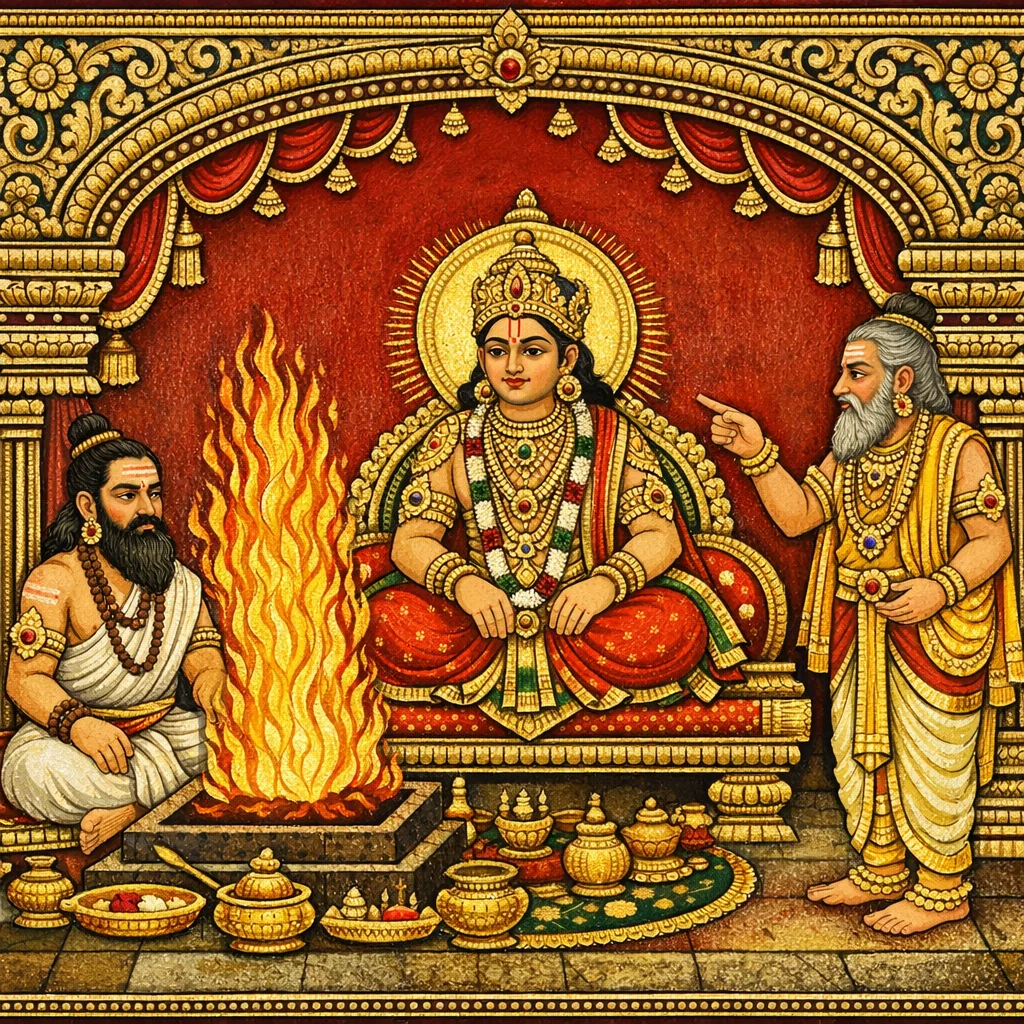
This chapter, narrated by Sūta, continues the genealogical register of Vaivasvata Manu’s descendants and related royal lines. It opens by turning to the visarga (secondary emanation) of Manu’s sons and shows moral causality in social form: Pṛṣadhra is cursed for harming his guru’s cow and thus falls in varṇa-status. The text then proceeds in compact lineage notices—naming descendants and successor kings—serving as a dynastic index rather than a continuous tale. A major insertion is the Marutta episode: Marutta’s cakravartin greatness is tied to a grand yajña officiated by Saṃvarta, which provokes a dispute with Bṛhaspati and highlights priestly authority, rivalry, and the cosmic weight of ritual prosperity. The chapter resumes the descent chain (e.g., Nariṣyanta → Dama → Rāṣṭravardhana and onward), mentions figures such as Budha and Tṛṇabindu, and notes King Viśāla’s founding of the city Viśālā. Overall, it functions as structured vamśa metadata, framed by yuga-awareness (including a Tretāyuga reference) and ritual causality.
Shlokas
Verse 1
इति श्रीब्रह्माण्डे महापुराणे मध्यमभागे वायुप्रोक्ते वैवस्वतमनोः सृष्टिर्नाम षष्टितमो ऽध्यायः // ६०// सूत उवाच विसर्गं मनुपुत्राणां विस्तरेण निबोधत / पृषध्रो हिंसयित्वा तु गुरोर्गां निशि तत्क्षये
Thus in the Śrī Brahmāṇḍa Mahāpurāṇa, the middle section, as spoken by Vāyu, ends the sixtieth chapter called “The Creation of Vaivasvata Manu” (60). Sūta said: “Hear in detail the emanation of Manu’s sons. Pṛṣadhra, having harmed his गुरु’s cow at night, at that very moment…”
Verse 2
शापाच्छूद्रत्वमापन्नश्च्यवनस्य महात्मनः / करूषस्य तु कारूषाः क्षत्त्रिया युद्धदुर्मदाः
By the curse of the great-souled Cyavana, he fell into the state of a Śūdra. And the Kārūṣa Kṣatriyas, descendants of Karūṣa, were arrogant and war-maddened in battle.
Verse 3
सहस्रं क्षत्त्रियगणो विक्रान्तः संबभूव ह / नाभागो दिष्टपुत्रस्तु विद्वानासीद्भलन्दनः
A valiant host of a thousand kṣatriyas came into being. And Nābhāga, the son of Diṣṭa—known as Bhalandana—was a learned sage.
Verse 4
भलन्दनस्य पुत्रो ऽभूत्प्रांशुर्नाम महाबलः / प्रांशोरेको ऽभवत्पुत्रः प्रजापतिसमो नृपः
Bhalandana’s son was the mighty Prāṃśu. Prāṃśu had but one son, a king equal to Prajāpati himself.
Verse 5
संवर्तेन दिवं नीतः ससुहृत्सहबान्धवः / विवादो ऽत्र महानासीत्संवर्त्तस्य बृहस्पतेः
Saṃvarta led him to heaven together with friends and kinsmen. Here a great dispute arose between Saṃvarta and Bṛhaspati.
Verse 6
ऋद्धिं दृष्ट्वा तु यज्ञस्य क्रुद्धस्तस्य बृहस्पतिः / संवर्त्तेन तते यज्ञे चुकोप स भृशं तदा
Seeing the splendor of that sacrifice, Bṛhaspati grew wrathful. At the yajña performed by Saṃvarta, he then blazed with fierce anger.
Verse 7
लोकानां सहि नाशाय दैवतैर्हि प्रसादितः / मरुत्तश्चक्रवर्त्ती स नरिष्यन्तमवासवान्
For the ruin of the worlds, he was propitiated by the gods; Marutta, the cakravartin, became the refuge of Nariṣyanta, bereft of Indra (avāsavān).
Verse 8
नरिष्यन्तस्य दायादो राजा दण्डधरो दमः / तस्य पुत्रस्तु विज्ञातो राजासीद्राष्ट्रवर्द्धनः
The heir of Nariṣyanta was King Dama, bearer of the daṇḍa (rod of justice); his son, renowned, was King Rāṣṭravardhana, who increased the realm.
Verse 9
सुधृतिस्तस्य पुत्रस्तु नरः सुधृतितः पुनः / केवलस्य पुत्रस्तु बन्धुमान्केवलात्मजः
His son was Sudhṛti; from Sudhṛti was born again Nara. And Kevala’s son was Bandhumān, the true offspring of Kevala.
Verse 10
अथ बन्धुमतः पुत्रोधर्मात्मा वेगवान्नृप / बुधो वेगवतः पुत्रस्तृणबिन्दुर्बुधात्मजः
Then Bandhumān’s son was the righteous king Vegavān. Vegavān’s son was Budha, and Budha’s son was Tṛṇabindu.
Verse 11
त्रेतायुगमुखे राजा तृतीये संबभूव ह / कन्या तु तस्येडविडामाता विश्रवसो हि सा
At the dawn of the Tretāyuga, in the third generation, that king was born. His daughter was Iḍaviḍā; she indeed became the mother of Viśravas.
Verse 12
पुत्रो यो ऽस्य विशालो ऽभूद्राजा परमधार्मिकः / दाश्वान्प्रख्यातवीर्य्यौजा विशाला येन निर्मिता
His son Viśāla became a supremely dharmic king—bountiful in gifts, famed for valor and might; by him the city of Viśālā was founded.
Verse 13
विशालस्य सुतो राजा हेमचन्द्रो महाबलः / सुचन्द्र इति विख्यातो हेमचन्द्रादनन्तरः
Viśāla’s son was the mighty king Hemacandra. After Hemacandra, a king renowned as Sucandra arose.
Verse 14
सुचन्द्रतनयो राजा धूम्राश्व इति विश्रुतः / धूम्राश्वतनयो विद्वान्सृंजयः समपद्यत
Sucandra’s son was the renowned king Dhūmrāśva. Dhūmrāśva’s son, the learned Sṛñjaya, then came to be.
Verse 15
सृञ्जयस्य सुतः श्रीमान्सहदेवः प्रतापवान् / कृशाश्वः सहदेवस्य पुत्रः परमधार्मिकः
Sṛñjaya’s son was the illustrious and valiant Sahadeva. Sahadeva’s son was Kṛśāśva, supremely devoted to dharma.
Verse 16
कृशाश्वस्य महातेजा सोमदत्तः प्रतापवान् / सोमदत्तस्य राजर्षेः सुतो ऽभूज्जनमेजयः
Kṛśāśva’s son was Somadatta, radiant and mighty in valor. To the royal sage Somadatta was born a son—Janamejaya.
Verse 17
जनमेजयात्मजश्चैव प्रमतिर्नाम विश्रुतः / तृणबिन्दुप्रभावेण सर्वे वैशालका नृपाः
Janamejaya’s son too was renowned by the name Pramati. Through the potency of the Ṛṣi Tṛṇabindu, all the Vaiśālaka kings became illustrious.
Verse 18
दीर्घायुषो महात्मानो वीर्यवन्तः सुधार्मिकाः / शर्यातेर्मिथुनं त्वासीदानर्त्तो नाम विश्रुतः
They were long-lived, great-souled, mighty in valor, and steadfast in righteous dharma. In Śaryāti’s line was born the renowned one named Ānarta.
Verse 19
पुत्रः सुकन्या कन्या च भार्या या च्यवनस्य च / आनर्त्तस्य तु दायादो रेवो नाम सुवीर्यवान्
There was a daughter named Sukanyā, who became the wife of the sage Cyavana. And Ānarta’s heir was Reva, a man of great valor.
Verse 20
आनर्त्तविषयो यस्य पुरी चापि कुशस्थली / रेवस्य रैवतः पुत्रः ककुद्मी नाम धार्मिकः
His realm was known as Ānarta, and its capital city was Kuśasthalī. Reva’s son was Raivata, and Raivata’s righteous son was named Kakudmī.
Verse 21
ज्येष्ठो भ्रातृशतस्यासीद्राज्यं प्राप्य कुशस्थलीम् / कन्यया सह श्रुत्वा च गान्धर्वं ब्रह्मणोंऽतिके
He was the eldest of a hundred brothers. Having gained the kingdom of Kuśasthalī, he, together with his daughter, listened to the Gandharvas’ song in Brahmā’s presence.
Verse 22
मुहर्त्तं देवदेवस्य मार्त्यं बहुयुगं विभो / आजगाम युवा चैव स्वां पुरीं यादवैर्वृताम्
O mighty one, what was but a single muhūrta for the God of gods became many yugas for mortals. Still youthful, he returned to his own city, now surrounded by the Yādavas.
Verse 23
कृतां द्वारवतीं नाम बहुद्वारां मनोरमाम् / भोजवृष्ण्यन्धकैर्गुप्तां वसुदेवपुरोगमैः
The lovely city named Dvāravatī, adorned with many gates, was built, and it was guarded by the Bhojas, Vṛṣṇis, and Andhakas under the leadership of Vasudeva.
Verse 24
तां कथां रेवतः श्रुत्वा यथातत्त्वमरिन्दमः / कन्यां तु बलदेवाय सुव्रतां नाम रेवतीम् / दत्त्वा जगाम शिखरं मेरोस्तपसि संस्थितः
Hearing Revata’s account in accordance with the truth, the foe-subduing king gave his daughter Revatī—called Suvratā—to Baladeva; then, established in austerity, he went to the summit of Mount Meru.
Verse 25
रेमे रामश्च धर्मात्मा रेवत्या सहितः किल / तां कथामृषयः श्रुत्वा पप्रच्छुक्तदनन्तरम्
Rama of righteous soul (Balarama) indeed delighted together with Revatī. Hearing that account, the sages then asked a question.
Verse 26
ऋषय ऊचुः कथं बहुयुगे काले समतीते महामते / न जरा रेवतीं प्राप्ता रैवतं वा ककुद्मिनम् / एतच्छुश्रूषमाणान्नो गान्धर्वं वद चैव हि
The sages said: “O great-minded one, though the time of many yugas has passed, how did old age not come upon Revatī or upon Raivata Kakudmin? We long to hear this; therefore speak also of the Gandharva account.”
Verse 27
सूत उवाच न जरा क्षुत्पिपासे वा न च मृत्युभयं ततः / न च रोगः प्रभवति ब्रह्मलोकं गतस्य ह
Sūta said: “For one who has gone to Brahmaloka, there is no old age, no hunger or thirst, no fear of death; and disease does not arise there.”
Verse 28
गान्धर्वं प्रति यच्चापि पृष्टस्तु मुनिसत्तमाः / ततो ऽहं संप्रवक्ष्यामि याथातथ्येन सुव्रताः
O best of sages, what you have asked concerning the Gandharva lore, I shall now declare in due truth, O you of noble vows.
Verse 29
सप्त स्वरास्त्रयो ग्रामा मूर्छनास्त्वेकविंशतिः / तानाश्चैकोनपञ्चाशदित्येत्स्वरमण्डलम्
Seven are the svaras, three the grāmas, twenty-one the mūrchanās, and forty-nine the tānas—this is the circle of tones, the svaramaṇḍala.
Verse 30
षड्जषभौ च गान्धारो मध्यमः पञ्चमस्तथा / धैवतश्चापि विज्ञेयस्तथा चापि निषादकः
Know these tones: Ṣaḍja, Ṛṣabha, Gāndhāra, Madhyama, Pañcama, Dhaivata, and Niṣāda.
Verse 31
सौवीरा मध्यमा ग्रामा हरिणाश्च तथैव च
Sauvīrā, Madhyamā, and Hariṇā—these likewise are the three grāmas.
Verse 32
तस्याः कालोयनोपेताश्चतुर्थाशुद्धमध्यमाः / नग्निं च पौषा वै देव दृष्ट्वा काञ्च यथाक्रमः
In that grāma are the caturthas joined with kāloyana and the pure madhyamas (mūrchanās); and in due order are those named Nagni, Pauṣā, Deva, Dṛṣṭvā, and Kāñca.
Verse 33
मध्यमग्रामिकाख्याता षड्जग्रामा निबोधत / उत्तरं मन्द्रा रजनी तथा वाचोन्नरायताः
Know the ṣaḍja-grāma called Madhyama-grāmikā: Uttara, Mandrā, Rajanī, and Vāconnarāyatā are its divisions.
Verse 34
मध्यषड्जा तथा चैव तथान्या चाभिमुद्गणा / गान्धारग्रामिका श्यामा कीर्तिमाना निबोधत
Know also Madhya-ṣaḍjā and the other called Abhimudgaṇā; and understand Gāndhāra-grāmikā, Śyāmā, and Kīrtimānā as well.
Verse 35
अग्निष्टोमं तु माद्यं तु द्वितीयं वाजपेयिकम् / यवरातसूयस्तु षष्ठवत्तु सुवर्मकम्
Agniṣṭoma is the first; the second is called Vājapeyika. Yavarātasūya follows, and Suvarmaka, akin to the sixth—thus the order is taught.
Verse 36
सप्त गौसवना नाम महावृष्टिकताष्टमाम् / ब्रह्मदानं च नवमं प्राजापत्यमनन्तरम् / नागयक्षाश्रयं विद्वान् तद्गोत्तरतथैव च
The seventh is named Gausavanā, the eighth Mahāvṛṣṭikā; the ninth is Brahmadāna, followed by Prājāpatya. The wise should likewise know Nāgayakṣāśraya and Tadgottara.
Verse 37
पदक्रान्तमृगक्रान्तं विष्णुक्रान्तमनोहरा / सूर्यकान्तधरेण्यैव संतकोकिलविश्रुतः
Padakrānta, Mṛgakrānta, and the enchanting Viṣṇukrānta; likewise Sūryakānta-dhareṇī and Santa-kokila-viśruta—these names too are renowned.
Verse 38
तेनवानित्यपवशपिशाचातीवनह्यपि / सावित्रमर्धसावित्रं सर्वतोभद्रमेव च
By his power, even the fear of defiling piśācas and the dread of the fierce forest are stilled; and the mantras Sāvitrī, Ardha-Sāvitrī, and Sarvatobhadra are also recited.
Verse 39
मनोहरमधात्र्यं च गन्धर्वानुपतश्च यः / अलंबुषेसेष्टमथो विष्णुवैणवरावुभौ
He is known as Manohara, Madhātrya, and Gandharvānupata; and Alambuṣā-Seṣṭa and Viṣṇu-Vaiṇava-Rāva—these two also are renowned.
Verse 40
सागराविजयं चैव सर्वभूतमनोहरः / हतोत्सृष्टो विजानीत स्कन्धं तु प्रियमेव च
There are also the names Sāgarāvijaya and Sarvabhūtamanohara; know too the name Hatotsṛṣṭa—and Skanda is indeed ever the beloved.
Verse 41
मनोहरमधात्र्यं च गन्धर्वानुपतश्च यः / अलंबुसेष्टस्य तथा नारदप्रिय एव च
He who is called Manohara, Madhātrya, and Gandharvānupata is also connected with Alambuṣā-Seṣṭa, and is likewise Nārada-priya—the beloved of Nārada.
Verse 42
कथितो भीमसेनेन नगरातानयप्रियः / विकलोपनीतविनताश्रीराख्यो भार्गवप्रियः
Spoken of by Bhīmasena is the one called Nagarātānaya-priya; and famed as Vikalopanīta-vinatā-śrī, he is dear to Bhārgava.
Verse 43
चतुर्दश तथा पञ्चदशेच्छन्तीह नारदः / ससौवीरां सुसोवीरा ब्रह्मणो ह्यपगीयते
Here Nārada longs even for the fourteenth and fifteenth distinctions of tone; “Sasauvīrā” and “Susovīrā” are sung forth as hymns of Brahmā.
Verse 44
उत्तरादिस्वरश्चैव ब्रह्मा वै देवतास्त्रयः / हरिदेशसमुत्पन्ना हरिणस्याव्यजायत
Brahmā and three deities are the presiding powers of the ‘uttara’ tones and the rest; arising in the land of Hari, they manifested for Hari’s sake.
Verse 45
मूर्छना हरिणा ते वै चन्द्रस्यास्याधिदैवतम् / करोपनीता विवृतावनुद्रिः स्वरमण्डले
These mūrchanā, set in place by Hari, are the presiding divinity of the lunar tone; within the circle of notes, “Anudrī” was raised by the hand and unfolded in fullness.
Verse 46
साकलोपनतातस्मान्मनुतस्यान्नदैवतः / मनुदेशाः समुत्पन्ना मूर्च्छनाशुद्धमात्मना
From that “Sākalopanata” was ordained Manu’s deity of nourishment; and from the mūrchanā, pure in essence, the ‘lands of Manu’ arose.
Verse 47
तस्मात्तस्मान्मृगामर्गीमृगेन्द्रोस्याधिदैवता / सावश्रमसमाद्युम्ना अनेकापौरुषानखान्
From that, again and again, arose “Mṛgāmargī,” whose presiding deity is Mṛgendra, the lord of beasts; with toil and the radiance of Ādyumna, she bears many claws not wrought by human hand.
Verse 48
मूर्च्छनायोजनाह्येषास्याद्रजसारजनीततः / तानि उत्तर मद्रांसपद्गदैवतकं विदुः
This mūrchanā is called “Āyojanā”, said to arise from the rajas quality and the principle of night (rajanī). The wise know it as connected with Uttara-Madra, Aṃsapada, and Gadaivataka.
Verse 49
तस्मादुत्तरतायावत्प्रथमं स्वायमं विदुः / तमोदुत्तरमैद्रोयदेवतास्याद्रुवेन च
Therefore, the first stage toward the north is known as “Svāyama”. What lies to the north of tamas is called “Aidra”, whose presiding deity is said to be joined with Dhruva.
Verse 50
अपामदुत्तरत्वावधैवतस्योत्तरायणः / स्यादिजमूर्छनाह्येच पितरः श्राद्धदेवताः
The boundary-deity of the “northwardness” of the water element (āp) is called “Uttarāyaṇa”. It is also termed “Ija-mūrchanā”, and the Pitṛs are remembered as its deities for śrāddha.
Verse 51
शुद्धषड्जस्वर कृत्वा यस्मादग्निमहर्षयः / उपैति तस्मान्नजानी याच्छुद्धयच्छिकरासभा
By establishing the pure Ṣaḍja note, the Mahārṣis draw near to Agni; from this is known the mūrchanā called “Najānī”. It is also spoken of as “Śuddha-yacchikarāsabhā”.
Verse 52
इत्येता मूर्छनाः कृत्वा यस्यामीदृशभावनः / पक्षिणां मूर्छनाः श्रुत्वा पक्षोका मूर्छनाः स्मृताः
Thus, having performed these mūrchanās, one who holds such contemplation, on hearing the mūrchanās of birds, remembers the mūrchanās known as “Pakṣokā”.
Verse 53
नागादृष्टिविषागीतानोपसर्पन्तिमूर्छनाः / नानासाधारमश्चैववडवात्रिविदस्तथा
In accord with the nāga’s gaze and the song of poison, the mūrchanā draw near; they are manifold, uncommon, and are also spoken of as the threefold vaḍavā.
Frequently Asked Questions
It indexes Vaivasvata Manu-related descent lines, moving through named successions (e.g., Nariṣyanta → Dama → Rāṣṭravardhana and onward) and extending into sub-lines featuring Budha, Tṛṇabindu, and kings associated with the founding of Viśālā.
It frames yajña-success as a site of cosmological power and priestly legitimacy: Saṃvarta’s conduct of Marutta’s rite generates prosperity and political supremacy, triggering Bṛhaspati’s rivalry and highlighting how ritual authority shapes worldly sovereignty.
No. The sampled material is predominantly genealogical and episodic (vamsha + yajña narrative), not bhuvana-kośa measurements, and it is not part of the Lalitopakhyana-focused Shakta esoterica.