Adhyaya 47
Samantapañcaka at Kurukṣetra: Paraśurāma’s Tīrtha-Creation and Pitṛ-Rites (समन्तपञ्चक-तीर्थप्रशंसा)
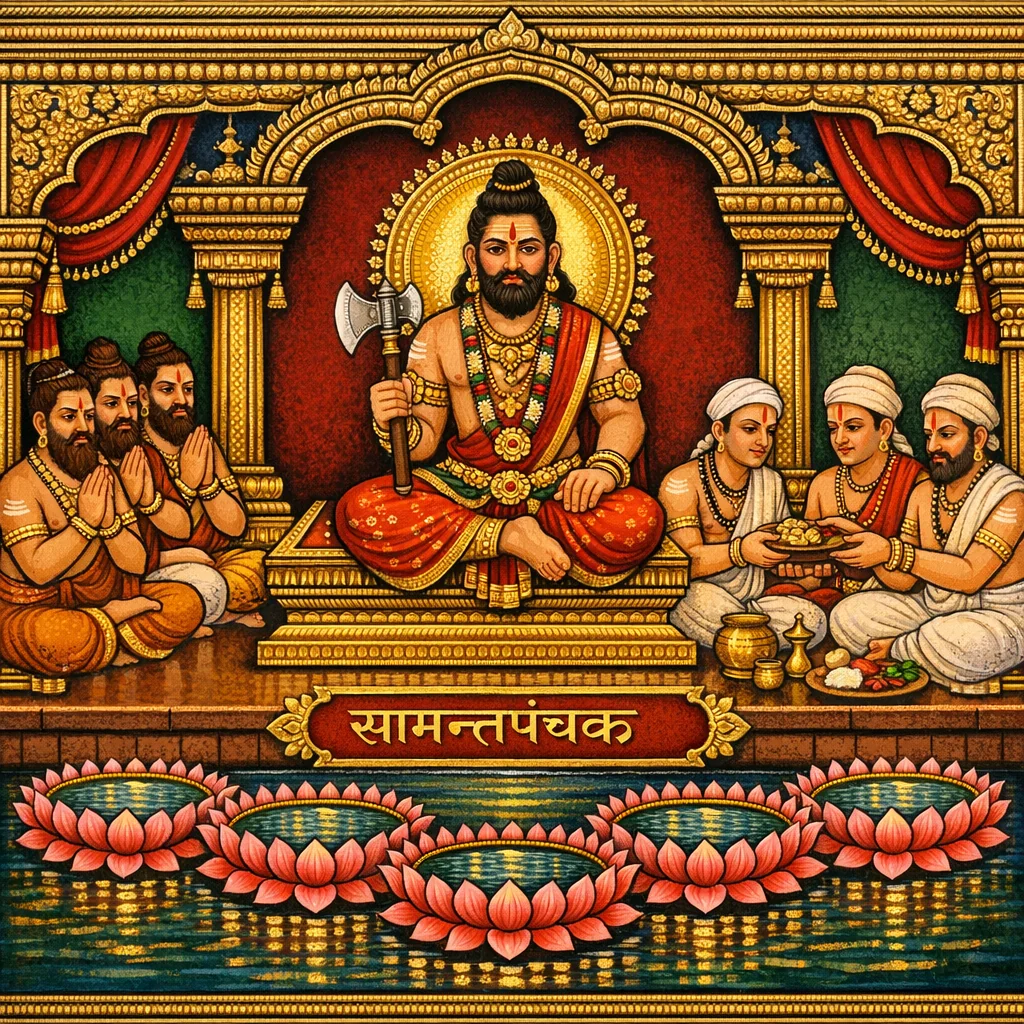
In a narrative led by Vasiṣṭha, Paraśurāma takes consecrated kings to the tapas-saturated field of Kurukṣetra. He excavates five lakes, filling them with the blood of the slain rulers. He then performs exhaustive śrāddha and tarpaṇa rites for his ancestors. This establishes the renowned tīrtha Samantapañcaka, praised for purifying sins and granting inexhaustible satisfaction to the Pitṛs.
Shlokas
Verse 1
इति श्रीब्रह्माण्डे महापुराणे वायुप्रोक्ते मध्यमभागे तृतीय उपोद्धातपादे भार्गवचरिते षट्चत्वारिंशत्त मो ऽध्यायः // ४६// वसिष्ठ उवाच ततो मूर्द्धाभिषिक्तानां राज्ञाममिततेजसाम् / षट्सहस्रद्वयं रामो जीवग्राहं गृहीतवान्
Thus, in the Śrī Brahmāṇḍa Mahāpurāṇa, in the middle section spoken by Vāyu, in the third upoddhāta-pāda of the Bhārgava narrative, is the forty-sixth chapter. Vasiṣṭha said: Then Rāma took alive, as captives, twelve thousand kings who had been anointed at their coronation, of immeasurable splendor.
Verse 2
ततो राजसहस्राणि गृहीत्वा मुनिभिः सह / स जगाम महातेजाः कुरुक्षेत्रं तपोमयम्
Then, taking thousands of kings along with the sages, he—of mighty splendor—went to Kurukṣetra, the land steeped in austerity.
Verse 3
सरसां पञ्चकं तत्र खानयित्वा भृगुद्वहः / सुखावगाहतीर्थानि तानि चक्रे समन्ततः
There the foremost of Bhṛgu’s line had five lakes dug, and on every side he established them as tīrthas—pleasant for sacred bathing.
Verse 4
जघान तत्र वै राज्ञः शरीरप्रभवामृजा / सरांसि तानि वै पञ्च पूरयामास भार्गवः
There Bhārgava struck down the kings with the impurity born of their own bodies—blood and filth—and with it he filled those five lakes.
Verse 5
स्नात्वा तेषु यथान्यायं जामदग्नयः प्रतापवान् / पितॄन्संतर्पयामास यथाशास्त्रमतन्द्रितः
Having bathed in those waters according to proper rite, the valiant Jāmadagnya, unwearied, offered tarpaṇa to the Pitṛs in accordance with the śāstras.
Verse 6
पितुः प्रेतस्य राजेन्द्र श्राद्धादिकमशेषतः / ब्राह्मणैः सह मातुश्च तत्र चक्रे यथोदितम्
O Rajendra, there he performed in full the śrāddha rites and all related observances for his departed father, and likewise for his mother, together with the brāhmaṇas, exactly as prescribed.
Verse 7
एवं तीर्णप्रतीकः स कुरुक्षेत्रे तपोमये / उवासातन्द्रितः सम्यक् पितृपूजापरायणः
Thus, having fulfilled his duty, he dwelt in Kurukṣetra, rich in ascetic power, ever vigilant and steadfast, wholly devoted to the worship of the Pitṛs.
Verse 8
ततः प्रभृत्यभूद्राजंस्तीर्थानामुत्तमोत्तमम् / विहितं जामदग्न्येन कुरुक्षेत्रे तपोवने
O King, from that time onward, that tīrtha—ordained by Jāmadagnya (Paraśurāma) in the ascetic grove of Kurukṣetra—was renowned as the most excellent of holy fords.
Verse 9
सस्यमं तपञ्चकमिति स्थानं त्रैलोक्यविश्रुतम् / यत्र यक्रे भृगुश्रेष्ठः पितॄणां तृप्तिमक्षयाम्
The place known as “Sasyamaṃ Tapañcakam” is famed throughout the three worlds; there Bhṛgu’s foremost (Paraśurāma) bestowed upon the Pitṛs an imperishable satisfaction.
Verse 10
स्नानदानतपोहोमद्विजभोजनतर्पणैः / भृशमाप्यायितास्तेन यत्र ते पितरो ऽखिलाः
There, by sacred bathing, gifts, austerities, homa offerings, feeding the dvijas, and tarpaṇa libations, he greatly nourished and satisfied all the Pitṛs.
Verse 11
अवापुरक्षयां तृप्तिं पितृलोकं च शाश्वतम् / समन्तपञ्चकं नाम तीर्थं लोके परिश्रुतम्
Here one attains unfailing satisfaction and the eternal world of the Pitṛs; the tīrtha called Samantapañcaka is renowned in the world.
Verse 12
सर्वपापक्षयकरं महापुण्योपबृंहितम् / मर्त्यानां यत्र यातानामेनांसि निखिलानि तु
This tīrtha destroys all sins and is filled with great merit; for mortals who come here, all their transgressions surely perish.
Verse 13
दूरादेवापयास्यन्ति प्रवाते शुष्कपर्णवत् / तत्क्षेत्रचर्यागमनं मर्त्यानामसतामिह
Here even the sins of wicked mortals flee from afar, like dry leaves before the wind; merely coming and walking this sacred ground brings about that result.
Verse 14
न लभ्यते महाराज जातु जन्मशतैरपि / समन्तपञ्चकं तीर्थं कुरुक्षेत्रे ऽतिपावनम्
O great king, the exceedingly purifying tīrtha Samantapañcaka in Kurukṣetra is at times hard to obtain even in a hundred births.
Verse 15
यत्र स्नातः सर्वतीर्थैः स्नातो भवति मानवः / कृतकृत्यस्ततो रामः सम्यक् पूर्णमनोरथः
Where one bathes, a person becomes as though bathed in all tīrthas; therefore, O Rāma, he is fulfilled in duty and his wishes are perfectly completed.
Verse 16
उवास तत्र नियतः कञ्चित्कालं महामतिः / ततः संवत्सरस्यान्ते ब्राह्मणैः सहितो वशी
The great-minded, self-restrained one dwelt there in observance for some time. Then, at the end of the year, he set forth accompanied by the Brahmanas.
Verse 17
पितृपिण्डप्रदानाय जामदग्न्यो ऽगमद्गयाम् / ततो गत्वा ततः श्राद्धे यथाशास्त्रमरिन्दमः
To offer the ancestral piṇḍas, Jāmadagnya went to Gayā. Having arrived, that subduer of foes performed the śrāddha in accordance with the śāstras.
Verse 18
ब्राह्मणांस्तर्पयामास पितॄनुद्दिश्य सत्कृतान् / शैवं तत्र परं स्थानं चन्द्रपादमिति स्मृतम्
He gratified the honored Brahmanas with tarpaṇa, dedicating it to the Pitṛs. There, the supreme Śaiva holy place is remembered as Candrapāda.
Verse 19
पितृतृप्तिकरं क्षेत्रं तादृग्लोके न विद्यते / यत्रार्चिताः स्वकुलजैर्यथाशक्ति मनागपि
No sacred field in the world equals this in gladdening the ancestors, where one’s own kin worship them to the best of their ability, even if only a little.
Verse 20
पितरः पिण्डदानाद्यैः प्राप्स्यन्ति गतिमक्षयाम् / पितॄनुद्दिश्य तत्रासौ तर्प्पितेषु द्विजातिषु
Through piṇḍa-offerings and the like, the ancestors attain an imperishable state. There, dedicating it to the Pitṛs, and after the twice-born had been satisfied, (he completed the rite).
Verse 21
ददौ च विधिवत्पिण्डं पितृभक्तिसमन्वितः / ततस्तत्पितरः सर्वे पितृलोकादुपागताः
He duly offered the piṇḍa, filled with devotion to the Pitṛs. Then all his ancestors came forth from Pitṛloka.
Verse 22
जगृहुस्तत्कृतां पूजां जमदग्निपुरोगमाः / अथ संप्रीतमनसः समेत्य भृगुनन्दनम्
With Jamadagni at their head, they accepted the worship he had performed. Then, pleased at heart, they gathered around Bhṛgu’s son.
Verse 23
ऊचुस्तत्पितरः सर्वे ऽदृश्या भूत्वान्तरिक्षगाः / पितर ऊचुः महत्कर्म कृतं वीर भवतान्यैः सुदुष्करम्
All his ancestors, becoming unseen and moving in the mid-air, spoke: “O hero, you have accomplished a great deed—one exceedingly hard for others to do.”
Verse 24
अस्मानपि यथान्यायं सम्यक् तर्पितवानसि / अस्माकमक्षयां प्रीतिं तथापि त्वं न यच्छसि
You have also satisfied us fully, according to what is right; yet even so you do not accept our undiminishing joy—our blessing.
Verse 25
क्षत्रहत्यां हि कृत्वा तु कृतकर्माभवद्यतः / क्षेत्रस्यास्य प्रभावेण भक्त्या च तव दर्शनम्
For having slain kṣatriyas, he became bound by the consequences of his deed; yet by the power of this sacred kṣetra and by your devotion, he attained your darśana.
Verse 26
प्राप्ताःस्म पूजिताः किं तु नाक्षय्यफलभागिनः / त्समात्त्वं वीरहत्यादिपापप्रशमनाय हि
We have come and been honored, yet we have not become sharers in the imperishable fruit. Therefore, do expiation to pacify sins such as the slaying of a hero and the like.
Verse 27
प्रायश्चित्तं यथान्यायं कुरु धर्मं च शाश्वतम् / वधाच्च विनिवर्तस्व क्षत्रियाणामतः परम्
Perform expiation according to proper rule and uphold the eternal dharma. From this point onward, turn back from the slaying of kshatriyas.
Verse 28
पितुर्न्न ते ऽपराध्यन्ते न स्वतन्त्रं यतो जगत् / तन्निमित्तं तु मरणं पितुस्ते विहितं पुरा
You bear no offense against your father, for the world is not independent. For that very cause, your father’s death was ordained long ago.
Verse 29
हन्तुं कं कः समर्थः स्याल्लोके रक्षितुमेव वा / निमित्तमात्रमेवेह सर्वः सर्वस्य चैतयोः
Who in this world is truly able to slay another, or even to protect another? Here, everyone is but a mere instrument for everyone else in both.
Verse 30
ध्रुवं कर्मानुरूपं ते चेष्टन्ते सर्व एव हि / कालानुवृत्तं बलवान्नृलोको नात्र संशयः
Surely, all beings act in accordance with their own karma. The world of men moves under the mighty sway of Time (Kāla); of this there is no doubt.
Verse 31
बाधितुं भुवि भूतानि भूतानां न विधिं विना / शक्यते वत्स सर्वो ऽपि यतः शक्त्या स्वकर्मकृत्
Child, without the ordained law (vidhi) of beings, it is not possible to afflict creatures upon the earth; for each, by his own power, reaps the fruit of his own deeds.
Verse 32
क्षत्रं प्रति ततो रोषं विमुच्यास्मत्प्रियेप्सया / शममा प्नुहि भद्रं ते स ह्यस्माकं परं बलम्
Therefore, cast off your wrath toward the kshatriya; for the sake of what is dear to us, attain tranquility. Blessings upon you—for that peace is our highest strength.
Verse 33
वसिष्ठ उवाच इत्युक्त्वान्तर्दधुः सर्वे पितरो भृगुनन्दनम् / स चापि तद्वचः सर्वं प्रतिजग्राह सादरम्
Vasiṣṭha said: Having spoken thus, all the Pitṛs vanished from before Bhṛgu’s son; and he, too, received all their words with reverent care.
Verse 34
अकृतव्रणसंयुक्तो मुदा परमया युतः / प्रययौ च तदा रामस्तस्मात्सिद्धवनाश्रमम्
Joined with Akṛtavraṇa and filled with supreme joy, Rāma then set forth from there to the āśrama of Siddhavana.
Verse 35
तस्मिन्स्थित्वा भृगुश्रेष्ठो ब्राह्मणैः सहितो नृप / तपसे धृतसंकल्पो बभूव स महामनाः
O king, dwelling there, the foremost of the Bhṛgus, together with the brāhmaṇas, held a steadfast resolve for tapas and became truly great-souled.
Verse 36
सरथं सहसाहं च धनुःसंहननानि च / पुनरागमसंकेतं कृत्वा प्रास्थापयत्तदा
He readied the chariot, his bold resolve, and the fitting of the bows; then, having set a sign for his return, he set forth at that time.
Verse 37
ततः स सर्वतीर्थेषु चक्रे स्नानमतन्द्रितः / परीत्यपृथिवीं सर्वां पितृदेवादिबूजकः
Then, untiring, he bathed at every sacred ford; and, roaming the whole earth, he worshiped the Fathers, the Devas, and all worthy of reverence.
Verse 38
एवं क्रमेण पृथिवीं त्रिवारं भुगुनन्दनः / परिचक्राम राजेन्द्र लोकवृत्तमनुव्रतः
O lord of kings, thus in due order Bhṛgu’s son circled the earth three times, keeping to the ways of the world.
Verse 39
ततः स पर्वतश्रेष्ठं महेन्द्रं पुनरप्यथ / जगाम तपसे राजन्बाह्मणैरभिसंवृतः
Then, O king, surrounded by Brahmins, he went once more to Mahendra, the foremost of mountains, to undertake austerities.
Verse 40
स तस्मिंश्चिररात्राय मुनि सिद्धनिषेविते / निवासमात्मनो राजन्कल्पयामास धर्मवित्
O king, in that place frequented by sages and Siddhas, the knower of Dharma established his own dwelling for a long sojourn.
Verse 41
मुनयस्तं तपस्यन्तं सर्वक्षेत्रनिवासिनः / द्रष्टुकामाः समाजग्मुर्नियता ब्रह्मवादिनः
The disciplined sages, Brahma-speaking seers dwelling in every sacred kṣetra, gathered there, longing to behold him absorbed in tapas.
Verse 42
ददृशुस्ते मुनिगणास्तपस्यासक्तमानसम् / क्षात्रं कक्षमशेषेण दग्ध्वा शान्तमिवानलम्
The bands of sages beheld his mind wholly intent on tapas; having burned away the kṣatriya ardor entirely, he stood serene like a fire grown calm.
Verse 43
अथ तानागतान्दृष्ट्वा मुनीन्दिव्यांस्तपोमयान् / अर्घ्यादिसमुदाचारैः पूजयामास भार्गवः
Then, seeing those divine sages—formed as it were of tapas—arrive, Bhārgava honored them with arghya and the proper rites of welcome.
Verse 44
कृतकौशलसंप्रश्नपूर्वकाः सुमहोदयाः / तेषां तस्य च संवृत्ताः कथाः पुण्या मनोहराः
Beginning with courteous inquiries of well-being, there arose between them and him conversations most auspicious—holy, delightful, and heart-enchanting.
Verse 45
ततस्तेषामनुमते मुनीनां भावितात्मनाम् / हयमेधं महायज्ञमाहर्तुमुपचक्रमे
Thereafter, with the consent of those sages of ripened spirit, he set about undertaking the great sacrifice—the Aśvamedha.
Verse 46
संभृत्य सर्वसंभारानौर्वाद्यैः सहितो नृप / विश्वामित्रभरद्वाजमार्कण्डेयादिभिस्तथा
O king, having gathered all the requisites for the sacrifice, he came accompanied by Aurva and other sages, and likewise by Viśvāmitra, Bharadvāja, Mārkaṇḍeya, and the rest.
Verse 47
तेषा मनुमते कृत्वा काश्यपं गुरुमात्मनः / वाजिमेधं ततो राजन्नाजहार महाक्रतुम्
Acting by their counsel, he appointed Kaśyapa as his own guru; then, O king, he performed the great rite, the Vājimedha sacrifice.
Verse 48
तस्याभूत्काश्यपो ऽध्वर्युरुद्गाता गौतमो मुनिः / विश्वामित्रो ऽभवद्धोता रामस्य विदितात्मनः
In that sacrifice, Kaśyapa served as the adhvaryu, the sage Gautama as the udgātā, and Viśvāmitra became the hotṛ for Rāma, knower of the Self.
Verse 49
ब्रह्मत्वमकरोत्तस्य मार्कण्डेयो महामुनिः / भरद्वाजाग्निवेश्याद्या वेद वेदाङ्गपारगाः
In that rite, the great sage Mārkaṇḍeya fulfilled the office of brahman; and Bharadvāja, Agniveśya, and others were masters of the Vedas and the Vedāṅgas.
Verse 50
मुनयश्चक्रुरन्यानि कर्माण्यन्ये यथाक्रमम् / पुत्त्रैः शिष्यैः प्रशिष्यैश्च सहितो भगवान्भृगुः
The other sages performed the remaining rites in due sequence; and the venerable Bhṛgu was present, accompanied by his sons, disciples, and disciples of disciples.
Verse 51
सादस्यमकरोद्राजन्नन्यैश्च मुनिभिः सह / स तैः सहाखिलं कर्म समाप्य भृगुपुङ्गवः
O King, he performed the duty of the sacred assembly together with the other sages; and the foremost of Bhṛgu’s line, with them, completed every rite and task.
Verse 52
ब्रह्माणं पूजयामास यथावद्गुरुणा सह / अलङ्कृत्य यथान्याय कन्यां रूपवतीं महीम्
With his preceptor he worshipped Brahmā in due rite; and, as prescribed, he adorned the beautiful maiden Mahī.
Verse 53
पुरग्रामशतोपेतां समुद्रांबरमालिनीम् / आहूय भृगुशार्दूलः सशैलवनकाननाम्
That (Mahī), endowed with cities and hundreds of villages, garlanded with the ocean as her robe, together with mountains and forests—Bhṛgu’s tiger among sages summoned her forth.
Verse 54
काश्यपाय ददौ सर्वामृते तं शैलमुत्तमम् / आत्मनः सन्निवासार्थं तं रामः पर्यकल्पयत्
He gave all of it to Kaśyapa, save that most excellent mountain; and that mountain Rāma set apart as his own abode.
Verse 55
ततः प्रभृतिराजेन्द्र पूजयामास शास्त्रतः / हिरण्यरत्नवस्त्रश्वगोगजान्नादिभिस्तथा
From that time onward, O king, he worshipped in accordance with the śāstras, offering gold, jewels, garments, horses, cows, elephants, food, and the like.
Verse 56
पुरा समाप्य यज्ञान्ते तथा चावभृथाप्लुतः / चक्रे द्रव्यपरित्यागं तेषामनुमते तदा
Having completed the sacrifice and performed the avabhṛtha bath at its close, he then, with their consent, renounced his possessions.
Verse 57
दत्त्वा च सर्वभूतानामभयं भृगुनन्दनः / तत्रापि पर्वतवरे तपश्चर्तुं समारभत्
Bestowing fearlessness upon all beings, the son of Bhṛgu began there, upon that excellent mountain, the practice of austerity.
Verse 58
ततस्तं समनुज्ञाय सदस्या ऋत्विजस्तथा / ययुर्यथागतं सर्वे मुनयः शंसितव्रताः
Then, having taken leave of him, the assembly members and the officiating priests, and all the sages of praised vows, departed, returning as they had come.
Verse 59
गतेषु तेषु भगवानकृतव्रणसंयुतः / तपो महत्समास्थाय तत्रैव न्यवसत्सुखी
When they had departed, the Bhagavān, steadfast in the vow of Akṛtavraṇa, embraced great austerity and dwelt there in serene contentment.
Verse 60
काश्यपी तु ततो भूमिर्जननाथा ह्यनेकशः / सर्वदुःखप्रशान्त्यर्थं मारीचानुमतेन तु
Thereafter, upon the land of Kāśyapī arose many lords of the people; and with Marīci’s consent, for the pacification of all sorrow (thus it was ordained).
Verse 61
तत्र दीपप्रतिष्ठाख्यव्रतं विष्णुमुखोदितम् / चचार धरणी सम्यक् दुखैर्ःमुक्ताभवच्च सा
There, the Earth duly observed the vow called “Establishing the Sacred Lamp,” spoken from Viṣṇu’s own mouth, and she became freed from sorrow.
Verse 62
इत्येष जामदग्न्यस्य प्रादुर्भाव उदाहृतः / यस्मिञ्श्रुते नरः सर्वपातकैर्विप्रमुच्यते
Thus has the advent of Jāmadagnya (Paraśurāma) been declared; hearing it, a person is released from all sins.
Verse 63
प्रभावः कार्त्तवीर्यस्य लोके प्रथिततेजसः / प्रसंगात्कथितः सम्यङ्नातिसंक्षेपविस्तरः
The might of Kārttavīrya, famed in the world for his splendor, has been recounted as the occasion arose—neither too brief nor too expansive.
Verse 64
एवंप्रभावः स नृपः कार्त्तवीर्यो ऽभवद्भुवि / न तादृशः पुमात्कश्चिद्भावी भूताथवा श्रुतः
Such in power was King Kārttavīrya upon the earth; no man like him is known—neither in the past nor in times to come.
Verse 65
दत्तात्रेयाद्वरं वव्रे मृतिमुत्तमपूरुषात् / यत्पुरा सो ऽगमन्मुक्तिं रणे रामेण घातितः
He sought a boon from Dattātreya, the Supreme Person: that his death be as before—slain by Rāma in battle, he attained liberation.
Verse 66
तस्यासीत्पञ्चमः पुत्रः पख्यातो यो जयध्वजः / पुत्रस्तस्य महाबाहुस्तालजङ्घो ऽभवन्नृप
His fifth son was famed as Jayadhvaja. Jayadhvaja’s mighty-armed son became the king named Talajanggha.
Verse 67
अभूत्तस्यापि पुत्राणां शतमुत्तमधन्विनाम् / तालजङ्घाभिधा येषां वीतिहोत्रो ऽग्रजो ऽभवत्
He too had a hundred sons, foremost among archers. They were known as the Talajangghas, and their eldest was Vitihotra.
Verse 68
पुत्रैः सवीतिहोत्राद्यैर्हैहयाद्यैश्च राजभिः / कालं महान्तमवसद्धिमाद्रिवानगह्वरे
With his sons led by Vitihotra, and with kings such as the Haihayas, he dwelt for a long time in the forested caverns of Himadri (the Himalaya).
Verse 69
यः पूर्वं राम बाणेन द्रवन्पृष्ठे ऽभिताडितः / तालजङ्घो ऽपतद्भूमौ मूर्छितो गाढवेदनः
He who once, fleeing, was struck in the back by Rama’s arrow—Talajanggha—fell to the ground, fainting in searing pain.
Verse 70
ददर्श वीतिहोत्रस्तं द्रवन्दैववशादिव / रथमारोप्य वेगेन पलायनपरो ऽभवत्
Vitihotra saw him running as though driven by fate; lifting him onto the chariot, he sped away, intent on escape.
Verse 71
ते तत्र न्यवसन्सर्वे हिमाद्रौ भयपीडिताः / कृच्छ्रं महान्तमासाद्य शाकमूलफलाशनः
All of them dwelt there in the Himalayas, oppressed by fear; meeting with great hardship, they lived on herbs, roots, and fruits.
Verse 72
ततः शान्तिं गते रामे तपस्यासक्तमानसे / जालजङ्घः स्वकं राज्यं सपुत्रः प्रत्यपद्यत
Then, when Rama attained peace with his mind devoted to austerity, Jālajaṅgha, together with his son, regained his own kingdom.
Verse 73
सन्निवेश्य पुरीं भूयः पूर्ववन्नृपसत्तमः / वसंस्तदा निजं राज्यमापालयदरिन्दमः
The foremost of kings established the city again as before; dwelling there, the foe-subduer governed and safeguarded his own realm.
Verse 74
सुपुत्रः सानुगबलः पूर्ववैरमनुस्मरन् / अभ्याययौ महाराज तालजङ्घः पुरं तव
O great king, Tālajaṅgha, with his worthy son and attendant forces, remembering the former enmity, marched toward your city.
Verse 75
चतुरङ्गबलोपेतः कंपयन्निव मेदिनीम् / रुरोदाभ्येत्य नगरीमयोध्यां स महीपतिः
With his fourfold army, that king seemed to make the earth tremble; drawing near to the city of Ayodhyā, he roared aloud in challenge.
Verse 76
ततो निष्क्रम्य नगरात्फलगुतन्त्रो ऽपि ते पिता / युयुधे तैर्नृपैः सर्वैर्वृद्धो ऽपि तरुणो यथा
Then your father went forth from the city; though scant in means, he fought with all those kings—aged, yet like a youth.
Verse 77
निहतानेकमातगतुरङ्गरथसैनिकः / शत्रुभिर्निर्जितो वृद्धः पलायनपरो ऽ भवत्
Though he slew many elephants, horses, chariots, and soldiers, the aged one was overcome by the foes and at last turned toward flight.
Verse 78
त्यक्त्वा स नगरं राज्यं सकोशबलवाहनम् / अन्तर्वत्न्या च ते मात्रा सहितो वनमाविशत्
Leaving behind the city and the kingdom, with treasury, troops, and steeds, he entered the forest together with your mother, who was with child.
Verse 79
तत्र चौर्वाश्रमोपान्ते निवसन्नचिरादिव / शोकामर्षसमाविष्टो वृद्धभावेन च स्वयम्
There, dwelling near the āśrama of Urvā, before long he was seized by grief and indignation, and was himself weighed down by the sense of age.
Verse 80
विलोक्यमानो मात्रा ते बाष्पगद्गदकण्ठया / अनाथ इव राजेन्द्र स्वर्गलोकमितो गतः
O Rajendra, as your mother looked on with a throat choked by tears, he departed from here to the heavenly world, like one left without refuge.
Verse 81
ततस्ते जननी राजन्दुःखशोकसमन्विता / चितामारोपयद्भर्तू रुदती सा कलेवरम्
Then, O King, the mother, overwhelmed with grief and sorrow, weeping, placed her husband’s body upon the funeral pyre.
Verse 82
अनशनादिदुःखेन भर्त्तुर्व्यसनकर्शिता / चकाराग्निप्रवेशाय सुदृढां मतिमात्मनः
Worn down by the anguish of fasting and the calamity that had befallen her husband, she formed within herself a steadfast resolve to enter the fire.
Verse 83
और्वस्तदखिलं श्रुत्वा स्वयमेव महामुनिः / निर्गत्य चाश्रमात्तां च वारयन्निदमब्रवीत्
Hearing all of this, the great sage Aurva himself came out from the hermitage and, restraining her, spoke these words.
Verse 84
न मर्त्तव्यं त्वया राज्ञि सांप्रतं जठरे तव / पुत्रस्तिष्ठति सर्वेषां प्रवरश्चवर्त्तिनाम्
O Queen, you must not die now; for at this very time, within your womb abides a son, the foremost among all royal heirs.
Verse 85
इति तद्वचनं श्रुत्वा माता तव मनस्विनी / विरराम मृतेस्तां तु मुनिः स्वाश्रममानयत् / ततः सा सर्वदुःखानि नियम्य त्वन्मुखांबुजम्
Hearing those words, your strong-minded mother desisted from death; the sage then brought her to his hermitage. Thereafter, restraining all sorrow, she fixed her heart upon your lotus-like face.
Verse 86
दिदृक्षुराश्रमोपान्ते तस्यैव न्यवसत्सुखम् / सुषाव च ततः काले सा त्वामौर्वाश्रमे तदा
Longing to behold him, she dwelt happily near the āśrama, in the very presence of that sage. Then, when the time came, there in Aurva’s āśrama she gave birth to you.
Verse 87
जातकर्मादिकं सर्वं भवतः सो ऽकरोन्मुनिः / और्वाश्रमे विवृद्धश्च भवांस्तेनानुकंपितः
That sage performed for you all the rites, beginning with the jātakarma and the rest. You grew up in Aurva’s āśrama, nurtured by his compassion.
Verse 88
त्वयैव विदितं सर्वमतः परमरिन्दम / एवं प्रभावो नृपतिः कार्त्तवीर्यो ऽभवद्भुवि
O supreme subduer of foes, all this is already known to you. Thus it was that on earth King Kārttavīrya came to possess such mighty splendor.
Verse 89
व्रतस्यास्य प्रभावेण सर्वलोकेषु विश्रुतः / यद्वंशजैर्जितो युद्धे पिता ते वनमादिशत्
By the power of this sacred vow (vrata) he became renowned in all the worlds. When he was defeated in battle by your descendants, your father commanded him to depart for the forest.
Verse 90
तद्वृत्तान्तमशेषेण मया ते समुदीरितम् / एतच्च सर्वमाख्यातं व्रतानामुत्तमं तव
I have recounted to you, without omission, that entire account. And I have also declared: among vows, this vow of yours is the most excellent.
Verse 91
समन्त्रतन्त्रं लोकेषु सर्वलोकफलप्रदम् / न ह्यस्य कर्त्तुर्नृपतेः पुरुषार्थचतुष्टये
This observance, endowed with mantra and tantra, bestows the fruits of all worlds; for the king who performs it, there is no hindrance in the four puruṣārthas.
Verse 92
भवत्यभीप्सितं किञ्चिद्दर्ल्लभं भुवनत्रये / संक्षेपेण मयाख्यातं व्रतं हैहयभूभुजः / जामदग्न्यस्य च मुने किमन्यत्कथयामि ते
Whatever one longs for, though hard to obtain in the three worlds, comes to be attained. In brief I have declared the vow of the Haihaya king and of the sage Jāmadagnya; what more shall I tell you?
Verse 93
जैमिनिरुवाच ततः स सगरो राजा कृताञ्जलिपुटो मुनिम्
Jaimini said: then King Sagara, with palms joined in reverence, addressed the sage.
Verse 94
उवाच भगवन्नेतत्कर्तुमिच्छाम्यहं व्रतम् / सम्यक्तमुपदेशेन तत्रानुज्ञां प्रयच्छ मे
He said: O Bhagavan, I wish to undertake this vow; by proper instruction, grant me permission to perform it.
Verse 95
कर्मणानेन विप्रर्षे कृतार्थो ऽस्मि न संशयः / इत्युक्तस्तेन राज्ञातु तथेत्युक्त्वा महामुनिः
He said: O viprarṣi, by this rite I shall surely be fulfilled—of this there is no doubt. When the king spoke thus, the great sage replied, “Tathāstu—so be it.”
Verse 96
दीक्षयामास राजानं शस्त्रोक्तेनैव वर्त्मना / स दीक्षितो वसिष्ठेन सगरो राजसत्तमः
The blessed rishi Vasiṣṭha initiated the king by the very path enjoined in the śāstras. Thus Sagara, best among kings, was consecrated by Vasiṣṭha.
Verse 97
द्रव्याण्यानीय विधिवत्प्रचचार शुभव्रतम् / पूजयित्वा जगन्नाथं विधिना तेन पार्थिवः
Having brought the ritual offerings, the king duly observed the auspicious vow. By that very rite he worshiped Jagannātha, Lord of the world.
Verse 98
समाप्य च यथायोग्यमनुज्ञाय गुरुं ततः / प्रतिज्ञामकरोद्राजा व्रतमेतदनुत्तमम्
Having duly completed it and taken his guru’s leave, the king made a vow to uphold this unsurpassed vrata.
Verse 99
आजीवान्तं धरिष्यामि यत्नेनेति महामतिः / अथानुज्ञाप्य राजानं वसिष्ठो भगवानृषिः
The king of great resolve declared, “With diligence I shall uphold it until life’s end.” Then the blessed rishi Vasiṣṭha, having granted leave to the king…
Verse 100
सन्निवर्त्यानुगच्छन्तं प्रजगाम निजाश्रमम्
Turning back the one who followed after him, Vasiṣṭha went to his own āśrama.
Frequently Asked Questions
Samantapañcaka is the Kurukṣetra tīrtha formed around five excavated lakes; it is praised as trailokya-viśruta (world-renowned), granting inexhaustible satisfaction to the Pitṛs and destroying sins for pilgrims.
The chapter emphasizes tīrtha-snāna (ritual bathing), tarpaṇa (ancestor libations), and comprehensive śrāddha for Paraśurāma’s father (as preta) and mother, performed with brāhmaṇas according to śāstra.
It is chiefly ritual-geographical (tīrtha-māhātmya) with vaṃśānucarita coloring: Paraśurāma’s exemplary act transforms Kurukṣetra into a universally efficacious node for purification and ancestor rites.