Adhyaya 29
Jamadagni, Brahmasva, and Royal Coercion (धेनुहरण-प्रसङ्गः / ब्रह्मस्व-अपरिहार्यत्वम्)
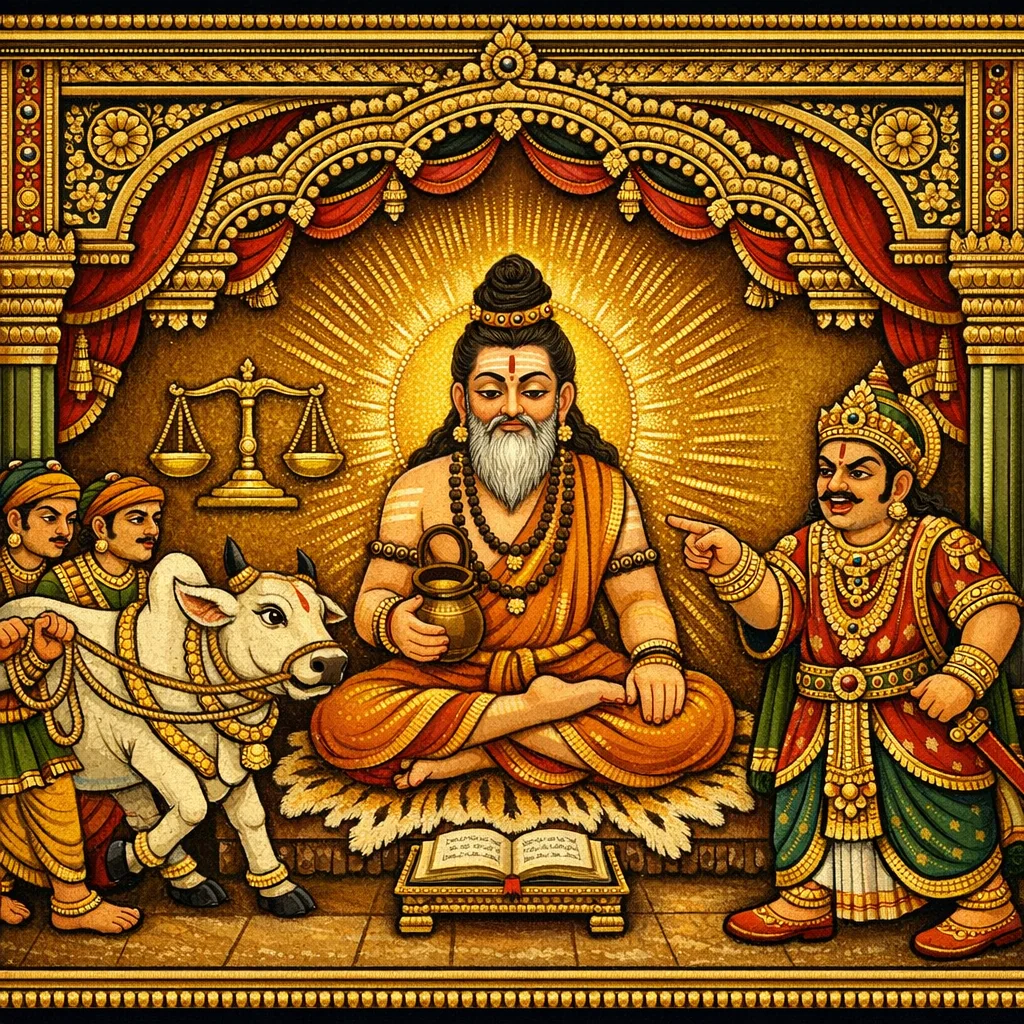
This chapter frames a dharma debate as a clash between ascetic authority and royal coercion. Vasiṣṭha recounts how the sage Jamadagni warns a king or royal agent (named Candragupta in the cited verses) not to seize a cow by force, declaring it brahmasva—Brahmin-sacral property that one who knows righteousness must not appropriate. Jamadagni foretells sin and even life-shortening consequences for such coercive taking. The ruler, time-driven (kāla-codita) and enraged, orders soldiers to expel the sage and drag the cow away with ropes. Though capable through tapas of cosmic-scale acts, Jamadagni embodies kṣamā (forbearance) and refuses anger; the text praises akrodha (non-wrath) as the “supreme wealth” of the good. The episode thus teaches a cosmological ethic: tapas and dharma restrain violence, while kingship without restraint becomes an anti-cosmic force, preparing later lineage-and-ethics narratives of the Bhṛgu line, especially those connected with Jamadagni’s son Rāma/Paraśurāma.
Shlokas
Verse 1
इति श्रीब्रह्माण्डे महापुराणे वोयुप्रोक्ते मध्यभागे तृतीय उपोद्धातपादे ऽष्टाविंशतितमो ऽध्यायः // २८// वसिष्ठ उवाच जमदग्निस्ततो भूयस्तमुवाच रुषान्वितः / ब्रह्मस्वं नापहर्त्तव्यं पुरुषेण विजानता
Thus in the Śrī Brahmāṇḍa Mahāpurāṇa, in the middle section spoken by Vāyu, in the third upoddhāta-pāda, the twenty-eighth chapter. Vasiṣṭha said: Then Jamadagni, filled with wrath, spoke to him again: “A man who knows must not seize brahmasva—the sacred property of the brahmins.”
Verse 2
प्रसह्य गां मे हरतो पापमाप्स्यसि दुर्मते / आयुर्जाने परिक्षीणं न चेदेतत्करिष्यति
Fool of evil counsel! If you seize my cow by force, you will incur sin; I know your span of life is already waning—if you do not desist from this.
Verse 3
बलादिच्छसि यन्नेतुं तन्न शक्यं कथञ्चन / स्वयं वा यदि सायुच्येद्विनशिष्यति पार्थिवः
What you seek to take away by force cannot be done in any way; and even if the king himself were to join in it, that earthly ruler would perish.
Verse 4
दानं विनापहरणं ब्राह्मणानां तपस्विनाम् / शतायुषोर्ऽजुनादन्यः को न्विच्छति जिजीविषुः
To seize the goods of ascetic Brahmins without first giving a sacred gift is not right. Who, desiring to live, would do so—save Arjuna, famed for a hundred-year span?
Verse 5
इत्युक्तस्तेन संक्रुद्धः स मन्त्रीकालचोदितः / बद्ध्वा तां गां दृढैः पाशैर्विचकर्ष बलान्वितः
Hearing this, the minister—driven on by the force of Time—grew enraged. He bound the cow with tight ropes and, relying on his strength, dragged her away.
Verse 6
जमदग्निरथ क्रोधाद्भाविकर्मप्रचोदितः / रुरोध तं यथाशक्ति विकर्षन्तं पायस्विनीम्
Then Jamadagni too, inflamed with anger and urged on by the karma that was to unfold, resisted with all his might the man who was dragging away the milk-giving cow.
Verse 7
जीवन्न प्रतिमोक्ष्यामि गामेनामित्यमर्षितः / जग्राह सुदृढं कण्ठे वाहुभ्यां तां महामुनिः
The great sage, stung with indignation, declared, “So long as I live, I will not release this cow.” And with both arms he gripped her neck with unyielding strength.
Verse 8
ततः क्रोधपरीतात्मा चन्द्रगुप्तो ऽतिनिर्घृणः / उत्सारयध्वमित्येनमादिदेश स्वसैनिकान्
Then Candragupta, his heart engulfed in wrath and pitiless in temper, commanded his own soldiers: “Drive him out at once!”
Verse 9
अप्रधृष्यतमं लोके तमृषिं राजकिङ्कराः / भर्त्राज्ञया प्रसह्यैनं परिवव्रुः समन्ततः
That sage, most unassailable in the world, was seized upon by the king’s servants. By their master’s command they forcibly surrounded him on every side.
Verse 10
दण्डैः कशाभिर्लकुडैर्विनिघ्नन्तश्च मुष्टिभिः / ते समुत्सारयन् धेनोः सुदूरतरमन्तिकात्
Beating him with staffs, whips, clubs, and fists, they drove him away—far, far from the cow’s side.
Verse 11
स तथा हन्यमोनो ऽपि व्यथितःक्षमयान्वितः / न चुक्रोधाक्रोधनत्वं सतो हि परमं धनम्
Though beaten in that manner and pained, he remained endowed with forbearance. He did not grow angry, for freedom from anger is the highest treasure of the virtuous.
Verse 12
स च शक्तः स्वतपसा संहर्त्तुमपि रक्षितुम् / जगत्सर्वं क्षयं तस्य चिन्तयन्न प्रचुक्रुधे
By his own austerity he was able either to destroy or to protect the entire world. Yet even while contemplating their ruin, he did not flare up in anger.
Verse 13
सपूर्वं क्रोधनो ऽत्यर्थं मातुरर्थे प्रसादितः / रामेणाभूत्ततो नित्यं शान्त एव महातपाः
That great ascetic had once been exceedingly wrathful; for his mother’s sake, Rama appeased him and bestowed grace. From then on, the mighty sage remained ever serene.
Verse 14
स हन्यमानः सुभृशं चूर्णिताङ्गास्थिवन्धनः / निपपात महातेजा धरण्यां गतचेतनः
Being severely beaten, his limbs and bone joints crushed, that one of great splendor fell to the earth, bereft of consciousness.
Verse 15
तस्मिन्मुनौ निपतिते स दुरात्मा विशङ्कितः / किङ्करानादिशच्छीघ्रं धेनोरानयने बलात्
When that sage had fallen, that evil-souled one, becoming apprehensive, immediately ordered his servants to bring the cow by force.
Verse 16
ततः सवत्सां ता धेनुं बद्ध्वा पाशैर्दृढैर्नृपः / कशाभिरभिहन्यन्त चकृषुश्च निनीषया
Then, having bound that cow along with her calf with strong ropes, they dragged her while striking her with whips, wishing to take her away.
Verse 17
आकृष्यमाणा बहुभिः कशाभिर्लगुडैरपि / हन्यमाना भृशं तैश्च चुक्रुधे च पयस्विनी
Being dragged by many, and beaten severely with whips and clubs by them, the milk-yielding cow became angry.
Verse 18
व्यथितातिकशापातैः क्रोधेन महातान्विता / आकृष्य पाशान् सुदृढान् कृत्वात्मानममोचयत्
Pained by the excessive strokes of the whip and filled with great anger, pulling at the strong ropes, she freed herself.
Verse 19
विमुक्तपाशवन्धासा सर्वतो ऽभिवृता बलैः / हुंहारवं प्रकुर्वाणा सर्वतो ऽह्यपतद्रुषा
Freed from the bonds of the noose, though hemmed in on every side by forces, she roared “hum” and, in wrath, sprang upon them from all directions.
Verse 20
विषाणखुरपुच्छाग्रैरभिहत्य समन्ततः / राजमन्त्रिबलं सर्वं व्यद्रावयदमर्षिता
Striking all around with her horns, hooves, and the tip of her tail, she—unappeased in fury—routed the entire force of the king and his ministers.
Verse 21
विद्राव्य किङ्करान्सर्वांस्तरसैव पयस्विनी / पश्यतां सर्वभूतानां गगनं प्रत्यपद्यत
Swiftly driving off all the attendants, Payasvinī—before the eyes of every being—made for the sky.
Verse 22
ततस्ते भग्नसंकल्पाः संभग्नक्षतविग्रहाः / प्रसह्य बद्ध्वा तद्वत्सं जग्मुरेवातिनिर्घृणाः
Then their resolve was shattered and their bodies were bruised and broken; yet those pitiless men, forcing it, bound that calf and went away.
Verse 23
पयस्विनीं विना वत्सं गृहीत्वा किङ्करैः सह / स पापस्तरसा राज्ञः सन्निधिं समुपागमत्
Leaving Payasvinī behind, he seized the calf along with the attendants; that sinful man hastened straight into the presence of the king.
Verse 24
गत्वा समीपं नृपतेः प्रणम्यास्मै प्रशंसकृत् / तद्व्रत्तान्तमशेषेण व्याचचक्षे ससाध्वसः
Going near the king and bowing low, he offered praise and then, with trembling fear, recounted the entire matter in full.
Frequently Asked Questions
That brahmasva (sacral Brahmin property, here a cow) must not be taken by force; coercion against tapas and rightful possession generates pāpa and invites karmic decline.
Vasiṣṭha frames the account; Jamadagni represents tapas guided by forbearance; Candragupta and his soldiers represent unrestrained royal power that violates dharma and destabilizes order.
It encodes a governance-ethic that underwrites Vamsha legitimacy: kingship must align with dharma to remain cosmically sanctioned, and Bhṛgu-line sage authority (Jamadagni) becomes a key node for later lineage narratives.