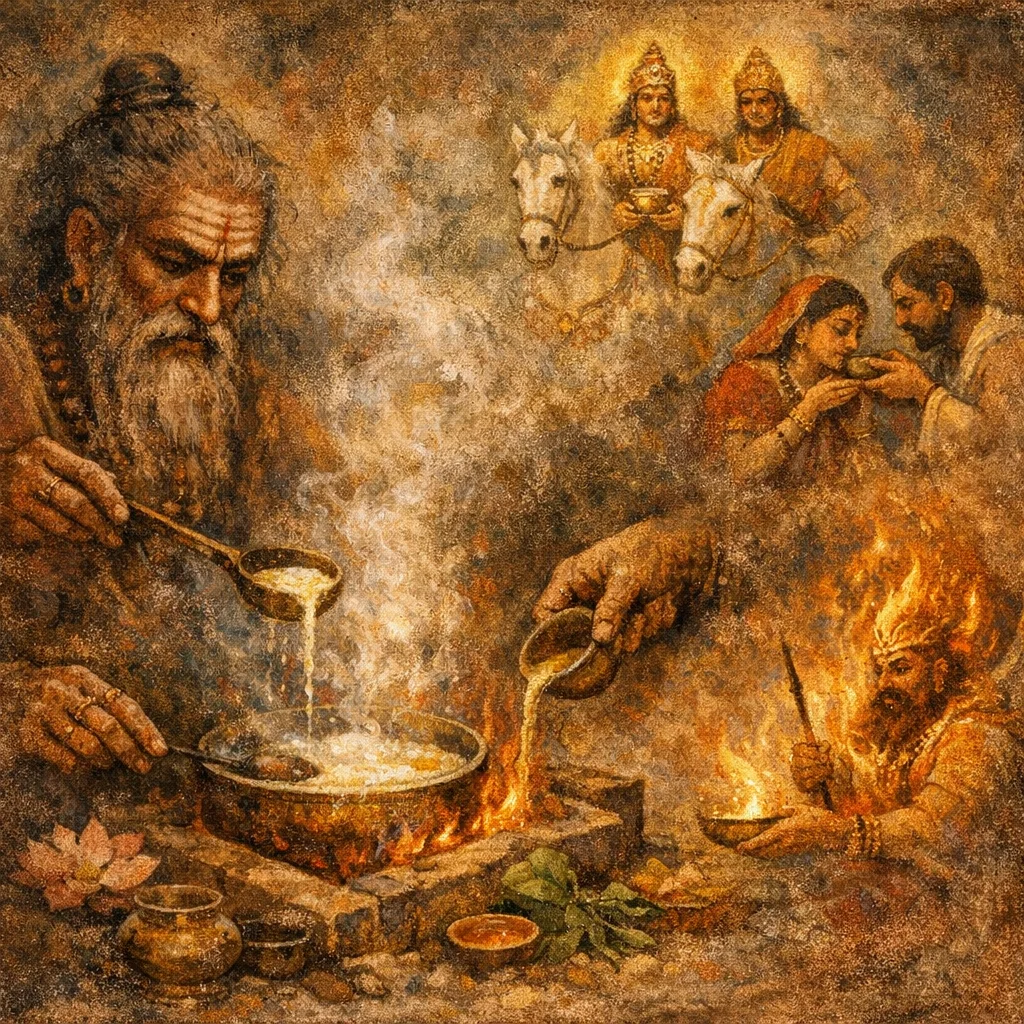
Sukta 73
Rishi: Traditionally Atharvanic/Angiras line (hymn-level attribution varies by Anukramaṇī; requires consultation of AVŚ 7.73 anukramaṇī).
Devata: Savitar; Dawn (Uṣas); implicitly the Cow/Milk as efficacious agent.
Chandas: Triṣṭubh-like cadence (needs metrical verification against pada lengths).
Mantras
Mantra 1
घर्मः। समिद्धो अग्निर्वृषणा रथी दिवस्तप्तो घर्मो दुह्यते वामिषे मधु । वयं हि वां पुरुदमासो अश्विना हवामहे सधमादेषु कारवः
The Gharma. Kindled is Agni; O ye two Bulls, the chariot-rider: from heaven the heated Gharma is drawn forth for you, for refreshment—sweet as honey. For we, the much-prevailing singers, O Aśvins, do invoke you at the common feasts.
Mantra 2
समिद्धो अग्निरश्विना तप्तो वां घर्म आ गतम्। दुह्यन्ते नूनं वृषणेह धेनवो दस्रा मदन्ति वेधसः
Kindled is Agni; O Aśvins, come hither: heated for you is the Gharma. Now, O ye two Bulls, here the milch-cows are milked; O wondrous ones, the wise are gladdened.
Mantra 3
स्वाहाकृतः शुचिर्देवेषु यज्ञो यो अश्विनोश्चमसो देवपानः । तमु विश्वे अमृतासो जुषाणा गन्धर्वस्य प्रत्यास्ना रिहन्ति
Offered with Svāhā, pure among the gods, is the sacrifice—this cup of the Aśvins, a draught for deities. That, verily, all the Immortals, taking delight therein, lick at the very lip, as (one) of the Gandharva.
Mantra 4
यदुस्रियास्वाहुतं घृतं पयोऽयं स वामश्विना भाग आ गतम्। माध्वी धर्तारा विदथस्य सत्पती तप्तं घर्मं पिबतं रोचने दिवः
What milk and butter, cow-born, is offered with Svāhā—this is your portion, O Aśvins: come hither. O honey-sweet sustainers, true lords of the rite’s assembly, drink the heated Gharma in the shining realm of heaven.
Mantra 5
तप्तो वां घर्मो नक्षतु स्वहोता प्र वामध्वर्युश्चरतु पयस्वान्। मधोर्दुग्धस्याश्विना तनाया वीतं पातं पयस उस्रियायाः
Heated, may the Gharma reach you twain, well-officiated; forth may the Adhvaryu proceed for you, rich in milk. Of the sweet, the milked, O Aśvins, for offspring—enjoy ye, drink ye, of the cow-born milk.
Mantra 6
उप द्रव पयसा गोधुगोषमा घर्मे सिञ्च पय उस्रियायाः । वि नाकमख्यत् सविता वरेण्योऽनुप्रयाणमुषसो वि राजति
Run hither with milk unto the sound of cow-milking; pour, in the heated offering, the milk of the bounteous cow. Savitar the Excellent hath disclosed the heavenly vault; the onward course of Dawn shineth forth in majesty.
Mantra 7
उप ह्वये सुदुघां धेनुमेतां सुहस्तो गोधुगुत दोहदेनाम्। श्रेष्ठं सवं सविता साविषन्नोऽभीऽद्धो घर्मस्तदु षु प्र वोचत्
Hither I call this well-yielding milch-cow: with skilful hands the cow-milker milketh her. Savitar hath impelled for us the best impulsion; verily the Gharma, kindled and set thereto, proclaimeth that straightway.
Mantra 8
हिङ्कृण्वती वसुपत्नी वसूनां वत्समिच्छन्ती मनसा न्यागन्। दुहामश्विभ्यां पयो अघ्न्येयं सा वर्धतां महते सौभगाय
Lowing, the Lady of wealth among all riches, desiring her calf in mind, she went down thereto. This inviolable cow yieldeth milk for the Aśvins: let her increase unto great good fortune.
Mantra 9
जुष्टो दमूना अतिथिर्दुरोण इमं नो यज्ञमुप याहि विद्वान्। विश्वा अग्ने अभियुजो विहत्य शत्रूयतामा भरा भोजनानि
Gracious, O house-abiding Guest within the dwelling, come thou, the Wise, unto this our sacrifice. Having smitten down all assailants, O Agni, bring hither the foods and enjoyments of them that play the foe.
Mantra 10
अग्ने शर्ध महते सौभगाय तव द्युम्नान्युत्तमानि सन्तु । सं जास्पत्यं सुयममा कृणुष्व शत्रूयतामभि तिष्ठा महांसि
O Agni, for great good fortune let thy highest splendors be ours. Establish in full a well-ruled lordship of the household; stand thou against the enemy-minded with mighty powers.
Mantra 11
सूयवसाद् भगवती हि भूया अधा वयं भगवन्तः स्याम । अद्धि तृणमघ्न्ये विश्वदानीं पिब शुद्धमुदकमाचरन्ती
From good pasture be thou, O Blessed One, yet more a bringer of good fortune; and then may we be fortunate. Eat thou the grass, O inviolable Cow, at all times; drink thou the pure water, moving freely to and fro.
Frequently Asked Questions
For paustika aims: increasing milk supply, protecting and strengthening cattle, and drawing bhaga (good fortune) into the household through a dawn-aligned recitation and offering-practice.
Savitar represents right timing and successful forward movement, while Dawn marks renewal and visible auspiciousness. The hymn ties milk’s abundance to that cosmic order—so daily milking becomes ritually ‘well-led’ and prosperous.
Not necessarily. The hymn can be applied in a household way during milking and blessing the cow’s pasture and water; the gharma/heated-offering imagery represents intensifying and consecrating nourishment, but the core intent is cattle and milk prosperity.