Sukta 128
Rishi: Uncertain/late compilation layer (Book 20); treated as traditional Atharvanic transmission rather than a single early ṛṣi attribution.
Devata: Auspicious qualities personified; effectively the empowered human subject (Tota) under brahmanic potency.
Chandas: Anuṣṭubh-like cadence (late AV style; refrain-driven).
Mantras
Mantra 1
खिलानि । यः सभेयो विदथ्यः सुत्वा यज्वाथ पूरुषः । सूर्यं चामू रिशादसस्तद् देवाः प्रागकल्पयन्
Khila verses. Whoso is meet for the assembly, meet for the sacred gathering—having pressed (Soma), a sacrificer—then that man (is established). The Sun, and yonder harm-devourers: that did the Gods set in order beforehand.
Mantra 2
यो जाम्या अप्रथयस्तद् यत् सखायं दुधूर्षति । ज्येष्ठो यदप्रचेतास्तदाहुरधरागिति
Whoso among his own folk furthereth not their weal—inasmuch as he would fain assail a comrade—when the elder is void of counsel, that, men say, is ‘the lower sort.’
Mantra 3
यद् भद्रस्य पुरुषस्य पुत्रो भवति दाधृषिः । तद् विप्रो अब्रवीदु तद् गन्धर्वः काम्यं वचः
When to a prosperous man a son is born, of dauntless spirit—this the inspired priest hath verily proclaimed; this is the Gandharva’s desirable word.
Mantra 4
यश्च पणि रघुजिष्ठ्यो यश्च देवां अदाशुरिः । धीराणां शश्वतामहं तदपागिति शुश्रुम
Both he who is Paṇi, swiftest to seize, and he who to the Gods gives no oblation—of the wise, the everlasting, have I heard this: ‘that man is cast away.’
Mantra 5
ये च देवा अयजन्ताथो ये च पराददिः । सूर्यो दिवमिव गत्वाय मघवा नो वि रप्शते
Both they who sacrificed not—yea, they who cast the rite away—(as) the Sun, as though to heaven he had departed: the Bounteous One doth rend us asunder.
Mantra 6
योनाक्ताक्षो अनभ्यक्तो अमणिवो अहिरण्यवः । अब्रह्मा ब्रह्मणः पुत्रस्तोता कल्पेषु संमिता
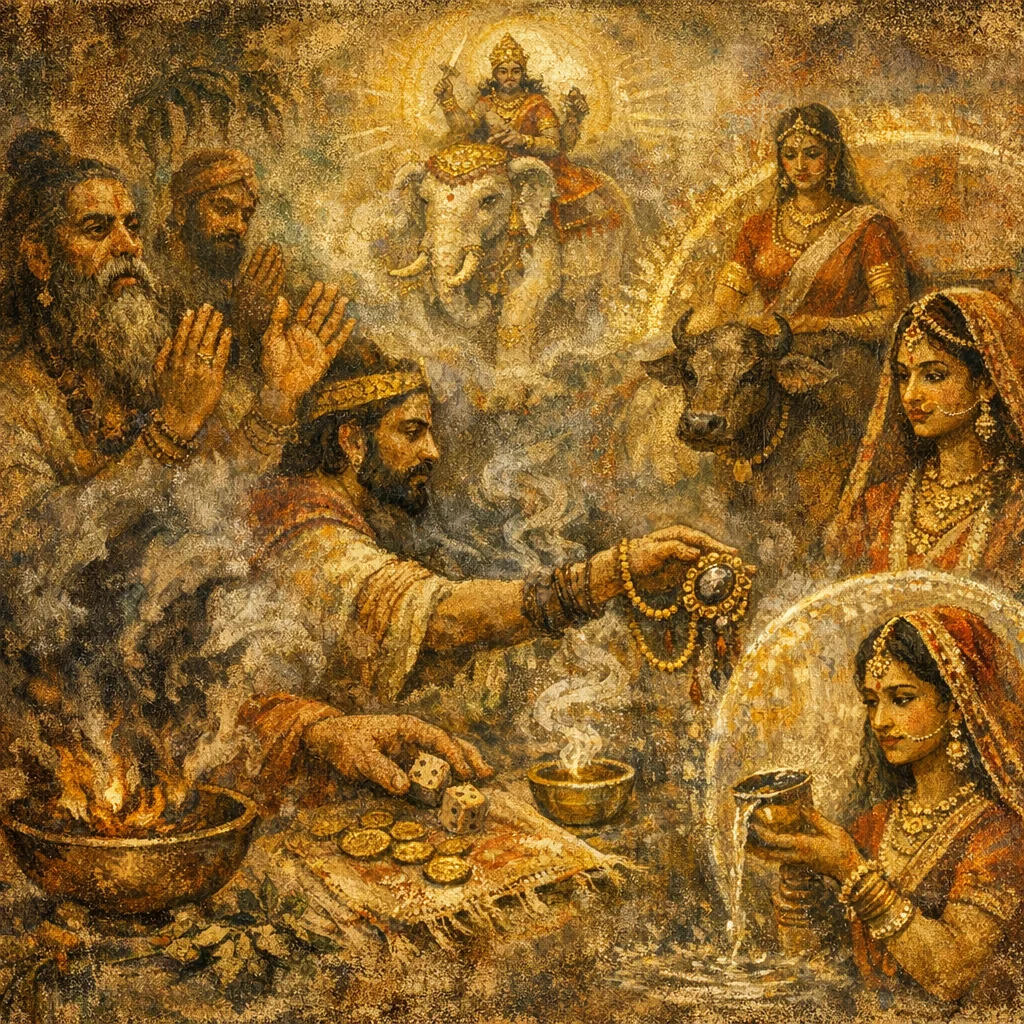
He whose eyes are un-anointed, himself un-anointed, without amulet, without gold—no brahman he, though Brahman’s son—(yet) a chanter, duly measured in the rites.
Mantra 7
य आक्ताक्षः सुभ्यक्तः सुमणिः सुहिरण्यवः । सुब्रह्मा ब्रह्मणः पुत्रस्तोता कल्पेषु संमिता
He whose eyes are duly anointed, well-smeared, possessed of a good amulet, and furnished with good gold; a good brahman, the Brahman’s son—Tota, in the ritual ordinances, is rightly measured and set.
Mantra 8
अप्रपाणा च वेशन्ता रेवां अप्रतिदिश्ययः । अयभ्या कन्या कल्याणी तोता कल्पेषु संमिता
Not wasteful, and entering the household, rich, not to be reproached; a maiden inviolable, auspicious—Tota, in the ritual ordinances, is duly measured and set.
Mantra 9
सुप्रपाणा च वेशन्ता रेवान्त्सुप्रतिदिश्ययः । सुयभ्या कन्या कल्याणी तोता कल्पेषु संमिता
Bountiful in refreshment, and entering the household, prosperous, well-approved; a maiden well-guarded, auspicious—Tota, in the ritual ordinances, is duly measured and set.
Mantra 10
परिवृक्ता च महिषी स्वस्त्या च युधिंगमः । अनाशुरश्चायामी तोता कल्पेषु संमिता
Chosen and installed is the queen; with welfare, and one that goes to battle; unperishing—Chāyāmī; Tota, in the ritual ordinances, is duly measured and set.
Mantra 11
वावाता च महिषी स्वस्त्या च युधिंगमः । श्वाशुरश्चायामी तोता कल्पेषु संमिता
Vāvātā, and the queen; with welfare, and one that goes to battle; with dog-guardianship (or Śvāśura)—Chāyāmī; Tota, in the ritual ordinances, is duly measured and set.
Mantra 12
यदिन्द्रादो दाशराज्ञे मानुषं वि गाहथाः । विरूपः सर्वस्मा आसीत् सह यक्षाय कल्पते
If, O Indra, on that day in the battle of the Ten Kings thou didst plunge forth into the human fray—then was he made of distorted form for all to see: together with thee this (spell) is made ready for the Yakṣa.
Mantra 13
त्वं वृषाक्षुं मघवन्नम्रं मर्याकरो रविः । त्वं रौहिणं व्यास्यो वि वृत्रस्याभिनच्छिरः
Thou, O Maghavan, didst bow down Vṛṣākṣu, making him a dependent; the Sun (itself) proclaims the deed. Thou, with jaws flung wide, didst smite away the head of Vṛtra, cleaving it asunder.
Mantra 14
यः पर्वतान् व्यदधाद् यो अपो व्यगाहथाः । इन्द्रो यो वृत्रहान्महं तस्मादिन्द्र नमोऽस्तु ते
He who set the mountains asunder, who plunged into the waters—Indra, who is the mighty slayer of Vṛtra: therefore, O Indra, let homage be to thee.
Mantra 15
पृष्ठं धावन्तं हर्योरौच्चैः श्रवसमब्रुवन्। स्वस्त्यश्व जैत्रायेन्द्रमा वह सुस्रम्
Of the two bay steeds, as the back sped onward, they cried aloud for glory: ‘Auspicious be it, O Horse; for victory do thou bear Indra hither—run thou well and smoothly.’
Mantra 16
ये त्वा श्वेता अजैश्रवसो हार्यो युञ्जन्ति दक्षिणम्। पूर्वा नमस्य देवानां बिभ्रदिन्द्र महीयते
They who—white, Ajaiśravas—yoke for thee the bay steeds on the right: bearing the ancient homage of the gods, O Indra, he is magnified.
Frequently Asked Questions
The hymn primarily empowers auspicious qualities (prosperity, protection, ritual fitness) as embodied in the named subject ‘Tota’. It also draws on Sūrya and Indra as cosmic enforcers and magnifiers of right-ordered power.
To establish someone as auspiciously ‘set’—anointed, protected by an amulet, associated with gold/wealth, and ritually legitimate—so that prosperity, protection, and social recognition follow.
An anointing ointment, a maṇi (protective jewel/amulet), and hiraṇya (gold). These are used as visible and ritually charged markers of auspiciousness during recitation.