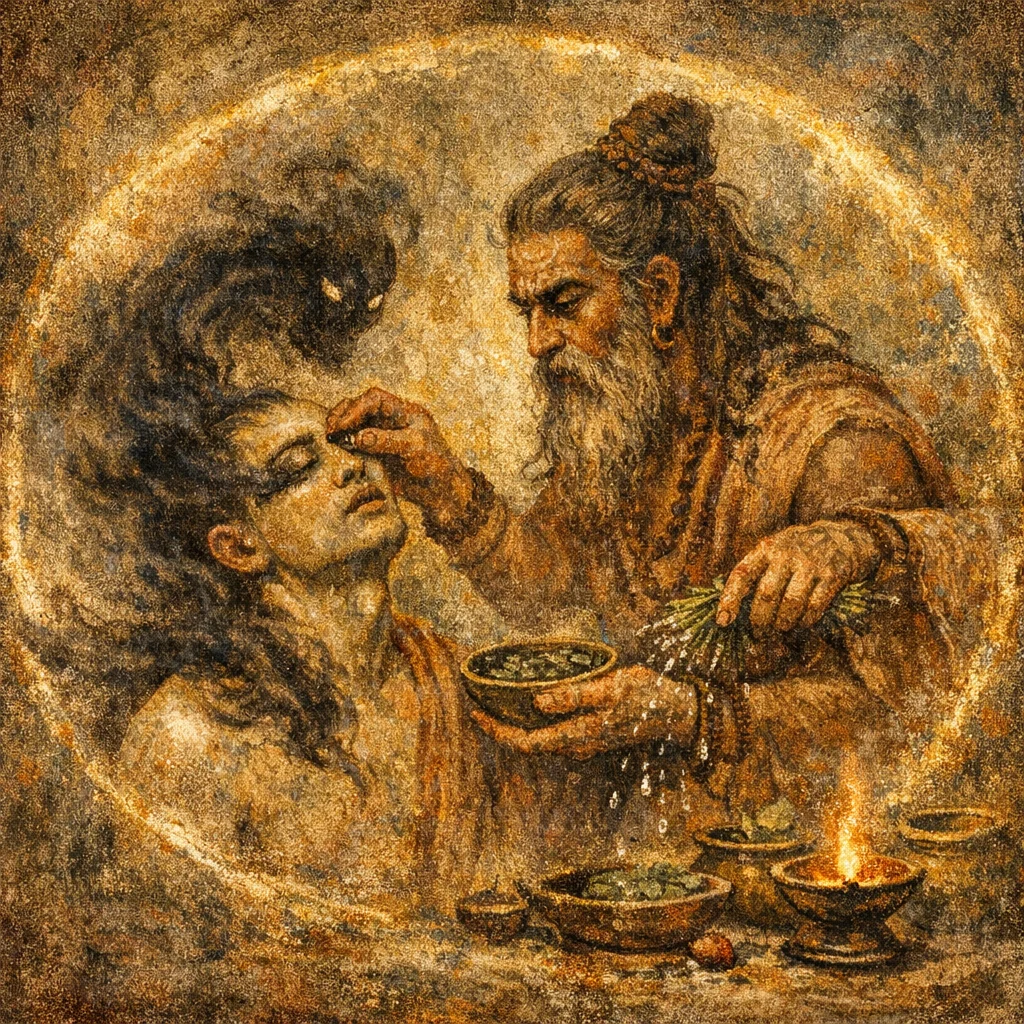
Sukta 44
Rishi: Atharvanic tradition (healing hymn; specific ṛṣi attribution not fixed here)
Devata: Añjana (personified remedy); Āpaḥ as auxiliary deities
Chandas: Anuṣṭubh (approx.)
Mantras
Mantra 1
भैषज्यम्। आयुषोऽसि प्रतरणं विप्रं भेषजमुच्यसे । तदाञ्जन त्वं शंताते शमापो अभयं कृतम्
A healing. Of life thou art the furthering ford; a potent, inspired remedy art thou called. Therefore, O Añjana, for welfare and for peace—(with) the Waters—make thou fearlessness effected.
Mantra 2
यो हरिमा जायान्योऽङ्गभेदो विसल्पकः । सर्वं ते यक्ष्ममङ्गेभ्यो बहिर्निर्हन्त्वाञ्जनम्
What yellowness, what jāyānya, what limb-rending pain, what visalpaka,—all thy wasting-disease from thy limbs, outward and forth, let Añjana smite away.
Mantra 3
आञ्जनं पृथिव्यां जातं भद्रं पुरुषजीवनम्। कृणोत्वप्रमायुकं रथजूतिमनागसम्
Añjana, born upon the Earth, auspicious, the life of man,—let it make (him) not doomed to untimely death, of chariot-swiftness, and without blame.
Mantra 4
प्राण प्राणं त्रायस्वासो असवे मृड । निरृते निरृत्या नः पाशेभ्यो मुञ्च
O Prāṇa, save thou the breath; be gracious unto the Asu, unto our life. From Nirṛti, from Nirṛti’s nooses, release us.
Mantra 5
सिन्धोर्गर्भोऽसि विद्युतां पुष्पम्। वातः प्राणः सूर्यश्चक्षुर्दिवस्पयः
Thou art the Sindhu’s embryo, the blossom of the lightnings: the Wind is breath, the Sun is eye, the milk of heaven is nourishment.
Mantra 6
देवाञ्जन त्रैककुदं परि मा पाहि विश्वतः । न त्वा तरन्त्योषधयो बाह्याः पर्वतीया उत
O divine unguent, O Traikakuda, guard me round about from every side. No other herbs surpass thee—no outward, no mountain-born remedies either.
Mantra 7
वी३दं मध्यमवासृपद् रक्षोहामीवचातनः । अमीवाः सर्वाश्चातयन् नाशयदभिभा इतः
This Vīda crept into the midst, a slayer of Rakṣas, a dispeller of disease: expelling all maladies, it destroyed the assailing powers from hence.
Mantra 8
बह्वि३दं राजन् वरुणानृतमाह पूरुषः । तस्मात् सहस्रवीर्य मुञ्च नः पर्यंहसः
Much untruth, O King Varuṇa, hath a man spoken. Therefore, O thousand-mighty, release us from the encompassing guilt and straitness.
Mantra 9
यदापो अघ्न्या इति वरुणेति यदूचिम। तस्मात् सहस्रवीर्य मुञ्च नः पर्यंहसः
What we have uttered—‘the Waters are inviolable,’ and ‘O Varuṇa’—by virtue of that, O thou of thousandfold might, release us from the encompassing distress.
Mantra 10
मित्रश्च त्वा वरुणश्चानुप्रेयतुराञ्जन । तौ त्वानुगत्य दूरं भोगाय पुनरोहतुः
Mitra and Varuṇa have attended thee, O Anjana; and those twain, accompanying thee, have brought back again from afar for our enjoyment.
Frequently Asked Questions
Añjana is a medicinal unguent/collyrium (often used for the eyes) that the hymn personifies and praises as a divine remedy capable of healing and protecting the patient.
The Waters represent purification and soothing power; in this hymn they help make the remedy bring śam (peace/welfare) and abhayam (fearlessness), as if sealing the medicine’s safety and efficacy.
Traditionally it functions as a consecration charm: the practitioner recites the verses over añjana (often mixed with clean water) and then applies it as a therapeutic/protective unguent, repeating as needed for recovery and safeguarding.