Adhyaya 20
गरुडजन्म तथा विनतादास्यवृत्तान्तः (Garuḍa’s Birth and Vinatā’s Enslavement)
Upa-parva: Āstīka Upākhyāna (Garuḍa–Vinātā Episode)
This chapter reports (via Sauti) the immediate consequence of the Kadru–Vinatā wager: after crossing the ocean, Kadru observes numerous black hairs attached to the serpent’s tail, interprets this as proof in her favor, and assigns the despondent Vinatā to servitude. In parallel, the narrative shifts to a cosmological register: at the destined time Garuḍa is born, bursting the egg without maternal assistance, rapidly expanding and taking to the sky. His blazing appearance resembles an immense conflagration; beings, fearing a world-consuming fire, seek refuge with Agni. Agni clarifies that the radiance is Garuḍa’s, comparable to his own tejas. Devas and ṛṣis then approach Garuḍa and praise him with elevated epithets—seer, lord of birds, protector, and cosmic illuminator—framing him as both beneficent and potentially catastrophic. The chapter closes with a key ethical-cosmological act: Garuḍa, thus addressed, performs tejas-pratisaṃhāra, withdrawing and regulating his radiance, signaling controlled power rather than indiscriminate destruction.
Chapter Arc: उग्रश्रवा (सौति) शौनकादि ऋषियों को उस निर्णायक प्रसंग में ले जाते हैं जहाँ कद्रू विनता से पूछती है—उच्चैःश्रवा घोड़े का वर्ण क्या है? एक छोटे-से उत्तर पर दास्य और वंश-भाग्य टिके हैं। → विनता निश्चयपूर्वक कहती है कि अश्वराज श्वेत है और कद्रू से भी वर्ण बताने को कहती है; दोनों बहनों में शर्त बँधती है कि जो गलत होगी वह दूसरी की दासी बनेगी। इसी बीच कद्रू का कठोर शाप नागों पर उतरता है, और उसका प्रतिध्वनि ब्रह्मा तक पहुँचती है—देवगणों सहित सृष्टिकर्ता उस शाप को लोक-हित की दृष्टि से स्वीकारते हैं, क्योंकि नागों की संख्या और उग्रता बढ़ रही है। → ब्रह्मा कश्यप को बुलाकर कहते हैं कि ये दन्दशूक (सर्प) अत्यन्त विषोल्बण, महाभोग और परंतप हैं; कद्रू के शाप पर क्रोध न किया जाए—यह पुरातन विधान है कि यज्ञ में सर्प-विनाश होगा। फिर वे कश्यप को विषहर विद्या प्रदान करते हैं, ताकि विनाश-नियति के बीच भी उपचार और संतुलन बना रहे। → सृष्टि-व्यवस्था का संतुलन स्पष्ट होता है—नागों का संहार नियत है, पर साथ ही विषहर विद्या का दान करुणा और संरक्षण का मार्ग खोलता है। कद्रू-विनता की शर्त निजी कलह से उठकर विश्व-व्यवस्था (यज्ञ, शाप, नियति) के ताने-बाने में जुड़ जाती है। → शप्त नागों के बीच कर्कोटक जैसे प्रमुख भुजग कद्रू से आगे की योजना/उपाय की बात करते हैं—और कथा उस बिंदु पर ठहरती है जहाँ नाग-समुदाय शाप से बचने या उसे मोड़ने की युक्ति खोजने को उद्यत है।
Shlokas
Verse 1
इस प्रकार श्रीमह्ाभारत आदिपरव्वके अन्तर्गत आस्तीकपर्वमें अमृतमन्थन-समाप्ति नामक उन्नीसवाँ अध्याय पूरा हुआ ॥/ १९ ॥ अपर बक। ] अि्शशाएड< विशो<् ध्याय: कद्रू और विनताकी होड़
قال سوتي: «لقد قصصتُ عليكم الآن على التمام كيف خُضَّ الرحيق حتى استُخرج. وفي ذلك الخضِّ نفسه ظهر الحصان البهيّ، ذو بأسٍ لا يُضاهى».
Verse 2
यं निशम्य तदा कद्रूविनतामिदमब्रवीत् । उच्चै:श्रवा हि किं वर्णो भद्रे प्रत्रूहि माचिरम्
فلما سمعت كَدْرُو بذلك قالت لفينَتا: «يا لطيفةَ الخُلُق، ما لونُ أُتْشايِهْشْرَفا حقًّا؟ أخبريني سريعًا ولا تُمهلي.»
Verse 3
विनतोवाच श्वेत एवाश्वराजो<यं किं वा त्वं मनन््यसे शुभे । ब्रृहि वर्ण त्वमप्यस्य ततो5त्र विपणावहे
قالت فينَتا: «يا ذاتَ اليُمن، إنّ ملكَ الخيل هذا أبيضُ حقًّا. فما رأيكِ أنتِ؟ اذكري أنتِ أيضًا لونَه، ثم لنعقد رهانًا هنا.»
Verse 4
कटूरुवाच कृष्णवालमहं मन्ये हयमेनं शुचिस्मिते । एहि सार्ध मया दीव्य दासीभावाय भामिनि
قالت كَدْرُو: «يا أختَاه ذاتَ الابتسامة الطاهرة، أرى أن لهذا الحصان ذَنَبًا أسود. هلمّي—راهني معي على ذلك، ولتكن العبوديةُ هي الرهان، يا متعزّزة. إن صدق قولُك عشتُ خادمةً لك؛ وإلا وجب عليكِ أن تصيري خادمتي.»
Verse 5
सौतिर्वाच एवं ते समयं कृत्वा दासीभावाय वै मिथ: । जम्मतुः स्वगृहानेव श्रो द्रक्ष्याव इति सम ह
قال سوتي: «وهكذا عقدت الأختان بينهما عهدًا بأن تصير إحداهما خادمةً للأخرى. ثم رجعتا كلٌّ إلى بيتها، واتّفقتا قائلتين: “غدًا نأتي فننظر إلى الحصان.”»
Verse 6
ततः पुत्रसहसत्रं तु कद्रूर्जिह्यां चिकीर्षती । आज्ञापयामास तदा वाला भूत्वाञ्जनप्रभा:
ثم إن كَدْرُو—وقد انطوت على نيةٍ معوجّة وأرادت أن تنتفع بالمكر—أمرت أبناءها من الحيّات، وهم بالألوف، قائلةً: «ادخلوا سريعًا في ذاك الفرس، وكونوا كالشَّعر الأسود ملتصقين بذَنَبه، لكيلا أصير أَمَةً». وأمّا الحيّات اللواتي لم يطعنَّ أمرها فقد لعنتهنّ قائلةً: «حين يشرع الملكُ الرِّشيّ الحكيم جَنَمِجَيَ، من سلالة الباندَفَة، في قربان الحيّات، فإن نار ذلك القربان المتّقدة ستحرقكنّ حتى تصرن رمادًا».
Verse 7
आविशध्वं हयं क्षिप्रं दासी न स्थामहं यथा । नावपद्यन्त ये वाक्यं ताञ्छशाप भुजड्मान्
قال شَوْنَكَة: «ادخلوا الفرسَ سريعًا لكيلا أصير أَمَةً». وأمّا الحيّات اللواتي لم يمتثلن لأمرها فقد لعنتهنّ كَدْرُو—بنيةٍ معوجّة—قائلةً: «حين يبدأ الملكُ الرِّشيّ الحكيم جَنَمِجَيَ، من سلالة الباندَفَة، قربانَ الحيّات، فإن نار ذلك الطقس المتّقدة ستحرقكنّ حتى تصرن رمادًا».
Verse 8
सर्पसत्रे वर्तमाने पावको व: प्रधक्ष्यति । जनमेजयस्य राजर्षे: पाण्डवेयस्प धीमत:
قال شَوْنَكَة: «حين يكون قربانُ الحيّات قائمًا، فإن النار ستحرقكم. وفي قربان الملكِ الرِّشيّ الحكيم جَنَمِجَيَ، من نسل الباندَفَة، ستلتهمكم النار.»
Verse 9
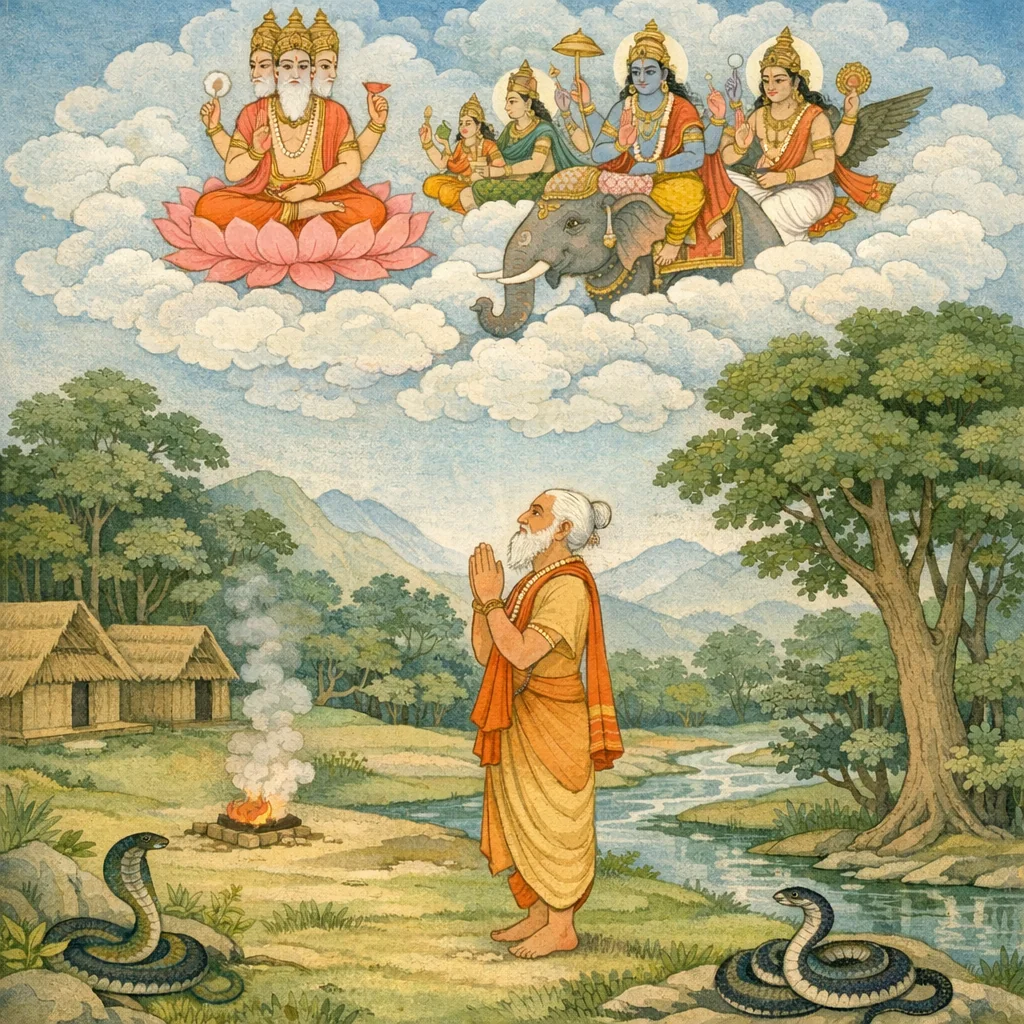
शापमेनं तु शुश्राव स्वयमेव पितामह: । अतिक्रूरं समुत्सृष्टं कद्रवा दैवादतीव हि
قال شَوْنَكَة: إن الجدَّ الأكبر (براهما) سمع تلك اللعنة بنفسه. وبمنعطفٍ عجيب من القضاء، نالت الحيّات لعنةً بالغة القسوة—صدرت من أمّهنّ نفسها، كَدْرُو.
Verse 10
सार्ध देवगणै: सर्वैर्वाच॑ं तामन्वमोदत । बहुवं प्रेक्ष्य सर्पाणां प्रजानां हितकाम्यया,सम्पूर्ण देवताओंसहित ब्रह्माजीने सर्पोंकी संख्या बढ़ती देख प्रजाके हितकी इच्छासे कद्रूकी उस बातका अनुमोदन ही किया
قال شَوْنَكَة: إن براهما، مع جميع جموع الآلهة، أقرَّ ذلك الرأي. ولما رأى الحيّات تتكاثر بأعداد عظيمة، ورغبةً في صلاح الكائنات، وافق—مراعاةً للخير العام.
Verse 11
तिग्मवीर्यविषा होते दन््दशूका महाबला: । तेषां तीक्षणविषत्वाद्धि प्रजानां च हिताय च
Śaunaka said: “These serpents are of fierce potency and venom, mighty in strength and deadly in their bite. Because their poison is so sharp—and for the welfare of living beings—it was right for their mother Kadrū to restrain them by a curse. Those who continually injure other creatures inevitably meet a life-destroying punishment ordained by fate.” Saying this, Brahmā praised Kadrū and summoned Kaśyapa, advising him: “Blameless one, the biting serpents born of you have huge bodies and dreadful venom; yet since their mother has cursed them, you must not be angered by it. Their destruction in a sacrifice is an ancient destined event known to you as well.” Having thus consoled Prajāpati Kaśyapa, the Creator granted him the knowledge that neutralizes serpent-venom.
Verse 12
युक्त मात्रा कृतं तेषां परपीडोपसर्पिणाम् । अन्येषामपि सत्त्वानां नित्यं दोषपरास्तु ये
Śaunaka said: “The mother acted with due measure in cursing those creatures who creep about to torment others. For those beings who are ever intent on wrongdoing and who constantly injure other living creatures, a life-destroying punishment inevitably falls upon them by divine ordinance.” Thus speaking, Brahmā praised Kadrū and, summoning Kaśyapa, told him not to be angered by the curse laid upon the mighty, venomous serpents he had begotten, for their destruction in a sacrifice was already foreseen; and Brahmā then consoled Kaśyapa and granted him the knowledge for neutralizing serpent-venom.
Verse 13
तेषां प्राणान््तको दण्डो देवेन विनिपात्यते । एवं सम्भाष्य देवस्तु पूज्य कद्रें च तां तदा
Śaunaka said: “For such beings, a life-ending punishment is cast down by the divine. Having spoken thus, the god (Brahmā) then honored Kadrū and praised her decision: those mighty serpents, unbearable in prowess and fierce with venom, roam about ever eager to harm others; therefore, for the welfare of all creatures, it was right that their mother cursed them. Upon those who continually injure living beings, a deadly chastisement inevitably descends by the ordinance of fate.”
Verse 14
आहूय कश्यपं देव इदं वचनमत्रवीत् । यदेते दन्दशूकाश्न सर्पा जातास्त्वयानघ
Śaunaka said: “Summoning Kaśyapa, the Lord spoke these words: ‘O blameless one, these biting serpents that have been born through you…’” The passage frames the serpents’ dangerous nature within a moral order: beings that habitually harm others become subject to a divinely sanctioned punishment, and Kaśyapa is urged not to be angered at their mother’s curse, since a destined event (their destruction in a sacrifice) lies ahead.
Verse 15
विषोल्बणा महाभोगा मात्रा शप्ता: परंतप । तत्र मन्युस्त्वया तात न कर्तव्य: कथंचन
Śaunaka said: “These serpents are swollen with venom and formidable in their power; they have been cursed by their mother. Therefore, O subduer of foes, you must not give way to anger on that account in any manner, dear one.” The ethical point is that when beings habitually harm others, a restraining punishment may arise through destiny; one should not respond with personal wrath but accept the corrective order that protects the welfare of creatures.
Verse 16
दृष्ट पुरातनं होतद् यज्ञे सर्पविनाशनम् । इत्युक्त्वा सृष्टिकृद् देवस्तं प्रसाद्य प्रजापतिम् । प्रादाद् विषहरीं विद्यां कश्यपाय महात्मने
قال شاونَكا: «إن هذا الخبر القديم معروفٌ: أنّ في قربانٍ (يَجْنَا) سيكون هلاكُ الحيّات.» ولمّا قال ذلك، فإنّ الإله الخالق براهما، بعد أن أرضى البراجابتي كاشيابا، منحَ ذلك الحكيم العظيم النفس عِلمًا يزيل سُمَّ الحيّات. ويعرض المقطعُ مصيرَ الحيّات القريب بوصفه عاقبةً رتّبها النظام الإلهيّ لمن يؤذي غيره، وفي الوقت نفسه يهب معرفةً علاجيةً لخير الكائنات الحيّة.
Verse 20
(एवं शप्तेषु नागेषु कद्गवा च द्विजसत्तम । उद्विग्न: शापतस्तस्या: कद्/ूं कर्कोटको<ब्रवीत् ।।
قال شاونَكا: «يا خيرَ ذوي المولدَين! لمّا لَعَنَتْ كَدْرُو الحيّاتَ على هذا النحو، اضطربَ كَرْكوطَكَ—وهو أسبقُ الناغا—بقوة تلك اللعنة، غير أنّه خاطب أمَّه بفرحٍ عظيم قائلاً: ‘يا أمّاه، اطمئنّي. سأصيرُ شعرةً سوداء، وأدخلُ جسدَ ذلك الفرسِ الممتاز، وأُظهرُ نفسي هناك على هيئة ذَنَبِه الداكن.’ فلمّا سمعتْ ذلك أجابت كَدْرُو الممجَّدة ابنَها: ‘فليكن كذلك يا بُنَيّ.’»
Frequently Asked Questions
The chapter foregrounds the ethical tension between procedural justice and substantive fairness: Vinatā becomes a servant due to the wager’s adjudicated outcome, illustrating how binding agreements can impose severe consequences even when the result appears socially destabilizing.
Power and brilliance (tejas) require self-regulation and social calibration; the narrative models how recognition and wise counsel can convert fear of destruction into ordered coexistence through restraint rather than escalation.
No explicit phalaśruti appears here; the meta-function is structural—linking Vinatā’s bondage to the necessity of Garuḍa’s later actions, and presenting tejas-pratisaṃhāra as an interpretive key for reading power ethically within the epic’s cosmology.
Read Mahabharata in the Vedapath app
Scan the QR code to open this directly in the app, with audio, word-by-word meanings, and more.