Adhyaya 302
Chapter Arc: महर्षिगण सावित्री के परम सौभाग्य का बार-बार वर्णन करते हैं और फिर भी तृप्त नहीं होते—मानो धर्म की विजय को शब्दों में बाँध पाना कठिन हो। → शाल्वदेश की प्रजा और प्रकृतिजन (अमात्य-वर्ग) अपने राजा द्युमत्सेन को पुनः राज्य-ग्रहण हेतु आमंत्रित करते हैं; शत्रु-पक्ष के पराजय/पलायन का समाचार भी आता है, जिससे लौटने का क्षण निर्णायक बन जाता है। → नगर में ‘जय’ की घोषणा के बीच द्युमत्सेन का पितृ-पैतामह पद पर पुनः आसन—और पुरोहितों द्वारा उनका राज्याभिषेक तथा सत्यवान का युवराज्याभिषेक। → शैब्या सावित्री के साथ, सेना/परिवार-परिवेष्टन में, राजपरिवार का राज्य में प्रवेश; राज्य-व्यवस्था का पुनर्स्थापन और सावित्री-चरित का फलश्रुति-उपसंहार।
Shlokas
Verse 1
हि मो न (0) हि २ 7 नवनवर्त्याधेक॑द्विशततमो< ध्याय: शाल्वदेशकी प्रजाके अनुरोधसे महाराज ट्ुमत्सेनका राज्याभिषेक कराना तथा सावित्रीको सौ पुत्रों और सौ भाइयोंकी प्राप्ति मार्कण्डेय उवाच तस्यां रात्र्यां व्यतीतायामुदिते सूर्यमण्डले । कृतपौर्वाह्निका: सर्वे समेयुस्ते तपोधना:,मार्कण्डेयजी कहते हैं--जब वह रात बीत गयी और सूर्यमण्डलका उदय हुआ, उस समय सब तपोधन ऋषिगण पूर्वाह्नकालका नित्यकृत्य पूरा करके पुनः उस आश्रममें एकत्र हुए
Mārkaṇḍeya said: When that night had passed and the orb of the sun had risen, all those ascetics—having completed their morning rites—gathered together again in the hermitage. The scene underscores disciplined daily conduct (nitya-karma) as the foundation of spiritual life and the orderly continuation of sacred discourse.
Verse 2
तदेव सर्व सावित्र्या महाभाग्यं॑ महर्षय: । द्युमत्सेनाय नातृप्पन् कथयन्तः पुनः पुनः
Markandeya said: “All the great sages, again and again recounting the entire blessed tale of Sāvitrī, never grew satisfied in narrating it to Dyumatsena.”
Verse 3
वे महर्षिगण राजा द्युमत्सेनसे सावित्रीके उस परम सौभाग्यका बारंबार वर्णन करते हुए भी तृप्त नहीं होते थे ।। ततः प्रकृतय: सर्वा: शाल्वेभ्यो5भ्यागता नृप । आचर्ख्यु्निहतं चैव स्वेनामात्येन तं द्विषम्,राजन्! उसी समय शाल्वदेशसे वहाँकी सारी प्रजाओंने आकर महाराज झट्ुमत्सेनसे कहा--'प्रभो! आपका शत्रु अपने ही मन्त्रीके हाथों मारा गया है'
Mārkaṇḍeya said: “O king, those companies of great seers, even while repeatedly describing to Dyumatsena and Sāvitrī her supreme good fortune, could not feel satisfied. Then all the subjects came from the land of the Śālvas and reported to the king: ‘Lord, your enemy has been slain—killed by his own minister.’”
Verse 4
त॑ मन्त्रिणा हतं श्रुव्वा ससहायं सबान्धवम् | न्यवेदयन् यथावृत्तं विद्रुतं च द्विषद्बलम्,उन्होंने यह भी निवेदन किया कि “उसके सहायक और बन्धु-बान्धव भी मन्त्रीके ही हाथों मर चुके हैं। शत्रुकी सारी सेना पलायन कर गयी है। यह यथावत् वृत्तान्त सुनकर सब लोगोंका एकमतसे यह निश्चय हुआ है कि हमें पूर्व नरेशपर ही विश्वास है। उन्हें दिखायी देता हो या न दीखता हो, वे ही हमारे राजा हों”
Mārkaṇḍeya said: Hearing that he had been slain by the minister—together with his allies and kinsmen—they reported the events exactly as they had occurred, adding that the enemy host had fled in rout. On receiving this truthful account, the people, with one accord, resolved to place their trust in the former king alone: whether he could be seen or not, he alone should be their sovereign. The passage underscores a communal ethic of fidelity to legitimate rule and the moral weight of accurate testimony in times of political upheaval.
Verse 5
ऐकमत्यं च सर्वस्य जनस्याथ नूपं प्रति । सचक्षुर्वाप्यचक्षुर्वा स नो राजा भवत्विति,उन्होंने यह भी निवेदन किया कि “उसके सहायक और बन्धु-बान्धव भी मन्त्रीके ही हाथों मर चुके हैं। शत्रुकी सारी सेना पलायन कर गयी है। यह यथावत् वृत्तान्त सुनकर सब लोगोंका एकमतसे यह निश्चय हुआ है कि हमें पूर्व नरेशपर ही विश्वास है। उन्हें दिखायी देता हो या न दीखता हो, वे ही हमारे राजा हों”
Mārkaṇḍeya said: “Then the entire populace, with one accord, made a submission to the king: ‘Whether he can see or cannot see, let him be our ruler.’” In context, the verse highlights collective consent and steadfast loyalty to legitimate kingship, valuing rightful authority and social stability over a ruler’s physical limitation.
Verse 6
अनेन निश्चयेनेह वयं प्रस्थापिता नृप । प्राप्तानीमानि यानानि चतुरड्ं च ते बलम्,“नरेश्वर! ऐसा निश्चय करके ही हमें यहाँ भेजा गया है। ये सवारियाँ प्रस्तुत हैं और आपकी चतुरंगिणी सेना भी सेवामें उपस्थित है'
Mārkaṇḍeya said: “O king, it is with this firm resolve that we have been dispatched here. The conveyances are ready, and your fourfold army too stands assembled in attendance.”
Verse 7
प्रयाहि राजन् भद्ठं ते घुष्टस्ते नगरे जय: । अध्यास्स्व चिररात्राय पितृपैतामहं पदम्,“राजन! आपका कल्याण हो। अब अपने राज्यमें पधारिये। नगरमें आपकी विजय घोषित कर दी गयी है। आप दीर्घकालतक अपने बाप-दादोंके राज्यपर प्रतिष्ठित रहें!
Mārkaṇḍeya said: “Go now, O King—may good befall you. In your city your victory has been proclaimed. Sit firmly, for a long time, upon the ancestral throne of your fathers and grandfathers.”
Verse 8
चक्षुष्मन्तं च तं दृष्टवा राजानं वपुषान्वितम् । मूर्थ्ना निपतिता: सर्वे विस्मयोत्फुल्ललोचना:,तत्पश्चात् राजा झ्युमत्सेनको नेत्रयुक्त और स्वस्थ शरीरसे सुशोभित देखकर उन सबके नेत्र आश्चवर्यससे खिल उठे और सबने मस्तक झुकाकर उन्हें प्रणाम किया
Verse 9
ततो5भिवाद्य तान् वृद्धान् द्विजानाश्रमवासिन: । तैश्नाभिपूजित: सर्व: प्रययौ नगरं प्रति,इसके बाद राजाने आश्रममें रहनेवाले उन वृद्ध ब्राह्यगोंका अभिवादन किया और उन सबसे समादृत हो वे अपनी राजधानीकी ओर चले
Then, having respectfully saluted those aged brāhmaṇas dwelling in the hermitage, and being duly honored by them in return, he departed and set out toward his city. The episode underscores the ethic that rightful power is tempered by reverence for elders and ascetics, and that a ruler’s conduct is measured by humility before dharma.
Verse 10
शैब्या च सह सावित्र्या स्वास्तीर्णेन सुवर्चसा । नरयुक्तेन यानेन प्रययौ सेनया वृता,शैब्या भी अपनी बहू सावित्रीके साथ सुन्दर बिछावनसे युक्त तेजस्वी शिबिकापर, जिसे कई कहार ढो रहे थे, आरूढ़ हो सेनासे घिरी हुई चल दी
Mārkaṇḍeya said: Śaibyā, together with her daughter-in-law Sāvitrī, set out—seated in a radiant palanquin furnished with a well-spread bedding and borne by men—while being surrounded and escorted by an armed retinue. The scene underscores royal decorum and protective duty: women of the household travel with dignity, yet under the safeguarding order of the king’s forces.
Verse 11
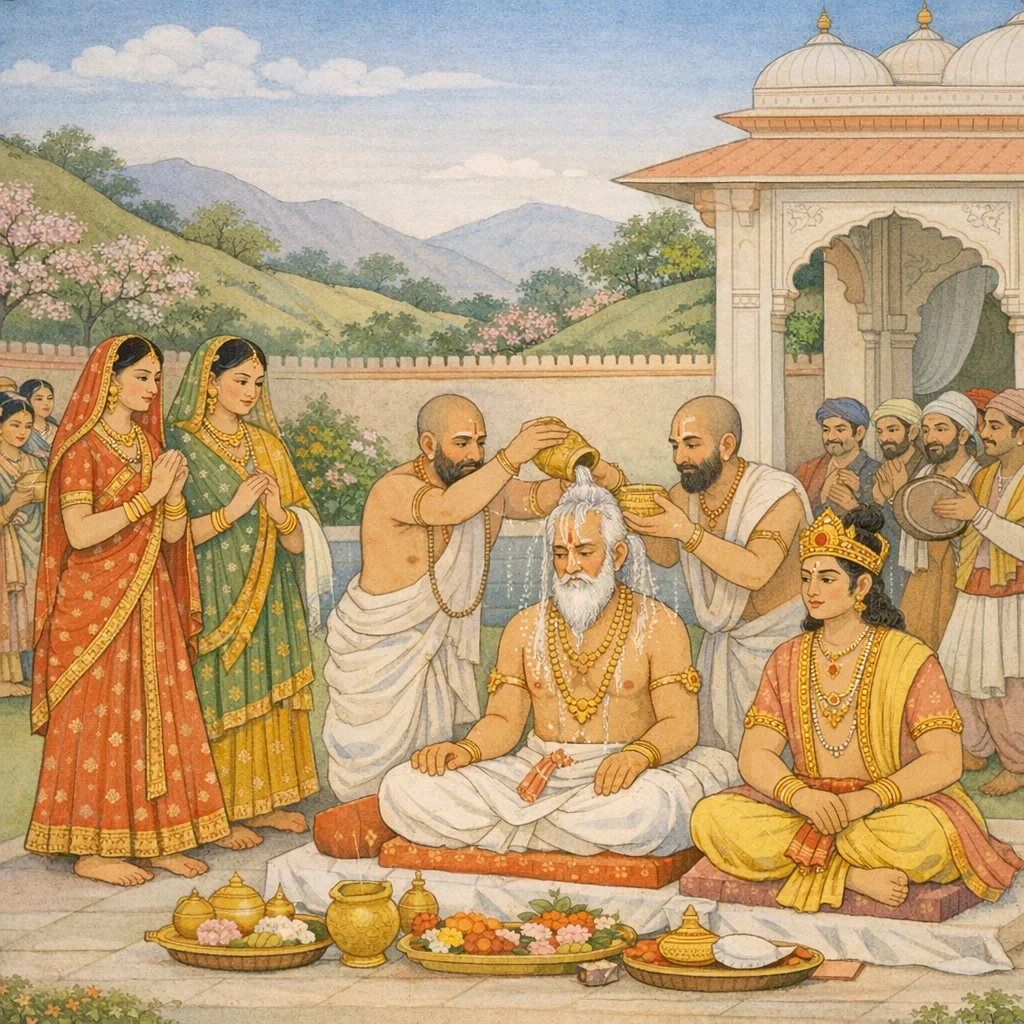
ततो5भिषिषिचु: प्रीत्या द्युमत्सेनं पुरोहिता: । पुत्रं चास्य महात्मानं यौवराज्ये5भ्यषेचयन्,वहाँ पहुँचनेपर पुरोहितोंने बड़ी प्रसन्नताके साथ द्युमत्सेनका राज्याभिषेक किया। साथ ही उनके महामना पुत्र सत्यवान्को भी युवराजके पदपर अभिषिक्त कर दिया
Verse 12
ततः कालेन महता सावित्र्या: कीर्तिवर्धनम् । तद् वै पुत्रशतं जज्ञे शूराणामनिवर्तिनाम्,तदनन्तर दीर्घकालके पश्चात् सावित्रीके गर्भसे उसकी कीर्ति बढ़ानेवाले सौ पुत्र उत्पन्न हुए। वे सब-के-सब शूरवीर तथा संग्राममें कभी पीछे न हटनेवाले थे
Then, after a long passage of time, to the increase of Sāvitrī’s fame, a hundred sons were indeed born to her—heroes all, steadfast and unturning back from battle. The narrative underscores how steadfast virtue and resolve culminate not merely in personal deliverance but in enduring renown and a flourishing lineage marked by courage and constancy.
Verse 13
भ्रातृणां सोदराणां च तथैवास्याभवच्छतम् । मद्राधिपस्याश्व॒पतेर्मालव्यां सुमहद् बलम्,इसी प्रकार मद्रराज अश्वपतिके भी मालवीके गर्भसे सावित्रीके सौ सहोदर भाई उत्पन्न हुए, जो अत्यन्त बलशाली थे
Mārkaṇḍeya said: “In the same way, she (Mālavī) bore a hundred full brothers. For Aśvapati, the lord of Madra, there arose through Mālavī a very great and mighty progeny.”
Verse 14
एवमात्मा पिता माता श्वश्रू: श्वशुर एव च । भर्तु: कुलं च सावितन्र्या सर्व कृच्छात् समुद्धृूतम्,इस तरह सावित्रीने अपने आपको, पिता-माताको, सास-ससुरको तथा पतिके समस्त कुलको भी भारी संकटसे बचा लिया था
Thus, by Savitrī’s steadfast resolve, not only she herself but also her father and mother, her mother-in-law and father-in-law, and indeed her husband’s entire lineage were rescued from a grave calamity. The passage highlights how a single person’s dharmic courage and fidelity can become the protection of an entire family line.
Verse 15
तथैवैषा हि कल्याणी द्रौपदी शीलसम्मता । तारयिष्यति व: सर्वान् सावित्रीव कुलाड़ना,सावित्रीकी ही भाँति यह कल्याणमयी उत्तम कुलवाली सुशीला द्रौपदी तुम सब लोगोंका महान् संकटसे उद्धार करेगी
Mārkaṇḍeya said: “In the same way, this auspicious Draupadī—approved for her noble conduct—will deliver all of you from great peril, just as Sāvitrī, the virtuous lady of a noble house, once saved her own.”
Verse 16
वैशम्पायन उवाच एवं स पाण्डवस्तेन अनुनीतो महात्मना । विशोको विज्वरो राजन् काम्यके न्यवसत् तदा,वैशम्पायनजी कहते हैं--जनमेजय! इस प्रकार उन महात्मा मार्कण्डेयजीके समझाने-बुझाने और आश्वासन देनेपर उस समय पाण्डुनन्दन राजा युधिष्ठिर शोक तथा चिन्तासे रहित हो काम्यकवनमें सुखपूर्वक रहने लगे
Vaiśampāyana said: Thus, O King, that Pāṇḍava—having been gently persuaded and consoled by the great-souled sage—became free from grief and feverish anxiety, and at that time dwelt peacefully in the Kāmyaka forest. The passage underscores the ethical power of wise counsel: sorrow is not denied, but steadied through guidance that restores inner composure and right endurance in adversity.
Verse 17
यश्चेदं शुणुयाद् भक्त्या सावित्र्याख्यानमुत्तमम् । स सुखी सर्वसिद्धार्थों न दु:खं प्राप्तुयान्नर:,जो इस परम उत्तम सावित्री-उपाख्यानको भक्तिभावसे सुनेगा, वह मनुष्य सदा अपने समस्त मनोरथोंके सिद्ध होनेसे सुखी होगा और कभी दुःख नहीं पायेगा
Vaiśampāyana said: Whoever listens with devotion to this supremely excellent account of Sāvitrī will live happily, with all aims fulfilled, and will not fall into sorrow.
Verse 299
इति श्रीमहा भारते वनपर्वणि पतिव्रतामाहात्म्यपर्वणि सावितरयुपाख्याने नवनवत्यधिकद्धिशततमो< ध्याय:,इस प्रकार श्रीमह्याभारत वनपर्वके अन्तर्गत पतिव्रतामाहात्म्यपर्वमें सावित्री- उपाख्यानविषयक दो सौ निन्यानबेवाँ अध्याय पूरा हुआ
Vaiśampāyana concludes: Thus, in the Mahābhārata, within the Vana Parva, in the section praising the greatness of devoted wives (pativratā), the Savitrī episode comes to an end—this being the two-hundred-and-ninety-ninth chapter. The colophon signals the completion of the narrative that upholds steadfast marital fidelity and dharma as a transformative moral power.