Adhyaya 294
कर्णेन्द्रविनिमयः (Karna–Indra Exchange of Kavaca-Kuṇḍala for the Vāsavī-Śakti)
Upa-parva: Karṇa–Indra Saṃvāda (Dāna–Vrataparīkṣā Episode)
Vaiśaṃpāyana relates that Indra approaches Karṇa in brāhmaṇa-disguise and is welcomed without Karṇa discerning the visitor’s inner intent. When asked what gift is desired, the petitioner refuses ordinary wealth and instead demands Karṇa’s innate armor and earrings, declaring them the highest gain. Karṇa offers land, women, cattle, and ongoing revenue, but the petitioner persists, revealing the demand’s singularity. Karṇa explains that the kavaca and kuṇḍala render him effectively invulnerable and that relinquishing them would expose him to lethal risk; nevertheless, he recognizes Indra’s identity and insists that the request cannot be granted “in vain,” proposing a vinimaya (exchange). Indra permits Karṇa to choose any boon except the thunderbolt (vajra). Karṇa requests the infallible Vāsavī-śakti, a weapon that will kill one powerful enemy and then return to Indra. Indra stipulates the exchange terms and warns of limitations, including that the intended target may be protected by Nārāyaṇa (Kṛṣṇa). Karṇa agrees, cuts away the kavaca and removes the kuṇḍala without distress; celestial signs (drums, flowers) mark the act. Indra departs, considering the Pandavas’ strategic interest advanced; the Kauravas react with dismay, while the Pandavas later hear of the event as the forest narrative continues into their movements and listening to Markandeya’s accounts.
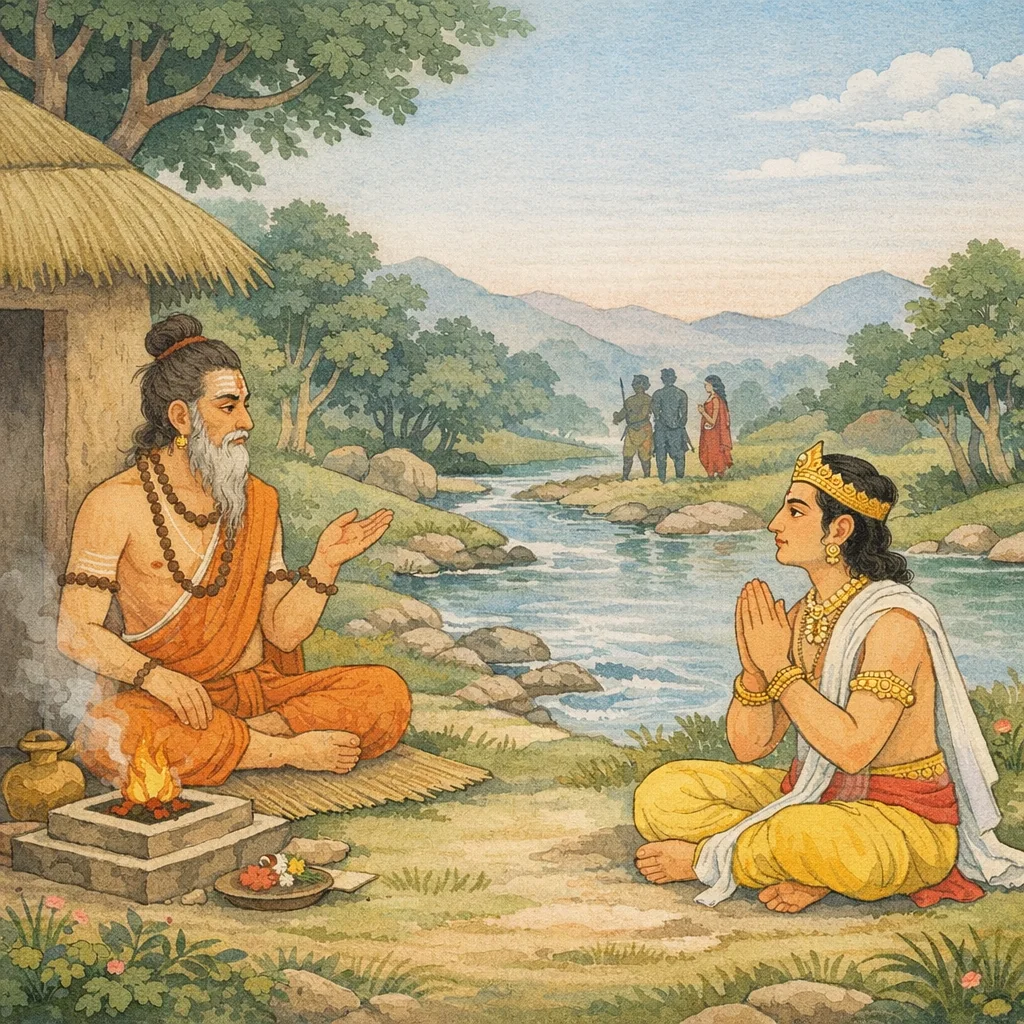
Chapter Arc: वनवास के दुःख से दबे युधिष्ठिर के सामने महर्षि मार्कण्डेय रामोपाख्यान का सार खींचकर रखते हैं—‘मा शुचः’—और राम के अद्भुत तेज व धैर्य को स्मरण करा कर आश्वासन का द्वार खोलते हैं। → मार्कण्डेय युधिष्ठिर के शोक को क्षत्रिय-धर्म के प्रतिकूल ठहराते हैं: तुम दीप्त-निर्णय होकर भी विषाद क्यों करते हो? वे तुलना करते हैं—राम के कष्ट के सामने तुम्हारा कष्ट ‘परमाणु’ भी नहीं; और तुम्हारे पास तो ऐसे सहायक हैं जो इन्द्र सहित देव-सेना को भी जीत सकें। → उदाहरण का शिखर: ‘असहायेन रामेण’—राम ने स्वजातीय सहायक के बिना भी सीता को पुनः प्राप्त किया और दशग्रीव रावण का वध किया; फिर प्रश्न की तरह चोट—ऐसे सहायकों (भीम, अर्जुन आदि) के होते हुए तुम क्यों टूटते हो? → मार्कण्डेय निष्कर्ष देते हैं—कुरुश्रेष्ठ, भरतर्षभ, महात्मा पुरुष शोक नहीं करते; धैर्य, पुरुषार्थ और धर्म-निष्ठा ही तुम्हारा आभूषण है। वैशम्पायन बताते हैं कि इस उपदेश से युधिष्ठिर का दुःख हल्का होता है और वे पुनः संवाद के लिए तैयार होते हैं। → आश्वस्त युधिष्ठिर आगे फिर क्या पूछते हैं—यह संकेत देकर अध्याय संवाद को अगले प्रसंग की ओर मोड़ देता है।
Shlokas
Verse 1
हि >> आय न [हुक है 2 आम 7 द्विनवत्यधिकद्विशततमो< ध्याय: मार्कण्डेयजीके द्वारा राजा युधिष्ठिरको आश्वासन मार्कण्डेय उवाच एवमेतन्महाबाहो रामेणामिततेजसा । प्राप्त व्यसनमत्युग्रं वनवासकृतं पुरा,मार्कण्डेयजी कहते हैं--महाबाहु युधिष्ठटिर! इस प्रकार प्राचीन कालमें अमिततेजस्वी श्रीरामने वनवासजनित अत्यन्त भंयकर कष्ट भोगा था
Mārkaṇḍeya said: “So indeed it was, O mighty-armed (Yudhiṣṭhira). In ancient times, Rāma of immeasurable splendor also encountered a most dreadful calamity—one brought about by life in exile in the forest.”
Verse 2
मा शुचः पुरुषव्याप्र क्षत्रियोडसि परंतप । बाहुवीयश्िते मार्गे वर्तसे दीप्तनिर्णये,शत्रुओंको संताप देनेवाले पुरुषसिंह! तुम क्षत्रिय हो, शोक न करो। तुम तो उस मार्गपर चल रहे हो, जहाँ केवल अपने बाहुबलका भरोसा किया जाता है तथा जहाँ अभीष्ट फलकी प्राप्ति प्रत्यक्ष एवं असंदिग्ध है
Mārkaṇḍeya said: “Do not grieve, tiger among men; you are a kṣatriya, a scorcher of foes. You are walking the path that rests upon the strength of one’s own arms—a course whose intended result is clear and decisive.”
Verse 3
नहि ते वृजिनं किंचिद् वर्तते परमण्वपि । अस्मिन् मार्गे निषीदेयु: सेन्द्रा अपि सुरसुरा:,श्रीरामके कष्टके सामने तुम्हारा कष्ट अणुमात्र भी नहीं है। इन्द्रसहित देवता तथा असुर भी इस क्षत्रियधर्मके मार्गपर चले हैं
Markandeya said: “No trace of wrongdoing or fault belongs to you—not even as much as an atom. On this very path (of duty) even the gods and the asuras, Indra included, have had to sit down in exhaustion and submit to its demands.”
Verse 4
संहत्य निहतो वृत्रो मरुद्भिर्वज़पाणिना । नमुचिश्रैव दुर्धर्षो दीर्घजिह्वा च राक्षसी,वज्रपाणि इन्द्रने मरुदूगणोंके साथ मिलकर वृत्रासुर, दुर्धर्ष वीर नमुचि तथा दीर्घ॑जिद्ना राक्षमीका वध किया था
Mārkaṇḍeya said: ‘Joining forces, Indra—wielder of the thunderbolt—together with the Maruts, slew Vṛtra; and likewise he struck down the formidable Namuci and the rākṣasī Dīrghajihvā.’ The verse recalls how coordinated divine action, guided by rightful purpose, overcomes forces that threaten cosmic order.
Verse 5
सहायवति सर्वार्था: संतिष्ठन्तीह सर्वश: । कि नु तस्याजितं संख्ये यस्य भ्राता धनंजय:,जो सहायकोंसे सम्पन्न है, उसके सभी मनोरथ इस जगत्में सब प्रकारसे सिद्ध होते हैं। फिर जिसे धनंजय-जैसा भाई मिला हो, वह युद्धमें किसे परास्त नहीं कर सकता
Markandeya said: “In this world, when one is supported by capable allies, every purpose can be brought to fulfillment in every way. How could anything remain unconquered in battle for a man whose brother is Dhanañjaya (Arjuna)?”
Verse 6
अयं च बलिनां श्रेष्ठो भीमो भीमपराक्रम: । युवानौ च महेष्वासौ वीरौ माद्रवतीसुतौ,ये भयंकर पराक्रमी भीमसेन बलवानोंमें श्रेष्ठ हैं। माद्रीनन्दन वीर नकुल-सहदेव भी महान् धनुर्धर तथा नवयुवक हैं
Mārkaṇḍeya said: “And here is Bhīma, the foremost among the strong, whose prowess is truly formidable. And these two youthful heroes, Nakula and Sahadeva—the sons of Mādrī—are great bowmen as well, endowed with fearsome valor.”
Verse 7
एभि: सहायै: कस्मात् त्वं विषीदसि परंतप । य इमे वज्िण: सेनां जयेयु: समरुद्गणाम्,परंतप! इन सब सहायकोंके होते हुए तुम विषाद क्यों करते हो? तुम्हारे ये भाई तो मरुदगणोंसहित वज्रधारी इन्द्रकी सेनाको भी परास्त कर सकते हैं
Mārkaṇḍeya said: “With such allies at your side, why do you sink into despair, O scorcher of foes? These very brothers of yours could defeat even the army of Indra the thunderbolt-bearer, though it be accompanied by the hosts of the Maruts. Therefore, do not abandon courage; trust in the strength of righteous companionship and steadfast resolve.”
Verse 8
त्वमप्येभिम॑हिष्वासै: सहायैर्देवरूपिभि: । विजेष्यसे रणे सर्वानमित्रान् भरतर्षभ,भरतश्रेष्ठ! तुम भी इन देवस्वरूप महाधनुर्धर भाइयोंकी सहायतासे अपने समस्त शत्रुओंको युद्धमें जीत लोगे
Mārkaṇḍeya said: “You too, O bull among the Bharatas, with the help of these mighty bowmen—companions who are like the gods in form and prowess—will conquer all your enemies in battle.” The statement strengthens resolve while framing victory as grounded in righteous alliance and disciplined effort rather than mere aggression.
Verse 9
इतश्व त्वमिमां पश्य सैन्धवेन दुरात्मना । बलिना वीर्यमत्तेन हृतामेभिमहात्मभि:,इधर इस द्रौपदीकी ओर देखो। अपने पराक्रमके मदसे उन्मत्त महाबली दुरात्मा सिन्धुराजने इसे हर लिया था; परंतु तुम्हारे इन महात्मा बन्धुओंने अत्यन्त दुष्कर कर्म करके ट्रुपदकुमारी कृष्णाको पुनः लौटा लिया तथा राजा जयद्रथको भी परास्त करके अपने अधीन कर लिया था
“And now, look here at this: she was carried off by the wicked Saindhava—mighty and intoxicated with his own prowess. Yet these high-souled ones (your kinsmen) accomplished an exceedingly difficult deed: they brought Kṛṣṇā, the daughter of Drupada, back again, and having defeated King Jayadratha, they even brought him under their control.”
Verse 10
आनीतां द्रौपदी कृष्णां कृत्वा कर्म सुदुष्करम् | जयद्रथं च राजानं विजितं वशमागतम्,इधर इस द्रौपदीकी ओर देखो। अपने पराक्रमके मदसे उन्मत्त महाबली दुरात्मा सिन्धुराजने इसे हर लिया था; परंतु तुम्हारे इन महात्मा बन्धुओंने अत्यन्त दुष्कर कर्म करके ट्रुपदकुमारी कृष्णाको पुनः लौटा लिया तथा राजा जयद्रथको भी परास्त करके अपने अधीन कर लिया था
Mārkaṇḍeya said: “Having accomplished a most difficult deed, they brought back Draupadī—Kṛṣṇā—and even King Jayadratha, once defeated, was made to come under their control. Look here toward this very Draupadī: intoxicated by his own prowess, the wicked and mighty lord of Sindhu had carried her off; yet your noble brothers, performing an exceedingly hard feat, restored the daughter of Drupada and subdued Jayadratha.”
Verse 11
असहायेन रामेण वैदेही पुनराहृता | हत्वा संख्ये दशग्रीवं राक्षसं भीमविक्रमम्,श्रीरामचन्द्रजीके तो कोई स्वजातीय सहायक भी नहीं थे, तो भी उन्होंने युद्धमें भंयकर पराक्रमी राक्षस दशाननका वध करके विदेहनन्दिनी सीताको पुनः लौटा लिया
Mārkaṇḍeya said: Though Rāma stood without the support of his own kin, he slew in battle the ten-necked rākṣasa—terrible in valor—and thus brought back Vaidehī (Sītā). The episode upholds the ethic that steadfast courage and righteous resolve can restore what is lost, even when one lacks familiar allies.
Verse 12
यस्य शाखामृगा मित्राण्यूक्षा: कालमुखास्तथा | जात्यन्तरगता राजजन्नेतद् बुद्धानुचिन्तय,राजन! दूसरी योनिके प्राणी वानर, लंगूर तथा रीछ ही उनके मित्र अथवा सहायक थे (किंतु तुम्हारे तो चार शूरवीर भाई सहायक हैं)। इस बातपर बुद्धिद्वारा विचार करो
Mārkaṇḍeya said: “O king, for him the monkeys of the forest—together with bears and the dark-faced ones—were friends and helpers, beings belonging to another species. Reflect on this with clear understanding: he had allies from other births, whereas you have your own four heroic brothers as support.”
Verse 13
तस्मात् स त्वं कुरुश्रेष्ठ मा शुचो भरतर्षभ । त्वद्विधा हि महात्मानो न शोचन्ति परंतप,अतः कुरुश्रेष्ठ॒ भरतभूषण! तुम शोक न करो। क्योंकि परंतप! तुम्हारे-जैसे महात्मा पुरुष कभी शोक नहीं करते
Therefore, O best of the Kurus, do not grieve, O bull among the Bharatas. For great-souled men like you, O scorcher of foes, do not give way to sorrow. Markandeya urges the king to uphold the steadiness and moral courage expected of a righteous ruler, meeting adversity without inner collapse.
Verse 14
वैशम्पायन उवाच एवमाश्चासितो राजा मार्कण्डेयेन धीमता । त्यक्त्वा दुःखमदीनात्मा पुनरेप्येनमब्रवीत्,वैशम्पायनजी कहते हैं-जनमेजय! परम बुद्धिमान् मार्कण्डेय मुनिके इस प्रकार आश्वासन देनेपर उदार हृदयवाले राजा युधिष्ठिर दुःख-शोक छोड़कर पुनः उनसे इस प्रकार बोले
Vaiśampāyana said: Thus reassured by the wise sage Mārkaṇḍeya, the king—steadfast in spirit—cast aside his grief; and once again he addressed him. The passage highlights how counsel from a discerning teacher restores inner composure, enabling a ruler to return to inquiry and right action rather than remain overwhelmed by sorrow.
Verse 292
इति श्रीमहाभारते वनपर्वणि रामोपाख्यानपर्वणि युधिष्ठिरा श्वासने द्विनवत्यधिकद्विशततमो<5ध्याय:
Thus, in the Śrī Mahābhārata, within the Vana Parva, in the section known as the Rāmopākhyāna, in the episode ‘Consolation of Yudhiṣṭhira’, ends the two-hundred-and-ninety-second chapter.
Frequently Asked Questions
Karṇa must choose between preserving self-protection tied to future duty and maintaining an uncompromised reputation for vowed generosity when confronted by an authoritative petitioner with hidden intent.
The chapter frames virtue as tested under asymmetry: ethical action may require negotiation (vinimaya) to align vows with responsibility, acknowledging that outcomes remain contingent despite sincere intention.
Rather than a formal phalaśruti, the narrative supplies interpretive commentary through consequences and reactions: Karṇa’s act is publicly valorized, yet it also reconfigures strategic possibilities, illustrating how moral capital and worldly risk interlock.