Adhyaya 92
प्रतीप–गङ्गा संवादः तथा शंतनु–गङ्गा विवाहशर्तिः (Pratīpa and Gaṅgā; Śaṃtanu’s marriage condition)
Upa-parva: Śaṃtanu–Gaṅgā Upākhyāna (Pratīpa-Śaṃtanu Genealogy Episode)
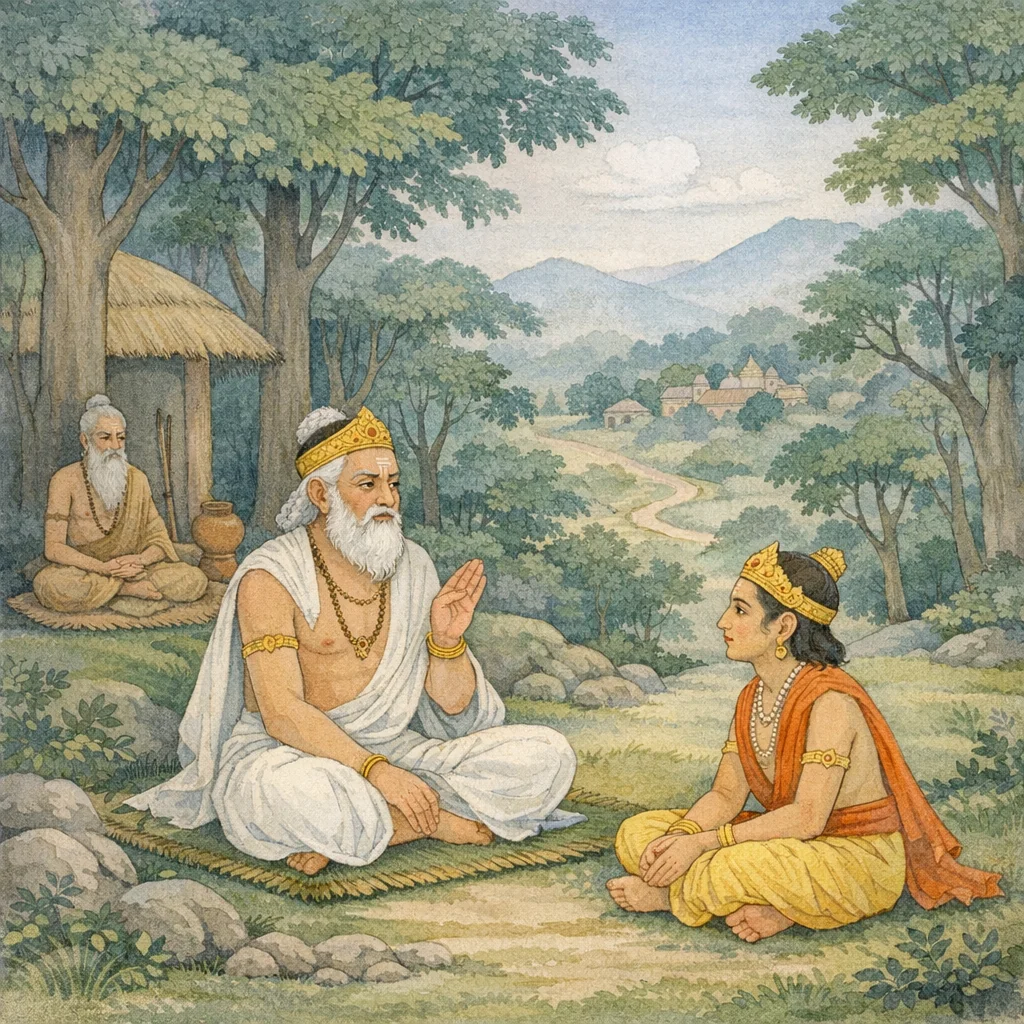
Vaiśaṃpāyana narrates that King Pratīpa, devoted to the welfare of beings, performs japa on the Gaṅgā’s bank when a radiant woman (Gaṅgā in human form) approaches and sits upon his right thigh. Pratīpa inquires about her desire; she proposes union, but he refuses on dharmic grounds (she is not a lawful partner in that context) and redirects the encounter into a lineage framework: because she chose the right thigh (associated here with descendants and daughters-in-law), he asks her to become his son’s wife for the sake of progeny. She consents, praises the Bhārata line, and states that Pratīpa’s son should not scrutinize her actions. Pratīpa undertakes austerities; Mahābhiṣa is born, later known as Śaṃtanu. Pratīpa instructs the grown Śaṃtanu that a divine woman will come desiring him and must not be questioned or opposed. Śaṃtanu becomes king, hunts along the Gaṅgā, meets the luminous woman, and requests marriage; she agrees under a strict condition: he must not restrain or criticize anything she does, else she will leave. They live together; eight sons are born, and each is immersed in the Gaṅgā. Śaṃtanu, bound by the vow, remains silent until the eighth birth, when grief compels him to protest. Gaṅgā reveals her identity and explains the eight sons are Vasus released from Vasiṣṭha’s curse; her promise was to liberate them at birth. Because Śaṃtanu broke the condition, she departs, leaving the surviving child—Gaṅgādattā—entrusted to the king.
Chapter Arc: ययाति के उत्तर-यायात संवाद में राजा-ऋषि की वाणी उठती है—ब्रह्मचारी और गृहस्थ के लिए कौन-सा आचरण ‘सिद्धि’ तक ले जाता है? → अष्टक जिज्ञासा को तीक्ष्ण करता है—मुनि कितने प्रकार के, मौन कितने प्रकार के, और वन-ग्राम का उलट-फेर कैसे होता है। ययाति क्रमशः आश्रम-धर्म, दान, अतिथि-सत्कार, और वैराग्य की कसौटियाँ रखता है; साधना का मार्ग सरल नहीं, क्योंकि विषय-रात्रि मन को जीतती है। → ययाति का निर्णायक उपदेश—जब मुनि निर्द्वन्द्व होकर मौन में स्थित होता है, तब इस लोक को जीतकर परलोक-विजय करता है; और जब संन्यासी ‘गोवत्’ केवल मुख से आहार ले, परिग्रह-त्याग में स्थिर हो, तब समस्त लोक उसके लिए अमृतत्व की ओर उन्मुख हो जाता है। → गृहस्थ-उपनिषद् के रूप में ‘धर्मागत धन’ से यज्ञ, दान, और अतिथि-भोजन का विधान स्थापित होता है; साथ ही वनप्रस्थ-संन्यास की चरम साधना का मानदण्ड भी स्पष्ट होता है—इच्छा-नियमन, रात्रि-विजय, और मौन-स्थित प्रज्ञा।
Shlokas
Verse 1
अपड-४#-रू- - “बल' शब्दका अर्थ यहाँ कौआ किया गया है; जो 'स्थौल्यसामर्थ्यसैन्येषु बलं ना काकसीरिणो:' अमरकोषके इस वाक्यसे समर्थित होता है। एकनवतितमो<ध्याय: ययाति और अष्टकका आश्रमधर्मसम्बन्धी संवाद अद्टक उवाच चरन् गृहस्थ: कथमेति धर्मान् कथं भिक्षु: कथमाचार्यकर्मा | वानप्रस्थ: सत्पथे संनिविष्टो बहून्यस्मिन् सम्प्रति वेदयन्ति,अष्टकने पूछा--महाराज! वेदज्ञ विद्वान् इस धर्मके अन्तर्गत बहुत-से कर्मोंको उत्तम लोकोंकी प्राप्तिका द्वार बताते हैं; अतः मैं पूछता हूँ, आचार्यकी सेवा करनेवाला ब्रह्मचारी, गृहस्थ, सन्मार्गमें स्थित वानप्रस्थ और संन्यासी किस प्रकार धर्माचरण करके उत्तम लोकमें जाता है?
Aṣṭaka said: “How does a householder, living in the world, attain the fruits of dharma? How does a mendicant? How does the student who serves his teacher? And how does the forest-dweller, firmly established on the good path? In this matter, the learned expound many duties as gateways to higher worlds—therefore I ask: by what manner of righteous conduct do these different ways of life lead one to the blessed realms?”
Verse 2
ययातिरुवाच आहूताध्यायी गुरुकर्मस्वचोद्य: पूर्वोत्थायी चरमं चोपशायी । मृदुर्दान्तो धृतिमानप्रमत्तः स्वाध्यायशील: सिध्यति ब्रह्म॒चारी,ययाति बोले--शिष्यको उचित है कि गुरुके बुलानेपर उसके समीप जाकर पढ़े। गुरुकी सेवामें बिना कहे लगा रहे, रातमें गुरुजीके सो जानेके बाद सोये और सबेरे उनसे पहले ही उठ जाय। वह मृदुल (विनम्र), जितेन्द्रिय, धैर्यवानू, सावधान और स्वाध्यायशील हो। इस नियमसे रहनेवाला ब्रह्मचारी सिद्धिको पाता है
Yayāti said: A student should approach and study when summoned by the teacher. Without needing to be told, he should remain engaged in the teacher’s duties; he should lie down only after the teacher has gone to rest, and rise earlier than him. Gentle and humble, self-controlled, steadfast, vigilant, and devoted to self-study—such a brahmacārin attains success through this disciplined way of life.
Verse 3
धर्मागतं प्राप्प धनं यजेत दद्यात् सदैवातिथीन् भोजयेच्च । अनाददानश्च परैरदत्तं सैषा गृहस्थोपनिषत् पुराणी,गृहस्थ पुरुष न्यायसे प्राप्त हुए धनको पाकर उससे यज्ञ करे, दान दे और सदा अतिथियोंको भोजन करावे। दूसरोंकी वस्तु उनके दिये बिना ग्रहण नहीं करे। यह गृहस्थ- धर्मका प्राचीन एवं रहस्यमय स्वरूप है
Aṣṭaka said: “Having obtained wealth that has come by righteous means, a householder should perform sacrifice, give in charity, and continually feed guests. He should not take what belongs to others unless it has been given. This is the ancient, inner teaching (a ‘secret doctrine’) of the householder’s way of life.”
Verse 4
स्ववीर्यजीवी वृजिनान्निवृत्तो दाता परेभ्यो न परोपतापी । तादृड़मुनि: सिद्धिमुपैति मुख्यां वसन्नरण्ये नियताहारचेष्ट:,वानप्रस्थ मुनि वनमें निवास करे। आहार और विहारको नियमित रखे। अपने ही पराक्रम एवं परिश्रमसे जीवन-निर्वाह करे, पापसे दूर रहे। दूसरोंको दान दे और किसीको कष्ट न पहुँचावे। ऐसा मुनि परम मोक्षको प्राप्त होता है
A forest-dwelling sage should live by his own strength and honest effort, turning away from sin. He should be generous to others and never cause them pain. Living in the wilderness with disciplined food and conduct, such a muni attains the highest fulfillment—supreme liberation.
Verse 5
अशिल्पजीवी गुणवांश्वैव नित्यं जितेन्द्रिय: सर्वतो विप्रयुक्त: । अनोकशायी लघुरल्पप्रचार- श्वरन् देशानेकचर: स भिक्षु:,संन्यासी शिल्पकलासे जीवन-निर्वाह न करे। शम, दम आदि श्रेष्ठ गुणोंसे सम्पन्न हो। सदा अपनी इन्द्रियोंको काबूमें रखे। सबसे अलग रहे। गृहस्थके घरमें न सोये। परिग्रहका भार न लेकर अपनेको हलका रखे। थोड़ा थोड़ा चले। अकेला ही अनेक स्थानोंमें भ्रमण करता रहे। ऐसा संन्यासी ही वास्तवमें भिक्षु कहलानेयोग्य है
Aṣṭaka said: “A true mendicant should not earn his living by crafts or trades. He should be continually endowed with noble qualities, with his senses conquered, and detached from all sides. He should not sleep in householders’ homes, should remain ‘light’ by carrying no burden of possessions, should move about only a little at a time, and should wander alone through many regions. Such a renunciant alone is truly fit to be called a bhikṣu.”
Verse 6
रात्र्या यया वाभिजिताक्ष लोका भवन्ति कामाभिजिता: सुखाश्न । तामेव रात्रि प्रयतेत विद्वा- नरण्यसंस्थो भवितुं यतात्मा,जिस समय रूप, रस आदि विषय तुच्छ प्रतीत होने लगें, इच्छानुसार जीत लिये जायाँ तथा उनके परित्यागमें ही सुख जान पड़े, उसी समय विद्वान् पुरुष मनको वशमें करके समस्त संग्रहोंका त्याग कर वनवासी होनेका प्रयत्न करे
Aṣṭaka said: When that ‘night’ arrives in which a person’s senses are conquered and the world’s objects lose their power—when desires are overcome and one finds contentment in simplicity—then the wise should, with disciplined mind, strive at that very time to renounce all hoarding and become a forest-dweller, living in self-control.
Verse 7
दशैव पूर्वान् दश चापरांश्व ज्ञातीनथात्मानमथैकविंशम् । अरण्यवासी सुकृते दधाति विमुच्यारण्ये स्वशरीरधातून्,जो वनवासी मुनि वनमें ही अपने पंचभूतात्मक शरीरका परित्याग करता है, वह दस पीढ़ी पूर्वके॑ और दस पीढ़ी बादके जाति-भाइयोंको तथा इक्कीसवें अपनेको भी पुण्यलोकोंमें पहुँचा देता है
Aṭaka said: “One who lives in the forest and, in that very wilderness, relinquishes the bodily elements that make up his frame, establishes merit of such power that it uplifts ten generations of ancestors and ten generations of descendants among his kin—and as the twenty-first, himself as well—conveying them to realms of blessed reward.”
Verse 8
अष्टक उवाच कतिस्विदेव मुनयः कति मौनानि चाप्युत । भवन्तीति तदाचक्ष्व श्रोतुमिच्छामहे वयम्,अष्टकने पूछा--राजन्! मुनि कितने हैं? और मौन कितने प्रकारके हैं? यह बताइये, हम इसे सुनना चाहते हैं
Aṣṭaka said: “O King, how many kinds of sages are there, and how many forms of silence as well? Please explain this to us— we wish to hear and understand.”
Verse 9
ययातिरुवाच अरण्ये वसतो यस्य ग्रामो भवति पृष्ठत: । ग्रामे वा वसतो5रण्यं स मुनि: स्थाज्जनाधिप,ययातिने कहा--जनेश्वर! अरण्यमें निवास करते समय जिसके लिये ग्राम पीछे होता है और ग्राममें वास करते समय जिसके लिये अरण्य पीछे होता है, वह मुनि कहलाता है
Yayāti said: “O lord of men, that person is truly a sage for whom, even while living in the forest, the village remains ‘behind’ (i.e., not clung to), and even while living in the village, the forest remains ‘behind’ (i.e., inner detachment is unchanged).” The teaching emphasizes that sainthood is measured not by location but by freedom from dependence on either wilderness austerity or worldly settlement.
Verse 10
अद्टक उवाच कथंस्विद् वसतो<रण्ये ग्रामो भवति पृष्ठतः । ग्रामे वा वसतो5रण्यं कथं भवति पृष्ठतः,अष्टकने पूछा--अरण्यमें निवास करनेवालेके लिये ग्राम और ग्राममें निवास करनेवालेके लिये अरण्य पीछे कैसे है?
Aṣṭaka said: “How is it that for one dwelling in the forest, the village is said to be ‘behind’? And for one dwelling in a village, how is the forest said to be ‘behind’?” Thus Aṣṭaka asks about the deeper meaning of ‘behind’—whether it refers to physical direction or to what one leaves behind through one’s chosen way of life.
Verse 11
ययातिरुवाच न ग्राम्यमुपयुञज्जीत य आरण्यो मुनिर्भवेत् । तथास्य वसतो<रण्ये ग्रामो भवति पृष्ठत:,ययातिने कहा--जो मुनि वनमें निवास करता है और गाँवोंमें प्राप्त होनेवाली वस्तुओंका उपयोग नहीं करता, इस प्रकार वनमें निवास करनेवाले उस (वानप्रस्थ) मुनिके लिये गाँव पीछे समझा जाता है
Yayāti said: A sage who has become a forest-dweller should not make use of village-bred comforts and provisions. When he lives in the wilderness in this way, the village is, for him, as though left behind—kept at his back, no longer his support or center of life.
Verse 12
अनग्निरनिकेतश्चाप्यगोत्रचरणो मुनि: । कौपीनाच्छादनं यावत् तावदिच्छेच्च चीवरम्,जो अग्नि और गृहको त्याग चुका है, जिसका गोत्र और चरण (वेदकी शाखा एवं जाति)-से भी सम्बन्ध नहीं रह गया है, जो मौन रहता है और उतने ही वस्त्रकी इच्छा रखता है जितनेसे लंगोटी और ओढ़नेका काम चल जाय; इसी प्रकार जितनेसे प्राणोंकी रक्षा हो सके उतना ही भोजन चाहता है; इस नियमसे गाँवमें निवास करनेवाले उस (संन्यासी) मुनिके लिये अरण्य पीछे समझा जाता है
Aṣṭaka said: “A sage who has abandoned the sacred fire and household life, who no longer identifies with lineage (gotra) or Vedic school (caraṇa), and who lives in silence—such a renunciant should desire only so much clothing as suffices for a loincloth and a simple covering. Living by this rule of strict minimal need, even if he stays near a village, he is to be regarded as one who truly dwells in the forest—because his ‘forest’ is his inner detachment rather than a mere location.”
Verse 13
यावत् प्राणाभिसंधानं तावदिच्छेच्च भोजनम् । तथास्य वसतो ग्रामे5रण्यं भवति पृष्ठत:,जो अग्नि और गृहको त्याग चुका है, जिसका गोत्र और चरण (वेदकी शाखा एवं जाति)-से भी सम्बन्ध नहीं रह गया है, जो मौन रहता है और उतने ही वस्त्रकी इच्छा रखता है जितनेसे लंगोटी और ओढ़नेका काम चल जाय; इसी प्रकार जितनेसे प्राणोंकी रक्षा हो सके उतना ही भोजन चाहता है; इस नियमसे गाँवमें निवास करनेवाले उस (संन्यासी) मुनिके लिये अरण्य पीछे समझा जाता है
Āṣṭaka said: “Let him desire only so much food as suffices to sustain life. For such a sage, even while dwelling in a village under this discipline of restraint, the village becomes as though the wilderness were behind him—he remains inwardly detached, living like one in the forest.”
Verse 14
यस्तु कामान् परित्यज्य त्यक्तकर्मा जितेन्द्रिय: । आतिषछेच्च मुनिर्मेनं स लोके सिद्धिमाप्रुयात्,जो मुनि सम्पूर्ण कामनाओंको छोड़कर कर्मोंको त्याग चुका है और इन्द्रिय-संयमपूर्वक सदा मौनमें स्थित है, ऐसा संन्यासी लोकमें परम सिद्धिको प्राप्त होता है
He who abandons desires, has renounced action (as personal enterprise), and has mastered his senses—such a sage, firmly established in silence and inner restraint, attains spiritual perfection in this world. The verse upholds renunciation and self-control as the ethical path to the highest accomplishment.
Verse 15
धौतदन्तं कृत्तनखं सदा स्नातमलंकृतम् । असितं सितकर्माणं कस्तमर्हति नार्चितुम्,जिसके दाँत शुद्ध और साफ हैं, जिसके नख (और केश) कटे हुए हैं, जो सदा स्नान करता है तथा यम-नियमादिसे अलंकृत (है, उन्हें धारण किये हुए) है, शीतोष्णको सहनेसे जिसका शरीर श्याम पड़ गया है, जिसके आचरण उत्तम हैं--ऐसा संनन््यासी किसके लिये पूजनीय नहीं है?
Aṭaka said: “Whose teeth are cleansed, whose nails are trimmed, who is ever bathed and disciplined—adorned with the observances of self-restraint; whose body has grown dark from enduring heat and cold; whose conduct is pure—what renunciant of such a kind would not deserve reverence?”
Verse 16
तपसा कर्शित: क्षाम: क्षीणमांसास्थिशोणित: । स च लोकमिमं जित्वा लोक॑ विजयते परम्,तपस्यासे मांस, हड्डी तथा रक्तके क्षीण हो जानेपर जिसका शरीर कृश और दुर्बल हो गया है, वह (वानप्रस्थ) मुनि इस लोकको जीतकर परलोकपर भी विजय पाता है
Āṣṭaka said: “Worn down by austerity—emaciated, with flesh, bones, and blood diminished—the ascetic who has thus mastered himself conquers this world, and having conquered it, attains victory in the higher world as well.”
Verse 17
यदा भवति निर्दन्द्धो मुनिर्मॉनं समास्थित: । अथ लोकमिमं जित्वा लोक॑ विजयते परम्,जब ([वानप्रस्थ) मुनि सुख-दुःख, राग-द्वेष आदि द्वद्धोंसे रहित एवं भलीभाँति मौनावलम्बी हो जाता है, तब वह इस लोकको जीतकर परलोकपर भी विजय पाता है
When a sage becomes free from the pairs of opposites—pleasure and pain, attraction and aversion—and firmly abides in disciplined silence, then, having conquered this world (through self-mastery), he also attains victory in the higher world. The verse presents inner conquest as the ethical foundation for spiritual success beyond death.
Verse 18
आस्येन तु यदाहारं गोवन्मृगयते मुनि: । अथास्य लोक: सर्वो5यं सो5मृतत्वाय कल्पते,जब संन्यासी मुनि गाय-बैलोंकी तरह मुखसे ही आहार ग्रहण करता है, हाथ आदिका भी सहारा नहीं लेता, तब उसके द्वारा ये सब लोक जीत लिये गये समझे जाते हैं और वह मोक्षकी प्राप्तिके लिये समर्थ समझा जाता है
Verse 91
इति श्रीमहाभारते आदिपर्वणि सम्भवपर्वणि उत्तरयायाते एकनवतितमो<ध्याय: ।। ९१३१ || इस प्रकार श्रीमह्या भारत आदिपव॑के अन्तर्गत यम्थवपर्वमें उत्तरयायातविषयक इक्यानबेवाँ अध्याय पूरा हुआ
Thus ends the ninety-first chapter on the theme of “Uttarayāyāta” within the Sambhava section of the Ādi Parva of the Śrī Mahābhārata. (This is a concluding colophon marking the completion of the chapter rather than a spoken narrative verse.)
Frequently Asked Questions
Śaṃtanu faces a dharma-saṅkaṭa between fidelity to a sworn condition (non-interference with Gaṅgā) and the immediate ethical impulse to prevent harm to his children; the narrative tests the cost and limits of vow-keeping.
Promises function as moral architecture in public life: restraint, role-bound conduct, and long-horizon consequence are emphasized, while the chapter also frames extraordinary suffering through a karmic-cosmic explanation (śāpa leading to mokṣa).
No explicit phalaśruti is stated in these verses; the meta-function is etiological—explaining Devavrata’s prehistory and the Vasus’ release—thereby situating later ethical decisions within inherited constraints.