Adhyaya 169
Parāśara’s Birth, Vasiṣṭha as Guardian, and the Bhṛgu–Kṣatriya Violence Etiology (Ādi-parva 169)
Upa-parva: Āstīka Parva (Embedded Genealogical–Rṣi Lineage Cycle)
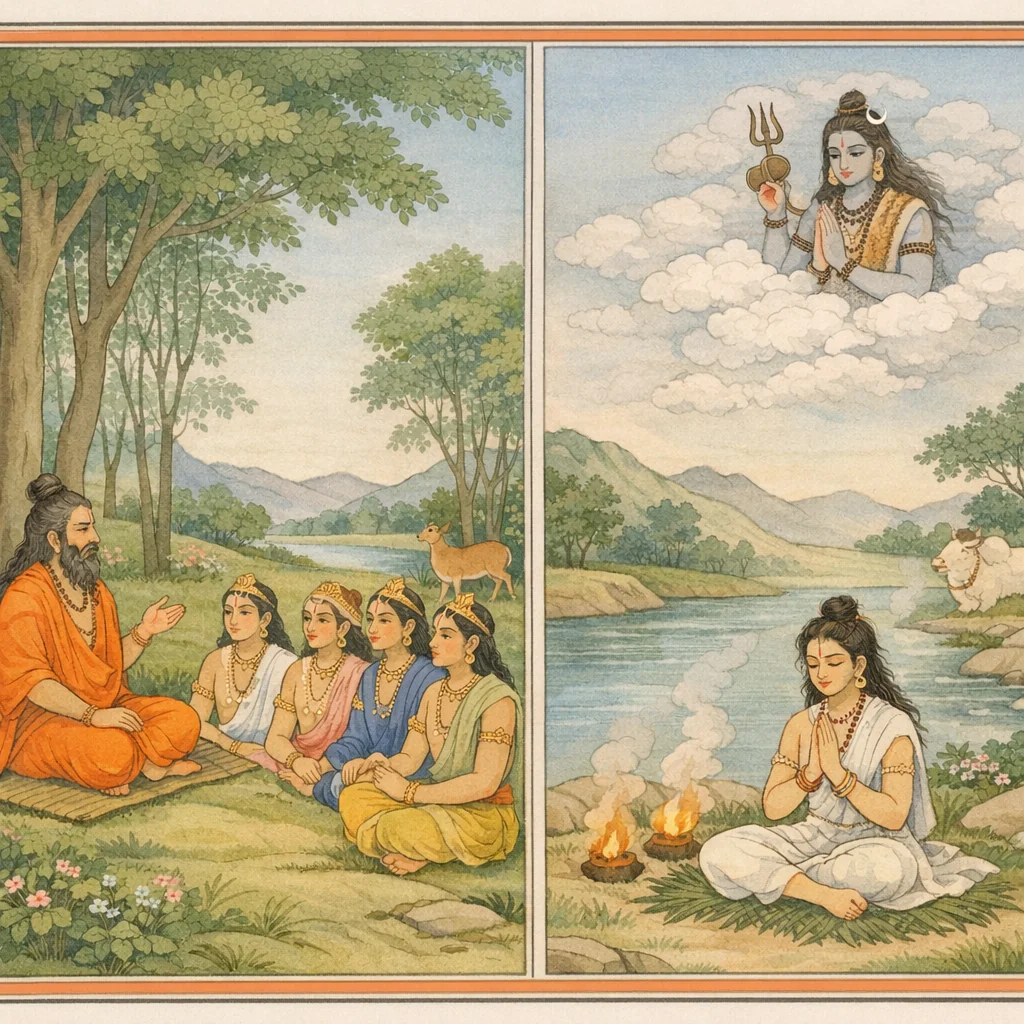
A Gandharva narrator reports that Adṛśyantī gives birth to a son described as a lineage-sustainer, likened to Śakti. The sage (Vasiṣṭha) personally performs the child’s saṃskāras and functions as the immediate guardian. The child, later known in the world as Parāśara (linked to the circumstance of establishing Vasiṣṭha), regards Vasiṣṭha as father from birth and addresses him as “tāta” in the mother’s presence. Adṛśyantī, tearful, clarifies that the biological father has been killed and consumed by a rākṣasa in the forest; Vasiṣṭha is presented as an honored elder connected to the paternal line rather than the father himself. Upon hearing this, Parāśara becomes grief-stricken and forms an intent oriented toward large-scale destruction. Vasiṣṭha restrains him by introducing an illustrative historical account: King Kṛtavīrya’s era and the subsequent financial crisis in his lineage prompt kings to seek wealth from the Bhṛgus. Some Bhṛgus hide wealth or distribute it to others out of fear; when buried wealth is discovered, enraged Kṣatriyas kill the Bhṛgus, extending violence even toward the unborn. The Bhṛgu women flee to Himavat; one woman conceals a radiant embryo in her thigh, from which the child bursts forth with solar brilliance, blinding the aggressors. The blinded Kṣatriyas seek refuge and request restoration of sight and release from wrongdoing, framing the episode as a cautionary template about escalation, refuge, and the moral cost of collective violence.
Chapter Arc: वन में छिपकर निवास करते पाण्डवों के पास महातपस्वी व्यास का आगमन होता है; उनके आते ही पाण्डव आदरपूर्वक उठकर अगवानी करते हैं और कथा के द्वार खुलते हैं। → व्यास द्रौपदी के पूर्वजन्म का वृत्तान्त सुनाते हैं—एक रूपवती कन्या अपने ही पूर्वकर्मों के कारण ‘दुर्भाग्य’ से ग्रस्त होकर योग्य पति नहीं पाती; भीतर-भीतर उसकी आकांक्षा और पीड़ा तप में बदलती जाती है। → कन्या उग्र तप से शंकर को प्रसन्न करती है; वरदाता शिव प्रकट होकर वर माँगने को कहते हैं, और वह एक ही वर—‘पति’—की याचना करती है। → व्यास इस पूर्वजन्म-कथा के माध्यम से द्रौपदी के असाधारण वैवाहिक भाग्य (और उसके पीछे कर्म-तप-दैव के संयोग) का संकेत देते हैं; कथा सुनाकर वे पाण्डवों और कुन्ती से विदा लेते हैं। → द्रौपदी के वरदान/भाग्य का आगे का निष्कर्ष—यह वर कैसे अनेक रूप लेता है और वर्तमान जीवन में कैसे फलित होता है—अगले प्रसंग की ओर पाठक को खींचता है।
Shlokas
Verse 1
ऑपन-माज बक। डे अष्ट षष्ट्यांधिकशततमोब& ध्याय: व्यासजीका पाण्डवोंको द्रौपदीके पूर्वजन्मका वृत्तान्त सुनाना वैशम्पायन उवाच वसत्सु तेषु प्रच्छन्न॑ पाण्डवेषु महात्मसु । आजगामाथ तानू द्र॒ष्ट व्यास: सत्यवतीसुत:,वैशम्पायनजी कहते हैं--जनमेजय! महात्मा पाण्डव जब गुप्तरूपसे वहाँ निवास कर रहे थे, उसी समय सत्यवतीनन्दन व्यासजी उनसे मिलनेके लिये वहाँ आये
Vaiśampāyana said: While those great-souled Pāṇḍavas were living there in concealment, Vyāsa, the son of Satyavatī, came to see them. The episode underscores the ethical necessity of prudence and secrecy in times of peril, and the guiding role of a wise elder who arrives to counsel and reveal what is needed for dharma’s protection.
Verse 2
तमागतमभिप्रेक्ष्य प्रत्युदूगम्य परंतपा: । प्रणिपत्याभिवाद्यैनं तस्थु: प्राउचलयस्तदा,उन्हें आया देख शत्रुसंतापन पाण्डवोंने आगे बढ़कर उनकी अगवानी की और प्रणामपूर्वक उनका अभिवादन करके वे सब उनके आगे हाथ जोड़कर खड़े हो गये। कुन्तीपुत्रोंद्वारा गुप्तरूपसे पूजित हो मुनिवर व्यासने उन सबको आज्ञा देकर बिठाया और जब वे बैठ गये, तब उनसे प्रसन्नतापूर्वक इस प्रकार पूछा--
Vaiśampāyana said: Seeing him arrive, the Pandavas—scorchers of their foes—went forward to receive him. Bowing down and offering respectful salutations, they then stood before him with folded hands. (Thereafter, the sage Vyāsa, honored discreetly by Kuntī’s sons, bade them be seated; and when they had sat, he questioned them with a pleased and gracious mind.)
Verse 3
समनुज्ञाप्य तान् सर्वानासीनान् मुनिरब्रवीत् । प्रच्छन्न॑ पूजित: पार्थ: प्रीतिपूर्वमिदं वच:,उन्हें आया देख शत्रुसंतापन पाण्डवोंने आगे बढ़कर उनकी अगवानी की और प्रणामपूर्वक उनका अभिवादन करके वे सब उनके आगे हाथ जोड़कर खड़े हो गये। कुन्तीपुत्रोंद्वारा गुप्तरूपसे पूजित हो मुनिवर व्यासने उन सबको आज्ञा देकर बिठाया और जब वे बैठ गये, तब उनसे प्रसन्नतापूर्वक इस प्रकार पूछा--
Vaiśampāyana said: Having granted leave to them all and having them seated, the sage spoke. When Pārtha had been honored discreetly, the sage—pleased at heart—addressed them with affectionate words, as if to inquire after their welfare and intentions in a manner befitting dharma and courtesy.
Verse 4
अपि धर्मेण वर्तेध्वं शास्त्रेण च परंतपा: । अपि विप्रेषु पूजा वः पूजार्हेषु न हीयते,'शत्रुओंको संतप्त करनेवाले वीरो! तुमलोग शास्त्रकी आज्ञा और धर्मके अनुसार चलते हो न? पूजनीय ब्राह्मणोंकी पूजा करनेमें तो तुम्हारी ओरसे कभी भूल नहीं होती?'
Vaiśaṃpāyana said: “O heroes who scorch the foe, do you indeed conduct yourselves in accordance with dharma and the injunctions of the śāstras? And is your reverent honoring of the brāhmaṇas—those worthy of worship—never found wanting?”
Verse 5
अथ धर्मार्थवद् वाक््यमुक्त्वा स भगवानृषि: । विचित्राश्न कथास्तास्ता: पुनरेवेदमब्रवीत्,तदनन्तर महर्षि भगवान् व्यासने उनसे धर्म और अर्थयुक्त बातें कहीं। फिर विचित्र- विचित्र कथाएँ सुनाकर वे पुनः उनसे इस प्रकार बोले
After speaking words rich in dharma and practical good sense, that blessed sage then related various wondrous tales; and thereafter he addressed them again as follows.
Verse 6
व्यास उवाच आसीत् तपोवने काचिदृषे: कन्या महात्मन: । विलग्नमध्या सुश्रोणी सुभ्रू: सर्वगुणान्विता,व्यासजीने कहा--पहलेकी बात है, तपोवनमें किसी महात्मा ऋषिकी कोई कन्या रहती थी, जिसकी कटि कृश तथा नितम्ब और भौंहें सुन्दर थीं। वह कन्या समस्त सदगुणोंसे सम्पन्न थी
Vyāsa said: In a forest hermitage devoted to austerities there once lived the daughter of a great-souled sage. Slender-waisted, with graceful hips and beautiful brows, she was endowed with every noble quality. The verse sets a moral frame: true excellence is presented as a harmony of inner virtue and disciplined life, not merely outward beauty.
Verse 7
कर्मभि: स्वकृतै: सा तु दुर्भगा समपद्यत । नाध्यगच्छत् पतिं सा तु कन्या रूपवती सती,परंतु अपने ही किये हुए कर्मोंके कारण वह कन्या दुर्भाग्यके वश हो गयी, इसलिये वह रूपवती और सदाचारिणी होनेपर भी कोई पति न पा सकी
Vyāsa said: By the force of her own deeds, she fell into misfortune; therefore, though she was a beautiful maiden and of virtuous conduct, she could not obtain a husband. The passage underscores the ethical idea that one’s present condition is shaped by one’s own past actions, even when outward merits are present.
Verse 8
ततस्तप्तुमथारेभे पत्यर्थमसुखा ततः । तोषयामास तपसा सा किलोग्रेण शंकरम्,तब पतिके लिये दुःखी होकर उसने तपस्या प्रारम्भ की और कहते हैं उग्र तपस्याके द्वारा उसने भगवान् शंकरको प्रसन्न कर लिया
Then, distressed at being without a husband and desiring one, she began to practice austerities. By that severe penance, it is said, she pleased Śaṅkara (Śiva).
Verse 9
तस्या: स भगवांस्तुष्टस्तामुवाच यशस्विनीम् । वरं वरय भद्रें ते वरदो5स्मीति शड्कर:,उसपर संतुष्ट हो भगवान् शंकरने उस यशस्विनी कन्यासे कहा--'शुभे! तुम्हारा कल्याण हो। तुम कोई वर माँगो। मैं तुम्हें वर देनेके लिये आया हूँ"
Pleased with her, the Blessed Lord Śaṅkara addressed that illustrious maiden: “Auspicious one, may good befall you. Choose a boon; I am here as the giver of boons.”
Verse 10
अथेश्वरमुवाचेदमात्मन: सा वचो हितम् । पतिं सर्वगुणोपेतमिच्छामीति पुनः पुनः,तब उसने भगवान् शंकरसे अपने लिये हितकर वचन कहा--'प्रभो! मैं सर्वगुणसम्पन्न पति चाहती हूँ।” इस वाक्यको उसने बार-बार दुहराया
Then she addressed the Lord with words meant for her own welfare: “O Master, I desire a husband endowed with every virtue.” She repeated this request again and again, showing steadfast resolve in her prayer.
Verse 11
तामथ प्रत्युवाचेदमीशानो वदतां वर: । पज्च ते पतयो भद्रे भविष्यन्तीति भारता:,तब वक्ताओंमें श्रेष्ठ भगवान् शिवने उससे कहा--“भद्रे! तुम्हारे पाँच भरतवंशी पति होंगे!
Then Īśāna (Lord Śiva), the foremost among speakers, replied to her: “O auspicious lady, you shall have five husbands—heroes of the Bhārata lineage.”
Verse 12
एवमुक्ता ततः कन्या देवं वरदमब्रवीत् । एकमिच्छाम्यहं देव त्वत्प्रसादात् पतिं प्रभो,उनके ऐसा कहनेपर वह कन्या उन वरदायक देवता भगवान् शिवसे इस प्रकार बोली -- देव! प्रभो! मैं आपकी कृपासे एक ही पति चाहती हूँ
When she had been addressed in this manner, the maiden spoke to the boon-giving deity: “O God, O Lord—by your grace I desire only one husband.” In the ethical frame of the narrative, her request underscores a wish for singular marital commitment and a clear, undivided household dharma, even when divine boons could permit extraordinary outcomes.
Verse 13
पुनरेवाब्रवीद् देव इदं वचनमुत्तमम् पज्चकृत्वस्त्वया हाक्तः पतिं देहीत्यहं पुनः,तब भगवानने पुनः उससे यह उत्तम बात कही--“भद्रे! तुमने मुझसे पाँच बार कहा है कि मुझे पति दीजिये
Then the divine one again spoke these excellent words: “O auspicious lady, you have said to me five times, ‘Grant me a husband.’ Therefore I speak once more.” The passage underscores the moral weight of repeated, deliberate speech—especially a request made with insistence—implying that words, once firmly reiterated, shape the course of one’s destiny and the response of higher powers.
Verse 14
देहमन्यं गतायास्ते यथोक्तं तद् भविष्यति । द्रुपदस्य कुले जज्ञे सा कन्या देवरूपिणी,“अतः दूसरा शरीर धारण करनेपर तुम्हें जैसा मैंने कहा है, वह वरदान प्राप्त होगा।' वही देवरूपिणी कन्या राजा ट्रुपदके कुलमें उत्पन्न हुई है
Vyāsa said: “When you take on another body, what I have declared will indeed come to pass for you as a boon. That maiden of divine beauty has been born in the lineage of King Drupada.”
Verse 15
निर्दिष्टा भवतां पत्नी कृष्णा पार्षत्यनिन्दिता । पाञउ्चालनगरे तस्मान्निवसध्व॑ महाबला: । सुखिनस्तामनुप्राप्य भविष्यथ न संशय:,वह महाराज पृषतकी पौत्री सती-साध्वी कृष्णा तुमलोगोंकी पत्नी नियत की गयी है; अतः महाबली वीरो! अब तुम पंचालनगरमें जाकर रहो। द्रौपदीको पाकर तुम सब लोग सुखी होओगे, इसमें संशय नहीं है
Vyāsa said: “Kṛṣṇā (Draupadī), the blameless daughter of Pārṣata (Drupada), has been appointed as your wife. Therefore, O mighty heroes, go and dwell in the city of the Pāñcālas. Having obtained her, you will live in happiness—of this there is no doubt.”
Verse 16
एवमुक््त्वा महाभाग: पाण्डवान् स पितामह: । पार्थानामन्त्र्य कुन्तीं च प्रातिष्ठत महातपा:,महान् सौभाग्यशाली और महातपस्वी पितामह व्यासजी पाण्डवोंसे ऐसा कहकर उन सबसे और कुन्तीसे विदा ले वहाँसे चल दिये
Having spoken thus, the illustrious grandsire—Veda-Vyāsa, great in austerity—took leave of the Pāṇḍavas and also of Kuntī. After bidding the sons of Pṛthā farewell, he departed from that place, marking the close of his counsel and the respectful observance of proper leave-taking.
Verse 167
इस प्रकार श्रीमहाभारत आदिपव॑के अन्तर्गत चैत्ररथपर्वमें पंचालदेशकी यात्राविषयक एक सौ सरसठवाँ अध्याय पूरा हुआ
Thus ends the one hundred and sixty-ninth chapter of the Caitraratha section within the Ādi Parva of the Śrī Mahābhārata, dealing with the journey to the land of Pañcāla. This closing colophon marks the completion of that narrative unit and signals a transition to what follows.
Verse 168
इति श्रीमहाभारते आदिपर्वणि चैत्ररथपर्वणि द्रौपदीजन्मान्तरकथने अष्टषष्ट्यधिकशततमो< ध्याय:,इस प्रकार श्रीमहाभारत आदिपरवव॑के अन्तर्गत चैत्ररथपर्वमें द्रौपदीजन्मान्तरकथनविषयक एक सौ अड़सठवाँ अध्याय पूरा हुआ
Thus, in the Śrī Mahābhārata, within the Ādi Parva, in the Caitraratha section, the chapter dealing with the account of Draupadī’s former birth comes to an end—this being the one hundred and sixty-eighth chapter. (This is a concluding colophon marking the completion of the chapter rather than continuing the narrative.)
Frequently Asked Questions
Parāśara’s grief-driven impulse toward indiscriminate destruction is set against the dharmic requirement of restraint and discernment; the chapter frames retaliation as ethically hazardous when it expands beyond accountable agents.
The narrative argues that lineage trauma does not justify generalized harm; wise counsel should redirect anger into disciplined judgment, and social repair may require refuge-seeking, confession, and measured reconciliation rather than escalation.
No explicit phalaśruti is stated in the provided verses; the meta-function is etiological and instructional—using embedded history to guide ethical decision-making and to contextualize later lineage outcomes within karmic continuity.