Adhyaya 168
Saudāsa (Kalmāṣapāda) Released by Vasiṣṭha; Return to Ayodhyā; Birth of Aśmaka (अश्मक-जन्म)
Upa-parva: Ikṣvāku-Vaṃśa Upākhyāna (Saudāsa–Vasiṣṭha Episode)
The chapter reports, through an embedded speaker sequence, a crisis-resolution and restoration narrative. Vasiṣṭha reassures a frightened interlocutor that the immediate presence is not a rākṣasa threat, identifying it as King Kalmāṣapāda. As the afflicted figure rushes forward, Vasiṣṭha halts him by ascetic force and ritually purifies him with mantra-consecrated water, releasing the king from a severe rākṣasa condition that had persisted for twelve years. Regaining consciousness, the king offers formal reverence and presents himself as Saudāsa, requesting instruction and expressing willingness to serve the sage. Vasiṣṭha directs him to return and govern, explicitly enjoining non-disparagement of brāhmaṇas; the king assents and pledges ongoing honor toward dvijas. Seeking to discharge obligations to the Ikṣvāku line, Saudāsa requests assistance in obtaining progeny; Vasiṣṭha consents. The narrative then shifts to the king’s return to renowned Ayodhyā, describing civic rejoicing and auspicious reception imagery. By royal command, the queen attends to Vasiṣṭha; in due season the sage unites with her by a “divine procedure,” resulting in conception. After the pregnancy is long-retained and not delivered naturally, the queen breaks her own abdomen with a stone, and in the twelfth year Aśmaka is born, later associated with the establishment of Potana.
Chapter Arc: एक ब्राह्मण के निवास में सुरक्षित रहकर भी कुन्ती का मन अब स्थिर नहीं—स्वयंवर की गंध और भविष्य की पुकार उसे पुत्रों से निर्णय पूछने को बाध्य करती है। → कुन्ती युधिष्ठिर से कहती है कि वे नगर, वन-उपवन, और भिक्षा-जीवन सब देख चुके; अब पंचाल की ओर चलना उचित होगा। वह पंचाल की समृद्धि और राजा यज्ञसेन (द्रुपद) की ‘ब्रह्मण्य’ की कीर्ति का उल्लेख कर यात्रा को धर्मसम्मत और व्यवहार्य ठहराती है। → युधिष्ठिर का उत्तर—‘माँ, आपका मत ही हमारे लिए परम हित है; पर मैं अनुजों की इच्छा भी जानना चाहता हूँ’—यात्रा को केवल आदेश नहीं, सामूहिक संकल्प बनाता है। → कुन्ती उस ब्राह्मण को आमंत्रित/विदा कर, पुत्रों सहित द्रुपद की रम्य नगरी (पंचाल) की ओर प्रस्थान करती है। → पंचाल की ओर यह प्रस्थान स्वयंवर-भूमि के द्वार पर ले जाता है—जहाँ द्रौपदी और भाग्य का निर्णायक मोड़ प्रतीक्षा कर रहा है।
Shlokas
Verse 1
/ (दाक्षिणात्य अधिक पाठके ३८ श्लोक मिलाकर कुल ९४ श्लोक हैं) सप्तषष्ट्यधिेकशततमोड<ध्याय: कुन्तीकी अपने पुत्रोंसे पूछकर पंचालदेशमें जानेकी तैयारी वैशम्पायन उवाच एतच्छुत्वा तु कौन्तेया ब्राह्मणात् संशितव्रतात् । सर्वे चास्वस्थमनसो बभूवुस्ते महाबला:,वैशम्पायनजी कहते हैं--जनमेजय! कठोर व्रत-वाले उस ब्राह्मणसे यह सुनकर उन सब महाबली कुन्तीपुत्रोंका मन विचलित हो गया
Vaiśampāyana said: Hearing this from that brāhmaṇa of disciplined vows, all those mighty sons of Kuntī became inwardly unsettled, their minds no longer at ease—an ethical tremor that signals how grave counsel or ominous news can shake even the strong when dharma and safety are at stake.
Verse 2
ततः कुन्ती सुतान् दृष्टवा सर्वास्तद्गतचेतस: । युधिष्िरमुवाचेदं वचनं सत्यवादिनी,तब सत्यवादिनी कुन्तीने अपने सभी पुत्रोंका मन उस स्वयंवरकी ओर आकृष्ट देख युधिष्ठिसे इस प्रकार कहा
Then Kuntī, seeing that all her sons’ minds were drawn toward that svayaṃvara, spoke these words to Yudhiṣṭhira—she who was steadfast in truth. The verse frames Kuntī as a moral voice: she observes their inward inclination and addresses the eldest with a truth-bound, duty-conscious intent.
Verse 3
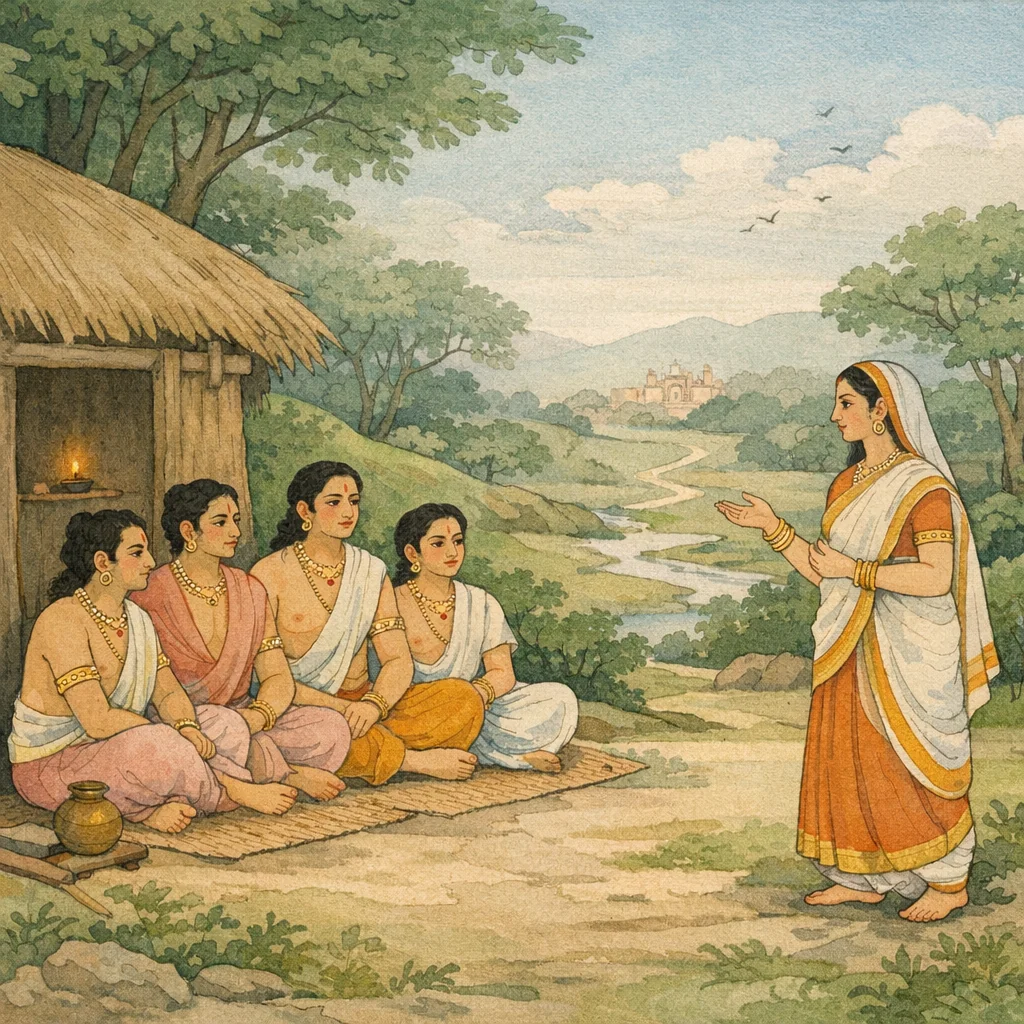
कुन्त्युवाच चिररात्रोषिता: स्मेह ब्राह्मणस्य निवेशने । रममाणा: पुरे रम्ये लब्धभैक्षा महात्मन:,कुन्ती बोली--बेटा! हमलोग यहाँ इन महात्मा ब्राह्मणके घरमें बहुत दिनोंसे रह रहे हैं। इस रमणीय नगरमें हम आनन्दपूर्वक घूमे-फिरे और यहाँ हमें (पर्याप्त) भिक्षा भी उपलब्ध हुई
Kuntī said: “My son, we have been staying here for a long time in the dwelling of this noble brāhmaṇa. In this delightful city we have lived at ease, moving about happily, and we have also obtained sufficient alms.”
Verse 4
यानीह रमणीयानि वनान्युपवनानि च । सर्वाणि तानि दृष्टानि पुन: पुनररिंदम,शत्रुदमन! यहाँ जो रमणीय वन और उपवन हैं, उन सबको हमने बार-बार देख लिया
Vaiśampāyana said: “O subduer of foes, O tamer of enemies—here we have seen again and again all those delightful forests and pleasure-groves.”
Verse 5
पुनर्द्र्ठैं हि तानीह प्रीणयन्ति न नस्तथा । भैक्षंच न तथा वीर लभ्यते कुरुनन्दन,वीर! यदि उन्हींको हम फिर देखनेके लिये जाये तो वे हमें उतनी प्रसन्नता नहीं दे सकते। कुरुनन्दन! अब भिक्षा भी यहाँ हमें पहले-जैसी नहीं मिल रही है
For even if we were to see them again here, they would not gladden us as before. And, O hero—O delight of the Kurus—alms too are no longer obtained here in the same way as earlier. The verse underscores the waning of former supports: both emotional solace from familiar ties and the practical means of sustenance have diminished, pressing the characters toward a harder, more austere course.
Verse 6
ते वयं साधु पञठ्चालान् गच्छाम यदि मन्यसे । अपूर्वदर्शनं वीर रमणीयं भविष्यति,यदि तुम्हारी राय हो तो अब हमलोग सुखपूर्वक पंचालदेशमें चलें। वीर! उस देशको हमने पहले कभी नहीं देखा है, इसलिये वह बड़ा रमणीय प्रतीत होगा
Vaiśaṃpāyana said: “If you agree, let us proceed peacefully to the land of the Pañcālas. O hero, since we have never seen that country before, it will surely appear fresh and delightful to us.”
Verse 7
सुभिक्षाश्वैव पञज्चाला: श्रूयन्ते शत्रुकर्शन । यज्ञसेनश्व राजासौ ब्रह्माण्य इति शुश्रुम,शत्रुनाशन! सुना जाता है, पंचालदेशमें बड़ा सुकाल है (इसलिये भिक्षा बहुतायतसे मिलती है)। हमने यह भी सुना है कि राजा यज्ञसेन ब्राह्मणोंके बड़े भक्त हैं
Vaiśampāyana said: “O subduer of foes, it is reported that the Pañcālas are enjoying abundant prosperity and plenty of alms. We have also heard that their king, Yajñasena, is devoted to the Brāhmaṇas.” The statement frames Pañcāla as a land of material well-being and religious hospitality, suggesting that righteous patronage and respect for sacred learning create social stability and support for those who live by dharma.
Verse 8
एकत्र चिरवासश्ष क्षमो न च मतो मम । ते तत्र साधु गच्छामो यदि त्वं पुत्र मन््यसे,बेटा! एक स्थानपर बहुत दिनोंतक रहना मुझे उचित नहीं जान पड़ता; अतः यदि तुम ठीक समझो तो हमलोग सुखपूर्वक वहाँ चलें
Vaiśampāyana said: “To remain in one place for a long time does not seem proper to me, nor do I approve of it. Therefore, if you think it right, my son, let us go from here to that place in a fitting and peaceful manner.”
Verse 9
युधिषछ्िर उवाच भवत्या यन्मतं कार्य तदस्माकं परं हितम् । अनुजांस्तु न जानामि गच्छेयुनेति वा पुन:,युधिष्ठिरने कहा--माँ! आप जिस कार्यको ठीक समझती हैं, वह हमारे लिये परम हितकर है; परंतु अपने छोटे भाइयोंके सम्बन्धमें मैं नहीं जानता कि वे जानेके लिये उद्यत हैं या नहीं
Verse 10
वैशम्पायन उवाच ततः कुन्ती भीमसेनमर्जुनं यमजौ तथा । उवाच गमन ते च तथेत्येवाब्रुवंस्तदा,वैशम्पायनजी कहते हैं--जनमेजय! तब कुन्तीने भीमसेन, अर्जुन, नकुल और सहदेवसे भी चलनेके विषयमें पूछा। उन सबने भी “तथास्तु” कहकर स्वीकृति दे दी
Vaiśampāyana said: Then Kuntī spoke to Bhīmasena, Arjuna, and the twin brothers as well. She asked them about setting out, and at that time they all assented, replying, “So be it.” The scene underscores disciplined consent and family solidarity—action is taken not by impulse but through consultation and willing agreement.
Verse 11
तत आमन्त्र्य तं विप्र॑ं कुन्ती राजन् सुतैः सह । प्रतस्थे नगरीं रम्यां ट्रपदस्य महात्मन:,राजन्! तब कुन्तीने उन ब्राह्मणदेवतासे विदा लेकर अपने पुत्रोंके साथ महात्मा द्रपदकी रमणीय नगरीकी ओर जानेकी तैयारी की
Vaiśampāyana said: Then, having taken leave of that brāhmaṇa, Kuntī—O king—set out together with her sons toward the delightful city of the great-souled Drupada. The passage underscores courteous conduct toward a brāhmaṇa and the careful, dharma-aligned transition from one refuge to the next in the Pandavas’ journey.
Verse 166
इस प्रकार श्रीमहाभारत आदिपर्वके अन्तर्गत चैत्ररथपर्वमें द्रौपदीप्रादु्भावविषयक एक सौ छाछठवाँ अध्याय पूरा हुआ
Thus ends the one hundred and sixty-sixth chapter of the Draupadī’s manifestation narrative, within the Caitraratha section of the Ādi Parva of the Śrī Mahābhārata. The colophon marks the completion of this unit, signaling a transition in the story and inviting the listener to reflect on how extraordinary births and divine interventions are framed as meaningful within the epic’s moral order (dharma).
Verse 167
इति श्रीमहाभारते आदिपर्वणि चैत्ररथपर्वणि पञ्चालदेशयात्रायां सप्तषष्ट्यधिकशततमो<ध्याय:
Thus ends the one hundred and sixty-seventh chapter (i.e., the 167th), in the Ādi Parva of the Śrī Mahābhārata—within the Caitraratha section—concerning the journey to the land of the Pañcālas. This is a concluding colophon marking the close of the chapter and situating it within the larger narrative structure.
Frequently Asked Questions
The king’s reintegration into lawful rule after a destructive affliction raises a dharma-choice: whether restored power will remain disciplined by reverence toward brāhmaṇa authority and ethical governance, or relapse into disregard that endangers social order.
Restoration is framed as both ritual and ethical: purification and restraint must accompany power, and gratitude toward those who uphold sacred knowledge is presented as a stabilizing principle for kingship and community welfare.
No explicit phalaśruti is stated here; the chapter’s implied meta-lesson is genealogical and ethical—how dharma-aligned restoration and lineage continuity are narrated as conditions for historical stability within itihāsa.