Adhyaya 144
एकचक्रानिवासप्रस्तावः | Ekacakrā Sojourn—Vyāsa’s Consolation and Directive
Upa-parva: Pāṇḍava-Vanavāsa-Praveśa (Disguised Settlement near Ekacakrā)
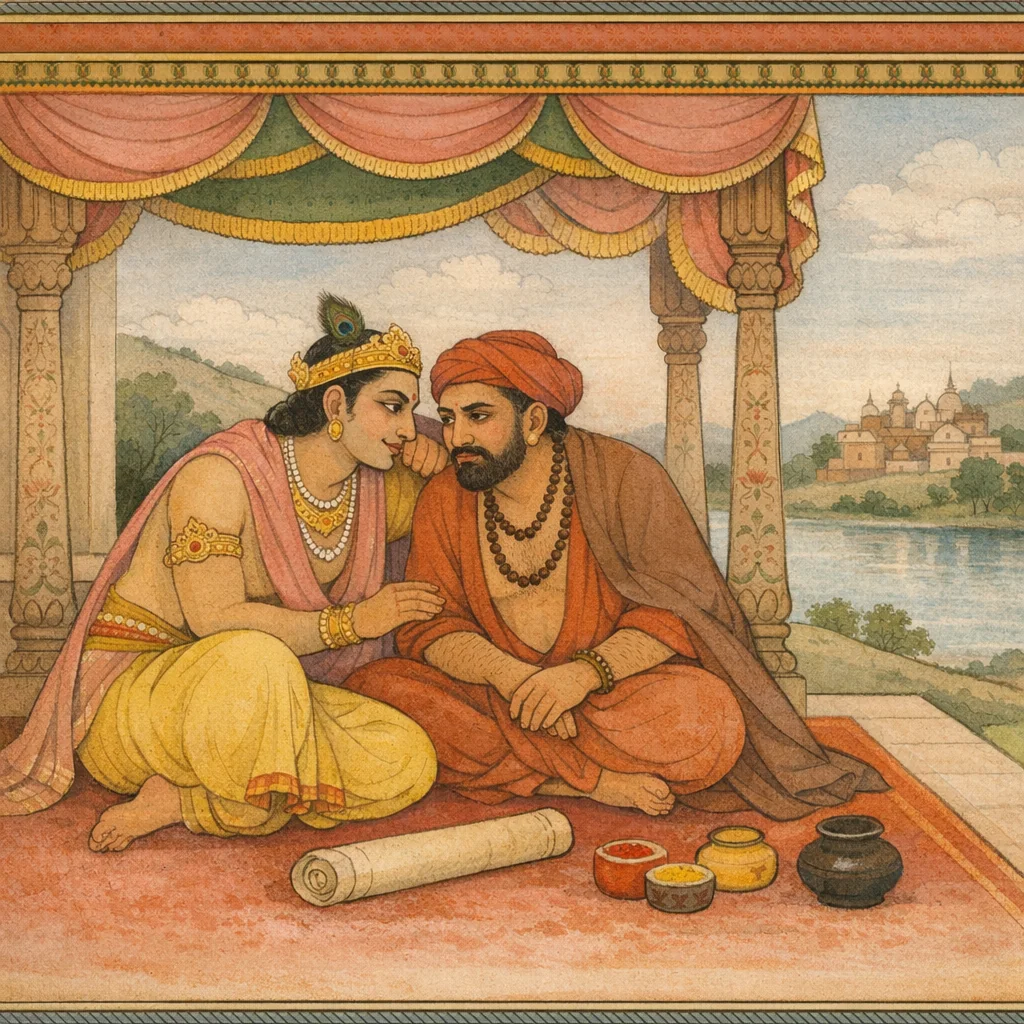
Vaiśaṃpāyana describes the Pāṇḍavas moving rapidly through forests and regions, observing scenic tracts and lakes while maintaining operational concealment. They assume ascetic appearance—matted hair and bark/skin garments—while ensuring Kuntī’s safety, at times carrying her and at times moving with measured pace. They encounter the sage Kṛṣṇa Dvaipāyana Vyāsa, whom they respectfully greet with folded hands. Vyāsa states he already knows, by insight, how they have been exiled through adharma and instructs them not to grieve, framing their hardship as ultimately conducive to future well-being. He expresses special affection for them and offers a practical plan: a nearby city that is pleasant and free from disease where they should live in concealment, awaiting his return. He then reassures Kuntī with a forward-looking prognosis: Yudhiṣṭhira will rule the earth by dharma, supported by Bhīma and Arjuna; the sons of Mādrī will also prosper; and the brothers will perform major royal rites after achieving sovereignty. Having settled them in a brāhmaṇa’s residence, Vyāsa asks them to wait until he returns at the proper time and departs.
Chapter Arc: धृतराष्ट्र के ‘राजधर्म’ के मुखौटे के पीछे दुर्योधन की गुप्त योजना आकार लेती है—पाण्डवों को वारणावत भेजने का बहाना, और भीतर ही भीतर उन्हें मिटाने की तैयारी। → दुर्योधन पुरोचन को एकान्त में बुलाकर दाहक-गृह (लाक्षागृह) की योजना सौंपता है: ऐसा भवन बनाना जो बाहर से अतिथि-सत्कार और वैभव का प्रतीक लगे, पर भीतर से अग्नि का जाल हो। वह आदेश देता है कि सन, राल, घी, तेल, चर्बी, लाक्षा और अन्य आग पकड़ने वाले द्रव्यों को दीवारों में लेपकर, लकड़ी आदि सामग्री को इस तरह छिपाकर रखा जाए कि पाण्डव या नगरवासी किसी परीक्षा में भी ‘आग्नेय’ स्वरूप न पहचान सकें। → आदेश का सबसे भयावह शिखर: ‘ऐसा करो कि वारणावत के लोग भी न जानें’—गुप्तता को ही सफलता का धर्म बना दिया जाता है। पुरोचन को निर्देश मिलता है कि पाण्डवों के लिए दिव्य आसन, शय्या, सवारी आदि की भव्य व्यवस्था भी हो, ताकि वे निश्चिन्त होकर उसी घर में रहें—यानी सौंदर्य को ही मृत्यु का आवरण बनाया जाए। → पुरोचन ‘तथेति’ प्रतिज्ञा कर दुर्योधन की इच्छा के अनुसार शीघ्रगामी रथ/गाड़ी से वारणावत प्रस्थान करता है और राजपुत्र के कथनानुसार निर्माण-व्यवस्था में लग जाता है। → लाक्षागृह का जाल बिछ चुका है—अब प्रश्न यह है कि पाण्डव उस चमकते आमंत्रण के भीतर छिपी अग्नि को पहचानेंगे या नहीं।
Shlokas
Verse 1
(दाक्षिणात्य अधिक पाठके २ श्लोक मिलाकर कुल २१ श्लोक हैं) ऑपन-सा बक। डे त्रिचत्वारिशर्दाधिकशततमो< ध्याय: दुर्योधनके आदेशसे पुरोचनका वारणावत नगरमें लाक्षागृह बनाना वैशम्पायन उवाच एवमुक्तेषु राज्ञा तु पाण्डुपुत्रेषु भारत | दुर्योधन: परं हर्षमगच्छत् स दुरात्मवान्,वैशम्पायनजी कहते हैं--जनमेजय! जब राजा धूृतराष्ट्रने पाण्डवोंको इस प्रकार वारणावत जानेकी आज्ञा दे दी, तब दुरात्मा दुर्योधनको बड़ी प्रसन्नता हुई। भरतश्रेष्ठ) उसने अपने मन्त्री पुरोचनको एकान्तमें बुलाया और उसका दाहिना हाथ पकड़कर कहा, 'पुरोचन! यह धन-धान्यसे सम्पन्न पृथ्वी जैसे मेरी है, वैसे ही तुम्हारी भी है; अतः तुम्हें इसकी रक्षा करनी चाहिये। मेरा तुमसे बढ़कर दूसरा कोई ऐसा विश्वासपात्र सहायक नहीं है, जिससे मिलकर इतनी गुप्त सलाह कर सकूँ, जैसे तुम्हारे साथ करता हूँ
Vaiśampāyana said: O descendant of Bharata, when the king had thus spoken to the sons of Pāṇḍu, the wicked-minded Duryodhana was filled with great delight. The narrative turns on a morally charged contrast: the king’s public instruction is met by Duryodhana’s private joy, hinting at concealed intent and the ethical corrosion that accompanies envy and the pursuit of power through deceit.
Verse 2
स पुरोचनमेकान्तमानीय भरतर्षभ । गृहीत्वा दक्षिणे पाणौ सचिवं वाक्यमब्रवीत्,वैशम्पायनजी कहते हैं--जनमेजय! जब राजा धूृतराष्ट्रने पाण्डवोंको इस प्रकार वारणावत जानेकी आज्ञा दे दी, तब दुरात्मा दुर्योधनको बड़ी प्रसन्नता हुई। भरतश्रेष्ठ) उसने अपने मन्त्री पुरोचनको एकान्तमें बुलाया और उसका दाहिना हाथ पकड़कर कहा, 'पुरोचन! यह धन-धान्यसे सम्पन्न पृथ्वी जैसे मेरी है, वैसे ही तुम्हारी भी है; अतः तुम्हें इसकी रक्षा करनी चाहिये। मेरा तुमसे बढ़कर दूसरा कोई ऐसा विश्वासपात्र सहायक नहीं है, जिससे मिलकर इतनी गुप्त सलाह कर सकूँ, जैसे तुम्हारे साथ करता हूँ
Vaiśampāyana said: O bull among the Bharatas, having brought Purocana aside in private, he took his minister by the right hand and spoke to him. The gesture of grasping the right hand signals intimate trust and a confidential charge—setting the stage for counsel that will be ethically fraught, where loyalty to a patron is invoked to justify secret action.
Verse 3
ममेयं वसुसम्पूर्णा पुरोचन वसुंधरा । यथेयं मम तद्वत् ते स तां रक्षितुमहसि,वैशम्पायनजी कहते हैं--जनमेजय! जब राजा धूृतराष्ट्रने पाण्डवोंको इस प्रकार वारणावत जानेकी आज्ञा दे दी, तब दुरात्मा दुर्योधनको बड़ी प्रसन्नता हुई। भरतश्रेष्ठ) उसने अपने मन्त्री पुरोचनको एकान्तमें बुलाया और उसका दाहिना हाथ पकड़कर कहा, 'पुरोचन! यह धन-धान्यसे सम्पन्न पृथ्वी जैसे मेरी है, वैसे ही तुम्हारी भी है; अतः तुम्हें इसकी रक्षा करनी चाहिये। मेरा तुमसे बढ़कर दूसरा कोई ऐसा विश्वासपात्र सहायक नहीं है, जिससे मिलकर इतनी गुप्त सलाह कर सकूँ, जैसे तुम्हारे साथ करता हूँ
Vaiśampāyana said: "O Purocana, this earth, rich in wealth and resources, is mine. Just as it is mine, so it is yours as well; therefore you ought to protect it." (In context, this is spoken as a calculated assurance meant to bind Purocana’s loyalty and enlist him for a secret, unethical design against the Pāṇḍavas.)
Verse 4
नहि मे ककश्षिदन्यो5स्ति विश्वासिकतरस्त्वया । सहायो येन संधाय मन्त्रयेयं यथा त्वया,वैशम्पायनजी कहते हैं--जनमेजय! जब राजा धूृतराष्ट्रने पाण्डवोंको इस प्रकार वारणावत जानेकी आज्ञा दे दी, तब दुरात्मा दुर्योधनको बड़ी प्रसन्नता हुई। भरतश्रेष्ठ) उसने अपने मन्त्री पुरोचनको एकान्तमें बुलाया और उसका दाहिना हाथ पकड़कर कहा, 'पुरोचन! यह धन-धान्यसे सम्पन्न पृथ्वी जैसे मेरी है, वैसे ही तुम्हारी भी है; अतः तुम्हें इसकी रक्षा करनी चाहिये। मेरा तुमसे बढ़कर दूसरा कोई ऐसा विश्वासपात्र सहायक नहीं है, जिससे मिलकर इतनी गुप्त सलाह कर सकूँ, जैसे तुम्हारे साथ करता हूँ
Vaiśampāyana said: “Truly, I have no one else more trustworthy than you. There is no other ally with whom I can confer in close confidence and take counsel as I do with you.”
Verse 5
संरक्ष तात मन्त्र च सपत्नांश्व ममोद्धर । निपुणेनाभ्युपायेन यद् ब्रवीमि तथा कुरु,“तात! तुम मेरी इस गुप्त मन्त्रणाकी रक्षा करो--इसे दूसरोंपर प्रकट न होने दो और अच्छे उपायद्वारा मेरे शत्रुओंको उखाड़ फेंको। मैं तुमसे जो कहता हूँ, वही करो
Vaiśampāyana said: “My son, guard this counsel as a secret—do not let it be disclosed to others. And by a skillful stratagem, uproot my rivals. Do exactly as I instruct you.”
Verse 6
ल्ण्ह्वार जा तर के ७ 9 6 | "05 (806 ॥ न टलल अं 228: 2622 का, हीं ! ७.9” | पाण्डवा धृतराष्ट्रेण प्रेषिता वारणावतम् । उत्सवे विहरिष्यन्ति धृतराष्ट्रस्य शासनात्,'पिताजीने पाण्डवोंको वारणावत जानेकी आज्ञा दी है। वे उनके आदेशसे (कुछ दिनोंतक) वहाँ रहकर उत्सवमें भाग लेंगे--मेलेमें घूमे-फिरेंगे
Vaiśaṃpāyana said: The Pāṇḍavas have been sent by Dhṛtarāṣṭra to Vāraṇāvata. In obedience to Dhṛtarāṣṭra’s command, they will stay there for a time and take part in the festivities—moving about and enjoying the public celebration. Beneath the outwardly courteous order lies the court’s political control over the heirs, foreshadowing the ethical tension between royal authority and the safety of the righteous.
Verse 7
स त्वं रासभयुक्तेन स्यन्दनेनाशुगामिना | वारणावतमद्यैव यथा यासि तथा कुरु,“अतः तुम खच्चर जुते हुए शीघ्रगामी रथपर बैठकर आज ही वहाँ पहुँच जाओ, ऐसी चेष्टा करो
Vaiśampāyana said: “So you—mount a swift chariot yoked with mules, and make it so that you reach Vāraṇāvata this very day.” The instruction presses urgency and obedience: the messenger is to act without delay, carrying out the command exactly as intended.
Verse 8
तत्र गत्वा चतुःशालं॑ गृहं परमसंवृतम् | नगरोपान्तमाश्रित्य कारयेथा महाधनम्,“वहाँ जाकर नगरके निकट ही एक ऐसा भवन तैयार कराओ जिसमें चारों ओर कमरे हों तथा जो सब ओरसे सुरक्षित हो। वह भवन बहुत धन खर्च करके सुन्दर-से-सुन्दर बनवाना चाहिये
Vaiśampāyana said: “Go there and have a four-winged house constructed—fully enclosed and strongly secured—situated near the outskirts of the city. Let it be built at great expense, made as splendid as possible.”
Verse 9
शणसर्जरसादीनि यानि द्रव्याणि कानिचित् | आग्नेयान्युत सनन््तीह तानि तत्र प्रदापय,“सन तथा राल आदि, जो कोई भी आग भड़कानेवाले द्रव्य संसारमें हैं, उन सबको उस मकानकी दीवारोंमें लगवाना
Vaiśampāyana said: “Have all such materials as hemp, resinous sap, and whatever other inflammable substances exist here—things that readily feed fire—be applied there (to that structure).” The verse underscores a deliberate, premeditated act of arson, highlighting the ethical collapse involved in using destructive means against unsuspecting persons.
Verse 10
सर्पिस्तैलवसाभिक्षु लाक्षया चाप्यनल्पया । मृत्तिकां मिश्रयित्वा त्वं लेपं कुड्येषु दापय,'घी, तेल, चर्बी तथा बहुत-सी लाह मिट्टीमें मिलवाकर उसीसे दीवारोंको लिपवाना
Vaiśampāyana said: “Mix ghee, oil, and animal fat with a large quantity of lac, and blend it with clay; then have the walls plastered with that coating.” In context, the instruction points to a calculated, covert preparation—using ordinary building work as a cover for a dangerous design—highlighting how technical means can be bent toward unethical ends when guided by malice rather than dharma.
Verse 11
शणं तैलं घृतं चैव जतु दारूणि चैव हि । तस्मिन् वेश्मनि सर्वाणि निक्षिपेथा: समन््ततः,“उस घरके चारों ओर सन, तेल, घी, लाह और लकड़ी आदि सब वस्तुएँ संग्रह करके रखना। अच्छी तरह देखभाल करनेपर भी पाण्डवों तथा दूसरे लोगोंको भी इस बातकी शंका न हो कि यह घर आग भड़कानेवाले पदार्थोंसे बना है, इस तरह पूरी सावधानीके साथ उस राजभवनका निर्माण कराना चाहिये। इस प्रकार महल बन जानेपर जब पाण्डव वहाँ जाये, तब उन्हें तथा सुहृदोंसहित कुन्तीदेवीको भी बड़े आदर-सत्कारके साथ उसीमें रखना
Vaiśampāyana said: “Place all around that residence flax, oil, ghee, lac, and timber—indeed, all such materials.” The instruction is part of a covert, unethical design: to stock the house with highly combustible substances while maintaining outward appearances so that the Pāṇḍavas and others do not suspect the building is meant to be set ablaze. It highlights calculated deceit and the deliberate violation of righteous conduct under the guise of hospitality and royal provision.
Verse 12
यथा च तन्न पश्येरन् परीक्षन्तोडपि पाण्डवा: । आग्नेयमिति तत् कार्यमपि चान्येडपि मानवा:,“उस घरके चारों ओर सन, तेल, घी, लाह और लकड़ी आदि सब वस्तुएँ संग्रह करके रखना। अच्छी तरह देखभाल करनेपर भी पाण्डवों तथा दूसरे लोगोंको भी इस बातकी शंका न हो कि यह घर आग भड़कानेवाले पदार्थोंसे बना है, इस तरह पूरी सावधानीके साथ उस राजभवनका निर्माण कराना चाहिये। इस प्रकार महल बन जानेपर जब पाण्डव वहाँ जाये, तब उन्हें तथा सुहृदोंसहित कुन्तीदेवीको भी बड़े आदर-सत्कारके साथ उसीमें रखना
Vaiśaṃpāyana said: “Arrange matters so that, even if the Pāṇḍavas examine it carefully, they will not perceive it as ‘made for fire’—nor should other people suspect it either. The palace must be constructed with such complete caution.”
Verse 13
वेश्मन्येवं कृते तत्र गत्वा तान् परमार्चितान् | वासयेथा: पाण्डवेयान् कुन्तीं च ससुहृज्जनाम्,“उस घरके चारों ओर सन, तेल, घी, लाह और लकड़ी आदि सब वस्तुएँ संग्रह करके रखना। अच्छी तरह देखभाल करनेपर भी पाण्डवों तथा दूसरे लोगोंको भी इस बातकी शंका न हो कि यह घर आग भड़कानेवाले पदार्थोंसे बना है, इस तरह पूरी सावधानीके साथ उस राजभवनका निर्माण कराना चाहिये। इस प्रकार महल बन जानेपर जब पाण्डव वहाँ जाये, तब उन्हें तथा सुहृदोंसहित कुन्तीदेवीको भी बड़े आदर-सत्कारके साथ उसीमें रखना
Vaiśampāyana said: “When that residence has been constructed in this manner, go there and, after honoring them with the highest respect, lodge the sons of Pāṇḍu there—along with Kuntī and their circle of well-wishing friends.” In context, the instruction is ethically perverse: the outward show of hospitality and reverence is meant to conceal a lethal design, turning ‘honor’ into a tool of deception.
Verse 14
आसनानि च दिव्यानि यानानि शयनानि च । विधातव्यानि पाण्डूनां यथा तुष्येत वै पिता,“वहाँ पाण्डवोंके लिये दिव्य आसन, सवारी और शय्या आदिकी ऐसी (सुन्दर) व्यवस्था कर देना, जिसे सुनकर मेरे पिताजी संतुष्ट हों। जबतक समय बदलनेके साथ ही अपने अभीष्ट कार्यकी सिद्धि न हो जाय, तबतक सब काम इस तरह करना चाहिये कि वारणावत नगरके लोगोंको इसके विषयमें कुछ भी ज्ञात न हो सके
Vaiśampāyana said: “Arrange for the Pāṇḍavas splendid seats, conveyances, and beds—provide everything in such a way that my father will indeed be pleased.”
Verse 15
यथा च तन्न जानन्ति नगरे वारणावते । तथा सर्व विधातव्यं यावत् कालस्य पर्यय:,“वहाँ पाण्डवोंके लिये दिव्य आसन, सवारी और शय्या आदिकी ऐसी (सुन्दर) व्यवस्था कर देना, जिसे सुनकर मेरे पिताजी संतुष्ट हों। जबतक समय बदलनेके साथ ही अपने अभीष्ट कार्यकी सिद्धि न हो जाय, तबतक सब काम इस तरह करना चाहिये कि वारणावत नगरके लोगोंको इसके विषयमें कुछ भी ज्ञात न हो सके
Vaiśampāyana said: “And arrange everything in such a way that the people of the city of Vāraṇāvata do not come to know of it. All measures must be carried out with complete secrecy until the turn of time brings about the accomplishment of the intended plan.”
Verse 16
ज्ञात्वा च तान् सुविश्वस्ताउशयानानकुतो भयान् । अग्निस्त्वया ततो देयो द्वारतस्तस्य वेश्मन:,“जब तुम्हें यह भलीभाँति ज्ञात हो जाय कि पाण्डवलोग यहाँ विश्वस्त होकर रहने लगे हैं, इनके मनमें कहींसे कोई खटका नहीं रह गया है, तब उनके सो जानेपर घरके दरवाजेकी ओरसे आग लगा देना
Vaiśampāyana said: “When you have ascertained that they have become fully trusting, lying asleep without any fear or suspicion, then you must set fire—starting from the doorway—of that house.” The instruction underscores a calculated breach of dharma: exploiting trust and sleep to commit arson, an act framed in the narrative as deceitful and morally reprehensible.
Verse 17
दहामाने स्वके गेहे दग्धा इति ततो जना: । न गर्हयेयुरस्मान् वै पाण्डवार्थाय कहिचित्,“उस समय लोग यही समझेंगे कि अपने ही घरमें आग लगी थी, उसीमें पाण्डव जल गये। अतः वे पाण्डवोंकी मृत्युके लिये कभी हमारी निन्दा नहीं करेंगे!
Vaiśampāyana said: “When our own house is seen burning, people will conclude, ‘They were burned in their own home.’ Thus, for the sake of the Pāṇḍavas’ death, no one anywhere will blame us.”
Verse 18
स तथेति प्रतिज्ञाय कौरवाय पुरोचन: । प्रायाद् रासभयुक्तेन स्थन्दनेनाशुगामिना,पुरोचनने दुर्योधनके सामने वैसा ही करनेकी प्रतिज्ञा की एवं खच्चर जुते हुए शीघ्रगामी रथपर आरूढ़ हो वहाँसे वारणावत नगरके लिये प्रस्थान किया
Vaiśampāyana said: Purocana, having pledged to the Kaurava (Duryodhana), “So be it,” set out at once—mounted on a swift chariot yoked with mules—departing for the city of Vāraṇāvata. The verse underscores how a vow made in service of an unrighteous intent can become the vehicle of harm, showing the moral peril of loyalty divorced from dharma.
Verse 19
स गत्वा त्वरितं राजन् दुर्योधनमते स्थित: । यथोक्तं राजपुत्रेण सर्व चक्रे पुरोचन:,राजन! पुरोचन दुर्योधनकी रायके अनुसार चलता था। वारणावतमें शीघ्र ही पहुँचकर उसने राजकुमार दुर्योधनके कथनानुसार सब काम पूरा कर लिया
Vaiśampāyana said: O King, Purocana—acting in accordance with Duryodhana’s intent—went swiftly (to Vāraṇāvata) and carried out everything exactly as the prince had instructed. The verse underscores how an agent, driven by loyalty to a wrongful command, can become the instrument of adharma through prompt and efficient obedience.
Verse 143
इति श्रीमहाभारते आदिपर्वणि जतुगृहपर्वणि पुरोचनोपदेशे त्रिचत्वारिंशदधिकशततमो< ध्याय:,इस प्रकार श्रीमह्याभारत आदिपर्वके अन्तर्गत जदुगृहपर्वमें पुरोचनके प्रति दुर्योधनकृत उपदेशविषयक एक सौ तैतालीसवाँ अध्याय पूरा हुआ
Thus, in the Śrī Mahābhārata, within the Ādi Parva, in the section concerning the Lac House (Jatugṛha Parva), the chapter dealing with Duryodhana’s instructions to Purocana comes to an end—this being the one hundred and forty-third chapter. The colophon marks the close of a morally charged episode in which deceit and premeditated harm are framed as policy, setting the stage for the larger ethical collapse that the epic will later confront through dharma and its consequences.
Frequently Asked Questions
The dilemma concerns how to respond to unjust exile: whether to succumb to despair or retaliatory action versus maintaining dharmic composure while adopting protective concealment; the chapter frames restraint and strategic patience as ethically permissible under coercive injustice.
Vyāsa’s instruction emphasizes emotional discipline and trust in dharma’s longer arc: hardship can be navigated through prudent timing and right conduct, and present concealment can serve future restoration without abandoning ethical commitments.
No explicit phalaśruti is stated; however, the chapter contains a functional meta-commentary in Vyāsa’s assurance that the exile is oriented toward eventual welfare and that correct timing (deśa-kāla) will yield “paramā mudā” (highest joy), linking narrative endurance to ethical and political fruition.