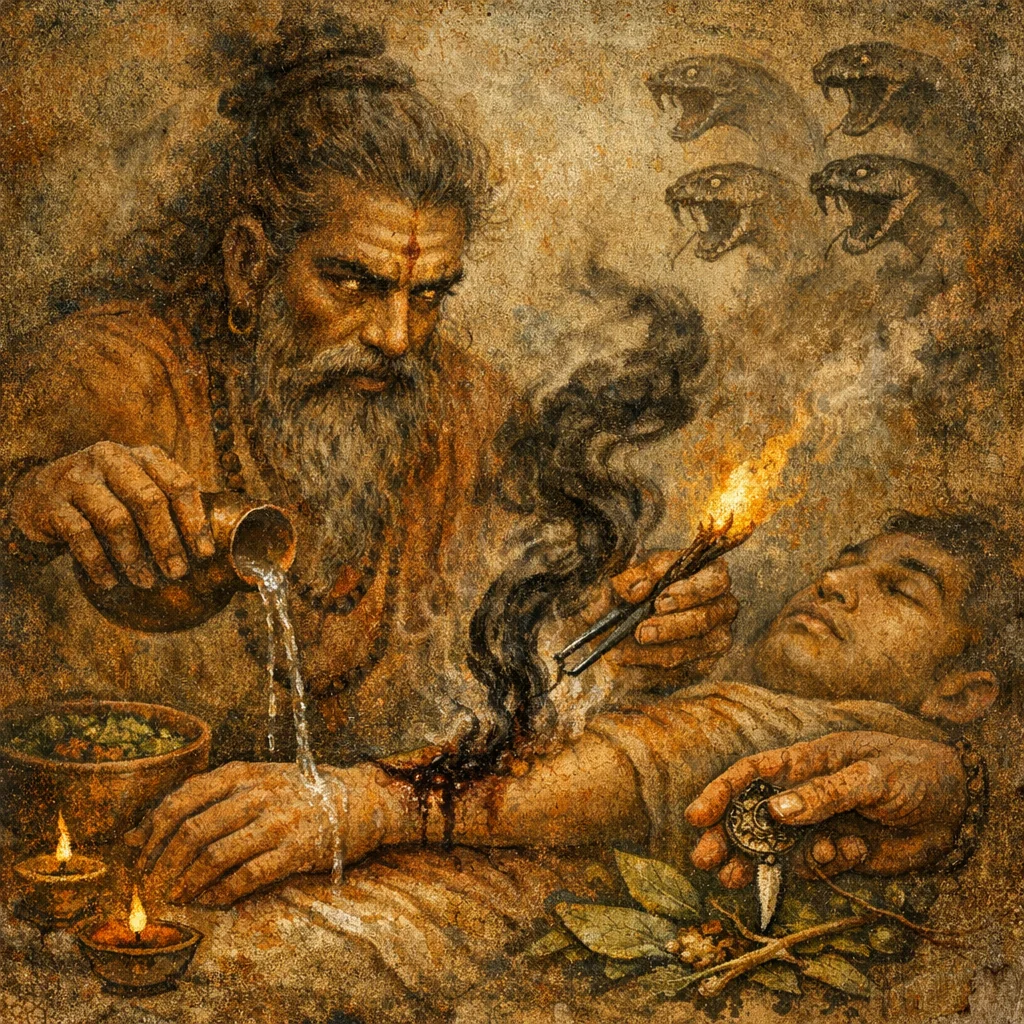
Sukta 13
Rishi: Atharvanic seer-tradition (often transmitted under Atharvan/Angiras rubric for poison-charms; specific r̥ṣi attribution depends on anukramaṇī tradition)
Devata: Viṣa (Poison) and its personified agents (Āligī, Viligī)
Chandas: Anuṣṭubh (predominant in AV healing charms; this verse is anuṣṭubh-like in cadence)
Mantras
Mantra 1
सर्पविषनाशनम्। ददिर्हि मह्यं वरुणो दिवः कविर्वचोभिरुग्रैर्नि रिणामि ते विषम्। खातमखातमुत सक्तमग्रभमिरेव धन्वन् नि जजास ते विषम्
Destruction of serpent-venom. For Varuṇa, the heavenly Sage, is a giver unto me: with potent words I drive away thy poison. Poison dug in, poison not dug in, and poison that clingeth—this have I seized; like a rushing force, running, I have crushed away thy poison.
Mantra 2
यत् ते अपोदकं विषं तत् त एतास्वग्रभम्। गृह्णामि ते मध्यममुत्तमं रसमुतावमं भियसा नेशदादु ते
What poison of thine is dry and waterless, that very bane I have laid hold of with these. I take for thee the middle and the highest sap, yea even the lowest; in fear let it not come nigh unto thee.
Mantra 3
वृषा मे रवो नभसा न तन्यतुरुग्रेण ते वचसा बाध आदु ते । अहं तमस्य नृभिरग्रभं रसं तमस इव ज्योतिरुदेतु सूर्यः
Bull-strong is my roar, as thunder from the cloud: with fierce speech I drive it off from thee. I, with men, have seized the sap from darkness: as light from gloom let the Sun arise.
Mantra 4
चक्षुषा ते चक्षुर्हन्मि विषेण हन्मि ते विषम्। अहे म्रियस्व मा जीवीः प्रत्यगभ्येऽतु त्वा विषम्
With eye I smite thine eye; with poison I smite thy poison. O serpent, die—live not: backward, upon thee, let the venom go.
Mantra 5
कैरात पृश्न उपतृण्य बभ्र आ मे शृणुतासिता अलीकाः । मा मे सख्युः स्तामानमपि ष्ठाताश्रावयन्तो नि विषे रमध्वम्
O Kirāta, O Speckled, Upatṛṇya, O Brown—hear me, ye black, deceitful ones. Stand not, not even for a moment, in my friend’s domain: hissing and making yourselves heard, take your pleasure down in poison.
Mantra 6
असितस्य तैमातस्य बभ्रोरपोदकस्य च । सात्रासाहस्याहं मन्योरव ज्यामिव धन्वनो वि मुञ्चामि रथाँ इव
From the Black, from Taimāta, from the Brown, and from the waterless; from Sātrāsāha’s fury—I release (thee) away, as a bowstring from the bow, as chariots are let go.
Mantra 7
आलिगी च विलिगी च पिता च माता च । विद्म वः सर्वतो बन्ध्वरसाः किं करिष्यथ
Āligī and Viligī, and father and mother—of you we know on every side: ye sapless kinsmen, what will ye do?
Mantra 8
उरुगूलाया दुहिता जाता दास्यसिक्न्या । प्रतङ्कं दद्रुषीणां सर्वासामरसं विषम्
Born as the daughter of Urugūlā, of the dark slave-woman: Prataṅka—of the Dadr̥śīs, of them all—(be) poison made sapless.
Mantra 9
कर्णा श्वावित् तदब्रवीद् गिरेरवचरन्तिका। याः काश्चेमाः खनित्रिमास्तासामरसतमं विषम्
Karnā, Śvāvit—thus spake she that cometh down from the mountain: whatever these be, earth-dug (burrow-born), of them (be) the poison most sapless.
Mantra 10
ताबुवं न ताबुवं न घेत् त्वमसि ताबुवम्। ताबुवेनारसं विषम्
‘Tābuvam’—not ‘tābuvam’; let it not seize: thou art the Tābuvam. By the Tābuvam (make) the poison sapless.
Mantra 11
तस्तुवं न तस्तुवं न घेत् त्वमसि तस्तुवम्। तस्तुवेनारसं विषम्
‘Tastuvam’—not ‘tastuvam’; let it not seize: thou art the Tastuvam. By the Tastuvam (make) the poison sapless.
Frequently Asked Questions
It is recited as a healing and protective charm to neutralize and expel poison—especially snake venom—by confronting it, naming its forms, and commanding it to release the victim.
Naming personified poison-agents is a ritual strategy: once identified, they are treated as exposed and controllable, so the mantra can intimidate and render them ineffective.
Its primary tool is mantra (potent speech) often paired with simple ritual supports like water-sprinkling and symbolic unbinding (loosening a cord). In practice it can accompany medical care rather than replace it.