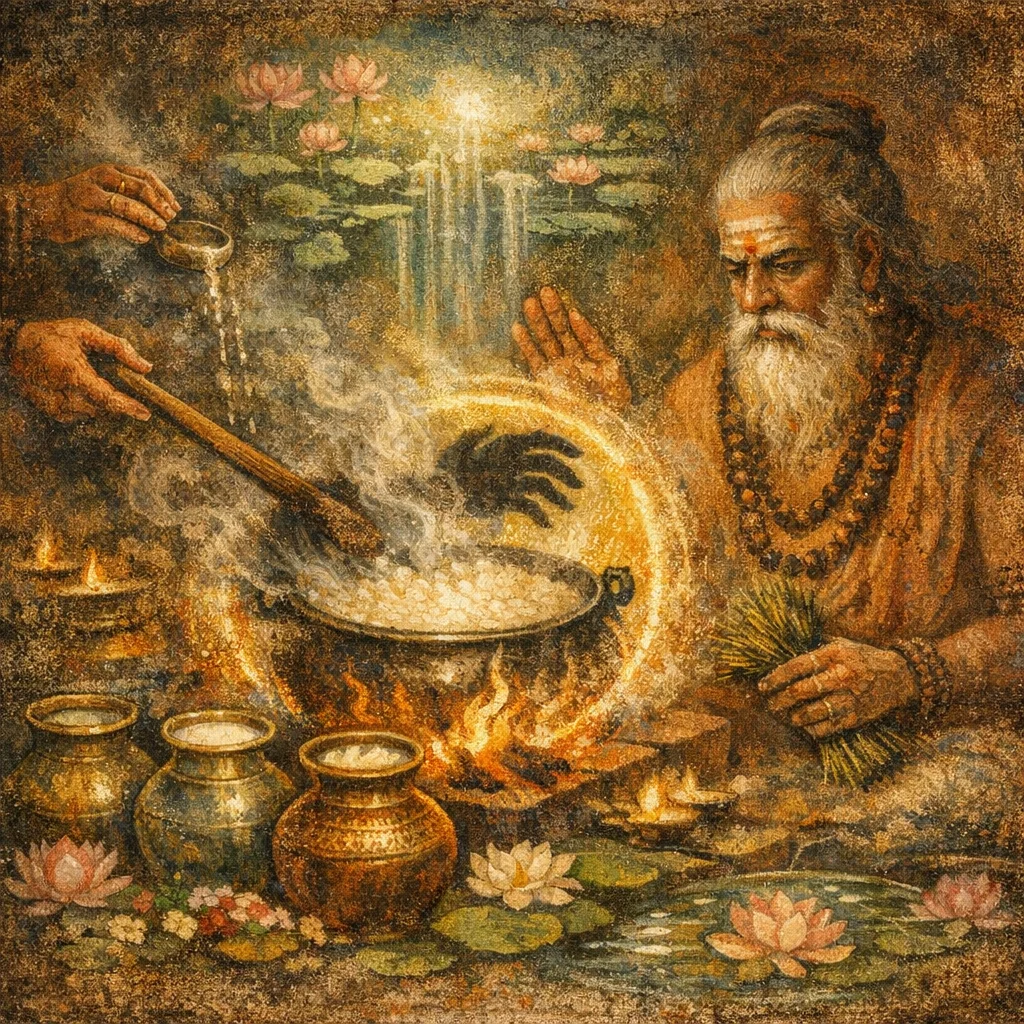
Sukta 34
Rishi: Atharvanic tradition (speculative-ritual hymn)
Devata: Brahmaudana / Yajña personified (ritual entity as devatā)
Chandas: Mixed/prose-like anuṣṭubh-adjacent; treated as mantraic statement (not a strict RV-style stanza)
Mantras
Mantra 1
ब्रह्मौदनम्। छन्दांसि पक्षौ मुखमस्य सत्यं विष्टारी जातस्तपसोऽधि यज्ञः
The Brahman-porridge: the metres are its two wings; truth is its mouth. Wide-spreading, born of fervour, the Sacrifice hath arisen thereon.
Mantra 2
अनस्थाः पूताः पवनेन शुद्धाः शुचयः शुचिमपि यन्ति लोकम्। नैषां शिश्नं प्र दहति जातवेदाः स्वर्गे लोके बहु स्त्रैणमेषाम्
Boneless, purified, cleansed by the purifier, the pure go unto the pure world. Jātavedas burneth not their member: in the heavenly world abundant is their women’s portion.
Mantra 3
विष्टारिणमोदनं ये पचन्ति नैनानवर्तिः सचते कदा चन। आस्ते यम उप याति देवान्त्सं गन्धर्वैर्मदते सोम्येभिः
They who cook the Vistārin porridge—never doth No-return cleave unto them at any time. Yama abideth; he draweth nigh unto the Gods, and with the Gandharvas he taketh delight in soma-like joys.
Mantra 4
विष्टारिणमोदनं ये पचन्ति नैनान् यमः परि मुष्णाति रेतः । रथी ह भूत्वा रथयान ईयते पक्षी ह भूत्वाति दिवः समेति
They who cook the Vistārin porridge—Yama stealeth not away their seed. Becoming a charioteer, he fareth on in chariot-course; becoming a bird, he reacheth beyond the heaven.
Mantra 5
ष यज्ञानां विततो वहिष्ठो विष्टारिणं पक्त्वा दिवमा विवेश । आण्डीकं कुमुदं सं तनोति बिसं शालूकं शफको मुलाली। एतास्त्वा धारा उप यन्तु सर्वाः स्वर्गे लोके मधुमत् पिन्वमाना उप त्वा तिष्ठन्तु पुष्करिणीः समन्ताः
He, best bearer among rites when duly spread abroad, having cooked the Vistārin, hath entered into heaven. Āṇḍīka and Kumuda he spreadeth forth—Bisa, Śālūka, Śaphaka, Mulālī. Let all these streams come nigh to thee, swelling with honeyed sweetness in the heavenly world; let lotus-pools stand about thee on every side.
Mantra 6
घृतह्रदा मधुकूलाः सुरोदकाः क्षीरेण पूर्णा उदकेन दध्ना। एतास्त्वा धारा उप यन्तु सर्वाः स्वर्गे लोके मधुमत् पिन्वमाना उप त्वा तिष्ठन्तु पुष्करिणीः समन्ताः
Ghee-laked, with honeyed banks, with surā-waters—filled with milk, with water, with curds: let all these streams come nigh to thee, swelling with honeyed sweetness in the heavenly world; let lotus-pools stand about thee on every side.
Mantra 7
चतुरः कुम्भांश्चतुर्धा ददामि क्षीरेण पूर्नाँ उदकेन दध्ना। एतास्त्वा धारा उप यन्तु सर्वाः स्वर्गे लोके मधुमत् पिन्वमाना उप त्वा तिष्ठन्तु पुष्करिणीः समन्ताः
Four pots in fourfold wise I set, filled with milk, with water, with curds. Let all these streams come nigh to thee, swelling with honeyed sweetness in the heavenly world; let lotus-pools stand about thee on every side.
Mantra 8
इममोदनं नि दधे ब्राह्मणेषु विष्टारिणं लोकजितं स्वर्गम्। स मे मा क्षेष्ट स्वधया पिन्वमानो विश्वरूपा धेनुः कामदुघा मे अस्तु
This boiled rice I set and stablish among the Brahmans—spreading abroad, world-winning, heaven-leading. Let it not harm me; swelling with its own svadhā, let it be for me a cow of every form, a milker-forth of all desires.
Frequently Asked Questions
It is cooked odana (porridge/boiled rice) treated as brahman-filled and identified with Yajña’s own body, so the food becomes a carrier of ritual power and merit.
The hymn sacralizes the offering by giving it a cosmic-ritual anatomy: chandas (metres) provide structure and ‘wings,’ satya (truth) is the validating ‘mouth,’ and tapas is the generating heat that makes yajña effective.
It is a protective clause ensuring the charged offering does not rebound negatively on the patron—i.e., the consecration is safe, properly transferred, and yields benefit rather than ritual fault or backlash.