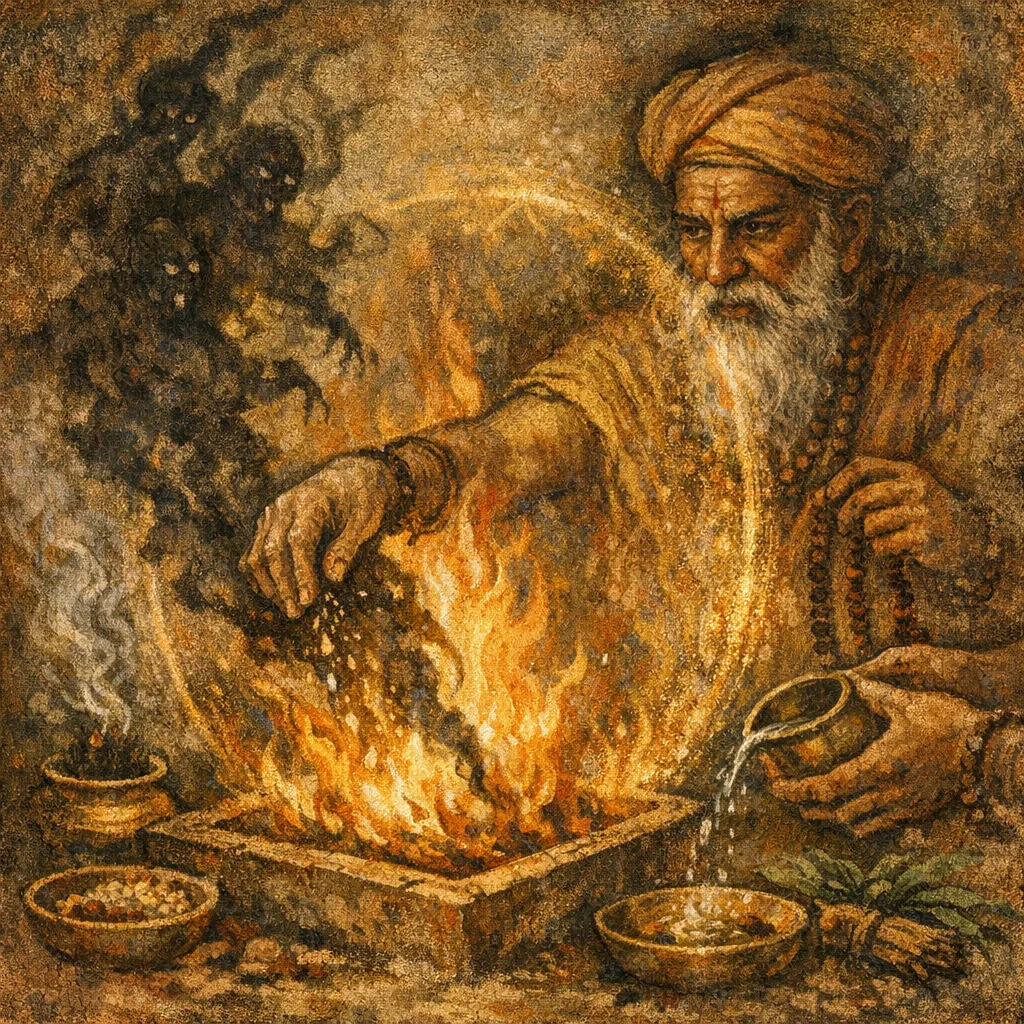
Sukta 23
Rishi: Atharvanic tradition (Agni-hymn; r̥ṣi attribution varies by anukramaṇī traditions)
Devata: Agni Jātavedas
Chandas: Anuṣṭubh-like cadence (Atharvanic mixed anuṣṭubh/triṣṭubh tendencies in this section; confirm by pada count per edition)
Mantras
Mantra 1
पाप-मोचनम्। अग्नेर्मन्वे प्रथमस्य प्रचेतसः पाञ्चजन्यस्य बहुधा यमिन्धते । विशो विशः प्रविशिवांसमीमहे स नो मुञ्चत्वंहसः
For release from evil: I acknowledge Agni, the first, the wise, the fire of the Five Peoples, whom in many a manner they kindle. Him, entered among clan after clan, we implore: may he set us free from anguish and from sin.
Mantra 2
यथा हव्यं वहसि जातवेदो यथा यज्ञं कल्पयसि प्रजानन्। एवा देवेभ्यः सुमतिं न आ वह स नो मुञ्चत्वंहसः
As thou bearest the oblation, O Jātavedas, as thou, knowing, duly orderest the sacrifice—so, for the Gods, bring hither unto us good favour; and may he release us from anguish.
Mantra 3
यामन्यामन्नुपयुक्तं वहिष्ठं कर्मन्कर्मन्नाभगम् । अग्निमीडे रक्षोहणं यज्ञवॄधं घृताहुतं स नो मुञ्चत्वंहसः
At every course—him, the harnessed, the best conveyor, bringing good fortune in each several act—I laud Agni, the slayer of demons, the increaser of sacrifice, ghee-offered: may he release us from anguish.
Mantra 4
सुजातं जातवेदसमग्निं वैश्वानरं विभुम्। हव्यवाहं हवामहे स नो मुञ्चत्वंहसः
Agni, well-born, Jātavedas, Vaiśvānara, the all-pervading—him, the oblation-bearer, we invoke: may he release us from anguish.
Mantra 5
येन ऋषयो बलमद्योतयन् युजा येनासुराणामयुवन्त मायाः । येनाग्निना पणीनिन्द्रो जिगाय स नो मुञ्चत्वंहसः
Wherewith the Seers made strength to shine by yoking; wherewith they kept afar the Asuras’ wizardries; wherewith, with Agni, Indra conquered the Paṇis—may he release us from anguish.
Mantra 6
येन देवा अमृतमन्वविन्दन् येनौषधीर्मधुमतीरकृण्वन्। येन देवाः स्व१राभरन्त्स नो मुञ्चत्वंहसः
Wherewith the Gods won immortality; wherewith they made the plants honey-sweet; wherewith the Gods brought hither heaven—may he release us from anguish.
Mantra 7
यस्येदं प्रदिशि यद् विरोचते यज्जातं जनितव्यंऽ च केवलम्। स्तौम्यग्निं नाथितो जोहवीमि स नो मुञ्चत्वंहसः
Whose is this All that in each region shineth forth—what hath been born, and what is yet to be engendered, wholly and alone: Agni I laud; in sore distress I call upon him ever. Let him release us from affliction and from sin.
Frequently Asked Questions
Aṃhas refers to constricting distress—misfortune, anxiety, guilt-like burden, and ritual/moral pollution that ‘binds’ a person and needs to be loosened.
Jātavedas means “knower of births/creatures.” It highlights Agni’s omniscience and competence to order the yajña and purify what is tangled or tainted in human life.
No. The hymn is centered on Agni and a simple offering (often ghee). Even a modest household fire with sincere recitation and a small oblation fits the hymn’s intent of release and pacification.