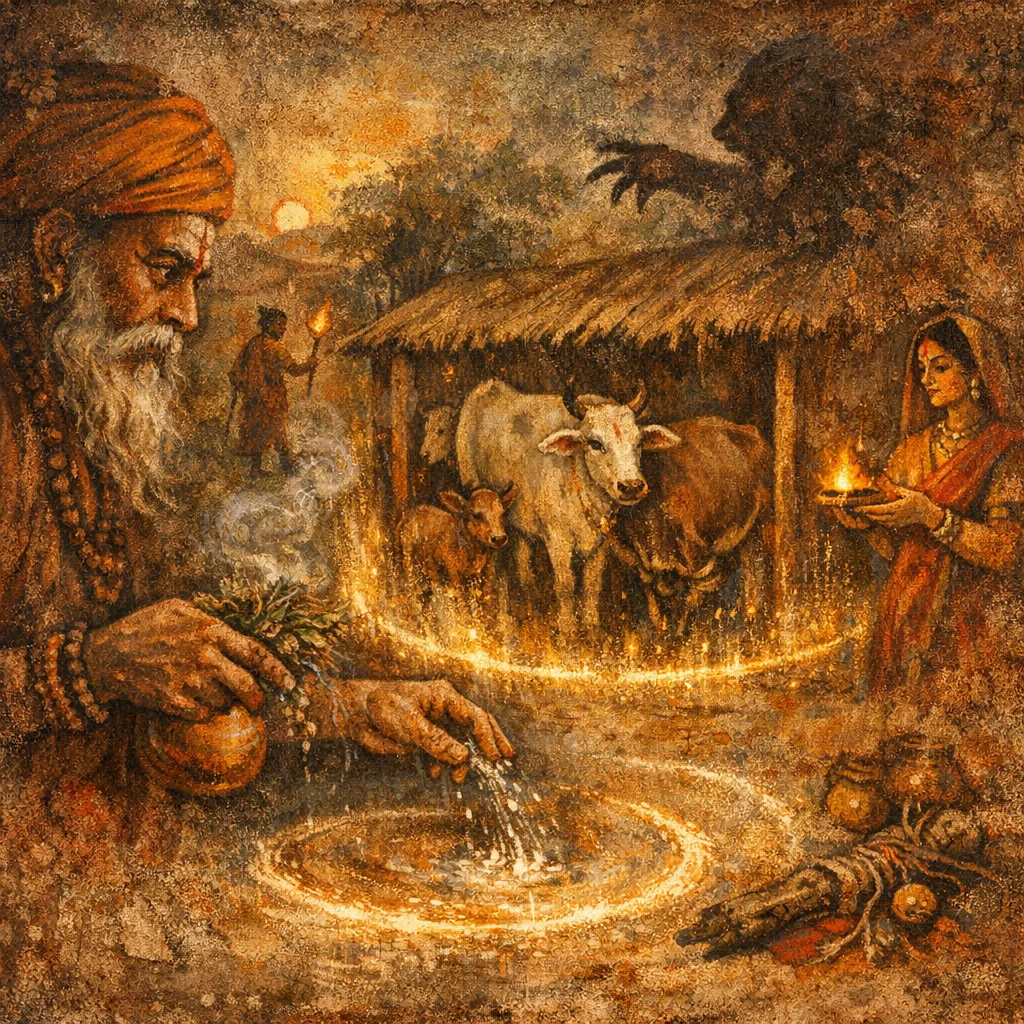
Sukta 21
Rishi: Atharvanic tradition (often anonymous/household seer for paustika hymns)
Devata: Gāvaḥ (Cows) with Indra as beneficiary/protector
Chandas: Mixed; predominantly Triṣṭubh-like cadence in Saunaka transmission (as commonly analyzed for this type of prosperity verse)
Mantras
Mantra 1
गावः। आ गावो अग्मन्नुत भद्रमक्रन्त्सीदन्तु गोष्ठे रणयन्त्वस्मे। प्रजावतीः पुरुरूपा इह स्युरिन्द्राय पूर्वीरुषसो दुहानाः
The Cows. Hither have the cows come; moreover they have wrought good fortune. Let them sit within the cow-stall; let them take delight among us. Fruitful, of many forms, may they be here—many as the Dawns—milking for Indra.
Mantra 2
इन्द्रो यज्वने गृणते च शिक्षत उपेद् ददाति न स्वं मुषायति । भूयोभूयो रयिमिदस्य वर्धयन्नभिन्ने खिल्ये नि दधाति देवयुम्
Indra to the sacrificer, and to the praising singer, gives guidance; he verily bestows, he steals not what is one’s own. Again and yet again increasing this man’s wealth, he sets the god-devoted one firm in unbroken pasture-land.
Mantra 3
न ता नशन्ति न दभाति तस्करो नासामामित्रो व्यथिरा दधर्षति । देवांश्च याभिर्यजते ददाति च ज्योगित् ताभिः सचते गोपतिः सह
They perish not; the thief harms them not; no enemy, making terror, dares assail them. With them wherewith he worships the Gods and gives, for long time indeed with them abides the Lord of Cows, together.
Mantra 4
न ता अर्वा रेणुककाटोऽश्नुते न संस्कृतत्रमुप यन्ति ता अभि। उरुगायमभयं तस्य ता अनु गावो मर्तस्य वि चरन्ति यज्वनः
No horse—Reṇukakāṭa—overtakes them; no well-laid snare comes up against them. Under the Wide-going One’s fearlessness, after him, the cows of the mortal sacrificer range abroad unhindered.
Mantra 5
गावो भगो गाव इन्द्रो म इच्छाद् गावः सोमस्य प्रथमस्य भक्षः । इमा या गावः स जनास इन्द्र इच्छामि हृदा मनसा चिदिन्द्रम्
Cows are Bhaga; cows—Indra—may desire me; cows are the foremost portion of Soma. These cows which (are mine to win)—he is Indra among men: Indra I desire, with heart, with mind—yea, Indra.
Mantra 6
यूयं गावो मेदयथ कृशं चिदश्रीरं चित् कृणुथा सुप्रतीकम्। भद्रं गृहं कृणुथ भद्रवाचो बृहद् वो वय उच्यते सभासु
Ye Cows, make ye the lean one fat; yea, even the luckless make ye of fair aspect. Make ye the house auspicious, of auspicious speech: great is your life-giving power, so is it proclaimed in the assemblies.
Mantra 7
प्रजावतीः सूयवसे रुशन्तीः शुद्धा अपः सुप्रपाणे पिबन्तीः । मा व स्तेन ईशत माघशंसः परि वो रुद्रस्य हेतिर्वृणक्तु
Fruitful, shining, to good pasture bound, pure—drinking the waters at the well-provided watering-place—let not the thief get mastery over you, nor the evil-reviler: round about you let Rudra’s weapon fence you in.
Frequently Asked Questions
It is used to bring cows safely home, settle them peacefully in the cow-stall, and secure fertility, milk-yield, and overall herd increase under divine protection.
Indra (as Urugāya) provides ‘fearlessness’ that prevents pursuit and snares during grazing, while Rudra is invoked to form a protective enclosure—like a fence—against theft and harmful hostility.
The hymn’s primary ‘materials’ are practical and symbolic: the goṣṭha (stall), good pasture, and clean water. The main protective element is the mantra-informed boundary—recited while settling the herd and encircling them in intention.