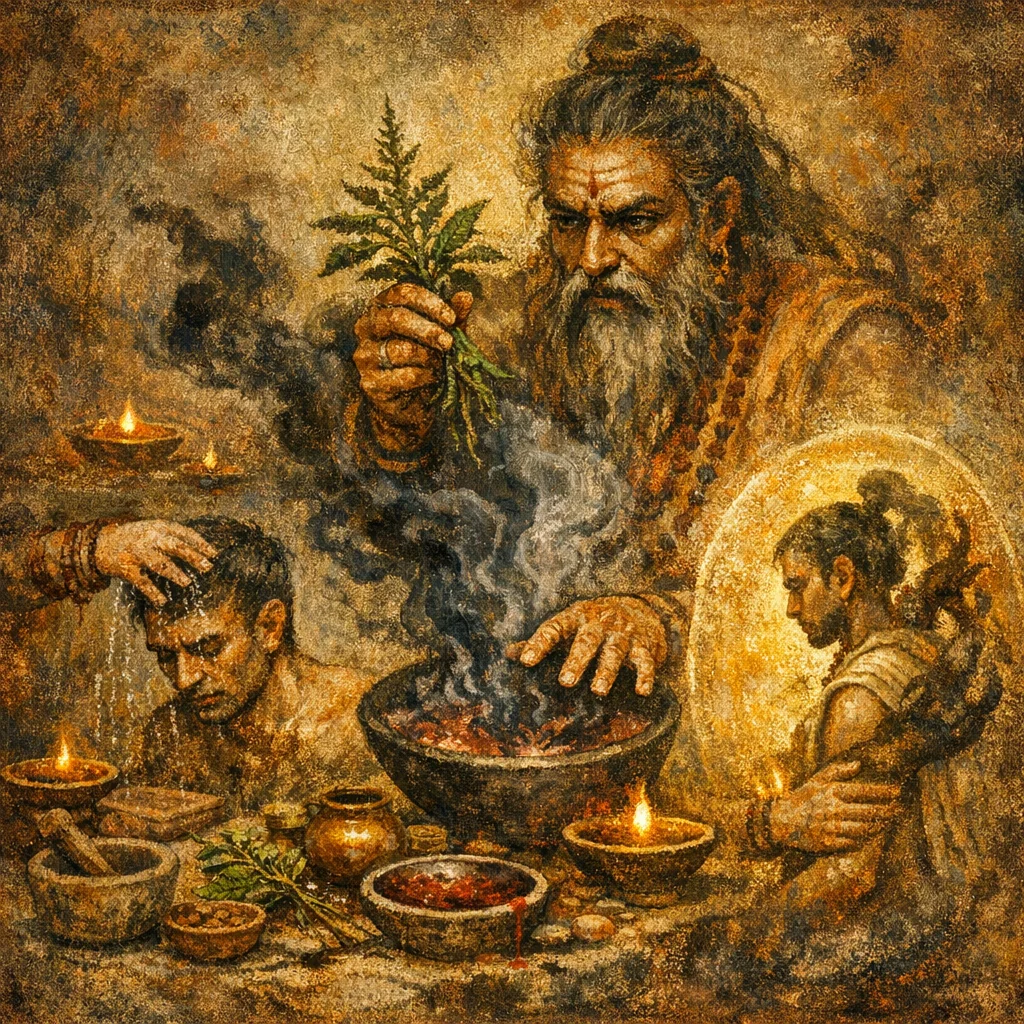
Sukta 17
Rishi: Atharvanic seer(s) of the Bhaisajya corpus
Devata: Apāmārga (personified Oṣadhi)
Chandas: Anuṣṭubh (with Atharvanic invocatory style)
Mantras
Mantra 1
अपामार्गः। ईशाणां त्वा भेषजानामुज्जेष आ रभामहे । चक्रे सहस्रवीर्यं सर्वस्मा ओषधे त्वा
Apāmārga! Thee, sovereign of medicines, for victory we grasp and take in hand. Thou hast fashioned thousandfold might: for every need, O Herb, thee we invoke.
Mantra 2
सत्यजितं शपथयावनीं सहमानां पुनःसराम्। सर्वाः समह्व्योषधीरितो नः पारयादिति
Truth-winning, curse-expelling, overpowering, health-restoring—having called together all the Herbs, may she bear us safely over from hence; so be it.
Mantra 3
या शशाप शपनेन याघं मूरमादधे। या रसस्य हरणाय जातमारेभे तोकमत्तु सा
She who hath cursed with cursing, who hath laid on evil and benumbing stupor; she who, to steal the vital sap, assaileth the child among the newly-born—let that woman be devoured (by her own bane).
Mantra 4
यां ते चक्रुरामे पात्रे यां चक्रुर्नीललोहिते। आमे मांसे कृत्यां यां चक्रुस्तया कृत्याकृतो जहि
The witchcraft which they have wrought against thee in a raw vessel, which they have wrought in the blue-and-red; the witchcraft which they have wrought in raw flesh—therewith smite thou the witchcraft-workers.
Mantra 5
दौष्वप्न्यं दौर्जीवित्यं रक्षो अभ्वऽमराय्यः । दुर्णाम्नीः सर्वा दुर्वाचस्ता अस्मन्नाशयामसि
Evil dreaming and evil living, the demon, the monstrous, the death-dealing; all ill-named powers, all evil speeches—these from us we cause to perish.
Mantra 6
क्षुधामारं तृष्णामारमगोतामनपत्यताम्। अपामार्ग त्वया वयं सर्वं तदप मृज्महे
Hunger-slaying and thirst-slaying, cattlelessness and childlessness—with thee, O Apāmārga, all that we wipe away.
Mantra 7
तृष्णामारं क्षुधामारमथो अक्षपराजयम्। अपामार्ग त्वया वयं सर्वं तदप मृज्महे
Thirst-slaying and hunger-slaying, and also defeat at the dice—with thee, O Apāmārga, all that we wipe away.
Mantra 8
अपामार्ग ओषधीनां सर्वासामेक इद् वशी। तेन ते मृज्म आस्थितमथ त्वमगदश्चर
Apāmārga, of all the herbs, is verily the one sole lord. With him we wipe away what hath settled upon thee; then do thou, as remedy, go forth and work.
Frequently Asked Questions
Both. The sukta treats Apāmārga as an actual medicinal herb and as a personified oṣadhi-power—“sovereign of medicines”—whose agency can be invoked to cure and protect.
It targets illness and ‘settled’ affliction, but also unseen harms: nightmares (duḥsvapnya), life-wasting misfortune (daurjīvitā), demonic/hostile agencies, curses, and evil speech directed at the patient.
A common Atharvanic application is mārjana—gently wiping/sweeping the person with Apāmārga while reciting the verses—then concluding by commissioning the herb to act as an agada (antidote) that ‘goes forth’ to work the cure.