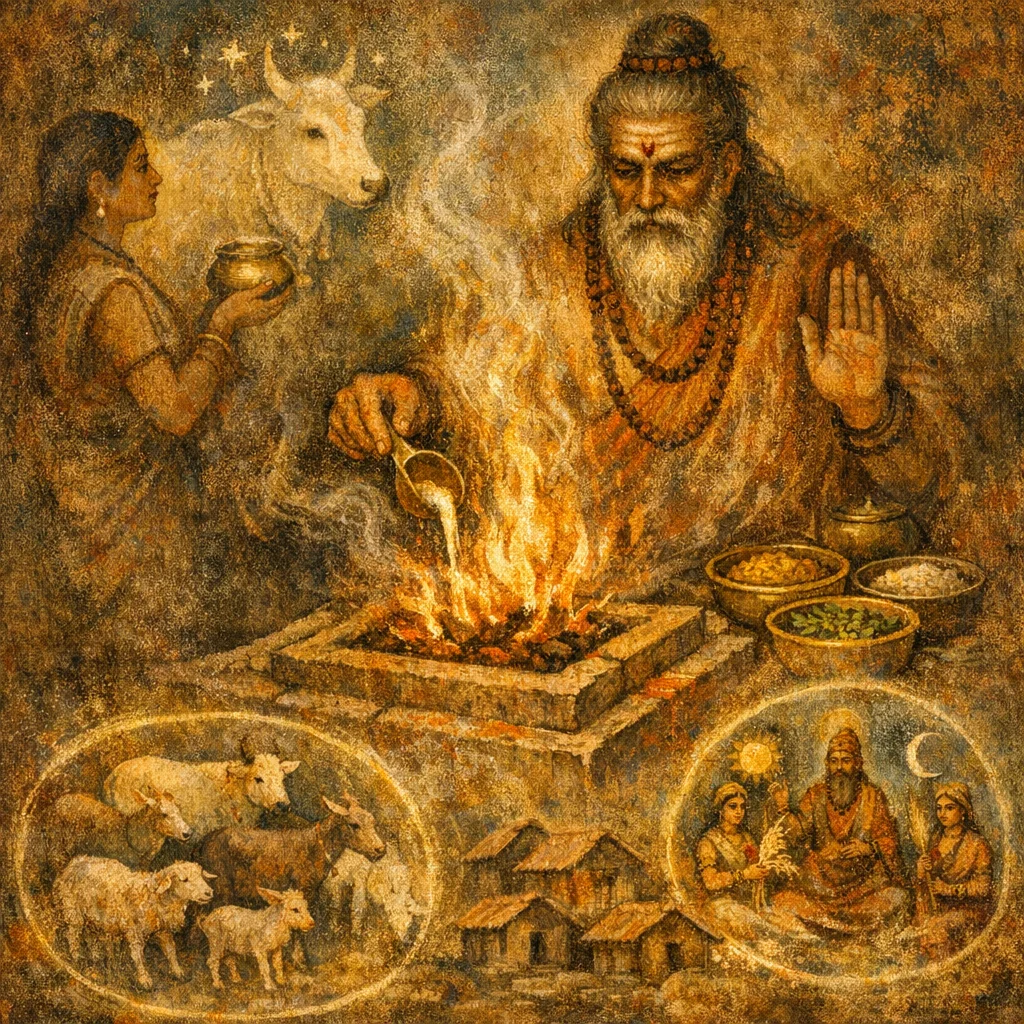
Sukta 10
Rishi: Atharvanic tradition (not specified in the excerpt; ancillary note lists deities/sections but not ṛṣi)
Devata: Ṛtavaḥ (Seasons) / Dhātṛ-Vidhātṛ / Devas / Indra / Prajāpati (as per the prefixed anukramaṇī-like note); verse imagery centers on the Dhenu (cow) as prosperity-agent
Chandas: Anuṣṭubh (probable)
Mantras
Mantra 1
रायस्पोषप्राप्तिः। ९ ऋतवः, १० धाता विधातारौ, ऋतवः, ११ देवाः, १२ इन्द्रः, देवाः, १३ प्रजापतिः। प्रथमा ह व्युऽवास सा धेनुरभवद् यमे। सा नः पयस्वती दुहामुत्तरामुत्तरां समाम्
First verily she shone forth; she became a milch-cow in Yama. Let her, rich in milk, milk out for us each later, later year.
Mantra 2
यां देवाः प्रतिनन्दन्ति रात्रिं धेनुमुपायतीम्। संवत्सरस्य या पत्नी सा नो अस्तु सुमङ्गली
That Night whom Gods with glad acclaim acknowledge, approaching like a milch-cow rich in yielding,—she who is consort of the circling Year,—let her for us be wholly auspicious.
Mantra 3
संवत्सरस्य प्रतिमां यां त्वा रात्र्युपास्महे । सा न आयुष्मतीं प्रजां रायस्पोषेण सं सृज
The counterpart of the Year, thee, Night, we reverently attend: do thou for us bring forth life-laden offspring, with wealth’s increase and thriving joined thereto.
Mantra 4
इयमेव सा या प्रथमा व्यौच्छदास्वितरासु चरति प्रविष्टा । महान्तो अस्यां महिमानो अन्तर्वधूर्जिगाय नवगज्जनित्री
This verily is she who first shone forth; among the later ones she moves, entered in and pervading. Great are the grandeurs lodged within her: the Bride, the Begetter, ninefold-going, hath won the victory.
Mantra 5
वानस्पत्या ग्रावाणो घोषमक्रत हविष्कृण्वन्तः परिवत्सरीणम्। एकाष्टके सुप्रजसः सुवीरा वयं स्याम पतयो रयीणाम्
The forest-lord’s stones have raised their sounding, preparing the oblation of the circling year. At Ekāṣṭakā may we be rich in fair offspring, rich in brave sons, lords over treasures manifold.
Mantra 6
इडायास्पदं घृतवत् सरीसृपं जातवेदः प्रति हव्या गृभाय । ये ग्राम्याः पशवो विश्वरूपास्तेषां सप्तानां मयि रन्तिरस्तु
The seat of Iḍā, rich with ghee, that gliding course,—O Jātavedas, take thou to thee the offerings. And of the village cattle, manifold in form,—of those seven—let there be for me secure enjoyment.
Mantra 7
आ मा पुष्टे च पोषे च रात्रि देवानां सुमतौ स्याम । पूर्णा दर्वे परा पत सुपूर्णा पुनरा पत । सर्वान् यज्ञान्त्संभुञ्जतीषमूर्जं न आ भर
Hither, for me, O Nourishment, and in thriving too; O Night, in the Gods’ good favour may we abide. Full, O Ladle, fly thou forth; well-filled return thou hither again. Enjoying wholly all sacrifices, bring thou to us refreshment and sustaining strength.
Mantra 8
आयमगन्त्संवत्सरः पतिरेकाष्टके तव । सा न आयुष्मतीं प्रजां रायस्पोषेण सं सृज
Hither hath come the Year, the lord—thine, O Ekāṣṭakā. Do thou for us bring forth a progeny rich in life, together with wealth’s thriving increase.
Mantra 9
ऋतून् यज ऋतुपतीनार्तवानुत हायनान्। समाः संवत्सरान् मासान् भूतस्य पतये यजे
Worship the Seasons; worship the Lords of Seasons, the seasonal portions, and the yearly rounds. The years, the full cycles, the months—to the Lord of Being I offer worship.
Mantra 10
ऋतुभ्यष्ट्वार्तवेभ्यो माद्भ्यः संवत्सरेभ्यः । धात्रे विधात्रे समृधे भूतस्य पतये यजे
From the Seasons, from the seasonal portions, from the months, from the years—to thee I offer. To Dhātṛ, to Vidhātṛ, to Prosperous Increase; to the Lord of Being I render worship.
Mantra 11
इडया जुह्वतो वयं देवान् घृतवता यजे । गृहानलुभ्यतो वयं सं विशेमोप गोमतः
With Iḍā, as we pour, with ghee I worship the Gods. May we, unharmed, enter together our homes—approaching (them) rich in cattle.
Mantra 12
एकाष्टका तपसा तप्यमाना जजान गर्भं महिमानमिन्द्रम्। तेन देवा व्यऽसहन्त शत्रून् हन्ता दस्यूनामभवच्छचीपतिः
Ekāṣṭakā, glowing with fervid heat, brought forth in birth the embryo—Indra, very Majesty. Therewith the Gods prevailed and drave their foemen asunder: Śacī’s Lord became the slayer of the Dasyu.
Mantra 13
इन्द्रपुत्रे सोमपुत्रे दुहितासि प्रजापतेः । कामानस्माकं पूरय प्रति गृह्णाहि नो हविः
O child of Indra, child of Soma, thou art the Daughter of Prajāpati. Fulfil our longings; accept, in recompense, our offered oblation.
Frequently Asked Questions
To make the turning year yield increasing prosperity—nourishment like milk, cattle-wealth, treasures, and strong offspring—while keeping the household safe and intact.
The dhenu is a prosperity-symbol: as a milch-cow continuously gives milk, so the rightly ordered year is asked to ‘milk out’ abundance for each succeeding year.
During annual or seasonal transition rites—particularly around Ekāṣṭakā—when households seek renewal of wealth, progeny, and protection through offerings such as ghee and havis.