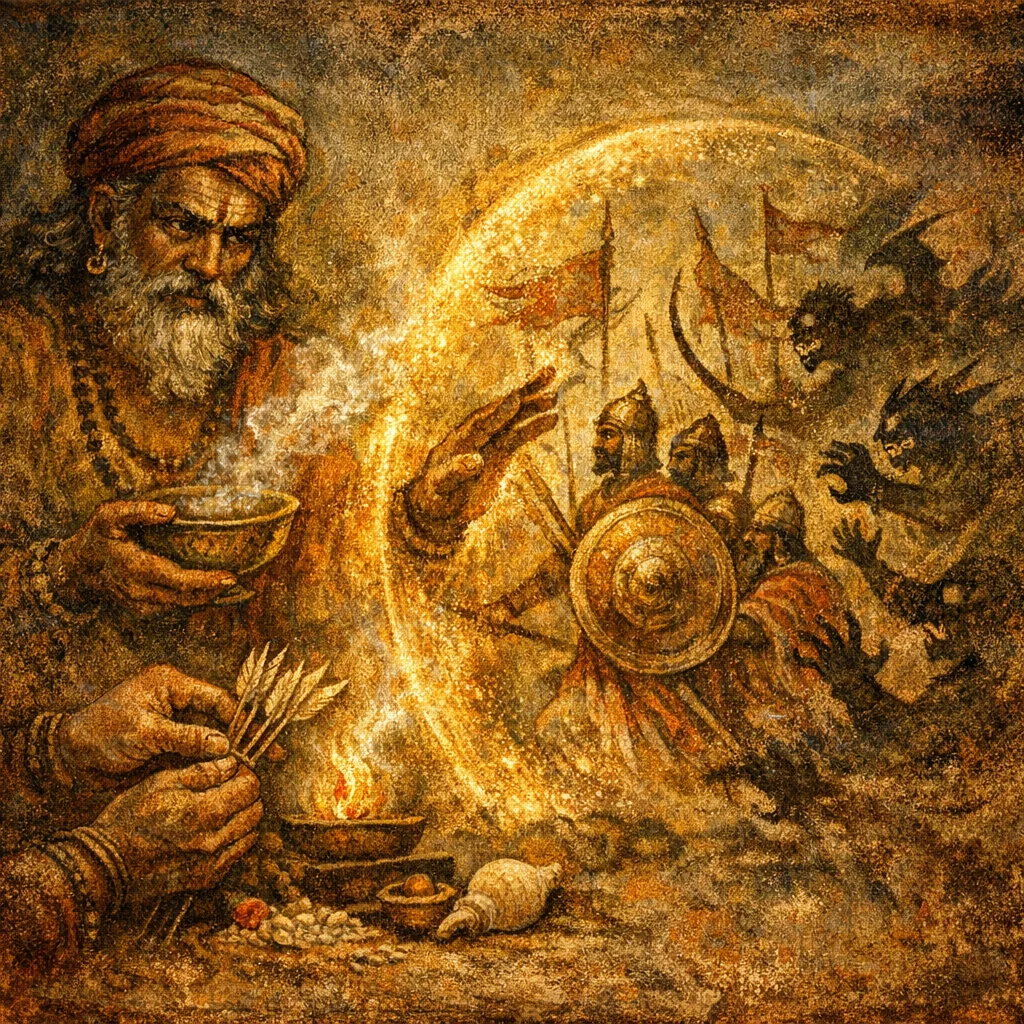
Sukta 13
Rishi: Anonymous (martial charm tradition)
Devata: Indra (via his ‘two arms’ as empowered agents)
Chandas: Triṣṭubh
Mantras
Mantra 1
एकवीरः। इन्द्रस्य बाहू स्थविरौ वृषाणौ चित्रा इमा वृषभौ पारयिष्णू। तौ योक्षे प्रथमो योग आगते याभ्यां जितमसुराणां स्व१र्यत्
The Lone Champion. Indra’s arms—stout, bull-like—these splendid two bulls that bear one safely through: them will I yoke when first the yoking comes, by which the heaven was won from out the Asuras.
Mantra 2
आशुः शिशानो वृषभो न भीमो घनाघनः क्षोभणश्चर्षणीनाम्। संक्रन्दनोऽनिमिष एकवीरः शतं सेना अजयत् साकमिन्द्रः
Swift, self-whetting, like a bull, dread; a smiter of smiters, a shaker of the peoples: the battle-roarer, unblinking, the single champion—Indra together (with his own) conquered a hundred armies at once.
Mantra 3
संक्रन्दनेनानिमिषेण जिष्णुनाऽयोध्येन दुश्च्यवनेन धृष्णुना । तदिन्द्रेण जयत तत् सहध्वं युधो नर इषुहस्तेन वृष्णा
By the battle-roarer, by the unblinking, by the victorious; by the unconquerable, the hard-to-dislodge, the bold—by Indra conquer that; to that unite ye, O men, in the battles, with the bull, the arrow-handed.
Mantra 4
स इषुहस्तैः स निषङ्गिभिर्वशी संस्रष्टा स युध इन्द्रो गणेन । संसृष्टजित् सोमपा बाहुशर्ध्यु१ग्रधन्वा प्रतिहिताभिरस्ता
He with the arrow-handed, he with the weapon-bearers—masterful, the arranger; he in the battles, Indra with his troop: winning by close array, Soma-drinker, strong-armed, fierce-bowed, a shooter with well-aimed shafts.
Mantra 5
बलविज्ञायः स्थविरः प्रवीरः सहस्वान् वाजी सहमान उग्रः । अभिवीरो अभिषत्वा सहोजिज्जैत्रमिन्द्र रथमा तिष्ठ गोविदम्
Knowing strength, stout, rich in heroes; mighty, prize-winning, overpowering, fierce—more than heroic, having smitten, winning by might: O Indra, mount the conquering chariot, the cow-winning.
Mantra 6
इमं वीरमनु हर्षध्वमुग्रमिन्द्रं सखायो अनु सं रभध्वम्। ग्रामजितं गोजितं वज्रबाहुं जयन्तमज्म प्रमृणन्तमोजसा
After this hero exult ye; after the fierce Indra, O comrades, together lay hold: the village-winner, the cow-winner, the thunderbolt-armed—conquering on the charge, crushing down with might.
Mantra 7
अभि गोत्राणि सहसा गाहमानोऽदाय उग्रः शतमन्युरिन्द्रः । दुश्च्यवनः पृतनाषाडयोध्यो३ऽस्माकं सेना अवतु प्र युत्सु
Indra, fierce, of a hundred battle-rages, unassailable, plunging with might against the clans; hard to dislodge, host-crushing, unconquerable—let him protect our armies, forward in the fights.
Mantra 8
बृहस्पते परि दीया रथेन रक्षोहामित्राँ अपबाधमानः । प्रभञ्जंछत्रून् प्रमृणन्नमित्रानस्माकमेध्यविता तनूनाम्
O Bṛhaspati, course round about with thy chariot, rákṣas-slayer, repelling the foes; shattering the enemies, crushing down the non-friends—be thou the increaser of our bodies, our folk.
Mantra 9
इन्द्र एषां नेता बृहस्पतिर्दक्षिणा यज्ञः पुर एतु सोमः । देवसेनानामभिभञ्जतीनां जयन्तीनां मरुतो यन्तु मध्ये
Indra be leader of these; Bṛhaspati (be) the right-hand power; let Sacrifice go in front, let Soma go before: in the midst let the Maruts march—of the god-hosts that break the foe and win.
Mantra 10
इन्द्रस्य वृष्णो वरुणस्य राज्ञ आदित्यानां मरुतां शर्ध उग्रम्। महामनसां भुवनच्यवानां घोषो देवानां जयतामुदस्थात्
The fierce host of the Maruts, of the Ādityas, of Varuṇa the King, of Indra the Bull—of the great-minded, world-shaking gods—their conquering shout hath risen aloft.
Mantra 11
अस्माकमिन्द्रः समृतेषु ध्वजेष्वस्माक या इषवस्ता जयन्तु । अस्माकं वीरा उत्तरे भवन्त्वस्मान् देवासोऽवता हवेषु
Our Indra (be) at the standards in the encounters; our arrows—let those conquer. Our heroes—let them be the uppermost; us may the gods protect in our calls.
Frequently Asked Questions
To transfer Indra-like strength—especially the power of his ‘two arms’—to a champion and his side, so their charge, arrows, and banner-centered formation win in battle.
The arms function as concrete, transferable agents of power: they are imagined as twin forces that can be ‘yoked’ onto the fighter, making victory feel immediate and embodied.
The text does not require herbs; its practical focus is on battlefield symbols—standard (dhvaja) and weapons (especially arrows)—with recitation done at mustering or just before engagement.