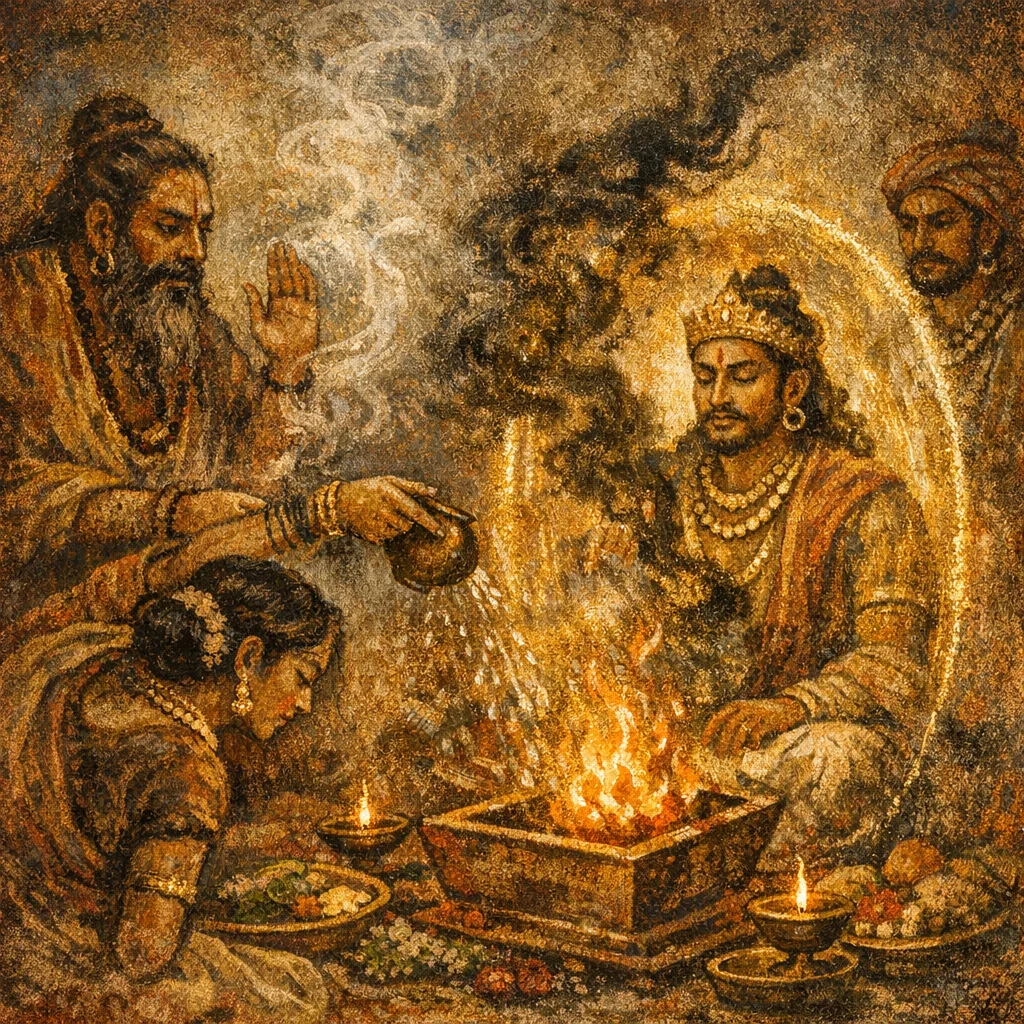
Sukta 10
Rishi: Traditionally connected with Atharvanic royal-theology strata (Bṛhaspati/Indra complex in the surrounding verses)
Devata: Kṣatra and Rāṣṭra (as institutional powers), with implicit Brahmanic sanction
Chandas: Prose/Anuṣṭubh-like cadence (late Atharvanic political prose style)
Mantras
Mantra 1
तद् यस्यैवं विद्वान् व्रात्यो राज्ञोऽतिथिर्गृहानागच्छेत्
This (is the case): unto whose house a knowing Vrātya, a king’s guest, should come.
Mantra 2
श्रेयांसमेनमात्मनो मानयेत् तथा क्षत्राय ना वृश्चते तथा राष्ट्राय ना वृश्चते
Let him honour this man as better than himself; so is the Kṣatra not shorn away, so is the Realm not shorn away.
Mantra 3
अतो वै ब्रह्म च क्षत्रं चोदतिष्ठतां ते अब्रूतां कं प्र विशावेति
Thereupon, verily, Brahman and Kṣatra arose together; and they said: ‘Into whom shall we two enter?’
Mantra 4
अतो वै बृहस्पतिमेव ब्रह्म प्रा विशत्विन्द्रं क्षत्रं तथा वा इति
Thereupon, verily, let Brahman enter Bṛhaspati alone; and let Kṣatra enter Indra: even so, indeed—thus (it is).
Mantra 5
अतो वै बृहस्पतिमेव ब्रह्म प्राविशदिन्द्रं क्षत्रम्
Thereupon, verily, Brahman entered Bṛhaspati alone; (and) Kṣatra (entered) Indra.
Mantra 6
इयं वा उ पृथिवी बृहस्पतिर्द्यौरेवेन्द्रः
This Earth, verily, is Bṛhaspati; the Heaven is Indra alone.
Mantra 7
अयं वा उ अग्निर्ब्रह्मासावादित्यः क्षत्रम्
This, verily—this Agni—is Brahman; yonder Āditya is Kṣatra, the royal might.
Mantra 8
ऐनं ब्रह्म गच्छति ब्रह्मवर्चसी भवति
Brahman comes unto him; he becomes endowed with brahman-splendour.
Mantra 9
यः पृथिवीं बृहस्पतिमग्निं ब्रह्म वेद
Whoso knoweth Earth as Bṛhaspati, and Agni as Brahman—
Mantra 10
ऐनमिन्द्रियं गच्छतीन्द्रियवान् भवति
Indriya comes unto him; he becomes possessed of vigour and mastery of faculty.
Mantra 11
य आदित्यं क्षत्रं दिवमिन्द्रं वेद
Whoso knoweth Āditya as Kṣatra, and Heaven as Indra—
Frequently Asked Questions
To keep royal authority (kṣatra) and the kingdom (rāṣṭra) from being diminished or ‘cut off,’ especially during politically sensitive encounters like receiving a powerful guest.
Because the act of formal deference stabilizes hierarchy and alliance; in the hymn’s logic, correct honor prevents the severance of institutional power and keeps the realm cohesive.
It is a cosmological identification: sovereignty is grounded in the Sun’s ordering power and Indra’s victorious heaven. By affirming this, the performer ritually aligns kingship with cosmic authority.