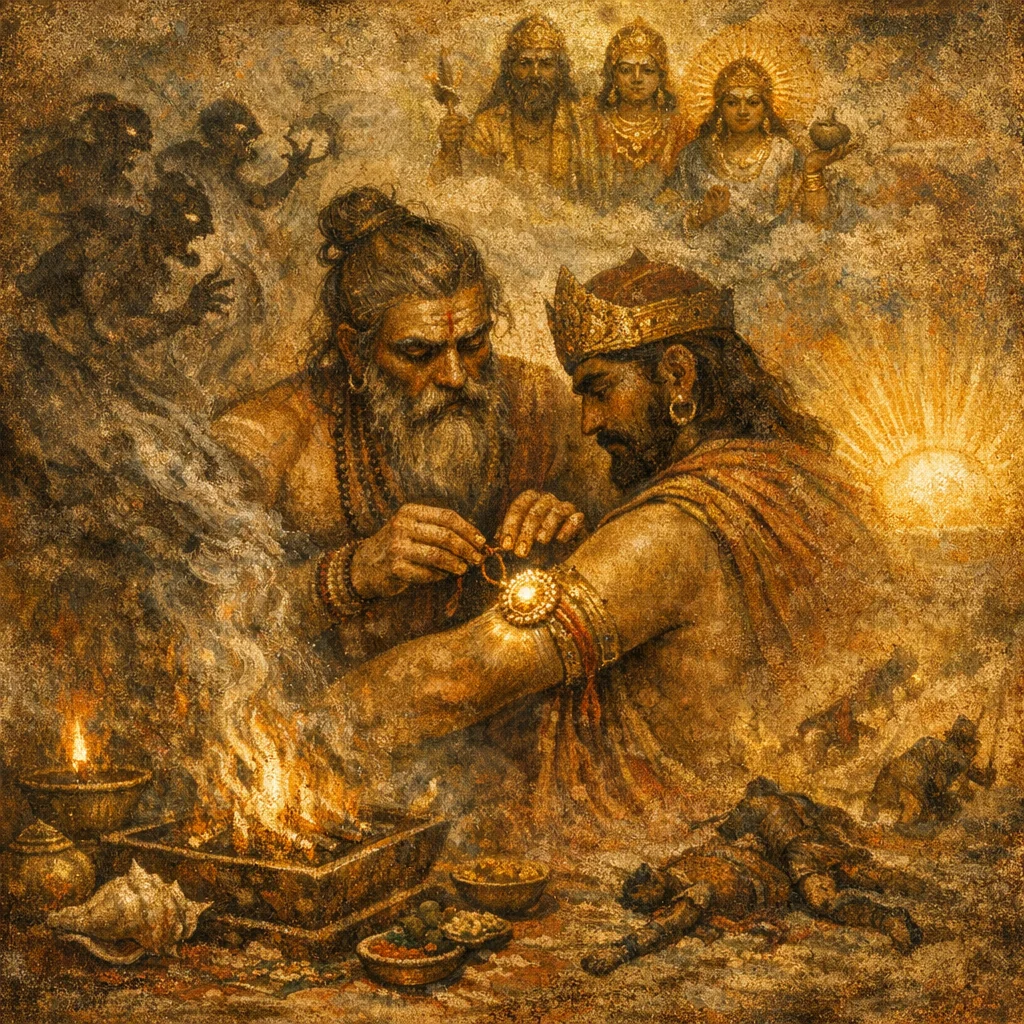
Sukta 29
Rishi: Atharvanic/Angirasa tradition (hymn-level attribution varies by Anukramaṇī; commonly treated as Atharvanic protective speech)
Devata: Indra or a generalized protective power (mantra functions as a command to the protector rather than a descriptive praise)
Chandas: Anuṣṭubh (probable; pāda-structure suggests the common Atharvanic anuṣṭubh cadence)
Mantras
Mantra 1
राष्ट्राभिवर्धनम्, सपत्नक्षयणं च। अभीवर्तेन मणिना येनेन्द्रो अभिवावृधे। तेनास्मान् ब्रह्मणस्पतेऽभि राष्ट्राय वर्धय
With the Abhīvarta amulet—wherewith Indra waxed mightily—therewith, O Lord of Sacred Speech, do thou increase us unto dominion.
Mantra 2
अभिवृत्य सपत्नानभि या नो अरातयः । अभि पृतन्यन्तं तिष्ठाभि यो नो दुरस्यति
Having encompassed the rivals—yea, against the ill-wishers of us—stand thou over the assailant in battle; stand thou against him who worketh us mischief.
Mantra 3
अभि त्वा देवः सविताभि सोमो अवीवृधत्। अभि त्वा विश्वा भूतान्यभीवर्तो यथाससि
Over thee hath god Savitar, over thee hath Soma, made increase. Over thee do all beings press and gather, that thou mayest be even as thou art (in thine own right estate).
Mantra 4
अभीवर्तो अभिभवः सपत्नक्षयणो मणिः । राष्ट्राय मह्यं बध्यतां सपत्नेभ्यः पराभुवे
A charm that turns (all) toward me, a charm of mastery, a jewel that wastes the rival—let it be bound on me for the realm, for the utter overthrow of my adversaries.
Mantra 5
उदसौ सूर्यो अगादुदिदं मामकं वचः । यथाहं शत्रुहोऽसान्यसपत्नः सपत्नहा
Up hath yonder Sun ascended; up hath risen this my proper spell, that I may be a smiter of the foe—rival-less, a slayer of rivals.
Mantra 6
सपत्नक्षयणो वृषाभिराष्ट्रो विषासहिः । यथाहमेषां वीराणां विराजानि जनस्य च
Foe-wasting, a bull of might, set over the realm, poison-overcoming—so may I shine forth as sovereign among these heroes, and among the people likewise.
Frequently Asked Questions
It is used to protect a person or community from rivals, hostile plotting, and attackers—by commanding a protector to ‘stand against’ the aggressor and by empowering a rival-wasting amulet.
Maṇi is the consecrated amulet (often a jewel or substitute charm-object) treated as an active power: it ‘turns things toward’ the patron, grants mastery, and wastes rivals when bound on the body.
No. While it strongly supports rāṣṭra (public order and authority) and can be used for leaders, its protective logic also applies to householders facing enmity, slander, or conflict, using an amulet-centered protection rite.