Adhyaya 202
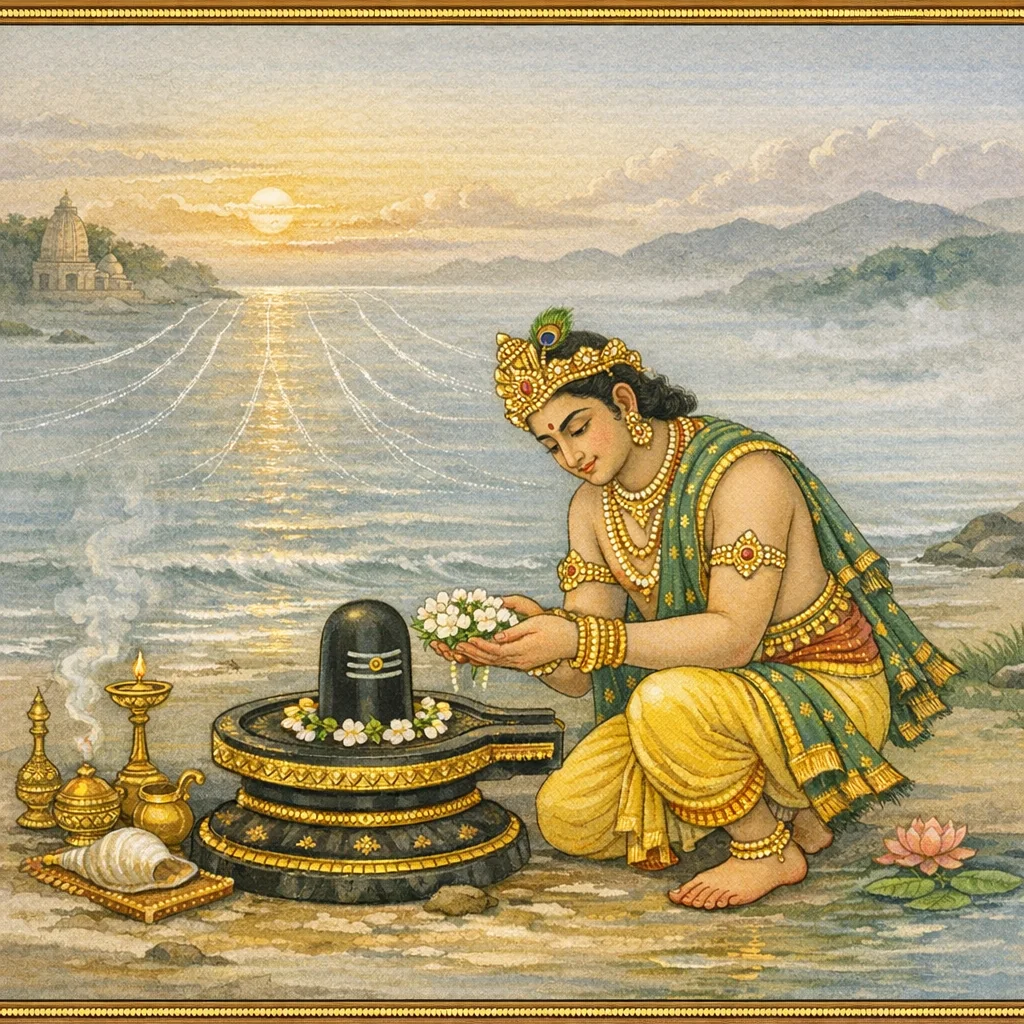
Īśvara tells Devī the place and greatness of Rāmeśvara at Prabhāsa, near the Sarasvatī. The tale recalls how Balabhadra (Rāma/Halāyudha) refused to take sides in the Pāṇḍava–Kaurava conflict and returned to Dvārakā; intoxicated, he wandered into a forest pleasure-grove. There he found learned Brahmins listening to a sūta’s recitation; in anger he struck the sūta down, then realized the deed brought a brahma-hatyā-like defilement, and he lamented its moral and bodily consequences. The chapter explains the reasoning of prāyaścitta—distinguishing intentional from unintentional harm, setting graded expiations, and emphasizing vrata observance. A bodiless voice directs Rāma to Prabhāsa, where the five-stream Pratilomā Sarasvatī is praised as destroying the five great sins, surpassing other tīrthas. Rāma performs pilgrimage rites, gives gifts, bathes at the river–ocean confluence, and establishes and worships a great liṅga, becoming purified. It ends with promised fruits: worship of the Rāmeśvara liṅga removes sin; a special observance on the eighth lunar day with the brahma-kūrcha procedure yields merit like an Aśvamedha. For those seeking the full yātrā-fruit, bathing, worship, and the gift of a cow are commended.
Shlokas
Verse 1
ईश्वर उवाच । ततो गच्छेन्महादेवि रामेश्वरमनुत्तमम् । मंकीशाद्दक्षिणे भागे आग्नेये तु कृतस्मरात् । पूर्वतस्तु सरस्वत्या बलभद्रप्रतिष्ठितम्
Īśvara said: Then, O great Goddess, one should go to the unsurpassed Rāmeśvara—situated to the south of Maṃkīśa, in the south-east of Kṛtasmarā, and to the east of the Sarasvatī—established by Balabhadra.
Verse 2
यत्र मुक्तोऽभवद्देवि रामो ब्रह्मवधात्किल । पातकात्प्रतिलोमां तामगाहत सरस्वतीम्
There, O Goddess, Rāma was indeed freed from the sin of brahmin-slaying; and there he entered the Sarasvatī that flows against the current in a sacred, extraordinary course.
Verse 3
देव्युवाच । कथं स पातकान्मुक्तः कथं पापमभूत्पुरा । कथं तत्स्थापितं लिंगं किंप्रभावं वदस्व मे
The Goddess said: How was he freed from sin? How did that wrongdoing arise in the first place? How was that liṅga established—and what is its sacred power? Tell me.
Verse 4
ईश्वर उवाच । शृणु देवि प्रवक्ष्यामि कथां पापप्रणाशिनीम् । यां श्रुत्वा मानवो देवि मुक्तः संसारसागरात् । सर्वान्कामान्स लभते सततं मनसि प्रियान्
Īśvara said: Listen, O Goddess—I shall relate a sin-destroying account. Hearing it, O Goddess, a person is freed from the ocean of saṃsāra and continually attains all the cherished desires within the mind.
Verse 5
रामः पूर्वं परां प्रीतिं कृत्वा कृष्णस्य लांगली । चिन्तयामास बहुधा किं कृतं सुकृतं भवेत्
Balarāma—bearer of the plough—having long cherished deep affection for Kṛṣṇa, pondered in many ways: “What deed might become true merit (sukṛta)?”
Verse 6
कृष्णेन हि विना नाहं यास्ये दुर्योधनान्तिकम् । पाण्डवान्वा समाश्रित्य कथं दुर्योधनं नृपम्
“Without Kṛṣṇa, I will not go to Duryodhana. And if I take refuge with the Pāṇḍavas, how could I face King Duryodhana?”
Verse 7
जामातरं तथा शिष्यं घातयिष्ये नरेश्वरम् । तस्मान्न पार्थं यास्यामि नापि दुर्योधनं नृपम्
“I would end up slaying my son-in-law and my disciple—both kings. Therefore I shall go neither to Pārtha nor to King Duryodhana.”
Verse 8
तीर्थेष्वाप्लावयिष्यामि तावदात्मानमात्मना । कुरूणां पाण्डवानां च यावदंताय कल्पते
“Until the end comes for the Kurus and the Pāṇḍavas, I shall immerse myself in holy fords, purifying my own self by my own disciplined effort.”
Verse 9
इत्यादिश्य हृषीकेशं पार्थदुर्योधनावपि । जगाम द्वारकां शौरिः स्वसैन्यैश्च परीवृतः
Having thus instructed Hṛṣīkeśa (Kṛṣṇa), and also Arjuna (Pārtha) and Duryodhana, Śauri (Balarāma) departed for Dvārakā, surrounded by his own troops.
Verse 10
गत्वा द्वारावतीं रामो हृष्टतुष्टजनाकुलाम् । स्वैरन्तःपुरगैः सार्धं पपौ पानं हलायुधः
Reaching Dvārāvatī—filled with people delighted and content—Rāma (Balarāma), wielder of the plough-weapon, drank wine together with his companions from the inner apartments.
Verse 11
पीतपानो जगामाथ रैवतोद्यानमृद्धिमत् । हस्ते गृहीत्वा स गदां रेवत्यादिभिरन्वितः
After drinking, he went to the splendid and prosperous Raivata Garden; taking his mace in hand, he proceeded accompanied by Revatī and the others.
Verse 12
स्त्रीकदंबकमध्यस्थो ययौ मत्तवदास्खलन् । ददर्श च वनं वीरो रमणीयमनुत्तमम्
Moving amid a cluster of women, he went on like one intoxicated, staggering; and the hero beheld a forest supremely delightful and incomparable.
Verse 13
सर्वत्र तरुपुष्पाढ्यं शाखामृगगणाकुलम् । पुष्प पद्मवनोपेतं सपल्वलमहावनम्
Everywhere the great forest was rich with blossoms on trees, crowded with troops of animals that roam the branches; it was adorned with flowering thickets and lotus-groves, and filled with ponds and marshy pools.
Verse 14
स शृण्वन्प्रीतिजनकान्वन्यान्मदकलाञ्छुभान् । श्रोत्ररम्यान्सुमधुराञ्छब्दान्खगसुखेरितान्
He listened to auspicious woodland notes that brought delight—very sweet sounds, pleasing to the ear, joyfully uttered by birds.
Verse 15
सर्वतः फलरत्नाढ्यान्सर्वतः कुसुमोज्ज्वलान् । अपश्यत्पादपांश्चैव विहगैरनुमोदितान्
On all sides he saw trees laden with jewel-like fruits, and everywhere radiant with blossoms—trees as though praised and celebrated by the birds.
Verse 17
आम्रानाग्रातकान्भव्यान्नालिकेरान्सतिंदुकान् । आबल्वनांस्था पीतान्दाडिमान्बीजपूरकान् । पनसांल्लकुचान्मोचांस्तापांश्चापि मनोहरान् । पालेवतान्कुसंकुल्लान्नलिनानथ वेतसान्
He saw mango trees and fine āgrātaka trees, coconut palms and tinduka; also ābalvana trees, pīta trees, pomegranates and citron; jackfruit, lakuca, plantains, and other charming fruits; and also pālevata trees, kusa-thickets, lotus-plants, and reeds.
Verse 18
भल्लातकानामलकींस्तिन्दुकांश्च महाफलान् । इंगुदान्करमर्दांश्च हरीतकबिभीतकान्
He also beheld bhallātaka trees, āmalakī (emblic myrobalan), tinduka with great fruits, iṅguda and karamarda, and harītaka and bibhītaka as well.
Verse 19
एतानन्यांश्च स तरून्ददर्श यदुनन्दनः । तथैवाशोकपुन्नागकेतकीबकुलांस्तथा
These and many other trees the Yadu-descendant beheld; likewise he saw aśoka, punnāga, ketakī, and bakula trees as well.
Verse 20
चंपकान्सप्तपर्णांश्च कर्णिकारान्सुमालतीः । पारिजातान्कोविदारा न्मन्दारेन्दीवरांस्तथा
There were campaka and saptaparṇa trees, karṇikāra and fragrant mālatī creepers; and also pārijāta and kovidāra, along with mandāra and blue water-lilies—adorning that sacred landscape.
Verse 21
पाटलान्पुष्पितान्रम्भान्देवदारुद्रुमांस्तथा । शालांस्तालांश्च स्तमालांनिचुलान्वञ्जुलांस्तथा
There were blossoming pāṭala trees, plantain groves, and also deodars; śāla and tāla palms, stamāla, nicula, and vañjula trees as well—filling the holy region with beauty.
Verse 22
चकोरैः शतपत्रैश्च भृंगराजैः समावृतान् । कोकिलैः कलविंकैश्च हारीतैर्जीवजीवकैः
It was filled all around with cakora birds, śatapatra birds, and bhṛṅgarājas—along with cuckoos, kalaviṅkas, hārītas, and jīvajīvas—making the sacred groves resound with life.
Verse 23
प्रियपुत्रैश्चातकैश्च शुकैरन्यैर्विहंगमैः । श्रोत्ररम्यं सुमधुरं कूज द्भिश्चाप्यधिष्ठितैः
It was inhabited by priyaputra birds, cātakas, parrots, and other winged creatures; their calls—sweet and pleasing to the ear—made the place ever more enchanting.
Verse 24
सरांसि च सपद्मानि मनोज्ञसलिलानि च । कुमुदैः पुण्डरीकैश्च तथा रोचनकोत्पलैः
There were lakes with lotuses, their waters charming to behold—adorned with kumuda lilies, white puṇḍarīka lotuses, and radiant rocanaka water-lilies.
Verse 25
कह्लारैः कमलैश्चापि चर्चितानि समंततः । कदंबैश्चक्रवाकैश्च तथैव जलकुक्कुटैः
Everywhere those waters were ornamented with kahlāra lilies and lotuses, and likewise with kadamba trees, cakravāka birds, and waterfowl—enhancing the splendor of the sacred place.
Verse 26
कारण्डवैः प्लवैर्हंसैः कूर्मैर्मंडुभिरेव च । एतैरन्यैश्च कीर्णानि तथान्यैर्जलवा सिभिः
They were teeming with kāraṇḍava ducks, plava birds, and swans, with turtles and frogs as well—scattered with these and other creatures that dwell in the waters.
Verse 27
क्रमेण संचरन्रामः प्रेक्षमाणो मनोरमम् । जगामानुगतः स्त्रीभिर्लतागृहमनुत्तमम्
Moving along step by step, Rāma—gazing upon those enchanting sights—went on, followed by the women, to an unsurpassed vine-bower (latāgṛha).
Verse 28
स ददर्श द्विजांस्तत्र वेदवेदांगपार गान् । कौशिकान्भार्गवांश्चैव भारद्वाजांश्च गौतमान्
There he beheld brāhmaṇas—masters who had crossed to the far shore of the Vedas and Vedāṅgas: Kauśikas, Bhārgavas, Bhāradvājas, and Gautamas.
Verse 29
विविधेषु च संभूतान्वंशेषु द्विजसत्तमान् । कथाश्रवणसोत्कण्ठानुपविष्टान्महा त्मनः
He saw the finest of brāhmaṇas, born in many lineages—great-souled ones seated there, eager and intent upon hearing the sacred narration.
Verse 30
कृष्णाजिनोत्तरीयेषु कूर्चेषु च वृसीषु च । सूते च तेषां मध्यस्थं कथयानं कथाः शुभाः
Wearing black-antelope skins as upper garments and seated on kuśa mats and deer-skins, the sages placed the Sūta in their midst as he recounted auspicious sacred narratives.
Verse 31
पौराणिकाः सुरर्षीणामा द्यानां चरितक्रियाः । दृष्ट्वा रामं द्विजाः सर्वे मधुपानारुणेक्षणम्
Those brāhmaṇas, learned in the Purāṇas and in the deeds and observances of gods and seers, on seeing Rāma (Balarāma) with eyes reddened from drink, all took notice.
Verse 32
मत्तोऽयमिति मन्वानाः समुत्तस्थुस्त्वरान्विताः । पूजयन्तो हलधरं तमृते सूतवंशजम्
Thinking, “He is intoxicated,” they quickly rose and began honoring Haladhara (Balarāma)—except for that man born of the Sūta lineage.
Verse 33
ततः क्रोधसमाविष्टो हली सूतं महाबलः । निजघान विवृत्ताक्षः क्षोभिताशेषदानवः
Then Halī (Balarāma), overcome by wrath—mighty, with eyes wide in fury, stirring dread as though he roused all the dānavas—struck down the Sūta.
Verse 34
अन्वासिते पदं ब्राह्म्यं तस्मिन्सूते निपातिते । निष्क्रान्तास्ते द्विजाः सर्वे वनात्कृष्णाजिनांबराः
When that Sūta—who had been occupying a Brahmin’s seat—was felled, all the twice-born sages, clad in black-antelope skins, withdrew and departed from the forest.
Verse 35
अवधूतं तथात्मानं मन्यमानो हलायुधः । चिन्तयामास सुमहन्मया पापमिदं कृतम्
Halāyudha (Balarāma), deeming himself fallen and disgraced, reflected deeply: “A very great sin has been committed by me.”
Verse 36
ब्रह्मासनगतो ह्येष यः सूतो विनिपातितः । तथा ह्येते द्विजाः सर्वे मामवेक्ष्य विनिर्गताः
“For the Sūta whom I struck down was seated upon a Brahmin’s seat; and indeed all these brāhmaṇas, seeing me, have gone away.”
Verse 37
शरीरस्य च मे गन्धो लोहस्येवासुखावहः । आत्मानं चावगच्छामि ब्रह्मघ्नमिति कुत्सितम्
“Even the odor of my body is distressing, like that of iron; and I recognize myself as vile—one branded a slayer of a brāhmaṇa.”
Verse 38
धिङ्ममार्थं तथा मद्यं महिमानमकीर्तिदम् । येना विष्टेन सुमहन्मया पापमिदं कृतम्
Fie upon my pride—and upon liquor (madya), which steals true greatness and brings only disgrace. Because of that foul intoxication, I have committed this exceedingly great sin.
Verse 39
स्मृत्युक्तं ते करिष्यामि प्रायश्चित्तं यथाविधि । उक्तमस्त्येव मनुना प्रायश्चित्तादिकं क्रमात्
I shall perform, exactly as prescribed, the prāyaścitta (expiation) taught in the Smṛtis; for Manu has indeed laid down, in due order, the procedures beginning with prāyaścitta.
Verse 41
क्षेत्रेश्वरस्य विज्ञानाद्विशुद्धिः परमा मता । शरीरस्य विशुद्धिस्तु प्रायश्चित्तैः पृथग्विधैः
Supreme purity is held to arise from realizing Kṣetreśvara, the Lord of the sacred field. But the purification of the body is attained through various distinct acts of prāyaścitta (expiation).
Verse 42
ततोऽद्यतः करिष्यामि व्रतं द्वादशवार्षिकम् । स्वकर्मख्यापनं कुर्वन्प्रायश्चित्तमनुत्तमम्
Therefore, from today I shall undertake a twelve-year vow—performing the unsurpassed prāyaścitta (expiation) while openly acknowledging my own deed.
Verse 43
इयं विशुद्धिरज्ञानाद्धत्वा चाकामतो द्विजम् । कामतो ब्राह्मणवधे निष्कृतिर्न विधीयते
This purification applies when, through ignorance, a dvija (twice-born) is slain unintentionally. But for the deliberate killing of a brāhmaṇa, no expiation is enjoined.
Verse 44
यः कामतो महापापं नरः कुर्य्नात्कथंचन । न तस्य निष्कृतिर्दृष्टा भृग्वग्निपतनादृते
A man who deliberately commits a great sin—by whatever means—has no expiation seen for him, except falling into the fire of Bhṛgu.
Verse 45
अकामतः कृते पापे प्रायश्चित्तं विदुर्बुधाः । कामकारकृतेऽप्याहुरेके श्रुतिनिदर्शनात्
For sins done unintentionally, the wise know expiation (prāyaścitta) to be proper. Some, citing indications from the Veda, also speak of expiation even for acts done intentionally.
Verse 46
विधिः प्राथमिकस्तस्माद्द्वितीये द्विगुणं चरेत् । तृतीये त्रिगुणं प्रोक्तं चतुर्थे नास्ति निष्कृतिः
Therefore the initial rule applies the first time; for a second occurrence one should perform it double, and for a third it is said to be triple. On the fourth, there is no expiation.
Verse 47
औषधं स्नेहमाहारं ददद्गोब्राह्मणादिषु । दीयमाने विपत्तिः स्यान्न स पापेन लिप्यते
If one gives medicine, unction (ghee/oil), or food to cows, brāhmaṇas, and the like, and a mishap occurs while giving, he is not tainted by sin.
Verse 48
अकारणं तु यः कश्चिद्द्विजः प्राणान्परित्यजेत् । तस्यैव तत्र दोषः स्यान्न तु योऽस्मै ददाति तत्
But if some twice-born (dvija), without cause, gives up his life, the fault there lies with him alone—not with the one who gives that aid to him.
Verse 49
परिष्कृतो यदा विप्रो हत्वाऽत्मानं मृतो यदि । निर्गुणः सहसा क्रोधाद्गृहक्षेत्रादिकारणात्
If a brāhmaṇa, though duly purified, still dies by slaying himself—suddenly, without restraint, from anger arising over house, land, and the like—
Verse 50
त्रिवार्षिकं व्रतं कुर्या त्प्रतिलोमां सरस्वतीम् । गच्छेद्वापि विशुद्ध्यर्थं तत्पापस्येति निश्चितम्
One should undertake a three-year vow; or else, for purification, go to the Sarasvatī in her reverse (upstream) course—this is the settled means for cleansing that sin.
Verse 51
उद्दिश्य कुपितो हत्वा तोषितं वासयेत्पुनः । तस्मिन्मृते न दोषोऽस्ति द्वयोरुच्छ्रावणे कृते
If, in anger and with a definite intent, one strikes (even kills) a person, one should again restore and settle the appeased party. And if that person dies, there is no fault—provided the formal proclamation to both parties has been duly made.
Verse 52
षण्ढं तु ब्राह्मणं हत्वा शूद्रहत्याव्रतं चरेत् । बहूनामेककार्याणां सर्वेषां शस्त्रधारिणाम्
But if one kills a eunuch brāhmaṇa, one should undertake the expiatory observance prescribed for killing a Śūdra. And when many join in a single common act—when all are weapon-bearers—(the responsibility is shared).
Verse 53
यद्येको घातयेत्तत्र सर्वे ते घातकाः स्मृताः । प्रायश्चित्ते व्यवसिते यदि कर्ता विपद्यते
If, among them, only one brings about the killing, all are still remembered as killers. And if, after the expiation has been determined, the one who was to perform it should die…
Verse 54
एनस्तत्प्राप्नुयादेनमिह लोके परत्र च । तदहं किं करोम्येष क्व गच्छामि दुरात्मवान्
That very sin would seize him—here in this world and also in the next. “So what am I to do? Where shall I go, I of wicked mind?”
Verse 55
धिङ्मां च पापचरितं महादुष्कृतकर्मिणम्
Shame on me—one of sinful conduct, a doer of great evil deeds!
Verse 56
ईश्वर उवाच । इत्येवं विलपन्यावच्छोका कुलितमानसः । तावदाकाशसंभूता वागुवाचाशरीरिणी
Īśvara said: While he was lamenting thus, his mind overwhelmed by grief, then a bodiless voice, arisen from the sky, spoke.
Verse 57
भोभो राम न संतापस्त्वया कार्यः कथंचन । गच्छ प्राभासिकं क्षेत्रं यत्र देवी सरस्वती
“O Rāma, do not grieve in any way. Go to the sacred Prābhāsika region, where the Goddess Sarasvatī is.”
Verse 58
पञ्चस्रोताः स्थिता तत्र पञ्चपातकनाशनी । नदीनां प्रवरा सा तु ब्रह्मभूता सरस्वती
There she stands with five streams, destroying the five great sins. Among rivers she is foremost—Sarasvatī, of the very nature of Brahman.
Verse 59
एकतः सर्वतीर्थानि ब्रह्माण्डे सचराचरे । गंगादीनि नरश्रेष्ठ तेषां पुण्या सरस्वती
On one side are all the sacred tīrthas in the whole universe, moving and unmoving—even Gaṅgā and the rest, O best of men; yet among them Sarasvatī is supremely holy.
Verse 60
तावद्गर्जंति पापानि ब्रह्महत्यादिकानि च । यावन्न दृश्यते देवी प्रभासस्था सर स्वती
Sins—beginning with brahma-hatyā—roar only so long as the Goddess Sarasvatī who abides at Prabhāsa is not seen (or approached).
Verse 61
तस्मात्तत्रैव गच्छ त्वं यत्र देवी सरस्वती । नान्यैस्तीर्थैः सहस्रैस्त्वं कर्तुं शक्यो विकल्मषः
Therefore go there alone—precisely to the place where the Goddess Sarasvatī is. By a thousand other sacred tīrthas you cannot so easily become free from defilement (sin).
Verse 62
तन्मा कार्षीर्विलंबं त्वं गच्छ तीरं महोदधेः । प्राभासिके महादेवीं प्रतिलोमां विगाहय
Do not delay in this matter. Go to the shore of the great ocean; in Prabhāsa, enter (bathe in) the great divine one—the sacred tīrtha—by moving in the reverse direction (pratiloma).
Verse 63
तत्रैवाराधय विभुं लिंगरूपिणमीश्वरम् । प्रतिष्ठाप्य महापापाच्छारी रात्त्वं विमोक्ष्यसि
There itself worship the all-pervading Lord, Īśvara, in the form of the Liṅga. Having established the Liṅga, you will be released—from the great sin and from bodily bondage.
Verse 64
इति श्रुत्वा वचो रामः परमानंदपूरितः । प्रभासक्षेत्रगमने मतिं चक्रे महामनाः
Hearing these words, Rāma—filled with supreme bliss—this great-souled one resolved to journey to Prabhāsakṣetra.
Verse 65
ततः स्वसैन्यसंयुक्तो द्रव्योपस्करसंयुतः । आजगाम महाक्षेत्रं प्रभासमिति विश्रुतम्
Then, accompanied by his own forces and furnished with supplies and requisites, he came to that great sacred region renowned as Prabhāsa.
Verse 66
दृष्ट्वा मनोरम तीर्थं सरस्वत्यब्धिसंगमे । चकार हृदि संकल्पं प्रति लोमावगाहने
Seeing the delightful tīrtha at the meeting of the Sarasvatī and the ocean, he formed in his heart a solemn resolve to perform the pratiloma immersion.
Verse 67
आहूय ब्राह्मणांस्तत्र प्रभासक्षेत्रवासिनः । सम्यग्यात्राविधानेन यात्रां तत्राकरोद्विभुः
Summoning the brāhmaṇas dwelling in Prabhāsakṣetra, the mighty one conducted the pilgrimage there in accordance with the proper ordinances of yātrā.
Verse 68
यानि प्राभासिके क्षेत्रे तीर्थानि विविधानि तु । रवियोजनसंस्थानि तेषु यात्रां चकार सः
Whatever diverse tīrthas are found in the Prābhāsa region—spread across an expanse measured in ‘ravi-yojanas’—to all of them he undertook pilgrimage.
Verse 69
प्रत्येकं च ददौ तेषु दानानि विविधानि तु । तथाऽधः स्थाप यामास सरस्वत्यब्धिसंगमे
At each of those tīrthas he bestowed gifts of many kinds. Likewise, at the confluence of the Sarasvatī and the ocean, he proceeded to establish a sacred installation there.
Verse 70
पूर्वभागे महालिंगं कृत्वा यज्ञविधिक्रियाम् । एवं कृते महादेवि विमुक्तः पातकैरभूत्
In the eastern quarter, having established a great Liṅga and performed the rites according to the ordinance of yajña, when this was done, O Mahādevī, he became freed from sins.
Verse 71
निर्मर्लांगस्ततो देवि दिनानि दश संस्थितः । ततस्तां चैव स स्नात्वा प्रतिलोमां क्रमाद्ययौ । प्लक्षावहरणं यावत्समुद्राच्च हिमाह्वयम्
Then, O Goddess, becoming free from stain, he stayed there for ten days. After bathing there as well, he proceeded step by step in reverse order—from the ocean up to the Himālaya, as far as the region called Plakṣāvaharaṇa.
Verse 72
एवं मुक्तः स पापौघै रामोऽभूत्प्रथितः प्रिये । तस्य लिंगस्य माहात्म्यात्सरस्वत्याः प्रसादतः
Thus freed from floods of sins, Rāma became renowned, O beloved—through the greatness of that Liṅga and by the gracious favor of Sarasvatī.
Verse 73
यस्तत्पूजयते देवि लिंगं पापभयापहम् । रामेश्वरेति कथितं सोऽपि मुच्येत पातकात्
Whoever worships that Liṅga, O Goddess—remover of sin and fear—known as “Rāmeśvara”, he too is released from wrongdoing.
Verse 74
अष्टम्यां च विशेषेण ब्रह्मकूर्चविधानतः । यस्तत्र कुरुते देवि सोऽश्वमेधफलं लभेत्
And especially on the lunar eighth day (Aṣṭamī), whoever performs the rite there according to the Brahma-kūrca procedure, O Goddess, attains the fruit of an Aśvamedha sacrifice.
Verse 75
स्नात्वा तत्र वरारोहे सरस्वत्यब्धिसंगमे । रामेश्वरेतिनामानं ततः संपूज्य शंकरम् । गोदानं तत्र देयं तु सम्यग्यात्राफलेप्सुभिः
Having bathed there, O fair-hipped one, at the confluence of Sarasvatī and the ocean, and then duly worshipped Śaṅkara under the name “Rāmeśvara”, those who seek the full fruit of pilgrimage should give the gift of a cow there.
Verse 76
इत्येवं कथितं देवि रामेश्वरमहोदयम् । यच्छ्रुत्वा मानवः सम्यक्छ्रद्धावान्प्राप्नुयाद्दिवम्
Thus, O Goddess, has the great glory of Rāmeśvara been described; hearing it properly with faith, a person attains heaven.