Adhyaya 35
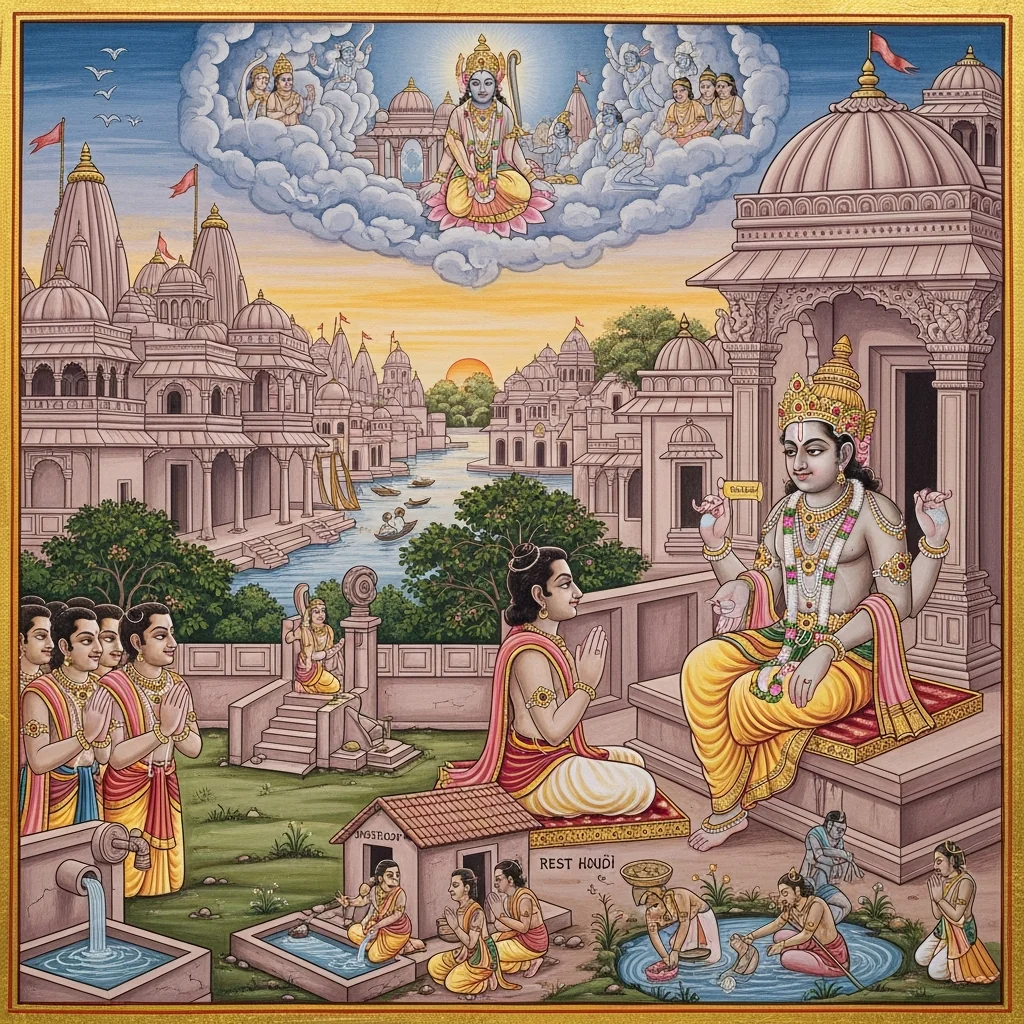
Adhyāya 35 unfolds as a dialogue in which Prahlāda praises the unsurpassed holiness of Dvārakā and the transforming power of darśana—simply beholding its Vaiṣṇava devotees and residents, marked by the four-armed form. He argues in stages that Dvārakā’s sanctity is vast and manifest even to celestial beings, and that even its stones, dust, and minor creatures become channels of release, heightening the kṣetra’s salvific character. The chapter then establishes an ethical boundary by condemning Vaiṣṇava-nindā—disparaging Dvārakā’s residents—illustrated through Jayanta’s punitive function and the warning that such censure brings grievous suffering. In contrast, it prescribes praise and practice: serving Kṛṣṇa in Dvārakā, dwelling there with bhakti, and giving dāna even in small amounts are said to yield magnified fruits beyond renowned rites elsewhere (such as gifts at Kurukṣetra or merits of the Godāvarī). Calendrical and ritual notes follow, including bathing in the Gomati when Guru (Jupiter) is in Leo and increased efficacy in certain months. The conclusion turns to an ethic of sacred infrastructure—building shelters, waterworks, and rest-houses, repairing ponds and wells, and installing images of Viṣṇu—mapped to ascending heavenly enjoyments and attainment of Viṣṇuloka, ending with the question of why Dvārakā uniquely accelerates puṇya and prevents the “sprouting” of pāpa.
Shlokas
Verse 1
प्रह्लाद उवाच । अहो क्षेत्रस्य माहात्म्यं समंताद्दशयोजनम् । दिविष्ठा यत्र पश्यंति सर्वानेव चतुर्भुजान्
Prahlāda said: “Ah, wondrous is the greatness of this kṣetra—extending ten yojanas in every direction—where the dwellers of heaven behold all as four-armed, in divine form.”
Verse 2
अहो क्षेत्रस्य माहात्म्यं दृष्ट्वा नित्यं चतुर्भुजान् । द्वारकावासिनः सर्वान्नमस्यंति दिवौकसः
Ah, wondrous is the greatness of this holy region: seeing all the Dvārakā-dwellers ever as four-armed, the inhabitants of heaven bow in reverence to them all.
Verse 3
अहो क्षेत्रस्य माहात्म्यं सर्वशास्त्रेषु विश्रुतम् । अहो क्षेत्रस्य माहात्म्यं शृण्वंतु ऋषयोऽमलाः
Ah! The greatness of this holy kṣetra is renowned in all the śāstras. Ah! Let the stainless ṛṣis hear once more the greatness of this kṣetra!
Verse 4
मुक्तिं नेच्छंति यत्रस्थाः कृष्णसेवोत्सुकाः सदा । यत्रत्याश्चैव पाषाणा यत्र क्वापि विमुक्तिदाः
There, those who dwell—ever eager to serve Kṛṣṇa—do not even desire mukti. Even the stones found there, wherever they may be, become bestowers of release.
Verse 5
अपि कीट पतंगाद्याः पशवोऽथ सरीसृपाः । विमुक्ताः पापिनः सर्वे द्वारकायाः प्रसादतः । किं पुनर्मानवा नित्यं द्वारकायां वसंति ये
Even insects and moths, beasts and creeping creatures—though sinful—are all set free by the grace of Dvārakā. How much more, then, those human beings who dwell in Dvārakā continually!
Verse 6
या गतिः सर्वजंतूनां द्वारकापुरवासिनाम् । सा गतिर्दुर्लभा नूनं मुनीनामूर्द्ध्वरेतसाम्
The destiny (gati) attained by all beings who dwell in the city of Dvārakā—that very state—is surely difficult to obtain even for ascetic munis of restrained seed.
Verse 7
सर्वेषु क्षेत्रतीर्थेषु वसतां वर्षकोटिभिः । तत्फलं निमिषाद्धेंन द्वारकायां दिनेदिने
The fruit gained by residing for crores of years in all sacred kṣetras and tīrthas—that very fruit is obtained in Dvārakā day by day, in but a moment.
Verse 8
द्वारकायां स्थिताः सर्वे नरा नार्य्यश्चतुर्भुजाः । द्वारकावासिनः सर्वान्यः पश्येत्कलुषापहान् । सत्यंसत्यं द्विजश्रेष्ठाः कृष्णस्यातिप्रियो भवेत्
In Dvārakā, all men and women who dwell there are beheld as four-armed. Whoever sees all the Dvārakā-dwellers as removers of impurity—truly, truly, O best of Brahmins—becomes exceedingly dear to Kṛṣṇa.
Verse 9
द्वारकावासिनो ये वै निंदंति पुरुषाधमाः । कृष्णस्नेहविहीनास्ते पतंति दुःखसागरे
Those base men who revile the residents of Dvārakā are devoid of love for Kṛṣṇa; they fall into an ocean of sorrow.
Verse 10
जयंतेन भृशं त्रस्ताः शूलाग्रारोपिताश्चिरम् । कर्षितास्ताडितास्ते वै मूर्च्छिताः पुनरुत्थिताः
Greatly terrified by Jayanta, they were hoisted for a long time upon the tip of a spear; dragged and beaten, they would faint and then rise again.
Verse 11
त्राहित्राहि जयंत त्वं वदंतो हि भयातुराः । स्मरंतः पूर्वपापं ते जयंतेन प्रताडिताः
Overwhelmed with fear, they kept crying, “Save us, save us, O Jayanta!” Remembering their former sins, they were struck again and again by Jayanta.
Verse 12
जयंत उवाच । किं कृतं मंदभाग्यैर्वो यत्पापं च सुदारुणम् । सर्वं पुण्यफलं लब्ध्वा द्वारकावासमुत्तमम्
Jayanta said: “What terribly cruel sin have you, ill-fated ones, committed—after obtaining the full fruit of merit, namely the excellent privilege of dwelling in Dvārakā?”
Verse 13
द्वारकावासिनां निंदा महापापाधिका ध्रुवम् । न निवर्तेत तत्पापं सा ज्ञेया परमेश्वरी
Slander of the residents of Dwārakā is surely graver than great sins. That sin does not easily subside; know it to be supremely powerful in its consequence.
Verse 14
अतः कृष्णाज्ञया सर्वान्पापिनो दंडयाम्यहम् । वैष्णवानां च निंदायाः फलं भुक्त्वा सुदारुणम्
Therefore, by Kṛṣṇa’s command, I punish all these sinners, so that they may undergo the exceedingly dreadful fruit of reviling the Vaiṣṇavas.
Verse 15
ततस्तु द्वारकायां च पुण्यं जन्म भविष्यति । कृष्णं प्रतोष्य संसिद्धिर्भविष्यति सुदुर्ल्लभा
Thereafter, in Dwārakā, a righteous and meritorious birth will arise; and by fully pleasing Kṛṣṇa, a perfection most difficult to attain will be gained.
Verse 16
तस्मात्तद्भुज्यतां पापं जातं वैष्णवनिंदनात् । तत्रत्यानां प्रभुर्नैव यम ईष्टे महेश्वरः
Therefore, let that sin born of reviling the Vaiṣṇavas be endured and exhausted. For those who dwell there, Yama is not the lord; Maheśvara is revered as the supreme authority.
Verse 17
श्रीप्रह्लाद उवाच । तस्माद्द्वारवतीं गत्वा संसेव्यो देवनायकः
Śrī Prahlāda said: “Therefore, having gone to Dwāravatī, one should devotedly serve the Lord, the leader of the gods.”
Verse 18
गोमतीतीरमाश्रित्य द्वारकायां प्रयच्छति । यत्तु किंचिद्धनं विप्राः श्रूयतां तत्फलोदयम्
Resorting to the bank of the Gomatī in Dwārakā, whatever wealth a person gives—O brāhmaṇas, hear now the arising of its rewards.
Verse 19
हेमभारसहस्रैस्तु रविवारे रविग्रहे । कुरुक्षेत्रे यदाप्नोति गजाश्वरथदानतः
That merit which one obtains at Kurukṣetra—on a Sunday, during a solar eclipse—by gifting elephants, horses, and chariots, (is the standard of comparison being described here).
Verse 20
सहस्रगुणितं तस्मात्सत्यंसत्यं मयोदितम् । हेममाषार्द्धमानेन द्वारकादानयोगतः
Therefore, the merit becomes a thousandfold—this is truth, truth, as I have declared. Even by the sacred act of charity in Dvārakā, with only half a māṣa measure of gold, one gains that multiplied fruit.
Verse 21
पत्राणां चैव पुष्पाणां नैवेद्यसिक्थसंख्यया । कृष्णदेवस्य पूजायामनंतं भवति द्विजाः
O brāhmaṇas, in the worship of Lord Kṛṣṇa, the fruit becomes endless—whether measured by the number of leaves and flowers offered, or by offerings of food and lamps.
Verse 22
अन्नदानं तु यः कुर्य्याद्द्वारकायां तु तत्फलम् । नैव शक्नोम्यहं वक्तुं ब्रह्मा शेषमहेश्वरौ
But whoever performs the gift of food in Dvārakā—its fruit I cannot possibly describe; nor can Brahmā, Śeṣa, or Maheśvara fully express it.
Verse 23
ब्राह्मणः क्षत्रियो वैश्यः शूद्रो वाऽप्यथ वांऽत्यजः । नारी वा द्वारकायां वै भक्त्या वासं करोति वै
Whether brāhmaṇa, kṣatriya, vaiśya, śūdra, or even one born in a last (marginalized) community—or a woman—whoever dwells in Dvārakā with devotion truly gains the sacred benefit.
Verse 24
कुलकोटिं समुद्धृत्य विष्णुलोके महीयते । सत्यंसत्यं द्विजश्रेष्ठा नानृतं मम भाषितम्
Having uplifted ten million of his lineage, he is honored in Viṣṇu’s world. Truly, truly, O best of brāhmaṇas—what I have spoken is not false.
Verse 25
द्वारकावासिनं दृष्ट्वा स्पृष्ट्वा चैव विशेषतः । महापापविनिर्मुक्ताः स्वर्गलोके वसंति ते
By merely seeing a resident of Dvārakā—and especially by touching him—they are freed from great sins and dwell in the heavenly worlds.
Verse 26
पांसुवो द्वारकाया वै वायुना समुदीरिताः । पापिनां मुक्तिदाः प्रोक्ताः किं पुनर्द्वारका भुवि
Even the dust of Dvārakā, lifted and carried by the wind, is said to grant liberation to sinners—how much more so Dvārakā itself upon the earth!
Verse 27
श्रीप्रह्लाद उवाच । श्रूयतां द्विजशार्दूला महामोहविनाशनम् । द्वारकायाश्च माहात्म्यं गोमतीकृष्णसन्निधौ
Śrī Prahlāda said: O tigers among the brāhmaṇas, listen to the greatness of Dvārakā—destroyer of great delusion—there in the presence of the Gomati and Lord Kṛṣṇa.
Verse 28
कुशावर्त्तात्समारभ्य यावद्वै सागरावधि । यस्यां तिथौ समायाति सिंहे देवपुरोहितः
Beginning from Kuśāvarta and extending up to the ocean’s boundary—on the lunar tithi when the divine priest Bṛhaspati enters Siṃha (Leo)…
Verse 29
तस्यां हि गोमतीस्नानं द्विषङ्गोदावरीफलम् । अवगाहिता प्रयत्नेन सिंहांते गौतमी सकृत्
On that occasion, bathing in the Gomatī yields the fruit of twice the famed merit of the Godāvarī. Whoever, with effort, bathes even once in the Gautamī at the close of Siṃha (Leo) attains that same result.
Verse 30
गोदावर्य्यां भवेत्पुण्यं वसतो वर्षसंख्यया । तत्फलं समवाप्नोति गोमतीसेवनाद्द्विजाः
O twice-born ones, the merit gained by dwelling on the Godāvarī for many years—that very fruit is obtained merely by devoutly serving and frequenting the holy Gomatī.
Verse 31
गोमत्यां श्रद्धया स्नानं पूर्णे सिंहस्थिते गुरौ । सहस्रगुणितं तत्स्याद्द्वारवत्यां दिनेदिने
A faith-filled bath in the Gomatī, when Guru—Bṛhaspati (Jupiter)—is fully established in Siṃha (Leo), becomes thousandfold in merit, day after day, in Dvāravatī (Dvārakā).
Verse 32
गच्छगच्छ महाभाग द्वारकामिति यो वदेत् । तस्यावलोकनादेव मुच्यते सर्वपातकैः
Whoever says, “Go, go, O fortunate one, to Dvārakā”—by merely looking upon that person, one is freed from all sins.
Verse 33
द्वारकेति च यो ब्रूयाद्द्वारकाभिमुखो नरः । कृपया कृष्णदेवस्य मुक्तिभागी भवेद्ध्रुवम्
Whoever, facing toward Dvārakā, utters “Dvārakā”—by the compassion of Lord Kṛṣṇa—surely becomes a recipient of liberation.
Verse 34
द्वारकां गोमतीं पुण्यां रुक्मिणीं कृष्णमेव च । स्मरंति येऽन्वहं भक्त्या द्वारकाफलभागिनः
Those who, day after day, with devotion remember Dvārakā, the holy Gomati, Rukmiṇī, and Lord Kṛṣṇa, become partakers of the fruit of Dvārakā.
Verse 35
सहस्रयोजनस्थानां येषां स्यादिति मानसम् । द्वारवत्यां गमिष्यामो द्रक्ष्यामो द्वारकेश्वरम्
Even those a thousand yojanas away, if this resolve arises in the mind—“We shall go to Dvāravatī; we shall behold Dvārakeśvara”—are uplifted by that very intention.
Verse 36
सर्वपापैः प्रमुच्यंते धन्यास्ते लोकपावनाः । किं वाच्यं द्वारकायात्रां ये प्रकुर्वंति मानवाः । किं पुनर्द्वारकानाथं कृष्णं पश्यंति ये नराः
They are freed from all sins—blessed indeed are those who purify the world. What more need be said of people who undertake the pilgrimage to Dvārakā? How much more blessed are those who behold Kṛṣṇa, the Lord of Dvārakā!
Verse 37
मित्रध्रुग्ब्रह्महा गोघ्नः परदारापहारकः । मातृहा पितृहा चैव ब्रह्मस्वापहरस्तथा
One who betrays a friend, one who kills a brāhmaṇa, a slayer of a cow, an abductor of another’s wife; a killer of mother or father, and likewise one who steals brahminical property—
Verse 38
एते चान्ये च पापिष्ठा महापापयुताश्च ये । सर्वपापैः प्रमुच्यंते कृष्णदेवस्य दर्शनात्
These and other most sinful people—even those burdened with great sins—are freed from all sins by the darśana, the sacred vision, of Lord Kṛṣṇa.
Verse 39
किं वेदैः श्रद्धया हीनैर्व्याख्यानैरपि कृत्स्नशः । हेमभारसहस्रैः किं कुरुक्षेत्रे रविग्रहे
What is the use of the Vedas when devoid of faith, even with exhaustive expositions? What is the use of thousands of loads of gold at Kurukṣetra during a solar eclipse?
Verse 40
गजाश्वरथदानैः किं किं मंदिरप्रतिष्ठया । तेषां पूजादिना सम्यगिष्टा पूर्तादिभिश्च किम्
What need is there of gifting elephants, horses, and chariots—or even of establishing temples? What need of elaborate worship, or of sacrifices and works of public merit, when one attains the higher fruit praised here?
Verse 41
राजसूयाश्वमेधाद्यैः सर्वयज्ञैश्च किं भवेत् । सेवनैः क्षेत्रतीर्थानां तपोभिर्विविधैस्तु किम्
What is gained even by Rājasūya, Aśvamedha, and all other sacrifices? And what need is there of serving many sacred shrines and tīrthas, or of practicing diverse austerities, when the supreme merit proclaimed here is available?
Verse 42
किं मोक्षसाधनैः क्लेशैर्ध्यानयोगसमाधिभिः । द्वारकेश्वरकृष्णस्य दर्शनं यस्य जायते
What need is there of painful disciplines claimed to be means to liberation—meditation, yogic practice, and samādhi—for the one to whom the vision of Kṛṣṇa, the Lord of Dvārakā, arises?
Verse 43
माहात्म्यं द्वारकायास्तु अथवा यः शृणोति च । विशेषेण तु वैशाख्यां जयंत्याश्चैव जागरे
Or whoever listens to the sacred greatness of Dvārakā—especially in the month of Vaiśākha and during the night-vigil (jāgara) of Jayantī—gains exceptional merit.
Verse 44
माघ्यां च फाल्गुने चैत्रे ज्येष्ठे चैव विशेषतः । अद्यापि द्वारका पुण्या कलावपि विशेषतः
In Māgha, Phālguna, Caitra, and Jyeṣṭha—most especially—Dvārakā is holy; even today, even in the Kali age, it remains holy in a singular way.
Verse 45
यस्यां सत्रं प्रपां कृत्वा प्रासादं मंचमेव च । यतीनां शरणं कृत्वा तीरे मंडपमेव च
In that holy city (Dvārakā), having established a satra (free distribution of food), a prapā (water-shed), a shrine or hall and resting-places; having given refuge to yatis (renunciants), and also a pavilion upon the shore—
Verse 46
वापीकूपतडागानां जीर्णोद्धारमथापि वा । मूर्तिं विष्णोः प्रतिष्ठाप्य दत्त्वा वा भोगसाधनम्
Or having renovated worn wells, stepwells (vāpī), and ponds; or having installed and consecrated (pratiṣṭhā) an image of Viṣṇu; or having donated the means for offerings and worship—
Verse 47
श्रूयतां तत्फलं विप्राः सर्वोत्कृष्टं वदाम्यहम् । संप्राप्य वांछितान्कामान्कृष्णानुग्रहभाजनम्
Hear, O brāhmaṇas, the fruit of this: I shall declare the most excellent result—one attains the desired aims and becomes a worthy vessel to receive Kṛṣṇa’s grace.
Verse 48
तेजोमयेषु लोकेषु भुक्त्वा भोगाननुक्रमात् । प्राप्नोति विष्णुलोकं वै नरो देवनमस्कृतम्
Having enjoyed pleasures in radiant worlds in due order, that person indeed attains Viṣṇu’s realm—revered even by the gods.
Verse 49
स्थापयेद्द्वारकायां वै मूर्तिं दारुशिलामयीम् । त्रैलोक्यं स्थापितं तेन विष्णोः सायुज्यतामियात्
One should install in Dvārakā an image (of the Lord) made of wood or stone. By that act, the three worlds are as though established by him; and he attains union (sāyujya) with Viṣṇu.
Verse 50
प्ररोहो नास्ति पापस्य पुण्यस्य वृद्धिरुत्तमा । द्वारकायां कथं जातं वैलक्षण्यमिदं प्रभो । क्षेत्रेभ्यः सर्वतीर्थेभ्य आश्चर्य्यं कथयंति ते
O Lord, in Dvārakā there is no further sprouting of sin, while merit increases in the highest way. How has this unique distinction arisen in Dvārakā? People describe it as a wonder surpassing all sacred regions and all tīrthas.