Adhyaya 35
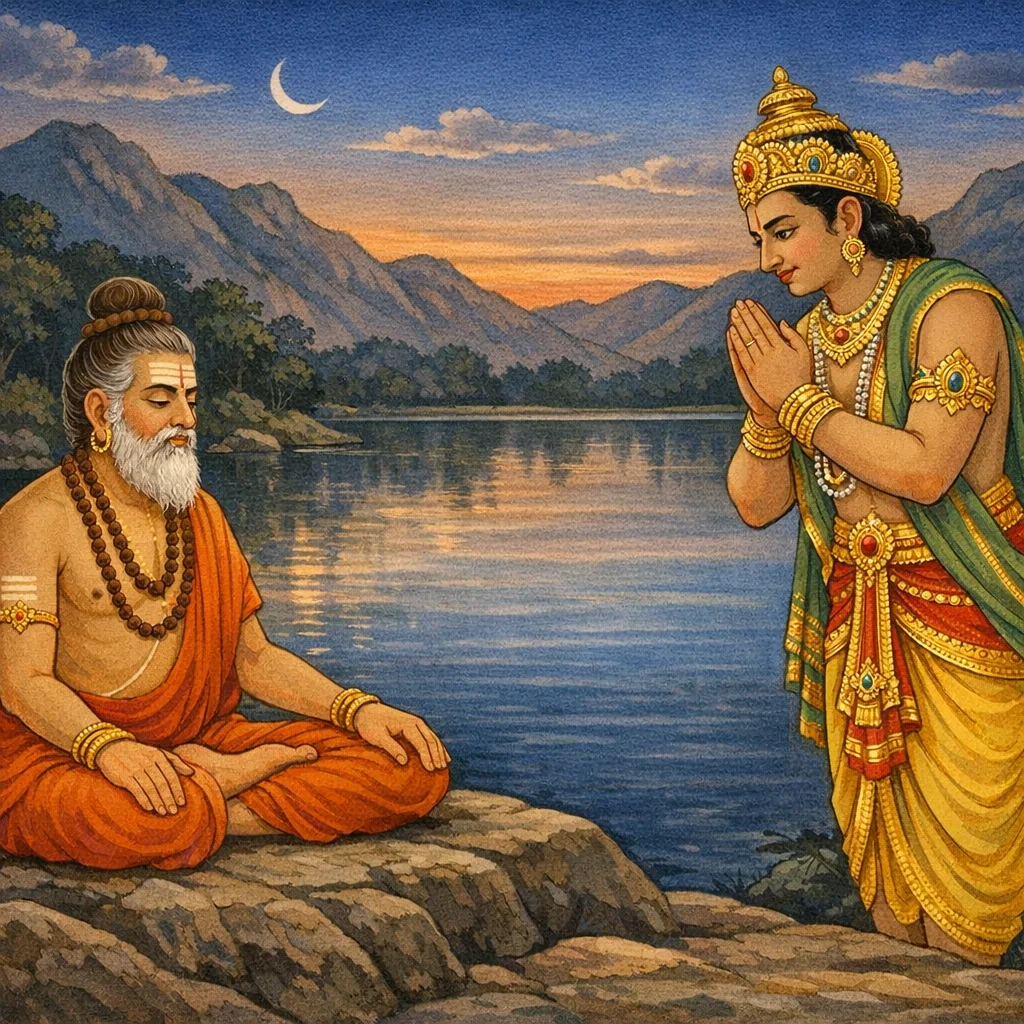
Pulastya instructs King Yayāti to go to a sin-destroying tīrtha called Māmūhrada amid the mountains, explaining its ritual power: faithful bathing removes even grave sins, and the darśana of the liṅga established by the sage Mudgala—Mudgaleśvara—bestows rare spiritual excellence, especially when done in Phālguna at the prescribed lunar times. The chapter also joins ancestral rites to the place: śrāddha performed there (with proper orientation) satisfies the pitṛs until cosmic dissolution, and even simple offerings—nivāra grains and vegetable/root-based rites—are praised. When Yayāti asks how the site gained its name and requests Mudgala’s āśrama story, Pulastya recounts a model episode. A divine messenger invites Mudgala to svarga; Mudgala questions heaven’s merits and flaws and learns that svarga is a realm of enjoyment where no new merit can be produced and where fear of “falling” remains once merit is exhausted. He rejects svarga, choosing intensified tapas and devotion to Śiva. Indra tries coercion through the messenger and then comes himself, but Mudgala’s spiritual power immobilizes them, forcing Indra to negotiate and offer a boon. Mudgala asks for mokṣa and for the tīrtha to be renowned on earth as Māmūhrada. Indra grants that Phālguna full-moon bathing yields supreme attainment, that piṇḍadāna there bears fruit comparable to Gayā, and that the rewards of charity are immeasurable. The narrative ends with Mudgala attaining imperishable liberation through pure contemplation, and a traditional gāthā (ascribed to Nārada) concludes that bathing at Māmūhrada and seeing Mudgaleśvara brings both worldly fulfillment and final release.
Shlokas
Verse 1
पुलस्त्य उवाच । ततो गच्छेन्नृपश्रेष्ठ तीर्थं पापप्रणाशनम् । मामुह्रदमिति ख्यातं तस्मिन्पर्वतरोधसि
Pulastya said: Then, O best of kings, one should go to the sin-destroying sacred ford known as Māmuhṛda, situated there amid the mountain fastness.
Verse 2
तत्र स्नातो नरः सम्यक्छ्रद्धावान्सुसमाहितः । मुच्यते पातकैर्घोरैः पूर्वजन्मकृतैरपि
One who bathes there properly—faithful and well-composed—becomes freed even from terrible sins committed in a former birth.
Verse 3
तस्य पश्चिमदिग्भागे लिंगमस्ति महीपते । सर्वकामप्रदं नृणां स्थापितं मुद्गलेन तु
O king, on its western side there is a Śiva-liṅga, granting all desired aims to people; it was established by Mudgala.
Verse 4
स्नात्वा मामुह्रदे पुण्ये यस्तल्लिंगं च पश्यति । शुक्लपक्षे चतुर्द्दश्यां फाल्गुने मासि मानवः । स प्राप्नोति परं श्रेयः सर्वतीर्थेषु दुर्लभम्
After bathing in the holy Māmuhṛda, the person who also beholds that liṅga—on the bright fortnight’s fourteenth day in the month of Phālguna—attains the highest good, rare even among all tīrthas.
Verse 5
यस्तत्र कुरुते श्राद्धं दक्षिणां मूर्तिमाश्रितः । पितरस्तस्य तृप्यंति यावदाभूतसंप्लवम्
Whoever performs śrāddha there, facing the southern direction, his Pitṛs remain satisfied until the end of the cosmic dissolution.
Verse 6
तत्र दानं प्रशंसंति नीवाराणां महर्षयः । शाकमूलादिभिः श्राद्धं पितॄणां तुष्टिदं नृप
There, the great sages praise the gift of wild rice (nīvāra). And śrāddha performed with vegetables, roots, and the like becomes pleasing to the Pitṛs, O king.
Verse 7
ययातिरुवाच । मामुह्रदमिति विभो कथं नामाऽभवत्पुरा । मुद्गलस्याश्रमं ब्रूहि मम सर्वं विधानतः
Yayāti said: “O Lord, how did this place formerly come to be known by the name ‘Māmuhrada’? Describe to me, in due order and in full detail, the hermitage of the great sage Mudgala.”
Verse 8
पुलस्त्य उवाच । तत्रस्थस्य पुरा राजन्मुद्गलस्य महात्मनः । विमानं वरमादाय देवदूतः समागतः
Pulastya said: “Formerly, O King, when the great-souled Mudgala was dwelling there, a divine messenger arrived, bringing with him an excellent celestial chariot.”
Verse 9
सोऽब्रवीद्देवराज्ञाहं प्रेषितो मुनिसत्तम । तवार्थायाऽरुहैनं त्वं विमानं गम्यतां दिवि
He said: “O best of sages, I have been sent by the king of the gods. For your sake, mount this celestial chariot and proceed to heaven.”
Verse 10
मुद्गल उवाच । स्वर्गस्य ये गुणा दूत ये च दोषा प्रकीर्तिताः । तान्मे वद करिष्येऽहं श्रुत्वा वै यत्क्षमं भवेत्
Mudgala said: “O messenger, tell me the merits of heaven and also the faults that are spoken of. Having heard them, I shall do what is truly fitting.”
Verse 11
ब्रूहि तान्सकलान्दूत त्वागमिष्याम्यहं ततः
“Tell me all of them, O messenger; then I shall go with you.”
Verse 12
देवदूत उवाच । अलमेतेन दर्पेण क्रियतां शक्रजल्पितम् । पुण्यैः स्वकैर्द्विजश्रेष्ठ समागच्छेरिदं ततः
The divine messenger said: “Enough of this pride. Do as Indra has spoken. By your own merits, O best of twice-born, come here at once, and proceed thereafter.”
Verse 13
मुद्गल उवाच । अश्रुतैस्तैर्न गच्छेऽहमेतन्मे हृदि निश्चितम् । करिष्येऽहं तपो भूरि पूजयिष्ये महेश्वरम्
Mudgala said: “Without hearing those points, I will not go—this is firmly resolved in my heart. I shall undertake abundant austerity and I shall worship Maheśvara (Śiva).”
Verse 14
दूत उवाच । न शक्तः स्वर्गुणान्वक्तुमपि वर्षशतैरपि । संक्षेपात्कथयिष्यामि यदि ते निश्चयः परः
The messenger said: “Even in a hundred years I would not be able to describe heaven’s qualities in full. Still, I shall tell them in brief, if your resolve is indeed firm.”
Verse 16
बुभुक्षा नैव तृष्णा च निद्रालस्ये न च प्रभो । रंभाद्यप्सरसो मुख्या गंधर्वास्तुंबरादयः । रमयंति नरं तत्र गीतैर्नृत्यैरनेकशः
O lord, there is neither hunger nor thirst there, nor sleepiness or fatigue. The foremost Apsarases—Rambhā and the rest—and Gandharvas such as Tumbara delight a person there in many ways, with songs and dances.
Verse 17
एवं च वसते तत्र जनः स्वर्गे तपोधन । यावत्पुण्यक्षयस्तावत्पश्चात्पातमवाप्नुयात्
Thus people dwell there in heaven, O treasure of austerity, only so long as their merit remains; when that merit is exhausted, afterward they fall (from that state).
Verse 18
एक एव मुने दोषः स्वर्लोके प्रतिभाति मे । स एव पतनाख्यस्तु स्वर्गिणां च भयावहः
O sage, only one fault appears to me in heaven: it is what is called ‘falling’—and it is terrifying for those who dwell in Svarga.
Verse 19
न पुण्यं लभते तत्र कर्तुं विप्र कथंचन । कर्मभूमिरियं ब्रह्मन्भोगभूमिस्तु सा स्मृता
O brāhmaṇa, one cannot gain the opportunity to perform fresh merit there (in heaven) in any way. This (human world) is remembered as the field of action, while that (Svarga) is known as the field of enjoyment.
Verse 20
यदत्र क्रियते कर्म शुभं तत्रोप भुज्यते । तथा दृष्ट्वा विमानस्थान्भूरिधर्मादिसंयुतान्
Whatever auspicious action is done here (on earth), its fruit is enjoyed there (in heaven). Seeing those seated in celestial chariots (vimānas), endowed with abundant dharma and other virtues, one understands the linkage of karma and reward.
Verse 21
बहुतेजोन्वितान्स्वर्गे ह्यल्पपुण्यो द्विजोत्तम । पश्चात्तापजदुःखेन स्वर्गस्थो दुःखितः सदा
O best of the twice-born, even in heaven the man of little merit—seeing others endowed with great splendor—remains ever afflicted by the sorrow born of regret.
Verse 22
न मया सुकृतं भूरि कृतं मर्त्त्ये कथंचन
“In the mortal world I did not, in any way, perform abundant good deeds.”
Verse 23
तथा च पतमानांश्च दृष्ट्वा चान्यान्सहस्रशः । आत्मनश्च महद्दुःखं जायते च तदद्भुतम्
And further, seeing thousands of others who are falling (from heaven), an astonishingly great sorrow arises within oneself.
Verse 24
एतत्ते सर्वमाख्यातं गुणदोषसमुद्भवम् । स्वर्गसंचेष्टितं ब्रह्मन्कुरुष्व यदभीप्सितम्
All this has been explained to you, O brāhmaṇa—arising from the merits and defects (of Svarga), and describing the ways of heaven. Now do as you desire.
Verse 25
मुद्गल उवाच । पतनस्य भयं यत्र पुण्यहानिर्न वर्द्धनम् । तेन स्वर्गेण मे दूत नैव कार्यं कथंचन
Mudgala said: O messenger, I have no use at all for that heaven where there is fear of falling, where merit only diminishes and does not increase.
Verse 26
वाच्यस्त्वया ममादेशाद्देवराजः स्फुटं वचः । क्षम्यतामपराधो मे न स्वर्गाय स्पृहा मम
By my command, you must clearly convey these words to the king of the gods: “May my offense be forgiven; I have no longing for heaven.”
Verse 27
तत्कर्माऽहं करिष्यामि येन नो पतनाद्भयम् । साधयिष्यामि तांल्लोकान्ये सदा पातवर्जिताः
I shall undertake that course of action by which there is no fear of falling; I shall attain those worlds that are forever free from downfall.
Verse 28
पुलस्त्य उवाच । एवमुक्त्वा नृपश्रेष्ठ मुद्गलः स्वर्गनिःस्पृहः । स्थितस्तत्रैव निरतः शिवध्यानपरायणः
Pulastya said: Having spoken thus, O best of kings, Mudgala—free from all longing for heaven—remained there, steadfast and absorbed, wholly devoted to meditation on Śiva.
Verse 29
श्रुत्वा दूतोऽपि शक्रस्य तस्य वाक्यं सविस्तरम् । कथयामास शक्रस्य तं भूयः सोऽभ्यभाषत
Having heard Mudgala’s words in full, Indra’s messenger reported them to Śakra; and Śakra then spoke again.
Verse 30
देवदूताप्रमाणं च विमानं हि त्वया कृतम् । न कृतं केन चित्पूर्वं न करिष्यति कश्चन
“Aerial carriages of a measure fit for divine messengers have indeed been made by you—something no one ever fashioned before, nor will anyone else fashion.”
Verse 31
तस्मात्तत्र द्रुतं गत्वा बलादानय तं मुनिम् । आनयस्वान्यथा शापं तव दास्याम्यसंशयम्
Therefore, go there quickly and bring that muni by force. Bring him—otherwise, without doubt, I shall lay a curse upon you.
Verse 32
पुलस्त्य उवाच । शक्रस्य वचनं श्रुत्वा देवदूते भयान्वितः । प्रस्थितः सत्वरं तत्र मुद्गलो यत्र तिष्ठति
Pulastya said: Hearing Śakra’s command, the divine messenger, seized with fear, hurriedly set out to the place where Mudgala was staying.
Verse 33
मुद्गलोऽपि विमानस्थं पुनर्दृष्ट्वा समागतम् । मामुह्रदे प्रविश्याथ वारयामास तं तदा
Mudgala too, seeing again the one who had arrived seated in a vimāna, entered the Māmu-pond and at that time restrained him.
Verse 34
स तस्य वचनेनैव स्तंभितो लिखितो यथा । चलितुं नैव शक्नोति प्रभावात्तस्य सन्मुनेः
By the mere words of that sage, he was immobilized as if painted in place; he could not move at all, through the spiritual potency of that holy muni.
Verse 35
चिरकालगतं ज्ञात्वा दूतं तु त्रिदशाधिपः । स्वयं तत्राययौ कोपादारुह्यैरावणं गजम्
Knowing that the messenger had been gone a long time, the lord of the thirty gods (Indra), in anger, came there himself, mounting the elephant Airāvata.
Verse 36
अथ दृष्ट्वा तदा दूतं स्तंभितं मुद्गलेन तु । वधार्थं तूद्यतस्तस्य स वज्रं भ्रामयंस्तदा
Then, seeing the messenger held motionless by Mudgala, Indra rose with intent to slay; and in that very moment he brandished and whirled his vajra, the thunderbolt.
Verse 37
एतस्मिन्नेव काले तु उत्पातास्तत्र दारुणाः । अपसव्यं मृगाश्चक्रुः पशवः पक्षिणश्च ये । तान्दृष्ट्वा चिन्तयामास मुद्गलो विस्मयान्वितः
At that very time, dreadful portents arose there: beasts, cattle, and birds moved inauspiciously to the left (apasavya). Seeing those signs, Mudgala reflected, filled with wonder.
Verse 38
अथ दृष्ट्वांबरगतं वज्रोद्यतकरं हरिम् । स्तंभयामास तं सद्यो दृष्टिपातेन मुद्गलः
Then Mudgala, seeing Hari (Indra) moving through the sky with his hand raised, ready with the vajra, instantly immobilized him by a mere glance.
Verse 39
तत्र शक्रः स्तुतिं चक्रे भग्नोत्साहो नृपोत्तम । मुञ्च मां ब्राह्मणश्रेष्ठ यास्यामि त्रिदशालयम्
Thereupon Śakra (Indra), his pride and resolve broken, offered praise and said: “Release me, O best of brāhmaṇas; I shall depart to the abode of the gods.”
Verse 40
स्वर्गे वा यदि वा मर्त्त्ये तिष्ठ त्वं स्वेच्छया द्विज । मया कृतः समुद्योगो हितार्थं ते मुने ह्ययम्
“Whether in heaven or on earth, stay wherever you wish, O twice-born. This effort of mine, O sage, was undertaken solely for your welfare.”
Verse 41
वरं वरय भद्रं ते नित्यं यो मनसि स्थितः । तं ते सर्वं प्रदास्यामि यद्यपि स्यात्सुदुर्लभम्
Choose a boon—may auspiciousness be yours—whatever abides constantly in your mind. I shall grant you all of that, even if it be exceedingly hard to obtain.
Verse 42
मुद्गल उवाच । एष एव वरः श्लाघ्यो यत्त्वं दृष्टः सुरेश्वर । दर्शनं ते सहस्राक्ष स्वप्नेष्वपि सुदुर्लभम्
Mudgala said: “This alone is the praiseworthy boon—that I have seen you, O lord of the gods. O thousand-eyed one, your very vision is difficult to obtain even in dreams.”
Verse 43
अवश्यं यदि मे देयो वरो वृत्रनिषूदन । त्वत्प्रसादेन मे मोक्षो जायतां शीघ्रमेव हि
“Yet if a boon must indeed be granted to me, O slayer of Vṛtra, then by your favor let liberation arise for me—swiftly, indeed.”
Verse 44
मा मु ह्रदं समागत्य दूतः प्रोक्तो मया यतः । ततो मामुह्रदमिति ख्यातिं यातु धरातले
“Since, upon coming to this lake, a messenger was addressed by me with the words ‘mā mu’, therefore let this place become renowned on earth by the name ‘Māmuhrada’.”
Verse 45
नंदनादीनि रम्याणि तत्र देववनानि च । अनन्यसदृशा भोगाः सदा तृप्तिर्द्विजोत्तम
“There are delightful divine groves there—Nandana and the rest—enjoyments unequalled by anything else, and unceasing satisfaction, O best of brāhmaṇas.”
Verse 46
पिण्डदानात्परां प्रीतिं लभंतां पितरोऽत्र हि
Indeed, by the offering of piṇḍa here, the ancestors attain supreme satisfaction.
Verse 47
इन्द्र उवाच । मामुह्रदमिति ख्यातं तीर्थमेतद्भविष्यति । वरिष्ठं नात्र सन्देहो मत्प्रसादाद्विजोत्तम
Indra said: “This sacred ford shall become known as Māmuhrada. It will be foremost—of this there is no doubt—by my favor, O best of brāhmaṇas.”
Verse 48
अत्र ये फाल्गुने मासि पौर्णमास्यां समाहिताः । करिष्यंति पुनः स्नानं ते यास्यंति परां गतिम्
Those who, here, with collected minds, perform the sacred bath again on the full-moon day in the month of Phālguna—such devotees shall attain the highest state.
Verse 49
पिण्डदानाद्गयातुल्यं लप्स्यंते फलमुत्तमम् । पुण्यदानफलं चात्र संख्याहीनं द्विजोत्तम
By offering piṇḍa here, one obtains the highest fruit, equal to that of Gayā. And the merit gained from holy gifts in this place is beyond counting, O best of twice-born.
Verse 50
पुलस्त्य उवाच । एवमुक्त्वा ययौ स्वर्गं दूतमादाय वज्रभृत् । मुद्गलोऽपि परं ब्रह्म चिंतयन्ह्यनिशं ततः
Pulastya said: Having spoken thus, the wielder of the thunderbolt departed for heaven, taking the messenger with him. Then Mudgala too, continually contemplating the Supreme Brahman, remained absorbed thereafter.
Verse 51
शुक्लध्यानपरो भूत्वा मोक्षं प्राप्तस्ततोऽक्षयम्
Devoted to pure, luminous meditation, he attained liberation (moksha)—imperishable from that time onward.
Verse 52
अत्र गाथा पुरा गीता नारदेन महात्मना । बहुविप्रसमवाये पर्वतेस्मिन्महीपते
Here, O king, in ancient times a sacred verse was sung by the great-souled Nārada on this mountain, amid an assembly of many brāhmaṇas.
Verse 53
मामु ह्रदे नरः स्नात्वा दृष्ट्वा तं मुद्गलेश्वरम् । इह भुक्त्वाऽखिलान्कामानन्ते मुक्तिमवाप्स्यति । एतस्मात्कारणाद्राजन्मामुह्रदमिति स्मृतम्
Whoever bathes in the Māmu lake and beholds that Lord Mudgaleśvara will, in this very life, enjoy every rightful desire, and in the end attain liberation. For this reason, O king, it is remembered as “Māmuhrada” (the Māmu lake).
Verse 54
तत्तीर्थं सर्वतीर्थानां प्रवरं लोकविश्रुतम् । तस्मात्सर्वप्रयत्नेन स्नानं तत्र समाचरेत्
That sacred ford is foremost among all tīrthas, renowned throughout the world. Therefore, with every effort, one should perform bathing there.
Verse 55
मोक्षकामो विशेषेण य इच्छेत्परमं पदम् । चण्डिकाश्रममासाद्य किं पुनः परितप्यते
One who especially longs for liberation and seeks the supreme state—having reached Caṇḍikā’s āśrama, why would he still undergo further hardship?