Adhyaya 3
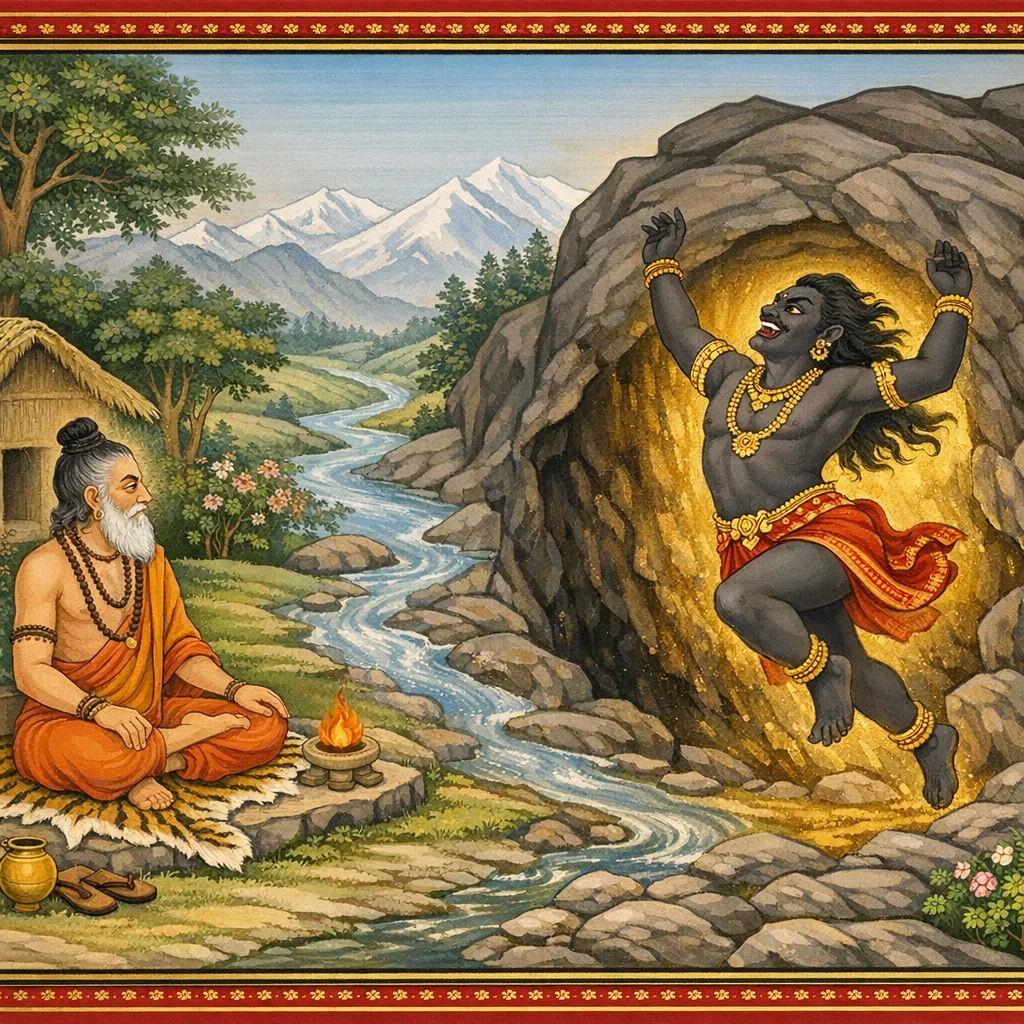
Sūta recounts a sequence of dialogues in which Himālaya asks the sage Vasiṣṭha how a dreadful chasm (vivara) might be filled. Since the mountains lost the power of flight after Indra long ago cut off their wings, a practical means is required. Vasiṣṭha proposes Nandivardhana, Himālaya’s son, together with his close companion Arbuda—a mighty nāga able to rise swiftly. Nandivardhana hesitates, calling the region harsh and socially unsafe, but Vasiṣṭha assures him that his sanctifying presence will establish rivers, tīrthas, deities, and auspicious life there, and that Maheśvara (Śiva) will also be brought. Arbuda agrees on the condition that the place become renowned by his name. Arbuda then fills/releases the chasm as instructed, pleasing Vasiṣṭha. As boons, Arbuda asks that the pure waterfall/spring on the peak be famed as Nāga Tīrtha, and that bathing there grant ascent to higher states; benefits of fertility for women are also declared. Observances are prescribed: worship on Nabhas śukla-pañcamī, Māgha bathing, sesame-gifts (tila-dāna), and pañcamī śrāddha. Vasiṣṭha grants all, establishes an āśrama, and through tapas manifests the river/stream Gomati. The chapter closes with its promised fruit: even grievous sinners attain a higher destiny by bathing, the sight of Vasiṣṭha’s face is linked with freedom from rebirth, and Arundhatī is affirmed as worthy of special veneration.
Shlokas
Verse 1
सूत उवाच । श्रुत्वा हिमाचलो वाक्यं वसिष्ठस्य महात्मनः । चिन्तयामास तत्कार्यं विवरस्य प्रपूरणे
Sūta said: Hearing the words of the great-souled Vasiṣṭha, Himācala pondered that task—how to fill up the chasm.
Verse 2
चिरं विचार्य तमृषिमिदमाह नगोत्तमः । क उपायो नगानां वै तत्र गंतुं वदस्व मे
After long reflection, the noblest of mountains said to that sage: “By what means can the mountains go there? Tell me.”
Verse 3
पक्षच्छेदस्तु शक्रेण सर्वेषां च पुरा कृतः । तस्मादस्य मुनिश्रेष्ठ कार्यस्य पश्य निश्चयम्
“In former times, Śakra (Indra) cut off the wings of all the mountains. Therefore, O best of sages, consider well and determine the sure course to accomplish this work.”
Verse 4
वसिष्ठ उवाच । अस्त्युपायो नगानां तु तत्र नेतुं महानग । तवायं तनयस्तत्र विख्यातो नंदिवर्द्धनः
Vasiṣṭha said: “O great mountain, there is indeed a means to take the mountains there. Your son, famed there as Nandivardhana, will accomplish it.”
Verse 5
तस्यार्बुद इति ख्पातो वयस्यः परमं प्रियः । नागः प्राणभृतां श्रेष्ठः खेचरोऽपि च वीर्यवान्
“He has a companion renowned as Arbuda—most dear to him: a nāga, foremost among living beings, and also one who moves through the sky, endowed with great valor.”
Verse 6
स वा ऊर्ध्वगतिः क्षिप्रं क्षणान्नेष्यत्यसंशयः । लीलया सर्वकृत्येषु तं विदित्वाऽहमागतः
“He, swift in upward flight, will carry them in a moment—without doubt. Knowing his effortless mastery in every undertaking, I have come.”
Verse 7
आदेशो दीयतामस्य दुःखं कर्तुं च नार्हसि । अवश्यं यदि भक्तोऽसि तत्र प्रेषय सत्वरम्
Give him the command; you should not cause him distress. If you are truly devoted to the duty, send him there at once.
Verse 8
सूत उवाच । वसिष्ठस्य वचः श्रुत्वा हिमवान्पुत्रवत्सलः । दुःखेन महताऽविष्टश्चिंतयामास भूधरः
Sūta said: Hearing Vasiṣṭha’s words, Himavān—affectionate toward his son—overwhelmed by great sorrow, began to ponder deeply.
Verse 9
मैनाकस्तनयोऽस्माकं प्रविष्टः सागरे भयात् । ज्येष्ठं तु सर्वथा चाथ वसिष्ठो नेतुमागतः । किं कृत्यमधुनाऽस्माकं कथं श्रेयो भविष्यति
“Our son Maināka has entered the ocean out of fear; and now Vasiṣṭha has come, determined to take away the eldest. What should we do now, and how will our welfare be secured?”
Verse 10
इतः शापभयं तीव्रमितो दुःखं च पुत्रजम् । वरं पुत्रवियोगोऽस्तु न शापो द्विजसंभवः
“On one side is the fierce fear of a curse; on the other, the grief born of losing a son. Better separation from a son than a curse arising from a brahmin.”
Verse 11
स एवं निश्चयं कृत्वा नंदिवर्धनमुक्तवान् । गच्छ त्वं पुत्र मे वाक्याद्वसिष्ठस्याश्रमं प्रति
Having thus reached a decision, he said to Nandivardhana: “Go, my son—by my word—to the hermitage of Vasiṣṭha.”
Verse 12
तत्रास्ति विवरो रौद्रस्तं प्रपूरय सत्वरम् । अर्बुदं नागमादाय मित्रं प्राणभृतां वरम्
There is a dreadful chasm there—fill it quickly. And take with you Arbuda the nāga, that friend, the best among living beings.
Verse 13
नंदिवर्द्धन उवाच । पापीयान्स विभो देशः फलमूलैर्विवर्जितः । पालाशैः खादिरैराढ्यो धवैः शाल्मलिभिस्तथा
Nandivardhana said: “O Lord, that region is most harsh—devoid of fruits and roots. It is, however, thick with palāśa and khadira trees, and also with dhava and śālmali.”
Verse 14
सुनिष्ठुरैर्नृपशुभिर्भिल्लैश्च विविधैरपि । नद्यो वहंति नो तत्र दुष्टा लोकाश्च वासिनः । नार्होऽहं पर्वतश्रेष्ठ तत्र गंतुं कथंचन
“That region is filled with very harsh men—base kings and many kinds of Bhilla tribes. There the rivers do not flow, and the residents are wicked. O best of mountains, I am not fit to go there in any way.”
Verse 15
अथोवाच वसिष्ठस्तं संत्रस्तं नंदिवर्द्धनम् । मा भीः कार्या त्वया तत्र देशे दौष्ट्यात्कथंचन
Then Vasiṣṭha said to the terrified Nandivardhana: “Do not be afraid in any way because of the wickedness of that land.”
Verse 16
तव मूर्ध्नि सदा वासो मम तत्र भविष्यति । तीर्थानि सरितो देवाः पुण्यान्यायतनानि च
“Upon your summit my abode will always be there. And there will arise sacred fords, holy rivers, gods, and sanctifying shrines as well.”
Verse 17
वृक्षाश्च विविधाकाराः पत्रपुष्पफलान्विताः । सदा तत्र भविष्यंति मृगाश्च विहगाः शुभाः
There will ever be trees of many forms, laden with leaves, flowers, and fruits; and auspicious beasts and birds will dwell there as well.
Verse 18
अहमेवानयिष्यामि तवार्थे च महेश्वरम् । तदा स्थास्यंति वै तत्र सर्वे देवाः सवासवाः
For your sake I myself shall bring Maheśvara there; then indeed all the gods—together with Vāsava (Indra)—will abide in that place.
Verse 19
सूत उवाच । वसिष्ठस्य वचः श्रुत्व संहृष्टो नंदिवर्द्धनः । अर्बुदं नागमासाद्य वाक्यमेतदुवाच ह
Sūta said: Having heard Vasiṣṭha’s words, Nandivardhana was filled with delight. Approaching Arbuda, the serpent-lord, he spoke these words.
Verse 20
तत्र यावोऽद्य भद्रं ते वयस्य विनयान्वित । एतत्कार्यमहं मन्ये सांप्रतं द्विजसंभवम्
Let us go there today—blessings upon you, my well-mannered friend. I deem this task timely now, born of a brahminical purpose of dharma.
Verse 21
अर्बुद उवाच । अहं तत्रागमिष्यामि स्नेहात्ते पर्वतात्मज । तत्रैव च वसिष्यामि त्वया सार्द्धमसंशयम्
Arbuda said: Out of affection for you, O mountain-born one, I shall come there; and I shall dwell there with you indeed, without doubt.
Verse 22
किं त्वहं प्रणयाद्भ्रातर्वक्ष्यामि यद्वचः शृषु । प्रणयान्नान्यथा कार्यं यद्यहं तव संमतः
But, brother, out of affection I will speak one request—listen to my words. Because of our bond, it should not be done otherwise, if I am acceptable to you.
Verse 23
मन्नाम्ना ख्यातिमायातु नान्यत्किंचिद्वृणोम्यहम् । ततः सोऽपि प्रतिज्ञाय आरूढस्तस्य चोपरि । प्रणम्य पितरौ चैव प्रतस्थे मुनिना सह
“Let renown come by my name; I ask for nothing else.” Then he too, having promised, mounted upon him. Having bowed to his parents as well, he set out together with the sage.
Verse 24
दिव्यैर्वृक्षैः शुभैः पूर्णैर्नदीनिर्झरसंकुलैः । मधुरैर्विहगैर्युक्तो मृगैः सौम्यैः समन्वितः
That place was filled with auspicious, heavenly trees, crowded with rivers and cascading waterfalls, resonant with sweet-voiced birds, and graced by gentle, peaceful deer—thus shining as a sacred landscape.
Verse 25
मुक्तोऽर्बुदेन तत्रैव विवरे मुनिवाक्यतः । समस्तस्तत्रानासाग्रं गतः पर्वतसत्तमः
Released there in that very cavern by Arbuda, in obedience to the sage’s word, the excellent mountain (serpent) emerged fully and reached the mouth-opening of that passage.
Verse 26
विमुक्तो विवरे तस्मिन्नर्बुदेन महात्मना । परिपूर्णे महारौद्रे संतुष्टो मुनिपुंगवः
When he had been set free in that cavern by the great-souled Arbuda—though the place was vast and awe-inspiring—the foremost of sages became satisfied.
Verse 27
ब्रवीच्चार्बुदं नागं वरं वरय सुव्रत । परितुष्टोऽस्मि ते भद्र कर्मणानेन पन्नग
He said to Arbuda, the nāga: “Choose a boon, O steadfast in vow. I am pleased with you, O noble serpent, by this deed of yours.”
Verse 28
अर्बुद उवाच । एष एव वरोऽस्माकं यत्त्वं तुष्टो महामुने । अवश्यं यदि दातव्यं तच्छृणुष्व द्विजोत्तम
Arbuda said: “This itself is our boon—that you are pleased, O great sage. Yet if a boon must indeed be granted, then listen, O best of the twice-born.”
Verse 29
यच्चैतच्छिखरे ह्यस्मिन्निर्झरं निर्मलोदकम् । नागतीर्थमिति ख्यातिं भूतले यातु सर्वतः
“And may this crystal-pure spring on this very peak become renowned across the earth as ‘Nāga-tīrtha’.”
Verse 30
अत्रैवाहं वसिष्यामि मित्रस्नेहात्सदा मुने । तत्र स्नात्वा दिवं यातु मानवस्त्वत्प्रसादतः
“I shall dwell right here always, O sage, out of friendship and affection. And by your grace, may a person who bathes there attain heaven.”
Verse 31
अपि वंध्या च या नारी स्नानमात्रं समाचरेत् । सा स्यात्पुत्रवती विप्र सुखसौभाग्यसंयुता
“Even a barren woman, if she performs merely the bath there, O brāhmaṇa, becomes a mother of sons, endowed with happiness and good fortune.”
Verse 32
वसिष्ठ उवाच । या वंध्यास्मिञ्जले पूर्णे स्नानमात्रं करिष्यति । सापि पुत्रमवाप्नोति सर्वलक्षणलक्षितम्
Vasiṣṭha said: “Even a barren woman who performs only a bath in this water, filled with sanctity, shall obtain a son adorned with every auspicious mark.”
Verse 33
नभसः शुक्लपंचम्यां फलैः पूजां करोति च । अपि वर्षशता नारी सा भविष्यति पुत्रिणी
“And if, on the bright fifth lunar day of the month of Nabhas, she offers worship with fruits, then even a woman childless for a hundred years shall be blessed with offspring.”
Verse 34
येऽत्र स्नानं करिष्यंति ह्यस्मिंस्तीर्थे च भक्तितः । यास्यंति ते परं स्थानं जरामरणवर्जितम्
Those who, with devotion, bathe here at this sacred tīrtha shall attain the supreme abode, free from old age and death.
Verse 35
श्राद्धं चात्र करिष्यंति पंचम्यां ये समाहिताः । मासे नभसि तीर्थस्य फलं तेषां भविष्यति
And those who, with minds composed, perform śrāddha here on the fifth lunar day (pañcamī) in the month of Nabhas shall obtain the full fruit of this tīrtha.
Verse 36
सूत उवाच । एवं दत्त्वा वरं तस्य वसिष्ठो भगवान्मुनिः । नंदिवर्द्धनमभ्येत्य वाक्यमेतदुवाच ह
Sūta said: Having thus granted him a boon, the blessed sage Vasiṣṭha approached Nandivardhana and spoke these words.
Verse 37
वरं च व्रियतां वत्स परितुष्टोऽस्मि तेऽनघ । विनयात्सौहृदात्सर्वं दास्यामि यत्सुदुर्ल्लभम्
Choose a boon, dear child; I am pleased with you, O blameless one. Out of your humility and affection, I shall grant you even that which is exceedingly hard to obtain.
Verse 38
नंदिवर्द्धन उवाच । तवास्तु वचनं सत्यं पूर्वोक्तं मुनिसत्तम । सांनिध्यं जायतामत्र अवश्यं तव सर्वदा
Nandivardhana said: Let your former utterance be true, O best of sages. Let your abiding presence arise here—certainly and always.
Verse 39
यथाहमर्बुदेत्येवं ख्यातिं गच्छामि भूतले । प्रसादाच्चैव ते भूयादेतन्मे मनसि स्थितम्
And may it be, by your grace, that I become renowned upon the earth by the very name ‘Arbuda’—this is what stands fixed in my mind.
Verse 40
सूत उवाच । एवमस्त्विति तं प्रोच्य वसिष्ठो भगवान्मुनिः । चक्रे स्वमाश्रमं तत्र तस्य वाक्येन नोदितः
Sūta said: Saying to him, “So be it,” the blessed sage Vasiṣṭha established his own hermitage there, prompted by his request.
Verse 41
पनसैश्चंपकैराम्रैः प्रियंगुबिल्वदाडिमैः । नानापक्षिसमायुक्तो देवगन्धर्वसेवितः
It was adorned with jackfruit trees, campakas, mangoes, priyangu, bilva, and pomegranates—filled with many kinds of birds, and frequented by devas and gandharvas.
Verse 42
तस्थौ तत्र मुनिश्रेष्ठो ह्यरुंधत्या समन्वितः । गोमतीमानयामास तपसा मुनिसत्तमः
There the foremost sage dwelt, accompanied by Arundhatī; and by the power of his tapas the best of seers caused the river Gomatī to be brought to that place.
Verse 43
यस्यां स्नात्वा दिवं यांति अतिपापकृतो नराः । माघमासे विशेषेण मकरस्थे दिवाकरे
By bathing in that Gomatī, even men burdened with grievous sins go to heaven—especially in the month of Māgha, when the Sun abides in Makara (Capricorn).
Verse 44
येत्र स्नानं करिष्यंति ते यास्यंति परां गतिम्
Those who perform the ritual bath at that sacred place will attain the supreme state, the highest spiritual destination.
Verse 45
माघमासे विशेषेण तिलदानं करोति यः । तिलसंख्यानि वर्षाणि स्वर्गे तिष्ठति मानवः
Whoever, especially in the month of Māgha, gives sesame in charity, dwells in heaven for as many years as the number of sesame seeds offered.
Verse 46
बहुना किमिहोक्तेन स्तानमात्रं समाचरेत्
What is the use of saying much here? Let one simply perform the sacred bath; that alone suffices.
Verse 47
वसिष्ठस्य मुखं दृष्ट्वा पुनर्जन्म न विद्यते । अरुंधती पूजनीया पूजनीया विशेषतः
Having beheld the face of Vasiṣṭha, there is no rebirth. Arundhatī is to be worshipped—indeed, she is especially worthy of worship.