Adhyaya 20
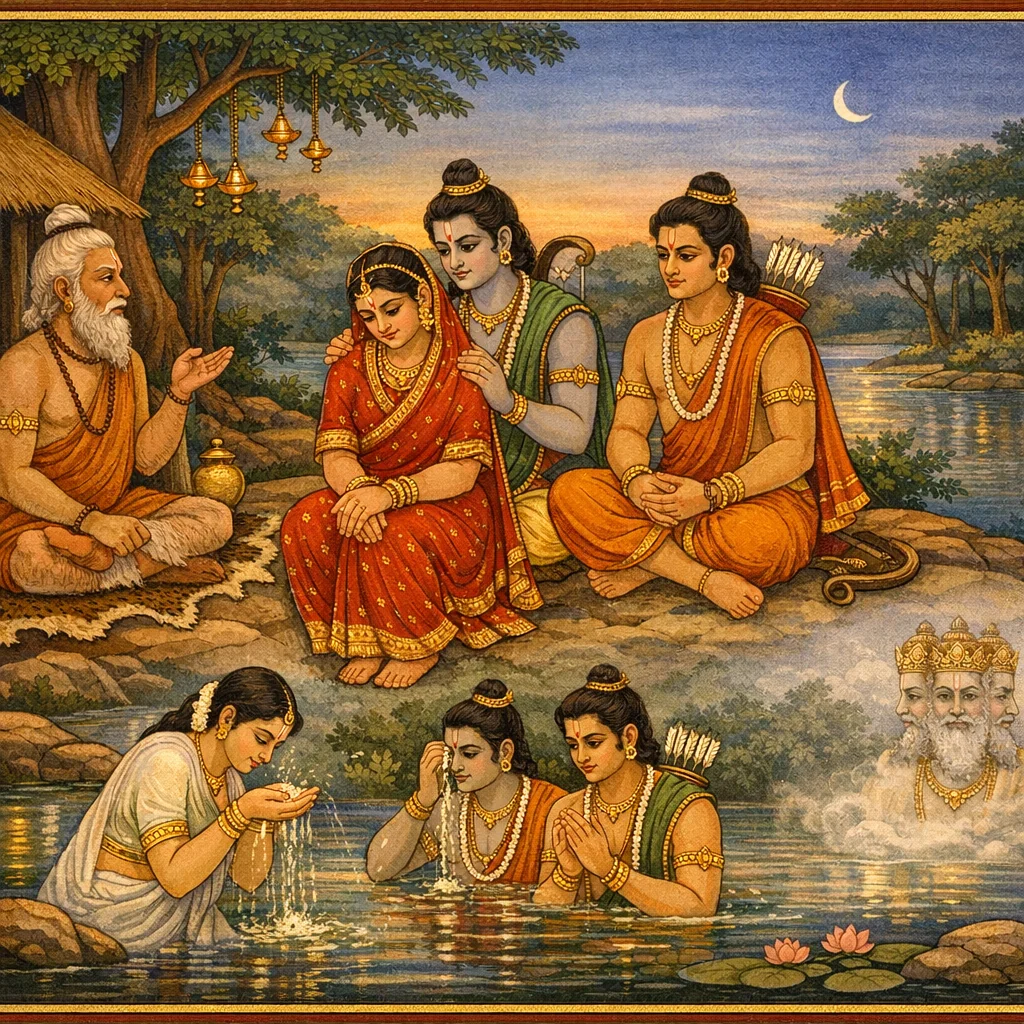
Sūta recounts that Rāma, with Sītā and Lakṣmaṇa during their forest exile, arrives at a place known as the pitṛ-kūpikā. After the evening observances, Rāma dreams of Daśaratha appearing joyful and splendidly adorned, and he consults brāhmaṇas. They interpret the dream as an ancestral request for śrāddha and prescribe an austere offering made from what the forest provides—nivāra grains, wild vegetables, roots, and til (sesame). Rāma invites brāhmaṇas and performs the śrāddha with reverence. During the rite Sītā withdraws out of modesty; later she explains that she perceived Daśaratha and other forefathers present within the brāhmaṇas themselves, creating a delicate ritual-ethical tension that Rāma resolves by affirming the purity of her intention and the dharma of the act. A further rupture arises when Lakṣmaṇa, feeling reduced to servile duties, flares in anger and entertains wrongdoing in his mind; reconciliation follows as moral repair. The sage Mārkaṇḍeya then arrives, turns the focus to tīrtha-based purification, and directs them to bathe at Bālamaṇḍana-tīrtha near his āśrama, declaring it able to cleanse even grave faults, including mental transgression. The chapter closes with the tīrtha visit, darśana of Pitāmaha, and their onward journey south, linking place, rite, and ethical restoration.
Shlokas
Verse 1
। सूत उवाच । तत्र दाशरथी रामो वनवासाय दीक्षितः । भ्रममाणो धरापृष्ठे सीतालक्ष्मणसंयुतः
Sūta said: There, Rāma, son of Daśaratha—consecrated for life in the forest—was wandering upon the earth, accompanied by Sītā and Lakṣmaṇa.
Verse 2
समाऽयातो द्विजश्रेष्ठा यत्र सा पितृकूपिका । तृषार्तश्च श्रमार्तश्च निषसाद धरातले
O best of Brahmins, he arrived at the place where that Pitṛkūpikā (the “ancestor-well”) is; afflicted by thirst and fatigue, he sat down upon the ground.
Verse 3
एतस्मिन्नंतरे प्राप्तो भगवान्दिननायकः । अस्ताचलं जपापुष्पसन्निभो द्विजसत्तमाः
Meanwhile, O best of Brahmins, the blessed Lord of the day—the Sun—drew near the western mountain to set, glowing like a hibiscus (japā) flower.
Verse 4
ततः प्लक्षनगाधस्तात्पर्णान्यास्तीर्य भूतले । सायंतनं विधिं कृत्वा सुष्वाप रघुनन्दनः
Then, beneath a plakṣa tree, spreading leaves upon the ground, the delight of the Raghu line performed the evening observance according to rule and fell asleep.
Verse 5
अथाऽवलोकयामास स्वप्ने दशरथं नृपम् । यद्वत्पूर्वं प्रियाऽलापसंसक्तं हृष्टमानसम्
Then, in a dream, he beheld King Daśaratha—just as before—his heart rejoicing, absorbed in affectionate conversation.
Verse 6
ततः प्रभाते विमले प्रोद्गते रविमण्डले । विप्रानाहूय तत्सर्वं कथयामास राघवः
Then, in the clear morning, when the orb of the Sun had risen, Rāghava summoned the Brahmins and related everything that had occurred.
Verse 7
अद्य स्वप्ने मया विप्राः प्रियालापपरः पिता । अतिहृष्टमना दृष्टः श्वेतमाल्यानुलेपनः
“Today, O Brahmins, I saw my father in a dream—intent on loving speech, exceedingly joyful, adorned with white garlands and fragrant unguents.”
Verse 8
तत्कीदृक्परिणामोऽस्य स्वप्नस्य द्विजसत्तमाः । भविष्यति प्रजल्पध्वं परं कौतूहलं यतः
“O best of Brahmins, what kind of outcome will this dream have? Please explain, for my curiosity is great.”
Verse 9
ब्राह्मणा ऊचुः । पितरः श्राद्धकामा ये वृद्धिं पश्यंति वा नृप । ते स्वप्ने दर्शनं यांति पुत्राणामिति नः श्रुतम्
The Brahmins said: “O king, we have heard that when the ancestors desire śrāddha—or when they behold prosperity—they appear in dreams to their sons.”
Verse 10
तदस्यां कूपिकायां च स्वयमेव गया स्थिता । तेन त्वया पिता दृष्टः स्वप्ने श्राद्धस्य वांछकः
In this very little well, Gayā itself abides of its own accord. Therefore you saw your father in a dream, desiring the rite of śrāddha.
Verse 11
तस्मात्कुरु रघुश्रेष्ठ श्राद्धमत्र यथोदितम् । नीवारैः शाक मूलैश्च तथाऽरण्योद्भवैस्तिलैः
Therefore, O best of the Raghus, perform the śrāddha here as prescribed—using wild rice, greens and roots, and also sesame gathered from the forest.
Verse 12
अथैवामन्त्रयामास तान्विप्रान्रघुसत्तमः । श्राद्धेषु श्रद्धया युक्तः प्रसादः क्रियतामिति
Then the best of the Raghus invited those brāhmaṇas, saying: “Being endowed with faith in the śrāddha rites, please accept and bestow your gracious favor.”
Verse 13
बाढमित्येव ते चोक्त्वा स्नानार्थं द्विजसत्तमाः । गताः सर्वे सुसंहृष्टा स्वकीयानाश्रमान्प्रति व
Saying, “So be it,” those excellent brāhmaṇas went to bathe; all of them, greatly delighted, departed toward their own hermitages.
Verse 14
अथ तेषु प्रयातेषु ब्राह्मणेषु रघूत्तमः । प्रोवाच लक्ष्मणं पार्श्वे विनयावनतं स्थितम्
When the brāhmaṇas had departed, Rāma—the best of the Raghus—spoke to Lakṣmaṇa, who stood at his side, bowed in humility.
Verse 15
शाकमूलफलान्याशु श्राद्धार्थं समुपानय । सौमित्रानय वैदेही स्वयं पचति भामिनी
“Quickly bring greens, roots, and fruits for the śrāddha. O Saumitri, bring them—Vaidehī herself, the noble lady, will cook.”
Verse 16
तच्छ्रुत्वा लक्ष्मणस्तूर्णं जगामाऽरण्यमेव हि । श्राद्धार्थमानिनायाऽशु फलानि विविधानि च
Hearing that, Lakṣmaṇa quickly went into the forest and promptly brought various kinds of fruits for the śrāddha.
Verse 17
धात्रीफलानि चाऽम्राणि चिर्भटानीं गुदानि च । करीराणि कपित्थानि तथैवाऽन्यानि भूरिशः
He brought āmalaka fruits and mangoes, watermelons and jaggery-sweets, karīra pods and wood-apples, and many other items in abundance.
Verse 18
ततश्च पाचयामास तदर्थे जनकोद्भवा । रामादेशात्स्वयं साध्वी विनयेन समन्विता
Then Janaka’s daughter Sītā—virtuous and modest—following Rāma’s command, herself cooked and prepared the offerings for that purpose.
Verse 19
ततश्च कुतपे प्राप्ते काले ते द्विजसत्तमाः । कृताह्निकाः समायाता रामभक्तिसमन्विताः
Then, when the kutapa time arrived, those excellent brāhmaṇas returned—having completed their daily rites and filled with devotion to Rāma.
Verse 20
एतस्मिन्नंतरे सीता प्लक्षवृक्षांतरे स्थिता । आत्मानं गोपयामास यथा वेत्ति न राघवः
Meanwhile, Sītā stood concealed among the branches of a plakṣa tree, hiding herself so that Rāghava (Rāma) would not notice her.
Verse 21
स तां सीतेति सीतेति व्याहृत्याथ मुहुर्मुहुः । स्त्रीधर्मिणीति मत्वा तु लक्ष्मणं चेदमब्रवीत्
Calling out again and again, “Sītā! Sītā!”, and deeming her a woman steadfast in her proper dharma, he then spoke these words to Lakṣmaṇa.
Verse 22
वत्स लक्ष्मण शुश्रूषां विप्राणां श्राद्धसंभवाम् । पादप्रक्षालनाद्यां त्वं यथावत्कर्तुमर्हसि
Dear Lakṣmaṇa, at the time of śrāddha you should duly render service to the brāhmaṇas—beginning with washing their feet and the other customary rites.
Verse 23
बाढमित्येव संप्रोक्तो लक्ष्मणः शुभलक्षणः । चक्रे सर्वं तथा कर्म यथा नारी विचक्षणा
Thus addressed, Lakṣmaṇa of auspicious marks replied, “So be it,” and duly carried out every duty, with the careful skill of one endowed with discernment.
Verse 24
ततो निर्वर्तिते श्राद्धे ब्राह्मणेषु गतेष्वथ । जनकस्य सुता साध्वी तत्क्षणात्समुपस्थिता
When the śrāddha had been duly completed and the brāhmaṇas had departed, Janaka’s virtuous daughter, Sītā, appeared at once.
Verse 25
तां दृष्ट्वा राघवः सीतां कोपसंरक्तलोचनः । प्रोवाच परुषैर्वाक्यैर्भर्त्समानो मुहुर्मुहुः
Seeing Sītā, Rāghava—his eyes reddened with anger—spoke harsh words, rebuking her again and again.
Verse 26
आयातेषु द्विजातेषु श्राद्धकाल उपस्थिते । क्व गता वद पापे त्वं मां परित्यज्य दूरतः
“When the twice-born had arrived and the time for śrāddha had come, where did you go? Tell me, sinful one—leaving me and going far away!”
Verse 27
नैतद्युक्तं कुलस्त्रीणां विशेषादत्र कानने । विहर्तुं दूरतः शून्ये तस्मात्त्याज्याऽसि मैथिलि
“This is not proper for a noble woman—especially here in this forest—to wander far away in a deserted place. Therefore, Maithilī, you are to be abandoned.”
Verse 28
तस्य तद्वचनं श्रुत्वा भीता सा जनकोद्भवा । उवाच वेपमानांगी प्रस्खलंत्या गिरा ततः
Hearing his words, Janaka’s daughter was seized by fear; her limbs trembling, she then spoke in a faltering voice.
Verse 29
न मामर्हसि कार्येऽस्मिन्गर्हितुं रघुसत्तम । यस्मादहमतिक्रान्ता स्थानादस्माच्छ्रणुष्व तत्
“O best of the Raghu line, do not condemn me in this matter. Since I stepped away from this place, please hear the reason for it.”
Verse 30
पिता तव मया दृष्टः साक्षाद्दशरथः स्वयम् । ब्राह्मणस्य शरीरस्थो द्वितीयश्च पितामहः
“I have seen your father—Daśaratha himself—manifest before my eyes, dwelling within the body of a brāhmaṇa; and I clearly perceived there a second venerable elder as well—your grandfather.”
Verse 31
पितुः पितामहोऽन्यस्य तृतीयस्य रघूत्तम । त्रयाणां च तथान्येषां त्रयोऽन्ये नृपसंनिभाः
“O Raghūttama, I also saw the grandfather of your father, and likewise the grandfather of another—thus there was a third as well; and for those three, three more appeared, king-like in splendor.”
Verse 32
ब्राह्मणानां मया दृष्टाः शरीरस्थाः सुहर्षिताः । मातामहानहं मन्ये तानपि त्रीनहं स्फुटम्
“Within the bodies of those brāhmaṇas I saw them—radiant and joyful. I believe I also distinctly recognized three maternal grandfathers.”
Verse 33
ततो ऽहं लज्जया नष्टा दृष्ट्वा श्वशुरसंगमान् । येन भुक्तानि भोज्यानि पुरा मृष्टान्यनेकशः
Then I was overcome with shame on seeing those meetings with my father-in-law and the elders, by whom in former times many fine foods had been eaten again and again.
Verse 34
तथा खाद्यानि लेह्यानि चोष्याणि च विशेषतः । पिता तव कथं सोऽद्य कषायाणि कटूनि च । भक्षयिष्यति दत्तानि स्वहस्तेन मया विभो
And likewise various foods—things to chew, to lick, and to suck, in particular. O Lord, how will your father today eat the astringent and pungent items that have been given by my own hand?
Verse 36
तच्छ्रुत्वा संप्रहृष्टात्मा रामो राजीवलोचनः । साधुसाध्विति तां प्राह परिष्वज्य मुहुर्मुहुः
Hearing this, lotus-eyed Rāma became filled with joy. Saying “Well done, well done,” he spoke to her, embracing her again and again.
Verse 37
ततो भुक्त्वा स्वयं रामो लक्ष्मणेन समन्वितः । सायाह्ने समनुप्राप्ते संध्याकार्यं विधाय च
Then Rāma himself ate, accompanied by Lakṣmaṇa. When evening arrived, he performed the prescribed sandhyā rites as well.
Verse 38
प्रोवाच लक्ष्मणं वत्स पर्णान्यास्तीर्य भूतले । शय्यां कुरु समानीय पादशौचाय सज्जलम्
He said to Lakṣmaṇa, “Dear one, spread leaves upon the ground and prepare a bed; and bring water ready for the washing of the feet.”
Verse 39
ततः कोपपरीतात्मा सौमित्रिः प्राह राघवम् । नाहं शय्यां करिष्यामि पादप्रक्षालनं न च
Then Saumitri (Lakṣmaṇa), his mind seized by anger, said to Rāghava: “I will not make the bed, nor will I wash your feet.”
Verse 40
तथाऽन्यदपि यत्किंचित्कर्म स्वल्पमपि प्रभो । त्वां वा त्यक्त्वा गमिष्यामि कुत्रचित्पीडितो भृशम्
“And any other task whatsoever—even a small one, O Lord—I will not do. Otherwise, leaving you behind, I shall go somewhere, grievously distressed.”
Verse 41
प्रेष्यत्वेन रघुश्रेष्ठ सत्यमेतन्मयोदितम् । सीतायाः किं समादेश्यं न किंचित्संप्रयच्छसि । अपि स्वल्पतरं राम मया त्वं किं करिष्यसि
“O best of the Raghu line, what I have said in the manner of a servant is true. What message am I to convey to Sītā, when you give me nothing at all? Even if it be something small, O Rāma—what will you have me do on your behalf?”
Verse 42
तस्य तद्वचनं श्रुत्वा विकृतं चापि राघवः । तूष्णीं बभूव मेधावी हास्यं कृत्वा मनाक्ततः
Hearing his somewhat improper words, the wise Rāghava merely smiled a little and then remained silent.
Verse 43
ततः स्वयं समुत्थाय कृत्वा स्वा स्तरकं शुभम् । सीतया क्षालितांघ्रिस्तु सुष्वाप तदनंतरम्
Then he rose by himself and prepared his own auspicious bedding; and with his feet washed by Sītā, he lay down to sleep thereafter.
Verse 44
लक्ष्मणोऽपि विदूरस्थः कोपसंरक्तलोचनः । वृक्षमूलं समाश्रित्य सुप्तश्चित्ते व्यचिंतयत्
Lakṣmaṇa too stayed at a distance, his eyes reddened with anger; taking shelter at the root of a tree, he lay down, yet his mind kept thinking.
Verse 45
हत्वैनं राघवं सुप्तं सीतां पत्नीं विधाय च । किं गच्छामि निजं स्थानं विदेशं वाऽपिदूरतः
“If I were to kill this sleeping Rāghava and take Sītā as my wife, where would I go—back to my own place, or to some far-off foreign land?”
Verse 46
एवं चिंतयतस्तस्य बहुधा लक्ष्मणस्य सा । व्यतिक्रांता निशा विप्राः कृच्छ्रेण महता ततः
As Lakṣmaṇa pondered in many ways like this, O brāhmaṇas, that night passed—only with great difficulty.
Verse 47
न तस्य निश्चयो जज्ञे तस्मिन्कृत्ये कथंचन । कोपात्प्रणष्टनिद्रस्य सोष्णं निःश्वसतो मुहुः
No decision arose in him at all regarding that deed. His sleep was destroyed by anger, and again and again he breathed out hot sighs.
Verse 48
ततः प्रभाते विमले कृतपूर्वाह्णिकक्रियः । रामः सीतां समादाय प्रस्थितो दक्षिणां दिशम्
Then, in the clear morning, Rāma—having completed the morning rites—set out, taking Sītā with him, toward the southern direction.
Verse 49
लक्ष्मणोऽपि धनुः सज्यं कृत्वा संधाय सायकम् । अनुव्रजति पृष्ठस्थस्तस्य च्छिद्रं विलोकयन्
Lakṣmaṇa too, stringing his bow and setting an arrow, followed from behind, watching for any opening or lapse.
Verse 50
ततो गोकर्णमासाद्य प्रणम्य च महेश्वरम् । प्रतस्थे राघवो यावत्सौमित्रिस्तावदागतः
Then, reaching Gokarṇa and bowing to Maheśvara, Rāghava set forth onward; and by that time Saumitrī (Lakṣmaṇa) had arrived as well.
Verse 51
बाष्पपर्याकुलाक्षश्च व्रीडयाऽधोमुखः स्थितः । प्रणम्य शिरसा रामं ततः प्राह सुदुः खितः
His eyes were clouded with tears; overcome with shame, he stood with his face lowered. Bowing his head to Rāma, he then spoke in deep sorrow.
Verse 52
कुरु मे निग्रहं नाथ स्वामिद्रोहसमुद्भवम् । अतिपापस्य दुष्टस्य कृतघ्नस्य रघूत्तम
O Lord, punish me for the offense born of betraying my master. O best of the Raghus, I am exceedingly sinful, wicked, and ungrateful.
Verse 53
उत्तराणि विरुद्धानि तव दत्तानि भूरिशः । मया विनाऽपराधेन वधोपायश्च चिंतितः
Again and again I gave you answers contrary to what was right; and though you had committed no offense, I even devised a means for your death.
Verse 54
ततश्च तं परिष्वज्य रामोऽपि निजबांधवम् । बाष्पक्लिन्नमुखः प्राह क्षांतं वत्स मया तव
Then Rāma too embraced his own kinsman. With his face wet with tears he said, “Child, I have forgiven you.”
Verse 55
न ते त्वन्यः प्रियः कश्चिन्मां मुक्त्वा वेद्म्यहं स्फुटम् । तस्मादागच्छ गच्छामो मार्गं वेलाधिका भवेत्
I know clearly that, apart from me, you have no other dear one. Therefore come—let us go on; otherwise the time for the journey will pass beyond measure.
Verse 56
लक्ष्मण उवाच । यदि मे निग्रहं नाथ न करिष्यसि सांप्रतम् । प्राणत्यागं करिष्यामि वह्नावात्मविशुद्धये
Lakṣmaṇa said: “If you will not chastise me now, O Lord, then I shall give up my life in fire for the purification of my soul.”
Verse 57
रामलक्ष्मणयोरेवं वदतोस्तत्र कानने । आजगाम मुनिश्रेष्ठो मार्कंड इति यः स्मृतः
While Rāma and Lakṣmaṇa were speaking thus in that forest, the foremost of sages arrived—he who is remembered as Mārkaṇḍa.
Verse 58
ततः प्रणम्य तं रामः सीतालक्ष्मणसंयुतः । प्रोवाच स्वागतं तेस्तु कुतः प्राप्तोऽसि सन्मुने
Then Rāma, accompanied by Sītā and Lakṣmaṇa, bowed to him and said, “Welcome to you, O holy sage. From where have you come?”
Verse 59
मार्कंडेय उवाच । प्रभासादहमायातः सांप्रतं रघुनंदन । स्वमाश्रमं गमिष्यामि क्षेत्रेऽत्रैव व्यवस्थितम्
Mārkaṇḍeya said: “I have just come from Prabhāsa, O delight of the Raghu line. Now I shall go to my own hermitage, situated here in this very sacred region.”
Verse 60
मया राघव तत्राऽस्ति स्थापितः प्रपितामहः । तस्याऽद्य दिवसे यात्रा बहुश्रेयःप्रदा स्मृता
O Rāghava, there I have installed the Prapitāmaha, the Ancient Grandsire. On this very day, pilgrimage to him is remembered as bestowing abundant welfare and merit.
Verse 61
तस्मात्त्वमपि तत्रैव तूर्णमेव मया सह । ममाश्रमपदे स्थित्वा पश्य देवं पितामहम्
“Therefore, you too should go there at once along with me. Staying at the place of my hermitage, behold the divine Pitāmaha (Brahmā).”
Verse 62
येन स्याः सर्वशत्रूणामगम्यस्त्वं रघूद्वह । ज्येष्ठपञ्चदशीयोगे ज्येष्ठपुत्रः समाहितः
“By this, O best of the Raghu line, you will become unreachable to all enemies. On the conjunction of the Jyeṣṭha full-moon day, the ‘eldest son’ (Indra) became composed and purified.”
Verse 63
यस्तत्र कुरुते स्नानं तस्य मृत्युभयं कुतः । साऽद्य पंचदशी राम ज्येष्ठमाससमुद्भवा । ज्येष्ठानक्षत्रसंयुक्ता तस्मात्स्नातुं त्वमर्हसि
“Whoever bathes there—how could fear of death remain for him? Today, O Rāma, is the fifteenth lunar day arising in the month of Jyeṣṭha, joined with the Jyeṣṭhā nakṣatra; therefore you ought to bathe in that tīrtha.”
Verse 64
ततः संप्रस्थितं रामं दृष्ट्वा प्रोवाच लक्ष्मणः । कुरु मे निग्रहं तावद्गच्छ तीर्थं ततः प्रभो
Then, seeing Rāma setting out, Lakṣmaṇa spoke: “Restrain me for a moment; then go to that tīrtha, that holy ford, O Lord.”
Verse 65
राम उवाच । स्थितेऽस्मिन्मुनिशार्दूले समीपे वत्स लक्ष्मण । अनर्हा निष्कृतिः कर्तुं तस्मादेनं प्रयाचय
Rāma said: “Dear Lakṣmaṇa, while this tiger among sages is nearby, it is not fitting to undertake expiation on our own; therefore, request his guidance.”
Verse 66
लक्ष्मण उवाच । स्वामिद्रोहे कृते ब्रह्मन्प्रायश्चित्तं यदीक्ष्यते । तन्मे देहि स्फुटं येन कायशुद्धिः प्रजायते
Lakṣmaṇa said: “O Brāhmaṇa, if an expiation is prescribed for treachery against one’s master, then tell it to me clearly—by which bodily purity may arise.”
Verse 67
मार्कंडेय उवाच । ममाऽश्रमसमीपेऽस्ति सुतीर्थं बालमंडनम् । स्वामिद्रोहरताः स्नाता मुच्यंते तत्र पातकैः
Mārkaṇḍeya said: “Near my hermitage there is an excellent tīrtha called Bālamaṇḍana. Those tainted by betrayal of their master, once they bathe there, are released from sins.”
Verse 68
तत्र शक्रो विपाप्माभूद्धत्वा गर्भं दितेः पुरा । विश्वस्ताया विशेषेण मातुः काकुत्स्थसत्तम । तस्मात्तत्र द्रुतं गत्वा स्नानं कुरु महामते
“There, Śakra (Indra) became free from sin after destroying Diti’s embryo long ago—especially through the Mother’s trust and grace. Therefore, O best of the Kakutsthas, go there quickly and perform the sacred bath, O great-minded one.”
Verse 69
ततः प्रमुच्यसे पापात्स्वामिद्रोहसमुद्भवात् । अपरं नास्ति ते दोषो मनसा पातकं कृतम्
Then you shall be released from the sin born of treachery toward your master. No other fault is in you—only a mental offence was committed.
Verse 70
मनस्तापेन शुध्येत मतमेतन्मनीषिणाम् । त्वया तु मनसा द्रोहः कृतो रामकृते यतः
By mental remorse one becomes purified—this is the view of the wise. For in your case, the betrayal was committed only in the mind, and it arose on account of Rāma.
Verse 71
ईदृक्षान्मनसस्तापात्तस्माच्छुद्धोऽसि लक्ष्मण । अपरं शृणु मे वाक्यं नास्ति दोषस्तवा नघ
Because of such anguish within the mind, you are therefore purified, O Lakṣmaṇa. Now hear my further words: O sinless one, there is no fault in you.
Verse 72
ईदृक्क्षेत्रप्रभावोऽयं सौभ्रात्रेण विवर्जितः । पंचक्रोशात्मके क्षेत्रे ये वसन्त्यत्र लक्ष्मण
Such is the power of this holy region: it is devoid of brotherly affection. Those who dwell here, O Lakṣmaṇa, within this five-krośa sacred precinct—
Verse 73
अपि स्वल्पं न सौभ्रात्रं तेषां संजायते क्वचित्
For them, not even a little brotherly feeling ever arises at any time.
Verse 74
तावत्स्नेहपरो मर्त्यस्तावद्वदति कोमलम् । चमत्कारोद्भवं क्षेत्रं यावन्न स्पृशतेंऽघ्रिभिः
A person remains affectionate and speaks gently only so long as he has not set foot upon this wondrously arisen sacred region.
Verse 75
येऽन्येपि निवसंत्यत्र पशवः पक्षिणो मृगाः । तेऽपि सौहार्द्दनिर्मुक्ताः सस्पर्द्धा इतरेतरम्
Even the other beings who live here—cattle, birds, and deer—are likewise free from amity, competing with one another.
Verse 76
कस्यचित्केनचित्सार्धं सौहार्दं नैव विद्यते । तस्मान्नैवास्ति ते दोष ईदृक्क्षे त्रस्य संस्थितिः
With anyone at all, friendship is not found here. Therefore there is truly no fault in you—such is the condition prevailing in this sacred region.
Verse 77
तथापि यदि ते काचिच्छंका चित्ते व्यवस्थिता । तत्स्नानं कुरु गत्वा तु तस्मिंस्तीर्थे सुशोभने
Even so, if some doubt still remains settled in your mind, then go and perform bathing in that splendid sacred ford.
Verse 78
यत्र शक्रो विपाप्माऽभूद्द्रोहं कृत्वा सुदारुणम् । विश्वस्ताया दितेः पूर्वं गर्भपातसमुद्रवम्
It is there that Śakra became free of sin, even after committing a most dreadful betrayal—causing, long ago, the grievous miscarriage of trusting Diti.
Verse 79
एवमुक्तस्तु सौमित्रिर्गत्वा तत्र द्विजोत्तमाः । तीर्थे स्नानाच्च संपन्नो विशुद्धः शक्रसेविते । रामोऽपि तत्र गत्वाशु मार्कंडेयवराश्रमे
Thus addressed, Saumitri went there, O best of the twice-born. By bathing at that tīrtha, frequented by Śakra (Indra), he became purified. Rāma too quickly went there, to the excellent hermitage of Mārkaṇḍeya.
Verse 80
स्नानं कृत्वा यथान्यायं ददर्शाऽथ पितामहम् । जगामाऽथ दिशं याम्यां सीतालक्ष्मणसंयुतः
Having performed the bath according to proper rule, he then beheld the Grandsire (Brahmā). Thereafter, accompanied by Sītā and Lakṣmaṇa, he proceeded toward the southern quarter.
Verse 83
तत्प्रभावाज्जघानाऽथ खरादीन्राक्षसोत्तमान् । तथा वै रावणं रौद्रं मेघनादसमन्वितम्
By the power of that sacred influence, he then slew the foremost of the Rākṣasas—Khara and the others; and likewise the fierce Rāvaṇa himself, attended by Meghanāda.
Verse 358
एतस्मात्कारणान्नष्टा त्वत्समीपादहं विभो । श्राद्धकालेऽपि संप्राप्ते सत्येनात्मानमालभे
For this very reason I have vanished from your presence, O Lord. Even when the time for the Śrāddha arrives, I sustain myself only by truth—by my vow of truthfulness.