Adhyaya 25
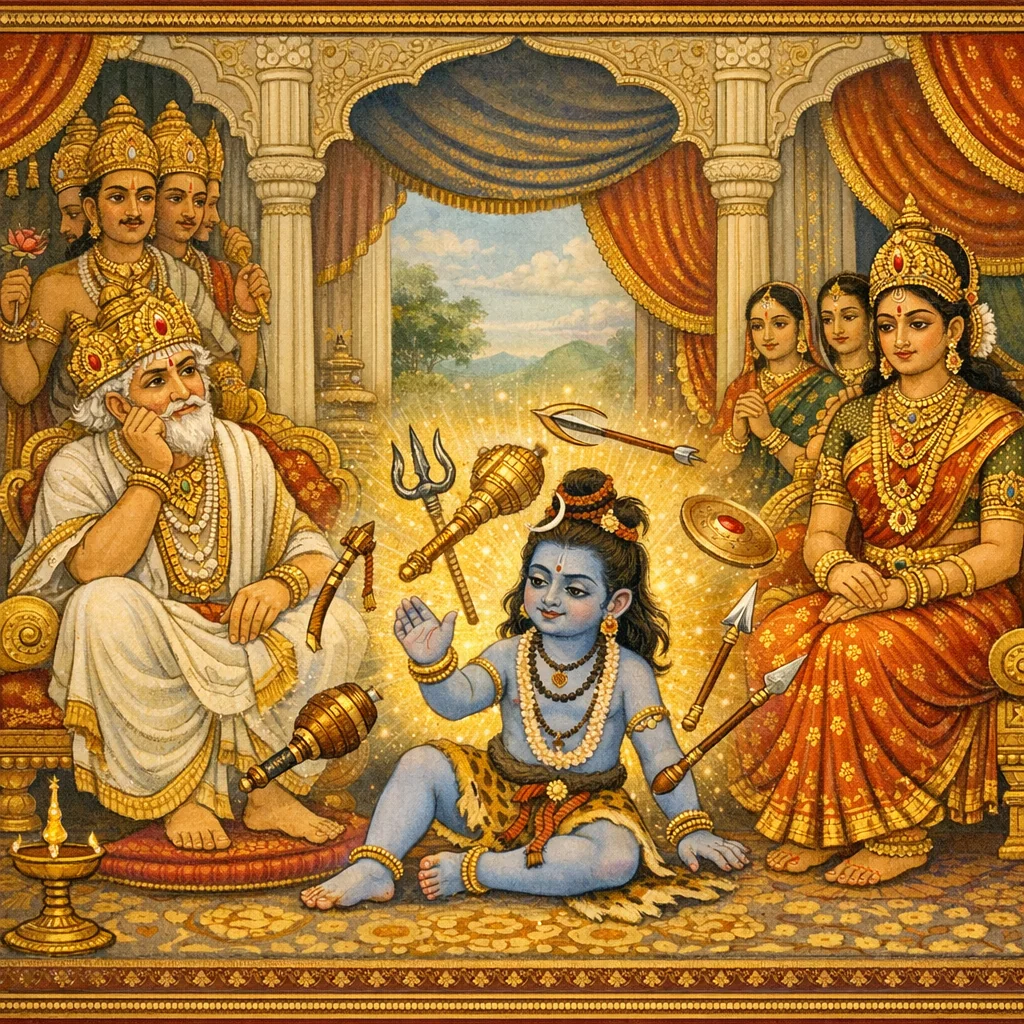
The chapter begins with Arjuna asking Nārada to restate the “nectar-like” account of Śiva’s intentions after his separation from Satī and the burning of Smara (Kāma). Nārada teaches that tapas (disciplined austerity) is the root of great attainments: without it there is no purity, no fitness for union, and no success in lofty undertakings. The narrative turns to Pārvatī’s sorrow and resolve. Rejecting mere fatalism, she declares that results arise from destiny joined with effort and inner disposition, and that tapas is a proven means of attainment. With her parents’ reluctant consent, she performs graded austerities on Himavat—progressively reducing food, then living by breath, and finally near-total fasting—while practicing the pranava (Om) and fixing her mind on Īśvara. Śiva arrives disguised as a brahmacārin and conducts a moral-theological test (including a contrived drowning episode), drawing out Pārvatī’s dharma-first commitment and unwavering vow. He then verbally criticizes Śiva’s ascetic marks to probe her discernment; Pārvatī answers with a doctrinal defense, reading the cremation-ground, serpents, trident, and bull as symbols of cosmic principles. Revealing his true form, Śiva accepts her and directs Himavat to arrange a svayaṃvara. At the svayaṃvara, devas and many beings assemble; Śiva playfully appears as an infant, immobilizes the gods’ weapons, and displays supreme sovereignty. Brahmā recognizes the divine līlā, leads the hymns of praise, and the gods receive a higher “vision” to perceive Śiva. Pārvatī places the garland upon Śiva, the assembly proclaims victory, and the episode closes as an affirmation of tapas, discernment, and divine grace.
Shlokas
Verse 1
अर्जुन उवाच । देवर्षे वर्ण्यते चेयं कथा पीयूषसोदरा । पुनरेतन्मुने ब्रूहि यदा वेत्ति महेश्वरः
Arjuna said: “O divine seer, this tale is like nectar itself. Tell it again, O sage—when does Maheśvara come to know of this matter?”
Verse 2
भगवान्स्वां सतीं भार्यां वधार्थं चापि तारकम् । सत्याश्च विरहात्तप्यन्ददाह किमसौ स्मरम्
Did the Lord—seeking to bring about the slaying of Tāraka and burning with the pain of separation from his chaste wife Satī—therefore burn Kāma (Smara)?
Verse 3
त्वयैवोक्तं स विरहात्सत्यास्तप्यति वै तपः । हिमाद्रिमास्थितो देवस्तस्याः संगमवांछया
You yourself have said that, through separation from Satī, he truly performs tapas; the God, abiding on Himālaya, longs for union with her.
Verse 4
नारद उवाच । सत्यमेतत्पुरा पार्थ भवस्येदं मनीषितम् । अतप्ततपसा योगो न कर्तव्यो मयाऽनया
Nārada said: This is true, O prince. Long ago this was Bhava’s (Śiva’s) resolve: “Without tapas having been performed, I shall not undertake union (yoga) with her.”
Verse 5
तपो विना शुद्धदेहो न कथंचन जायते । असुद्धदेहेन समं संयोगो नैव दैहिकः
Without tapas, a purified body does not arise in any way; and with an impure body, bodily union is truly not fitting.
Verse 6
महत्कर्माणि यानीह तेषां मूलं सदा तपः । नातप्ततपसां सिद्धिर्महत्कर्माणि यांति वै
Whatever great works exist here, their root is always tapas; those who have not practiced tapas do not attain success in great undertakings.
Verse 7
एतस्मात्कारणाद्देवो दर्पितं तं ददाह तु । ततो दग्धे स्मरे चापि पार्वतीमपि व्रीतिताम्
For this very reason the God burned that arrogant one; and when Smara was burned, Pārvatī too was overcome with shame.
Verse 8
विहाय सगणो देवः कैलासं समपद्यत । देवी च परमोद्विग्ना प्रस्खलंती पदेपदे
The God, departing with his attendants, returned to Kailāsa; and the Goddess, sorely distressed, stumbled at every step.
Verse 9
जीवितं स्वं विनिंदंती बभ्रामेतस्ततश्चसा । हिमाद्रिरपि स्वे श्रृंगे रुदतीं पृष्टवान्रतिम्
Censuring her own life, she wandered here and there; and even Himālaya, upon his peak, questioned the weeping Rati.
Verse 10
कासि कस्यासि कल्याणि किमर्थं चापि रोदिषि । पृष्टा सा च रतिः सर्वं यथावृत्तं न्यवेदयत्
“Who are you, and whose are you, O auspicious lady? And why do you weep?” Thus questioned, Rati recounted everything exactly as it had occurred.
Verse 11
निवेदिते तथा रत्या शैलः संभ्रांतमानसः । प्राप्य स्वां तनयां पाणावादायागात्स्वकं पुरम्
When Rati had thus reported the matter, the Mountain (Himālaya), his mind shaken, took his own daughter by the hand and returned to his city.
Verse 12
सा तत्र पितरौ प्राह सखीनां वदनेन च । दुर्भगेन शरीरेण किमनेन हि कारणम्
There she spoke to her parents—echoing also what her companions had said: “What purpose is served by this ill-fated body?”
Verse 13
देहवासं परित्यक्ष्ये प्राप्स्ये वाभिमतं पतिम् । असाध्यं चाप्यभीष्टं च कथं प्राप्यं तपो विना
I will renounce this bodily dwelling—or else I shall obtain the husband I desire. How can what is difficult, and what is longed for, be attained without austerity?
Verse 14
नियमैर्विविधैस्तस्माच्छोषयिष्ये कलेवरम् । अनुजानीत मां तत्र यदि वः करुणा मयि
Therefore, by various disciplines I shall dry up this body. Permit me to go there, if you have compassion for me.
Verse 15
श्रुत्वेति वचनं माता पिता च प्राह तां शुभाम् । उ मेति चपले पुत्रि न क्षमं तावकं वपुः
Hearing her words, her mother and father spoke to that virtuous girl: 'O impulsive daughter, your body is not fit to endure this.'
Verse 16
सोढुं क्लेशात्मरूपस्य तपसः सौम्यदर्शने । भावीन्यप्यनि वार्याणि वस्तूनि च सदैव तु
O gentle-faced one, austerity is of the nature of hardship and must be endured; and in life, inevitable events also come to pass.
Verse 17
भाविनोर्था भवंत्येव नरस्यानिच्छतोपि हि । तस्मान्न तपसा तेऽस्ति बाले किंचित्प्रयोजनम्
Even for a person who does not wish it, what is destined still comes to be. Therefore, O child, austerity serves no purpose for you.
Verse 18
श्रीदेव्युवाच । यदिदं भवतो वाक्यं न सम्यगिति मे मतिः । केवलं न हि दैवेन प्राप्तुमर्थो हि शक्यते
The Goddess said: “In my judgment, what you have spoken is not wholly correct. A goal cannot be attained by fate alone.”
Verse 19
त्किंचिद्दैवाद्धठात्किंचित्किंचिदेव स्वभावतः । पुरुषः फलमाप्नोति चतुर्थं नात्र कारणम्
“Some results come from destiny, some arise suddenly, and some come from one’s own nature; thus a person attains outcomes—there is no fourth cause here.”
Verse 20
ब्रह्मणा चापि ब्रह्मत्वं प्राप्तं किलतपोबलात् । अन्यैरपि च यल्लब्धं तन्नसंख्यातुमुत्सहे
“Even Brahmā attained Brahmāhood, it is said, through the power of austerity (tapas). What others too have gained by it—I do not venture to count.”
Verse 21
अध्रुवेण शरीरेण यद्यभीष्टं न साध्यते । पश्चात्स शोच्यते मंदः पतितेऽस्मिञ्छरीरके
“If, with this perishable body, the desired goal is not accomplished, then later that dull person grieves when this body falls.”
Verse 22
यस्य देहस्य धर्मोऽयं क्वचिज्जायेत्क्वचिन्म्रियेत् । क्वचिद्गर्भगतं नश्येज्जातमात्रं क्वचित्तथा
This is the nature of the body: somewhere it is born, somewhere it dies; somewhere it perishes while still in the womb, and somewhere it is destroyed immediately after birth as well.
Verse 23
बाल्ये च यौवने चापि वार्धक्येपि विनश्यति । तेन चंचलदेहेन कोऽर्थः स्वार्थो न चेद्भवेत्
It perishes in childhood, in youth as well, and also in old age. What worth is this fickle body, if one’s true purpose is not fulfilled?
Verse 24
इत्युक्त्वा स्वसखीयुक्ता पितृभ्यां साश्रु वीक्षिता । श्रृंगं हिमवतः पुण्यं नानाश्चर्यं जगाम सा
Having spoken thus, accompanied by her own companions, and watched by her parents with tears, she went to the holy peak of Himavat, filled with many wonders.
Verse 25
तत्रां बराणि संत्यज्य भूषणानि च शैलजा । संवीता वल्कलैर्दिव्यैस्तपोऽतप्यत संयता
There, Śailajā cast off her garments and ornaments; clothed in divine bark-cloth, self-restrained, she undertook austerity (tapas).
Verse 26
ईश्वरं हृदि संस्थाप्य प्रणवाभ्यसनादृता । मुनीनामप्य भून्मान्या तदानीं पार्थ पार्वती
Placing the Lord within her heart, devoted to the disciplined practice of the Praṇava (Oṁ), Pārvatī became worthy of honor even among sages at that time, O Pārtha.
Verse 27
त्रिस्नाता पाटलापत्रभक्षकाभूच्छतं समाः । शंत च बिल्वपत्रेण शीर्णोन कृतभोजना
Bathing thrice daily, she lived for a hundred years feeding on pāṭalā leaves; and for another hundred, she sustained herself on bilva leaves—withered—taking no regular cooked food.
Verse 28
जलभक्षा शतं चाभूच्छतं वै वायुभोजना । ततो नियममादाय पादांगुष्ठस्थिताभवत्
For a hundred years she subsisted on water alone; for another hundred she lived on air alone. Then, taking up an even stricter niyama, she remained standing upon the tip of her great toe.
Verse 29
निराहारा ततस्तापं प्रापुस्तत्तपसो जनाः । ततो जगत्समालोक्य तदीयतपसोर्जितम्
Then she became wholly without food; and by the burning power of that austerity, people were afflicted. Thereupon, seeing the world impacted by the force of her tapas—
Verse 30
हरस्तत्राययौ साक्षाद्ब्रह्मचारिवपुर्द्धरः । वसानो वल्कलं दिव्यं रौरवाजिनसंवृतः
Then Hara (Śiva) himself came there in person, assuming the form of a brahmacārin, a celibate student. He wore divine bark-cloth and was covered with a raurava deerskin.
Verse 31
सुलक्षणाषाढधरः सद्वृत्तः प्रति भानवान् । ततस्तं पूजयामासुस्तत्सख्यो बहुमानतः
He bore auspicious marks and wore an āṣāḍha garment; his conduct was noble, and he shone with intelligence. Then her companions worshipped him with great respect.
Verse 32
वक्तुमिच्छुः शैलपुत्रीं सखीभिरिति चोदितः । ब्रह्मन्नियं महाभागा गृहीतनियमा शुभा
Eager to speak to the Daughter of the Mountain, and urged on by her companions, he was told: “O Brāhmaṇa, this noble and auspicious lady has undertaken a sacred niyama (devotional observance).”
Verse 33
मुहूर्तपंचमात्रेण नियमोऽस्याः समाप्यते । तत्प्रतीक्षस्व तं कालं पश्चादस्मत्सखीसमम्
In merely five muhūrtas her sacred observance will be fulfilled. Wait for that time; afterwards you may meet her in the company of us, her friends.
Verse 34
नानाविदा धर्मवार्ताः प्रकरिष्यसि ब्राह्मण । इत्युक्त्वा विजयाद्यास्ता देवीचरितवर्णनैः
Saying, “O Brāhmaṇa, you will relate many kinds of discourse on dharma,” Vijayā and the other companions passed the time by recounting the deeds and sacred stories of the Goddess.
Verse 35
अश्रुमुख्यो द्विजस्याग्रे निन्युः कालं च तं तदा । ततः काले किंचिदूने ब्रह्मचारी महामतिः
Then, with tearful faces, they spent that time in the Brāhmaṇa’s presence. When a little time still remained, that great-minded brahmacārin then took action.
Verse 36
विलोकनमिषेणागादाश्रमोपस्थितं ह्रदम् । निपपात च तत्रासौ चुक्रोशातितरां ततः
On the pretext of looking around, he went to the lake near the hermitage. There he fell in, and then cried out exceedingly loudly.
Verse 37
अहमत्र निमज्जामि कोऽपि मामुद्धरेत भोः । इति तारेण क्रोशंतं श्रुत्वा तं विजयादिकाः
“I am drowning here—someone rescue me, O friends!” Hearing him cry out thus in a high voice, Vijayā and the others responded.
Verse 38
आजग्मुस्त्वरया युक्ता ददुस्तस्मै करं च ताः । स चुक्रोश ततो गाढं दूरेदूरे पुनःपुनः
They hurried there and offered him their hand. Yet he cried out all the more insistently, again and again: “Farther away, farther away!”
Verse 39
नाहं स्पृशाम्यसंसिद्धां म्रिये वा नानृतं त्विदम् । ततः समाप्तनियमा पार्वती स्वयमाययौ
“I will not touch one whose observance is unfinished; I would rather die—this is no falsehood.” Then, when her vow had been completed, Pārvatī herself came there.
Verse 40
सव्यं करं ददावस्य तं चासौ नाभ्यनन्दत । भद्रे यच्छुचि नैव स्याद्यच्चैवावज्ञया कृतम्
She offered him her left hand, but he did not accept it. He said, “O gentle lady, what is not pure, and what is done with disregard, should not be accepted.”
Verse 41
सदोषेण कृतं यच्च तदादद्यान्न कर्हिचित् । सव्यं चाशुचि ते हस्तं नावलंबामि कर्हिचित्
“And whatever is done with a fault should never be accepted. Your left hand is impure; I will not take support from it—ever.”
Verse 42
इत्युक्ता पार्वती प्राह नाहं दत्तं च दक्षिणम् । ददामि कस्यचिद्विप्र देवदेवाय कल्पितम्
Thus addressed, Pārvatī said: “I have not yet given away my dakṣiṇā (sacred gift). O brāhmaṇa, I bestow it upon someone only when it is intended for the God of gods, Devadeva (Śiva).”
Verse 43
दक्षिणं मे करं देवो ग्रहीता भव एव च । शीर्यते चोग्रतपसा सत्यमेतन्मयोदितम्
“My dakṣiṇā is my right hand—may the Lord take it; and you too, O brāhmaṇa, receive it. It is worn away by fierce austerity; this is the truth I speak.”
Verse 44
विप्र उवाच । यद्येवमवलेपस्ते गमनं केन वार्यते । यथा तव प्रतिज्ञेयं ममापीयं तथाचला
The brāhmaṇa said: “If such pride is in you, who can restrain your going? Yet just as your vow must be upheld, so too must this my claim stand firm—O Acalā, the Unshaken.”
Verse 45
रुद्रस्यापि वयं मान्याः कीदृशं ते तपो वद । विषमस्थं यत्र विप्रं म्रियमाणमुपेक्षसि
“Even to Rudra we are worthy of honor. Tell me—what sort of austerity is yours, that you neglect a brāhmaṇa in distress, dying before you?”
Verse 46
अवजा नासि विप्रांस्त्वं तच्छीघ्रं व्रज दर्शनात् । यदि वा मन्यसे पूज्यांस्ततोऽभ्युद्धर नान्यथा
“If you do not despise brāhmaṇas, then quickly go away from our sight. Or if you truly regard them as worthy of worship, then rescue (me) at once—there is no other option.”
Verse 47
ततो विचार्य बहुधा इति चेति च सा शुभा । विप्रस्योद्धरणं सर्वधर्मेभ्योऽमन्यताधिकम्
Then that auspicious Goddess reflected in many ways—“so it is, or is it not?”—and she concluded that rescuing the brāhmaṇa outweighed all other duties of dharma.
Verse 48
ततः सा दक्षिणं दत्त्वा करं तं प्रोज्जहार च । नरं नारी प्रोद्धरति सज्जन्तं भववारिधौ । एतत्सन्दर्शनार्थाय तथा चक्रे भवोद्भवः
Then she offered the dakṣiṇā and let go of that hand. Truly, a woman can lift up a man who is sinking in the ocean of saṃsāra; to make this known, Bhavodbhava (Śiva) so arranged it.
Verse 49
प्रोद्धृत्य च ततः स्नात्वा बद्ध्व योगासनं स्थिता
Having lifted him out, she then bathed, bound herself into a yogic posture, and remained steady.
Verse 50
ब्रह्मचारी ततः प्राह प्रहसन्किमिदं शुभे । कर्तुकामासि तन्वंगि दृढयोगासनस्थिता
Then the brahmacārī said with a smile: “O auspicious one, what is this? O slender-limbed lady, what do you intend to do, seated so firmly in a steady yogic posture?”
Verse 51
देवी प्राह ज्वालयिष्ये शरीरं योगवह्निना । महादेवकृतमतिरुच्छिष्टाहं यतोऽभवम्
The Goddess said: “I will burn this body with the fire of yoga. For my mind was shaped by Mahādeva, and thus I have become as one left over after him—unworthy.”
Verse 52
ब्रह्मचारी ततः प्राह काश्चिद्ब्राह्मणकाम्यया । कृत्वा वार्तास्ततः स्वीयमभीष्टं कुरु पार्वति
Then the brahmacārin spoke: “It is for a certain desire connected with a brāhmaṇa. After speaking with me for a while, do what you yourself wish, O Pārvatī.”
Verse 53
नोपहन्यां कदाचिद्वि साधुभिर्विप्रकामना । धर्ममेनं मन्यसे चेन्मुहूर्तं ब्रूहि पार्वति
“Indeed, I would never do harm at any time—I who am sought by sages and brāhmaṇas. If you deem this to be dharma, then speak for a moment, O Pārvatī.”
Verse 54
देवी प्राह ब्रूहि विप्र मुहूर्तं संस्थिता त्वहम् । ततः स्वयं व्रती प्राह देवीं तां स्वसखीयुताम्
The Goddess said: “Speak, O brāhmaṇa; I am standing here for a moment.” Then the vow-observing one himself spoke to that Goddess, who was accompanied by her own companions.
Verse 55
किमर्थमिति रम्भोरु नवे वयसि दुश्चरम् । तपस्त्वया समारब्धं नानुरूपं विभाति मे
“For what purpose, O woman of shapely thighs, have you begun this difficult austerity in the freshness of youth? This tapas you have undertaken does not seem fitting to me.”
Verse 56
दुर्लभं प्राप्य मानुष्यं गिरिराजगृहेऽधुना । भोगांश्च दुर्लभान्देवि त्यक्त्वा किं क्लिश्यते वपुः
“Having obtained this hard-to-attain human condition, and now dwelling in the house of the Lord of Mountains, O Goddess—why is your body tormented, abandoning even rare enjoyments?”
Verse 57
अतीव दूये वीक्ष्य त्वां सुकुमारतराकृतिम् । अत्युग्रतपसा क्लिष्टा पद्मिनीव हिमर्दिता
“I grieve greatly on seeing you—so exceedingly delicate in form—afflicted by very fierce austerities, like a lotus-plant battered by frost.”
Verse 58
इदं चान्यत्त्व शुभे शिरसो रोगदं मम । यद्देहं त्यक्तुकामा त्वं प्रबुद्धा नासि बालिके
And there is yet another matter, O auspicious one, that pains my head: that you, wishing to cast off your body, have not awakened to your own good, O girl.
Verse 59
वामः कामो मनुष्येषु सत्यमेतद्वचो यतः । स्पृहणीयासि सर्वेषामेवं पीडयसे वपुः
Desire among humans is perverse—this saying is indeed true; for though you are coveted by all, you still torment your body in this way.
Verse 60
अविज्ञातान्वयो नग्नः शूली भूतगणाधिपः । श्मशाननिलयो भस्मोद्धूलनो वृषवाहनः
(He is) of unknown lineage; unclad; bearer of the trident; lord of the hosts of spirits; dwelling in cremation grounds; smeared with ashes; and having a bull for his mount.
Verse 61
गजाजिनो द्विजिह्वाद्यलंकृतांगो जटाधरः । विरूपाक्षः कथंकारं निर्गुणः स्यात्तवोचितः
Wearing an elephant-hide, his body adorned with serpents and the like, bearing matted locks, with strange-looking eyes—how could such a one, called “without qualities,” possibly be suitable for you?
Verse 62
गुणा ये कुलशीलाद्य वराणामुदिता बुधैः । तेषामेकोऽपि नैवास्ति तस्मिंस्तन्नोचितः स ते
The virtues—noble lineage, good conduct, and the rest—praised by the wise as marks of an excellent bridegroom: not even one of these is found in him. Therefore, he is not a fitting match for you.
Verse 63
शोचनीयतमा पूर्वमासीत्पार्वति कौमुदी । त्वं संवृत्ता द्वितीयासि तस्यास्तत्संगमाशया
O Pārvatī, formerly Kaumudī was the most pitiable of all; now you have become the second—because you hope to unite with him.
Verse 64
तपोधनाः सर्वसमा वयं यद्यपि पार्वति । दुनोत्येव तवारंभः शूलायां यूपसत्क्रिया
O Pārvatī, although we ascetics are equal toward all, your undertaking still troubles us—this ‘honouring of the sacrificial post’ upon a trident.
Verse 65
वृषभारोहणं वासः श्मशाने पाणिसंग्रहः । सव्यालपाणिना क्षौमगजत्वग्बंधनः कथम्
How can there be marriage with one whose mount is a bull, whose dwelling is the cremation-ground, whose hand is clasped while it bears a serpent, and who is bound about with linen and elephant-hide?
Verse 66
जनहास्यकरं सर्वं त्वयारब्धमसांप्रतम् । स्त्रीभावाद्भूतिसंपर्क्कः कथं चाभिमतस्तव
All that you have undertaken is untimely and becomes a cause of public laughter. And for you, being in a woman’s state, how can contact with sacred ash be something you desire?
Verse 67
निवर्तय मनस्तस्मादस्मात्सर्वविरोधिनः । मृगाक्षि मदनारातेर्मर्कटाक्षस्य प्रार्थनात्
O doe-eyed one, turn your mind away from him—hostile to all. Cease your seeking of that monkey-eyed foe of Kāma (Love).
Verse 68
विरुद्धवादिनं चैवं ब्रह्मचारिणमीश्वरम् । निशम्य कुपिता देवी प्राह वाचा सगद्गदम्
Hearing the Lord—appearing as a brahmacārin—speak thus in opposition, the Goddess grew wrathful and spoke, her voice trembling with emotion.
Verse 69
मा मा ब्राह्मण भाषिष्ठा विरुद्धमिति शंकरे । महत्तमो याति पुमान्देवदेवस्य निंदया
Do not, O brāhmaṇa—do not speak of Śaṅkara as “improper” or “contrary.” By slandering the God of gods, a man falls into great darkness.
Verse 70
न सम्यगभिजानासि तस्य देवस्य चेष्टितम् । श्रृणु ब्राह्मण त्वं पापाद्यथास्मात्परिमुच्यसे
You do not rightly understand the deeds and ways of that God. Listen, O brāhmaṇa, so that you may be freed from this sin.
Verse 71
स आदिः सर्वजगतां कोस्य वेदान्वयं ततः । सर्वं जगद्यस्य रूपं दिग्वासाः कीर्त्यते ततः
He is the beginning of all worlds—so what “Vedic lineage” could there be for Him? Since the entire universe is His form, therefore He is celebrated as “clothed by the directions” (Digambara).
Verse 72
गुणत्रयमयं शूलं शूली यस्माद्बिभार्ते सः । अबद्धाः सर्वतो मुक्ता भूता एव च तत्पतिः
Because he bears the trident constituted of the three guṇas, he is called the Trident-bearer (Śūlī). And since beings (bhūtas) are in truth unbound and freed on every side, he is their Lord as well.
Verse 73
श्मशानं चापि संसारस्तद्वासी कृपयार्थिनाम् । भूतयः कथिता भूतिस्तां बिभर्ति स भूतिभृत्
This wandering world of saṃsāra is itself a cremation-ground; there he dwells for those who seek compassion. “Bhūti” is said to be the hosts of beings; he bears that bhūti—therefore he is called Bhūtibhṛt, the Bearer of Bhūti.
Verse 74
वृषो धर्म इति प्रोक्तस्तमारूढस्ततो वृषी । सर्पाश्च दोषाः क्रोधाद्यास्तान्बिभर्ति जगन्मयः
“The bull is Dharma,” so it is declared; because he is mounted upon it, he is therefore called Vṛṣī. And the serpents are the faults—anger and the rest; the Lord who pervades the universe bears even those.
Verse 75
नानाविधाः कर्मयोगा जटारूपा बिभर्ति सः । वेदत्रयी त्रिनेत्राणि त्रिपुरं त्रिगुणं वपुः
He bears the many disciplines of karma-yoga as his matted locks. The three Vedas are his three eyes; Tripura is his threefold city; and his very form is the three guṇas.
Verse 76
भस्मीकरोति तद्देवस्त्रिपुरध्नस्ततः स्मृतः । एवंविध महादेवं विदुर्ये सूक्ष्मदर्शिनः
That God reduces it to ashes; therefore he is remembered as Tripuradhna, the Slayer of Tripura. Those of subtle vision understand Mahādeva to be of this very nature.
Verse 77
कथंकारं हि ते नाम भजंते नैव तं हरम् । अथ वा भीतसंसाराः सर्वे विप्र यतो जनाः
How indeed do they worship only “mere talk” and not that Hara? Or rather—since all people are frightened by worldly existence, O brāhmaṇa, they should turn to him.
Verse 78
विमृश्य कुर्वते सर्वं विमृश्यैतन्मया कृतम् । शुभं वाप्यशुभं वास्तु त्वमप्येनं प्रपूजय
After due reflection they do everything; after reflection I too have done this. Whether it be auspicious or inauspicious, you also should worship him well.
Verse 79
इति ब्रुवंत्यां तस्यां तु किंचित्प्रस्फुरिताधरम् । विज्ञाय तां सखीमाह किमप्येष विवक्षुकः
As she was speaking thus, his lips quivered slightly. Noticing that, her companion said: ‘It seems he wishes to say something.’
Verse 80
वार्यतामिति विप्रोऽयं महद्दूषणबाषकः । न केवलं पापभागी श्रोता वै स्यान्न संशयः
‘Stop him!’—this brāhmaṇa is uttering great slander. Not only the speaker, but even the listener would surely become a sharer in the sin—there is no doubt.
Verse 81
अथ वा किं च नः कार्यं वादेन सह ब्राह्मणैः । कर्णौ पिधाय यास्यामो यथा यः स्यात्ततास्तु सः
Or else, what need have we to engage in argument with brāhmaṇas? Let us go away with our ears covered; let whatever is to happen, happen.
Verse 82
इत्युक्त्वोत्थाय गच्छंत्यां पिधाय श्रवणावुभौ । स्वरूपं समुपाश्रित्य जगृहे वसनं हरः
Having spoken thus, as she rose and began to depart, Hara covered both his ears; then, returning to his own true form, he took up his garment.
Verse 83
ततो निरीक्ष्य तं देवं संभ्रांता परमेश्वरी । प्रणिपत्य महेशानं तुष्टावावनता उमा
Then, beholding that God, the Supreme Goddess—overwhelmed with reverence—bowed down to Maheśāna; and Uma, with head bent low, praised him.
Verse 84
प्राह तां च महादेवो दासोऽस्मि तव शोभने । तपोद्रव्येण क्रीतश्च समादिश यथेप्सितम्
Mahādeva said to her, “O lovely one, I am your servant; I have been ‘purchased’ by the wealth of your austerities. Command me as you wish.”
Verse 85
देव्युवाच । मनसस्त्वं प्रभुः शंभो दत्तं तच्च मया तव । वपुषः पितरावीशौ तौ सम्मानयितुमर्हसि
The Goddess said: “O Śambhu, you are the lord of my mind—and I have given that mind to you. But as for my body, its parents are those two venerable ones; you ought to honor them.”
Verse 86
महादेव उवाच । पित्रा हि ते परिज्ञातं दृष्ट्वा त्वां रूपशालिनीम् । बालां स्वयंवरं पुत्री महं दास्यामि नान्यथा
Mahādeva said: “Indeed, your father has understood the matter upon seeing you, radiant in beauty. He will give his young daughter in a svayaṃvara—he will do so, and not otherwise.”
Verse 87
तत्तस्य सर्वमेवास्तु वचनं त्वं हिमाचलम् । स्वयंवरार्थं सुश्रोणि प्रेरय त्वां वृणे ततः
“Let everything be exactly as he has spoken. O fair-hipped one, send word to Himācala for the svayaṃvara; then, in that assembly, I shall choose you.”
Verse 88
इत्युक्त्वा तां महादेवः शुचिः शुचिषदो विभुः । जगामेष्टं तदा देशं स्वपुरं प्रययौ च सा
Thus speaking to her, Mahādeva—the pure Lord, dwelling among the pure—then went to the place of his choosing; and she too departed for her own city.
Verse 89
दृष्ट्वा देवीं तदा हृष्टो मेनया सहितोऽचलः
Seeing the Goddess then, Acala (Himālaya), together with Menā, was filled with joy.
Verse 90
आलिंग्याघ्राय पप्रच्छ सर्वं सा च न्यवेदयत् । दुहितुर्देवदेवेन आज्ञप्तं तु हिमाचलः
Embracing her and smelling the crown of her head, he asked about everything, and she related it all. Then Himācala, instructed by the God of gods concerning his daughter, prepared to act accordingly.
Verse 91
स्वयंवरं प्रमुदितः सर्वलोकेष्वघोषयत् । अश्विनो द्वादशादित्या गन्धर्वरुडोरगाः
Rejoicing, he proclaimed the svayaṃvara throughout all the worlds, inviting the Aśvins, the twelve Ādityas, the Gandharvas, the Garuḍas, and the Nāgas.
Verse 92
यक्षाः सिद्धास्तथा साध्या दैत्याः किंपुरुषा नगाः । समुद्राद्याश्च ये केचित्त्रैलोक्यप्रवरास्च ये
Yakṣas, Siddhas, and Sādhyas; Daityas, Kiṃpuruṣas, and Nāgas—together with the oceans and all other eminent beings of the three worlds—assembled for that supreme occasion.
Verse 93
त्रयस्त्रिंशत्सहस्राणि त्रयस्त्रिंशच्छतानि च । त्रयस्त्रिंशच्च ये देवास्त्रयस्त्रिंशच्च कोटयः
There were thirty-three thousand, and thirty-three hundred; the thirty-three Devas as well—and beyond these, thirty-three crores besides.
Verse 94
जग्मुर्गिरीन्द्रपुत्र्यास्तु स्वयंवरमनुत्तमम् । आमंत्रितस्तथा विष्णुर्मेरुमाह हसन्निव
They went to the unsurpassed svayaṃvara of the Mountain-King’s daughter. And Viṣṇu too, being invited, spoke to Meru as though smiling.
Verse 95
तातास्माकं च सा देवी मेरो गच्छ नमामि ताम् । अथ शैलसुता देवी हैममारुह्य शोभनम्
“O father, that Goddess is truly ours; Meru, go—I bow to her.” Then the Goddess, the Mountain’s daughter, mounted a splendid golden conveyance.
Verse 96
विमानं सर्वतोभद्रं सर्वरत्नैरलंकृतम् । अप्सरोभिः प्रनृत्यद्भिः सर्वाभरणभूषिता
A splendid, all-auspicious vimāna, adorned with every jewel; attended by dancing Apsarases, she stood arrayed in all divine ornaments.
Verse 97
गंधर्वसंघैर्विविधैः किंनरैश्च सुशोभनैः । बंदिभिः स्तूयमाना च वीरकांस्यधरा स्थिता
Surrounded by many hosts of Gandharvas and splendid Kiṃnaras, and praised by court-bards, she stood there amid the heroic, resounding music of bronze instruments.
Verse 98
सितातपत्ररत्नांशुमिश्रितं चावहत्तदा । शालिनी नाम पार्वत्याः संध्यापूर्णेदुमंडला
Then Śālinī, radiant like the full moon at twilight, held aloft for Pārvatī a white parasol, mingled with jewel-like rays.
Verse 99
चामरासक्तहस्ताभिर्दिव्यस्त्रीभिश्च संवृता । मालां प्रगृह्य सा तस्थौ सुरद्रुमसमुद्भवाम्
Encircled by divine women holding yak-tail fans, she stood there holding a garland that had arisen from the celestial wish-fulfilling tree.
Verse 100
एवं तस्यां स्थितायां तु स्थिते लोकत्रये तदा । शिशुर्भूत्वा महादेवः क्रीडार्थं वृषभध्वजः
Thus, as she stood there and as the three worlds stood attentive, Mahādeva, the Bull-bannered Lord, became a child for the sake of play.
Verse 101
उत्संगतलसंगुप्तो बभूव भगवान्भवः । जयेति यत्पदं ख्यातं तस्य सत्यार्थमीश्वरम्
Bhagavān Bhava (Śiva) was concealed upon the lap’s surface, and the Lord made true in meaning that famed utterance, “Jaya—Victory!”
Verse 102
अथ दृष्ट्वा शिशुं देवास्तस्य उत्संगवर्तिनः । कोयमत्रेति संमंत्र्य चुक्रुशुर्भृशरोषिताः
Then, seeing the infant seated upon his lap, the gods conferred among themselves, crying, “Who is this here?”—and they shouted in intense anger.
Verse 103
वज्रमाहारयत्तस्य बाहुमुद्यम्य वृत्रहा । स बाहुरुद्यतस्तस्य तथैव समतिष्ठत
Vṛtrahā (Indra) raised his arm and brought forth the thunderbolt; yet his uplifted arm remained fixed, standing just so.
Verse 104
स्तंभितः शिशुरूपेण देवदेवेन लीलया । वज्रं क्षेप्तुं न शक्नोति बाहुं चालयितुं तदा
Paralyzed by the Lord of gods, who sported in the form of an infant, he could neither hurl the thunderbolt nor even move his arm at that time.
Verse 105
वह्निः शक्तिं तदा क्षेप्तुं न शशाक तथोत्थितः । यमोऽपि दंडं खड्गं च निरृतिस्तं शिशुं प्रति
Agni, though he rose up, could not then cast his spear (śakti). Yama too lifted his staff and sword, and Nirṛti turned her weapons toward that infant.
Verse 106
पाशं च वरुणो राजा ध्वजयष्टिं समीरणः । सोमो गुडं धनेशश्च गदां सुमहतीं दृढाम्
King Varuṇa took up the noose (pāśa); Samīraṇa (Vāyu) the banner-staff; Soma a mace; and Dhaneśa (Kubera) a very great, firm club.
Verse 107
नानायुधानि चादित्या मुसलं वसवस्तथा । महाघोराणि शस्त्राणि तारकाद्याश्च दानवाः
The Ādityas too took up various weapons, and the Vasus a mallet (musala); and the Dānavas, beginning with Tāraka, wielded exceedingly terrible arms.
Verse 108
स्तंभिता देवदेवेन तथान्ये भुवनेषु ये । पूषा दंतान्दशन्दंर्बालमैक्षत मोहितः
Thus were they and others in the worlds immobilized by the God of gods. Pūṣan, gnashing his teeth, gazed upon the Child in bewildered delusion.
Verse 109
तस्यापि दशनाः पेतुर्दृष्टमात्रस्य शंभुना । भगश्च नेत्रे विकृते चकार स्फुटिते च ते
Even his teeth fell out merely by being looked upon by Śambhu; and Bhaga’s eyes too were made distorted—indeed, they were split asunder.
Verse 110
बलं तेजश्च योगांश्च सर्वेषां जगृहे प्रभुः । अथ तेषु स्थितेष्वेव मन्युमत्सु सुरेष्वपि
The Lord took away the strength, the radiance, and the yogic powers of them all. And while those gods still stood there, filled with wrath,
Verse 111
ब्रह्मा ध्यानमुपाश्रित्य बुबोध हरचेष्टितम् । सोऽभिगम्य महादेवं तुष्टाव प्रयतो विधिः
Brahmā, resorting to meditation, understood that this was Hara’s act. Then the Creator (Vidhi), approaching Mahādeva with reverence, praised him.
Verse 112
पौराणैः सामसंगीतैर्वेदिकैर्गुह्यनामभिः । नमस्तुभ्यं महादेव महादेव्यै नमोनमः
With Purāṇic hymns, with Sāman-chant melodies, with Vedic praises, and with the secret mystic names, we bow to You, O Mahādeva; again and again we bow to the Great Goddess, Mahādevī.
Verse 113
प्रसादात्तव बुद्ध्यादिर्जगदेतत्प्रवर्तते । मूढाश्च देवताः सर्वा नैनं बुध्यत शंकरम्
By Your grace, even intellect and the other faculties set this world in motion. Yet all the gods, deluded, did not recognize Him—Śaṅkara.
Verse 114
महादेवमिहायातं सर्वदेवनमस्कृतम् । गच्छध्वं शरणं शीघ्रं यदि जीवितुमिच्छत
Mahādeva has come here—He whom all the gods bow to. Go quickly and take refuge, if you wish to live.
Verse 115
ततः संभ्रम संपन्नास्तुष्टुवुः प्रणताः सुराः । नमोनमो महादेव पाहिपाहि जगत्पते
Then the gods, filled with awe and bowing down, praised Him: “Homage, homage, O Mahādeva—protect us, protect us, O Lord of the world!”
Verse 116
दुराचारान्भवानस्मानात्मद्रोहपरायणान् । अहो पश्यत नो मौढ्यं जानंतस्तव भाविनीम्
“We are of wicked conduct, devoted even to self-betrayal. Alas—behold our folly: though knowing Your destined consort (Umā), we still acted so.”
Verse 117
भार्यामुमां महादेवीं तथाप्यत्र समागताः । युक्तमेतद्यदस्माकं राज्यं गृह्येत चासुरैः
“Though Umā, the Great Goddess, is Your own spouse, we still came here (as if to compete). It is only fitting, then, that our sovereignty should be seized by the Asuras.”
Verse 118
येषामेवंविधाबुद्धिरस्माभिः किं कृतं त्विदम् । अथ वा नो न दोषोऽस्ति पशवो हि वयं यतः
For those whose understanding is of such a kind, what indeed has been “done” by us? Or else—perhaps we are not at fault, for after all we are but beasts, driven by instinct.
Verse 119
त्वयैव पतिना सर्वे प्रेरिताः कुर्महे विभो । ईश्वरः सर्व भूतानां पतिस्त्वं परमेश्वरः
By You alone—as our Lord—are we all impelled; thus we act, O Mighty One. You are the ruler of all beings; You are the Lord, the Supreme Īśvara.
Verse 120
भ्रामयस्यखिलं विश्वं यन्त्रारूढं स्वमायया । येन विभ्रामिता मूढाः समायाताः स्वयंवरम्
By Your own māyā You cause the entire universe—like a machine set in motion—to revolve. By that very power, we deluded ones were bewildered and came to this svayaṃvara.
Verse 121
तस्मै पशुनां पतये नमस्तुभ्यं प्रसीद नः । अथ तेषां प्रसन्नऽभूद्देवदेवास्त्रियंबकः
To Him—the Lord of creatures (Paśupati)—we bow; be gracious to us. Then Triyambaka, the God of gods, became pleased with them.
Verse 122
यथापूर्वं चकारैतान्संस्तवाद्ब्रह्मणः प्रभुः । तारकप्रमुखा दैत्याः संक्रुद्धास्तत्र प्रोचिरे
Then the Lord, in response to Brahmā’s hymn of praise, caused things to proceed as before. But the Dānavas led by Tāraka, enraged, spoke out there and then.
Verse 123
कोयमंग महादेवो न मन्यामो वयं च तम् । ततः प्रहस्य बालोऽसौ हुंकारं लीलया व्यधात्
“Who indeed is this ‘Mahādeva’? We do not acknowledge him at all!” Then that divine Boy, smiling, playfully uttered a single “huṃ”.
Verse 124
हुंकारेणैव ते दैत्याः स्वमेव नगरं गताः । विस्मृतं सकलं तेषां स्वयंवरमुखं च तत्
By that very “huṃ” alone, those Daityas returned to their own city. Everything was forgotten by them—including that very purpose of the svayaṃvara.
Verse 125
महादेवप्रभावेन दैत्यानां घोरकर्मणाम् । एवं यस्य प्रभावो हि देवदैत्येषु फाल्गुन
By the majesty of Mahādeva, even those Daityas of dreadful deeds were thus subdued. Such indeed is his power among both Devas and Daityas, O Phālguna.
Verse 126
कथमीश्वरवाक्यार्थस्तस्मादन्यत्र मुच्यते । असंशयं विमुढास्ते पश्चात्तापः पुरा महान्
How can the intent of the Lord’s words ever be set aside elsewhere? Those deluded ones, without doubt, later fell into great remorse.
Verse 127
ईश्वरं भुवनस्यास्य ये भजंते न त्र्यंबकम् । ततः संस्तूयमानः स सुरैः पद्मभुवादिभिः
Those who worship the Lord of this universe but do not worship Tryambaka—(they miss the true refuge). Then he was praised by the gods, beginning with Padmabhū (Brahmā).
Verse 128
वपुश्चकार देवेशस्त्र्यंबकः परमाद्भुतम् । तेजसा तस्य देवास्ते सेंद्रचंद्रदिवाकराः
Tryambaka, Lord of the gods, assumed a most wondrous form. By the radiance of that form, the gods—together with Indra, the Moon, and the Sun—were overwhelmed by its splendor.
Verse 129
सब्रह्मकाः ससाध्याश्च वसुर्विश्वे च देवताः । सयमाश्च सरुद्राश्च चक्षुरप्रार्थयन्प्रभुम्
Together with Brahmā, with the Sādhyas, the Vasus, and the Viśvedevas, along with Yama and the Rudras, the deities prayed to the Lord to grant them divine sight.
Verse 130
तेभ्यः परतमं चक्षुः स्ववपुर्द्रष्टुमुत्तमम् । ददावम्बापतिः शर्वो भवान्याश्चालस्य च
Śarva—Lord of Ambā—granted them the supreme and excellent divine sight, so that they might behold his own form, and also the form of Bhavānī, his consort.
Verse 131
लब्ध्वा रुद्रप्रसादेन दिव्यं चक्षुरनुत्तमम् । सब्रह्यकास्तदा देवास्तमपश्यन्महेश्वरम्
Having obtained, by Rudra’s grace, that unsurpassed divine sight, the gods—together with Brahmā—then beheld Maheśvara.
Verse 132
ततो जगुश्च मुनयः पुष्पवृष्टिं च खेचराः । मुमुचुश्च तदा नेदुर्देवदुंदुभयो भृशम्
Then the sages burst into song; the celestial beings in the sky released a shower of flowers, and at that moment the divine kettledrums resounded loudly.
Verse 133
जगुगधर्वमुख्याश्च ननृतुश्चाप्सरोगणाः । मुमुदुर्गणपाः सर्वे मुमोदांबा च पार्वती
The foremost Gandharvas sang, and hosts of Apsarases danced. All the Gaṇas rejoiced, and Mother Pārvatī too was filled with delight.
Verse 134
ब्रह्माद्या मेनिरे पूर्णां भवानीं च गिरीश्वरम् । तस्य देवी ततो हृष्टा समक्षं त्रिदिवौकसाम्
Brahmā and the other gods recognized Bhavānī and Girīśvara as fully fulfilled in glory. Then the Goddess, delighted, stood before the very eyes of the dwellers of heaven.
Verse 135
पादयोः स्थापयामास मालां दिव्यां सुगंधिनीम् । सादुसाध्विति संप्रोच्य तया तं तत्र चर्चितम्
She placed at his feet a divine, fragrant garland; saying, “Well done, well done,” she then honored him there with praise.
Verse 136
सह देव्या नमश्चक्रुः शिरोभिर्भूतलाश्रितैः । सर्वे सब्रह्मका देवा जयेति च मुदा जगुः
Together with the Goddess, they bowed down, their heads touching the earth. All the gods, with Brahmā among them, joyfully cried, “Victory!”