Adhyaya 24
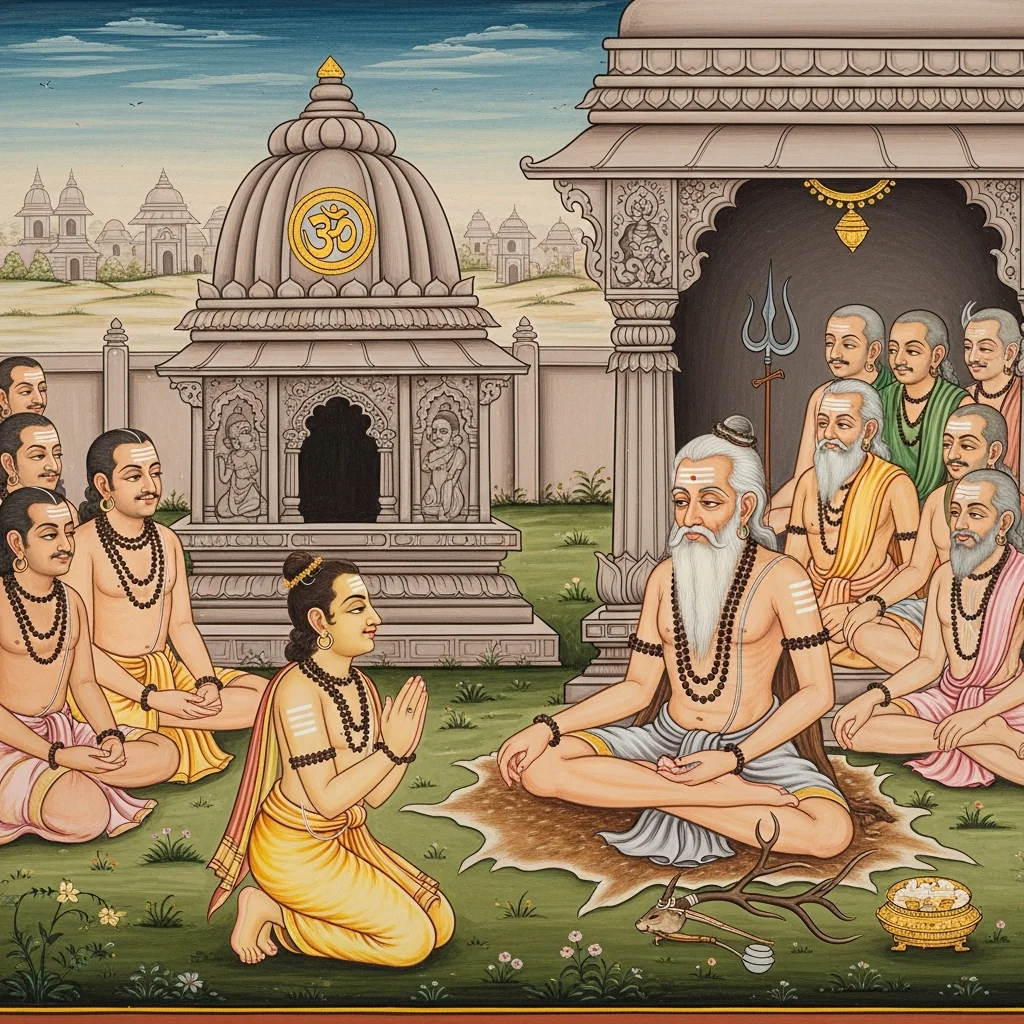
Chapter 24 unfolds a layered theological teaching around a seeker’s desire to attain siddhi “in this very body” and the unique sanctity of Avimukta (Kāśī). Skanda recounts an earlier tale (set in the Padma-kalpa) of Damana, son of Bhāradvāja, who—seeing the world’s instability and sorrow—wanders through āśramas, cities, forests, rivers, and tīrthas, performing austerities yet failing to gain steadiness of mind. By providential fortune he reaches the bank of the Revā and the sacred Oṃkāra precinct, meets Pāśupata ascetics, and approaches their aged teacher, the muni Garga, seeking instruction. Damana lists his many prior disciplines—pilgrimages, mantra-japa, havana, guru-service, nights in cremation grounds, medicinal and alchemical practices, and severe tapas—yet confesses he lacks the “seed” of siddhi and asks for precise upadeśa for embodied attainment. Garga praises Avimukta as the supreme kṣetra, a saving refuge from saṃsāra, and describes its boundary guardians and chief nodes such as Maṇikarṇikā and Viśveśvara. He then centers practice on the Oṃkāra-liṅga, naming Pāśupata exemplars who attained siddhi through its worship, and relates a cautionary origin-story: a frog that consumes Śiva’s nirmālya (offering-remnants) dies outside the kṣetra for that fault and is reborn with mixed auspicious and inauspicious marks—establishing a moral-ritual rule to honor Śiva’s property and offerings. An ensuing exemplar tells of Mādhavī (reborn from that frog), whose intense, exclusive devotion to Oṃkāra—constant remembrance, service, and sense-restraint directed only to the liṅga—culminates in merging into the liṅga during a Vaiśākha caturdaśī vigil and fast; a radiant manifestation appears and local festival observance is noted. The chapter closes with a phalaśruti promising purification and Śiva-loka to attentive hearers, and adds that the kṣetra is perpetually guarded by Śiva’s gaṇas.
Shlokas
Verse 1
स्कंद उवाच । शृणु वातापि संहर्तः काश्यां पातकतंकिनी । पद्मकल्पे तु या वृत्ता दमनस्य द्विजन्मनः
Skanda said: Listen, O slayer of Vātāpi, to this sin-destroying account connected with Kāśī—the story that occurred in the Padma-kalpa, concerning Damana, a twice-born brāhmaṇa.
Verse 2
भारद्वाजस्य तनयो दमनो नाम नामतः । कृतमौंजीविधिः सोथ विद्याजातं प्रगृह्य च
Bhāradvāja’s son, named Damana, after he had duly undergone the rite of wearing the sacred girdle (mauñjī) and taken up the disciplines of learning, set forth upon his path.
Verse 3
संसारदुःखबहुलं जीवितं चापि चंचलम् । विज्ञाय दमनो विद्वान्निर्जगाम गृहान्निजात्
Knowing that worldly life in saṃsāra is filled with suffering and that life is unsteady, the learned Damana departed from his own home.
Verse 4
कांचिद्दिशं समालंब्य निर्वेदं परमं गतः । प्रत्याश्रमं प्रतिनगं प्रत्यब्धि प्रतिकाननम्
Taking to some direction and having attained profound detachment, he went from hermitage to hermitage, from mountain to mountain, from sea to sea, and from forest to forest.
Verse 5
प्रतितीर्थं प्रतिनदि स बभ्राम तपोयुतः । यावंत्यायतनानीह तिष्ठंति परितो भुवम्
Endowed with tapas, he wandered to every tīrtha and every river—indeed, to all the sacred shrines that stand across the earth.
Verse 6
अध्युवास स तावंति संयतेंद्रियमानसः । परं न मनसः स्थैर्यं क्वापि प्रापि च तेन वै
He stayed in so many holy places, with senses and mind restrained; yet even so, he did not attain perfect steadiness of mind anywhere.
Verse 7
मनोरथोपदेष्टा च कुत्रचित्क्वापि नेक्षितः । कदाचिद्दैवयोगात्स दमनो नाम तापसः
Nor did he find anywhere a guide to instruct him in the path to his heart’s true aim; but once, by divine providence, the ascetic named Damana appeared (to him).
Verse 8
रेवातटे निरैक्षिष्ट तीर्थं चामरकंटकम् । महदायतनं पुण्यमोंकारस्यापि तत्र वै
On the bank of the Revā he beheld the tīrtha called Āmarakaṇṭaka; there too stood a great and holy sanctuary of Oṃkāra.
Verse 9
दृष्ट्वा हृष्टमना आसीच्चेतः स्थैर्यमवाप ह । अथ पाशुपतांस्तत्र स निरीक्ष्य तपोधनान्
Seeing it, he became joyful, and his mind attained steadiness. Then, observing there the Pāśupata ascetics—treasures of tapas—
Verse 10
विभूतिभूषिततनून्कृतलिंगसमर्चनान् । विहितप्राणयात्रांश्च कृतागमविचारणान्
—their bodies adorned with sacred ash (vibhūti), they were engaged in worship of the liṅga; observing the prescribed disciplines of breath and vital conduct, and devoted to contemplation of the Āgamas, the Śaiva scriptures.
Verse 11
स्वस्थोपविष्टान्स्वपुरोरग्रतोऽचलमानसान् । प्रणम्योपाविशत्तत्र तदाचार्यस्य सन्निधौ
Seeing them seated calmly before him, their minds steady and unmoving, he first bowed in reverence and then sat down there, in the very presence of that revered teacher.
Verse 12
प्रबद्धहस्तयुगलः प्रणमतरकंधरः । अथ पाशुपताचार्यो गर्गो नाम महामुनिः
With hands joined in reverent gesture and his neck bent in salutation, there stood the Pāśupata preceptor—the great sage named Garga.
Verse 13
वार्धकेन समाक्रांतस्तपसा कृशविग्रहः । शंभोराराधनेनिष्ठः श्रेष्ठः सर्वतपस्विषु
Though overtaken by old age and made lean-bodied by austerity (tapas), he remained steadfast in the worship of Śambhu, preeminent among all ascetics.
Verse 14
पप्रच्छ दमनं चेति कस्त्वं कस्मादिहागतः । तरुणोपि विरक्तोसि कुतस्तद्वद सत्तम
He questioned Damana: “Who are you, and from where have you come here? Though young, you are detached—how has this arisen? Tell me, O best of men.”
Verse 15
इति प्रणयपूर्वं स निशम्य दमनोऽब्रवीत् । भगोः पाशुपताचार्य सर्वज्ञाराधनप्रिय
Thus, addressed with affection, Damana listened and replied: “O venerable teacher of the Pāśupata path, beloved of the worship of the All-knowing Lord…”
Verse 16
कथयामि यथार्थं ते निजचेतोविचेष्टितम् । अहं ब्राह्मणदायादो वेदशास्त्रकृतश्रमः
“I shall tell you truthfully the workings of my own mind. I am a Brahmin by lineage, and I have labored in the study of the Veda and the śāstra.”
Verse 17
संसारासारतां ज्ञात्वा वानप्रस्थमशिश्रियम् । अनेनैव शरीरेण महासिद्धिमभीप्सता
“Knowing the hollowness of saṃsāra, I took up the life of a vānaprastha, a forest-dweller; and with this very body I longed to attain the great siddhi.”
Verse 18
स्नातं बहुषु तीर्थेषु मंत्रा जप्तास्तु कोटिशः । देवताः सेविता बह्व्यो हवनं च कृतं बहु
“I have bathed at many tīrthas; I have repeated mantras tens of millions of times. I have served many deities, and I have performed many havan—fire-offerings.”
Verse 19
शुश्रूषिताश्च गुरवो बहवो बह्वनेहसम् । महाश्मशानेषु निशा भूयस्योप्यतिवाहिताः
“I have served many gurus for long periods; and in great śmaśānas—cremation grounds—I have spent many nights as well.”
Verse 20
शिखराणि गिरींद्राणां मया चाध्युषितान्यहो । दिव्यौषधि सहस्राणि मया संसाधितान्यपि
Alas, I have even dwelt upon the peaks of lordly mountains; and I have also mastered thousands of wondrous medicinal herbs.
Verse 21
रसायनानि बहुशः सेवितानि मया पुनः । महासाहसमालंब्य सिद्धाध्युषितकंदराः
I have repeatedly taken many rejuvenating elixirs; and, relying on great daring, I have entered caves and ravines inhabited by perfected beings (siddhas).
Verse 22
मया प्रविष्टा बहुशः कृतांतवदनोपमाः । तपश्चापि महत्तप्तं बहुभिर्नियमैर्यमैः
Many times I have entered places that looked like the very mouth of Death; and I have also performed great austerity, sustained by numerous observances and restraints.
Verse 23
परं किंचित्क्वचिन्नैक्षि सिद्ध्यंकुरमपि प्रभो । इदानीं त्वामनुप्राप्य महीं पर्यटता मया
Yet nowhere did I behold even a sprout of success, O Lord. But now, having reached you while wandering the earth, hope has arisen in me.
Verse 24
मनसः स्थैर्यमापन्नमिव संप्राप्तसिद्धिना । अवश्यं त्वन्मुखांभोजाद्यद्वचो निःसरिष्यति
My mind feels as though it has gained steadiness, as if success were already attained—surely, whatever words will issue forth from your lotus-like mouth must be efficacious.
Verse 25
तेनैव महती सिद्धिर्भवित्री मम नान्यथा । तद्ब्रूहि सूपदेशं च कथं सिद्धिर्भवेन्मम
Through that alone shall great accomplishment come to me, and not otherwise. Therefore tell me the excellent instruction—how may attainment arise for me?
Verse 26
अनेनैव शरीरेण पार्थिवेन प्रथीयसी । दमनस्य निशम्येति गर्गाचार्यो वचस्तदा
Hearing Damanā’s words, the teacher Garga then said: “With this very earthly body, you shall indeed attain eminence and fulfillment.”
Verse 27
प्रत्यक्षदृष्टं प्रोवाच महदाश्चर्यमुत्तमम् । सर्वेषां शृण्वतां तत्र शिष्याणां स्थिरचेतसाम् । मुमुक्षूणां धृतवतां महापाशुपतं व्रतम्
He then proclaimed a supreme and wondrous teaching, verified by direct experience, while all the steady-minded disciples listened there—aspirants for liberation, firm in resolve—namely, the great Pāśupata observance.
Verse 28
गर्ग उवाच । अनेनैवेह देहेन यदि त्वं सिद्धिकामुकः । शृणुष्वावहितो भूत्वा तदा ते कथयाम्यहम्
Garga said: “If you desire attainment here with this very body, then listen with full attention; I shall explain it to you.”
Verse 29
अविमुक्ते महाक्षेत्रे सर्वसिद्धिप्रदे सताम् । धर्मार्थकाममोक्षाख्य रत्नानां परमाकरे
“In Avimukta, the great sacred field that grants every siddhi to the virtuous, lies the supreme mine of jewels called Dharma, Artha, Kāma, and Mokṣa.”
Verse 30
समाश्रितानां जंतूनां सर्वेषां सर्वकर्मणाम् । शलभानां प्रदीपाभे तमःस्तोम महाद्विपि
For all beings who take refuge there—of every kind and every deed—Avimukta is like a lamp to moths; a mighty elephant that crushes heaps of darkness.
Verse 31
कर्मभूरुह दावाग्नौ संसाराब्ध्यौर्वशोचिपि । निर्वाणलक्ष्मी क्षीराब्धौ सुखसंकेतसद्मनि
O Kāśī—like a forest-fire to the tree of karma, like the submarine fire to the ocean of saṃsāra—O abode that signals the bliss of liberation, like the Milk-Ocean that bears the fortune of nirvāṇa.
Verse 32
दीर्घनिद्रा प्रसुप्तानां परमोद्बोधदायिनि । यातायातश्रमापन्नप्राणिमार्गमहीरुहि
O Kāśī, giver of the supreme awakening to those asleep in long ignorance; O great tree that shelters the path of beings wearied by endless comings and goings (birth and death).
Verse 33
अनेकजन्मजनित महापापाद्रिवज्रिणि । नामोच्चारकृतां पुंसां महाश्रेयो विधायिनि
O Kāśī, thunderbolt to the mountain of great sins accumulated through many births; O bestower of the highest good upon people merely by the utterance of your name.
Verse 34
विश्वेशितुः परेधाम्नि सीम्नि स्वर्गापवर्गयोः । स्वर्धुनी लोलकल्लोला नित्यक्षालित भूतले
In the supreme abode of Viśveśvara, on the very boundary between heaven and liberation, the earth is ever washed by the heavenly river, whose waves play restlessly.
Verse 35
एवंविधे महाक्षेत्रे सर्वदुःखौघहारिणि । प्रत्यक्षं मम यद्वृत्तं तद्ब्रवीमि महामते
In such a great sacred field, the mahākṣetra that removes the flood of all sorrows, O great-minded one, I shall now tell what befell me—what I have known directly.
Verse 36
यत्र कालभयं नास्ति यत्र नास्त्येनसो भयम् । तत्क्षेत्रमहिमानं कः सम्यग्वर्णयितुं क्षमः
Where there is no fear of Time (Kāla), and where there is no fear of sin—who is able to describe rightly the greatness of that sacred field?
Verse 37
तीर्थानि यानि लोकेस्मिञ्जंतूनामघहान्यहो । तानि सर्वाणि शुद्ध्यर्थं काशीमायांति नित्यशः
All the tīrthas in this world that remove the sins of living beings—indeed, all of them—come to Kāśī every day for their own purification.
Verse 38
अपि काश्यां वसेद्यस्तु सर्वाशी सर्वविक्रयी । स यां गतिं लभेन्मर्त्यो यज्ञैर्दानैर्न सान्यतः
Even if a man dwells in Kāśī, eating anything and selling everything, the state he attains cannot be gained elsewhere through sacrifices (yajña) and gifts (dāna).
Verse 39
रागबीजसमुद्भूतः संसारविटपो महान् । दीर्घस्वाप कुठारेण च्छिन्नः काश्यां न वर्धते
The great tree of saṃsāra, sprung from the seed of attachment (rāga), once cut down by the axe of long spiritual sleep, does not grow again in Kāśī.
Verse 40
सर्वेषामूषराणां तु काशी परम ऊषरः । वप्तुर्बीजमिदं तस्मिन्नुप्तं नैव प्ररोहति
Among all barren tracts, Kāśī is the most barren; there, the seed sown by the sower of karma does not sprout at all.
Verse 41
स्मरिष्यंतीह ये काशीमवश्यं तेपि साधवः । तेप्यघौघ विनिर्मुक्ता यास्यंति गतिमुत्तमाम्
Even those who, while living here, will certainly remember Kāśī—those too become truly virtuous. Freed from torrents of sin, they attain the highest state of liberation.
Verse 42
विभूतिः सर्वलोकानां सत्यादीनां सुभंगुरा । अभंगुरा विमुक्तस्य सा तु लभ्या शिवाज्ञया
The splendor of all worlds—even of Satya-loka and the rest—is perishable. But for the liberated one, that splendor is imperishable; it is attained only by Śiva’s command and grace.
Verse 43
कृमिकीटपतंगानामविमुक्ते तनुत्यजाम् । विभूतिर्दृश्यते या सा क्वास्ति ब्रह्मांडमंडले
Even for worms, insects, and flying creatures that cast off their bodies in Avimukta, a glory is seen—where else in the whole sphere of the universe is such a glory found?
Verse 44
वाराणसी यदा प्राप्ता कदाचित्कालपर्ययात् । स उपायो विधातव्यो येन नो निष्क्रमो बहिः
When Vārāṇasī is reached—at some time, by the turn of fate—one should adopt that means by which there is no going out beyond it.
Verse 45
पूर्वतो मणिकर्णीशो ब्रह्मेशो दक्षिणे स्थितः । पश्चिमे चैव गोकर्णो भारभूतस्तथोत्तरे
To the east stands Maṇikarṇīśa; to the south abides Brahmeśa. To the west is Gokarṇa, and likewise to the north is Bhārabhūta.
Verse 46
इत्येतदुत्तमं क्षेत्रमविमुक्ते महाफलम् । मणिकर्णी ह्रदे स्नात्वा दृष्ट्वा विश्वेश्वरंविभुम्
Thus is this supreme sacred field—Avimukta—of great fruit. Having bathed in the Maṇikarṇī pool and beheld Viśveśvara, the all-pervading Lord, (one gains that merit).
Verse 47
क्षेत्रं प्रदक्षिणीकृत्य राजसूयफलं लभेत् । तत्र श्राद्धप्रदातुश्च मुच्यंते प्रपितामहाः
By reverently circumambulating the sacred region, one obtains the fruit of a Rājasūya sacrifice. And for the one who offers śrāddha there, even the forefathers are released.
Verse 48
अविमुक्त समं क्षेत्रमपि ब्रह्मांडगोलके । न विद्यते क्वचित्सत्यं सत्यं साधकसिद्धिदम्
In the entire sphere of the cosmos there exists no sacred region equal to Avimukta—this is the truth, the truth—for it bestows accomplishment upon spiritual aspirants.
Verse 49
रक्षंति सततं क्षेत्रं यत्र पाशासिपाणयः । महापारिषदा उग्राः क्रूरेभ्योऽक्रूरबुद्धयः
That sacred region is guarded constantly by fierce great attendants, holding nooses and swords—terrifying to the cruel, yet benevolent in intent.
Verse 50
प्राग्द्वारमट्टहासश्च गणकोटिपरीवृतः । रक्षेदहर्निशं क्षेत्रं दुर्वृत्तेभ्यो विभीषणः
At the eastern gate, Aṭṭahāsa—surrounded by crores of Gaṇas—guards the sacred kṣetra day and night, a terror to the wicked.
Verse 51
तथैव भूतधात्रीशः क्षेत्रदक्षिणरक्षकः । गोकर्णः पश्चिमद्वारं पाति कोटिगणावृतः
Likewise, Bhūtadhātrīśa stands as the guardian of the southern side of the holy kṣetra (Kāśī); and Gokarṇa—surrounded by crores of Gaṇas—protects the western gate.
Verse 52
उदग्द्वारं तथा रक्षेद्घंटाकर्णो महागणः । ऐशंकोणं छागवक्त्रो भीषणो वह्निदिग्दलम्
In the same way, the great Gaṇa named Ghaṇṭākarṇa guards the northern gate; and the fearsome Chāgavaktra protects the north-eastern corner, the quadrant adjoining the direction of Fire.
Verse 54
कालाक्षोरण भद्रस्तु कौलेयः कालकंपनः । एते पूर्वेण रक्षंति गंगापारे स्थिता गणाः
Kālākṣa, Oraṇabhadra, Kauleya, and Kālakaṃpana—these Gaṇas, stationed on the far bank of the Gaṅgā, protect the eastern side.
Verse 55
वीरभद्रो नभश्चैव कर्दमालिप्तविग्रहः । स्थूलकर्णो महाबाहुरसिपारे व्यवस्थिताः
Vīrabhadra and Nabhas, and also Kardamāliptavigraha, Sthūlakarṇa, and Mahābāhu—these are stationed on the farther side of the Asi river.
Verse 56
विशालाक्षो महाभीमः कुंडोदरमहोदरौ । रक्षंति पश्चिमद्वारं देहलीदेशसंस्थिताः
Viśālākṣa, the mighty Mahābhīma, and Kuṇḍodara together with Mahodara—stationed in the region of Dehalī—guard the western gate.
Verse 57
नंदिसेनश्च पंचालः खरपादकरंटकः । आनंदोगोपको बभ्रू रक्षंति वरणातटे
Nandisena, Pañcāla, Kharapādakaraṇṭaka, Ānandogopaka, and Babhrū protect the bank of the Varaṇā River.
Verse 58
तस्मिन्क्षेत्रे महापुण्ये लिंगमोंकारसंज्ञकम् । तत्र सिद्धिं परां प्राप्ता देहेनानेन साधकाः
In that supremely meritorious sacred field stands the liṅga known as Oṃkāra; there, practitioners attained the highest perfection while still in this very body.
Verse 59
कपिलश्चैव सावर्णिः श्रीकंठः पिगलोंशुमान् । एते पाशुपताः सिद्धास्तल्लिंगाराधनेन हि
Kapila, Sāvarṇi, Śrīkaṇṭha, and Pigaloṃśumān—these Pāśupata devotees—indeed became perfected through the worship of that liṅga.
Verse 60
एकदा तस्य लिंगस्य कृत्वा पंचापिपूजनम् । नृत्यतः सहुडुत्कारं तस्मिंल्लिंगे लयं ययुः
Once, having performed the fivefold worship of that liṅga, they danced with the exclamation “huḍu!”, and were absorbed into that very liṅga.
Verse 61
अन्यच्च ते प्रवक्ष्यामि तत्र यद्वृत्तमद्भुतम् । निशामय महाबुद्धे दमन द्विजसत्तम
And I shall tell you yet another thing—an astonishing event that occurred there. Listen attentively, O Damana of great intelligence, best among the twice-born.
Verse 62
एका भेकी मुने तत्र चरंती लिंग सन्निधौ । प्रदक्षिणं सदा कुर्यान्निर्माल्याक्षतभक्षिणी
O sage, there a certain female frog moved about in the presence of the Śiva-liṅga; she constantly performed pradakṣiṇā (circumambulation), yet she fed on the nirmālya and on grains of rice (akṣata).
Verse 63
सा तत्र मृत्युं न प्राप शिवनिर्माल्यभक्षणात् । क्षेत्रादन्यत्र मरणं जातं तस्यास्तदेनसः
Because she consumed Śiva’s nirmālya, she did not meet death while there in the holy kṣetra; but outside the sacred area death came to her, due to that very sin.
Verse 64
वरं विषमपिप्राश्यं शिवस्वं नैव भक्षयेत् । विषमेकाकिनं हंति थिवस्वं पुत्रपौवकम्
Better to swallow poison than to consume what belongs to Śiva. Poison destroys only the one who takes it; but taking Śiva’s property destroys a person together with sons and grandsons.
Verse 65
शिवस्य परिपुष्टांगाः स्पर्शनीया न साधुभिः । तेन कर्मविपाकेन ततस्ते रौरवौकसः
Those whose limbs have grown ‘well-nourished’ from what belongs to Śiva are not to be touched by the virtuous. By the ripening of that karma, they then become dwellers in Raurava.
Verse 66
कश्चित्काकः समालोक्य मंडूकीं तामितस्ततः । पोप्लूयमानामादाय चंच्वा क्षेत्राद्बहिर्गतः
A certain crow, noticing that female frog there, seized her in its beak as she floundered, and flew out beyond the boundary of the sacred kṣetra.
Verse 67
वर्षाभ्वी तेन सा क्षिप्ता काकेन क्षेत्रबाह्यतः । अथ सा कालतो भेकी तत्रैव क्षेत्रसत्तमे
In the rainy season she was cast by that crow outside the sacred bounds. Then, in due course, that frog met her end right there at that very spot, though the kṣetra is supremely holy.
Verse 68
प्रदक्षिणीकरणतो लिंगस्यस्पर्शनादपि । पुण्यापुण्यवतीजाता कन्यापुष्पबटोर्गृहे
By performing pradakṣiṇā, and even by touching the liṅga, she was born as a girl bearing both merit and demerit, in the house of the brahmacārin named Kanyāpuṣpabaṭu.
Verse 69
शुभावयवसंस्थाना शुभलक्षणलक्षिता । परं गृध्रमुखी जाता निर्माल्याक्षतभक्षणात्
Her body was well formed and marked with auspicious signs; yet she was born with the face of a vulture, because she had eaten the nirmālya and the akṣata.
Verse 70
सम्यग्गीतरहस्यज्ञा नितरां मधुरस्वरा । सप्तस्वरास्त्रयो ग्रामा मूर्च्छनास्त्वैकविंशतिः
She knew well the secret principles of song and possessed an exceedingly sweet voice: the seven svaras, the three grāmas, and the twenty-one mūrcchanās.
Verse 71
ताना एकोनपंचाश ताला एकोत्तरंशतम् । रागाः षडेव तेषां तु पंचपंचापि चांगनाः
There were forty-nine tānas and one hundred and one tālas. Six were the principal rāgas, and for each of them there were also five and five “consorts” (subsidiary rāgas).
Verse 72
षड्विंशद्रागरागिण्य इति रागि मुदावहाः । देशकाल विभेदेन पंचषष्टिस्तथा पराः
There are twenty-six principal rāgas and rāgiṇīs that delight the connoisseur; and further, by distinctions of region and time, there are also sixty-five additional variations.
Verse 73
यावंत एव तालाः स्यु रागास्तावंत एव हि । इति गीतोपनिषदा प्रत्यहं सा शुभव्रता
As many as there are tālas (rhythmic measures), so many indeed are the rāgas. Thus instructed by the “Gītopaniṣad,” that woman of auspicious vows practiced day after day.
Verse 74
माधवी मधुरालापा सदोंकारं समर्चयेत् । प्राप्याप्यनर्घ्यतारुण्यं सा तु पुष्पबटोः सुता
Mādhavī, sweet in speech, would ever worship Oṃkāra. Though she attained priceless youth, she—the daughter of Puṣpabaṭa—remained devoted to that worship.
Verse 75
प्राग्जन्मवासनायोगादोंकारं बह्वमंस्त वै । स्वभाव चंचलं चेतस्तस्यास्तल्लिंग सेवनात्
By the force of impressions from former births, she contemplated Oṃkāra intensely. Though the mind is by nature restless, in her case it became steadied through service to that liṅga.
Verse 76
दमनस्थैर्यमगमद्योगेनेव महात्मनः । न दिवा बाधयांचक्रे क्षुत्तृण्निद्रा क्षपा सुताम्
She attained the steadfastness of self-restraint, as though through the yoga of a great soul. By day, hunger, thirst, and sleep did not trouble that daughter of Kṣapā.
Verse 77
अतंद्रितमना आसीत्सा तल्लिंग निरीक्षणे । अक्ष्णोर्निमेषा यावंतस्तस्या आसन्दिवानिशम्
Her mind was untiring as she gazed upon that liṅga. The blinks of her eyes—whatever they were—were scarcely there, day and night, for she would not turn away.
Verse 78
तावत्कालस्तया साध्व्या महान्विघ्नोऽनुमीयते । निमेषांतरितः कालो यो यो व्यथोंगतो मम । लिंगानवेक्षणात्तत्र प्रायश्चित्तं कथं भवेत
For that very reason, the holy woman deemed even so small a span of time a great obstruction: “Whatever moment has passed for me—even the interval of a blink—without beholding the liṅga, how could there be any expiation for that?”
Verse 79
इति संचितयंत्येव सेवां तत्याज नोंकृतेः । जलाभिलाषिणी सा तु लिंगनामामृतं पिबेत्
Thinking thus, she never abandoned her service, not even for the sake of Oṃkṛti, the sacred sound Oṃ. And when she longed for water, she drank instead the nectar of the liṅga’s Name.
Verse 80
नान्य द्दिदृक्षिणी तस्या अक्षिणी श्रुतिगे अपि । विहाय लिंगमोंकारं हृद्विहायः स्थितं सताम्
Her eyes longed to see nothing else, even when other sounds reached her ears. For how could she abandon the Oṃkāra-liṅga—Śiva—who abides as the heart’s refuge of the good?
Verse 81
तस्याः शब्दग्रहौ नान्य शब्दग्रहणतत्परौ । अतीव निपुणौ जातौ तत्सन्माल्यकरौकरौ
Her “sound-catching” faculties grasped no other sounds, intent only on receiving the sacred vibration. Her hands, too, became exceedingly skilled—hands that fashioned fine garlands for Him.
Verse 82
नान्यत्र चरणौ तस्याश्चरतः सुखवांछया । त्यक्त्वोंकाराजिरक्षोणीं क्षुण्णां निर्वाणपद्मया
Seeking bliss, she set her feet nowhere else; even the ground marked by the sacred line of Oṃkāra she abandoned and trod upon—like a lotus of liberation.
Verse 83
ओंकारं प्रणवं सारं परब्रह्मप्रकाशकम् । शब्दब्रह्मत्रयीरूपं नादबिंदुकलालयम्
Oṃkāra—the Praṇava—is the very essence, the revealer of the Supreme Brahman; it is the Vedic triad in the form of Śabda-Brahman, the abode of nāda (sound), bindu (the point/seed), and kalā (subtle potency).
Verse 84
सदक्षरं चादिरूपं विश्वरूपं परावरम् । वरं वरेण्यं वरदं शाश्वतं शांतमीश्वरम्
It is the true Imperishable, the primal form, the cosmic form, beyond both higher and lower; the excellent, the most worthy of choice, the bestower of boons—eternal, peaceful, and the Lord.
Verse 85
सर्वलोकैकजनकं सर्वलोकैकरक्षकम् । सर्वलोकैकसंहर्तृ सर्वलोकैकवंदितम्
The sole begetter of all worlds, the sole protector of all worlds; the sole withdrawer of all worlds, the one worshipped by all worlds.
Verse 86
आद्यंतरहितं नित्यं र्शिवं शंकरमव्ययम् । एकगुणत्रयातीतं भक्तस्वांतकृतास्पदम्
Beginningless and endless, eternal—Śiva, Śaṅkara, imperishable; beyond the triad of guṇas, yet taking His seat within the purified hearts of devotees.
Verse 87
निरुपाधिं निराकारं निर्विकारं निरंजनम् । निर्मलं निरहंकारं निष्प्रपंचं निजोदयम्
Free from limiting conditions, formless, changeless, stainless; pure, devoid of ego, beyond the manifold of the world—self-luminous in Its own arising.
Verse 88
स्वात्माराममनंतं च सर्वगं सर्वदर्शिनम् । सर्वदं सर्वभोक्तारं सर्वं सर्वसुखास्पदम्
Delighting in Its own Self, infinite; all-pervading and all-seeing; the giver of all, the enjoyer of all; the All itself, and the very abode of all bliss.
Verse 89
वागिंद्रियं तदीयं च प्रोच्चरत्तदहर्निशम् । नामांतरं न गृह्णाति क्वचिदन्यस्यकस्यचित्
Her organ of speech, belonging wholly to Him, kept uttering that Name day and night; it would not take up any other name of anyone whatsoever.
Verse 90
एतन्नामाक्षररसं रसयंती दिवानिशम् । रसना नैव जानाति तस्या अन्यद्रसांतरम्
Savoring the nectar-like essence of this Name-syllable day and night, her tongue no longer knew any other taste at all.
Verse 91
संमार्जनं रंगमालाः प्रासादं परितः सदा । विदध्यान्माधवी तत्र तथार्चा पात्रशोधनम्
Mādhavī would ever arrange the sweeping and the decorative garlands all around the shrine; and there she would also perform worship and the cleansing of the ritual vessels.
Verse 92
तत्र पाशुपता ये वै प्रणवेशार्चने रताः । तांश्च शुश्रूषयेन्नित्यं पितृबुद्ध्याति भक्तितः
There, those Pāśupata devotees devoted to the worship of Praṇaveśa, the Lord of Oṃkāra, should be served continually—regarding them as one’s own fathers—with surpassing devotion.
Verse 93
वैशाखस्य चतुर्दश्यामेकदा सा तु माधवी । रात्रौ जागरणं कृत्वा दिवोपवसान्विता
Once, on the fourteenth lunar day of the month of Vaiśākha, that Mādhavī kept a night-long vigil, having observed a fast through the day.
Verse 94
यात्रामिलितभक्तेषु प्रातर्यातेषु सर्वतः । संमार्जनादिकं कृत्वा लिंगमभ्यर्च्य हर्षतः
When the devotees gathered for the pilgrimage procession had departed in the morning in every direction, she performed sweeping and other services, and then joyfully worshiped the liṅga.
Verse 95
गायंती मधुरं गीतं नृत्यंती निजलीलया । ध्यायंती लिंगमोंकारं तत्र लिंगे लयं ययौ
Singing sweet songs, dancing in the spontaneity of her devotion, and meditating on the liṅga as Oṃkāra, she attained dissolution there, being absorbed into that very liṅga.
Verse 96
अनेनैव शरीरेण पार्थिवेन महामतिः । अस्मदाचार्यमुख्यानां पश्यतां च तपस्विनाम्
With this very earthly body, O great-minded one, that noble-hearted maiden (Mādhavī) attained the divine state, while our foremost teachers and the ascetics looked on.
Verse 97
प्रादुर्बभूव यल्लिंगाज्ज्योतिर्जटिलितांबरम् । तत्र ज्योतिषि सा बाला ज्योतिर्मय्यपि साप्यभूत्
From that liṅga there arose a radiance, as though the very sky were woven with light; and within that light the young maiden became—she too—made of light.
Verse 98
राधशुक्लचतुर्दश्यामद्यापि क्षेत्रवासिनः । तत्र यात्रां प्रकुर्वंति महोत्सवपुरःसराः
Even today, on the bright fourteenth day of the month of Rādha, the residents of the sacred kṣetra (Kāśī) undertake a yātrā there, led forth by a great festival.
Verse 99
तत्र जागरणं कृत्वा चतुर्दश्यामुपोषिताः । प्राप्नुवंति परं ज्ञानं यत्रकुत्रापि वै मृताः
Those who keep vigil there and fast on the fourteenth day attain the highest knowledge—even if they should die anywhere at all.
Verse 100
ब्रह्मांडोदर मध्ये तु यानि तीर्थानि सर्वतः । तानि वैशाखभूतायामायांत्योंकृति दर्शने
All the tīrthas that exist throughout the very ‘womb of the universe’ come, as it were, in the month of Vaiśākha, at the vision of the Oṃkāra-form.
Verse 110
सर्वाण्यायतनान्याशु साब्धीनि स गिरीण्यपि । स नदीनि स तीर्थानि स द्वीपानि ययुस्ततः
Then, swiftly, all the shrines, the oceans, and the mountains too—along with the rivers, the sacred tīrthas, and the islands—departed from there, as though drawn into that divine convergence.
Verse 120
ये निंदंति महादेवं क्षेत्रं निंदंति येऽधियः । पुराणं ये च निंदंति ते संभाष्या न कुत्रचित्
Those who revile Mahādeva, those misguided in mind who revile the sacred Kṣetra (Kāśī), and those who revile the Purāṇa—such persons should not be conversed with anywhere at all.
Verse 121
ओंकारसदृशं लिंगं न क्वचिज्जगतीतले । इति गौर्यै समाख्यातं देवदेवेन निश्चितम्
On the face of the earth there is nowhere a Liṅga comparable to the form of Oṃkāra. Thus the Lord of Lords declared it to Gaurī as a settled truth.
Verse 122
इममध्यायमाकर्ण्य नरस्तद्गतमानसः । विमुक्तः सर्वपापेभ्यः शिवलोकमवाप्नुयात्
A person who hears this chapter with a mind absorbed in it is freed from all sins and attains the world of Śiva (Śivaloka).
Verse 853
रक्षः काष्ठां शंकुकर्णो दृमिचंडो मरुद्दिशम् । इत्थं क्षेत्रं सदा पांति गणा एतेऽति भास्वराः
Śaṅkukarṇa guards the quarter of the Rākṣasas, and Dṛmicaṇḍa the direction of the Wind-god. In this manner these exceedingly radiant Gaṇas always protect the sacred Kṣetra (Kāśī).